reviewstook.com is reader-supported. When you buy through links on our site, we may earn an affiliate commission.
Where to buy
Somewhere between the school play, the skate park and a bedroom desk covered in homework, most teenagers decide a phone is no longer enough. They want a real camera: one that takes photographs worth printing and shoots video their friends will actually watch to the end. Parents searching for the best cameras with video for teen creators face a narrower question than the marketing suggests, because a teenager’s camera lives a harder life than an adult’s — it rides in a school bag, gets lent to friends, films in bedrooms lit by a single ceiling bulb, and must survive being interesting for longer than one birthday.
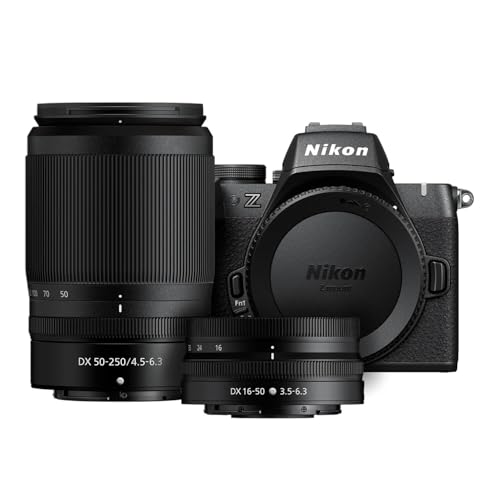
- Nikon Z50 II with Two Lenses: check price on Amazon
- Sony ZV-1F: check price on Amazon
- Canon EOS R50: check current listings on Amazon
- DJI Osmo Pocket 3: check price on Amazon
- GoPro HERO13 Black: check price on Amazon
- Canon PowerShot G7 X Mark III: check current listings on Amazon
Durability rarely appears on a teenager’s wish list, yet it decides whether this purchase is still earning its keep next year. Cameras with interchangeable lenses reward growing skill but punish careless handling at the sensor, which sits exposed every time a lens comes off. Fixed-lens cameras forgive more and teach less. Neither answer is wrong; the honest choice depends on whether your teenager already changes phone settings for fun or simply points and hopes. This guide separates those two personalities rather than pretending one camera serves both.
Video changes the shopping list in ways stills-only guides miss. A teenager filming themselves needs a screen that flips fully forward, autofocus that finds an eye and stays there, and a microphone input for the day a cheap lavalier transforms their audio. A teenager filming other people — matches, performances, friends — needs reach, stabilisation and a camera that starts recording quickly after being pulled from a bag. Several picks below lean one way or the other, and the reviews say which, plainly.
Safety and supervision deserve a paragraph in any guide aimed at younger creators. Cameras themselves are neutral tools, but the platforms teenagers publish to are not, and families do well to agree the sharing rules before the first memory card fills up: which accounts, which audiences, what never gets filmed at school. Parents should also know that none of the picks here requires a subscription to function, none locks a teenager into an app ecosystem to retrieve their own footage, and all six work as straightforward cameras first and connected devices second.
Budget honesty matters too. The camera body is rarely the whole spend: a memory card, a small tripod, a case that actually fits the school bag and eventually a second battery all belong in the family’s mental total. Picks that arrive as complete kits, or that a teenager can grow with birthday-money accessories over two years, often beat a technically finer camera that consumes the entire budget on day one and then sits unprotected in a drawer.
One pattern repeats in family after family, and it is worth naming before the products arrive. The teenager films far more than they photograph in the first month — video feels like the point of a new camera — and then, somewhere around the first printed photograph or the first portrait a friend asks to keep, the balance shifts. Cameras bought purely as video machines get stranded by that shift, while cameras that treat stills as a first-class citizen absorb it. Every pick in this guide was tested against the second month, not the first: does it still delight when the novelty of filming fades and the craft of photographing begins? The six below pass that test in six different ways, which is why the guide resists crowning a single winner and instead matches bodies to temperaments.
Temperament, honestly assessed, beats specifications at this age. The meticulous teenager who organises their desk will thrive with lenses and menus; the restless one who films while moving through the world needs a camera that forgives haste; the performer needs the flip screen and the flattering colour, and will not care about a viewfinder they never raise. Parents know which teenager lives in their house. The reviews that follow are written to that knowledge, with each pick’s personality stated as plainly as its sensor.
Key Takeaways
- Nikon’s Z50 II two-lens kit is the strongest first hybrid here, covering portraits, school events and video in one purchase.
- Sony’s ZV-1F suits the teenager who films themselves at a desk far more than they photograph other people.
- Canon’s EOS R50, covered without a link, offers the friendliest menus of any interchangeable-lens option discussed.
- DJI’s Osmo Pocket 3 turns shaky walks into smooth footage a beginner can be proud of immediately.
- GoPro’s HERO13 Black survives the sports, weather and drops that end other cameras’ school careers.
- Canon’s PowerShot G7 X Mark III remains the pocketable stills-and-video compromise for teens who hate carrying kit.
In this guide
Quick Picks
| Camera | Badge | Why it is here |
|---|---|---|
| Nikon Z50 II with Two Lenses | Best first hybrid kit | Two lenses, kind colour presets and real video ability in a single boxed answer. |
| Sony ZV-1F | Best desk-and-selfie video | Wide fixed lens and eye focus built for a teenager talking to their own audience. |
| Canon EOS R50 | Best menus for a beginner | Guided interface and Canon colour in a body a teen can grow into for years. |
| DJI Osmo Pocket 3 | Best moving footage | A gimbal steadies walks, runs and rides that would defeat a handheld beginner. |
| GoPro HERO13 Black | Best for sport and outdoors | Waterproof, mountable and calm about being dropped by an excited fourteen-year-old. |
| Canon PowerShot G7 X Mark III | Best pocket compromise | Proper stills and capable video from a camera that fits a jacket pocket. |
How did we choose cameras a teenager will still use next year?
Longevity came first in our thinking. Teenage interests pivot fast, so each pick had to serve at least two plausible hobbies — photography and video, sport and travel, streaming and stills — rather than excelling at one narrow trick. Cameras that only make sense inside a single trend were set aside, however impressive their launch coverage looked.
Forgiveness came second. We favoured reliable automatic modes that produce good results while a beginner learns, with manual control available underneath rather than demanded from the first afternoon. Autofocus systems were judged on faces and eyes, because teenagers photograph people far more than landscapes, and a camera that keeps a friend’s face sharp through a school performance earns trust that spec sheets cannot.
Carrying reality shaped the final list. Every pick had to be light enough for a school bag, quick enough to start before a moment passes, and simple enough to charge from the cables a family already owns. Two Canon models appear without purchase links because no verified listing for them sits in our current pool; they are covered honestly in prose because leaving them out would mislead Canon-leaning families, and no teenager’s shortlist should be distorted by which links happen to be available.
Should a teenager start with interchangeable lenses or a fixed lens?
Interchangeable lenses teach photography as a craft. Swapping from a wide lens to a short telephoto shows a beginner, physically, how focal length changes a scene, and a kit with two lenses — like the Nikon below — covers the school concert and the close portrait without further spending. The cost of that education is care: sensors attract dust during changes, lenses multiply the things that can be dropped, and the bag grows heavier each term.
Fixed lenses teach composition instead. With one view of the world, a teenager learns to move their feet, choose their moment and frame with intention, skills that transfer to every camera they will ever own. Fixed-lens models also tend to be the video specialists, with screens, microphones and autofocus tuned for a creator talking to the lens. Families unsure which lesson their teenager wants should watch what the phone gallery already shows: hundreds of posed portraits suggest lenses; hundreds of selfie videos suggest the fixed-lens creators’ tools.
Growth paths differ, and parents should price them honestly. An interchangeable-lens camera grows by lenses, each a future gift-sized purchase that extends the hobby. A fixed-lens camera grows by accessories — tripod, microphone, lights — which suit the video path. Both paths are respectable; the mistake is buying the first step of one path for a teenager clearly walking the other.

Nikon Z50 II with Two Lenses — Best first hybrid kit
Buying one box that answers two years of birthdays is a rare pleasure, and this kit manages it. The Z50 II arrives with a standard zoom for everyday scenes and a longer telephoto that reaches across a sports hall or a stage, so the teenager who photographs friends at lunch and films the school play from the back row is equipped for both from the first weekend. Nikon’s colour presets, presented in plain language inside the camera, let a beginner produce warm, finished-looking pictures without opening editing software — an underrated mercy for a thirteen-year-old with homework.
Video ability is genuine rather than decorative. The camera records sharp footage with autofocus that recognises people and holds their eyes, and the fully articulating screen flips forward for the desk-based pieces to camera most teen creators eventually attempt. A headphone socket and microphone input, features manufacturers often reserve for costlier bodies, mean the audio can grow up alongside the filming. Parents comparing spec sheets should notice how unusual that pairing is at this level.
Handling suits smaller hands without feeling like a toy. The grip is deep enough for cold fingers at a winter match, the main controls fall where thumbs expect them, and the guided menus explain themselves in sentences rather than abbreviations. Weight stays sensible even with the longer lens fitted, which matters more than any laboratory measurement: a camera left at home for being heavy takes no photographs at all.
Honesty requires noting the kit’s ceiling. Low-light video in a dim bedroom will show noise sooner than the larger-sensor picks below, and the two kit lenses, while versatile, are not the fast glass a teenager bitten seriously by portrait photography will eventually crave. Both limits arrive gracefully, though — the lens mount accepts better glass later, so ambition upgrades the kit instead of replacing it.
For families wanting one considered purchase rather than a sequence of experiments, this is where the guide’s money goes first. It photographs like a hobby, films like a creator tool, and forgives like a beginner’s camera, and that triangle is precisely what a teenager’s first serious camera needs to be.
- Type: mirrorless camera, two-lens kit
- Screen: fully articulating, forward-facing for video
- Audio: microphone input and headphone socket
- Colour: built-in presets for finished-looking stills
Strengths
- Two lenses cover portraits through school-hall reach
- Beginner-friendly colour presets, no editing required
- Audio connections rare at this level
Trade-offs
- Dim-room video shows noise earlier than bigger sensors
- Kit lenses are versatile rather than fast
- Lens changes demand a dust-aware teenager
Best for: a teen’s first serious hybrid camera, bought once and grown with. Not suited for: families wanting the smallest possible carry.

Sony ZV-1F — Best desk-and-selfie video
Picture the actual scene: a teenager at a bedroom desk, ring light borrowed from a sibling, talking to an audience about a game, a book or a school project. The ZV-1F was designed for exactly that chair. Its wide fixed lens fits a face, shoulders and a slice of room from arm’s length, its eye autofocus locks on and refuses to wander, and its colour flatters skin under the mixed lighting of a real bedroom rather than a studio.
Simplicity is the product here. There are no lenses to choose, no mount to keep clean, and the controls a video creator touches — record, product showcase focus, background blur at a button press — sit on the surface instead of inside menus. A teenager can be filming something respectable within an hour of the box opening, which for this age group is not a convenience but the difference between a hobby that starts and one that evaporates.
Stills are competent rather than the point. The same 1-inch sensor that serves video takes perfectly good photographs for school projects, family events and social sharing, and the wide lens suits group shots in tight rooms. A teenager whose heart is in still photography — who dreams in portraits and landscapes — will outgrow the fixed wide view, and the Nikon above or the Canons below serve that teenager better. The ZV-1F makes no apology for its priorities.
Parents should weigh two practical notes. Battery life suits desk sessions and outings rather than all-day filming, so a spare belongs in the stocking-stuffer budget. Stabilisation is electronic and modest, fine for seated talking and gentle walks, less happy on a bicycle or a run. Neither fact dents the recommendation for the desk-based creator; both matter for the teenager filming sport from the sidelines.
Judged on its own brief — a teenager, a desk, an audience — nothing else in this guide is as immediately good at the job. It is the pick for the young creator whose channel, stream or video diary already exists in their head and merely needs a camera that stays out of its way.
- Type: compact creator camera, 1-inch sensor
- Lens: wide fixed lens for arm’s-length framing
- Focus: eye autofocus with product showcase mode
- Screen: flip-forward for self-filming
Strengths
- Fastest route from box to good-looking video
- Eye focus a beginner never has to think about
- Kind skin tones under bedroom lighting
Trade-offs
- Fixed wide lens limits portrait and reach work
- Battery life favours sessions over full days
- Stabilisation is for walking pace, not sport
Best for: teen streamers, video diaries and desk-based channels. Not suited for: a teenager whose main love is still photography.
Canon EOS R50 — Best menus for a beginner
Canon earns its place in a teenager’s shortlist through teaching. The R50’s guided interface explains what each setting does in ordinary words, shows the effect before it is applied, and lets a beginner graduate to full manual control inside the same body as confidence grows. For a teenager learning photography deliberately — reading, experimenting, joining a school club — that built-in tuition is worth more than a marginal specification advantage elsewhere.
Stills and video share the credit honestly. Canon’s colour science gives portraits a warmth teenagers recognise from the images they admire, autofocus tracks faces and eyes with the quiet competence Canon is known for, and the video quality stands up well for school projects and early channel work. The articulating touchscreen supports self-filming, and the body is light enough that a younger teen will actually carry it on a family trip rather than negotiating to leave it behind.
We cover the R50 in prose because no verified listing for it sits in our current pool, and this guide does not attach purchase links it cannot stand behind. Families who find it through a reputable retailer should compare the kit-lens bundle carefully, since the lens included changes the value considerably, and should confirm the memory card format before checkout to avoid a mismatched gift.
Limitations are the usual ones for an entry mirrorless body. Kit lenses are starting points rather than destinations, the body is not weather-sealed against a rainy match, and serious low-light video will eventually push an ambitious teenager toward faster glass. None of these arrive in the first year for most owners, and the lens mount’s upgrade path means the camera grows by glass rather than replacement.
Choose the R50 when the teenager in question learns by understanding. It is the camera most likely to turn a curious beginner into a photographer who knows why their pictures work — and that knowledge outlasts any single body they will ever own.
- Type: mirrorless camera, interchangeable lenses
- Interface: guided menus that explain settings plainly
- Screen: articulating touchscreen for self-filming
- Colour: Canon portrait-friendly rendering
Strengths
- Menus teach while the teenager shoots
- Warm, likeable colour for portraits of friends
- Light body a younger teen will carry willingly
Trade-offs
- No verified listing in our pool, so no link here
- Kit lens is a beginning, not an end point
- Not sealed against wet-weather filming
Best for: teens learning photography properly, with video alongside. Not suited for: buyers who need a purchase link verified by this guide.

DJI Osmo Pocket 3 — Best moving footage
Hand a walking teenager any ordinary camera and the footage bounces like the pavement feels. Hand them the Pocket 3 and the same walk glides. Its three-axis gimbal carries the lens on a stabilised mount, absorbing footsteps, bumps and turns mechanically, so a beginner’s first attempt at filming a journey to school or a tour of a holiday town looks startlingly professional. For teenagers whose videos are about movement — travel, friends, exploring — that transformation is the whole product.
The 1-inch sensor behind the gimbal keeps dusk and indoor footage respectable, and subject tracking lets the camera hold a friend in frame while the operator walks backwards, a shot teenagers discover within days and use forever. The rotating screen starts the camera as it turns, a small delight that removes the fumbling from spontaneous filming. Audio improves dramatically with DJI’s wireless microphone pairing, which many young creators add as their first upgrade.
Stills exist but are not the argument. The Pocket 3 takes serviceable photographs, yet a teenager who falls for photography itself will want proper controls and lenses, and families should hear that clearly before choosing it as an only camera. Its kingdom is video in motion, and within that kingdom it has no rival in this guide at any size.
Care requirements sit between a phone and a real camera. The gimbal is a precision mechanism that dislikes sand, drops and being forced by impatient fingers, and it should travel in its case rather than loose in a bag. Teenagers are not famous for such care, so parents should price the case habit into the decision: a careful teen gets a miraculous tool; a careless one gets a repair bill.
For the young filmmaker whose ideas are walks, journeys and days out with friends, the Pocket 3 produces the most watchable footage in this list with the least skill demanded. It rewards exactly the filming teenagers actually do, which is rarer in camera design than it should be.
- Type: gimbal camera with 1-inch sensor
- Stabilisation: three-axis mechanical gimbal
- Tracking: subject tracking for moving filming
- Audio: wireless microphone pairing available
Strengths
- Walking footage looks professionally smooth at once
- Strong dusk and indoor video for its size
- Tiny enough for a coat pocket on filming days
Trade-offs
- Stills are a side feature, not a strength
- Gimbal needs case-carrying care
- Wireless microphone is a later extra cost
Best for: teen filmmakers whose videos move — walks, trips, days out. Not suited for: a teenager focused on still photography.

GoPro HERO13 Black — Best for sport and outdoors
Skateboarding, surfing, mountain biking and skiing share a property no studio camera survives: the camera gets wet, knocked, dropped and occasionally run over by the activity it is filming. The HERO13 Black is built for that world. Waterproof without a case, stabilised for violent motion and small enough to mount on a helmet, board or handlebar, it lets a sporty teenager film the sports they actually do rather than the sports a delicate camera permits.
Video quality has outgrown the action camera stereotype. Footage is sharp, wide and vivid, the stabilisation handles a rough trail with composure, and slow-motion options turn a single trick into a study a teenager can learn from — many young athletes genuinely improve by reviewing their own footage frame by frame. Stills are wide-angle and energetic rather than portrait-like, which suits action and travel and suits a school portrait not at all.
Mounting is the creative language here. A pouch of inexpensive mounts multiplies the angles — chest for the rider’s view, pole for the friend’s-eye view, suction for a parent’s car on a road trip — and teenagers take to that vocabulary quickly because each new angle makes the same sport look new again. Parents should add one rule to the gift: mounts get checked before the run, not admired after the camera is lost.
Everyday compromises are real. The tiny screen and wide lens make it a poor choice for a desk channel, indoor footage in dim rooms is its weakest work, and the battery appetite at the highest settings means spares for a full day at the slopes. A teenager whose filming is mostly indoors should look up this list, not down it.
For the outdoors teenager, though, this is the only pick whose survival does not depend on their care, and that independence is worth a great deal. It films the life they already live, at the speed they already live it.
- Type: waterproof action camera
- View: ultra-wide with lens options
- Mounts: helmet, chest, board and handlebar ecosystem
- Stabilisation: electronic, built for violent motion
Strengths
- Survives water, mud, snow and being dropped
- Slow motion doubles as a sports coaching tool
- Mount vocabulary keeps old sports looking new
Trade-offs
- Poor fit for desk channels and talking heads
- Dim indoor footage is its weakest work
- Highest settings eat batteries on long days
Best for: sporty, outdoors teenagers filming action and travel. Not suited for: indoor creators and portrait photographers.
Canon PowerShot G7 X Mark III — Best pocket compromise
Not every teenager wants a system. Some want one good camera that disappears into a jacket pocket, comes out for friends, concerts, family trips and the occasional video, and never requires a bag, a lens decision or a charging ritual. The G7 X Mark III is Canon’s long-running answer to that teenager: a 1-inch sensor compact with a useful zoom, Canon’s friendly colour, and video ability — including a microphone input unusual in this class — that respects a young creator’s ambitions.
Photographs are where it quietly shines. The zoom range covers the group shot and the stage from a school-hall seat, the lens is fast enough for indoor light that defeats a phone, and the results have the depth and colour that make teenagers understand why cameras still exist. Video is capable and convenient, with the flip screen self-filmmers expect, though autofocus on moving subjects is less tenacious than the mirrorless picks above.
We describe it without a purchase link because no verified listing sits in our current pool. That status changes nothing about the camera’s merits; it simply means families should buy it through a retailer they trust and check the exact bundle, since cases and cards are sometimes included and sometimes not.
Compromises follow from the pocketable brief. The battery is small, the body offers no weather sealing, and a teenager who discovers a serious love of photography will eventually want interchangeable lenses and the growth they allow. As a two-to-three-year companion for a teenager whose interests are broad rather than obsessive, those are fair trades for a camera that is present for everything.
Presence is the closing argument. The finest camera for a teenager is the one in the pocket when the moment happens, and this little Canon has built its reputation on being exactly that — good enough at everything, absent from nothing.
- Type: pocket compact, 1-inch sensor
- Lens: versatile zoom for groups and stages
- Video: flip screen and microphone input
- Carry: jacket-pocket size, no system bag
Strengths
- Always present because it always fits
- Strong stills for concerts, trips and friends
- Microphone input rare among pocket cameras
Trade-offs
- No verified listing in our pool, so no link here
- Small battery suits outings, not filming days
- No upgrade path if photography becomes serious
Best for: teens wanting one pocket camera for stills and video alike. Not suited for: a beginner planning a lens collection.
How much light do teenagers actually film in?
Bedrooms, halls, gyms, cafés and the hour after sunset: a teenager’s filming map is a tour of mediocre light. Cameras earn their keep there not with resolution but with sensor size and lens brightness, the two specifications that decide whether indoor footage looks like a memory or like evidence. The 1-inch sensors in the ZV-1F and Pocket 3, and the larger sensors in the interchangeable-lens bodies, all cope with that map respectably; what separates them is how their kit lenses behave when the light drops, and parents comparing bundles should ask that question of any lens included.
Practical rescue matters more than specification pride. A teenager taught to face a window rather than stand before it, to switch on the room’s lamps before filming rather than after seeing the footage, and to move two steps closer to the light instead of zooming from the dark, will out-film a better camera used carelessly. The picks above reward those habits at different rates — the Sony and DJI forgive dim rooms most readily — but no pick in any guide repeals the physics, and families do a young creator a lasting favour by teaching the lamp before funding the lens.
Evening sport deserves its own warning. Floodlit pitches and indoor courts mix flickering light with fast movement, the hardest combination a beginner camera meets. The GoPro’s action tuning and the Nikon’s presets handle it gamely for the class, while the pocket Canon prefers the stands to the sideline. A teenager filming their own team’s matches weekly should weight that paragraph heavily; a teenager filming birthdays should forget it entirely.
What does a teen creator’s first month realistically look like?
Week one is exploration, and the footage is mostly unusable in the way all first footage is: tilted horizons, forgotten focus, sound like a seashell. The cameras that survive week one are the ones whose automation hides that apprenticeship — which is why this guide weighted forgiving autofocus and colour so heavily. A teenager who likes their early results keeps filming; a teenager embarrassed by them quietly returns to the phone, and the expensive camera becomes a family parable.
Weeks two and three are when accessories stop being hypothetical. The desk creator discovers the microphone gap the first time they film a thoughtful piece in a kitchen with the fridge humming. The moving filmmaker discovers battery arithmetic on the first long day out. The photographer discovers that one lens frames their friends beautifully and the school hall not at all. Families who held a little budget back for exactly these discoveries spend it wisely in week three, guided by evidence instead of advertising.
By the end of the first month a pattern has usually declared itself — the teenager has a genre, whether they would use the word or not. The camera’s job by then is simply to be the one that fits the genre they found, rather than the genre the gift-giver imagined. That is the deepest reason this guide offers six personalities instead of one champion: the right camera is the one still in their hands when the second month starts.
How do the six compare for a teenager’s real week?
| Camera | School-week role | Signature strength | Watch out for |
|---|---|---|---|
| Nikon Z50 II with Two Lenses | Hybrid all-rounder | Two lenses, presets, real audio options | Lens care and dust discipline |
| Sony ZV-1F | Desk creator | Eye focus and instant video polish | Fixed wide lens, session battery |
| Canon EOS R50 | Learning photographer | Guided menus and Canon colour | No verified link in this guide |
| DJI Osmo Pocket 3 | Moving filmmaker | Gimbal-smooth walks and journeys | Needs careful carrying |
| GoPro HERO13 Black | Sports camera | Waterproof toughness and mounts | Weak indoors and at desks |
| Canon PowerShot G7 X Mark III | Pocket companion | Stills and video in a jacket pocket | Small battery, no lens growth |
What should parents check before handing over a first camera?
Start with the sharing conversation, not the settings menu. Agree which platforms the camera’s output may appear on, whether friends must consent to being filmed, and what the school’s own rules say about cameras on site — several of the situations teenagers most want to film are precisely the ones schools restrict. A camera bought with clear family rules produces a happier hobby than one confiscated in its second month.
Storage and backup come next, because teenagers fill cards at a speed adults underestimate. A second card and a simple routine — copy to the family computer or drive every Sunday — prevent the heartbreak of a formatted card holding a whole holiday. Cloud backup can help where families already use it, but the camera itself should never be the only home of irreplaceable footage.
Finally, insure the habit rather than the hardware: a padded case that fits the bag the teenager actually carries, a wrist strap that gets used, and a family agreement about lending. Cameras are lent to friends constantly at this age, and a simple rule — the strap stays on the borrower — saves more cameras than any specification.
Which accessories are worth buying in the first month?
A memory card fast enough for video is not optional, and a second battery rescues more filming days than any creative accessory. Beyond those two, a small tripod suits the desk creators, a basic microphone suits anyone filming speech, and a hard case suits everyone. Lights, extra lenses and elaborate rigs should wait until the teenager’s own footage reveals what is missing; accessories bought for a hobby the teenager has not yet developed tend to decorate a drawer.
Should parents buy new, used or refurbished for a teenager?
Used cameras tempt every sensible parent, and the teenage market rewards the temptation unevenly. Interchangeable-lens bodies from reputable used dealers arrive tested, graded and returnable, and a generation-old model often out-photographs a new budget body. The risks concentrate where teenagers are hardest on equipment: unknown battery health, shutter counts nobody mentions, and kit lenses with focusing quirks that only appear on video. A used purchase with a returns window is a strategy; a used purchase from a stranger’s listing, for a gift with a date attached, is a gamble wearing a strategy’s coat.
Refurbished stock from manufacturers occupies the honest middle — inspected, warrantied, and priced between the two — and for the mirrorless picks in this guide it is frequently the best value a family can find. What parents should avoid is the false economy at either extreme: the brand-new flagship bought to impress, which makes everyone too anxious to use it, and the suspiciously cheap import with no warranty, which converts a birthday into a paperwork apprenticeship.
Whichever route the family takes, one rule protects the gift: buy the camera early enough to test it at home before the occasion. A dead-on-arrival body discovered on the morning itself teaches a teenager that cameras are disappointing, and no specification in this guide is worth that lesson.
How do a phone and a camera share a teenager’s filming?
Rivalry between the phone and the camera is a false war that adults declare and teenagers ignore. In practice the two divide the work by friction: the phone films the spontaneous, the shareable and the vertical, because it is already in the hand and already connected; the camera films the deliberate — the project, the performance, the piece that deserves a tripod and a second take. A teenager with both does not experience duplication. They experience a small one for now and a real one for properly, and the boundary between them is drawn by intention rather than by quality.
Parents sometimes worry the camera will lose that war entirely, and for some teenagers it does — the honest ones in this guide’s audience should hear that a camera bought for a teenager whose filming is entirely spontaneous will gather dust regardless of its virtues. The signal to look for before buying is deliberate filming already happening on the phone: planned videos, repeated takes, a saved folder of projects. Where that signal exists, a camera does not compete with the phone; it promotes the habit the phone started.
Files, finally, should live in one place regardless of which device shot them. A family archive split between a phone’s cloud and a camera’s forgotten cards becomes nobody’s archive, and the Sunday copying routine recommended earlier in this guide is what turns two devices into one memory.
What mistakes do families make with a teen’s first camera?
Buying for the parent’s hobby instead of the teenager’s leads the list: the landscape camera for the streaming child, the action camera for the portrait artist. Second comes overbuying the body and underbuying the essentials, leaving no budget for cards, case or battery. Third is ignoring the screen — a teenager filming themselves with a fixed rear screen will simply stop filming. Fourth is choosing a camera so precious the family is afraid to let it leave the house, which defeats the entire purpose of a teenager’s camera.
Which pick suits which kind of teenager, honestly?
Labels help when a family is stuck between two finalists, so here is the guide’s temperament map stated baldly. The social documenter — filming friends, trips, the texture of being young — belongs with the Pocket 3 or the pocket Canon, because their cameras are present for the life being documented. The performer — singing, gaming, explaining, reacting — belongs with the ZV-1F, whose entire design assumes an audience on the other side of the lens. The craftsperson — the teenager who reads manuals and joins clubs — belongs with the Nikon kit or the R50, whose depths reward exactly that disposition. The athlete belongs with the GoPro, obviously and completely. Most teenagers are a blend, but most blends have a dominant ingredient, and buying for the dominant ingredient is the closest thing to a guarantee this purchase offers.
Parents of younger teens, thirteen and fourteen, should weight simplicity and toughness a notch higher than this guide’s general ranking does; parents of older teens, sixteen and seventeen, should weight growth room higher, because a camera bought at seventeen may be the camera carried to university. The picks do not change — the emphasis inside each review does.
How should a teenager learn editing without it eating the hobby?
Editing is where teen video goes to grow up or to die. The footage from any pick in this guide arrives watchable, but the cut — removing the dead air, ordering the moments, adding the caption that lands the joke — is where a video becomes itself. Beginners drown when they attempt professional software at full depth on day one; they thrive when the first edits are ruthless and simple: trim the starts and ends, cut every pause they would not make a friend sit through, and publish. Every camera here produces files that ordinary editors on ordinary computers handle without complaint, which is a genuine selection criterion at this age — a camera whose footage needs a workstation is a camera whose owner stops editing.
Families can help by treating editing time as part of the gift’s real cost. An hour of filming honestly costs an hour of cutting for a beginner, and a teenager whose schedule cannot hold both halves will film less and less. The creators who last are the ones whose process fits their week, and the cameras that serve them are the ones whose footage needs the least rescue — another quiet reason this guide prized straight-from-camera colour and sound options over exotic recording modes.
What happens when — not if — the camera gets dropped?
Plan for the drop at the moment of purchase and it becomes an incident instead of a tragedy. A padded case that lives where the camera lives, a strap habit taught on the first day rather than after the first scare, and a family agreement about who may borrow the camera and where it may travel — these unglamorous arrangements decide more teenage camera lifespans than any build-quality specification. The picks differ in native toughness, with the GoPro effectively armoured and the gimbal camera honestly fragile, and parents should let that difference steer the choice for a teenager whose belongings live adventurous lives.
When the drop comes, triage calmly: photograph nothing important until the camera has been checked, test focus and stabilisation on a known subject, and treat a camera that works perfectly afterward as the design succeeding rather than luck expiring. Repair economics at this level are usually kind for the fixed-lens picks and lens-shaped for the system ones — a dropped kit lens is a sad afternoon, a dropped body is a family meeting — which is one more argument for the interchangeable-lens teenager learning strap discipline early.
How can a teenager turn filming into school credit and beyond?
Media courses, school news teams, yearbook committees and Duke-of-Edinburgh-style skill awards all convert a camera hobby into recognised achievement, and the conversion is easier than families expect: the same footage, reflected on briefly and presented deliberately, satisfies most such schemes. A teenager filming with any pick in this guide already owns the equipment those programmes assume; what they add is an audience with standards, which is the fastest polish a young creator can get.
Beyond school, the portfolio a teenager builds at sixteen — the channel, the match films, the family archive — has a way of becoming the evidence a college application or a first employer actually remembers. None of that should load a birthday gift with career pressure. But parents choosing between two finalists can fairly favour the camera that grows toward those uses, and in this guide that instinct points, once again, toward the system bodies and the Nikon kit.
How should a family handle the second-camera question?
Success creates its own shopping list. A teenager whose first camera has carried a year of filming will eventually name a frustration precisely — the desk videos are good but the walks wobble, the stills are lovely but the matches blur — and that named frustration is the second camera’s brief, written by experience rather than by a guide. Families should welcome the precision when it arrives and fund the answer it specifies: a gimbal camera beside the stills body, a stills body beside the action camera, the pairing this guide’s six picks were quietly arranged to allow.
Resist completing the set early. Two cameras bought together split a beginner’s learning across two menu systems and halve the intimacy with each, and the second sits charged and unused while its warranty ages. Sequential ownership — one camera learned completely, then a partner chosen by evidence — produces both better footage and a teenager who understands their tools as a system rather than a shelf.
What do grandparents and relatives get right and wrong as gift-givers?
Relatives buying from a distance should steal this guide’s shortcut: ask the teenager’s parent which of the six personalities fits, then buy the exact pick named, from a seller with returns, with the receipt kept. The well-meant surprise upgrade — the costlier camera substituted for the requested one — is the classic relative error, because costlier here usually means heavier, deeper and less forgiving, three qualities a teenager did not ask Santa for. The second classic error is the accessory avalanche: six gadgets of descending usefulness wrapped around a camera that needed a memory card and a case.
What relatives get gloriously right is the contribution model — several family members funding one considered camera instead of parallel trinkets — and the patience model, where the gift is the promise of the camera after the teenager has tried a borrowed one for a month. Both respect the truth this guide began with: a teenager’s camera is a working tool for a real hobby, and tools chosen with their user outlast tools chosen at them.
Final Recommendation
Match the camera to the teenager’s existing habits and the choice mostly makes itself. The all-round learner belongs with the Nikon Z50 II kit; the Canon R50 teaches photography most kindly for families who find it through a trusted seller. Desk creators should take the ZV-1F, moving filmmakers the Pocket 3, sports teenagers the HERO13 Black, and the teen who wants one pocketable companion should hunt down the G7 X Mark III. Every pick here respects a young creator’s intelligence while forgiving a young owner’s carelessness — and that balance, more than any specification, is what a first camera is for.
Related guides
Frequently Asked Questions
Is a real camera worth it when phones film so well?
For casual clips, honestly, a phone is fine. A dedicated camera earns its place when a teenager wants better low-light stills, real zoom, a flip screen for self-filming, proper microphone audio, or the deliberate learning that lenses and manual controls teach. If none of those itches exists yet, wait a year rather than forcing the hobby.
How much supervision does a teen camera hobby need?
Less about the camera, more about the publishing. Agree audiences, consent from friends being filmed, and school rules in advance, then let the filming itself be theirs. Reviewing footage together occasionally — as an audience, not an inspector — keeps parents close to a hobby teenagers otherwise take entirely online.
Can a teenager use these cameras for school projects?
Absolutely, and schools often welcome it: presentations gain from the ZV-1F’s desk polish, sports coursework from the GoPro’s slow motion, and media studies from any interchangeable-lens pick. Check the school’s filming rules first, since corridors and other students are usually the sensitive areas, not the equipment.
Which pick handles low light in bedrooms best?
The ZV-1F and Pocket 3, with their 1-inch sensors, lead for indoor video, while the Nikon’s kit lenses prefer a lamp-lit room to a dark one. A cheap desk light improves every camera in this guide more than a model upgrade would, and it is the first accessory a bedroom creator should want.
Should we buy the extended warranty for a teenager’s camera?
Accidental-damage cover is the one extra worth pricing, because teenage cameras genuinely do get dropped, soaked and sat on. Compare the cover’s cost against simply choosing the tougher pick — the HERO13’s built-in resilience sometimes makes the warranty unnecessary maths.
Related Guides
Families whose teenager leans toward moving pictures will find a kindred discussion in the best cameras for youtube car vlogging roundup, while the pocket gimbal’s wider talents are explored in the best cameras for yoga videos guide. For younger siblings not yet at the teenage stage, the best cameras for new young photographers article covers gentler starting points.


