reviewstook.com is reader-supported. When you buy through links on our site, we may earn an affiliate commission.
Where to buy
First, the word itself: “wedsinga” is a typo — a hurried keyboard’s version of “weddings” — and if that is what you typed, you are in the right place and in good company. This guide covers cameras for filming weddings: the moving record of the ceremony and the day around it. Its companion guide on this site covers wedding stills photography, and the two deliberately do not overlap, because filming a wedding and photographing one are different crafts that happen to share a venue. Everything below is judged as a filmmaking tool. Follow a pick’s link to check price on Amazon and confirm whether the listing is body-only or bundled.
The best cameras for wedsinga work — weddings, filmed — must solve problems a stills camera never meets. The ceremony is a single continuous take of twenty to forty minutes that cannot be paused, restarted or lit; the vows are quiet and must be heard as clearly as they are seen; the reception’s light collapses from daylight to candlelight to a DJ’s colour wash while the camera keeps rolling. A wedding film camera is therefore judged on endurance, on audio, on autofocus that can be trusted unsupervised on a locked-off tripod, and on image stabilisation for the long handheld hours between the fixed points.
The six picks divide the way real wedding film kits divide. Two full-frame bodies built for serious video lead the list, a hybrid Canon covers the run-and-gun middle, a gimbal camera and an action camera take the discreet extra angles that make an edit feel produced, and one prose-only route — the dedicated camcorder — represents the unfashionable tool that still films more ceremonies reliably than everything else here combined.
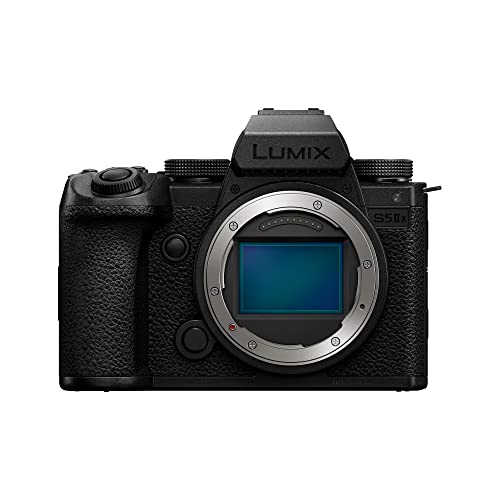
- Panasonic LUMIX S5IIX: check price on Amazon
- Sony Alpha 7 IV: check price on Amazon
- Canon EOS R6 Mark II: check price on Amazon
- DJI Osmo Pocket 3: check price on Amazon
- GoPro HERO13 Black: check price on Amazon
- A dedicated camcorder for the ceremony: prose-only pick, explained below
One warning before the picks, because wedding filming attracts expensive mistakes. The camera is the third most important purchase in a wedding film kit, after audio and after the tripod that holds the ceremony angle steady for forty minutes. A modest body with a proper microphone at the lectern will produce a film couples treasure; the finest body here, recording the room’s echo through its built-in microphone, will produce a beautiful silent movie with unintelligible vows. The picks assume the audio discipline the later sections describe.
Key Takeaways
- Panasonic’s LUMIX S5IIX is the wedding filmmaker’s body: built for long, serious video work.
- Sony’s Alpha 7 IV is the hybrid anchor — ceremony-safe autofocus with a huge lens system.
- Canon’s EOS R6 Mark II is the run-and-gun choice for one-operator wedding days.
- The DJI Osmo Pocket 3 is the discreet second angle that glides through preparations and venues.
- A GoPro HERO13 locked off wide covers the ceremony’s safety shot and the dance floor’s chaos.
- A dedicated camcorder still films ceremonies with the least supervision — the prose-only case.
In this guide
Quick Picks
| Camera | Label | Why it earns its place |
|---|---|---|
| Panasonic LUMIX S5IIX | Best for wedding filmmakers | Video-first design, endless-feeling recording, professional file options. |
| Sony Alpha 7 IV | Best hybrid ceremony body | Autofocus you can leave alone during the vows. |
| Canon EOS R6 Mark II | Solo operator’s favourite | Colour and handling for a solo operator covering everything. |
| DJI Osmo Pocket 3 | Best discreet mover | Gimbal footage of preparations, details and venue dressing. |
| GoPro HERO13 Black | Best locked-off safety | A wide, patient eye that never misses the whole scene. |
| Dedicated camcorder | Best unattended ceremony camera | Built to record an hour without being watched. |
What does filming a wedding ask of a camera that stills never do?
Continuity, above everything. A stills photographer samples the day; a filmmaker must survive it whole — forty unbroken minutes of ceremony, a first dance that cannot be re-blocked, speeches whose best line arrives unannounced. That single fact promotes unglamorous virtues to the top of the list: recording without time limits that matter, power that can be fed continuously, media that swallows hours, cooling that holds in a sunlit marquee, and autofocus that behaves like a professional operator — decisive, calm, and never hunting for attention during the vows. Audio inputs matter as much as the sensor, because the film’s emotional core is spoken. We weighted those continuities first, image beauty second, and stills performance not at all, which is why this guide’s ranking would look wrong to a photographer and obvious to anyone who has ever filmed a ceremony with their heart in their mouth.
One more criterion belongs on the record: service and survival. Wedding cameras work fifty Saturdays a year in churches, barns and marquees, and the body whose maker services it quickly, whose batteries and mounts are everywhere, whose used market can replace it by Friday, is worth a premium over a marginally finer image that travels alone. A working kit is a small business’s infrastructure, and infrastructure is bought for the bad week as much as the good ones.

Panasonic LUMIX S5IIX — Best for wedding filmmakers
The S5IIX is what happens when a camera is designed by people who film events for a living. Where hybrid bodies treat video as a mode, this one treats it as the job: recording options aimed at professionals, cooling and endurance for long takes, and an autofocus system — phase hybrid, finally — that a filmmaker can trust on a moving subject in poor light. On a wedding day it takes the main camera position, the one that must not fail, and holds it with the least drama in this guide.
Its ceremony credentials deserve the detail. A wedding film’s backbone is the wide or mid shot that runs the entire service; the S5IIX records that take as a matter of routine, fed by mains power, writing to generous media, its image stabilised against the tripod bumps and floor vibrations of a working church. Pair it with a recorder or microphone at the lectern and the officiant, and the backbone of the film is secured before the couple even enters — which is exactly when a filmmaker wants it secured.
The moving work flatters it equally. Active stabilisation smooths the processional follow and the reception’s roaming coverage; the full-frame image keeps candlelit scenes rich rather than noisy; and the colour science gives skin a treatment that survives the DJ’s lighting desk better than most. It is a camera that expects to be graded lightly and delivered proudly.
Costs are the professional’s usual ones. The system around it — L-mount lenses, audio gear, support — is an investment assembled over seasons, and the body rewards an operator who configures it deliberately rather than one who improvises. Filmmakers coming from stills-first bodies should expect a weekend of setup and rehearsal before the first wedding, not an afternoon.
Choose the S5IIX if filming weddings is, or is becoming, the business. It is the guide’s professional answer: the body bought to be the ceremony’s guarantee and the reception’s storyteller in one.
- Format: full-frame mirrorless, video-first variant
- Recording: long-take endurance for ceremonies
- Autofocus: phase hybrid for moving subjects
- Mount: L-mount, multi-maker lenses
Strengths
- Takes the main camera position calmly
- Long takes without babysitting
- Rich low-light moving image
Trade-offs
- System investment over seasons
- Rewards deliberate configuration
- Overbuilt for occasional filming
Best for: dedicated and aspiring professional wedding filmmakers. Not suited for: a friend filming one wedding as a favour.
A filmmaker’s note on trust: the S5IIX changes how its owner spends the ceremony morning. Instead of hovering over settings, the professional running this body spends the hour on people — confirming the officiant’s recorder, greeting the couple, walking the attended camera’s route. That redistribution of attention is worth money, because weddings are coordinated by the calm of the people working them, and a camera that does not need managing frees its owner to manage everything else. Judge video-first design by that standard and the premium explains itself in a single morning.

Sony Alpha 7 IV — Best hybrid ceremony body
Every wedding film has one shot that cannot be supervised: the locked-off or lightly attended camera covering the couple while the operator works a second angle. That shot lives or dies on autofocus, and the Alpha 7 IV’s real-time eye tracking is the most trustworthy unsupervised focus in this guide. Set it on the couple at the ceremony’s start and it holds their faces through turns, embraces and the registrar’s choreography, quietly, for the length of the service. That trust is a production feature — it is what allows one filmmaker to deliver a two-camera film.
As the roaming camera it is equally composed. Subject recognition follows the couple through a crowded reception; the lens catalogue offers fast primes for the evening’s darkness and zooms for the day’s coverage; and the stills side, irrelevant to this guide’s ranking, happens to make it the body a hybrid shooter — one person hired for film and photographs — can build a whole practice around.
Audio provision is professional in shape: proper inputs, monitoring, and the accessory ecosystem of a system that takes sound seriously. Wedding filmmakers live by their audio chain, and a body that accepts the chain without adapters and workarounds saves its cost in avoided failures across a season.
The honest cautions are thermal and ergonomic. Long takes in hot venues at the highest settings ask for sensible configuration — the filmmaker who sets the body up for the ceremony rather than for a specification sheet will never meet its limits, and the one who maxes every setting in a sunlit marquee is conducting an experiment on the couple. Menus likewise reward the home setup session. Both cautions are the price of a hybrid that does this much.
Choose the Alpha 7 IV as the anchor body of a wedding film kit, especially where one operator must be two cameras. Its autofocus is not a feature; on a wedding day, it is staff.
- Format: full-frame mirrorless body, Sony E-mount
- Autofocus: real-time eye tracking for video
- Audio: professional inputs and monitoring
- Role: anchor body, attended or locked-off
Strengths
- Unsupervised focus you can trust
- Lens system for every wedding job
- Hybrid strength for film-and-photo commissions
Trade-offs
- Needs sensible setup for long hot takes
- Menus reward preparation
- System grows expensive at the top
Best for: solo filmmakers delivering multi-angle wedding films. Not suited for: operators unwilling to configure a body at home first.
There is a rehearsal worth doing with this body before the season: film a friend’s party, a school concert, anything with the wedding’s shape — a fixed important event in the middle, chaos at the edges, light that will not sit still — and deliver a five-minute film from it within a day. The Alpha 7 IV’s systems reveal their settings under exactly that pressure, and the filmmaker learns which focus mode they trust unsupervised and which they merely admire. Weddings repay that knowledge at the one moment tuition cannot be repeated: the real vows, rolling, with the backup camera earning its name.

Canon EOS R6 Mark II — Run-and-gun favourite
Not every wedding film is a two-camera production. The solo operator with one body, moving from preparations to ceremony to speeches to dancing, needs a camera that behaves like a good assistant: fast to reconfigure, forgiving of haste, and kind to faces in whatever light the day invents. The R6 Mark II is that camera in this guide. Canon’s colour flatters skin under mixed reception light, the autofocus seizes subjects decisively, and the handling lets an operator change what matters — aperture, ISO, focus point — by feel, while looking at the couple rather than at the camera.
Its stabilisation and subject detection suit the roaming style: walking backwards before the couple’s entrance, circling the first dance, catching the bouquet toss from wherever the operator happens to be standing when it happens. Wedding filming at this scale is opportunism with good manners, and the Canon’s responsiveness is opportunism’s best friend.
For the ceremony it takes the attended position — the operator’s own camera, reframing gently, riding the zoom through the vows and readings — while a locked-off partner (the GoPro below, or the camcorder of the final pick) holds the safety wide. That division of labour plays to its strengths and covers its one wedding-relevant caution: like most hybrid bodies, it prefers its longest takes to be a choice rather than a default, so give the endless recording to a tool built for it and let the Canon do the expressive work.
Running costs are the RF system’s familiar ones, and the body’s stills excellence means hybrid commissions are open to its owner — a real consideration for filmmakers whose couples keep asking whether they ‘also do photos’. As a single-camera wedding practice in a box, nothing here is more willing.
Take the R6 Mark II as a solo wedding filmmaker who values responsiveness over infrastructure. It is the camera for the operator who is the crew.
- Format: full-frame mirrorless body, Canon RF mount
- Handling: controls that work by feel
- Stabilisation: in-body for handheld coverage
- Role: the operator’s attended camera
Strengths
- Forgiving colour for faces in mixed light
- Fast, decisive subject focus
- One body can carry a whole solo practice
Trade-offs
- Longest takes better delegated to a partner camera
- RF lenses are a premium system
- Hybrid price includes stills talent
Best for: solo wedding filmmakers working run-and-gun. Not suited for: unattended all-ceremony recording as the only camera.
Solo operators should also weigh this body’s effect on their own visibility. Wedding guests forgive a camera that looks like a photographer’s tool; they perform for one that looks like a film set. The R6 Mark II sits in the forgiving category — compact in the hands, quiet in operation, quick to be lowered when the moment turns intimate. The couple’s grandmother will talk past it; she would address a rig. Filmmakers underestimate how much of their best footage is simply the room forgetting them, and a body that helps the room forget is a creative instrument in the plainest sense.

DJI Osmo Pocket 3 — Best discreet mover
A wedding film is remembered for its movement: the glide down the aisle before the guests arrive, the slow reveal of the dressed reception room, the preparations filmed without a rig looming over the bride’s morning. The Pocket 3 makes that movement available to any operator, because its gimbal does the steadying that once took a stabiliser, a strong arm and a season of practice. It is the smallest serious camera in this guide and, in the day’s intimate spaces, the least intrusive — which at a wedding is a creative quality, not a convenience.
Use it where big cameras change the room. Preparations, details, the venue dressing, the couple’s portrait session filmed alongside the photographer — the Pocket 3 slips through these chapters without announcing a film crew. Its face tracking keeps a walking subject composed, its rotating screen flips to the vertical clips couples now expect for sharing, and its wireless microphone pairing gives moving footage a voice that stays close and clear.
In the edit it is the texture camera: the shots that make a film feel produced rather than merely recorded. Thirty seconds of gliding venue footage under the titles, the dress’s details in a slow pass, the guests arriving in a gentle tracking shot — these are the moments that separate a wedding film from wedding coverage, and they are this little camera’s native language.
Its limits are scale and light. It will not be the ceremony’s main camera, its fixed lens frames as it frames, and very dark receptions test it. It also asks to be handled like the mechanism it is. Within its brief — movement, discretion, texture — nothing else in the guide competes with it, and most wedding kits are improved more by adding it than by upgrading a main body.
Choose the Pocket 3 as the second purchase of a wedding film kit, or the first for a filmmaker whose style is intimate and mobile. It is the difference between covering a wedding and evoking one.
- Format: three-axis gimbal camera, 1-inch CMOS
- Stabilisation: three-axis mechanical gimbal
- Screen: rotating, for vertical sharing clips
- Audio: pairs with DJI wireless microphones
Strengths
- Gliding movement without a rig
- Discreet in intimate spaces
- Texture shots that lift the whole edit
Trade-offs
- Not a ceremony main camera
- Fixed lens, fixed framing
- Dark receptions test its size
Best for: preparations, venue dressing and portrait-session footage. Not suited for: the ceremony’s principal recording.
One more assignment suits it uniquely: the couple’s own perspective. Handed the Pocket 3 for the portrait session’s margins or the walk between venue and reception, couples film each other with a looseness no professional can direct — shaky in the charming places, steady where the gimbal insists, and utterly theirs. Editors treasure these minutes out of all proportion to their length, because authenticity is the one ingredient that cannot be added in post. A camera small and simple enough to be handed over without a briefing is, in that sense, the most professional tool in the bag.

GoPro HERO13 Black — Best locked-off safety
Every experienced wedding filmmaker keeps a camera whose job is to be forgotten. The HERO13 is that camera perfected: small enough to sit on a shelf, a balcony rail or a discreet clamp at the ceremony’s side, wide enough to hold the whole scene, patient enough to record the service entire. Its footage is the edit’s insurance — when the main camera is reframing, when the operator is repositioning, when anything human happens to the attended angles, the safety shot has the moment, whole and usable.
The dance floor is its second home. Placed high or handed to the best man under instruction, it takes the reception’s chaos at a wide, stabilised remove that cuts beautifully against the main camera’s close work. Waterproofing and toughness matter here more than in any adventure context: drinks fly, floors are hard, and a camera that can be dropped, splashed and still finish the night is a camera the edit can rely on.
Set it with intent and it rewards you. Lock its exposure for the room rather than letting it chase the DJ’s lights; power it from the mains where the venue allows, so the ceremony’s length is never a battery calculation; and frame it a little wider than feels right, because its resolution forgives the crop and the edit will thank you for the options.
It will not give you shallow depth, intimate close-ups or good room audio, and asking it to is the classic beginner’s error. Its microphone hears the nearest conversation, not the vows. Treat it as the widest, toughest pair of eyes at the wedding — never the only pair — and it is worth its modest place in the bag many times over, usually on the one occasion per season when it saves the film.
Choose the HERO13 as the kit’s insurance policy and dance-floor witness. Every wedding film practice eventually buys one; the only question is whether the purchase happens before or after the wedding that needed it.
- Format: waterproof action camera
- View: very wide field for whole-scene coverage
- Power: mains feed for ceremony-length takes
- Role: locked-off safety and dance floor
Strengths
- Never misses the whole scene
- Tough enough for reception chaos
- Cheap insurance for the edit
Trade-offs
- No intimate close-ups or depth
- Room audio is not vow audio
- Exposure must be locked with intent
Best for: safety angles, ceremony wides and dance-floor coverage. Not suited for: main-camera duties or audio of any kind.
Its presence also disciplines the main cameras’ work, in a way beginners rarely predict. Knowing the wide exists, the attended operator stops playing safe — stops holding the insurance framing — and starts filming expressively: tighter, braver, closer to the emotion. The safety camera’s real contribution to the finished film is therefore double: the shots it provides, and the better shots it licenses everyone else to attempt. Kits are ecosystems, and this small camera is the keystone species of the wedding one.
A dedicated camcorder for the ceremony — Best unattended ceremony camera
This final pick has no link because the right model depends on your region and rental stock — and because its argument matters more than its badge. The dedicated camcorder, unfashionable for a decade, remains the most reliable ceremony camera ever made: a zoom that covers the room from one position, recording measured in hours rather than minutes, power and media designed for events, and an autofocus content to hold a lectern and a couple without ambition or drama. It is the camera the ceremony actually wants — a witness, not an artist.
Professional wedding filmmakers quietly agree. Many a polished multi-camera film rests on a camcorder’s backbone: the unbroken wide shot, the clean lectern audio fed into it, the take that simply exists, complete, when the edit begins. Mirrorless bodies make the beautiful angles; the camcorder makes the film possible. Hiring one for the ceremony while owning the expressive bodies in this guide is not a compromise — it is the architecture of most working kits.
Its virtues are operational. Servo zoom reframes without touching a lens; built-in neutral density tames the window-lit church; the form factor sits on a tripod for hours without heat anxiety or battery theatre. A volunteer or second operator can run it after ten minutes of instruction, which no mirrorless body in this guide can honestly claim.
The trade is image character. A camcorder’s smaller sensor will not melt a background or drink candlelight like the full-frame picks, and its footage looks like what it is: clean, deep-focus event coverage. In a multi-camera edit that is precisely the foundation the prettier angles need, and couples — who watch faces and listen for vows — will never once wish the safety shot were shallower.
Choose the camcorder route if your filming is ceremony-centred: houses of worship filming their own services, registrars’ recommended freelancers, family filmmakers who want the vows captured completely and calmly. Rent it first; the rental weekend will teach you whether your kit’s backbone should be owned or hired, and either answer is a professional one.
- Format: dedicated camcorder, servo zoom
- Recording: hours-long event takes
- Operation: learnable in minutes by a helper
- Role: the ceremony’s backbone camera
Strengths
- Unbroken coverage without supervision
- Zoom and ND built for real venues
- The backbone of most working kits
Trade-offs
- Deep-focus event look, no cinematic blur
- Smaller sensor in candlelight
- Another device to hire or store
Best for: ceremony-first filming and houses of worship. Not suited for: filmmakers whose style is entirely shallow-focus and mobile.
There is a dignity argument for it, too, worth making once. The ceremony is not a film set that happens to contain a marriage; it is a marriage that has permitted filming. A quiet box on a tripod at the side, doing its work without lights, movement or appetite, respects that order of things in a way a roaming cinema rig never quite does. Venues and officiants who restrict filming are usually restricting disruption — and the camcorder’s whole design is the absence of disruption, which is why it remains welcome in the rooms where the day’s most important twenty minutes happen.
How should the ceremony itself be covered, camera by camera?
Build the ceremony in layers before a single guest sits down. The backbone — camcorder or a video-first body — takes the wide or mid position that sees the couple, the officiant and the lectern, fed with the best audio you can arrange: a microphone at the lectern, a recorder on the officiant, a feed from the venue’s system if one exists. The attended camera works the aisle side for faces, hands and the exchange of rings, reframing gently and never crossing the backbone’s line. The safety camera holds the whole room from height. Sound is recorded in at least two places, because the vows exist once. Then, discipline: nobody moves during the service except the attended operator, nobody’s battery is a hope rather than a fact, and the filmmaker watches the ceremony as a guest would — because the camera positions chosen in calm an hour earlier are now doing the work, and the operator’s job has become attention rather than operation.
Why is audio the wedding film’s real budget line?
Because the film is watched for faces but kept for voices. The vows, the officiant’s words, the father’s speech cracking on the second line — these are the artefacts a couple returns to for fifty years, and every one of them is audio. The camera’s built-in microphone, metres away in a reflective room, records the architecture instead. So the working filmmaker’s money flows to small recorders placed with consent on the groom and the officiant, a microphone at the lectern, a feed from the reception’s PA for the speeches, and the habit of recording every channel separately so the edit can choose. None of this is visible in the finished film, which is the point: great wedding audio sounds like nothing at all, just the day, close and clear, as if the listener had been standing where love put them.
What does the reception demand once the light goes?
Adaptability and restraint in equal measure. The reception’s light falls by the hour and changes by the song; the filmmaker’s answer is fast lenses, honest high-ISO tolerance — a strength of the full-frame picks — and a small on-camera light used like seasoning rather than floodlighting, because a blasted dance floor stops dancing. Coverage priorities invert, too: the ceremony wanted completeness, the reception wants essence. The first dance entire, the speeches entire, and between them the roaming texture — laughter at the tables, the cake’s collapse, the grandmother dancing — filmed in the short, stabilised passes the Pocket 3 and the run-and-gun Canon exist for. Battery and media discipline peaks here: the evening is when tired operators miss the bouquet because a card filled during the speeches. Swap at the meal, every time, and let the evening be the only surprise.
How do you film preparations without turning the morning into a set?
Arrive as a guest who happens to carry a camera. The preparations chapter — hair, dresses, the groom’s party discovering cufflinks — runs on nerves and laughter, and a filmmaker who stages it kills it. Work with the small cameras: the Pocket 3 for the gliding details, the run-and-gun body for faces, both used in short passes between long stretches of simply being present. Film the objects once, early, while the room is still calm; then let the people own the morning and take what they give you. Sound matters less here — music and chatter will carry the sequence in the edit — so the microphone discipline can relax for the one chapter where the pictures are the story. The couple will watch this chapter more fondly than any other, because it is the part of the day each of them only half saw. Film it like a friend with excellent equipment and no agenda, because that is the assignment.
What should a second shooter be handed, and told?
The second shooter is the wedding film’s unsung insurance, and their kit should be the kit that cannot embarrass the edit: the safety-minded body or the camcorder, a lens that covers the room, and instructions written in plain language — your angle is the congregation during the vows, the wide during the speeches, the guests while the main operator follows the couple; never cross the aisle line; change nothing you have not been shown. Brief them on the couple’s names, the family’s faces, the three moments that must not be missed from their side. Then trust them, visibly, because a second shooter who feels trusted films like a colleague and one who feels supervised films like a suspect. The footage that saves wedding films — the reaction shot during the vows, the father’s face during the speech — is disproportionately shot by seconds who were given a clear brief and a calm morning.
How long should a wedding film be, and what does that demand of the filming?
Shorter than the footage wants to be. The films couples rewatch are the tight ones — a ceremony film that honours the service’s real length for family who could not attend, and a highlight film measured in minutes that behaves like memory: the day as it felt, not as it ran. That destination shapes the filming more than any camera choice. Shoot for the edit’s needs: clean entrances and exits on every sequence so cuts have somewhere to land, ten seconds of stillness at the start and end of set pieces, the room tone of each space recorded deliberately for the sound edit. A filmmaker who shoots with the final length in mind comes home with less footage and more film. The cameras in this guide all serve that discipline equally; the discipline itself is the professional’s actual product, and it is learned at weddings, one honest edit at a time.
What belongs in the filming bag that never appears on screen?
The unphotogenic majority of the kit. Gaffer tape and cable ties for the tripod legs and the lectern microphone’s lead. A multi-tool, a torch, spare batteries in a case that separates charged from spent by touch. A printed running order with the couple’s names spelled as they spell them. Water, and the snack that stands between the operator and the 4 p.m. collapse. A rain cover for the camera that the forecast swore was unnecessary. None of it films anything; all of it has saved a wedding film somewhere, usually quietly, usually at the exact moment the day could least afford a problem. Professionals are recognisable by this bag more reliably than by their cameras — the cameras in this guide can be bought in an afternoon, while the bag takes a career of small disasters to assemble.
How do you deliver the film so the couple actually watches it?
On the screens they own, in the lengths their lives allow. The full ceremony film is an heirloom — archived, shared with the relatives who could not travel, watched on anniversaries. The highlight film is the social object — the one sent to friends, posted, rewatched on phones in queues. Deliver both, from the same footage, and name the files like a person rather than a render queue. This delivery reality reaches back into the filming: the highlight film needs the vertical and the intimate, which is the Pocket 3’s homework; the ceremony film needs the unbroken backbone and the vows in clean audio, which is the camcorder’s and the microphones’. A filmmaker who knows the two destinations films two films at once all day, and the cameras divide the labour exactly as this guide has arranged them. Couples judge the work by how often they return to it; everything in the kit should be audited against that return.
What permissions and courtesies does filming a wedding require?
More than the contract’s signature. The venue and the officiant set the physical rules — where cameras may stand, whether movement is allowed during the service, what the house system can feed you — and those rules are learned at the rehearsal or the site visit, never negotiated at the door. Guests deserve a lighter courtesy: a filmmaker who is visibly a professional, who lowers the camera when a moment turns private, who never lets a lens come between a family and its own experience of the day. Children, elderly relatives, the guest who simply dislikes being filmed — the edit can honour all of them if the filming noticed them. These courtesies are also commercial: venues recommend the filmmakers who respected their rooms, and couples rebook the ones their guests describe as having been barely there. Each shortlist here was assembled with that barely-there quality in mind — quiet, compact, undemanding — because discretion is a wedding film’s first special effect.
How should a new wedding filmmaker practise before the first real booking?
Film ceremonies that are not weddings. A school concert has the fixed event, the proud families and the unforgiving acoustics; a church service — with permission — has the architecture, the lectern and the hush; a community theatre night has the speeches and the terrible mixed light. Deliver a finished film from each within days, and let the imaginary client be strict: are the vows-equivalent words intelligible, did the main event survive unbroken, does the film feel like the occasion? The cameras will teach their settings under this rehearsal pressure, and the operator will learn the day’s rhythm — where to stand, when to move, what to check at the meal — without a real couple paying the tuition. Wedding filmmaking is a performance of calm built on rehearsed competence, and the rehearsal is available in every town, every month, for the price of asking.
How do you sync and survive a multi-camera edit?
By decisions made while filming, not heroics in the edit suite. All cameras set to the same time of day before the ceremony; a visible, audible sync point — a clap, a camera flash of the room lights — at the head of every long take; audio recorded continuously on the backbone so the other angles have a spine to align to. File discipline does the rest: cards copied into folders named by camera and chapter, never renamed in anger at midnight, backed up before the edit begins rather than during it. Multi-camera wedding edits collapse not from complexity but from archaeology — footage whose origin nobody can prove. The filmmaker who labels as they go edits a film; the one who does not excavates one. Build the habit into the day’s breaks and the layered coverage this guide recommends stays a pleasure instead of becoming a punishment.
What changes when the wedding is outdoors?
Wind becomes the sound department’s enemy and light becomes the camera’s test. Gusts defeat exposed microphones, so the recorders on people matter even more, shielded and tucked; a breeze that looks romantic ruins audio like rain. Sunlight at full strength is the other discipline — neutral density, sensible exposure for faces under hats and veils, and ceremony positions scouted at the same hour the day before, because an outdoor ceremony’s light at 2 p.m. is a fact that can be known in advance. The tough and the small earn their keep here: the HERO13 shrugs at weather that sends other cameras under cover, and the gimbal camera holds its composure in a garden’s uneven ground. Outdoor weddings reward the filmmaker who visited, measured and planned — the day itself offers no shade for improvisation.
Why do experienced filmmakers arrive absurdly early?
Because the ceremony’s success is decided before it starts, in the hour when positions are still negotiable and problems are still cheap. Early arrival buys the backbone its best seat, the audio its tests against the room’s real acoustics, the safety camera its discreet perch, and the operator a walk through the day with the venue’s staff — who know where the sun falls at four, which door the couple will actually use, and which socket is dead. Every wedding has one surprise; arriving early moves it from the vows to the setup, where surprises are merely information. The cameras in this guide all reward the early hour equally, since none of them can recover a position that was never taken. Filmmakers call this professionalism. Couples, watching their film in ten years, will call it the reason the vows are audible.
Comparison Table
| Camera | Form | Wedding film role | Signature strength | Watch out for |
|---|---|---|---|---|
| Panasonic LUMIX S5IIX | Full-frame mirrorless | Main camera | Long-take professionalism | Setup investment |
| Sony Alpha 7 IV | Full-frame mirrorless | Anchor, attended or not | Unsupervised autofocus | Thermal sense needed |
| Canon EOS R6 Mark II | Full-frame mirrorless | Run-and-gun | Responsiveness and colour | Delegate the longest takes |
| DJI Osmo Pocket 3 | Gimbal camera | Movement and texture | Discreet gliding shots | Not a main camera |
| GoPro HERO13 Black | Action camera | Safety wide | Whole scene, always | Audio and close-ups |
| Dedicated camcorder | Camcorder | Ceremony backbone | Hours of calm recording | Event look, not cinema |
Which mistakes haunt wedding films long after the day?
The unrecorded vow leads the list, and it is almost always an audio failure wearing a camera’s blame: no microphone near the couple, no backup recorder, a beautiful picture of people moving their lips. Second, the ceremony filmed from one angle by one camera that stopped — for heat, for a card, for a battery that was ‘probably fine’. Third, the roaming operator who became a guest with a camera, blocking the aisle, the photographer and the family’s view. Fourth, exposure chased song by song at the reception until the film flickers like a disco itself. Fifth, no establishing footage — the venue dressed and empty, the details, the weather of the day — so the film begins mid-ceremony with no sense of place. Every one of these is prevented by the layered plan and the unglamorous purchases: microphones, media, power, and a camera assigned to simply not missing things.
Final Recommendation
Anchor the kit on a body that treats the ceremony as sacred: the S5IIX for the dedicated filmmaker, the Alpha 7 IV where one operator must be everywhere, the R6 Mark II for the solo run-and-gun artist. Give the day its movement with the Pocket 3, its insurance with the HERO13, and serious thought to the camcorder as the backbone — owned or hired. Then spend the rest of the budget where couples will actually feel it: on the microphones and recorders that keep the vows. A wedding film is a promise that the day can be re-entered; these are the cameras that keep the promise, each in its assigned place.
Finally, keep one small tradition whatever kit you choose: film thirty seconds of the empty venue before anyone arrives — the light, the flowers, the room holding its breath. It costs nothing, it opens every film beautifully, and years later it may be the footage the couple loves most, because it is the day before the day began, preserved by the one person who was there early enough to see it.
Treat the first wedding with any new body as a supervised debut: second-shooter duties or a small ceremony first, the flagship booking only after the camera has survived a full day in your hands and a full edit on your screen. Bodies earn wedding trust the way people do — by showing up prepared, repeatedly, until nobody in the room is thinking about them at all.
Related guides
Frequently Asked Questions
Is “wedsinga” a real word?
No — it is a common typo of “weddings”, typed quickly by people planning or filming one. This guide treats it as exactly that and covers wedding filming throughout; the companion guide covers wedding stills photography if your commission is pictures rather than film.
Can one camera film a whole wedding well?
One attended camera can film a wedding honestly if the operator is skilled and the ceremony position is chosen with care — but it cannot be in two places, and it offers no insurance. The layered approach in this guide, even with a modest safety camera added, is the difference between coverage and a film.
How long can these cameras record a ceremony?
The video-first and camcorder options are built for ceremony-length takes as a routine matter. Hybrid mirrorless bodies can also cover a service when configured sensibly — resolution, power and cooling managed deliberately — which is why the guide assigns the endless takes thoughtfully rather than by headline specification.
Where should microphones go at a ceremony?
Close to the voices that matter: a small recorder or transmitter on the officiant and on the groom (whose pocket also catches the bride’s vows at conversational distance), a microphone at the lectern for readings, and a backup recorder near a speaker. Record channels separately and sync in the edit.
Do wedding films need 4K?
It helps the edit more than the audience: reframing a wide ceremony shot, stabilising a roaming pass, and delivering a crisp HD film all benefit. The ceremony’s safety camera especially earns its keep in 4K, because its whole job is to be cropped later.
How do filmmakers and photographers share the day?
By agreeing positions before the ceremony and treating sightlines as shared property. The stills guide on this site covers the photographer’s side; the film side adds one rule — never cross between the couple and the backbone camera during the vows, for any reason, ever.
Should the couple’s own phone footage be welcomed into the film?
Graciously, and on the editor’s terms. A thirty-second clip filmed by the bride’s sister from inside the moment can carry an emotional charge no professional angle matches. Ask for the original files rather than messaging-app copies, use them briefly and honestly, and let the professional footage do the structural work around them.
What is the kindest length for the ceremony film?
The ceremony’s own length, uncut in its essentials. Families who could not attend want the service whole — the readings, the music, the pauses — and trimming it for pace is a decision only the couple should make. Deliver the full record as the heirloom and the tight film as the keepsake; they are different objects with different jobs.
And a last practical word about the night itself. The film is not finished when the dancing ends; it is finished when the footage exists in two places. Copy the cards before the car journey, not after the sleep, and let the backup be the final professional act of the day. The couple will never know it happened, which is exactly what they paid for: a day they can re-enter forever, guarded by habits they never had to think about.
Store the finished films as carefully as the footage: a copy with the couple, a copy in the studio archive, and file names their grandchildren will understand. The cameras in this guide will be replaced within the decade; the films are the permanent part of the transaction.
Related Guides
For the other half of the wedding commission, see the companion guide to wedding stills photography, our notes on recording vows and speeches cleanly, and the checklist for backing up a wedding film before the memory cards sleep.


