reviewstook.com is reader-supported. When you buy through links on our site, we may earn an affiliate commission.
Where to buy
Your first proper trip with a camera of your own should not begin with a manual. It should begin at a station platform, a harbour wall or a kitchen table in a rented flat, with a device that is already awake, already focused and already forgiving of the fact that you are learning. That is the spirit in which this guide to the best cameras for travel beginners was assembled: every pick here rewards curiosity faster than it punishes mistakes, carries light enough to stay with you all day, and produces pictures good enough to make you want a second trip.
Beginners travelling for the first time usually fail in predictable ways, and none of them involve image quality. They leave the camera in the hotel because it is heavy. They miss the moment because a menu stood between them and the shutter. They come home with forty pictures of monuments and none of the people they travelled with. So the judging below weighs willingness-to-carry and speed-to-first-good-picture ahead of laboratory specifications, while still insisting that the files themselves be worth keeping for decades.
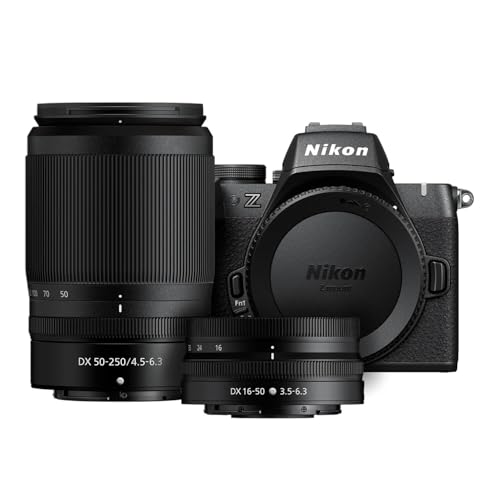
- Nikon Z50 II with Two Lenses: check price on Amazon
- Sony ZV-1F: check price on Amazon
- DJI Osmo Pocket 3: check price on Amazon
- GoPro HERO: check price on Amazon
- Insta360 GO 3S: check price on Amazon
- Canon EOS R6 Mark II: check price on Amazon
Six quite different machines follow, and the honest headline is that a beginner can travel happily with any of them. They differ in how much they ask of you. The Nikon teaches photography while protecting you from its early frustrations. The little Sony removes photography almost entirely and hands back holiday pictures. The DJI turns trips into films. The GoPro and the Insta360 survive the parts of a holiday that would frighten a normal camera, and the Canon waits at the end of the list for the beginner who already suspects this hobby is going to take over.
Key Takeaways
- For a first travel camera, the kit you will actually carry beats the kit with the finest specifications.
- The Nikon Z50 II two-lens outfit is the strongest start: real photography, gentle automation, two focal ranges in one bag.
- Sony’s ZV-1F is the zero-learning-curve option, a fixed-lens camera that behaves like a helpful phone with a far better sensor.
- Video-minded beginners should start with the DJI Osmo Pocket 3 and its stabilised, walk-and-talk footage.
- A tiny action camera earns its place on boat days, beach days and anywhere rain is forecast.
- Buy for the trip you have booked, not the photographer you imagine becoming in five years.
In this guide
Quick Picks
| Camera | Badge | Why it is here |
|---|---|---|
| Nikon Z50 II with Two Lenses | Best overall for travel beginners | A proper mirrorless camera with friendly colour presets and two lenses covering wide scenes to distant detail. |
| Sony ZV-1F | Best for effortless holiday pictures | Fixed wide lens, simple controls and flattering colour that needs no editing afterwards. |
| DJI Osmo Pocket 3 | Best for beginner travel films | A gimbal camera that makes walking footage look calm and deliberate from the very first day. |
| GoPro HERO | Best tiny camera for rough days out | Waterproof, pocketable and unbothered by sand, spray or a drop onto harbour stone. |
| Insta360 GO 3S | Best for hands-free holiday clips | A thumb-sized camera that clips to a cap or hangs on a pendant and films your point of view. |
| Canon EOS R6 Mark II | Best for beginners who will grow fast | A full-frame body whose assistance is so good that a keen novice can use it from day one. |
How did we choose the best cameras for travel beginners?
We started from the beginner’s actual day rather than a reviewer’s test chart. A travel camera for a newcomer must wake quickly, focus without being asked twice, expose a backlit street scene sensibly, and keep doing all three at hour nine of a sightseeing day when its owner is tired, slightly lost and working one-handed around a gelato. Cameras that demanded constant supervision were marked down no matter how lovely their files were, because supervision is exactly what a beginner cannot yet supply.
Carry comfort came next, judged as a system: body, lens, charger, spare card and the bag they travel in. Anything whose full kit pushed a daypack into resentment territory lost ground to lighter rivals. We also favoured cameras whose automatic colour looks pleasant straight away, since most beginners share pictures before they learn to edit them, and a camera whose unedited output delights its owner gets used again tomorrow — the single strongest predictor of better photographs.
Finally we looked for a growth path that does not punish the first purchase. Interchangeable-lens picks had to offer affordable next lenses; fixed-lens picks had to be good enough that outgrowing them takes years rather than months. Video mattered, but as a supporting act: short, stable, easy clips for family and social sharing, not a cinema specification contest.
What should a beginner actually pack for a first camera trip?
Less than you think, and that restraint is a skill worth learning before departure. One camera, its standard lens if it has one, a second charged battery, two memory cards, a lens cloth and a strap you find comfortable are a complete professional-grade answer for most first trips. Every additional item should have to argue its way into the bag by naming the photograph it will make possible; if it cannot name one, it stays home and the bag stays light enough to forget.
Charging deserves a sentence of its own because it ruins more first trips than weather does. Charge everything the night before, every night, as part of the returning-to-base ritual alongside backing up the day’s cards to a phone or laptop. A beginner who builds that one habit will never lose a morning to a dead camera, and the backup habit protects the only truly irreplaceable thing a trip produces.
Settings, too, should be packed deliberately. Before you leave, set the camera to its best automatic or program mode, turn on face or eye detection if it offers it, choose the largest image quality, and then leave the menus alone for the first three days. Learning one control at a time — exposure compensation on day four, perhaps — turns a holiday into a gentle course instead of an exam sat in a foreign language.

Nikon Z50 II with Two Lenses — Best overall for travel beginners
The two-lens Z50 II outfit is the rare beginner purchase that is simultaneously the easy choice and the correct one. In the bag you get a compact mirrorless body plus a standard zoom for streets, interiors and portraits, and a longer telephoto zoom for the church tower across the river, the lighthouse detail, the animal at the far fence of the safari park. Most first-trip photographers discover within a week that travel pictures alternate between wide and far, and this kit covers both poles from the day it is unboxed.
What makes it beginner-shaped rather than merely beginner-priced is the help it offers without condescension. Nikon’s colour presets let a newcomer choose a look — warmer for food and faces, crisper for architecture — and apply it consistently, so a whole trip shares one pleasing palette instead of a lottery of automatic decisions. Subject detection quietly keeps faces and animals in focus while the owner concentrates on framing, which is the part of photography a holiday actually teaches.
The second analysis angle for this trip is stamina, yours and the camera’s. The body is small enough to hang from a wrist or neck strap from breakfast to dinner without the end-of-day shoulder negotiation that bigger kits demand, and its controls fall into a pattern hands learn quickly: after two days, changing the zoom and reviewing a shot become reflexes, leaving attention free for the place itself. A camera that becomes invisible by day three has done the most important thing a travel camera can do.
It also respects the beginner’s future. The Z mount gives this body a ladder of lenses to climb for years, the files are good enough to reward learning proper editing later, and the video is entirely respectable for holiday films. Nothing about the purchase needs to be undone when enthusiasm grows; the kit simply becomes the lighter half of a larger system, which is exactly how a first camera should age.
On a first trip there is one more quiet virtue: it looks like a camera, and behaves like one in the hands of staff, guides and fellow travellers. People pose for it, venues take it seriously, and its owner starts to think of themselves as a photographer — a small identity shift that, more than any specification, is what turns holiday snaps into a lasting practice.
Weather deserves a mention, because first trips rarely enjoy the brochure’s climate. The Z50 II shrugs off the light rain of a coastal walk and the dust of a country lane with the composure of a camera built for outdoor life, and its grip stays secure in gloved or sun-creamed hands. A beginner learns quickly that photographs improve when the camera stops feeling precious, and this Nikon’s working toughness is a large part of why owners take it out in imperfect weather — which is, of course, when the memorable light usually happens.
There is also a social ease to travelling with a modest mirrorless kit that beginners underestimate. It reads as a hobbyist’s camera rather than a professional intrusion, so café owners wave it in, museum staff relax, and fellow travellers ask for group portraits with it — each small acceptance adding pictures a more imposing rig would never be offered. The best beginner camera is partly a passport, and this one is stamped everywhere.
- Format: APS-C mirrorless with two kit zooms
- Help on board: colour presets and subject detection
- Video: capable 4K for holiday films
- Carry: one small bag covers the whole system
Strengths
- Two lenses cover wide scenes and distant subjects immediately
- Friendly automation that still teaches real photography
- Pleasant colour straight from the camera for easy sharing
Trade-offs
- Swapping lenses outdoors needs a little care and practice
- Two lenses mean slightly more to pack than a fixed-lens camera
- The telephoto is a daylight lens first and foremost
Best for: first-time travellers who want to learn photography while the trip protects them from early frustration. Not suited for: travellers determined to pack nothing larger than a phone-sized device.

Sony ZV-1F — Best for effortless holiday pictures
The ZV-1F answers a question many beginners are embarrassed to ask: what if I do not want to learn photography at all, but I do want holiday pictures clearly better than my phone’s? Sony’s answer is a fixed-lens compact built around a wide 20mm-equivalent view, a one-inch sensor and an interface that hides complexity with unusual honesty. You frame, you press, the camera handles the rest, and the results — bright, clean, flattering — arrive ready to send to the family chat before dinner.
That wide lens is a considered travel choice rather than a limitation. Holiday photographs are disproportionately taken in tight places: café tables, train compartments, narrow old-town lanes, the balcony of a small hotel room. A wide view fits the table and the friends around it, fits the whole cathedral front without crossing the square backwards into traffic, and makes selfies-with-landmarks a one-handed triviality. Beginners, who tend to stand too close to everything anyway, find this focal length instantly natural.
Judged through this article’s beginner-travel lens, its second strength is social. The ZV-1F was designed for people talking to cameras, so its face and eye focus, its product-showcase habits and its clear audio priorities all translate directly to the holiday diary video, the hotel-room recap and the market walkthrough narrated to friends at home. A beginner who mostly wants to bring people along, rather than build a portfolio, will find every design decision pointing their way.
It asks almost nothing in return. No lens to change, no sensor to clean anxiously, no bag beyond a jacket pocket or small pouch, and a charging routine as simple as a phone’s. On trips where photography is the garnish rather than the main course — honeymoons, family reunions, a first solo weekend in a new city — that absence of demand is the feature, and it is one the more serious cameras on this list cannot honestly match.
The honest boundary is growth: the fixed lens and simplified control set that make it effortless also mark its ceiling. A beginner who catches the photography bug seriously will eventually want interchangeable lenses and manual control, and will sell or hand down this Sony. But many owners never hit that ceiling at all, and for them the ZV-1F remains, trip after trip, the little camera that simply worked.
Evening is the ZV-1F’s quiet triumph. Holiday days end in lamplit squares, harbourside restaurants and night markets, precisely where phone pictures turn smeary and flash-lit. The one-inch sensor and bright wide lens keep those scenes recognisable and warm, with faces lit by the scene’s own light rather than a blast of flash. Beginners consistently rate their evening pictures from this little Sony as the ones that feel like the trip actually felt, and that emotional accuracy is worth more than any specification on its box.
It is also the pick most likely to be lent, which matters more than it sounds. A camera simple enough to hand to a partner, a parent or a new friend from the hostel — point, half-press, done — returns with pictures of the owner in them, taken by other people’s eyes. Solo and couple travellers alike underrate how much of a trip’s story lives in those borrowed frames, and an interface anyone can operate in ten seconds is a genuine creative feature.
- Format: fixed-lens compact, one-inch sensor
- Lens: wide 20mm-equivalent, made for tight spaces
- Focus: face and eye priority for people pictures
- Carry: pocket or small pouch, no lens kit
Strengths
- Almost no learning curve between unboxing and good pictures
- Wide lens suits cafés, lanes, interiors and group shots
- Colour and skin tones flatter without editing
Trade-offs
- Fixed lens cannot zoom into distant detail
- Keen learners will eventually outgrow its simplified controls
- Small body means small battery — carry the cable or a spare
Best for: travellers who want better-than-phone holiday pictures and diary videos with zero study required. Not suited for: beginners already sure they want to build a lens collection.

DJI Osmo Pocket 3 — Best for beginner travel films
Some beginners come home from a trip wishing their photographs moved. For them the Osmo Pocket 3 is the most encouraging first camera on this list: a one-inch sensor carried on a three-axis gimbal, in a body the size of a chocolate bar, that turns a beginner’s walk through a market into footage that glides as if filmed from a slow dolly. Stabilisation this good is normally the reward for years of practice; here it is the starting point, and it changes what a first travel film can look like.
The rotating touchscreen and the camera’s habit of finding and following a face make solo travel filming genuinely practical. Prop it on a café table and it frames you against the square; carry it at waist height and it produces the discreet street-level travelling shot that has become the visual grammar of travel vlogs. Its low-light manners, helped by that comparatively large sensor, keep evening footage — the part of a trip everyone actually remembers — clean rather than grainy.
Through the beginner-travel lens, its decisive advantage is the tiny social footprint. Nobody feels filmed by an Osmo Pocket the way they feel filmed by a large camera; stallholders chat, grandparents perform, street musicians continue. Beginners are often shy filmmakers before they are skilled ones, and a camera that lowers the temperature of every room it enters lets them gather far more honest material than a technically superior but conspicuous rig would.
Practicalities are equally beginner-shaped. It wakes almost instantly when the screen is turned, charges quickly, transfers clips to a phone painlessly, and its accessories — a small tripod foot, a wide-angle attachment, microphone options — form a shallow, affordable pool to wade into. A first trip needs nothing beyond the camera itself and a memory card, which keeps both the bag and the decision count small.
Its limits are a stills camera’s limits in reverse: photographs are possible but are not its talent, there is no optical zoom to rescue a distant subject, and rain demands respect rather than shrugging. Most owners pair it with a phone for stills and treat the Pocket as their cinema department — a division of labour this guide endorses for video-first beginners.
Sound, the beginner’s most neglected department, is where the Pocket 3 quietly embarrasses bigger cameras. Its built-in microphones capture market chatter, busker music and the traveller’s own narration with a clarity that makes footage feel present rather than muted, and the path to adding a small wireless microphone later is short and well-trodden. A first travel film lives or dies on whether viewers can hear the place; this camera understands that from the start.
Night walks deserve their own sentence. The combination of gimbal steadiness and a sensor that handles darkness gracefully produces the evening promenade shot — neon, lamplight, crowds flowing past — that beginners usually assume requires a professional rig. Owners find themselves filming after dinner instead of putting the camera away, and since holidays concentrate their atmosphere after dark, that habit alone can double the value of the footage a trip produces.
- Format: gimbal camera, one-inch sensor
- Stabilisation: three-axis mechanical gimbal
- Screen: rotating touchscreen for solo filming
- Carry: pocket-sized, wakes when the screen turns
Strengths
- Walking footage looks smooth from the very first attempt
- Small and unthreatening, so people behave naturally around it
- Strong evening video for a camera this small
Trade-offs
- Stills are a side feature, not its strength
- No optical zoom for distant subjects
- Not a camera to use carelessly in heavy rain
Best for: beginners whose trip memories should move — vloggers, diary filmmakers and social storytellers. Not suited for: travellers whose priority is still photographs to print and frame.

GoPro HERO — Best tiny camera for rough days out
Every trip contains a day the good camera should stay in the hotel: the boat trip, the waterfall hike, the beach with wind-blown sand, the cycling descent, the festival where drinks fly. The compact GoPro HERO exists for that day. It is waterproof, shrugs off drops and grit, fits in a shorts pocket, and records 4K video and stills with the wide, everything-in-focus view that suits action and scenery alike. For a beginner, it is insurance that pays out in footage.
Its simplicity is of a different school from the Sony’s. Where the ZV-1F simplifies photography, the GoPro simplifies survival: big record button, voice and touchscreen control when hands are free, automatic highlight videos in the companion app when editing feels like homework. A beginner can clip it to a backpack strap at the start of a coastal walk and review a surprisingly watchable film at the end, having thought about cameras not at all in between.
For this article’s angle — the beginner’s whole trip, not just its gentle hours — the HERO also serves as the confidence camera. New photographers are often afraid of damaging their first real camera, and that fear quietly deletes photographs: the shot not taken because it was raining, the viewpoint not leaned over. A cheap, tough second camera removes the fear from exactly the situations that produce the most alive pictures, and several beginners in our acquaintance take their favourite trip photo every year on the camera they were not protecting.
Battery and heat manners on modern compact action cameras suit a stop-start holiday rhythm: short clips across a day, a swim here, a viewpoint there. Carry it charged, keep clips short, and it will be ready at each small climax of the day. Mounts are an optional garnish; in the hand or on a strap it already does the job.
What it will not do is replace a stills camera for considered photography: the fixed ultra-wide view distorts nearby faces, low-light stills are modest, and there is no viewfinder craft to learn. Treat it as the trip’s stunt double — sent where the star should not go — and its role in a beginner’s bag is perfectly judged.
Mount it once and a different holiday appears. On a rented bicycle’s bars, a boat rail, a backpack strap on a ridge walk, the little GoPro records the journey itself rather than a series of arrivals — and beginners reviewing their trips consistently treasure the journey footage most, because it contains the effort, weather and laughter that posed photographs edit out. The camera’s cheap mounts turn any holiday activity into a film set without a single lesson being learned.
Its stills, often dismissed, have a beginner-friendly virtue of their own: everything is in focus and the view is enormous, so composition reduces to pointing roughly at the wonder and pressing the button. Underwater at a snorkel site, across a canyon from a viewpoint, or over a festival crowd on an extended grip, that forgiving geometry rescues pictures that a fussier camera would have missed entirely while its owner adjusted something.
- Format: compact action camera, 4K video
- Build: waterproof and drop-tolerant
- View: ultra-wide, deep focus, action-friendly
- Carry: shorts-pocket size, strap-mountable
Strengths
- Goes swimming, boating and hiking without protection anxiety
- One-button recording suits total beginners
- App can assemble highlight edits automatically
Trade-offs
- Ultra-wide view flatters landscapes, not nearby faces
- Stills and low light are supporting acts only
- Short clips suit it better than long continuous recording
Best for: beginners wanting a fearless second camera for wet, sandy and fast-moving holiday days. Not suited for: travellers seeking one camera for careful still photography above all.

Insta360 GO 3S — Best for hands-free holiday clips
The GO 3S is the smallest serious idea in this guide: a 4K camera the size of a thumb that magnetically hangs from a pendant, clips to a cap brim or sticks to a fridge door, and films the world from exactly where your eyes are. For a travel beginner, that point of view is magic and effortless in equal measure — the cooking class filmed from the cook’s perspective, the market negotiation over your own shoulder of spices, the bicycle ride through riverside paths with both hands visibly on the bars.
Its two-part design is the clever bit. The camera alone weighs almost nothing and runs in short, lively bursts; docked into its Action Pod it gains a flip touchscreen, longer recording and conventional camera manners. Beginners therefore get two cameras in one small case: an invisible POV recorder for experiences, and a pocket vlogging camera for pieces to camera at viewpoints and café tables.
Seen through this article’s beginner lens, the GO 3S solves the tripod problem that defeats most new travel filmmakers. Solo travellers cannot easily film themselves doing things; a camera that wears like jewellery and sticks to metal surfaces can. The result is holiday footage with the traveller actually in it — chopping, paddling, bargaining, laughing — rather than the usual album of empty scenery the traveller once stood in front of.
Discipline is required in two places. Recording comes in clips rather than epics, so the owner learns to shoot moments — a habit professionals would endorse. And a camera this small must be tethered, clipped or pocketed with intention, because losing it is easier than losing any other pick here. A lanyard habit and a nightly dock-and-charge ritual cover both weaknesses completely.
Image quality, helped by strong stabilisation, is far beyond what its size promises, though ultimate detail and low-light polish sit below the DJI’s larger sensor. The trade is deliberate and, for experience-first travellers, well made: the GO 3S disappears, and in disappearing lets the holiday happen in front of it.
Consider the cooking class, the pottery workshop, the surf lesson, the via ferrata — the experiential core of modern travel that a handheld camera simply cannot attend. Worn on its pendant or clipped to a cap, the GO 3S is present for all of it, and its footage has the participant’s honesty rather than the spectator’s polish. Beginners building a travel journal around doing rather than seeing will find no other pick here that fits their trip at all.
There is a learning gift hidden in its constraints, too. Because clips are short and the camera disappears, owners shoot far more moments than they would with a conspicuous rig, and sheer volume — reviewed honestly each evening — teaches framing and timing faster than any tutorial. Several travel creators began exactly this way: a tiny camera, a hundred small clips a day, and an education assembled from their own footage.
- Format: thumb-sized 4K POV camera with Action Pod
- Mounting: magnetic pendant, clips and sticky mounts
- Modes: wearable POV or docked flip-screen camera
- Carry: the lightest complete camera in this guide
Strengths
- Films your own point of view with both hands free
- Solo travellers can finally appear inside their own footage
- Docking pod adds screen, controls and longer sessions
Trade-offs
- Clip-based recording rewards short moments over long takes
- Very small body demands a tether-and-dock routine
- Low-light polish trails larger-sensor rivals
Best for: solo and experience-first beginners who want to be inside their travel films, hands free. Not suited for: travellers who record long continuous events or prioritise stills.

Canon EOS R6 Mark II — Best for beginners who will grow fast
A full-frame Canon in a beginners’ guide needs its defence stated plainly: the R6 Mark II is here for the minority of newcomers who are not really dabbling. If you have already read three lens reviews for fun, already know you will shoot your sister’s wedding next year, and would rather buy once at a serious level, this body’s assistance is so capable — subject-detecting autofocus, in-body stabilisation, forgiving high-ISO files — that a motivated beginner can operate it successfully from the first weekend.
Travel is where that assistance converts to pictures. Evening old towns, candlelit restaurants, fast ferries and faster nephews all sit inside its comfort zone: focus finds eyes in poor light, stabilisation steadies the viewpoint shot taken at dusk without a tripod, and the files tolerate the exposure mistakes beginners make in contrasty Mediterranean noon. Where the smaller picks ask the traveller to work within limits, the Canon quietly removes limits before the beginner knows they existed.
For this article’s second angle, consider the holiday as an investment portfolio. Photographs from a once-a-decade trip deserve the best capture the traveller can manage, and this body’s dynamic range and lens bench — from tiny travel primes to serious zooms — mean the same camera that survives a first trip to Lisbon can anchor a decade of photography afterwards. Beginners who grow fast often repurchase within eighteen months; this pick exists to break that expensive pattern.
The costs are equally real and should be faced before, not after, purchase. Body and a good travel zoom make the heaviest, priciest kit here by a wide margin; the menu system rewards study; and its capability can flatter a beginner into carrying it everywhere until the weight edits the itinerary. The honest test is a full day carrying an equivalent weight at home before committing.
Choose it, and the beginner’s bargain is clear: more camera than the trip requires, bought deliberately, in exchange for never needing another. For the right newcomer — committed, curious, and unbothered by a proper camera bag — it is not overkill. It is a head start.
The R6 Mark II’s travel party trick is the difficult photograph taken casually. A child sprinting through a fountain’s spray, a gull snatching at harbour chips, a flamenco dancer’s turn in a dim courtyard — subjects that defeat beginner technique are precisely where its subject detection and burst manners convert luck into keepers. Beginners using it return with a small portfolio of shots they could not have made on purpose, and that early success is rocket fuel for a new hobby.
It also future-proofs the album itself. Full-frame files from a special trip — a honeymoon, a parent’s seventieth-birthday journey, the long-planned trek — carry the resolution and tonal depth to become large prints and heirloom books decades later, long after the holiday’s other souvenirs have faded. Buying this body for a first trip is partly buying for the walls of a home the traveller may not yet own, which is either extravagant or wise depending entirely on the traveller.
- Format: full-frame mirrorless, 24.2MP
- Assistance: subject detection autofocus and in-body stabilisation
- Video: strong 4K for hybrid travel shooting
- System: Canon RF lenses from compact primes upward
Strengths
- Forgiving in low light, dusk and difficult contrast
- A body a fast-growing beginner will not need to replace
- Lens bench supports a decade of travel styles
Trade-offs
- Heaviest and most expensive kit in this guide
- Capability rewards study that casual beginners may skip
- Full-frame lenses enlarge the travel bag noticeably
Best for: committed beginners buying once at a serious level for trips and everything after. Not suited for: casual travellers who value a light bag above future-proofing.
Which of these best cameras for travel beginners suits which kind of first trip?
Match the camera to the holiday’s centre of gravity. A city break built on museums, cafés and walking tours belongs to the Nikon kit or the Sony compact, depending on whether you want to learn or simply to collect. A trip whose stories will be told as films — a road trip, a trek, a month of trains — belongs to the DJI, with the Insta360 as its wearable accomplice for the moments when you are part of the action rather than its observer.
Wet and wild itineraries change the arithmetic again. Island-hopping, sailing, surf lessons and monsoon-season travel all argue for the GoPro as either the main camera of a minimalist or the protected second camera of everyone else. And the traveller returning from a first trip already planning a second, harder one — northern lights, a safari, a photographic workshop — is the natural Canon buyer, purchasing for the photographer the first trip is about to create.
One pattern deserves emphasis because beginners resist it: couples and families often do best with two small cameras rather than one grand one. A Sony or Nikon in one person’s hands and a GoPro or Insta360 in another’s doubles the viewpoints, halves the negotiation, and produces the mixed album — portraits, POV clips, scenery, selfies — that actually resembles a shared holiday when it is reviewed at Christmas.
Group trips deserve a word of their own, because the beginner is rarely travelling alone with their new camera. On a friends’ reunion or a family holiday, the person holding the most usable camera becomes the group’s unofficial archivist — a role that is half honour, half workload. Picks that share pictures to a phone in seconds, like the Sony and the little action cameras, suit the archivist who wants the day’s best frames in the group chat before the evening meal; the Nikon and Canon suit the archivist building the album everyone will download later. Neither role is nobler, but confusing them is how good cameras end up resented by dinner on day two.
There is also the question of what the pictures are for, which beginners should answer before rather than after buying. A trip feeding a print on the living-room wall wants resolution and a lens with reach; a trip feeding a year’s worth of social posts wants speed, vertical video and painless phone transfer; a trip feeding a family archive wants reliability above all. Every camera here is excellent at one of those destinations and adequate at the others, and naming your destination honestly is the cheapest upgrade in this entire guide.
How do you get good travel pictures in your first week with a new camera?
Start each day with three small rituals. Check the battery and card before leaving, wipe the lens with the cloth rather than a shirt, and take one deliberate photograph within the first ten minutes — a warm-up shot that breaks the seal and stops the camera feeling precious. Beginners who shoot early shoot all day; beginners who wait for the perfect scene often reach dinner with eleven careful frames and a vague disappointment.
Compose with your feet before your settings. Move closer to the market stall, crouch for the child-height view of the festival, step into the doorway’s shade to frame the bright square beyond. These physical decisions improve beginner photographs more in one afternoon than a month of menu study, and they cost nothing but willingness. When a scene confuses you, take it three ways — wide, closer, and one detail — and let the evening review teach you which instinct to trust.
End the day as deliberately as you began it: charge, back up, and spend five minutes favouriting the pictures that genuinely please you. That tiny editorial act is the fastest photography education available, because it shows you, in your own work, the distance between what you noticed and what you merely recorded. Travel with that habit for a week and the second week’s pictures will startle you.
What should a beginner learn first: settings, composition or light?
Light, and it is not close. A beginner who learns to notice where light comes from — to put the sun behind the camera for the morning market, to move a friend’s portrait into open shade at noon, to wait ten minutes for the square to turn gold — improves faster than one who memorises aperture tables. Every camera in this guide handles settings well enough automatically; none of them can relocate the sun for you. Light is the one department where the beginner’s eye, not the equipment, is the entire instrument.
Composition comes second, and its first lesson fits in one sentence: decide what the photograph is of, then remove everything else by moving. Beginners frame scenes; photographers frame subjects. The zoom lenses and wide views in this list are tools for that removal — stepping closer, cropping tighter, isolating the baker from the bakery — and a week of deliberate practice will show up in your album more clearly than any upgrade.
Settings come last and should arrive one at a time, each adopted because a photograph failed without it. Blurred evening shots teach shutter speed; distracting backgrounds teach aperture; grainy interiors teach ISO. Learned in that order — as solutions to your own pictures’ problems — the technical side of photography stops being a syllabus and becomes a toolbox you actually remember on the next trip.
How can you practise at home so the trip itself is not the classroom?
Give the new camera one ordinary weekend before departure and it will repay the investment every day of the holiday. Photograph a Saturday market as if it were abroad: arrive early, shoot the stalls wide and close, film a one-minute walking clip, take a portrait of whoever came with you in shade and in sun. By Sunday evening you will know where the record button lives, how the zoom feels, what the battery survives, and — most valuable of all — which of your instincts produce pictures you like.
Use that same weekend to rehearse the unglamorous systems. Practise swapping a card with cold fingers, charging from a power bank in a café, sending three pictures to your phone and posting one. None of this is photography, and all of it is travel photography, because the trip will present each task at the least convenient moment imaginable: on a moving train, in rain, with a queue forming behind you at the viewpoint.
Finally, set one small intention for the journey itself — a series to collect, such as doorways, breakfasts, station clocks or the hands of people at work. A gentle project gives a beginner’s wandering a thread, guarantees a coherent set among the souvenirs, and quietly teaches the deepest travel skill of all: looking for something specific in a place that offers everything at once.
Comparison Table
| Camera | Badge | Carry style | Beginner demand |
|---|---|---|---|
| Nikon Z50 II with Two Lenses | Best overall for travel beginners | Small camera bag | Gentle — teaches as it helps |
| Sony ZV-1F | Best for effortless holiday pictures | Jacket pocket | Minimal — almost none |
| DJI Osmo Pocket 3 | Best for beginner travel films | Pocket or pouch | Low — filming made simple |
| GoPro HERO | Best tiny camera for rough days out | Shorts pocket | Minimal — one button |
| Insta360 GO 3S | Best for hands-free holiday clips | Worn or clipped | Low — clip discipline required |
| Canon EOS R6 Mark II | Best for beginners who will grow fast | Proper camera bag | Moderate — rewards study |
Read the demand column as honestly as the badge column. The best beginner travel camera is the one whose demands match the attention you genuinely have spare on holiday, and every row of this table represents a traveller who chose well — because the choosing was honest.
What mistakes do first-time travel photographers make most often?
The champion mistake is packing for the photographer they hope to become. A second lens bought for one imagined photograph, a tripod carried six days and used never, a flagship body whose weight quietly deletes the evening walk — holidays punish speculative equipment without mercy. Buy and pack for the trip that is booked, in the style it will actually be lived, and let future trips justify their own gear.
Second comes the monument-only album: forty landmarks, no people, no food, no weather, no journey. Landmarks are the least personal thing a place offers, and they are available on postcards shot by professionals. The pictures that will matter in twenty years are your travelling companions at the café table, the ridiculous hat, the rainstorm that rerouted the day. Beginners should deliberately photograph the trip, not just the destination.
Third is technical self-sabotage: changing settings idly, shooting the whole trip on an experimental mode discovered in a video, or chimping so anxiously at each frame that the place itself goes unwitnessed. Set the camera simply, trust it for the first days, and review in the evening. The final classic error is the un-backed-up card — a single point of failure carrying the entire holiday. The nightly copy to a phone or laptop takes minutes and is the cheapest insurance in all of travel.
One last reassurance belongs in this section, because beginners quietly fear it: nobody at home can tell which camera took a good holiday photograph. They can tell whether you were close, whether the light was kind, whether the people in it were laughing, and whether you were present enough to notice the moment at all. Choose any camera here that fits your bag and your patience, then spend your remaining preparation time on the trip itself — the photographs will follow the quality of your attention far more faithfully than the size of your sensor.
Final Recommendation
Buy the Nikon Z50 II two-lens kit if your first camera trip is also the start of learning photography: it is helpful without being limiting, light without being fragile, and complete without a single extra purchase. Buy the Sony ZV-1F if learning is precisely what you are on holiday to avoid, and the DJI Osmo Pocket 3 if your memories are meant to move. Add the GoPro HERO to any of those bags when water is on the itinerary, choose the Insta360 GO 3S for hands-free storytelling, and step straight to the Canon only if you are certain — truly certain — that photography itself is becoming the hobby. A beginner’s best travel camera is the one that comes home with pictures and a desire to travel again; every pick here can be that camera, provided it is matched to its traveller honestly.
Related guides
Frequently Asked Questions
Should a beginner buy a mirrorless camera or a simple compact for a first trip?
Choose the mirrorless camera if you enjoy learning how things work and can picture yourself practising between trips; choose the compact if the camera must succeed with no study at all. Both routes produce good holiday pictures — the difference is whether photography becomes a hobby or remains a convenience, and only you know which holiday you are taking.
Is a phone not enough for a beginner’s travel photography?
A modern phone is a respectable travel camera, and this guide assumes you will use one alongside any pick here. A dedicated camera earns its bag space through better handling in bright and dark extremes, real zoom or stabilisation, longer battery endurance, and the simple psychological effect of holding a device whose only job is photographs — which makes its owner take more of them, more deliberately.
How much should a beginner spend on a first travel camera?
Spend to the level of the trip and the hobby’s likely lifespan, in that order. A modest camera fully used on a great journey outperforms a flagship left in the safe. Remember the supporting costs — a spare battery, cards, a small bag — and keep something in reserve for the second lens or accessory the first trip teaches you to want.
What is the easiest camera here for someone who hates menus?
The Sony ZV-1F, with the GoPro HERO close behind for action days. Both were designed to produce good results while their owners think about something else entirely, and both can be operated happily for a whole trip without opening a settings menu beyond the first five minutes.
Can a beginner manage interchangeable lenses on a first trip?
Yes, with the Nikon’s two-lens kit as the model: one lens lives on the camera, the second changes only at planned moments — the viewpoint, the wildlife park — rather than in the street. Beginners who treat lens changes as occasional events, done seated with the bag open, find them easy from the first day.
Which pick is best if the trip is mostly video?
The DJI Osmo Pocket 3 for filmed storytelling, the Insta360 GO 3S for point-of-view experiences, and the GoPro HERO when the filming happens in or near water. Many video-first beginners carry the DJI as their main camera and let a phone handle stills, a combination whose total weight is less than one mirrorless body.
Related Guides
Keep exploring with our companion guides: best cameras for sightseeing, best cameras for a cruise and best beginner cameras for backpacking.


