reviewstook.com is reader-supported. When you buy through links on our site, we may earn an affiliate commission.
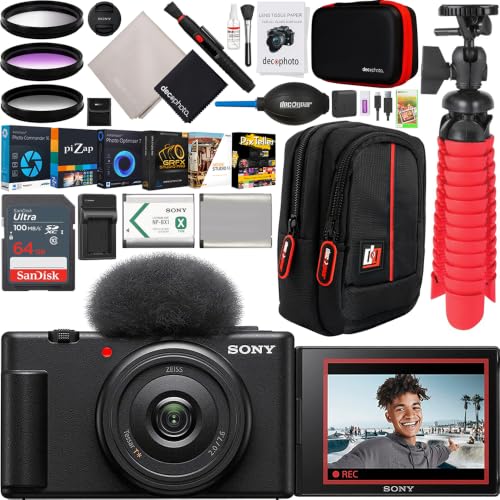
Where to buy
Five of the six cameras below link to their Amazon listings; the sixth is a much-loved compact discussed without a link because it sits outside the pool verified for this guide, and the big electronics retailers carry it. If you are buying your first real camera, buy it with a memory card, a small tripod or grip, and a case in the same order, because a camera that cannot be carried safely or stood up on a table will spend its first month at home, and the first month is when habits form.
- Sony ZV-1F: check price on Amazon
- Nikon Z50 II with Two Lenses: check price on Amazon
- DJI Osmo Pocket 3: check price on Amazon
- Insta360 GO 3S: check price on Amazon
- GoPro Hero: check price on Amazon
- Canon PowerShot G7 X-class compact: available from electronics retailers (prose-only pick in this guide)
Somewhere between the typo and the truth, this search tells a whole story. Somebody typed “phots” in a hurry, probably on a phone, probably because they want one camera that films the video and takes the photos for a life that gets posted: the birthday and the birthday reel, the product and the product demo, the trip and the trip album. The best cameras for filming and phots, read generously, are the best cameras for a beginner who does both, shoots stills and films clips, and publishes them to the same feeds, often on the same day, without a crew, a studio or a film-school vocabulary.
That beginner brief rearranges the usual priorities completely. Ease outranks power, because a setting never found might as well not exist. Forgiveness outranks precision, because the first hundred videos will be filmed in kitchens, bedrooms and cafés whose light nobody chose. Size outranks almost everything, because the camera that fits the jacket pocket attends the moment and the camera that needs its own bag attends the cupboard. And the journey from camera to phone matters enormously, because a photograph that takes four cables and a laptop to publish is a photograph that stays unpublished.
So this guide ranks six cameras the way a first year with them actually feels. How quickly does a complete beginner get a good-looking clip and a good-looking photograph out of each one? How kindly does each treat shaky hands, mixed light and forgotten settings? How naturally does each feed the social platforms, vertical video, quick transfers, thumbnails that match the video they sit on? The professional bodies in our neighbouring guides are magnificent, and mostly wrong for this question; this is the guide for the person the typo belongs to, and it takes that person seriously.
One promise before the rankings: nothing here requires you to become a camera person. Every pick below can be used well on its automatic settings while its owner learns, and each offers a next step to grow into rather than a cliff to fall off. The goal is a camera that makes your filming and your photos look like you meant them, from the first week onward.
Key Takeaways
- For a first camera that films and photographs, ease and forgiveness beat raw power every time.
- The Sony ZV-1F is the simplest complete answer for creators filming themselves.
- Nikon’s two-lens Z50 II kit is the beginner’s growth path in one box.
- The Pocket 3 makes shaky beginners look like they hired a camera operator.
- The tiny GO 3S films the hands-free moments no held camera can reach.
- Buy the card, the little tripod and the case with the camera, not after the first mishap.
- Vertical video and painless phone transfer matter more to social posting than resolution does.
In this guide
Quick Picks
| Camera | Badge | Why it is here |
|---|---|---|
| Sony ZV-1F | Best First Creator Camera | Made for people filming themselves, photographs included. |
| Nikon Z50 II with Two Lenses | Best Beginner Growth Kit | Two lenses teach framing while the body stays friendly. |
| DJI Osmo Pocket 3 | Best for Smooth Video | A pocket gimbal that hides a beginner’s shaky hands. |
| Insta360 GO 3S | Best Wearable Camera | Thumb-sized filming for hands-free days and POV clips. |
| GoPro Hero | Best Tough Starter | Waterproof, simple and unbothered by drops, sand or rain. |
| Canon PowerShot G7 X-Class Compact | Best Pocket Photo-First Pick | A beloved pocket compact for photos that also films. |
How did we choose cameras for filming and photos together?
We judged these cameras as a beginner’s first year would judge them, not as a laboratory would. The first test was the ten-minute test: hand the camera to someone who has never owned one, and see whether a decent photograph and a decent clip exist ten minutes later without a manual or a video tutorial. Cameras that demanded configuration before kindness fell down the order, however powerful they later proved.
The second test was forgiveness. Beginners film in bad light with shaky hands and photograph against windows, under yellow kitchen bulbs, at arm’s length with the wrong settings left over from yesterday. We weighted autofocus that rescues faces, automatic exposure with good judgement, stabilisation that hides the tremor, and colour that flatters people without an editing session, because a beginner’s audience judges the result, not the difficulty.
The third test was the feed itself. Social posting runs on vertical video, quick phone transfers, stills that match the clips they accompany, and batteries that survive an outing. Every pick was checked against that reality. Finally we asked the growth question: when this beginner is better in a year, does the camera grow with them, through lenses, settings and accessories, or does it become the ceiling? Both answers can be right, the simple camera that stays simple has its own honour, but the buyer should know which they are choosing.
The picks in detail

Sony ZV-1F — Best First Creator Camera
The ZV-1F was designed by people who watched thousands of beginners film themselves and catalogued every stumble. The lens is wide enough that a desk, a kitchen counter or a market stall frames itself at arm’s length. The autofocus finds your eyes and stays there while you talk, gesture and hold things up. A dedicated button blurs the background for the portrait look without explaining aperture to anyone. The colour is tuned so skin looks like skin under ordinary room light, which is where its owners live.
Photographs come from the same one-inch sensor, and they are honest, pleasant photographs, a clear step above a phone in the indoor light where phones smear detail and flatten faces. The stills and the clips match in colour, so the photo you post to announce the video looks like the video, a small professional touch that audiences feel without naming. A directional microphone built into the body respects the beginner’s voice better than most camera microphones bother to.
Its limits are the price of its simplicity. The lens never changes and never zooms far, the battery is a session battery rather than a day battery, and a growing creator will eventually want the interchangeable-lens world this camera politely declines to join. As a first filming-and-photos camera for someone whose stage is a room and whose audience is a feed, it is the most complete answer in this guide.
- Form: fixed-lens compact, one-inch sensor
- Lens: wide and bright, arm’s-length framing
- Focus: eye autofocus with product showcase mode
- Colour: flattering skin tones, minimal editing
- Role: desk creators, sellers, vlog beginners
Strengths
- Ten-minute test passed with room to spare.
- Stills and clips share one flattering look.
- Background-blur button teaches nothing, delivers anyway.
Trade-offs
- Fixed lens, fixed framing, no telephoto reach.
- Battery suits sessions, not full days out.
- No upgrade path within the same camera.
Best for: new creators filming themselves at a desk, stall or kitchen table while photographing the same subjects. Not suited for: beginners planning sports, wildlife or any subject that stays far away.

Nikon Z50 II with Two Lenses — Best Beginner Growth Kit
Most beginners are told to buy a body and then discover that lenses are a second, larger education. This kit answers the whole question in one box: Nikon’s friendly APS-C body with a standard zoom for everyday framing and a longer zoom for the zoo, the school play and the sideline. Swapping between the two teaches the single most valuable beginner lesson, that focal length is a creative choice, faster than any tutorial, because the same scene photographed both ways explains itself.
The body beneath the lenses is a generous teacher. Nikon’s colour presets let a beginner apply a look to photographs and video alike and see it live, the subject recognition finds faces and eyes without being configured, and the handling, grip, dials, touchscreen, feels like a smaller version of a professional camera rather than a toy. Photographs have the depth and low-light ability that mark the step up from a phone, and the 4K video is clean and honest.
Growth is this pick’s argument. The Z mount opens Nikon’s lens catalogue as ambition and budget allow, the body’s manual controls are all present when curiosity arrives, and nothing about the kit needs replacing when the beginner stops being one. Its costs are size, it is a camera bag item rather than a pocket item, and the two-lens habit of carrying both. For the beginner who suspects, correctly, that this hobby is going to take, it is the wisest first purchase here.
- Form: APS-C mirrorless with two zooms
- Kit: everyday zoom plus telephoto zoom
- Colour: live presets across stills and video
- Focus: face and eye recognition built in
- Role: learning photographers and filming families
Strengths
- Two lenses teach framing by experience.
- A real camera’s controls, kindly arranged.
- Nothing in the kit becomes obsolete as you improve.
Trade-offs
- Bag-sized, not pocket-sized.
- Two lenses means choosing and carrying.
- Spares and a bag add to the first order.
Best for: beginners who want to learn photography properly while filming family and travel. Not suited for: anyone whose camera must vanish into a jacket pocket.

DJI Osmo Pocket 3 — Best for Smooth Video
Every beginner’s first videos share one flaw that no setting fixes: they shake. Walking footage judders, panning footage lurches, and the audience feels seasick before the subject appears. The Pocket 3 abolishes the problem mechanically, floating its one-inch sensor on a three-axis gimbal, so a beginner’s walk through a market looks like a tracking shot and a turn of the wrist becomes a smooth reveal. For filming, it is close to cheating, and beginners should cheat exactly here.
It photographs too, respectably, and its rotating screen is a small stroke of social-media genius: twist it and the camera is framing vertical video for the feeds; twist it back for horizontal. Subject tracking follows a face or a dog while its owner narrates, and the whole instrument is the size of a chocolate bar, which means it attends everything. Its stills will not trouble the Nikon kit above, but its video will embarrass cameras three times its price in a beginner’s hands.
The compromises are a fixed wide view, a photographer’s controls reduced to essentials, and a gimbal’s moving parts that deserve their case and a little respect. Battery life is good rather than endless. As the filming-first half of a beginner’s kit, especially paired with a phone’s stills while confidence grows, nothing else here comes close.
- Form: pocket gimbal camera, one-inch sensor
- Stabilisation: three-axis mechanical gimbal
- Screen: rotates between vertical and horizontal
- Tracking: faces and subjects followed automatically
- Role: travel, walks, markets, family days
Strengths
- Beginner shake simply disappears.
- Vertical video handled by a twist.
- Small enough to be present for everything.
Trade-offs
- Stills are capable, not a photographer’s tool.
- Fixed wide view, no zooming with lenses.
- Gimbal wants its case and gentle treatment.
Best for: beginners whose filming involves walking, travelling and showing places. Not suited for: beginners whose main ambition is still photography craft.

Insta360 GO 3S — Best Wearable Camera
The GO 3S is the camera on this list that changes what filming means. It weighs about as much as two coins’ worth of camera, clips to a cap, hangs from a pendant, sticks magnetically to a fridge or a lamppost, and films 4K from the wearer’s own point of view while both hands stay in the scene. For the beginner filming cooking, crafts, cycling, skating, playing with children or working with their hands, it captures the angle every other camera in this guide is structurally unable to see.
Its case is its partner: a flip-screen pod that previews, controls and charges the tiny camera, then sends it out alone for the mounted shots. Photographs are honest snapshots rather than crafted images, and that is the correct expectation; this is a filming instrument first, whose stills serve as thumbnails, references and happy accidents. Stabilisation in software smooths the head-mounted bounce that would otherwise ruin POV footage.
Battery life is the small camera’s tax, the pod extends it between mounts, and low light is where physics collects its fee from a sensor this small. Audio is serviceable for narration near the camera and modest beyond it. None of that dents its unique offer: for the beginner whose life is the subject and whose hands are busy living it, the GO 3S is the only pick that films the life from inside it.
- Form: thumb-sized wearable camera with pod
- Mounting: magnetic, pendant, clip and stick-on
- Video: 4K POV with strong stabilisation
- Stills: snapshot quality, thumbnail-friendly
- Role: cooking, crafts, sport, hands-free days
Strengths
- Films angles no held camera can reach.
- Hands stay in the scene, not on the camera.
- The pod makes a tiny camera easy to run.
Trade-offs
- Small sensor struggles after dark.
- Stills are snapshots, not crafted photographs.
- Battery life leans on the charging pod.
Best for: hands-busy beginners filming their own point of view. Not suited for: beginners wanting a traditional camera to learn photography on.

GoPro Hero — Best Tough Starter
Beginners break cameras in predictable places: the beach, the boat, the ski lift, the rainy festival, the toddler’s reach. The compact GoPro Hero is the pick that declines to care. Waterproof out of the box, small enough for any pocket, and simple enough to run with gloves or wet hands, it films 4K and photographs the day while shrugging at the conditions that send other cameras back into their bags and their owners back to their phones.
Its wide view is the action camera’s signature, whole scenes, whole groups, the rider and the landscape in one frame, and its stabilisation keeps moving footage watchable. For the beginner, the deeper virtue is psychological: a camera you are not afraid for is a camera you use boldly, held over the water, mounted on the bike, passed to the child. Bold use is where interesting filming and photographs come from, and fearlessness is this little camera’s real specification.
The trade-offs are the wide lens’s distortion at the edges, stills that are good rather than lovely, and controls simplified to the edge of bluntness. It will not teach photography like the Nikon kit or flatter a presenter like the Sony. It will survive the year, film it vividly, and be borrowed by everyone you know, which is its own kind of best.
- Form: compact waterproof action camera
- Video: 4K with electronic stabilisation
- View: very wide, whole-scene framing
- Build: waterproof without a housing
- Role: beach, bikes, boats, family rough and tumble
Strengths
- Fearless use produces the best footage.
- Waterproof from the box, no housing fuss.
- Simple enough for anyone you hand it to.
Trade-offs
- Wide lens bends edges and flattens faces close up.
- Stills are serviceable rather than beautiful.
- Controls are minimal by design.
Best for: beginners filming outdoors, water, wheels and weather. Not suited for: beginners wanting flattering portraits or a photography education.
Canon PowerShot G7 X-Class Compact — Best Pocket Photo-First Pick
A generation of creators learned filming and photography on pocket compacts of this class, and the affection was earned. A one-inch sensor behind a genuinely useful zoom, in a body that slides into a jeans pocket, with a flip screen for self-framing and colours that treat faces kindly: it is the photograph-first beginner’s camera, the one whose stills lead and whose video, perfectly capable for clips and vlogs, supports. We discuss it without a link because it sits outside this guide’s verified pool, and it remains widely available from the usual retailers.
Its teaching value is quiet but real. A zoom ring and a proper mode dial introduce the photographer’s vocabulary, aperture, shutter, sensitivity, at a pocket camera’s unintimidating scale, and its photographs reward the learning immediately. Generations of travel albums, food blogs and first channels were built on exactly this formula, and the formula has not stopped working.
Against the linked picks, its compromises are age and ecosystem: no growth path beyond itself, video features a step behind the newest creator compacts, and a battery sized for outings rather than expeditions. For the beginner whose heart says photographs first and filming second, and whose pocket must agree, it remains the class benchmark, and the second-hand market is full of them in kind condition.
- Form: pocket compact, one-inch sensor
- Lens: useful zoom range, pocketable
- Screen: flips for self-framing
- Controls: real dials at friendly scale
- Role: travel, food, everyday photo-first beginners
Strengths
- The best stills-per-pocket ratio in this guide.
- Teaches real controls without intimidation.
- A proven formula with a deep used market.
Trade-offs
- No growth path beyond the fixed lens.
- Video features trail the newest rivals.
- Discussed here without a purchase link.
Best for: photo-first beginners wanting a true pocket camera that also films well. Not suited for: beginners planning to grow into interchangeable lenses.
Comparison table
| Camera | Sensor / form | Best at | Standout | Choose it for |
|---|---|---|---|---|
| Sony ZV-1F | 1-inch compact | Filming yourself, simply | Matched stills and clips | Desk creators |
| Nikon Z50 II Two-Lens Kit | APS-C mirrorless | Learning with two zooms | Growth without replacement | Serious beginners |
| DJI Osmo Pocket 3 | 1-inch gimbal | Walking and travel video | Rotating vertical screen | Smooth-video seekers |
| Insta360 GO 3S | Wearable micro | Hands-free POV filming | Magnetic mounting | Cooks, riders, makers |
| GoPro Hero | Action compact | Water, wheels and weather | Waterproof simplicity | Outdoor beginners |
| Canon G7 X-Class Compact | 1-inch compact | Pocket photographs first | Real dials, kind colours | Photo-first beginners |
What should a beginner check before buying a first filming and photos camera?
Check where your subjects live. If they live across a desk, a kitchen or a shop counter, the compacts and the Pocket 3 frame them perfectly; if they live across a playground, a pitch or a zoo enclosure, only the Nikon kit’s longer lens reaches them, and no amount of other virtues compensates for a subject rendered as a dot. Distance is the first specification, and beginners most often buy it wrong by buying for the camera’s beauty instead of the subject’s geography.
Check the transfer path with your own phone in the shop if you can. The beginner’s publishing rhythm is film, photograph, post, today; a camera whose app pairs painlessly and sends clips and stills in seconds will be used daily, and one that fights the phone will be quietly abandoned by March. Then check the carrying truth: pocket, handbag, camera bag or neck strap, and be honest about which of those your life actually contains on the days worth filming.
Finally, check the sound. Beginners obsess over picture and post audio as an apology, yet audiences forgive a soft image far sooner than a muffled voice. Every pick here has at least a respectable built-in microphone arrangement, and several accept better ones later; whichever you choose, film one test sentence indoors and one outdoors before the return window closes, and listen on headphones.
How does a beginner actually learn to film and photograph with one camera?
Give the week a tiny assignment
Skill grows from assignments, not from ownership. Photograph one meal properly before eating it. Film one walk without stopping. Make one thirty-second video that introduces your street, your shop or your dog. Small, finishable tasks teach framing, light and nerve in days, and they produce a feed’s worth of posts while they teach, which keeps motivation fed from the same plate.
Learn light before settings
The beginner’s most valuable hour is spent learning to face subjects toward windows, to step into shade at noon, to turn a lamp on and move a chair. Light improves photographs and film more than any menu, costs nothing, and works on every camera the beginner will ever own. Settings can be learned one at a time afterward, in the order the photographs demand them.
Post the imperfect work
The feed forgives beginners everything except absence. Publish the slightly shaky market video and the slightly crooked birthday photograph, read what people actually respond to, faces, usually, and moments, always, and let the audience’s evidence, rather than the camera’s specification sheet, direct the next month’s practice. Every creator in this guide’s picks began exactly there.
Keep the camera charged and present
The beginner’s camera fails most often by being elsewhere or empty. Build the dull habits early: charge after every outing, card emptied and returned the same evening, camera living in one place by the door rather than migrating around the house. Presence is a skill, and it is the one all the others depend on.
What mistakes do first-time camera buyers make?
Buying the professional’s camera for a beginner’s life
The flagship body is a magnificent instrument that assumes an operator. In beginner hands its complexity taxes every outing until the phone quietly resumes duty, and the expensive camera becomes furniture with a lens cap. The picks in this guide are ranked by the first year, not the fifth, precisely because that story repeats so reliably.
Ignoring the cost of the kit around the camera
The camera is the ticket, not the trip. Cards, a spare battery, a small tripod, a case and, soon, a microphone ride along, and the beginner who spends every coin on the body owns an unusable fraction of a kit. Hold back a sensible share of the budget for the companions; the guide’s picks were chosen partly for how modest their companion lists are.
Filming everything and photographing nothing
New owners often film the whole day and discover at the desk that video is a commitment to watch, while the photograph they never took would have been the keeper. Practise the division early: film the journey and the process, photograph the arrival and the face. The two habits together are the entire craft this keyword asks for.
Judging the first month too harshly
Every beginner’s first month contains soft focus, crooked horizons and a video narrated by wind. These are not verdicts on the camera or the owner; they are the tuition every creator in history has paid. The cameras above were chosen to make the tuition cheap and the improvement visible, which is all a first camera owes anyone.
Final Recommendation
For most beginners behind this search, the Sony ZV-1F is the first recommendation: it films and photographs the arm’s-length world kindly, immediately, with the least to learn. Choose the Nikon two-lens kit when you know the hobby will grow and you want to learn photography properly from day one. Take the Pocket 3 if your filming walks and travels, the GO 3S if your hands are the story, the little GoPro if your life is wet and wheeled, and the pocket Canon class if photographs lead and filming follows. The typo in the keyword was an accident; the wish inside it, one friendly camera for both halves of a posted life, is exactly right.
Related guides
- Best Cameras for Photography and 4K Video: Hybrids That Do Both Properly
- Best Cameras for High Quality Photos — Dynamic Range, Lenses and Focus That Survive Enlargement
Frequently Asked Questions
Is a phone not enough for filming and photos?
For many people it genuinely is, and this guide’s picks exist for the moments it is not: indoor light that smears phone detail, subjects across a field, voices that deserve a real microphone, and days longer than a phone battery’s patience. Buy a camera for a named phone frustration and you will buy well.
Which of these is easiest for a complete beginner?
The Sony ZV-1F for filming yourself, and the DJI Osmo Pocket 3 for filming the world while moving. Both were designed to produce good results before their owners learn a single technical term, and both keep helping after the terms are learned.
Do I need to learn manual settings?
Not to begin, and not to publish happily for a long time. Learn light and framing first, on automatic, then adopt one manual idea at a time when a photograph or clip disappoints you in a way you can name. Curiosity-driven learning sticks; curriculum-driven learning, for most beginners, does not.
What about vertical video for social feeds?
It is a first-class requirement now, not a novelty. The Pocket 3 rotates its screen for it, the GO 3S reframes in its app, and every pick here can shoot vertically by turning the camera; what matters is composing for the tall frame deliberately rather than cropping a horizontal afterthought.
How much should a beginner budget beyond the camera?
Enough for a fast memory card, a spare battery where the design allows, a pocket tripod or grip, and a case. That companion kit is what turns a purchase into a working camera, and skipping it is the most common false economy in this whole category.
How do filming and photos divide across a beginner’s week?
Look at a real beginner’s week and the two media sort themselves with surprising consistency. Filming takes the processes: the recipe being cooked, the route being walked, the product being made, the child learning the thing. Photos take the results and the faces: the finished plate, the summit, the stall ready for customers, the birthday expression. A beginner who notices this division stops pointing the camera hopefully and starts choosing the medium per moment, which is the precise instant their output starts looking intentional.
The platforms reward the division too. A short film of the making, followed by a strong photograph of the made, is a complete little story in two posts, and audiences consume the pair hungrily. The cameras in this guide were all tested against that rhythm, because it is the rhythm this keyword’s searcher will actually live, whatever equipment they choose.
What does the second year with a first camera look like?
Year two is when the first camera’s character reveals itself. The simple compacts become trusted companions, carried more, not less, because their owners have learned exactly what they do kindly. The Nikon kit’s owner starts browsing a third lens with the confidence of experience. The Pocket 3’s owner films travel like a professional and quietly becomes the family’s documentarian. None of these are failure stories; they are what a well-matched first purchase matures into.
The mismatch stories are equally consistent: the over-bought professional body sold at a loss, the action camera asked to photograph christenings, the wearable asked to be a portrait studio. This guide’s rankings, read against your own honest week, are designed to put you in the first set of stories. The camera is the beginning of the hobby, not its verdict, and a first year of frequent, forgiving use teaches more than a decade of specification reading.
How do you care for a first camera so it survives its education?
Beginners’ cameras die of environments, not of use: sand in a zoom, a bag dropped from a car seat, a battery left flat for a season, a lens wiped with a gritty sleeve. The care habits are few and dull. A case that is actually used, a strap that is actually worn, a soft cloth kept in the same pocket as the camera, and a battery charged before it is stored. The GoPro shrugs at most of this by design, which is part of its beginner case, but even it appreciates a rinse after salt water and a door seal kept clean.
Lenses and screens deserve one specific kindness: blow dust off before wiping, because wiping grit is how coatings scratch. And keep the camera’s firmware and the phone app updated in the same sitting, on a quiet evening, rather than discovering an update demand at the school gate. None of this is glamorous, and all of it is the difference between a first camera that teaches for five years and one that teaches for five months.
How do beginners film people without making everyone uncomfortable?
The first social skill of filming is consent performed gracefully. Hold the camera down while you ask, raise it after the yes, and stop the moment anyone’s face says stop before their mouth does. People photographed and filmed kindly become collaborators; people ambushed become an audience that avoids your camera for a year. Every pick in this guide is small enough to be unintimidating, which is a genuine feature for family and community filming, where a large professional body changes the room’s behaviour the moment it appears.
Children deserve a particular etiquette. Film the play rather than directing it, photograph the concentration rather than demanding the smile, and show them the screen afterward, because children who see themselves treated respectfully in the footage ask to be filmed again. The beginner who learns this early owns something no setting provides: a family that relaxes when the camera comes out, which will improve their photographs and films more than any purchase in this guide.
Strangers and crowds ask for judgement rather than rules. A wide scene of a market or a festival is the world’s oldest photograph; a close film of one stranger’s grief or embarrassment is a theft. Beginners do well to ask which of the two they are making before pressing the button, and the small, friendly cameras here make the honest choice easier, because they never look like surveillance equipment.
What should a beginner do with all the footage and photos?
The beginner’s archive problem arrives sooner than expected: hundreds of clips and thousands of photographs, unnamed, on a card, in a phone, in a cloud, in a panic. The cure is a five-minute ritual on the evening of every outing. Move the day’s files into one folder named with the date and the place. Delete only the hopeless, the ceiling shots and the black frames. Mark, with whatever star or flag the app offers, the five photographs and three clips that carry the day. Five minutes, the same evening, is the difference between an archive and a landfill.
Backup follows the same unglamorous logic as the ritual. One copy on the computer, one copy somewhere else, a drive in a drawer or a cloud account, made before the card is wiped. Beginners lose their first year more often to a formatted card or a drowned phone than to any failure of talent, and the loss is always described the same way afterward: I meant to copy those. Mean it on the day, in the ritual, and the first year’s filming and photos survive to be embarrassed about, fondly, in year five.
Sharing deserves a final word in the ritual. Post the marked few while the day is warm, because the audience for a birthday is hungry on the birthday. The rest can wait for the quiet-evening edit that turns a month of outings into the little film or album that families actually keep. The cameras above make capture easy; the ritual makes capture matter.
How does sound work for a beginner who films?
Beginners discover sound in a predictable order. First they discover wind, which ruins more first videos than every other flaw combined, and learn that a furry wind cover or a turned back is worth more than a resolution upgrade. Then they discover distance, that a voice three rooms of air away sounds like a rumour, and that stepping two paces closer improves a video more than any microphone they can buy this month. Then they discover the room itself, the echo of kitchens and halls, and start filming voices in the soft rooms, near curtains, coats and bookshelves, where every camera in this guide sounds twice as expensive.
The built-in microphones of these picks were part of their ranking for exactly this reason. The ZV-1F’s directional array flatters a presenter; the Pocket 3 and GO 3S accept wireless microphones when the beginner’s ambition arrives; the GoPro hears the scene around the action honestly. When the upgrade itch comes, and it comes for sound before it comes for lenses in most creators’ lives, a small wireless microphone is the purchase that transforms a beginner’s filming overnight, and every pick here can grow into one.
Why do beginners quit cameras, and how does this guide’s ranking prevent it?
Follow former camera owners and the quitting stories repeat with eerie consistency. The camera was too complicated to enjoy before it became useful. The camera was too big to be present when life happened. The camera’s results, in the owner’s actual light and actual subjects, looked no better than the phone’s, so the phone won. And the accessories, the cards and batteries and bags, were never bought, so the camera was always almost ready. Each story is a purchasing error, not a talent verdict.
Every ranking decision in this guide is a countermeasure to one of those stories. Forgiving automation counters the complexity quit. Pocketable and wearable forms counter the absence quit. Picks chosen for indoor light and real rooms counter the no-better-than-phone quit, because their advantage shows exactly where beginners shoot. And the repeated instruction to buy the companions with the camera counters the almost-ready quit. A beginner who avoids those four exits rarely quits at all; they become, instead, the person at every family event whose filming and photos everyone asks for, which is the destination this keyword was always pointing at.
How should a beginner choose between these six on a shop visit?
Bring three tests to the shop and let the cameras sit them. The face test: film the assistant, or a patient friend, talking for twenty seconds in the shop’s ordinary light, then play it back and listen before you look, because your audience will judge the voice first too. The pocket test: put the camera where your life would carry it, pocket, handbag, coat, and walk the length of the shop; the camera that already annoys you in a warm shop will be abandoned by a rainy Tuesday. The menu test: change one thing, the video quality, the photo style, the self-timer, without asking for help, and notice whether the camera explained itself or punished you.
Then apply the week test at home in your imagination, hour by hour. Monday’s desk video, Wednesday’s school run photographs, Saturday’s market film, Sunday’s family lunch. The right pick scores adequately everywhere and brilliantly somewhere; the wrong pick is brilliant on Saturday and absent the rest of the week. Beginners buy for the brilliant day and live the adequate week, and the cameras ranked highest here were ranked for the week.
What does a beginner’s first upgrade path look like?
Resist the upgrade until a specific, repeated disappointment names it. The voice is lost outdoors: a wireless microphone. The subject is too far every Saturday: the longer lens, or the Nikon kit’s world. The evening photographs smear: a small light, or a faster lens within the system you own. Named disappointments produce surgical purchases; vague dissatisfaction produces expensive churn, and the second-hand market is paved with first cameras upgraded out of vagueness.
Notice, too, what does not need upgrading. The beginner who chose well owns a camera whose photographs and films still anchor the feed years later, perhaps as the second camera, the pocket camera, the one lent to the teenager. Good first cameras retire into roles rather than into drawers. That is the quiet ambition of this guide’s ranking: not the most impressive first purchase, but the one still working, in some capacity, when its owner has become the experienced photographer the typo was dreaming of becoming.
How do the seasons change a beginner’s filming and photos?
A first camera meets four different worlds in its first year, and each teaches a separate lesson. Winter is the indoor examination: short days, yellow lamps, family crowded into warm rooms, and the cameras with the kindest sensors and fastest lenses, the ZV-1F and the Nikon kit, pull visibly ahead while their owners learn that a step toward the window is worth a menu of settings. Winter also teaches the battery’s cold-weather honesty and the virtue of the spare kept warm in a pocket.
Spring and summer are the outdoor terms, where every pick here is happy and the differences move to endurance, glare and water. The GoPro and the GO 3S come into their inheritance at beaches, bikes and festivals; screens wash out in hard sun and beginners learn to shade them with a hand and trust the exposure they cannot quite see. Autumn is the colour term, when even a beginner’s photographs start to look like a calendar and confidence quietly doubles. The point of the seasonal view is reassurance: no single month is a fair trial of a camera, and the beginner who judges their purchase across a year owns a verdict worth trusting.
A short word on borrowing before buying
If a friend owns anything resembling these six, borrow it for one ordinary weekend before money moves. Borrowed cameras tell the truth that shops cannot: whether the size fits your hand and your bag, whether the menus feel like help or homework, whether the photographs of your own kitchen and your own people please you. Most owners are flattered to lend, and most beginners who borrow buy once, correctly, instead of twice. Where borrowing is impossible, the shop tests earlier in this guide are the honest substitute, performed slowly, with your own subjects in mind rather than the shop’s flattering displays.
What if the beginner’s real subject is a small business?
Many of this keyword’s searchers are filming and photographing for a living in miniature: the baker, the florist, the mechanic, the market trader whose feed is the shop window. Their division of labour is the week’s rhythm from earlier in this guide, sharpened by commerce. Film the making, because process builds trust; photograph the made, because the still is what gets saved, shared and ordered from. The ZV-1F was practically designed for this counter, the Pocket 3 for the walkthrough of the premises, and the Nikon kit for the business ready to look like a brand. Whichever serves, consistency is the commercial virtue: same corner, same light, same look, week after week, until the feed becomes recognisable at a scroll’s speed, which is when a camera stops being an expense and starts being the marketing department.
The beginner’s promise to themselves
End with the only resolution that matters in this entire category: the camera will be carried. Not on the expedition of the year but on the walk of the week; not reserved for occasions but present for Tuesdays. Every pick above was chosen to make that promise keepable, small enough, simple enough, forgiving enough, and the beginner who keeps it for one year will own a body of filming and photographs that no specification could have promised them, because presence, practised daily, is the whole secret the professionals were keeping.
Carry it charged, carry it with its card inside and its case doing its quiet job, and let the year’s ordinary days accumulate into the archive. The photographs will improve because the light lessons compound; the films will improve because the nerve does. Somewhere around the hundredth outing, usually without noticing, the beginner stops apologising for the work and starts signing it, and the camera that began as a hopeful purchase becomes what it was always meant to be: the witness that was there.
Which simple posting rhythm works for beginners sharing both clips and pictures from the same outing?
Start by publishing a short carousel of still images on the evening itself, while memories remain fresh for friends who attended. Follow two days later with a trimmed vertical edit highlighting movement that photographs could never convey, such as a toddler chasing bubbles or street musicians finishing a chorus. Spacing releases this way gives each format its own attention instead of forcing pictures and footage to compete inside one overloaded upload.
Captions deserve equal care across formats. Describe who appears, where the gathering happened, and one sensory detail viewers missed by not standing nearby. Avoid dumping twenty near identical frames; selecting six strong photographs teaches composition faster than volume ever will. Over several months, that restraint builds an audience expecting quality whenever your name surfaces in their feed.
How can a newcomer avoid shaky handheld footage without buying extra stabilising equipment immediately?
Brace elbows against ribs, widen stance slightly, and pivot from hips rather than twisting wrists when following children across a garden. Shorter recordings naturally hide tremor better, so capture several five second moments instead of attempting one ambitious minute long sweep. Leaning a shoulder gently against doorframes, park benches, or tree trunks adds surprising steadiness during birthday speeches and playground achievements alike.
Electronic stabilisation inside many beginner friendly bodies forgives modest wobble if subjects stay reasonably central. Walk heel to toe with knees softened when movement becomes unavoidable, accepting slower progress in exchange for smoother results. Review clips at full screen that same night, noting which technique felt awkward, then repeat the successful approach next weekend until steadiness becomes habit rather than luck.
Friends often help by holding a reflector made from a pale bedsheet or simply standing where their own shadow softens glare across faces. Involving companions in tiny production roles makes group outings feel collaborative rather than turning the photographer into a detached observer. Rotate who records during longer gatherings so the usual camera carrier also appears naturally within the shared record, an omission many families regret years later when reviewing birthdays and holidays where one person remains perpetually absent behind the lens.
Evening review sessions become more instructive when you select one favourite photograph and one favourite clip, then explain aloud what specifically pleases you about each. Naming the reason, whether gentle window light or a genuine laugh mid sentence, turns vague satisfaction into a repeatable intention for the next outing together with friends.
Related Guides
When the beginner is ready to specialise, our hybrid film-and-shoot guide takes the same double life seriously at a higher level. Desk creators should also read the vlogging camera comparison, and families will find their own shortlist in our family portrait camera guide.


