reviewstook.com is reader-supported. When you buy through links on our site, we may earn an affiliate commission.
Where to buy
Somewhere in the last decade, “photography camera” quietly became “photography and 4K video camera,” and buyers searching for the best cameras for photography 4k are really asking one question: which stills camera also shoots video good enough that they will never need a second device? This guide answers it with six cameras whose stills are beyond argument and whose 4K is genuinely usable — not a spec-sheet afterthought — and explains, in plain language, what the 4K numbers on the box actually mean for the footage you will make.
- Panasonic LUMIX S5IIX: check price on Amazon
- Panasonic LUMIX S5II: check price on Amazon
- Sony Alpha 7 IV: check price on Amazon
- Canon EOS R6 Mark II: check price on Amazon
- DJI Osmo Pocket 3: check price on Amazon
- Insta360 Ace Pro 2: check price on Amazon
The honest starting point is that 4K itself is now the easy part. Every serious camera records it; the differences that decide ownership live one layer down — in how long the camera will record before heat intervenes, whether the 4K uses the whole sensor or a cropped corner of it, how the autofocus behaves when a face turns away mid-sentence, and whether the files slot into your editing life without a transcoding ritual. Those are the criteria this guide graded, because they are the ones that decide whether your camera’s video talent gets used weekly or apologised for annually.
The six picks divide by temperament. Two Panasonics serve the video-serious photographer with tools borrowed from cinema cameras. The Sony and Canon serve the stills-first photographer whose video must simply be excellent without ceremony. The two small cameras serve motion itself — gimbal-smooth walking footage and mount-anywhere action — for creators whose photography increasingly happens at twenty-four frames a second. Read for the temperament that matches yours; the resolution is identical across all six, and it is the least interesting thing about any of them.
Key Takeaways
- 4K is a commodity now; recording endurance, autofocus behaviour and crop factors are the real differences between hybrid cameras, and they are the differences your longest filming day will actually test.
- Panasonic’s S5II pair are the video-leaning photographer’s picks, with cinema-derived tools no rival matches at their level of commitment.
- Sony and Canon serve stills-first owners whose 4K must be effortless — weddings, family films, client clips between the photographs.
- A 4K frame grab is a legitimate still photograph for many uses, which quietly doubles the value of a good hybrid on fast-moving days when the decisive expression arrives between your stills and refuses to repeat itself for anyone.
- Heat is the honest tax on small hybrid bodies; long-form recording belongs to the cameras here that were designed to shed it, rather than to whichever body shouts the largest resolution number.
In this guide
Quick Picks
| Camera | Badge | Why it is here |
|---|---|---|
| Panasonic LUMIX S5IIX | Best for video-led photographers | Cinema tools, external recording options and endurance for people who shoot footage like it matters. |
| Panasonic LUMIX S5II | Best hybrid value | Most of the X model’s photographic and 4K talent at a friendlier commitment. |
| Sony Alpha 7 IV | Best stills-first hybrid | A photographer’s camera whose 4K is superb for clips, events and family films. |
| Canon EOS R6 Mark II | Best effortless 4K | Colour and autofocus that make video feel like photography with the shutter held down. |
| DJI Osmo Pocket 3 | Best moving camera | Gimbal-stabilised 4K that walks, travels and narrates without a rig. |
| Insta360 Ace Pro 2 | Best action 4K | An action camera whose low-light 4K embarrasses the category’s history. |
How did we choose these cameras for photography and 4K together?
Each candidate had to pass two auditions, and failing either was fatal. The stills audition was the standard one applied across this site’s camera guides: sensor quality in real light, autofocus a photographer can trust on people, a lens system with a future, and handling that survives a full day’s shooting. Plenty of video-famous cameras failed here, because a photography-and-4K camera that treats stills as a side hustle betrays the keyword’s first word. The video audition then graded the survivors on the unglamorous truths: continuous recording behaviour in a warm room, autofocus transitions when subjects move and turn, the honesty of the 4K — full-width or cropped, and how much — stabilisation that works at walking pace, and audio provisions for the microphone every serious clip eventually needs.
Two judgements deserve declaring openly. First, this guide values usable 4K over headline numbers above it: a camera whose 4K runs all afternoon beats one whose higher modes arrive with thermal asterisks, for the overwhelming majority of photographers who also film. Second, ergonomics counted double, because hybrid shooting is a constant negotiation between two crafts — the dial you need is always the other craft’s dial — and the cameras that manage that negotiation gracefully are the ones whose owners actually use both halves of the machine they bought.

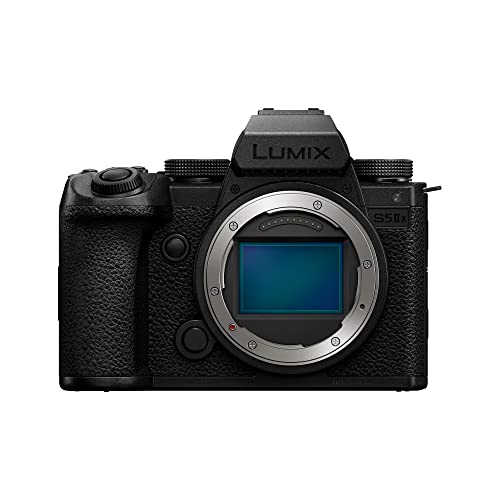
Panasonic LUMIX S5IIX — Best for video-led photographers
The S5IIX is the photographer’s camera that a film crew would nod at. Built on a 24.2-megapixel full-frame sensor with phase-detect autofocus — the addition that ended Panasonic’s old contrast-detect argument — it adds the working videographer’s toolkit: recording to external SSDs, professional codec choices, waveform monitoring, and thermal design that treats long 4K sessions as the normal case rather than an emergency. Its stills are the equal of anything in its class; its video provisions are simply a league beyond them, which is why it leads this guide for anyone whose photography now shares the diary with footage.
The hybrid angle is about a single workflow. A creator can shoot a product’s stills in the morning and its launch film after lunch on one body, one lens set and one colour language, with the camera’s video assists — zebras, waveforms, shutter-angle thinking — preventing the exposure improvisations that make amateur footage look amateur. The L-mount lens bench behind it, fed by Sigma’s value primes, keeps the whole enterprise affordable by cinema standards. If your camera bag increasingly resembles a small production, start here.
- Sensor: full-frame, roughly 24 megapixels
- Autofocus: phase hybrid, for stills and video alike
- Recording: external SSD support and professional codec options
- Mount: L-mount, shared across Panasonic, Sigma and Leica
Strengths
- Video toolset borrowed from dedicated cinema cameras
- Recording endurance designed for real sessions
- Stills quality fully equal to its video reputation
Trade-offs
- Video depth can overwhelm a stills-only owner
- Autofocus still a half-step behind Sony and Canon
- Body size reflects its production ambitions
Best for: creators and professionals whose stills and footage carry equal weight. Not suited for: photographers who film twice a year and want simplicity above all.

Panasonic LUMIX S5II — Best hybrid value
Strip the X model’s external-recording and codec extras away and the S5II remains: the same sensor, the same phase-detect autofocus transformation, the same excellent stabilisation and the same honest 4K, at a commitment level that makes it the value centre of this guide. For the photographer who films seriously but not professionally — events, travel films, a growing channel, client clips — the differences between the two Panasonics will rarely be the differences that matter, and the saving buys the lens or the microphone that visibly will.
Its particular gift to hybrid shooters is calm. The stabilisation lets handheld 4K look deliberate rather than apologetic; the colour science flatters skin in stills and footage with the same hand; and the body’s menus, while deep, organise the two crafts without forcing either to live in the other’s shadow. Owners consistently describe it as the camera that ended their two-device era, and in a guide about photography-and-4K that is the highest praise available. Buy the X if productions pay you; buy this if they might one day, and pocket the difference without regret.
- Sensor: full-frame, roughly 24 megapixels
- Autofocus: phase hybrid system
- Stabilisation: strong in-body system for handheld footage
- Mount: L-mount, three-brand lens bench
Strengths
- Nearly all the X model’s talent for less commitment
- Handheld 4K that looks intentional
- Stills and video colour in one language
Trade-offs
- No external SSD recording for marathon sessions
- Codec menu is the X’s deeper one
- Autofocus trails the class leaders slightly
Best for: serious hybrid shooters balancing ambition and budget. Not suited for: production professionals who need the X’s recording pipeline.

Sony Alpha 7 IV — Best stills-first hybrid
The Alpha 7 IV approaches the hybrid question from the photographer’s side of the fence: a 33-megapixel stills camera of the first rank that also records 4K of a quality that satisfies everyone except dedicated cinema shooters. Its autofocus — the stills benchmark — works in video with the same subject intelligence, holding eyes through movement in a way that makes family films, event clips and interview footage look quietly professional. For the photographer whose video is important but secondary, that hierarchy is exactly right, and the E-mount’s ocean of lenses serves both crafts from one bag.
Know its honest limits and it will never disappoint you. The 4K at its highest frame rates comes with a crop, and long continuous recording in hot conditions asks more of its compact body than of the Panasonics’ production-minded designs. Within the natural territory of stills-led work — clips, ceremonies, travel, the occasional short film shot in takes rather than marathons — those limits rarely appear, and what remains is the most complete photographer’s hybrid of its generation. It is the pick for buyers whose first love is the still frame and whose second love is rapidly catching up.
- Sensor: full-frame, roughly 33 megapixels
- Autofocus: real-time eye tracking in stills and video
- Video: 4K with high frame rate options (cropped at the top rate)
- Mount: Sony E, the deepest hybrid lens bench
Strengths
- Stills resolution and quality lead its hybrid class
- Video autofocus with genuine subject intelligence
- One lens system for both crafts, at every price
Trade-offs
- Top-rate 4K uses a crop of the sensor
- Long hot recording sessions test its thermals
- Video assists are photographer’s, not cinema’s
Best for: photographers first, filmmakers increasingly. Not suited for: videographers who record long takes in warm venues weekly.

Canon EOS R6 Mark II — Best effortless 4K
Canon’s R6 Mark II makes video feel like a natural extension of photography rather than a second trade to learn. Its subject-detection autofocus crosses over seamlessly — the camera that was tracking your daughter’s eyes for portraits tracks them for the school-play film — and Canon’s colour gives footage the same kindness it gives skin in stills, which matters enormously for the family and event material most hybrids actually shoot. The 4K itself is oversampled and rich, and the body’s general air of competence makes the red button feel unintimidating, which is a genuine feature for photographers crossing over.
Its caveats are the familiar hybrid ones, stated plainly: very long continuous recording in warm conditions is not its party trick, and Canon’s lens ecosystem, while excellent, prices its finest hybrid glass professionally. In exchange, the stills side is beyond reproach — fast, forgiving, superb in low light — and the whole package suits the wedding-and-events shooter particularly well, the professional who must deliver a gallery and a highlights film from the same afternoon and cannot afford for either to feel like the afterthought. Among the effortless hybrids, it is the most effortless.
- Sensor: full-frame, roughly 24 megapixels
- Autofocus: deep-learning detection shared across stills and video
- Video: oversampled 4K with Canon colour
- Mount: Canon RF professional range
Strengths
- Footage colour that flatters people immediately
- Autofocus continuity between stills and video
- Stills performance with no weak department
Trade-offs
- Thermal limits on the longest continuous takes
- RF’s best hybrid lenses are priced professionally
- Professional video assists are limited
Best for: event and wedding hybrids, family filmmakers with standards. Not suited for: long-form recording specialists.

DJI Osmo Pocket 3 — Best moving camera
A surprising share of the photography-and-4K life is walking: through markets, around properties, behind children, along the trail while narrating it. For all of that, the Pocket 3 — a 1-inch sensor on a three-axis gimbal in a device the size of a chocolate bar — produces 4K so smooth it looks budgeted, and stills adequate for the social record. Its trick is subtraction: no rig, no balancing, no setup, just a camera that is recording beautifully within seconds of leaving a pocket, stabilised by machinery rather than by hope.
As part of a hybrid kit it plays a role the big bodies cannot: the moving camera. Intercut its gliding walkthroughs with a mirrorless body’s considered stills and locked-off clips and the resulting film looks produced rather than captured. Its limitations are structural and cheerful about it — a fixed lens, a small sensor that prefers decent light, a gimbal that asks not to be dropped — and within its territory it has no rival in this guide. Creators who talk to camera while moving should consider it not an accessory but a co-star.
- Sensor: 1-inch, gimbal-stabilised
- Video: 4K at high frame rates for slow motion
- Tracking: face and subject tracking while moving
- Size: pocketable, instant-on
Strengths
- Movement footage no handheld body can imitate
- Starts shooting faster than any rival here
- Audio and tracking designed for presenters
Trade-offs
- Stills are documentation, not art
- Fixed lens, small sensor, low-light limits
- Gimbal mechanism dislikes abuse
Best for: walking, travelling and talking-to-camera creators. Not suited for: stills-led photographers or telephoto work.

Insta360 Ace Pro 2 — Best action 4K
The Ace Pro 2 exists to answer the action camera’s oldest embarrassment: what happens when the light goes. Co-engineered with Leica and built around a large-for-the-class sensor with serious processing, it records 4K — and higher headline modes — that stays clean as dusk falls on the ride, the run or the reef, where rival action footage dissolves into noise. For the photographer whose 4K life includes motion sports, travel adventure and weather, it is the camera that can be mounted, soaked, frozen and dropped while the mirrorless body stays safe in the bag, and its stills, while secondary, are the strongest the action category offers.
Its place in this guide is the outer edge of hybrid: the camera for the footage that defines a trip’s story, whose files intercut with stills from the bodies above to make the complete record. The flip screen aids the vlogging half of its life, the mounting ecosystem rivals GoPro’s, and the processing earns its keep in exactly the mixed, ugly light where adventures actually happen. Buy it as the second camera in a serious kit, or the first camera in an adventurous one — either way, it redefines what its category’s footage is allowed to look like.
- Sensor: large-format for the action class, Leica co-engineered lens
- Video: 4K and higher modes with strong low-light processing
- Build: waterproof, rugged, flip screen
- Mounting: broad action ecosystem compatibility
Strengths
- Low-light footage that leads the action category
- Ruggedness that frees the mirrorless body from risk
- Flip screen serves solo creators
Trade-offs
- Stills remain the junior partner
- Small sensor physics still apply in true darkness
- Best footage rewards learning its processing modes
Best for: adventure, travel and action creators. Not suited for: studio, portrait or event stills work.
What do the 4K numbers on the box actually mean?
Three numbers matter and the rest is garnish. The first is resolution itself — 4K means roughly four thousand pixels across, four times the detail of the HD your older camera called high definition — and at normal viewing distances it is the point of diminishing returns for most screens most people own, which is why this guide treats it as the standard rather than the summit. The second number is the frame rate hiding behind the headline: 4K at 24 or 30 frames a second is the cinematic and everyday standard, while 4K at 60 doubles the temporal detail for sport and lets you slow footage to half speed gracefully — but on some bodies, including one in this guide, that top rate uses only the centre of the sensor, changing your lens’s effective view. Always ask which 4K, at what rate, from how much of the sensor.
The third number never appears on the box at all: minutes. How long the camera sustains its best 4K in a warm room before heat calls a halt is the specification that decides whether a camera can film a ceremony, a match or a lecture, and it varies from “indefinitely, by design” on the production-minded Panasonic X to “plan in takes” on compact stills-led bodies. None of this makes the stills-led cameras bad at video; it makes them honest specialists in clips rather than marathons. Match the number to your longest realistic take and the whole 4K conversation becomes refreshingly short.
Can you pull real photographs out of 4K footage?
Yes, and working photographers quietly do it constantly. A single 4K frame holds enough resolution for prints at the sizes family and editorial life actually uses, for every social purpose, and for the moment that happened between your stills — the expression mid-sentence, the toddler’s exact instant of balance, the bird that crossed during a landscape clip. The technique reframes video as a burst mode with sound: shoot the unpredictable moment as footage, then extract the frame in editing with the same ruthlessness you would apply to a motor-drive sequence.
The discipline is shutter speed, because a frame pulled from footage shot at cinematic shutter speeds carries motion blur that reads as atmosphere in motion and as softness in a still. When you know a moment matters doubly — the finish line, the first dance — a faster shutter within the video settings buys grab-able frames at the cost of slightly less filmic motion, a trade the hybrid shooters in this guide’s audience make knowingly. Treat frame grabs as a bonus economy rather than a stills replacement and they will rescue a dozen moments a year that no photographer, however fast, could have caught on purpose.
How do you set up a hybrid camera so stills and video stop fighting?
Give each craft its own saved configuration and make switching a single dial’s work. Most bodies here offer custom modes; dedicate one to your stills baseline and one to video, with the video mode carrying its own shutter logic, picture profile and audio levels, so a mid-event switch never leaves you filming photographs’ settings or photographing video’s. Set the video profile honestly: a flat, grading-friendly profile rewards editors and punishes everyone who shares footage straight from the card, while a standard profile does the reverse — and the correct choice is the one matching what you actually did with your last ten clips, not what you intend to do with the next hundred.
Audio deserves its own paragraph because it is where hybrid footage goes to die. The built-in microphones on every camera here are adequate for ambience and inadequate for voices at distance, so the single highest-value accessory in hybrid work is a small external microphone, followed by the habit of monitoring levels on the camera’s meters as religiously as exposure. Photographers already own the skill video audio requires — attention to an unglamorous technical layer while the creative moment unfolds — and the ones who apply it produce footage that sounds as considered as their photographs look.
What is a codec, and why should a photographer care?
A codec is the language your footage is written in, and it decides three practical things: how large the files are, how hard your computer works to edit them, and how much punishment the image survives in grading. The efficient modern codecs compress cleverly — storing the differences between frames rather than every frame whole — which keeps cards alive and laptops calm, at the cost of making the editing software decode on the fly. The heavier, more edit-friendly formats store more of every frame, producing enormous files that any machine can scrub through happily. Neither is morally superior; they are answers to different questions, and the Panasonics in this guide are notable precisely for offering the professional end of that menu, while the Sony and Canon optimise for the efficient end most hybrid shooters actually live at.
For the stills-first owner, the working rule is blissfully simple: choose the camera’s high-quality standard codec, shoot a test clip, edit it on your actual computer, and only explore the menu’s depths if something in that test annoyed you. Codec anxiety is the hybrid era’s version of raw-versus-JPEG anxiety, and it resolves the same way — by output, not by forum. Your audience will never know which codec you used. They will know whether the footage was steady, well-exposed, well-recorded and worth watching, which is where this guide suggests the attention budget belongs.
How does stabilisation change what a hybrid camera can do?
More than any video feature of the decade. The in-body stabilisation in the full-frame bodies here — working with stabilised lenses on the Canon and Sony, standing strong alone on the Panasonics — converts handheld footage from a compromise into a style: slow push-ins, walking pans and locked-off-looking clips from a standing position are now available to a photographer carrying nothing but the camera. It does not replace the gimbal, as the Pocket 3’s existence in this guide testifies — sustained walking footage still belongs to mechanical stabilisation — but it has quietly deleted the tripod from most hybrid shooters’ everyday bags, which changes what gets filmed at all.
Stills photographers should note the dividend flows both ways: the same systems steady long lenses at dusk and slow shutter speeds in stills, buying back the light that hybrid sensors are famous for gathering. When you compare the bodies here, stabilisation is one of the few features that serves both halves of the hybrid promise at full strength, and it is weighted accordingly in these rankings. A camera that is steady in both crafts gets carried into more situations, and carried cameras — as every guide on this site eventually concludes — are the ones that produce the work.
What does a hybrid wedding or event day actually demand?
Everything, in alternation, at speed. The morning is stills: details, preparations, portraits. The ceremony is both at once — the gallery the couple frames, and the film they replay — often from the same pair of hands, which is why event hybrids prize instant switching between crafts, identical colour across both, and autofocus that behaves identically whether the shutter or the red button is in charge. The Canon and Panasonic pairs in this guide were graded heavily on exactly this day, and their high placings reflect how gracefully they survive it. The afternoon adds speeches — long takes, audio discipline, thermal honesty — and the evening adds darkness, where the full-frame sensors justify themselves in both crafts simultaneously.
The professional’s kit logic follows from the day: two bodies so stills and video never queue for the same camera, one of them biased to each craft; fast zooms rather than primes for the unpredictable hours; and the small cameras here as specialists — the Pocket 3 gliding through the reception, an action camera planted somewhere joyful and forbidden. Amateurs shooting one wedding for love rather than money can compress all of that into a single body from this guide and a fast lens, and should: the photographs and footage from one well-run hybrid now exceed what a two-device amateur kit produced a generation ago, which is the entire premise of the keyword that brought you here.
How much storage does a photography-and-4K life consume?
More than your stills life did, by an order of magnitude you should plan for rather than discover. An hour of high-quality 4K can occupy the space of thousands of raw stills, and a hybrid shooter’s card wallet and hard drives must be sized accordingly: fast cards in the camera, because 4K’s data rates punish slow media with stopped recordings; a same-day offload habit, because cards are not archives; and a backup arrangement that treats footage with the same paranoia as photographs, since the film of a wedding is exactly as irreplaceable as its gallery. The photographers who lose work are rarely the careless ones — they are the ones whose storage plan was designed for their stills years and silently outgrown.
The consolation is that footage is self-editing in a way stills are not. Nobody keeps four hours of ceremony rushes at full quality forever; the delivered film, its project file and a selects reel are the archive, and the rest can be honourably deleted once the work is delivered and backed up. Build that lifecycle into your storage from the start — shoot generously, archive selectively, back up religiously — and the data weight of the hybrid life becomes a manageable line in the budget rather than a recurring emergency. It is the least romantic section of this guide and, in five years’ time, possibly the one you will be most grateful for.
Should you hold out for 6K or 8K instead?
Only if your work already knows why. Higher resolutions buy cropping room in the edit — reframing a wide shot into a close-up without leaving 4K delivery quality — and future-proofing against displays that have not yet arrived in most homes. They cost heat, storage, processing time and money, in quantities this guide has spent several sections teaching you to respect. The professional with a reframing workflow has a genuine case; the photographer-filmmaker whose audience watches on phones and televisions has a weaker one than the marketing suggests, because 4K shot well — steady, exposed, recorded with good audio — defeats higher resolutions shot carelessly on every screen your audience owns.
There is also the stills photographer’s perspective to honour: your camera’s sensor already resolves far beyond 4K in every photograph you take, and the craft of the still frame is not waiting on any video specification. Buy the hybrid whose complete behaviour — stills, 4K endurance, autofocus, handling, lens bench — fits your next three years, and let the resolution race continue without you. It will still be there, cheaper and cooler-running, when your work genuinely calls for it.
Which lenses serve both crafts without doubling the bag?
The hybrid shooter’s lens problem is that the two crafts want overlapping but distinct things: stills reward aperture and character, video additionally rewards quiet focusing, minimal focus breathing — the slight zoom effect as focus shifts — and gearing that a follow-focus or a smooth hand can work. The modern standard zoom designed for hybrid use is the spine of the answer, and every system here fields one; it covers the documentary range both crafts live in, focuses silently enough for onboard audio, and stays on the camera through whole events. Around that spine, one fast prime does double duty as the low-light stills lens and the shallow-depth interview lens, which is why this guide’s recurring two-lens advice survives translation into the hybrid era intact.
Resist building parallel lens sets for the two crafts; it is the classic route to a bag too heavy to carry and a bank account too light to enjoy. Instead, audit your actual shooting after three months of hybrid work — the focal lengths your stills cluster at, the ones your footage wishes it had — and let that evidence order the third lens. For most owners it is reach, because events and travel film as hungrily as they photograph. The systems ranked here were all chosen partly on this audit’s likely outcome: whichever direction your evidence points, their benches hold an answer at a sane price, which is more than can be said for every mount on the market.
How do you learn video as an experienced photographer?
Faster than you fear, because most of the curriculum transfers. Composition, light and moment are already yours; what video adds is time — the shot continues, and must keep deserving to. Learn in short, complete pieces: a thirty-second film of a morning routine, start to finish, edited the same day, teaches more than a month of reading about codecs, because it forces the three new disciplines at once — holding a shot longer than instinct wants, recording sound deliberately, and cutting without mercy. The cameras here support the apprenticeship kindly, particularly the Canon’s forgiving colour and the Panasonics’ honest monitoring tools, which show you what the footage actually contains while you are still able to fix it.
Expect one genuine culture shock: in stills, you hunt the decisive instant; in video, you build sequences, and a beautiful shot that connects to nothing is as useless as a sharp frame of the wrong play. Think in threes — wide, medium, close — for every subject, and your edits will assemble themselves. Within a season, most photographers find the crafts feeding each other: video teaches their stills patience and sequence, stills teach their video composition and light. That cross-training, more than any specification, is the real return on a hybrid camera, and it begins the first time you press the red button on purpose.
What does a photographer’s first month with a hybrid camera look like?
Week one is stills only, deliberately, while the camera’s handling becomes muscle memory — a hybrid bought in a flurry of video ambition and never bonded with as a stills camera ends up serving neither craft. Week two adds clips to ordinary stills outings: the market, the dog walk, the family kitchen, each outing returning with one short sequence shot in the wide-medium-close discipline described above. Review the footage on the largest screen you own and grade it as unsparingly as you grade photographs; the gap between what the viewfinder promised and what the television reports is the syllabus for the rest of the month, and it is mostly about steadiness, shutter choices and sound.
Week three, make one complete short film — two minutes, a beginning and an end, a subject you care about — and show it to someone whose honesty you trust. Week four, shoot one event hybrid-style from start to finish, stills and footage interleaved, and deliver both within a day. By the end of that month you will know, from evidence rather than reviews, which of this guide’s temperaments you actually are: the production-minded Panasonic owner, the stills-first Sony or Canon owner, or the mover who reaches for the little cameras first. That self-knowledge is worth more than the camera, and it is available free with any of the six — provided the month actually happens, which, as with every craft in these guides, is the photographer’s part of the bargain.
How should you think about colour when one camera shoots both crafts?
Consistency is the prize. A wedding gallery and its film should feel like one artist’s afternoon, which means resisting the temptation to give each craft a wildly different colour personality: choose a stills treatment and a video profile that are cousins, and the hybrid deliverable coheres in a way clients feel without analysing. The manufacturers here each carry a house colour across both crafts — Canon’s warmth, Panasonic’s measured neutrality, Sony’s customisable precision — and part of choosing among them is choosing which family’s colour your whole output will wear. Photographers who edit heavily can bend any of them toward a personal look; photographers who deliver quickly should audition the out-of-camera results in both crafts before buying, because that is the colour they will actually ship.
Practically, shoot a test day before any important hybrid job: the same subject, in the same light, as stills and as footage, processed through your real delivery pipeline. The mismatches — a profile that flatters stills but flattens footage, a white balance that drifts between crafts — are all discoverable on a test day and expensive on a wedding day. It is the hybrid era’s version of the film photographer’s test roll, and the professionals in this guide’s audience treat it with the same seriousness their predecessors did, for the same reason: the camera is a system of behaviours, not a list of specifications, and behaviour is only ever learned by rehearsal.
What about photographing with a camera that is also your video camera — the practical worries?
Three worries recur among photographers considering the hybrid switch, and all three have honest answers. The first is wear: video holds the sensor active for long stretches and fills shutter-count-equivalent hours faster than stills life does, but modern mirrorless bodies are engineered for exactly this duty, and the photographers who retire hybrids do so for newer features, not worn-out cameras. The second is complexity — two crafts’ settings in one menu system — and the answer is the custom-mode discipline described earlier: configure once, label clearly, and the camera presents the right personality when asked. The third is identity, the feeling that a camera optimised for both crafts must be compromised in each; a decade ago that suspicion had evidence, and today the six cameras here are the evidence against it, each one a stills instrument that professional photographers use without apology.
Underneath all three sits the real question, which is not about the camera at all: whether your photography wants motion in it. Some photographers try video, feel the pull immediately, and reorganise their creative lives around the hybrid promise. Others try it, respect it, and return to the still frame with their commitment clarified — also a successful outcome, and one the stills-first bodies here honour completely, since their video excellence costs their stills nothing. Either way, buying from this list cannot strand you: the worst case is owning a superb stills camera with a talent you use rarely, and the best case is a second craft opening inside the equipment you already carry.
How do you film an interview or a talking piece with a photographer’s kit?
The interview is where hybrid footage earns its most professional keep, and its recipe is reassuringly photographic: a fast prime at a flattering distance, the subject lit by the largest soft source available — a window behaves exactly as it does in portraiture — and the camera locked off at eye level while the autofocus, on the bodies here, holds the eyes with a reliability that once required a dedicated operator. Frame with headroom for the platform’s captions, record a minute of the room’s silence for the edit, and let the subject forget the camera, which the quiet mirrorless bodies here make easier than any camcorder with a tally light and a fan ever did.
Sound decides whether the result is professional, and it obeys one law: distance is quality. A microphone near the subject — a lavalier, or a small recorder placed like a still-life prop within the frame’s edge — transforms the same footage from amateur to broadcast in a way no lens can, and the cameras here all accept proper audio input and let you monitor levels while recording. Photographers already light faces for a living; the interview simply asks them to listen to the room with the same attention, and rewards them with the most reusable skill in the hybrid repertoire, because every genre of footage they will ever make — events, family films, client work — contains a person talking at its heart.
A final word on the word “photography” in this keyword
It is worth noticing that the search that brought you here puts photography first, and this guide has honoured that order deliberately. The cameras ranked above were required to be excellent stills instruments before their video was even auditioned, because a hybrid that delights filmmakers and merely satisfies photographers would answer a different question than the one asked. What the last decade has actually delivered — and what these six bodies prove from six different directions — is that the order no longer forces a sacrifice: the stills camera and the 4K camera have become the same camera, at every level from the pocket gimbal to the production Panasonic, and the buyer’s task has narrowed to the pleasant one of choosing a temperament.
So choose it the photographer’s way. Decide by the stills you cannot wait to make, verify the video against your longest realistic take and your real editing computer, budget honestly for the microphone and the cards, and then spend the first month the way this guide prescribes — stills first, clips second, one complete short film, one complete hybrid day. The camera that emerges from that month as your camera will not be the one with the largest number on its box. It will be the one whose footage looks like your photographs feel, and that is the only definition of a photography-and-4K camera that has ever mattered.
Comparison: all six picks at a glance
| Camera | Sensor | Character | Choose it if… |
|---|---|---|---|
| Panasonic LUMIX S5IIX | Full-frame | Production hybrid | Footage pays your bills |
| Panasonic LUMIX S5II | Full-frame | Balanced hybrid value | You want both crafts without the X’s pipeline |
| Sony Alpha 7 IV | Full-frame | Stills-first hybrid | Photographs lead, footage follows closely |
| Canon EOS R6 Mark II | Full-frame | Effortless hybrid | Events demand gallery plus film in one afternoon |
| DJI Osmo Pocket 3 | 1-inch gimbal | Moving camera | Your footage walks and talks |
| Insta360 Ace Pro 2 | Action sensor | Adventure 4K | Your stories happen outdoors at speed |
What are the most common mistakes when buying a photography and 4K camera?
Chasing the biggest video number on the box
Higher headline modes with thermal limits and heavy crops serve fewer real shoots than honest, sustainable 4K. Buy for the footage you will actually record — its length, its light, its frame rate — and let the summit numbers impress people who film specification sheets.
Ignoring the crop behind the frame rate
A 4K mode that uses the centre of the sensor turns your wide lens into a normal one mid-shoot. Check which modes crop before the first important job, and plan lenses around the modes you will genuinely use, not the ones in the advertisement.
Budgeting nothing for sound and storage
4K eats cards and cheap footage is usually badly recorded footage. A microphone and fast, capacious media are not accessories to a hybrid purchase; they are the second half of it, and skipping them is how excellent cameras produce disappointing films.
Final Recommendation
Let your longest take decide. If your footage runs to ceremonies, productions and long sessions, the S5IIX is the professional answer and the S5II its value shadow. If your video life is clips, events and family films between stills, the Alpha 7 IV and R6 Mark II are the complete photographer’s hybrids, chosen by whether resolution or effortlessness speaks louder to you. Add the Pocket 3 when your footage walks, the Ace Pro 2 when it swims, rides or falls — and remember that in every case the stills came first in this guide’s grading, because they came first in your search. One last practical encouragement: whichever body you choose, film something short and complete within its first week — a birthday, a walk, a two-minute portrait of a place you love — and edit it the same evening. Photographers who do this in week one become hybrid shooters; photographers who postpone it until the camera feels familiar often discover, a year later, that they bought a superb stills camera and a stranger. The red button is not a commitment to a new identity. It is an invitation, printed in the colour of record, and the first short film is how you RSVP.
Frequently Asked Questions
Is 4K worth it if I mostly take photographs?
Yes, as insurance and as a second craft that asks nothing of the first. The cameras ranked here were graded as stills instruments before their video was auditioned, so choosing one for its 4K never means accepting a lesser photograph in exchange — and the day a school play, a wedding or a once-only family moment asks to be filmed as well as photographed, the capability is simply there, in the camera already in your hands, with your lenses already mounted and your eye already trained. Modern hybrids include excellent 4K at no stills cost, frame grabs rescue moments stills miss, and the first time an event asks for footage you will be equipped. Buy the stills camera you love; let its 4K be the bonus that ages well.
What is the difference between 4K 30 and 4K 60?
Frame rate: sixty frames a second captures motion more smoothly and can be slowed to half-speed playback, while thirty matches the familiar look of most online video and twenty-four the look of cinema. Sport and action favour sixty; interviews and everyday films are happy at thirty or below.
Do I need a special computer to edit 4K?
A reasonably modern machine handles 4K from these cameras, especially with the efficient codecs several of them offer, though large projects reward memory and fast storage. Proxy editing — working from lightweight copies — makes even modest computers comfortable, and every major editor supports it.
Why does my camera stop recording after a while?
Usually heat or a card that cannot sustain the data rate. Compact hybrid bodies shed heat slowly by design; shade, airflow, open screens and shorter takes are the fieldcraft answers, and production-minded bodies like the S5IIX exist precisely for owners who cannot organise their filming around thermals.
Can one camera really replace a separate video camera?
For the overwhelming majority of hybrid work, yes — that replacement is the story of the last decade of camera design. Dedicated cinema cameras still win on ergonomics for full productions, but a hybrid from this guide covers everything from family films to client work without apology. The proof is in the credits: short films, wedding features, documentaries and commercial clips are now routinely shot on bodies sold as stills cameras, by photographers who added motion to their practice without surrendering anything their stills work depended on. The separate video camera survives as a specialist’s tool for crews and long productions; for the solo hybrid shooter it has become, honestly, a museum of good intentions.
Which lens should a hybrid shooter buy first?
A standard zoom with a reasonably fast aperture covers both crafts’ everyday territory and holds its value as the kit’s spine. Add a fast prime for low-light stills and shallow-depth footage when the budget recovers; that pair is the classic hybrid foundation.
Related Guides
Keep exploring with our companion reading: best cameras for vlogging and content creation, best cameras for photography beginners starting out and best action cameras for adventure filming. Between them they cover the neighbouring territories of the hybrid life — the creator’s studio, the beginner’s first system and the adventurer’s second camera — with the same insistence on honest limits, real workflows and equipment chosen for the work you actually do rather than the work the advertisements imagine.


