reviewstook.com is reader-supported. When you buy through links on our site, we may earn an affiliate commission.
Where to buy
A first film camera is a teacher as much as a tool: it will shape what its owner believes a shot is, how light behaves and whether filmmaking feels like a craft or a software subscription. The cameras below were chosen for beginners who mean it — students, self-taught directors, wedding and music-video newcomers — and every linked model is sold through Amazon. Budget for the body as roughly half the system: a lens, a microphone, a tripod with a fluid head and storage will complete the education, and this guide says where each body sits in that economy.
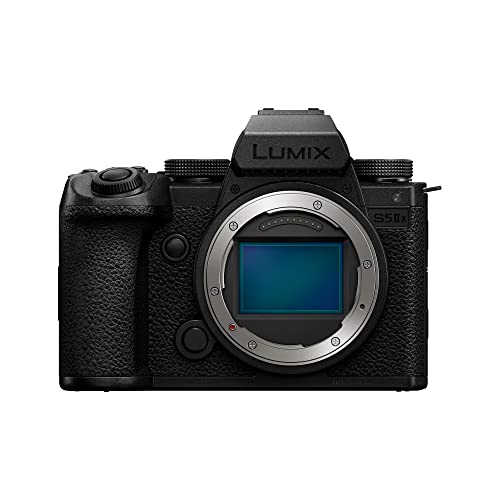
- Panasonic LUMIX S5IIX: check price on Amazon
- Sony Alpha 7 IV: see the current price on Amazon
- Canon EOS R6 Mark II: view this camera on Amazon
- Panasonic LUMIX S5II: check availability on Amazon
- DJI Osmo Pocket 3: see it on Amazon
- Sony ZV-1F: look at it on Amazon
The best cameras for new filmmakers are not the cameras with the most impressive demonstration reels. They are the cameras that teach the largest number of transferable lessons per pound spent: how aperture writes depth, how a codec behaves in the grade, how a shot is lit rather than rescued, how a production survives its own audio. A beginner’s first body will be outgrown; the question is whether it leaves behind a filmmaker or merely a former owner. Every pick below was judged as a curriculum disguised as a camera.
Film, unlike photography, punishes the camera’s weaknesses in sequence and in public. Autofocus that breathes, a sensor that banding-stripes under cheap lights, a body that overheats at the wedding’s speeches, a screen the director cannot see in sunlight — each becomes a story the beginner tells about the day the camera failed the film. So this guide weights the unglamorous film virtues heavily: recording endurance, monitoring tools, clean output to an external recorder or monitor, microphone and headphone sockets, and codecs that a student laptop can actually edit.
The list is deliberately built as a ladder with honest rungs. At the top, the hybrid full-frame bodies that a beginner can grow into professional work without re-buying. In the middle, the value body whose video specification embarrasses the class. At the base, two small cameras that teach composition, movement and storytelling at prices a student can reach this term — because the first law of filmmaking education is that a modest camera shooting every weekend teaches more than a flagship saving itself for occasions.
One warning before the names, because it will save the beginner more money than any ranking: the camera is the third purchase. Sound and light — a real microphone and one decent light with a softbox — change a beginner’s films more than any body upgrade, and they transfer to every future camera. Buy the body that leaves budget for them. The filmmakers whose first films look professional almost always made that allocation; the ones whose films look expensive rarely did.
A final framing before the cameras themselves: filmmaking is the most collaborative of the camera arts and the least about cameras. The beginner who joins a local film group, crews on other students’ shoots and shows unfinished work for honest criticism will out-learn the solitary owner of any body in this list. Buy the camera that gets you onto sets and into edits fastest, then let the community — and the repetitions — do the teaching that no manufacturer can package.
Key Takeaways
- A first film camera is a curriculum: choose the body that teaches the most per pound.
- The S5IIX is the beginner’s professional shortcut — cinema tools without cinema-department prices.
- Headphone and microphone sockets are non-negotiable; films fail by sound more than by picture.
- Buy the body that leaves budget for a microphone and a light — they outrank any upgrade.
- The Pocket 3 teaches movement and framing at a student price; it is a film school in a pocket.
- Heat and recording limits are beginner-killers: endurance beats specification-sheet drama.
In this guide
Quick Picks
| Camera | Badge | Why it is here |
|---|---|---|
| Panasonic LUMIX S5IIX | Best first camera for serious filmmakers | Professional video tools — recording options, monitoring, workflow — on a full-frame body a beginner can reach. |
| Sony Alpha 7 IV | Best autofocus for new filmmakers | Autofocus a beginner can trust with moving subjects, in the deepest lens system available. |
| Canon EOS R6 Mark II | Best handling for run-and-gun beginners | Beautiful colour, friendly controls and stabilisation that forgives a beginner’s handheld work. |
| Panasonic LUMIX S5II | Best value full-frame film body | Nearly the X’s stills and video quality for less — the budget-conscious beginner’s full-frame door. |
| DJI Osmo Pocket 3 | Best first camera for learning movement | A gimbal camera that teaches framing, movement and coverage at a price students reach first. |
| Sony ZV-1F | Best simple camera for first films and vlogs | A fixed-lens compact that removes every technical excuse between a beginner and their first finished film. |
How did we judge cameras as teachers of filmmaking?
We assessed each camera by shooting the beginner’s actual assignments: a two-person dialogue scene in a living room, a music performance in a dim venue, a wedding-style day of uncontrolled moments, and a short narrative scene lit with one light. We scored whether the camera helped or hindered the classic lessons — holding a manual focus pull, exposing for a face against a window, recording production sound you would not be ashamed of, and surviving a full day’s shooting without thermal or battery drama. Monitoring tools were weighted like a professional’s: waveforms, zebras and focus aids are the beginner’s tutors, present in the viewfinder at the moment of error.
Editability completed the judging. A beginner’s laptop is part of the camera system whether manufacturers admit it or not, so we favoured codecs with a sensible range — efficient options for everyday work, richer options for the projects that deserve them — and bodies whose colour science forgives a student’s grading while rewarding its improvement. The goal throughout was a camera the beginner can make a good film on this month and a better film on in two years, without the body becoming the excuse in between.
One more criterion ran quietly through the judging and deserves naming: repairability of reputation. A beginner will mishandle settings, miss focus in public and deliver a film whose sound embarrasses them. The cameras chosen here minimise the blast radius of those early errors — reliable metering, forgiving colour, autofocus that covers a multitude of sins — because a beginner whose first public works succeed, however modestly, keeps going, and keeping going is the entire mechanism by which filmmakers are made.

Panasonic LUMIX S5IIX — Best first camera for serious filmmakers
The S5IIX is the closest thing filmmaking beginners have to a cheat code: a body that places genuinely professional video tools — the monitoring, the recording options, the workflow features that working camera departments rely on — at a price a committed student can reach by saving rather than by inheritance. Its fan cooling deserves first mention in a beginner’s guide, because nothing teaches a new filmmaker despair like a camera that stops during the take that mattered. This one records through the wedding speeches, the theatre performance and the summer documentary day, and lets its owner worry about the film instead of the thermometer.
Its monitoring suite is the faculty. A waveform teaches exposure as a measurable craft rather than a screen’s mood; zebras teach highlight discipline on faces; focus peaking teaches the manual pull that still separates filmmakers from camera owners. A beginner who spends a year inside these tools emerges with professional reflexes, and the body — full-frame, with the L-Mount’s spread from affordable Sigma primes to serious cinema glass — does not need replacing when the reflexes start earning money.
The honest costs are complexity and intent. The menus reward study; the beginner who wants a camera that decides everything will find this one respectfully uninterested in deciding for them. Its autofocus, while much improved and entirely workable, is not the set-and-forget system of the Sony below. What it returns for the effort is a professional education at a consumer price, which is why it tops a guide for new filmmakers rather than a guide for new camera owners.
Buy it with one good prime lens rather than a mediocre zoom, and the classic education begins immediately: fixed focal length teaches movement — the director walks the camera to the close-up instead of zooming from the chair — and a fast prime teaches light, because at wide apertures every lamp in the room becomes a decision. The S5IIX plus a fast fifty is a film school that fits in a shoulder bag and keeps its value for a decade.
- Format: full-frame mirrorless, L-Mount
- Video: professional recording features
- Monitoring: waveform, zebras, focus tools
- Audio: microphone and headphone sockets
- Cooling: fan for long recordings
Strengths
- Cinema-department tools at a student-reachable price
- Fan cooling ends the overheating conversation
- L-Mount lenses span student to cinema budgets
Trade-offs
- Menus assume a willingness to learn
- Autofocus good, not class-leading for sport
- The stills-only buyer overpays for video depth
Best for: beginners committed to filmmaking as a craft or a career. Not suited for: casual video shooters who will never open a waveform

Sony Alpha 7 IV — Best autofocus for new filmmakers
Where the Panasonic teaches, the Sony assists — and for many beginners assistance is the difference between a finished film and an abandoned one. The Alpha 7 IV’s autofocus holds a moving subject’s eye through turns, gestures and walks toward the lens with a reliability that lets a one-person crew direct, monitor sound and watch the performance instead of living inside the focus ring. Wedding newcomers, music-video directors working with performers in motion and documentary beginners following unpredictable subjects will find this the most forgiving serious camera in the guide.
Its lens catalogue is the long-term argument repeated from the landscape guide but with a filmmaker’s accent: fast primes for the night shoot, affordable zooms for the run-and-gun day, and eventually cinema glass, all native, all rentable in most cities — a practical point for students, since a body whose lenses can be hired for the big project weekend is worth more than a marginally better body marooned in an orphan system.
Sony’s colour science flatters the beginner’s grade, and its picture profiles offer a staircase: shoot the pleasing standard colour while learning, step to the flatter profiles as grading skill arrives, and find the body still has headroom to offer. That staircase is a curriculum design many beginners only appreciate in retrospect — the camera never humiliates the current level of skill, and never caps the next one.
Manage its known terms: very long continuous recordings in heat deserve the awareness its manual describes, and the full feature set rewards an evening with the manual and a notebook. For the beginner whose films are about people in motion — which is most beginners’ films — this is the body most likely to be thanked in the credits.
- Format: full-frame mirrorless
- Focus: real-time eye autofocus for people and animals
- Video: 4K with strong colour options
- Audio: microphone and headphone sockets
- Lenses: the largest native catalogue
Strengths
- Autofocus that lets beginners direct instead of focus-pull
- Lens catalogue for every budget and ambition
- Colour that flatters untrained grading
Trade-offs
- Long recordings need heat awareness
- Best features reward menu study
- Body price plus lenses is a real commitment
Best for: beginners filming people in motion — events, weddings, performance. Not suited for: manual-focus purists learning on a budget

Canon EOS R6 Mark II — Best handling for run-and-gun beginners
The R6 Mark II is the beginner’s handheld friend. Its in-body stabilisation smooths the nervous operator’s micro-shakes into something resembling intention, its subject detection finds faces in a crowd scene and holds them, and its colour — Canon’s rendering of skin above all — makes untrained footage look cast and lit rather than captured. For the wedding and events path, where the beginner cannot ask the day to repeat itself, those three mercies are worth more than any specification victory.
Its controls teach by kindness. The dials and menus are arranged the way a beginner’s hand expects, which matters at the exact moments filmmaking is learned — mid-event, mid-light-change, with the couple approaching and no time for a manual. Cameras that punish hesitation teach avoidance; this one teaches fluency, and fluency compounds into the confidence that lets a second-season filmmaker attempt the harder shot.
Plan around its recording terms on long ceremonies, as its owners do — segment the day, mind the heat, carry the batteries the day consumes — and the limitation becomes a production habit rather than a surprise. Every professional body has terms; learning to read and respect them is itself part of the curriculum, and the R6 Mark II’s are among the gentlest in its class.
Choose it when your filmmaking will be handheld, human and unrepeatable: the christening, the gig, the market at dawn. In those arenas its footage flatters beginners into looking like naturals, and some of them, encouraged, become naturals in fact.
- Format: full-frame mirrorless
- Stabilisation: strong in-body stabilisation
- Colour: Canon’s celebrated skin tones
- Focus: deep-learning subject detection
- Body: weather-sealed, intuitive controls
Strengths
- Handheld footage looks steadier than the operator felt
- Skin tones that make actors look cast
- Controls a beginner masters in a weekend
Trade-offs
- Recording limits need planning on long events
- RF lenses are premium-priced
- Resolution modest beside the Sony
Best for: beginners shooting weddings, events and handheld documentary. Not suited for: studio filmmakers who always shoot locked-off and manual

Panasonic LUMIX S5II — Best value full-frame film body
The S5II is the budget brain of this guide: the body that leaves money alive for the microphone, the light and the lens, while still delivering full-frame film quality that no audience will distinguish from its pricier sibling’s. Its video lacks the X’s professional recording extras — the formats and workflow features a working department invoices for — but for the beginner’s actual productions, from the student short to the first wedding season, its footage is not the limiting factor. The limiting factor is everything else, and the S5II is the body that funds everything else.
Its stabilisation and improved autofocus make it a kinder handheld teacher than its price suggests, and the L-Mount economy applies with full force: a Sigma prime of genuine excellence costs what the big systems charge for the merely good. A beginner assembling a kit over two years — body now, prime at Christmas, the light and microphone between — will find this system’s arithmetic the friendliest in the guide.
Be honest about the fork in the road: if filmmaking is certainly the career, the X above is the straighter path and its premium is tuition. If filmmaking is a serious exploration — the honest position of most beginners — the S5II is the wiser buy, because exploration should be funded broadly: more lenses borrowed, more lights owned, more projects shot. Films are made by the kit around the camera, and this is the camera that respects the kit.
Its stills quality, inherited from the same sensor family praised in the landscape guide, adds a safety net the pure film bodies lack: the beginner who discovers their eye is photographic after all owns a fine stills camera already. Careers in image-making bend; the S5II bends with them.
- Format: full-frame mirrorless, L-Mount
- Sensor: 24.2-megapixel full-frame
- Focus: phase hybrid autofocus
- Stabilisation: strong in-body stabilisation
- Video: high-quality 4K recording
Strengths
- Full-frame film quality at a mid-range price
- Shares the L-Mount lens economy
- Stabilisation suits handheld beginners
Trade-offs
- Lacks the X’s professional recording extras
- Autofocus a step behind Sony for action
- Fewer rental lenses locally than Canon or Sony
Best for: beginners whose budget must also buy lenses, light and sound. Not suited for: beginners who already know they need pro recording workflows

DJI Osmo Pocket 3 — Best first camera for learning movement
Every film school exercise — the tracking shot, the reveal, the walk-and-talk — is built into the Pocket 3’s small body. Its gimbal delivers the smooth movement that beginners otherwise need a crew and a rig to achieve, which means a student can practise the grammar of cinema on day one: where the shot begins, how it travels, when it lands. Directors are made by repetitions of exactly those decisions, and this camera makes the repetitions free, instant and joyful.
Its limitations are pedagogical gifts in disguise. A fixed lens means framing is done with the feet — the oldest and best lesson in cinematography. A small sensor means light must be found or made rather than assumed. A pocket camera means the student shoots daily, on the bus route and the lunch break, and daily shooting is the entire secret of the filmmakers who improve. The footage, meanwhile, is far better than a teaching tool needs to be: 4K, well-stabilised, with sound options serious enough for real work.
Use it as the first year of a two-camera education. The student who has shot fifty small films on a Pocket 3 — birthdays, skate sessions, the short that finally worked — arrives at their first serious body with taste, timing and a showreel, which are the assets that actually get filmmakers hired. The camera also remains useful forever after as the B-camera, the gimbal shot and the travel body, so its purchase is never a dead end.
For the beginner whose budget is this term’s wages, the Pocket 3 is not the compromise at the bottom of this list. It is the correct first camera, full stop — and the filmmakers who start by moving a small camera well tend to out-direct the ones who started by owning a large one.
- Format: gimbal-stabilised pocket camera
- Sensor: 1-inch class sensor
- Video: 4K at high frame rates
- Screen: rotating touchscreen
- Audio: quality built-in and wireless options
Strengths
- Camera movement without a gimbal rig or crew
- Instant start — shoots every rehearsal and walk
- Sound options unusually serious for its size
Trade-offs
- No interchangeable lenses — framing is by footwork
- Low light good, not full-frame good
- A stepping stone, not a destination body
Best for: students and solo creators learning the grammar of the moving shot. Not suited for: beginners who need a stills camera or lens choice

Sony ZV-1F — Best simple camera for first films and vlogs
The ZV-1F’s white finish is listed deliberately: this is the camera for the beginner whose first films are vlogs, travel diaries, family documentaries and the talking-to-camera work that builds an audience while skills develop. Its fixed wide lens frames a room and a presenter without decisions, its directional microphone respects the voice, and its simplicity means the first film gets finished — the milestone that separates filmmakers from camera shoppers more reliably than any other.
Finishing is the curriculum here. The beginner who completes ten small films on a simple camera learns structure, pacing, sound discipline and the humility of the edit, while the beginner wrestling a professional body often completes none. The ZV-1F removes the technical alibis one by one — exposure, focus, framing are handled kindly — until the only remaining problems are the filmmaker’s own, which is precisely when education begins.
Its ceiling is real and should be named in its own section: no lens choice, no viewfinder, a sensor that dusk will test. The aspiring cinematographer will outgrow it, and this guide’s upper rungs are waiting. But outgrowing a camera you have shot fifty films on is a triumph, not a waste — the ZV-1F’s resale drawer is full of the first works of filmmakers now shooting on everything above it in this list.
Choose it when the films must start this weekend and the learning will happen in public, one upload at a time. In the creator economy that is a legitimate film school — arguably the largest one ever built — and this is its friendliest first camera.
- Format: compact camera, fixed wide lens
- Sensor: 1-inch class sensor
- Video: 4K recording
- Design: simple, creator-focused controls
- Audio: directional built-in microphone
Strengths
- Nothing to configure wrongly on day one
- Wide lens suits rooms, vlogs and groups
- Films finished work while skills catch up
Trade-offs
- Fixed lens limits cinematic framing choices
- No viewfinder for bright-day filming
- Serious beginners will outgrow it within a year or two
Best for: absolute beginners and vloggers who need finished films immediately. Not suited for: aspiring cinematographers ready for lenses and manual craft
What should a new filmmaker buy after the camera?
In order: a microphone, a tripod with a fluid head, one light, and storage — and the order matters. The microphone comes first because audiences forgive soft pictures and abandon bad sound within a minute; a modest dedicated microphone, close to the speaker, transforms a beginner’s films more than any lens. The fluid head comes second because filmmaking is controlled movement, and a photographic tripod’s jerky pans will sabotage every lesson the camera teaches. The light comes third — one soft source, learned deeply, beats a case of lights used timidly — and storage last, because footage you cannot keep is footage you did not shoot.
Lenses follow, and the beginner’s lens is a fast prime in the classic focal length for their sensor. It teaches footwork, flatters faces, opens the night shoot, and holds its value while zooms are sold on. Buy the microphone before it, the light before the second lens, and the second lens only when a specific shot you attempted and failed is asking for it by name. Kit assembled by failed shots is kit that earns; kit assembled by anticipation is a shop.
Finally, buy the unglamorous insurance: batteries counted for a full day, cards fast enough for the richest codec you will actually use, a bag that closes in rain, and a backup habit — footage copied to two places before the card is formatted, every time, from the first student film. Productions are lost to logistics far more often than to optics, and the beginner who professionalises their logistics early is employable early.
How do you light a first film with one light?
Place the light where a window would be if the room had better windows: to one side of the subject, slightly above eye level, softened through a softbox or a shower curtain, and let the room’s darkness do the rest. This single-source arrangement — the beginner’s Rembrandt — models a face with a lit cheek and a shadowed one, gives the scene depth, and flatters almost every human who will ever sit for you. Turn everything else off. The mixed colours of household bulbs are the beginner’s muddiest enemy, and one deliberate light in a dark room defeats them by outshining and excluding them at once.
Expose for the face the light is making, and let the background fall toward black without apology — the audience reads darkness as cinema and clutter as accident. Add, when the kit grows, a practical lamp in the background for depth and a reflector — a white bedsheet has served — to lift the shadow side a stop. But learn the single light to its bones first: move it nearer for softness, further for drama, higher for authority, lower for unease. One light, four lessons, a whole visual education — and every body in this guide can record the results beautifully.
Sound and light share a final beginner’s secret: both are mostly about distance. The microphone close, the light close, the camera where the story is. Beginners place all three too far away and then buy upgrades to compensate. Move everything closer first. It is free, and it is most of cinematography.
How should a beginner practise focus, exposure and coverage in weekly exercises?
Give each week a single discipline and shoot it in the small: twenty minutes, one location, no audience. Focus week is a series of pulls between two objects at different depths, racking from the cup to the face and back, until the hand learns the lens’s rotation the way a pianist learns scales. Exposure week is the same window at every hour, exposed manually, until the student can predict the histogram before raising the camera. Coverage week is one conversation filmed five ways — wide, two singles, an over-shoulder each — and edited into a scene, because coverage is where beginners discover that films are assembled, not merely recorded.
Keep the exercises in a dated archive and review them monthly with merciless kindness. The improvement curve of a practising beginner is steep enough to see across eight weeks, and seeing it is the fuel for the next eight. The cameras in this guide all support the exercises — manual focus aids, honest histograms, codecs that survive the experiments — and none of them is the bottleneck. The bottleneck is the calendar, and it yields to twenty minutes a week more readily than to any purchase.
Find one other beginner and exchange rushes. Critique given is craft learned twice — once in the seeing, once in the saying — and the small society of two practising filmmakers will out-teach a solitary genius with a flagship. Film culture began as friends showing each other reels in borrowed rooms. It still works.
What separates a beginner’s film that looks professional from one that does not?
Sound, steadiness and restraint — in that order, and none of them is the camera. Sound first: a close microphone and a quiet room make student work sound funded. Steadiness second: the locked shot, the gimbal move and the tripod pan all declare intention, while the drifting handheld frame declares the opposite, however sharp. Restraint third: the professional-looking beginner film cuts less, zooms almost never, holds the shot while the moment completes, and trusts one light and one idea per scene. Audiences cannot name these virtues, but they feel their absence within a minute and their presence as quality they attribute, wrongly and usefully, to the camera.
The beginner who internalises the trio discovers the happy secret of this whole guide: at the level of the first films, the bodies here are effectively equal, and the differences that matter are the operator’s. Choose the camera whose lessons match your temperament — the Panasonic’s discipline, the Sony’s assistance, the Canon’s kindness, the small cameras’ insistence on finishing — and then go and be the difference.
How do you shoot a dialogue scene that does not look like a security recording?
Begin with the geometry: two chairs at an angle, not opposite like an interrogation, a window or the key light modelling both faces from the same side, and the camera at the subjects’ eye level — the single decision that most separates cinema from surveillance footage. Shoot the wide first, complete, as insurance; then the singles, complete, letting each actor play the whole scene to an off-camera eyeline placed as close to the lens as dignity allows. The edit will thank you for the completeness, because dialogue is cut on reactions, and reactions exist only if the camera was rolling on the listener.
Sound the scene like it matters, because it matters most: the microphone above and between the speakers, just out of frame, closer than feels polite. A beginner’s dialogue scene with close sound and simple pictures will be watched to the end; the reverse — glossy pictures, distant sound — will be abandoned in a minute, and the audience will blame the acting. Direct the performances down, not up: film exaggerates, and the note that saves most student scenes is simply “half that, and slower.” The cameras here all record the results faithfully; the scene’s success is decided by chair angles, microphone distance and that one direction.
Light the pair as a unit rather than as two portraits. One key from the side they share, one background practical for depth, and the discipline to let the far actor sit a stop darker — cinema is comfortable with inequality of light, and the eye goes to the brighter face, which is usually the speaker, which is usually correct. Resist relighting between singles; matching angles are worth more than perfect ones, and the beginner who learns that has learned production.
What does a beginner need to know about codecs and colour before the first real project?
Enough to make three decisions and no more, because codec anxiety is the beginner’s most expensive hobby. Decide the recording quality by the project’s destination: everyday practice and online work at the camera’s efficient settings, the cherished project at its richest — because storage and editing time are real costs that compound across a year of shooting. Decide the frame rate by the screen tradition you are delivering to and then never mix rates casually inside a project. And decide the colour profile by the staircase in the FAQ: standard while learning exposure, flat when the grade becomes part of the plan.
Colour deserves one paragraph of calm. Modern cameras’ standard colour is genuinely good — better than a beginner’s grade of a flat file for at least the first year — and the flat profiles are not a moral obligation but a tool for scenes whose light the standard colour handles badly: the mixed-light room, the extreme sunset, the venue with the green fluorescents. Shoot the rehearsal both ways, grade both, and let your own eyes file the verdict. Filmmakers are made by such comparisons, not by forum commandments, and every body in this guide gives you the material for the experiment.
Finally, name and archive files like a professional from the first project: project, date, scene, take, in a folder structure that survives your memory of the day. The beginner who can find last month’s take three in ten seconds is already working like the filmmakers they admire, and the habit costs nothing but the decision to start it before the archive is a swamp.
How do you film live music and performance without ruining either?
Arrive early and become furniture: find the position that sees the performer’s face and the instrument, agree it with the venue if the event is formal, and then commit — the wandering videographer is the audience’s enemy and the edit’s problem. Set exposure manually for the stage lighting, because performance light changes by design and auto exposure will chase every change a half-second late, forever. Focus on the performer and let the drummer live in the soft background where drummers, cinematically, belong.
Sound is the performance film’s whole game. The camera’s microphones at the back of a hall record the room’s echo wearing the music as a costume; the solutions, in ascending order, are to stand where the sound is balanced rather than loud, to place a recorder near the stage with permission, or to take a feed from the desk where the engineer allows it. Even the first transforms the result. The Pocket 3 and the ZV-1F, with their serious sound options, punch above their size here; the full-frame bodies with a proper microphone own the category.
Film the audience sparingly and the hands generously. Close details — the guitarist’s fingers, the drummer’s feet, the singer’s breath before the high note — are the cutaways that let a performance film breathe, and they are available to the beginner who watches the show as a series of such moments rather than as a wide shot with ambitions. The performance will not repeat itself for you. Be early, be still, be close with the sound, and it will not need to.
How should a beginner plan a first short film across one weekend?
Write for the camera you own and the locations you can borrow: one interior, one exterior, two actors, a story that turns on a conversation rather than a car chase. The weekend short is an exercise in completion, and its constraints are the curriculum — every professional began by discovering that a simple scene, finished, teaches more than an epic abandoned at the script stage. Rehearse the actors before the weekend, scout the light at the hours you will shoot, and schedule the hardest scene first while the company is fresh and the beginner-director’s courage is at its morning height.
Shoot for the edit: the wide, the singles, the cutaways of hands and objects that will save the transitions, and room tone — a minute of the location’s silence — recorded before anyone leaves, because the editor will bless you for it at midnight. Back the footage up before the wrap meal, while the cards are still in the camera and the day is still a triumph. Then edit within the week, while the intentions are remembered, and screen the result for one honest friend before the world. A finished five minutes, screened and survived, is the foundation credential of filmmaking — and every camera in this guide can carry a beginner to it.
Why does the edit teach more than the shoot — and how should a beginner use that?
Because the edit is where the film confesses. Shots the director loved on the day sit dead in the sequence; the throwaway cutaway becomes the scene’s hinge; the performance that felt large plays false and the quiet take, nearly deleted, carries the ending. Beginners who edit their own footage — all of it, including the embarrassments — receive this education weekly, and it rewires their shooting within a month: they begin filming for the join, holding the extra beat, capturing the listener, protecting the sound. No camera feature teaches this. Only the timeline does, which is why this guide keeps insisting that finishing small films outranks upgrading bodies.
Keep an editor’s notebook beside the keyboard: one line per discovery, dated, in the plainest language. “Held the wide too long.” “The microphone was right; the light was lazy.” “Her reaction was the scene.” In six months the notebook is a personal film school, written in the only dialect its reader fully trusts — their own experience — and the next camera, when it comes, will be bought to serve lessons already learned rather than lessons advertised. That is the moment a beginner becomes a filmmaker with equipment opinions worth hearing.
Comparison Table
| Camera | Type | Role in this guide | Key virtue |
|---|---|---|---|
| Panasonic LUMIX S5IIX | full-frame mirrorless, L-Mount | Best first camera for serious filmmakers | Professional video tools — recording options, monitoring, workflow — on a full-frame body a beginner can reach. |
| Sony Alpha 7 IV | full-frame mirrorless | Best autofocus for new filmmakers | Autofocus a beginner can trust with moving subjects, in the deepest lens system available. |
| Canon EOS R6 Mark II | full-frame mirrorless | Best handling for run-and-gun beginners | Beautiful colour, friendly controls and stabilisation that forgives a beginner’s handheld work. |
| Panasonic LUMIX S5II | full-frame mirrorless, L-Mount | Best value full-frame film body | Nearly the X’s stills and video quality for less — the budget-conscious beginner’s full-frame door. |
| DJI Osmo Pocket 3 | gimbal-stabilised pocket camera | Best first camera for learning movement | A gimbal camera that teaches framing, movement and coverage at a price students reach first. |
| Sony ZV-1F | compact camera, fixed wide lens | Best simple camera for first films and vlogs | A fixed-lens compact that removes every technical excuse between a beginner and their first finished film. |
What mistakes do new filmmakers make with their first camera?
The first is buying the body with the whole budget and filming the first production on the camera’s built-in microphone, in mixed household light, with the results attributed to the camera’s inadequacy. The second is shooting everything at the widest aperture because the background blur looks cinematic, until the dialogue scene arrives with one eye in focus and the performance drifting in and out of the plane. Depth of field is a language, not a special effect, and the beginner’s films improve the week they start stopping down for conversation.
The third mistake is zooming instead of moving — the shot that creeps rather than commits — and the fourth is neglecting the backup until a card fails with a wedding on it, an education no one should have to buy at that price. The fifth is comparing first films with professionals’ hundredth and concluding the equipment is at fault. Their advantage is repetitions. Yours is available at the same price: shoot the next small film this weekend, on whichever of these cameras you chose, and let the repetitions begin compounding.
Final Recommendation
For the committed beginner, the S5IIX is this guide’s first recommendation — a professional education at a reachable price. The Sony serves the filmmaker of people in motion, the Canon the handheld events beginner, and the S5II the budget that must also fund light and sound. The Pocket 3 and the ZV-1F start the education this weekend at student prices, and both remain useful long after the serious body arrives.
Whichever rung you start on, start shooting before the next accessory arrives. Filmmaking is learned in the edit of the last small film, not in the unboxing of the next camera — and the first body’s real specification is how quickly it gets you there.
And keep the first films. Every working filmmaker treasures the evidence of their own beginning — the wobbly short, the wedding filmed for a cousin, the music video with the brave light — because those works contain the whole subsequent career in embryo: the eye already choosing, the taste already forming, the camera already forgotten in the excitement of the scene. That forgetting, in the end, is what all six of these cameras are for.
Related guides
Frequently Asked Questions
Do I need full-frame to make serious films?
No — but the bodies here are full-frame because their low-light cleanliness, lens choice and second-hand depth serve a beginner for years. A smaller-sensor camera shoots beautiful films in good light; full-frame forgives the dim venues and night scenes beginners constantly meet. Buy the forgiveness if the budget allows, and never let its absence stop a film.
Is autofocus or manual focus better for a beginner?
Learn both, in that order of daily use: autofocus for events and moving subjects, manual for controlled scenes where the focus pull is part of the storytelling. The Panasonic’s aids teach manual craft; the Sony’s tracking covers the unrepeatable. A filmmaker fluent in both is employable; a purist in either is limited.
How important is 4K for a first film camera?
Useful for reframing and future-proofing, irrelevant to whether the film is good. Audiences watch story and sound; festivals screen 1080p without blinking. Shoot 4K when the card and computer allow, deliver at the platform’s standard, and spend your anxiety on the microphone instead.
Can I film a wedding on one of these cameras?
Yes — the Canon and Sony here are wedding-season regulars, the Panasonics are gaining fast. The professional terms are endurance and backup: batteries for the whole day, cards that never hold the only copy, a second body or at least a second angle for the ceremony, and sound recorded twice. The camera is ready when the logistics are.
What lens should a beginner buy first?
A fast prime near the classic standard focal length for your sensor. It teaches movement, opens low light, flatters faces and holds value. Add a zoom when productions demand flexibility, and a wide or long prime when a failed shot asks for it by name. One great prime educates faster than a bag of compromises.
Should a beginner shoot in a flat profile and grade?
Eventually, and in stages: begin in the camera’s pleasing standard colour until exposure is reliable, then adopt the flatter profiles on controlled projects where a failed grade costs nothing. Grading cannot rescue bad exposure, but it can elevate good exposure — learn the order and the profiles become a staircase rather than a trap.
Where should the microphone go when dialogue matters most?
Dialogue clarity depends more on distance than on microphone price. A recorder or small microphone placed just outside the frame line, roughly an arm’s length from the speaker’s mouth, will outperform a costly unit mounted on a camera across the room. Hide a lavalier under a collar edge, secure its cable so clothing cannot rustle against the capsule, and record thirty seconds of room tone before actors leave the set. That quiet recording lets an editor smooth gaps between takes. Monitor through closed headphones on every setup, because fridges, traffic and fluorescent lights often announce themselves only in playback, hours after fixing them was easy.
How do I organise footage so the edit does not collapse later?
Name cards by camera, day and scene as they come off the camera, before any editing software opens. Copy each card to two separate drives and keep the original folder structure intact, since cinema cameras scatter audio, metadata and video across subfolders that editing tools expect to find together. A simple paper log noting good takes, wild lines and any continuity problem saves hours of scrubbing. Back up the project file itself alongside the media, and store one copy away from your desk once shooting wraps. Directors remember performances; editors survive on paperwork, and on a small production you are both.
What coverage does a simple two-person scene actually need?
Begin with a wide master that records the whole conversation without cuts, giving you geography, eyelines and one complete performance to fall back on. Then move to matching singles over each actor’s shoulder, keeping lens height and screen direction consistent so the audience never loses who faces whom. Add one insert only when the story needs it: hands passing a letter, a phone lighting up, a key turning. Shoot the listener’s reactions at full length rather than nodding fragments. This modest pattern covers most student and independent scenes, and restraint on set leaves energy for performance instead of endless repositioning.
Rehearse that coverage pattern once with friends before any real shoot, timing how long each lighting change takes when nobody is being paid to wait. Note the setups that ate the afternoon, then simplify them ruthlessly: one motivated light source per location, backgrounds dressed by moving furniture rather than extra lamps, and camera positions chosen from the rehearsal photographs. A calm, predictable set is a creative tool, because actors spend their energy on the scene instead of watching the crew solve avoidable puzzles around them.
Related Guides
Related reading: the best cameras for new young photographers, how to light a short film with one light, the best microphones for beginner filmmakers.


