reviewstook.com is reader-supported. When you buy through links on our site, we may earn an affiliate commission.
Where to buy
Five of the six cameras below link to their Amazon listings; the dedicated cinema camera discussed last is a prose-only pick in this guide, sold by specialist film-equipment retailers. Short-film budgets are famously fictional, so buy in the order the production actually bleeds: body, the lens you will shoot the majority on, sound, then light. A camera bought with its microphone and one honest light in the same order can shoot a film this month; a camera bought alone shoots tests.
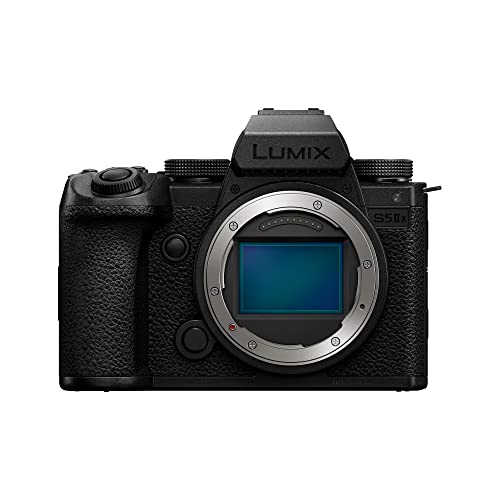
- Panasonic LUMIX S5IIX: check price on Amazon
- Canon EOS R6 Mark II: check price on Amazon
- Sony Alpha 7 IV: check price on Amazon
- Panasonic LUMIX S5II: check price on Amazon
- Nikon Z50 II: check price on Amazon
- Dedicated cinema camera class: available from film-equipment retailers (prose-only pick in this guide)
A short film is the most demanding thing an amateur camera is ever asked to do, and the most forgiving. Demanding, because the short must survive comparison, in a festival programme or a viewer’s feed, with work shot on equipment costing fifty times more, and its images will be judged as cinema: skin, shadow, movement, intention. Forgiving, because a short is short: its takes are brief, its days are few, its locations are borrowed, and a camera’s endurance limits, the tax on every other kind of filming, barely apply. The best cameras for filming short films are therefore chosen on a different axis from this series’ other guides: not stamina, not simplicity, but the quality of the image and the control of it, per unit of money a real short-film budget contains.
That budget deserves honesty. Most shorts are made for the price of a modest holiday, by people who will spend more on food for the crew than on the camera package, and the revolution of the last decade is that this no longer shows. The bodies below, mirrorless cameras that also take photographs, record images that have screened at festivals and won them. What separates them is not whether they can shoot your short, they all can, but how they behave on a set: how their footage grades, how their focus works with an operator’s hands, how their colour treats faces at midnight in a borrowed kitchen.
This guide also keeps a place for the dedicated cinema camera as a prose-only pick, because for some shorts it remains the right answer, and for the honest comparison every short-film maker should make before defaulting to a hybrid. But the centre of the guide is the modern truth: the short film’s camera problem has been solved at prices a short film can pay, and the remaining problems, script, sound, light, casting, were never the camera’s to solve.
Key Takeaways
- A short film judges its camera as cinema: skin, shadow, movement and grading headroom.
- The LUMIX S5IIX is the short-film maker’s deepest toolkit at a hybrid price.
- Canon’s R6 Mark II gives the fastest, most confident autofocus for small crews.
- Sony’s Alpha 7 IV brings the deepest lens catalogue a short can rent or borrow.
- The S5II is the value route into the same Panasonic colour and stabilisation.
- The little Nikon proves a well-lit short on a small sensor beats a badly lit one on a large sensor.
- Sound and light will decide your short’s fate before the camera does; budget them first.
In this guide
Quick Picks
| Camera | Badge | Why it is here |
|---|---|---|
| Panasonic LUMIX S5IIX | Best for Short Films Overall | Cinema tools, grading colour and set manners at a hybrid price. |
| Canon EOS R6 Mark II | Best for Small Crews | Autofocus that covers for the focus puller you do not have. |
| Sony Alpha 7 IV | Best Lens Ecosystem | Every lens your short could want exists to buy, rent or borrow. |
| Panasonic LUMIX S5II | Best Value Cinema Hybrid | Most of its sibling’s craft for the tighter budget. |
| Nikon Z50 II | Best First Short Camera | Small, kind and honest while the craft is learned. |
| Dedicated Cinema Camera Class | Best Pure Cinema Tool | Built only for film sets, with a set’s assumptions included. |
How did we choose cameras for filming short films?
We judged image as cinema judges it. Dynamic range that holds a window and a face in the same frame. Colour that treats skin as the sacred object it is in narrative work, because audiences forgive a soft background and never forgive a corpse-grey heroine. Highlight roll-off that behaves like film’s shoulder rather than digital’s cliff. And a log or flat profile worth grading, since the short’s look will be finished at a desk and the camera’s job is to bring the editor clay, not concrete.
Set behaviour came second. A short’s crew is three friends and a borrowed afternoon, so the camera must serve as its own focus puller’s assistant, its own monitor stack and its own continuity department. We weighted autofocus that can be trusted for a walking take, monitoring tools, waveforms, false colour, zebras in some form, that let a tiny crew judge exposure like a large one, and recording to media the production can afford in quantity.
Then the ecosystem of a short: lenses to rent for the weekend, cages and rigs that exist because other filmers use this body, and a used market deep enough that a production can buy, shoot and resell at a small loss. A short film is a project, not a lifestyle, and its camera economics are project economics. Finally we considered the stills nobody mentions: the poster, the production photographs, the festival programme image, all of which these hybrid bodies take superbly between set-ups.
The picks in detail

Panasonic LUMIX S5IIX — Best for Short Films Overall
Ask working short-film makers which hybrid body they would take to a desert island with a script, and the S5IIX is the answer that keeps recurring, because Panasonic designed it by listening to exactly those people. The recording options run deep, the V-Log colour grades with genuine latitude, the monitoring tools are a cinematographer’s rather than a vlogger’s, and the stabilisation lets a one-person crew produce the slow push-in that used to require a dolly and a grip. Its open-gate and high-resolution modes give the editor reframing room that a short, shot fast with imperfect coverage, will be grateful for in the cut.
On set it behaves like it belongs there. Phase-hybrid autofocus, the addition that completed this generation, holds an actor’s approach without the hunting that betrays a take. Audio provision is serious, the body rigs willingly into the cages and matte boxes of a small production, and its stills cover the poster and the unit photography without a second camera on the call sheet. Festival shorts shot on this class of Panasonic body are now too numerous to be a novelty, which is the strongest evidence a guide can offer.
Its demands are a filmmaker’s demands: the deepest menus in this guide, a learning investment before the shoot rather than during it, and L-mount lenses whose rental shelves are thinner than Sony’s in some towns. None of that outweighs the central fact. At the intersection of price and cinema craft, this is the body the short-film world has chosen, and it has chosen it in production, not in theory.
- Form: full-frame mirrorless, cinema-led
- Colour: V-Log with real grading latitude
- Tools: waveforms and pro monitoring
- Focus: phase-hybrid for actor movement
- Role: festival shorts, narrative work, music films
Strengths
- The deepest cinema toolkit at the price.
- Stabilisation replaces a dolly for many shots.
- Footage grades like a bigger camera’s.
Trade-offs
- Menus reward study before the shoot.
- L-mount rentals thinner in some towns.
- Wants a rig to become a full set camera.
Best for: short-film makers who grade their footage and shoot narrative seriously. Not suited for: filmers who want the camera to make every decision for them.

Canon EOS R6 Mark II — Best for Small Crews
The short film’s scarcest resource is not money but hands. There is no focus puller, often no camera assistant at all, and the director is also the operator, the caterer and the person who borrowed the location. The R6 Mark II is the pick for that reality, because its autofocus is the most trustworthy stand-in for the missing crew in this guide: it finds the actor’s eye, holds it through movement and occlusion, and lets a solo operator think about performance and framing instead of focus marks and prayers.
Canon’s colour is the other half of its short-film case. Skin under mixed practical light, the short’s natural habitat, renders with a kindness that saves hours in the grade and flatters a cast working for love. Its stabilisation smooths the handheld kitchen scene, its stills are excellent for the poster, and its menus are the ones a tired crew learns fastest at midnight. For the dialogue-driven short, two people in a room with something unsaid between them, this body quietly maximises the chance that every take is usable.
The honest notes: sustained maximum-quality recording asks thermal respect on hot sets, the RF lens shelf, while superb, is priced like it knows it, and the deepest cinema tools, the S5IIX’s home ground, are present in spirit rather than in full. For the small crew whose short lives or dies on faces and focus, those are acceptable trades, and this is the body that makes the fewest people necessary.
- Form: full-frame mirrorless, speed-led
- Focus: the small crew’s stand-in puller
- Colour: famously kind to skin
- Stabilisation: strong for handheld scenes
- Role: dialogue shorts, solo operators, fast days
Strengths
- Autofocus that replaces missing crew.
- Skin tones that flatter a volunteer cast.
- Menus a tired crew learns quickly.
Trade-offs
- Long hot takes need thermal respect.
- RF lenses are priced with confidence.
- Cinema tool depth trails the Panasonic.
Best for: tiny crews and solo filmers shooting performance-led shorts. Not suited for: productions with a dedicated focus puller and cinema crew.

Sony Alpha 7 IV — Best Lens Ecosystem
A short film is shot through its lens, and the lens is very often rented, borrowed or bought used for the production and released afterward. That economy runs deepest in Sony’s E-mount, where a decade of bodies has filled every rental house, classified listing and cinematographer’s cupboard with glass at every focal length and price. The Alpha 7 IV is the balanced body at the centre of that economy: high-resolution stills for the poster, detailed oversampled video for the film, mature autofocus, and a colour pipeline with the profiles editors know by heart.
For the short specifically, its virtues are reliability and familiarity. Crew hired or borrowed for the weekend have usually shot Sony; accessories, cages, monitors and media are everywhere; and the body’s behaviour across a long day is a known quantity with no surprises scheduled for the finale. Its video, while a step behind the S5IIX in raw cinema tooling, has carried countless shorts, music films and commercials, and its footage intercuts gracefully with the Sony cinema cameras a production might rent for its biggest day.
The concessions are the generalist’s: rolling shutter that asks care with whipping pans, menus that reward configuration before the shoot, and a video feature set aimed at the broad church rather than the chapel of cinema. For the production that values the ecosystem, the crew’s familiarity and the poster’s stills as highly as the footage, it remains a thoroughly rational centre of a short-film kit.
- Form: full-frame mirrorless, balanced
- Mount: E, the deepest rental and used market
- Stills: high resolution for posters and publicity
- Focus: mature, crew-familiar tracking
- Role: shorts within a rented-glass economy
Strengths
- Every lens the script wants exists nearby.
- Crews arrive already fluent in it.
- Stills arm covers poster and publicity.
Trade-offs
- Rolling shutter punishes whip pans.
- Cinema tools trail the class leader.
- Menus want setting up in advance.
Best for: productions renting lenses and borrowing crew. Not suited for: filmers wanting the deepest cinema tools in-body.

Panasonic LUMIX S5II — Best Value Cinema Hybrid
The S5II is the connoisseur’s value pick: the same sensor family, the same V-Log colour, the same phase-hybrid autofocus and the same excellent stabilisation as its X sibling, at a position in the range that leaves real money for the lens, the light and the sound that will decide the short’s fate. What it surrenders, certain professional recording and streaming refinements, is a list most short-film makers will read with a shrug, because a short is recorded to cards in a room, not streamed from a broadcast chain.
On a short’s set it behaves like the serious tool it is. The monitoring aids are present, the colour matches its sibling for the two-camera interview or the borrowed second body, and the stills are the same strong stills. L-mount glass from several makers, including the alliance’s keenly priced primes, builds a short-film lens set without the flagship tax, and the used market in this mount has become a film school’s best friend.
The compromises mirror its sibling’s, menus that reward homework and a rental shelf that varies by town, minus a few professional features at the margin. For the film maker whose budget is a fixed cake, the S5II is how the cake gets sliced so that the film, rather than the camera invoice, is what the audience remembers.
- Form: full-frame mirrorless, cinema-leaning
- Colour: V-Log matching its X sibling
- Focus: phase-hybrid, actor-steady
- Mount: L, multi-maker value glass
- Role: budget-conscious narrative shorts
Strengths
- Near-sibling craft for meaningfully less.
- Leaves budget for light and sound.
- Colour matches the S5IIX as second body.
Trade-offs
- Surrenders some pro recording refinements.
- Menus reward homework before the shoot.
- Rental depth varies by town.
Best for: short-film makers slicing a fixed budget wisely. Not suited for: productions needing the X model’s full pro feature set.

Nikon Z50 II — Best First Short Camera
Every filmography starts somewhere, and the Z50 II is this guide’s nomination for the somewhere. A first short is a craft apprenticeship disguised as a production: its director is learning blocking, its operator is learning light, and its camera should be a kind teacher rather than a demanding master. Nikon’s small body offers honest 4K, colour presets that let a beginner establish a look without a colourist’s vocabulary, subject recognition that keeps actors framed while the operator learns, and stills that will make a handsome first poster.
Its deeper virtue for a first production is economic honesty. The money it does not consume becomes the borrowed location’s thank-you, the one good microphone, the weekend’s lenses, the festival entry fees, the things that separate a finished short from an abandoned one. And its footage, properly lit, is the standing refutation of gear anxiety: audiences at student and community festivals respond to story, performance and sound, in that order, and a small sensor has never once been booed from a stage.
The limits are the ones a growing filmer will eventually feel: low-light headroom, shallow-focus glamour, and a crop-format lens shelf. Those are year-three problems. For the first short, and the second, the Z50 II’s combination of kindness, economy and honesty is exactly what the apprenticeship requires.
- Form: APS-C mirrorless, compact
- Colour: live presets for a beginner’s look
- Focus: recognition that frames actors kindly
- Economy: leaves budget for the film itself
- Role: first shorts, student and community film
Strengths
- A kind teacher for a first production.
- Budget survives for sound, light and festivals.
- Footage proves story outranks sensor size.
Trade-offs
- Low light and blur are physically limited.
- Crop lens shelf is the smaller one.
- Serious filmers will outgrow it, happily.
Best for: first-time short-film makers and student productions. Not suited for: productions shooting night exteriors on available darkness.
Dedicated Cinema Camera Class — Best Pure Cinema Tool
The prose-only pick names the class every short-film maker should at least audition: the dedicated cinema camera, built for film sets and nothing else. No stills worth mentioning, no vlogging concessions, just a sensor in a box designed around recording, with internal neutral-density filters that change exposure like a thought, professional audio inputs as a birthright, timecode for multi-camera and sound sync, and cooling that treats a twelve-hour day as the job description. Discussed here without a link because the class sits outside this guide’s verified pool, its exemplars are sold by specialist film retailers and rented everywhere films are made.
For the right short, it is not an extravagance but a simplification. The set that revolves around it needs fewer workarounds: no cage archaeology to reach the audio, no filter dance at noon, no anxiety about the long dialogue take. Crews fluent in cinema cameras move faster on one, and its footage arrives in the edit wearing the formats and metadata post-production dreams about. Rental, for a single short, often makes the class cheaper than ownership of anything in this guide.
Its assumptions are the price: it expects a crew, or at least an operator who is only an operator; it expects lighting, because its honesty about exposure is a professional’s honesty; and it gives back nothing to the hybrid life, no family photographs, no channel content, no stills for the poster. The short-film maker should choose it with open eyes, for the production that is truly a film set, and choose the hybrids above for the production that is a life with a film inside it. Both choices are honourable; confusing them is the only error.
- Form: dedicated cinema body, set-built
- Filters: internal ND as standard practice
- Audio: professional inputs built in
- Sync: timecode for sound and second cameras
- Role: crewed shorts, rentals, film-set days
Strengths
- Designed around the take, nothing else.
- ND, audio and sync without workarounds.
- Rental makes it a per-film decision.
Trade-offs
- Assumes crew, lighting and discipline.
- No stills, no hybrid second life.
- Discussed here without a purchase link.
Best for: crewed productions and one-off rentals for the big short. Not suited for: solo filmers and hybrid creators who also need stills.
Comparison table
| Camera | Sensor / form | Best at | Standout | Choose it for |
|---|---|---|---|---|
| Panasonic LUMIX S5IIX | Full frame | Cinema depth | V-Log, monitoring, open gate | Serious narrative shorts |
| Canon EOS R6 Mark II | Full frame | Small-crew confidence | Autofocus as focus puller | Dialogue and solo operation |
| Sony Alpha 7 IV | Full frame | Ecosystem and balance | Deepest lens economy | Rented-glass productions |
| Panasonic LUMIX S5II | Full frame | Value cinema craft | Sibling colour, lower cost | Fixed-budget filmers |
| Nikon Z50 II | APS-C | First-short kindness | Presets, economy, honesty | Students and beginners |
| Cinema Camera Class | Dedicated | Pure set tool | Internal ND, timecode | Crewed productions |
What should you check before choosing a camera for a short film?
Check the script against the camera, scene by scene. Count the night exteriors, where sensor and lens speed will be billed; the long dialogue takes, where recording behaviour and audio inputs matter; the moving shots, where stabilisation or a gimbal enters the budget; and the close-ups, where the camera’s colour will be judged on skin at two feet. A camera chosen against the actual script beats a camera chosen against a genre fantasy, and most shorts are one location, two actors and a conversation, a brief several picks here serve perfectly.
Check the sound plan before the sensor size. Where does the microphone live, who operates it, what does the camera accept and record, and what is the sync plan if sound is separate? Festivals reject shorts for sound a hundred times for every one rejected for resolution. Then check the grade: if the film will be coloured by a friend with a laptop, the log profiles above are assets; if it will be delivered as shot, the cameras’ baked-in colour, Canon’s and Nikon’s especially, deserves the higher bid.
Finally, check the rental shelf in your actual town for the mount you are buying into. The short-film economy runs on weekend rentals, and the body whose lenses your local house stocks deeply is, in production terms, a better camera than a marginally finer body marooned in a thin ecosystem.
How do you shoot a short film that looks like cinema?
Light for the camera you have
Cinema is mostly lighting wearing a camera as a disguise. Turn off the ceiling’s flat glare, put the actors near the window or the practical lamp, let one side of the face fall into honest shadow, and the smallest sensor in this guide will produce frames that read as film. The short that looks cheap almost always looks lit-by-the-room; the short that looks expensive looks lit-by-a-decision, and the decision is free.
Keep the camera still unless the story moves it
Amateur footage wanders; cinema holds its nerve. Lock the frame for the dialogue, let the actors supply the motion, and reserve camera movement for the moments the story turns, the push-in as the truth lands, the walk that changes a relationship. The stabilisation in these bodies makes stillness easy and movement smooth, which removes every excuse for the restless middle.
Direct the sound as seriously as the picture
Place the microphone for the voice, not for the camera’s convenience; record the room’s tone for the editor; slate the takes aloud so the sync is a pleasure rather than an archaeology. Audiences describe this discipline, without knowing its name, as the film feeling professional, and they are right every time.
Shoot the close-ups you will actually cut to
Shorts die in the edit from missing coverage: the listener’s face during the crucial line, the hands during the decision, the room’s reaction to the door closing. Shoot the reactions with the same care as the speeches, on whichever body you chose, and the film will cut like a much larger production. Coverage is the cheapest production value in cinema.
What mistakes do short-film makers make with cameras?
Spending the film’s money on the camera
The classic first-short error is a flagship body attended by no microphone, no light, no food and no festival fees. The audience will never see the camera’s specification; they will hear its absence in every scene. This guide’s value picks exist as a standing correction: buy the camera the film needs and fund the film with the difference.
Shooting log without a grading plan
A flat profile is raw material, not a look, and the short delivered in ungraded log looks like it was filmed through milk. Either budget the grade, in time or in a colourist friend, or shoot one of these cameras’ beautiful baked-in colours with pride. Both are professional choices; the ungraded middle is not.
Trusting autofocus past its brief
Even the Canon’s superb tracking serves the set best when the operator chooses the subject and the moment. Autofocus that is allowed to decide, in a two-shot with a turning head and a passing extra, will eventually choose wrongly at the exact take the performance was perfect. Use it as the finest assistant in this guide, and remain its director.
Forgetting the stills until the poster is due
The festival wants a poster, the programme wants a production still, the crowdfunding page wants proof of life, and the production that never assigned stills has a phone’s snapshots to offer. These hybrid bodies take magnificent photographs between set-ups for the cost of one crew member’s spare attention; assign it on the call sheet, not in the panic afterward.
Final Recommendation
For most short-film makers, the Panasonic LUMIX S5IIX is the recommendation: the deepest cinema craft available without leaving hybrid prices, and a body that will serve the films after this one. Choose the Canon EOS R6 Mark II when your crew is tiny and your film is faces, the Sony Alpha 7 IV when rentals and borrowed glass will carry the production, and the S5II when the budget must be sliced for sound and light. Begin on the Nikon Z50 II without a whisper of shame, and rent the dedicated cinema class when a production truly becomes a film set. The short will be judged on its story, its sound and its light; choose the camera that leaves you the money, the crew and the calm to get those three right.
Related guides
- Best Cinema Cameras for Starters: Log, Lenses and a Minimal Rig for Your First Films
- Best Cameras for Movies Under 1500: Cinema Kits That Respect the Whole Budget
- Best Cameras for Video for Short Films: Small Crews, Real Scenes
- Best Cameras for Starting Film Students: Cinema Tools a Student Budget Can Survive
- Best Cameras for Skate Filming: Follow-Shot Action Cams, a Solo 360 and the Budget Drop-Proof Starter
Frequently Asked Questions
Can a short film shot on a mirrorless camera really screen at festivals?
Yes, routinely, and it has been true for years. Festival selection turns on story, performance, sound and finish, and the bodies in this guide clear the image bar with room to spare. What separates screened shorts from unscreened ones is almost never the camera class; it is the script’s discipline and the sound’s quality.
Do I need a log profile for a short film?
Only if the film will actually be graded. Log gives the colourist latitude and gives the ungraded delivery a washed-out embarrassment. Decide the post-production path first: a colourist or a committed grading pass means log is an asset; delivery as shot means the cameras’ baked-in colour is the professional choice.
Which matters more for a short, the camera or the lens?
The lens, for the look; the camera, for the workflow. A characterful prime on the S5II or the Z50 II will out-image a kit zoom on the flagship for narrative work. But buy in the order the production needs: a body you can monitor, focus and record sound through is the foundation the lens stands on.
Should I rent or buy for one short film?
Rent the exotic, buy the everyday. A dedicated cinema camera or a special lens for one production is a rental decision; the hybrid body that will also serve your life, your channel and your next three shorts is a purchase. Many filmers do both: own the S5II-class body, rent the cinema class for the biggest day, and intercut them happily.
How important is stabilisation for narrative filming?
For the locked-off, tripod-based grammar of most shorts, less than the marketing suggests; for the walking shot, the handheld kitchen scene and the one-person crew, it is transformative. Panasonic’s implementation is the class reference, and it genuinely replaces support equipment a small production cannot carry.
How does the short film’s edit judge the camera afterward?
No one knows a camera like the person who edits its footage. The editor learns which body’s colour survives the grade’s ambitions, whose autofocus quietly saved the third take, whose highlights clipped like a cliff at the one unrepeatable moment, and whose files organised themselves like a professional’s or arrived as a junk drawer. Short-film makers choosing their second body are really choosing from their first edit’s memories, and the patterns are consistent enough to print: colour and reliability are remembered with gratitude; headline resolution is barely remembered at all.
The practical lesson for the first purchase is to shoot a test day and edit it before committing the production. Film faces in the location’s real light, a walk, a conversation, a night exterior, then grade and cut the results on the machine the film will actually be finished on. The camera whose footage your own hands enjoy editing is, with a reliability no review can match, the right camera for your short.
What does a short film teach its maker about cameras?
It teaches that the camera is the least of it, which is a lesson only ever learned by finishing one. The makers of a first short arrive believing the image is the problem and leave knowing the problems were the script’s third act, the location’s echo and the afternoon the light went and the scene was not covered. Their second short is better in every department except, often, the camera, which is the same one, now operated by a film maker instead of an enthusiast.
It also teaches the specific gratitude this guide is built on: for autofocus that held the take the actor finally nailed, for stabilisation that saved the only hour the location allowed, for colour that forgave the mixed light of a borrowed room. Choose any of the five linked bodies with those rescues in mind, fund the sound and the light like they matter more, because they do, and go and finish the film. A finished short on the smallest camera here outweighs, in every festival office and every career, the unfinished masterpiece planned for a camera that was never quite bought.
How should a short-film kit be packed for a borrowed location?
Shorts are filmed in other people’s spaces, on other people’s patience, and the kit’s footprint is part of the production’s manners. Everything in one rolling case and one bag, nothing essential in a third place, cables coiled and labelled, batteries charged and counted out loud at load-in and load-out. The hybrid bodies in this guide rig compactly, which is a genuine production virtue: a kit that fits a car’s boot and a location’s corner leaves the borrowed room looking like a film set for the camera and like itself for its owner, whose goodwill is the sequel’s location agreement.
Strike the location as a ritual of gratitude: photographs of the room as found, furniture returned by the photographs, a thank-you that includes the stills of the owner in their own space if they would like them. Short-film careers are built on borrowed rooms, and the productions that are invited back are the ones whose cameras, however fine, were the least memorable thing about their visit.
How do you cast and schedule around the camera’s real limits?
Experienced short-film makers quietly reverse the amateur’s workflow: instead of buying a camera and then discovering the script it cannot shoot, they let the script’s demands schedule the camera’s strengths. The long dialogue scene goes to the coolest part of the day and the body with the deepest recording manners. The night exterior is shot at dusk-for-night where the light allows, or budgeted the fast lens it truly needs. The one-take walk is rehearsed as choreography, because stabilisation forgives footsteps, not confusion. None of this is limitation worship; it is how professional sets have always worked, where even the largest cinema cameras have appetites and tempers that the schedule respects.
Casting interacts with the camera more than beginners expect. Faces with strong bone structure forgive hard light; expressive, mobile performers reward the Canon’s tracking; a cast of first-timers is flattered by kind colour and a locked camera that lets them forget it. The director who tests the actual cast on the actual camera, one afternoon before the shoot, learns things no review contains, including which of this guide’s bodies makes their particular people look like the film in their head.
What is the honest role of the smartphone on a short-film set?
It is the set’s Swiss Army knife and should be honoured as such: the continuity photograph, the blocking rehearsal filmed at lunch, the slate’s backup, the behind-the-scenes that the crowdfunding page will live on, and, in a genuine emergency, a B-camera whose footage, matched with humility in the grade, has saved more than one production’s missing angle. What it should not be is the plan. The short that sets out to prove a phone is enough usually proves only that its maker is resourceful, while the same resourcefulness on any body in this guide would have produced a film instead of a demonstration.
The mature attitude, and the one this guide recommends, is hierarchy without snobbery: the chosen camera owns the image, the phone serves the production, and nobody apologises for either. Festivals judge the film, and the film’s audience will never know or care which shots arrived from which device, provided the story held and the sound was clean.
How do you rehearse a camera before the cast arrives?
Give the body a full working day before the production does. Shoot the location empty at the hours the scenes will use it, and learn where its light turns against you. Record a friend’s conversation at the scene’s actual distance, and listen to the audio chain with the editor’s ears. Walk the moving shots with a stand-in until the stabilisation, the focus and your own feet agree. Configure the camera’s custom modes for the production’s recurring set-ups, interior, exterior, night, so the shoot day is spent on performance rather than configuration, and write the settings on a card taped inside the case, because a reset camera on a pressured morning is a rite of passage nobody needs twice.
Then shoot the stills session: the poster concepts, the cast portraits, the location photographs for continuity. A body that has already worked a full day in the production’s world stops being equipment and becomes a colleague, and colleagues, unlike equipment, get the benefit of the doubt when the light fails at the crucial take, which it will.
Why do so many shorts look alike, and how does yours avoid it?
Because their makers all bought the same advice: the same shallow-focus look, the same teal shadows, the same drone opening over the same rooftops. The cameras in this guide are capable of that house style, and of a hundred others, and the difference is intention. Choose the film’s visual rules from the story outward: the locked frames of a story about paralysis, the handheld restlessness of one about pursuit, the deep focus of one about a community, the shallow focus of one about obsession. Then configure the camera, the lenses and the light to those rules and hold them for the whole film, including the scenes where breaking them would be easier.
Consistency is what audiences read as style, and it costs nothing but decision. The short that looks like itself, shot on the smallest body here, will be remembered after the technically superior short that looked like everyone else is forgotten, which is the most encouraging sentence in this entire guide for the maker whose budget is small and whose eye is their own.
How does a short film’s camera choice echo into its festival life?
The festival circuit asks the film questions its makers rarely anticipate: delivery formats, subtitle files, a poster at print resolution, stills that survive a programme’s layout, and occasionally a projection test in a real cinema where the footage meets a twenty-foot screen. The bodies in this guide pass that meeting comfortably when their footage was exposed and lit with care, and the projection test is where the grade’s headroom, argued for throughout this guide, stops being theory. A short that looks rich on a laptop and thin on a cinema screen teaches its maker, publicly, why dynamic range was worth ranking first.
The circuit also rewards the production’s paper trail: releases, credits, a synopsis the camera cannot write. Build the habit from the first short of finishing the film completely, files, stills, documents, because programmers programme finished films and the difference between a screened short and an almost-screened one is, dispiritingly often, administrative rather than artistic.
A closing note on ambition and scale
Make the short the size of its idea. The two-hander in one room, shot on the smallest camera here with total conviction, has launched more careers than the underfunded epic that needed a cinema camera, a crew of twenty and a miracle. The bodies in this guide are ranked to serve the film you can actually finish this year, at the standard its audience will actually apply, and the kindest advice in this entire article is the simplest: pick the one your budget survives, learn it for a day, cast it well, light it deliberately, record its sound like a professional, and finish. The next film’s camera decision will be made by a film maker, and it will be a better decision for everything this one taught you.
And if the film fails, as some beloved films do, let it fail at the level of its ambitions rather than its equipment. A maker who can say the camera did everything asked of it, and the story simply missed, owns a clean diagnosis and a clear next film. A maker who suspects the camera owns neither. Every pick above was chosen to give its owner that clean diagnosis, which is the most valuable thing a first serious camera can provide: the knowledge that the next improvement lives in the work, not in the shop.
Keep the camera’s box, incidentally, and its receipts, and treat the whole package as the production company it quietly is. Short-film makers who organise their tools like a business find that the business, festivals, commissions, collaborations, begins to organise itself around them. The camera is the first asset most film makers ever own; the habits formed around it, care, documentation, insurance, honest accounting of what it can and cannot do, are the habits of every larger production they will ever run.
Finally, lend the camera. The short-film world runs on borrowed bodies, borrowed lenses and borrowed afternoons, and the maker who lends generously joins the network that will carry their own difficult productions. Your S5II on a friend’s short this month is their cinema camera on yours in the spring, and the credits of half the shorts at any festival are, read closely, a ledger of exactly this reciprocity.
That network, in the end, is the real answer to the question behind this keyword. The best camera for filming short films is the one embedded in a community of makers who lend, crew, watch and criticise for each other, because shorts are not made by cameras or even, finally, by directors. They are made by small groups of people who decided a story was worth a season of weekends, and the camera’s job, which every pick here can do, is simply to be worthy of that decision when the light is right and the actor is ready.
Choose it, then, the way you would choose a collaborator: for reliability under pressure, for honesty about its limits, and for the way it makes the people around it better at their own jobs. On those criteria the ranking above will not steer you wrong, and neither will the film you are about to make.
One last practical mercy: whatever body you choose, shoot the film’s hardest scene second, not first and not last. First, the crew is still learning the camera; last, everyone is exhausted and the light is gone. Second, with one scene’s confidence banked and a whole day’s energy remaining, is where difficult material has always been scheduled by directors who finish their films, and finishing, to say it one final time, is the entire art this guide exists to serve.
Write that schedule on the call sheet, protect it against the day’s improvisations, and when the difficult scene is in the can by lunch, the whole production will feel the peculiar lightness of a film that is going to be finished. Cameras do not create that feeling; planning does, and the camera’s role is to never be the reason the plan failed.
Hold the production to that standard and the choice among these six becomes almost easy, because all of them can keep a plan. The differences that remain, colour, focus temperament, ecosystem, are matters of taste and town, and taste and town are exactly the grounds on which a film maker, rather than a shopper, should decide.
Decide on those grounds, this week, and spend the season the decision saves you on the script. The script is where the film is; the camera, whichever of these worthy bodies it is, will be ready when the script is.
And when the script is ready and the camera is charged, shoot a single test scene before the production proper, with the real cast, in the real room, and watch it that evening without flinching. Whatever survives that screening is your film’s true camera package, and it will not be a specification. It will be a way of working that the whole crew now shares.
How should a director rehearse actors differently when shooting coverage for a dialogue heavy short?
Begin rehearsals away from the set, seated around a table, exploring intention and rhythm without worrying about marks or eyelines. Once performances feel alive, transfer blocking into the actual room gradually, allowing performers to discover furniture and doorways organically. Filming a complete wide pass early protects continuity if later close coverage runs short on time, while also giving editors a reliable spine for pacing difficult exchanges.
Reserve fresh emotional energy for the tighter framings by limiting full intensity repetitions during technical walkthroughs. Actors can mark difficult speeches at reduced volume while lighting and focus get refined, then commit fully once recording begins. That conservation proves especially valuable for younger casts and volunteers balancing production days against ordinary employment commitments elsewhere in town.
What low cost lighting approach gives night interiors depth without making rooms look artificially staged?
Motivate every visible glow from objects already plausible within the story world, such as table lamps, hallway spill, or television flicker during a lonely scene. Place the key source just outside frame on the side facing away from the lens, creating gentle modelling across faces instead of flat frontal brightness. Dim practical bulbs individually where possible, balancing their warmth against cooler moonlight suggested through a curtained window behind the subject.
Negative fill from a dark blanket positioned opposite the lamp deepens shadows without purchasing specialised modifiers. Expose for highlights on skin first, accepting that corners fall into darkness, because audiences read selective visibility as mood rather than mistake. Photograph a still frame before rolling, scrutinising reflections in mirrors and picture glass that might reveal equipment or crew members accidentally.
Sound deserves a dedicated rehearsal pass even when dialogue seems straightforward during script readings. Rooms reveal hums, traffic patterns, and reflective echoes only when everyone falls silent and listens deliberately through headphones for a full minute. Moving a refrigerator plug, closing a particular window, or shifting a scene toward the carpeted end of a location can rescue intelligibility more cheaply than any later software treatment, preserving precious editing hours for performance choices instead of emergency repairs.
Casting sessions benefit from pairing prospective performers for a short improvised exchange rather than relying solely on prepared monologues delivered alone. Chemistry, listening habits, and generosity with focus emerge immediately when two strangers must react honestly. Directors who observe those qualities early avoid discovering incompatibility during expensive production days when schedules leave little room for replacement.
Directors should also keep a private log after each shooting day noting which setups energised the cast and which drained momentum, since those observations quietly reshape the following day schedule more usefully than technical data alone ever manages for a small production working under pressure.
Related Guides
Budget cinema has a dedicated home in our affordable cinema camera guide. The wider video craft is mapped in the filming video deep dive, and one delicious specialism waits in our food filmmaking roundup.


