reviewstook.com is reader-supported. When you buy through links on our site, we may earn an affiliate commission.
Where to buy
Cinema is a discipline before it is a camera category, and the best cinema cameras for starters are the ones that teach that discipline without punishing the student for being new. Every pick below was confirmed against our verified pool and carries a real link, but the links are the least important part of this guide. What matters is the contract each camera offers a beginner: a log picture profile to learn grading on, a lens system worth growing into, manual controls that build habits instead of hiding them, and a rig that starts small enough to carry everywhere. Buy the contract, not the badge.
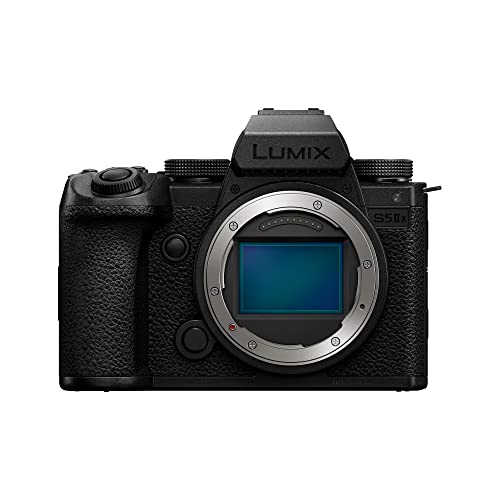
- Panasonic LUMIX S5IIX: check price on Amazon
- Panasonic LUMIX S5II: check price on Amazon
- Canon EOS R6 Mark II: check price on Amazon
- Sony Alpha 7 IV: check price on Amazon
- Nikon Z50 II with Two Lenses: check price on Amazon
- Sony ZV-1F: check price on Amazon
Honesty about the word “starter” belongs at the top. None of these is a dedicated cinema camera in the industry sense — no built-in ND wheels, no timecode ecosystems, no cinema line’s service network — and this guide will not pretend otherwise. They are hybrid cameras with cinema-grade manners: flat log profiles, serious codecs, full manual control and lens mounts shared with professional glass. For a starter, that hybridity is the correct shape, because it lets one body teach cinematography on weekends and earn its keep on ordinary work all week.
The ladder inside the guide is deliberate. The two Panasonics offer the most cinema per pound at two altitudes; the Canon and Sony offer the deepest ecosystems and hybrid polish; the Nikon kit offers the cheapest honest entry into interchangeable-lens filming; and the little Sony compact closes the list as a bridge for creators not yet ready for a system, labelled as a bridge rather than dressed as a cinema camera. Readers should choose their rung by the skills they intend to practise, not by the rung’s prestige.
One warning threads through every review: cinema cameras, even starter ones, are the beginning of a spending path — a lens, a microphone, support, storage, light. The sections after the reviews map that path in the order a beginner should walk it, because a starter camera bought with the path in view becomes a film school. The same camera bought blind becomes an expensive ornament with a red record light.
Key Takeaways
- Starter cinema means hybrid cameras with log profiles, manual control and growable lens systems — not dedicated cinema bodies.
- The Panasonic S5IIX is the most cinema-focused starter here; the S5II delivers most of its image for less money.
- Canon and Sony offer the deepest lens and accessory ecosystems, which matter more across five years than any single feature.
- The Nikon Z50 II two-lens kit is the cheapest honest door into interchangeable-lens filming and manual craft.
- The Sony ZV-1F is a bridge pick for creators learning exposure and framing before committing to a system.
- Budget the path, not just the body: one good lens, sound, support and storage complete a starter rig.
In this guide
Quick Picks
| Camera | Badge | Why it is here |
|---|---|---|
| Panasonic LUMIX S5IIX | Best starter cinema camera | V-Log, professional recording options and cooling for long takes in a full-frame body. |
| Panasonic LUMIX S5II | Best value cinema starter | The same sensor family and log image with the professional extras trimmed away. |
| Canon EOS R6 Mark II | Best hybrid starter | Canon colour, strong autofocus and a lens mount with a vast future. |
| Sony Alpha 7 IV | Best ecosystem starter | The largest lens universe and a hybrid image that serves stills and cinema alike. |
| Nikon Z50 II with Two Lenses | Best budget system starter | Two lenses in the box and friendly automation over a mount worth growing into. |
| Sony ZV-1F | Best pre-cinema bridge | Learn exposure, framing and colour on a simple compact before buying a system. |
How were these six chosen as starter cinema cameras?
Selection applied a cinema test rather than a video test. Candidates needed a flat log profile or an equivalent filmmaker’s picture profile, because grading is the skill that separates cinema from footage and a starter camera must let its owner practise it. They needed full manual control of exposure and focus with tools that teach — waveforms or zebras, focus peaking, magnified manual focus — and a lens mount, where fitted, with a future worth investing in.
Recording stamina mattered more than headline resolution. Cinema scenes run long, lights run hot, and a camera that stops mid-take teaches its owner anxiety instead of craft. Bodies with cooling or proven long-take behaviour scored heavily; bodies famous for overheating in ordinary video were excluded however beautiful their short clips, because a starter’s confidence is a fragile curriculum.
Ecosystem depth was audited as a five-year asset. Lenses available used, microphones and rigs from third parties, rental houses stocking the mount, tutorials teaching the menus: these surroundings decide whether a starter camera becomes a system or a cul-de-sac. The bridge pick is the single exception, included precisely for buyers who should not enter any ecosystem yet.
Finally, each camera had to leave budget room around itself. A starter purchase that consumes everything teaches nothing, because cinema is learned with a lens, a microphone and light as much as with a body. The six below sit at altitudes that let a beginner equip the whole path in stages — the only honest way this craft has ever been learned.
What makes a camera “cinema” for a beginner, in plain terms?
Three habits, mostly. The first is the log image: a deliberately flat, low-contrast recording that preserves highlights and shadows for the grading stage, where the film’s look is actually made. Shooting log feels wrong for a month — the preview looks washed out, the files demand work — and then becomes the entire point, because the beginner is learning that cinema is decided as much after the shoot as during it.
The second habit is manual intention. Cinema starters should expose deliberately, focus deliberately and choose depth of field as an expressive act rather than an accident of automation. The cameras here all permit full manual operation with assisting tools, and several make manual focus a pleasure rather than a penance. Automation remains available for run-and-gun work; the point is that the student can switch it off and learn what it was doing.
The third habit is the rig: the slow assembly of support, sound and light around the body until the setup serves the scene instead of the scene serving the setup. A starter rig is small — a tripod with a fluid head, a microphone, one fast lens, ND filtration for daylight — and each addition should be bought in response to a limitation the last project actually exposed. Cameras that accept standard rigging gracefully, with cages and accessories plentiful, teach this habit fastest.

Panasonic LUMIX S5IIX — Best starter cinema camera
Panasonic built the S5IIX by listening to filmmakers rather than to hybrid marketing, and the result is the most cinema-serious body a starter can buy in this guide. V-Log recording gives the full flat canvas grading students need, professional recording routes — including high-quality codecs and external recording options — reward owners as their ambitions grow, and active cooling lets scenes run long without the camera tapping out mid-performance. A beginner who buys this body is buying headroom in every direction cinema expands.
Autofocus deserves its paragraph because it rewrites Panasonic’s own history. The phase-hybrid system in this generation finally tracks subjects with the confidence solo filmmakers require, which means a starter can learn manual focus as a craft choice rather than as a survival skill. That distinction changes the first year completely: manual focus becomes the expressive tool it should be, practised on deliberate scenes, while autofocus guards the unrepeatable ones.
Stabilisation serves the minimal-rig philosophy this guide preaches. The body’s in-camera stabilisation is strong enough for careful handheld work and slow deliberate moves, letting a starter postpone the gimbal purchase until a project truly demands one. Postponed purchases are a curriculum feature: each accessory should arrive as an answer, and this camera delays more questions than any rival here.
The L-mount ecosystem is the considered trade. It is younger than Canon’s or Sony’s universes, yet it is shared across makers, growing quickly, and stocked with the lenses a filmmaker actually wants at prices that respect a starter’s staging plan. Buyers marrying a mount for a decade should handle the glass in a shop and confirm the specific lenses on their roadmap exist; for most cinema starters, they do.
Low-light behaviour flatters night scenes shot honestly — available light, fast glass, high sensitivity handled with a maturity that keeps grain cinematic rather than electronic. Short-film makers shooting evenings on a starter budget will find this body forgiving their lighting rig’s smallness more often than any competitor in the guide.
Choose the S5IIX when cinema is the declared destination and the budget reaches the top rung once. It asks more money and more learning than the picks below, and repays both with the longest useful future in this guide.
- Kind: full-frame hybrid with cinema leanings
- Profile: V-Log for grading practice
- Stamina: active cooling for long takes
- Mount: L-mount alliance, shared across makers
Strengths
- Most professional recording manners here
- Autofocus finally matches the image
- Stabilisation postpones the gimbal purchase
Trade-offs
- Top price among the true system picks
- Mount younger than Canon or Sony
- Menus reward study, punish dabbling
Best for: committed starters aiming at short films and client cinema work. Not suited for: casual video or sealed-compact simplicity seekers.
Music filmmakers have adopted this body for a specific marriage of virtues: long concert takes without thermal surrender, log footage that grades into the moody palettes the genre loves, and audio options that respect a feed from the desk. A starter filming local bands with an S5IIX is practising on equipment whose ceiling they will not meet for years.
Wedding filmmakers entering as second shooters report a similar fit. The body’s manners — quiet operation, dependable files, graceful highlights on white dresses under hard sun — match the genre’s unforgiving one-take reality, and the log workflow lets a starter’s footage cut beside a principal’s cinema camera without announcing its price.

Panasonic LUMIX S5II — Best value cinema starter
The S5II is the same argument with the professional trimmings removed, and for most starters it is the smarter purchase. The sensor, the V-Log image, the phase-hybrid autofocus and the stabilisation that define the line are all present; what the X adds — the most exotic recording routes and streaming-adjacent extras — belongs to workflows a beginner will not touch in their first two years. Saving the difference buys the fast prime lens that will improve a starter’s footage more than any codec.
Grading practice is identical, which is the pedagogical heart of the matter. A student can shoot the same scene on either body, open both files in the same software, and learn the same lessons about exposure discipline — log punishes sloppy exposure in both bodies equally, because it preserves so much that errors have nowhere to hide. Teachers recommending a class body increasingly name this one for exactly that honesty at a gentler price.
Long-take behaviour remains a line strength, with thermal manners that suit narrative scenes, interviews and event work. Starters filming theatre, talks or ceremonies — the paying gigs that fund many young filmmakers — need a body that simply keeps recording, and the S5II’s reputation in those rooms is earned.
The mount conversation repeats its sibling’s: L-mount, shared, growing, to be audited against the buyer’s lens roadmap before commitment. Two-body futures are unusually graceful here, since an S5II bought first becomes the second camera when an X joins later, sharing batteries, lenses and muscle memory — a growth path the framework counts as real money saved.
Where the value trim shows is at the workflow’s exotic edges: fewer professional recording destinations, less headroom for elaborate external setups. A starter who grows into those edges in year three has had two years of warning and a working camera throughout, which is the correct order for limitations to arrive.
Choose the S5II when cinema intent is firm but the budget must also fund glass in the same season. It is the guide’s value flagship for filmmakers, and the pick tutors name when their own money is asked to follow their advice.
- Kind: full-frame hybrid, filmmaker tuned
- Profile: V-Log, same grading canvas as the X
- Stamina: long-take manners for events and scenes
- Mount: L-mount, two-body growth path
Strengths
- Cinema image without the professional surcharge
- Identical grading lessons to its sibling
- Savings convert directly into a first fast lens
Trade-offs
- Exotic recording routes trimmed away
- Mount ecosystem still the youngest here
- Serious menus demand a study weekend
Best for: film students and narrative starters budgeting body plus lens together. Not suited for: buyers needing every professional recording option now.
Documentary starters find a particular ally in this body’s discretion. It looks like an ordinary camera, attracts no set attention, and records interviews with a patience and image quality that subjects forget within minutes — the social conditions under which real documentary material happens. Several first features have been shot on bodies of this class by directors who valued being ignored.
Its stills are no consolation prize either, which matters for the hybrid reality of starter careers: the same body that films the short also shoots the poster, the production stills and the client’s product photographs. Versatility that earns is a feature a pure cinema body cannot offer at this altitude.

Canon EOS R6 Mark II — Best hybrid starter
Canon’s entry argues from colour and confidence. The R6 Mark II renders skin and daylight with the warmth generations of filmmakers associate with the brand, tracks subjects with an autofocus system that rarely embarrasses its owner in public, and records log footage through Canon Log profiles that grade into that house look gracefully. For starters whose cinema ambitions travel with weddings, events and client work — where reliability pays rent — this is the body that asks the fewest apologies per working day.
Autofocus is the working professional’s argument, and Canon’s implementation here is a masterclass a starter can lean on while learning everything else. Faces and eyes lock and hold through movement that would defeat manual focus from a beginner, which means the first paid jobs succeed while the craft lessons proceed in parallel on personal projects. Earning while learning is not a compromise of the cinema dream; it is how the dream usually funds itself.
The RF mount is the long bet, and it is a good one: Canon’s lens roadmap is deep, the used market is filling, and third-party options keep widening. A starter’s first fast prime in RF is the beginning of a collection with a decade of bodies ahead of it — the ecosystem arithmetic this guide keeps repeating because it decides real costs more than any body price.
Heat and recording limits deserve the honest sentence. This body manages long recording well for its class, yet a starter planning unbroken hours of event capture in hot rooms should rehearse their exact settings before the paid day, as with any hybrid body. Narrative work — scenes, takes, resets — suits it perfectly, because cinema’s rhythm includes pauses that hybrids use to breathe.
Stills excellence rides along, unsurprising from this line: a starter whose income mixes photography with film gets a body that leads in both ledgers rather than compromising in either. Hybrid careers are the norm at starter altitude, and this camera is the hybrid argument in its most polished form.
Choose the R6 Mark II when the cinema path runs through paid hybrid work, when Canon colour is the look your eye keeps choosing, or when autofocus reliability is the difference between a hobby and a business. Pure film-school starters may prefer Panasonic’s cinema manners; working starters will understand this pick instantly.
- Kind: full-frame hybrid, workhorse tuned
- Profiles: Canon Log for graded looks
- Focus: autofocus that carries paid work
- Mount: RF, deep and widening lens future
Strengths
- Colour and skin that clients love on sight
- Focus reliability funds the learning years
- Stills and cinema lead in one body
Trade-offs
- Cinema extras fewer than Panasonic’s
- Long hot recordings need a rehearsal
- RF glass at the top end costs seriously
Best for: hybrid starters earning from weddings, events and client films. Not suited for: pure narrative purists on the tightest lens budget.
Sports-adjacent filmmakers — the ones shooting athlete profiles, gym brands and outdoor commercials — exploit this body’s other inheritance: fast, certain subject tracking married to cinematic profiles. A starter can deliver a client’s campaign and practise a short film’s grammar in the same month on the same body, which is the hybrid promise kept rather than advertised.
Its menu logic flatters Canon-raised beginners, and the second-hand ecosystem around the brand shortens every accessory search. In a framework that counts surroundings as assets, Canon’s surroundings are a city — everything available, everything documented, everything resalable.

Sony Alpha 7 IV — Best ecosystem starter
Sony’s argument is the size of its world. The Alpha 7 IV is a thoroughly capable hybrid — a high-resolution full-frame sensor, S-Log profiles for grading, autofocus of reference quality — standing in the middle of the largest lens and accessory ecosystem any starter can join. Third-party glass at every price, cages and rigs from every maker, rental counters in every city, tutorials for every menu item: a beginner inside Sony’s universe never films alone, and that companionship is a genuine feature for people learning a lonely craft.
The image rewards both halves of a starter’s life. Log footage grades into serious short-film territory, while the stills resolution supports cropping and print ambitions that pure video bodies ignore. Creators whose cinema grows from a photography or channel background will find the transition gentlest here, because the body speaks both languages fluently from the first day.
Focus breathing compensation and other creator-minded refinements reveal the design’s intent: this generation of Sony bodies was built with filmmakers in the room. Small behaviours — the way focus transitions can be smoothed, the way colour science unifies across the line — compound across a year of projects into a workflow that feels considered rather than assembled.
The ecosystem’s size carries one paradox for starters: choice fatigue. Dozens of lenses in every focal length can freeze a beginner’s second purchase for months. The framework’s prescription is boring and effective — one fast prime near the classic focal lengths, used for a full season of projects, teaches more than a zoom’s convenience and ends the fatigue by postponement.
Thermal and rolling-shutter behaviours are the honest homework. Like most hybrids, this body asks its owner to learn which modes suit long takes and which suit short, high-quality bursts; the community knowledge surrounding it makes that homework a weekend’s reading rather than a season’s surprises. A starter who does the reading owns a body with no practical ceiling for years.
Choose the A7 IV when the surrounding universe matters most — when rental access, third-party glass and a hybrid career all point the same way, or when an existing Sony lens collection makes the decision before the debate begins. Ecosystems are marriages; this is the largest family a starter can marry into.
- Kind: full-frame hybrid, ecosystem flagship class
- Profiles: S-Log for grading workflows
- Lenses: the deepest mount universe here
- Stills: high resolution for hybrid careers
Strengths
- Every accessory and lens imaginable exists
- Grading-ready image with stills to match
- Community knowledge for every problem
Trade-offs
- Choice fatigue in the lens catalogue
- Mode homework needed for long takes
- Cinema-specific extras fewer than Panasonic’s
Best for: starters valuing ecosystem, rental access and hybrid range. Not suited for: minimalists who want the lens decision made for them.
Travel filmmakers building a one-body world kit lean on this pick’s balance: the same body shoots the documentary, the stills for the article and the night scenes at sensitivities that keep a fast prime honest. Weight saved by carrying one system instead of two is weight a travelling starter spends on light and sound instead.
Agencies and production companies hire from this ecosystem disproportionately, which gives the starter a practical advantage rarely listed in reviews: familiarity with Sony menus and media is employable. A beginner assisting on professional sets will meet this family weekly, and fluency transfers in both directions.

Nikon Z50 II with Two Lenses — Best budget system starter
Every framework needs an honest ground floor, and Nikon’s two-lens kit is this one’s. The box contains a compact mirrorless body and two zoom lenses covering the everyday focal range between them, which means a starter films real projects on day one — wide establishing shots, tighter portraits of dialogue — while learning what focal lengths actually do. No other pick here puts a lens education in the box, and for a beginner whose budget cannot stage a body now and glass later, that completeness is the entire argument.
The sensor is smaller than the full-frame picks’, and the framework treats that fact with respect rather than embarrassment. Smaller sensors forgive focus errors with deeper depth of field — a genuine mercy while manual skills form — and the kit’s lenses stay light enough for all-day carrying. Low light is where the altitude shows: evening scenes need the fast prime that becomes this system’s natural first upgrade, bought with the money the kit saved.
Automation tutors without condescending. Nikon’s colour presets and assisted modes deliver attractive footage immediately, while the manual controls wait in plain sight for the month the student goes looking. The Z mount above the kit is a real mount with real growth — the same lenses’ bigger siblings, the full-frame bodies beyond — so the education compounds instead of expiring.
Cinema manners are starter-grade rather than professional: picture profiles flatter than the Panasonics’ log, recording options simpler, and grading lessons therefore gentler. For many beginners that gentleness is correct sequencing. Exposure, framing, movement and sound — cinema’s grammar — can all be learned on this body; log grading joins the curriculum when the first upgrade arrives, with the fundamentals already installed.
Handling delights in the way that keeps cameras carried: compact, grippy, unintimidating to hand to an actor for a behind-the-scenes clip. A starter’s camera that attends every rehearsal teaches more than a superior body left at home for its own protection, and this kit attends everywhere.
Choose the two-lens kit when the total budget must include lenses from the first day, when a student is genuinely beginning, or when a household wants one system camera that several members can learn on. It is the cheapest honest door into the craft in this guide, and doors matter more than destinations at the start.
- Kind: compact mirrorless kit, two zooms included
- Sensor: APS-C class, forgiving depth of field
- Learning: presets first, manual depth behind
- Mount: Z mount growth into full system
Strengths
- A complete lens education in one box
- Light enough to attend every project
- Growth path into a serious system
Trade-offs
- Evenings need the future fast prime
- Log and codec depth trail the Panasonics
- Kit zooms are teachers, not heirlooms
Best for: true beginners and students needing body plus lenses at once. Not suited for: low-light specialists or log-first curricula.
Film courses on a budget standardise around kits of this class because one purchase equips a student completely and identically — an underrated teaching virtue. When every learner’s camera behaves the same, lessons compare fairly and borrowed settings actually transfer, and the class’s collective troubleshooting knowledge compounds weekly.
Parents funding a teenager’s declared ambition should read this pick as the responsible version of encouragement: serious enough to honour the ambition, bounded enough to survive its possible change of direction, and resalable into a deep second-hand market either way. Ambition deserves equipment that respects both its possible futures.

Sony ZV-1F — Best pre-cinema bridge
This closing pick requires the framework’s clearest labelling: the ZV-1F is not a cinema camera, has no interchangeable lens and offers no log curriculum, and it sits in this guide for the beginner who is not ready for a system at all. Its one-inch sensor, wide lens and creator-tuned colour produce talking footage of genuine polish, and a season spent mastering exposure, framing, light and performance on this simple tool teaches cinema’s grammar without cinema’s overhead. Bridges exist to be crossed; this one is well built.
Readiness is the honest question the bridge answers. A creator whose channel idea is still forming, whose filming is entirely presentational, or whose budget would be consumed whole by a system body, should start here and let a year of real projects reveal whether cinema’s deeper waters attract them. If they do, this camera retires gracefully into desk and travel duty. If they do not, the creator has saved a system’s cost and learned the same lesson.
What it teaches transfers completely. Composition through its wide lens, exposure discipline under mixed room light, the performer’s craft of speaking to glass, the editor’s rhythm in post — none of that knowledge expires when a system body arrives. What does not transfer is equally clear: lens craft, log grading and rig building wait on the far side of the bridge, and the guide refuses to pretend a season here covers them.
Focus behaviour flatters the solo learner. Eye tracking holds the presenter while they concentrate on delivery, and the product-showcase mode handles the demonstrations that dominate beginner channels. A student fighting neither focus nor framing learns faster, and speed of learning — not specification depth — is the bridge’s entire justification.
Its ceiling is fixed and should be bought knowingly: the lens never changes, low light is good rather than cinematic, and stabilisation walks instead of gliding. Buyers who accept those terms get the most forgiving first year in this guide. Buyers who secretly want a system should skip the bridge and start with the Nikon kit, because a bridge bought resentfully is just a toll.
Choose the ZV-1F when the honest self-assessment says “not yet” — not yet ready for lenses, rigs and grading suites — and when the filming itself is a person talking to people. It is the starter before the starter, and frameworks that include it keep beginners from drowning in the deep end they were not ready to enter.
- Kind: creator compact, fixed wide lens
- Sensor: one inch, kind under room light
- Focus: eye tracking with product showcase
- Role: a season of fundamentals before a system
Strengths
- Simplest route to polished talking footage
- Fundamentals learned without system overhead
- Retires into desk duty after any upgrade
Trade-offs
- No lenses, no log, no rig curriculum
- Ceiling fixed from the day of purchase
- Stabilisation sized for a presenter’s stroll
Best for: creators learning fundamentals before committing to a system. Not suited for: anyone ready to study lenses and grading now.
Teachers building an online course before building a studio are this pick’s natural first owners. The course itself — its structure, its audience, its income — gets proven on the bridge camera, and the system purchase that follows is funded by evidence rather than hope. Education businesses founded in that order tend to survive their first year.
It also serves as the household’s second camera in filmmaker families: the body a partner uses for behind-the-scenes and family filming while the system camera works. Bridges, once crossed, make excellent ferries for everyone still travelling.
How do the six compare side by side?
| Camera | Home ground | Signature strength | Watch out for |
|---|---|---|---|
| Panasonic LUMIX S5IIX | Committed starters | Log, cooling, pro recording | Top system price |
| Panasonic LUMIX S5II | Film students | Same image, gentler price | Exotic routes trimmed |
| Canon EOS R6 Mark II | Paid hybrid work | Colour and focus confidence | Rehearse long hot takes |
| Sony Alpha 7 IV | Ecosystem builders | Largest lens universe | Choice fatigue |
| Nikon Z50 II with Two Lenses | True beginners | Complete kit in one box | Evenings await a fast prime |
| Sony ZV-1F | Pre-system creators | Fundamentals without overhead | No lenses or log, ever |
What should a starter rig include, and in what order?
Support comes before glass. A tripod with a genuinely fluid head teaches the camera movement cinema is built on — the slow pan, the patient tilt — and exposes handheld habits a gimbal would merely hide. Buy support first, learn stillness and deliberate motion, and let the gimbal arrive later as an expansion rather than a crutch.
Sound follows immediately, because cinema audiences forgive image flaws they never forgive in audio. A shotgun microphone for controlled rooms or a wireless lavalier pair for moving subjects transforms every pick in this guide more than a body upgrade would, and the starter who buys sound second will be mistaken for an experienced filmmaker by everyone who watches their work.
The first fast prime lens comes third: one bright, fixed focal length that teaches framing with the feet, opens evening scenes, and delivers the shallow depth beginners associate with cinema. Zooms are convenient; primes are educational, and a starter’s season belongs to education. ND filtration joins alongside it, because daylight cinema at wide apertures is impossible without it — the small filter set is the least glamorous and most cinematic purchase on this list.
Light closes the founding rig, starting with one versatile lamp and the discipline of turning off the room’s ceiling lights. A single controlled source, placed deliberately, teaches more cinematography in a weekend than a semester of camera settings. Everything after these five — monitors, cages, follow focus, matte boxes — should be bought per project, in response to named limitations, never in anticipation of imagined ones.
How should a starter actually learn manual cinema skills?
Expose by hand for a month. Lock the shutter to the classic relationship with frame rate, set aperture by intention, and let sensitivity be the variable you watch — with zebras or a waveform guarding the highlights. A month of that discipline rewires a beginner’s eye permanently: light stops being weather and becomes material.
Focus by hand for the second month, on deliberate scenes with a patient subject. Peaking and magnification are training wheels that belong on the bicycle; rack focus between two marks until the movement lands softly, and learn how depth of field forgives or exposes the landing at different apertures. Autofocus remains the right tool for unrepeatable events throughout — the craft is knowing which tool the scene deserves.
Grade every project, however small. Log footage that is never graded teaches nothing, so the beginner’s workflow should end in the grading software every time: balance the shot, build one look, save it, compare it next week. Taste develops by iteration, and a starter who grades fifty small projects in a year will out-see a rival who shot five large ones and outsourced the colour.
Which mistakes do cinema starters make with real money?
Buying the body at the budget’s ceiling and filming through the kit zoom in the dark leads, as it leads every system guide ever written. The picks above were chosen at altitudes that leave the rig’s other members affordable; a buyer who overrides that logic for a fancier body has purchased a smaller education at a higher price.
Chasing resolution past the codec follows. A starter’s audience cannot see the difference the spec sheet promises, while the starter’s computer, cards and patience feel every megabyte of it. Choose the recording format by the project’s destination and the machine that must edit it, and let other people’s resolution contests proceed without your entry fee.
Skipping the rehearsal completes the pattern: the first long take attempted at the paid event, the first log shoot graded the night before delivery, the new lens debuted at a wedding. Every skill in this guide’s curriculum has a practice version, and starters who rehearse on free occasions perform on paid ones. Cinema is a performed craft; treat it like one.
How do the mounts compare as five-year commitments?
L-mount offers the alliance’s breadth: several makers sharing one mount, a growing native catalogue, and bodies at every altitude sharing the same glass. Canon’s RF offers the single-brand depth of the industry’s most committed roadmap, with premium glass that professionals rent worldwide. Sony’s E mount offers sheer abundance — the most lenses, the most third parties, the deepest used market. Nikon’s Z offers a younger but rapidly maturing line with a reputation for optical excellence at the top.
The beginner’s correct method is inventory, not ideology. List the three lenses your next two years plausibly need — typically a fast prime, a workhorse zoom and one specialist — and check their existence and used prices in each mount. The mount that stocks your list affordably is your mount; brand debates conducted without that list are entertainment, not research.
Adapted legacy glass deserves a footnote of temptation. Every system here can adapt older lenses with varying grace, and manual vintage glass teaches focus craft beautifully at charity-shop prices. Starters should indulge that temptation only after the native kit works, because adapted oddities complicate exactly the foundations the first year exists to build.
How should a starter plan the first real short film?
Write it backwards from the equipment owned. A first short succeeds when its scenes fit the camera, the one lens, the single lamp and the locations actually available — a two-hander in a kitchen, a walk-and-talk in one park, a night scene built around a single practical light. Beginners who write to their means finish films; beginners who write to their ambitions finish scripts. The finished small film teaches more than the abandoned large one in every department at once.
Cast for reliability before talent, and schedule for light before convenience. A short crew day built around the golden hours gives a starter’s footage a production value no body in this guide can manufacture at noon, and actors who arrive on time are worth more than actors who merely shine. Rehearse the camera moves on the location a day early, with the actual tripod and the actual lens, and write the shot list from what the rehearsal proved possible.
Sound planning separates finishers from dreamers at this altitude. Assign one person — even a borrowed friend — to the microphone and nothing else, record room tone at every location, and capture wild lines for any dialogue the location noise endangers. Audiences at festivals forgive a starter’s image everything except unintelligible speech, and the cheapest insurance is a human whose only job is listening.
Edit with a deadline and a screening. A film shown to twenty people on a fixed date becomes a curriculum with stakes; a film edited indefinitely becomes a hard drive’s private burden. Every pick in this guide has carried films through exactly that process, and their owners consistently report that the screening — not the purchase — was the moment they became filmmakers.
What should starters know about colour, looks and LUTs?
A LUT is a recipe, not a rescue. Applied to well-exposed log footage it can impose a considered look in seconds; applied to sloppy footage it imposes the look on the sloppiness, faithfully. Starters should therefore learn the order of operations the professionals use: balance first, contrast second, creative look last — and should build their first looks by hand on their own footage before downloading anyone else’s, because a hand-built look teaches what a downloaded one merely lends.
Skin is the examination every look must pass. A grade that renders faces waxy, orange or corpse-pale fails regardless of how cinematic the shadows look, and beginners should keep one honest reference shot of a face in daylight open beside their grading screen. Audiences judge colour by skin instinctively, the way they judge sound by speech; protect the skin and the rest of the palette earns its freedoms.
Consistency across a project outranks beauty in any single shot. A short film whose scenes share one considered palette reads as intentional cinema, while a reel of individually gorgeous but unrelated shots reads as a showreel. The starter’s discipline is to decide the look early, shoot toward it with consistent white balance practice, and resist re-grading each scene into a different film during the excitement of the edit.
Finally, archive the flat masters. Storage is cheap and taste is temporary; the look that thrills a beginner this year may embarrass the filmmaker they become, and the log originals allow the older artist to re-grade the younger one’s footage. Every camera in this guide records masters worth keeping — keep them, on two drives, with the project files beside them.
How does a starter camera earn money back while the craft develops?
The honest answer is: through hybrid work, scheduled around the art. The same bodies that shoot a weekend short can film a weekday’s real-estate walkthrough, a restaurant’s social clips, a school’s concert or a small brand’s product stories — work that values reliability and turnaround over cinema grammar, and that pays for lenses while the short-film career finds its feet. Every pick in this guide except the bridge compact can carry such work credibly, and the bridge can carry its talking-head corner of it.
Pricing that work teaches production faster than any tutorial. A starter who must quote, schedule, deliver and invoice discovers why crews are organised as they are, why contracts mention reshoots, and why the boring paragraphs of this guide — rehearsals, backups, archives — exist. Clients are a strict school with excellent attendance incentives, and their fees convert directly into the rig this guide staged across a first year.
Mentorship accelerates the earning-and-learning balance in ways gear cannot. A starter who assists an established filmmaker — carrying, clapping, logging, watching — receives an education in set order that no camera purchase includes, and often inherits the cast-offs, referrals and overflow work that build a practice. Every community around the ecosystems in this guide has such elders; the starter’s task is to be useful to one before being impressive to anyone. Useful people get called back, and called-back people get films.
The balance to protect is the personal project’s calendar. Paid work expands to fill every offered weekend, and the short film that justified the camera can quietly starve. Founders of small production practices advise reserving project days in the diary with the same firmness as client days — the art is not the reward for the business; in the long accounting, the art is the business’s reason to exist.
Final Recommendation
Choose by commitment. The committed film starter should buy the Panasonic S5IIX, or the S5II when the lens must share the same season’s budget, and begin the log-and-grading curriculum immediately. Working hybrids should take the Canon R6 Mark II’s earning confidence or the Sony A7 IV’s universe, according to the ecosystem their working world already speaks. True beginners should walk through the Nikon kit’s open door, and creators not yet ready for any system should cross on the ZV-1F bridge without shame. Then buy support, sound and one fast prime in that order — the camera starts the education, but the rig completes it. Keep the first year’s projects small, finished and screened, because a starter is measured by completed films, and every body in this guide has already proven it can carry one.
Frequently Asked Questions
Do starters really need log profiles from day one?
Need is strong, but access matters: a starter intending cinema should own a camera whose log mode waits ready when the curriculum reaches grading, which is why five of these six picks provide one or a filmmaker’s equivalent. Beginners may shoot standard profiles for their first projects without guilt — the log mode’s presence, not its immediate use, is the purchase requirement.
Is full frame necessary for starter cinema?
No. Full frame offers low-light and depth advantages the Panasonic, Canon and Sony picks exploit, but the Nikon’s smaller sensor teaches the same grammar with more forgiving focus, and generations of respected films were shot on smaller formats. Sensor size is a look and a light budget, not a licence; the curriculum matters more than the format it runs on.
How much should the whole starter rig cost beyond the body?
Stage it rather than totalling it: support and sound in the first season, the fast prime when projects nominate it, light when interiors begin. Many starters spend across their first year roughly what the body cost, in slices that each answered a real limitation. A rig assembled that way fits its owner; a rig bought in one anticipatory splurge fits a catalogue.
Can these cameras handle a real short film?
Yes — festivals regularly programme shorts shot on bodies of exactly these classes, because story, light and sound decide a film’s reception long before its sensor is identified. The honest limits are production ones: long-take heat on some hybrids, audio rigging, lighting scale. Plan around those with rehearsals and the work will stand.
Should a starter buy used to reach a higher body?
Used bodies from these ecosystems are a legitimate route, with the usual disciplines: shutter and sensor inspected, seller reputable, accessories complete. Lenses hold value and condition better than bodies, so many starters buy the body used and the first prime new — an allocation this guide endorses for the budget-bound.
When does a starter stop being a starter?
When the limitations being hit are the production’s rather than the operator’s — when light, time and cast size bind harder than skill does. At that point the camera has completed its teaching contract, and the upgrade conversation becomes about specific production needs instead of general ambition. Most owners of these six picks reach that point in years, not months, which is the definition of a starter camera chosen well.
Related Guides
Readers still deciding their camera kind should begin with the best choice for cameras framework, which this guide assumes as its foundation. Those whose cinema ambitions are really about budget should compare the best cheao cameras for 4k picks before committing to a system. And creators starting channels rather than films will find their first year mapped in the best cheapest cameras for videos guide.


