reviewstook.com is reader-supported. When you buy through links on our site, we may earn an affiliate commission.
Where to buy
Film school will hand you cameras. That is worth knowing before you spend anything: most programmes own a fleet, and your first year is partly an education in other people’s equipment. The best cameras for starting film students are therefore not the ones that imitate a professional set — they are the ones that fill the gaps a school fleet leaves. A camera of your own means shooting on weekends instead of booking slots, practising a lighting setup at midnight, and arriving at your first assessed short with a tool your hands already know. The six below were chosen for students: manual control that teaches, image quality that survives a grade, audio provisions that respect the fifty percent of film that is sound, and prices a student loan can survive.
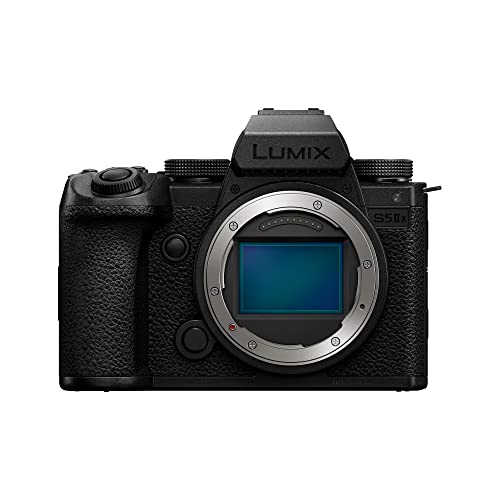
- Panasonic LUMIX S5IIX: check price on Amazon
- Sony Alpha 7 IV: check price on Amazon
- Canon EOS R6 Mark II: check price on Amazon
- Panasonic LUMIX S5II: check price on Amazon
- DJI Osmo Pocket 3: check price on Amazon
- Blackmagic Pocket Cinema Camera 6K (prose-only pick — see its section below): check availability at your preferred retailer
Two philosophies divide the list. The mirrorless hybrids — Panasonic, Sony, Canon — are cameras that also take stills, rent their lenses everywhere and resell easily when you upgrade. The specialists — the Pocket 3 as a practice and B-camera, the Blackmagic as a pure cinema instrument — teach narrower, deeper lessons. A wise student owns one from the first group and borrows, rents or aspires to the second.
Budget honesty runs through everything that follows. A film student’s real kit includes a tripod with a fluid head, a microphone, light in some form, and media that will not corrupt at 2 a.m. before a deadline. The camera is the largest line in that budget, not the only one, and the recommendations below are priced with the rest of the list in mind.
Read the picks, then, as arguments about what a student camera is for. Each one defends a different theory — completeness, versatility, kindness, value, practice, purity — and the right choice is the theory that matches your course and your temperament. The wrong choice, notably, is not on the list; every camera here has carried real students to real graduations, which is more than can be said for the internet’s louder enthusiasms.
Key Takeaways
- The Panasonic S5IIX is the most complete student cinema tool here: proper video features, strong codecs and focusing that finally keeps up.
- Sony’s Alpha 7 IV is the hybrid to buy if your course mixes stills and film, or if your school’s rental shelves are Sony-shaped.
- Canon’s R6 Mark II flatters actors and documentaries alike, with colour that needs the least grading courage from a beginner.
- The S5II delivers most of its X sibling’s image for less money — the classic student trade, and a good one.
- A Pocket 3 in the bag means you are always one minute from practising a tracking shot; the Blackmagic remains the pure-cinema benchmark to learn toward.
- Whatever you buy, reserve real money for sound and support: audiences forgive a soft image long before they forgive bad audio.
In this guide
Quick Picks
| Camera | Badge | Why it is here |
|---|---|---|
| Panasonic LUMIX S5IIX | Best overall for film students | A video-first hybrid with professional recording options and no overheating anxiety on set. |
| Sony Alpha 7 IV | Best stills-and-film hybrid | Tracking, lens choice and resale value for the student whose course mixes media. |
| Canon EOS R6 Mark II | Best for people and documentary | Colour that flatters faces straight away, plus focusing a solo shooter can trust. |
| Panasonic LUMIX S5II | Best value cinema hybrid | Nearly the X model’s image and focusing at a friendlier point in the budget. |
| DJI Osmo Pocket 3 | Best practice and B-camera | A gimbal camera for daily reps, second angles and shots a tripod cannot reach. |
| Blackmagic Pocket Cinema Camera 6K | Best pure cinema teacher | The film-school classic: raw recording and a cinema workflow that teaches by demanding. |
What do the best cameras for starting film students owe the people who buy them?
First, it owes manual control that stays manual. A student camera must let you set focus, aperture, shutter and sensitivity deliberately and keep them where you put them, because the entire first year is the conversion of those four decisions from mysteries into reflexes. Cameras that second-guess, bury controls in touch menus or change behaviour between modes teach superstition instead of craft, and were excluded however pretty their footage looked.
Second, it owes an image that survives the student’s own learning curve. You will underexpose, overexpose and white-balance creatively wrong; a camera with forgiving dynamic range and a log profile that grades kindly lets a tutor rescue your footage in the edit suite and show you what the scene could have been. That rescue is a lesson no lecture delivers as efficiently.
Third, it owes honesty about the whole workflow: recording media you can afford in quantity, batteries that last a shooting day of short takes, audio inputs that accept a real microphone, and a screen or viewfinder you can judge focus on. The cameras below were weighed as systems for making finished short films on student schedules — which is to say, at night, in a hurry, with a crew of three friends and a borrowed kitchen.
A fourth debt was quietly audited too: forgiveness in the hands of a tired operator. Student shoots run long, locations are cold, and the last setup of the night is always the important one. Cameras whose key controls can be found by touch, whose warnings are legible at a glance and whose files are named and organised sensibly for a 3 a.m. ingest scored above cameras that demand freshness from their users. Education is exhausting enough; the tool should not add its own coursework at midnight.
That midnight test eliminated more famous names than any other in this judging. Cameras adored by reviewers working in daylight studios revealed themselves, at hour fourteen of a student shoot, as fussy companions — and were set aside for the six above, every one of which has been carried, cursed at affectionately, and forgiven by real students on real deadlines. Forgiveness, earned at 3 a.m., is the truest review a student camera can receive.
Insurance and care were the final unglamorous audit. Student kit gets stolen from halls and dropped on location with a regularity that actuaries could set their watches by, so bodies that are common enough to replace quickly, and cheap enough to insure honestly, scored above exotics. Add your camera to a contents policy the week it arrives, photograph its serial number, and back up footage like the degree depends on it — because one day, in the most literal sense, it will.

Panasonic LUMIX S5IIX — Best overall for film students
Panasonic built the S5IIX by listening to the people who shoot video on hybrid bodies and writing down their complaints. The result is the most cinema-literate camera on this page: recording options that reach toward professional workflows, an open-gate mode that uses the whole sensor for flexible reframing, streaming and SSD provisions that treat long takes as normal, and a cooling design that does not make a director watch the clock during the one performance that matters. For a student, that completeness means the camera stops being the limitation on any exercise a tutor can set.
The focusing transformation matters as much as the features. Panasonic’s phase hybrid system finally tracks a moving actor with the confidence student crews need — a walk-and-talk through a corridor, a two-shot where attention passes between faces — while manual focus aids remain excellent for the deliberate work film school rightly insists on. You can learn focus pulling on this body and also survive the day your focus puller is ill.
Its image character suits education: a pleasing, not overbaked colour foundation, a log profile with genuine room to grade, and stabilisation strong enough to teach handheld language without a rig. Add the L-mount’s growing lens shelf — including the affordable glass a student budget requires — and the S5IIX is the camera we would hand a starting film student who could buy only one, with the fewest apologies attached.
One feature deserves translation for newcomers, because tutors will assume it: open gate. It means recording with the sensor’s full height, capturing more of the scene above and below the frame than a standard widescreen crop uses. For a student this is insurance — a boom dipping into shot can be reframed out in the edit, a vertical version for a festival’s social channels can be cut from the same take, and an anamorphic lens, when the school lets you borrow one, finally has a sensor that honours it. Features that forgive are worth double in an education, because every exercise is partly an experiment whose failures should be survivable.
Ownership economics complete its case. The body holds value well because working videographers want it too, the lens mount is shared with professional Panasonic and Leica worlds a graduate might enter, and its stills are good enough that it need not be sold when a cinema camera eventually arrives — it becomes the B-camera it was always secretly training to be. A student purchase that survives graduation as professional equipment is the rarest bargain in education, and this is the pick most likely to manage it.
Weather and workload manners round it out for location-heavy courses: the body is sealed well enough for the British winter that seems to schedule itself against every exterior shoot, and its controls remain findable with cold fingers at the end of a long day. Student filmmaking happens in real weather on real deadlines, and a camera that treats both as normal working conditions earns a loyalty that specification comparisons never quite explain.
Ask its owners what finally sold them and a surprising number name the same small thing: the tally of thoughtful video details — focus aids, exposure tools, frame guides — that read like a checklist written by working shooters. Students may not know why those details matter in September; by their first assessed shoot in November, they do, and the camera that anticipated their education starts to feel less like equipment and more like a tutor with a sensor.
- Format: full-frame mirrorless, video-focused
- Recording: high-quality codecs, open gate, SSD options
- Autofocus: phase hybrid with subject tracking
- Audio: proper microphone input and monitoring provisions
Strengths
- The most complete video feature set for the money
- Runs long takes without thermal drama
- An image built to be graded and learned from
Trade-offs
- Stills photographers get more joy from the Sony
- Feature depth can overwhelm the first month
- L-mount native glass is growing, not grown
Best for: film students who want one camera to carry them from first exercises to a graduation short. Not suited for: students whose course is primarily stills photography.

Sony Alpha 7 IV — Best stills-and-film hybrid
Many courses are not pure film. The media degree, the journalism programme, the art school foundation year — all of them ask for stills on Monday and a short on Friday, and the Alpha 7 IV is the camera that refuses to make that a compromise. Its video is strong, log-equipped and backed by the most confident subject tracking in this list; its stills are simply excellent. A student whose ambitions have not yet chosen a medium should not be forced to choose a camera that has.
The tracking deserves its reputation in a student context. Solo shooters — and most student shoots are one person doing three jobs — cannot pull focus, boom a microphone and watch a performance simultaneously. A camera that holds an actor’s eye reliably while you attend to sound is not a luxury; it is the crew member you could not recruit. Sony’s system is that crew member, and its lens catalogue, the deepest in mirrorless, means the school’s rental shelf and your own shelf will speak the same mount.
Resale is the unromantic clincher. Student life changes direction; a body this popular sells in a weekend at a fair price, and while you own it, every accessory, cage and tutorial on earth exists for it. Buying into the most populated ecosystem in modern imaging is a defensible strategy for a student whose three years will be complicated enough without orphan hardware.
Its stills deserve a fuller defence than hybrid discussions usually give them, because a film student’s portfolio is rarely only film. Unit stills on classmates’ shoots, production photographs for funding applications, a side income in headshots for the drama society — the Alpha 7 IV covers all of it at a professional standard, and those sidelines are how many students finance their own shorts. A camera that earns money across media while it teaches one medium is a rational purchase in an irrational economy, and its presence in so many school bags is economics as much as aesthetics.
One caution belongs in an honest account: its video recording in the most ambitious modes asks the camera to crop its sensor, which changes your lens’s field of view and can ambush a carefully planned frame. Students learn to plan around it — choosing which mode a scene is shot in as part of the pre-production, not the panic — and the lesson itself, that formats are decisions with consequences, is worth the inconvenience. Every professional format in history has had a catch; learning to read the catch is the job.
Its ergonomics for long handheld days deserve a mention that spec sheets omit: the grip, the button placement for record and focus magnification, the screen that can be read in a bright quad between lectures. A student camera is carried more than it is used, and used in snatches between other obligations; the Sony’s readiness in those snatches — awake fast, focused faster — is a genuine educational feature disguised as convenience.
Its community is a study resource in itself: because so many students and working shooters own it, every problem you will ever have has a forum thread, a tutorial and a classmate who solved it last term. In a degree where deadlines do not move, the size of a camera’s knowledge base is a practical feature, and on that measure this body is effectively unbothered by competition.
- Format: full-frame mirrorless, 33MP
- Video: 4K with log profiles and strong tracking
- Lenses: the largest native selection at every price
- Autofocus: real-time eye tracking for people
Strengths
- Equally serious about stills and film
- Tracking that substitutes for a missing crew member
- An ecosystem with answers to everything
Trade-offs
- Video features trail the Panasonic flagship’s depth
- Menus take a determined evening to tame
- Crop in the highest frame rates narrows your lens choices
Best for: mixed-media students and anyone whose school standardises on Sony. Not suited for: purists who want a video-first tool above all.

Canon EOS R6 Mark II — Best for people and documentary
Ask working videographers what Canon does that nobody else quite does and the answer arrives quickly: people look like themselves. Skin tones under mixed light, faces in a dim café, an interviewee who relaxes because the footage flatters them — the R6 Mark II’s colour is the kindest in this list to human beings, and for the documentary exercises that dominate many first years, kindness to faces is a technical specification. A student can learn grading on any camera; learning it on footage that starts handsome is a morale advantage not to be underestimated.
The focusing supports that documentary calling. It finds eyes in cluttered, real-world light and holds them through the small chaos of an interview or a vox pop, and the stabilisation steadies the walk-and-talk without a gimbal’s fuss. For the run-and-gun assignments tutors love — one camera, one subject, one afternoon — this body asks the least of its operator while giving the most presentable footage.
Where it asks a student’s patience is in the longer, more technical shoots: it is a stills-led hybrid whose video, though excellent, is not wrapped in the production provisions the Panasonic offers, and long continuous recording in the highest quality modes deserves a test before a one-take performance piece. Know that, plan around it, and what remains is the most likeable camera here — the one students pick up for fun, which is a pedagogical virtue in itself.
Interview craft is where it quietly becomes the cohort favourite. Documentary modules live or die on interviews, and interviews live or die on whether the subject forgets the apparatus. The Canon is unobtrusive, quick to trust with focus, and gentle in its rendering of tired, nervous, ordinary faces — the faces of real documentary. Students gravitate to it for their first films about grandparents, market traders and night-shift workers, and the footage’s warmth does half the persuading that the subject was worth filming. Tools shape topics; this one shapes humane ones.
Battery and media manners suit the student day as well: it sips rather than gulps through a schedule of short takes, its cards are the affordable kind, and its files are sized for laptops that are also writing essays. Infrastructure is invisible when it works, and the Canon’s infrastructure works quietly in the background of a degree — which is precisely where infrastructure belongs, and why its owners talk about their subjects instead of their storage.
Its one structural demand is a lens budget with patience: Canon’s finest glass is priced for the professionals your tutors keep mentioning, and the student’s route runs through the affordable primes and zooms that are arriving steadily, plus adapted older lenses that the mirrorless mount welcomes. Students have always built kits this way — slowly, opportunistically, with an eye on the second-hand shelf — and the Canon rewards the patience with an image that makes the patience look wise.
Voice students and podcasters moonlighting in film should note its second career: the same colour and focusing that serve documentary make it a superb interview and streaming camera for the portfolio work students increasingly graduate with. A body that can shoot the assessed short in October and the paying client film in June is not two purchases; it is one, amortised across a degree and the first year of a career.
- Format: full-frame mirrorless, 24.2MP
- Video: oversampled 4K with pleasing colour
- Autofocus: people and eye detection, confident in clutter
- Stabilisation: in-body, effective for handheld work
Strengths
- The most flattering faces on this page
- Documentary manners: quiet, quick, unobtrusive
- Stills quality that covers course photography too
Trade-offs
- Fewer production-video provisions than the S5IIX
- Long-take recording deserves a pre-shoot test
- RF lenses at student prices are still maturing
Best for: documentary-leaning students and anyone filming people in real places. Not suited for: students planning long, single-take stage recordings as their main work.

Panasonic LUMIX S5II — Best value cinema hybrid
Every cohort has a student who does the arithmetic properly, and this is their camera. The S5II shares its sensor, its focusing system and the great majority of its video capability with the X model at the top of this list; what it surrenders is a layer of professional recording extras and streaming provisions that most students will not touch before graduation. What it keeps is the image — and the image is the degree.
That framing matters because the money saved is not pocket money; it is a fluid-head tripod, or a proper microphone, or the lighting kit that will improve your footage more than any camera upgrade on earth. A student who buys the S5II and spends the difference on sound and support will hand in better films than the student who bought the flagship body and a bargain tripod. Tutors can tell. So can audiences, within about nine seconds.
None of this is to call it a compromise camera. The phase hybrid focusing tracks actors properly, the stabilisation teaches smooth handheld work, the log profile grades beautifully, and the body is built to survive a course’s worth of being carried everywhere. It is the same school as its sibling, with a smaller bursary — and students have always known how much that is worth.
A cohort effect works in its favour as well. Because the S5II is the thinking student’s default, it is the camera your classmates are most likely to own, which means shared batteries on a location day, a second body for the two-camera scene, lenses borrowed across the corridor and troubleshooting knowledge pooled at midnight. Standardising informally on a cohort camera is one of the oldest survival strategies in film school, and this model, more than any other here, is the one a cohort standardises on.
Its image also teaches restraint, a virtue tutors prize. The footage looks finished without being cooked — colour with room to move, sharpness without brittleness — so students learn to light and expose for the look rather than rescue it later. Cameras whose footage arrives over-processed teach dependence on the camera’s taste; this one returns the taste-making to the student, where a film school believes it belongs, and grades accordingly when it finds it there.
Size is its final student virtue. It is the smallest full-frame body in this argument, and small bodies attend more shoots: they fit the bag that also holds the laptop and the library books, they draw less attention filming in public for documentary exercises, and they ache less across a day of carrying. In a degree measured in location days, the camera that comes along is the camera that teaches, and this one comes along almost without being asked.
And its price positions it as the natural partner in the two-camera student strategy this guide keeps circling: the S5II as the owned workhorse, the school’s Blackmagic or a rented specialist for the prestige shoots. Owning the dependable ninety percent and borrowing the exotic ten is how professionals structure their kit at every level; learning the pattern as a student is itself an education in production economics.
Directors of photography in training should also note how well it behaves on a tripod in a lighting exercise: the screen, the exposure tools and the focus magnification all serve the slow, deliberate end of the craft as faithfully as its run-and-gun manners serve the fast end. A value pick that covers both tempos of filmmaking is not a compromise at all; it is the definition of a student camera chosen with intelligence.
That dual-tempo nature is why, in the informal polls every cohort runs by Christmas, this is the camera its owners recommend to the year below without being asked. Recommendations passed down a cohort are the purest data in film education — untainted by marketing, paid for in experience — and they have settled on the two Panasonics at the top of this list with unusual consistency.
- Format: full-frame mirrorless
- Video: high-quality recording with log profile
- Autofocus: phase hybrid, shared with the X model
- Value: flagship image at a mid-range price
Strengths
- Nearly the flagship’s footage for notably less
- Savings fund the sound and support that matter
- Proper focusing and stabilisation for learning on
Trade-offs
- Fewer professional recording extras than the X
- Streaming provisions are thinner
- Shares the L-mount’s still-growing lens shelf
Best for: budget-literate students who would rather fund a whole kit than one body. Not suited for: students who know they need the X model’s recording extras for paid work alongside the course.

DJI Osmo Pocket 3 — Best practice and B-camera
Filmmaking is a motor skill, and motor skills are built on repetitions. The Pocket 3 is the repetition machine: a gimbal-stabilised camera the size of a chocolate bar that is ready in seconds, tracks a subject on command, and turns a walk to the shops into a practised tracking shot. Students who carry one shoot ten times more moving camera than students who must assemble a rig, and by the second term that difference in reps is visible on screen in everything they make with bigger cameras too.
As a B-camera it punches absurdly above its size. The large sensor delivers footage that intercuts with the hybrids here far better than any phone’s, the gimbal produces the floating moves that a student production cannot afford a dolly for, and its timelapse and motion modes teach time manipulation in an afternoon. On a three-person crew it is the second angle that costs nobody’s attention — set it, frame it, let it witness the wide while the main camera works the close-ups.
Its limits define its role honestly. It is not the camera to learn manual exposure craft on, its audio needs an external solution for anything serious, and no tutor will accept it as your main instrument for an assessed narrative short. But as the always-present practice tool and secret weapon of a student kit, nothing else on this page — or any page — does quite its job.
Sound, its obvious weakness, has a student-shaped workaround worth knowing: pair it with the wireless microphone ecosystem it was designed alongside and the little gimbal becomes a legitimate interview and walk-and-talk tool, with the receiver’s audio recorded cleanly while the camera floats. Several cohorts now shoot their documentary exercises’ B-roll and vox pops almost entirely on this combination, reserving the big bodies for the set pieces — a division of labour that professional units, with their action cameras and gimbals, would recognise instantly.
There is a confidence dividend, too, that tutors notice. A student carrying a camera that is always ready stops asking permission of their own equipment. They shoot the corridor conversation, the rehearsal, the walk between locations — and a film school portfolio quietly fills with the observational material that distinguishes it. The Pocket 3’s contribution to a degree is measured less in its own footage than in the habit of readiness it installs in its owner.
It also future-proofs a skill the industry increasingly pays for: the small-camera, fast-turnaround aesthetic of online film. Festivals may still premiere the big work, but the daily economy of filmmaking — the behind-the-scenes film, the funder’s update, the director’s own location scout footage — runs on cameras exactly this size, operated exactly this way. A student fluent in both registers, the cinema body and the pocket gimbal, graduates speaking the industry’s two native languages.
Keep its footage organised and it also becomes a visual diary of the degree — the daily reps, the location scouts, the rehearsals — which students consistently report valuing more, years later, than the assessed films themselves. A camera that documents the becoming as faithfully as the work has a claim on a film student’s bag that no specification sheet will ever capture.
- Format: gimbal camera, large sensor for its class
- Stabilisation: mechanical three-axis gimbal
- Tracking: subject following built in
- Role: practice camera and B-camera
Strengths
- More moving-camera practice than any rival enables
- B-camera footage that cuts with the big bodies
- Ready in seconds, carried everywhere
Trade-offs
- Not a manual-craft teacher
- Audio needs external help for drama
- Fixed lens and small body limit rigging
Best for: every film student as a second camera, and beginners building camera-movement instincts. Not suited for: use as your only camera for assessed narrative work.
Blackmagic Pocket Cinema Camera 6K — Best pure cinema teacher
We present this one without a purchase link, as the benchmark every film student will meet in a seminar room argument: the Blackmagic Pocket 6K is the camera that behaves like cinema and nothing else. It records raw with enormous grading latitude, speaks the language of professional post-production through its maker’s own software, and organises its controls around filmmaking alone — no stills pretensions, no hybrid compromises, a menu that reads like a cinematography syllabus.
As a teacher it is unmatched and unforgiving in equal measure. Raw footage demands storage, discipline and a grading education; the focusing is manual in spirit; battery life is measured in scenes, not days. Students who learn on it emerge understanding exposure, colour and workflow at a depth hybrid shooters must work to reach. Students who buy it as their only camera sometimes emerge owning very little finished work, which is the cautionary half of its legend.
Our advice is the advice tutors give: aspire to it, borrow it from the school fleet, rent it for the special short — and own one of the hybrids above for the daily business of becoming a filmmaker. When the day comes that its demands feel like home rather than homework, you will know the education worked, and you will buy it with a professional’s clarity about what it is for.
Its software half matters to the lesson as well. The editing and colour environment it pairs with is the same one professional colourists argue about, in a version students can own outright, so the grading education it forces is not a toy version of the craft — it is the craft, learned on real scopes with real latitude. A student who can expose for raw, manage media like a data wrangler and grade a scene to a brief owns three employable skills before the second year ends, and this unassuming little cinema camera is the most affordable door into all three.
Renting one for a single weekend is the wisest way to meet it: load it with a borrowed lens, shoot a two-minute exercise, and take the footage through the full grading pipeline before deciding anything. Some students feel the click of a vocation in that weekend. Others feel only the weight of the workflow and return happily to their hybrids, wiser about themselves. Both outcomes are bargains at rental prices, and both are better than a purchase made on seminar-room mythology.
One more honest note for the determined: if you do buy it during the degree, buy it late and buy it knowingly — second or third year, when your exposure discipline is real, your storage habits are formed and a specific film needs what only it does. Bought at that moment it is a precision instrument arriving on schedule. Bought in freshers’ week it is a beautiful anchor. The camera does not change; the student does, and timing is a feature of every purchase in this guide.
Until that moment, let it do its other job: hang in the seminar room as the standard of seriousness. Knowing what the pure instrument demands — and measuring your hybrid footage against its image — sharpens a student’s eye for exposure and colour faster than any single exercise. Benchmarks teach even when they are never bought, and this is the most instructive benchmark a starting filmmaker can keep in view.
- Format: dedicated cinema camera
- Recording: raw with extensive grading latitude
- Workflow: built around professional post-production
- Note: presented prose-only here; widely available to rent
Strengths
- The deepest cinema education in a small body
- Raw image quality far beyond its price class
- A workflow that teaches professional habits
Trade-offs
- Demands storage, batteries and discipline
- No autofocus to lean on while learning
- Impractical as a student’s only camera
Best for: aspiring cinematographers ready for a pure cinema workflow. Not suited for: beginners needing one forgiving camera for everything.
What should a film student actually budget for beyond the camera?
Sound first, and without apology. A serviceable shotgun microphone, a way to get it off the camera and near the actors, and headphones to hear what it hears will improve your student films more than any other purchase in this guide. Audiences — and assessors — read bad audio as incompetence and a merely decent image as style. Every camera above accepts a proper microphone; the discipline is in budgeting for one before the second lens starts whispering.
Support second. A tripod with a genuinely fluid head is the difference between pans that look directed and pans that look accidental, and it will outlast three camera bodies. Third comes light: even a single affordable panel, learned properly, teaches more cinematography than a semester of camera upgrades, because lighting is the part of the image the camera merely records.
Media and power close the list. Fast cards in quantity, a reader, a drive dedicated to footage with a backup habit formed early, and batteries enough for a day of short takes. Student films die of corrupted cards and dead batteries far more often than of insufficient resolution, and both deaths are preventable for the price of a textbook.
Put numbers on the philosophy and a sane student budget emerges: the camera takes roughly half, sound and support split most of the rest, and a stubborn tenth stays unspent for the emergency every production eventually schedules — the replacement cable, the extra card, the taxi with the tripod at dawn. Students who hold that reserve finish their films; students who spend it on a marginally better sensor finish their excuses. The arithmetic is not glamorous, and neither is bankruptcy.
Second-hand markets deserve a line in any student budget: last-generation bodies and lenses from working professionals circulate at prices that can move a student up a class for the same money. Buy from dealers who grade honestly and warranty briefly, test any used body with your own card before the return window closes, and remember that a scratched lens hood is a discount, while a scratched sensor is a story you do not want to star in.
How do you choose between these cameras for your course?
Read your course like a producer reads a script. If the assessments are narrative shorts with crews, prioritise the Panasonics’ video depth and plan to rent specialty glass. If the work is documentary and solo, the Canon’s kindness and the Sony’s tracking argue for themselves. If stills count toward your grade, the hybrid question answers itself — Sony first, Canon close behind — and if your school’s fleet is one brand, matching it is not conformity; it is free access to a lens library.
Then audition the menus, because you will live in them at 1 a.m. Every camera here can be operated well; they differ in how their logic fits a particular brain. A student who fights a menu shoots less, and shooting less is the only unforgivable outcome in a practice-based degree. The right camera is the one whose controls you stop noticing by the end of the first month.
Finally, ask the second-year students. They know which cameras the tutors quietly respect, which the rental desk is always out of, and which purchases their cohort regrets. Cohort knowledge is the most current review source in any film school, and it is free — spend an afternoon collecting it before you spend anything else.
And visit the school’s own store cupboard with your shortlist in hand. Physically mounting your prospective camera’s lens mount onto the fleet’s glass, checking that the cage in the kit room fits, confirming the chargers match — these ten minutes of compatibility checking prevent the classic first-term tragedy of owning a fine camera that cannot borrow anything. Ecosystems are social before they are technical, and your camera should be a citizen of the one you are joining.
Which camera fits which kind of film course?
A cinematography-track student, headed for the camera department, should weight the Panasonics and the Blackmagic’s lessons most heavily: exposure discipline, manual craft, files that reward a colourist’s attention. A documentary-track student should weight kindness and autonomy — the Canon for faces, the Sony for tracking when the crew is one person and the story will not wait. A directing student, who will mostly hire cinematographers later, still benefits from owning the S5II: a director who has exposed, focused and graded their own footage gives better notes for the rest of a career.
Animation and experimental programmes bend the logic again — stop-motion and process work reward the stills strength of the Sony and Canon, and the patience features like interval recording. Read your own syllabus against this list rather than against the internet’s general idea of film school, because courses differ more than cameras do, and the best student camera is the one pointed at your actual assignments.
Music and performance programmes deserve their own sentence, since their students film long, continuous events rather than scenes: there the Panasonics’ stamina and audio provisions dominate, and the wise purchase pairs the S5II with the best microphone the budget allows, because a concert film is a sound recording with pictures attached. Match the camera to the artefact your course actually examines, and half the buying decision makes itself.
Comparison Table
| Camera | Type | Strongest suit | Watch out for |
|---|---|---|---|
| Panasonic LUMIX S5IIX | Video-first hybrid | Complete cinema features | Feature depth at first |
| Sony Alpha 7 IV | Hybrid | Stills, tracking, ecosystem | Video depth second to Panasonic |
| Canon EOS R6 Mark II | Hybrid | Faces and documentary | Long-take planning |
| Panasonic LUMIX S5II | Video hybrid | Flagship image, less money | Fewer pro extras |
| DJI Osmo Pocket 3 | Gimbal camera | Practice and B-camera | Not a main camera |
| Blackmagic Pocket Cinema Camera 6K | Cinema camera | Raw workflow education | Demands and discipline |
What mistakes do starting film students make with cameras?
The canonical mistake is buying resolution and starving everything else: a glorious sensor atop a wobbling tripod, recording location sound through the camera’s own microphone in a tiled kitchen. Tutors can spot the allocation in the first thirty seconds of a screening. The cameras above are deliberately priced to leave a kit behind them; a student who spends the whole loan on a body has misunderstood the assignment the degree is setting.
Second is treating autofocus as either salvation or betrayal. It is a tool with a temperament — learn when it serves the shot and when the shot needs a focus puller’s hand, and learn it on exercises, not on the assessed short. Third is neglecting the edit while buying for the shoot: a camera whose files your laptop cannot chew will teach you rendering, not filmmaking. Test the whole pipeline with borrowed gear before committing.
Fourth is waiting for the perfect camera to start. The students who improve fastest shoot weekly on whatever they own, including the Pocket 3 and their phones, and treat gear as the least interesting variable in the room. They are right, and this list is built to get you into their company as cheaply as honesty allows.
A fifth mistake is treating the camera as the portfolio. Assessors and employers ask to see films, not receipts, and a modest camera behind three finished, honest shorts outranks a flagship behind intentions. Every recommendation in this guide is therefore deliberately sufficient rather than ultimate — the point at which the camera stops being the story, so the student can start being it.
Final Recommendation
Buy the Panasonic S5IIX if your course is film first and your budget allows one serious tool; buy the S5II if it does not, and spend the difference on sound and support with a clear conscience. Choose the Sony Alpha 7 IV when stills share the syllabus or your school runs Sony, the Canon R6 Mark II when your heart is documentary and your subjects are people, and put a Pocket 3 in the bag of any of them for the daily practice that actually builds a filmmaker. Meet the Blackmagic at school, learn what it teaches, and let graduation decide whether it joins the shelf. Then close this page and go shoot something this weekend — that, and not the badge on the camera, is what the next three years are for.
If you are reading this the summer before you start: buy in time to shoot a small film before term begins, even a bad one, especially a bad one. Arriving with a finished failure in your past puts you a full exercise ahead of the cohort, because the first film’s lessons — about sound, about coverage, about how long everything takes — are the ones every camera on this page exists to teach, and they are cheaper learned in August than in assessment week.
Frequently Asked Questions
Do I even need my own camera at film school?
Strictly, no — fleets exist. Practically, the students who own one shoot far more, and shooting volume is the strongest predictor of progress in a craft degree. Your own camera converts dead time — weekends, evenings, the journey home — into practice, and lets you arrive at booked fleet shoots with your hands already trained. If money is tight, the S5II and a borrowed everything-else is the classic configuration.
Is 4K enough, or should I chase higher resolutions?
For student work, 4K from a good sensor is more than enough; assessors judge lighting, coverage and story, none of which a resolution figure improves. Higher-resolution and raw options matter as grading flexibility, which is the Blackmagic’s lesson — valuable, but a second-year concern for most students. Spend first-year money on sound, support and light.
Full-frame or crop sensor for a student?
Full-frame dominates this list because the current hybrid bargains live there, but the sensor size itself is not the lesson. Depth of field control, low-light grace and lens choice follow from it, yet a crop system with the right lenses has shot many fine student films. Choose by ecosystem, features and price; let sensor size be a consequence, not a creed.
How important is autofocus for filmmaking?
More than tradition admits and less than marketing claims. Narrative craft still runs on manual focus and marks, and you must learn it. But for documentary, solo shooting and gimbal work, modern tracking autofocus is a genuine crew substitute. The Panasonics and Sony here let you learn both disciplines on one body, which is exactly a student’s requirement.
Should I buy lenses or rent them?
Own the everyday lens you will shoot eighty percent of your work on; rent the exotics for the weekends they star in. School and city rental rates for students are kind, and renting teaches the catalogue faster than ownership ever will. Your owned lens, a tripod and a microphone are the permanent kit; everything else can be hired by the day until a specialism chooses you.
Can I use a phone for my first-year exercises?
For learning composition, coverage and editing rhythm, absolutely — and many tutors set phone exercises precisely to prove the camera is not the lesson. But the degree will eventually assess manual control, sound craft and image quality under pressure, and a phone teaches none of those hands. Use the phone as the Pocket 3’s understudy: a practice tool beside a real instrument, not instead of one.
Related Guides
Companion reading for the road ahead: best cameras for starter photography, best cameras for still and video and best affordable cameras for cinema.


