reviewstook.com is reader-supported. When you buy through links on our site, we may earn an affiliate commission.
Where to buy
Every generation of filmmakers begins with the same arithmetic: a fixed sum of money, and a screen in the imagination that the money must somehow reach. This guide works inside the frame the keyword sets — the best cameras movie under 1500, read as a total budget in that neighbourhood for a camera that can genuinely shoot a film — and it treats the budget as a discipline rather than a deprivation. No product prices are printed here, by this site’s standing rule; instead, each pick is positioned honestly within the frame: the bodies and kits that fit it whole, the ones that fit as a body with a first lens chosen carefully, and the smaller cameras that leave most of the budget standing for the things films are actually made of.
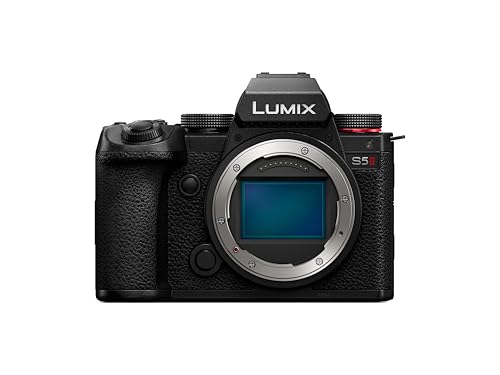
- Panasonic LUMIX S5II: check price on Amazon
- Panasonic LUMIX S5IIX: check price on Amazon
- Canon EOS R6 Mark II: check price on Amazon
- Nikon Z50 II: check price on Amazon
- DJI Osmo Pocket 3: check price on Amazon
- Sony ZV-1F: check price on Amazon
Budget honesty requires one paragraph of plain speech before the cameras. At this level, the body is not the film. A production spends on lenses, light, sound, storage, power and the unglamorous logistics of getting people and equipment to the same place fed and on time, and a camera decision that consumes the entire frame leaves the film itself unfunded. The picks below are therefore ranked with their ecosystems attached: what the first lens costs in discipline, what the body leaves standing, and whether the system’s second-hand and rental depth — the independent filmmaker’s real supply chain — supports a production beyond its first short.
What “movie” demands, technically, is also narrower than camera marketing suggests. A film needs an image that survives grading, focus that can be trusted or pulled, recording that runs for a scene’s full length without a thermal opinion, and audio arrangements that do not disgrace the picture. Frame rates and resolutions beyond the delivery standard matter mostly as flexibility. The six picks were interrogated on those production questions — the long take, the dim location, the one-take performance — rather than on the specification theatre that sells cameras to people who will never roll on a scene.
Key Takeaways
- Panasonic’s LUMIX S5II is the budget’s centre of gravity: full-frame image, phase autofocus and a video toolset that respects the frame.
- The S5IIX is the stretch pick for filmmakers whose productions need its deeper recording and monitoring provisions.
- Canon’s EOS R6 Mark II serves directors whose films are carried by faces, with detection and colour that flatter performance.
- Nikon’s Z50 II is the kit that leaves the most budget standing for lenses, light and sound while filming far above its class.
- DJI’s Osmo Pocket 3 is the movement camera — the gimbal shots a locked-off production cannot otherwise afford.
- Sony’s ZV-1F is the dialogue-and-confessional camera for micro-budget formats built around a single performer.
In this guide
Quick Picks
| Camera | Badge | Why it is here |
|---|---|---|
| Panasonic LUMIX S5II | Best movie camera in the frame | Full-frame image, phase hybrid focus and production manners at the budget’s heart. |
| Panasonic LUMIX S5IIX | Best for serious productions | The video-flagship variant, for filmmakers building toward client and festival work. |
| Canon EOS R6 Mark II | Best for performance-led films | Subject intelligence and skin colour that keep actors looking like the casting decision. |
| Nikon Z50 II | Best budget-preserving kit | Detection autofocus and lens growth while leaving money for light and sound. |
| DJI Osmo Pocket 3 | Best movement on a budget | A stabilised camera that gives a small production the walking and tracking shots. |
| Sony ZV-1F | Best single-performer camera | For monologue, confessional and one-room formats where the face is the film. |
What does a film ask that a video does not?
Duration, first. A scene runs for minutes, a take for the length of a performance, and a camera that interrupts either — a recording limit reached, a battery surrendered, a thermal shutdown in the third act of a one-location short — has failed at the only moment it existed for. Movie cameras are therefore judged in this guide on sustained behaviour: how the body manages heat across a filming day, how its power arrangements support a schedule, and whether its recording provisions treat a long scene as a design case rather than an abuse.
Grading headroom is the second ask. A film’s look is built in post-production from files that must survive being pushed — shadows lifted from a night exterior, a window’s highlight rolled off, a colour palette unified across locations shot weeks apart. Sensors and codecs differ enormously in how much pushing they forgive, and at this budget the difference between a file that grades and a file that crumbles is the difference between a film and a recording of a play. The Panasonic pair and the Canon earn their positions substantially on this unglamorous axis.
Focus philosophy is the third, and cinema has opinions. A film may want autofocus that behaves like a good focus puller — decisive, smooth, invisible — or it may want manual control with proper tools: focus aids, magnification, lenses whose rings reward a hand. The picks below divide honestly on that line. What none of them may do is pulse, hunt or breathe visibly in the middle of a performance, because a film audience, settled in the dark with nothing else to look at, sees focus behaviour the way a theatre audience hears a missed note.
Sound is the fourth ask, and the one beginners underfund most reliably. Cinema audiences forgive a soft image shot with intention; they do not forgive dialogue they must strain to hear. Every camera here is therefore assessed as the centre of an audio arrangement — its inputs, its monitoring, its compatibility with the separate recorder or wireless system the production should be running — and this guide repeats its standing advice in a filmmaker’s accent: the microphone budget is not what remains after the camera. It is a co-star, cast at the same time.

Panasonic LUMIX S5II — Best movie camera in the frame
Start the budget conversation where it naturally settles: a full-frame Panasonic body with phase hybrid autofocus, in-body stabilisation, a video toolset designed by the most production-minded engineers in this price territory, and an image that grades like a film’s should. The S5II is the pick against which the rest of this list defines its exceptions, because it makes the fewest apologies per unit of the frame it occupies — and at a fixed budget, apologies are the currency everything is priced in.
The autofocus conversion is what admitted this line to cinema duty at all. Panasonic’s earlier contrast-based focusing pulsed visibly in video, exiling otherwise beloved bodies from any set where focus could not be pulled by hand. The hybrid system ends the exile: phase detection acquires decisively, contrast refinement settles precisely, and a solo filmmaker — director, operator and cast in one coat — can trust the camera to hold a performer’s face through a scene’s emotional weather. Trust, on a micro-budget set with no focus puller, is not a convenience. It is the crew position the budget could not hire.
Stabilisation reshapes what a small production can attempt. The S5II’s in-body system steadies handheld work to the point where deliberate, motivated camera movement — the slow push, the following walk, the handheld intimacy of a two-hander in a real kitchen — becomes available without a gimbal’s rental, setup and operator. Films are distinguished from recordings substantially by whether the camera’s movement feels intended, and this body hands a small crew intention at no extra line in the budget.
The image itself is the argument’s foundation: full-frame depth for the close-up that must carry a scene, low-light behaviour that lets real locations at real night pass for cinema rather than for evidence, and files with the grading manners the previous section demanded. Panasonic’s colour is a respected, natural starting point — a negative, in the old sense, from which a look can be built rather than a look imposed before the director arrives.
L-mount economics suit the frame precisely. The alliance’s lenses include the modern, fast-focusing glass the hybrid system deserves at prices a production can stage — the standard zoom for the shoot, the fast prime for the night work — and the mount’s shared nature widens the second-hand pool from which independent filmmakers actually equip themselves. A budget stretched across body and first lens inside this mount arrives at a working cinema kit with money still standing for light and sound, which is the definition of fitting the frame well.
Long-session behaviour completes the case: this is a body engineered for video as its primary employment, and a filming day of scenes, resets and long takes is its home terrain rather than its stress test. Directors should still rehearse their exact recording configuration at length before the shoot — the standing rule of this series — but they rehearse it to learn its manners, not to discover its limits.
For the filmmaker whose production is a real one — cast, locations, a schedule, a festival in mind — the S5II is where the money goes first and where this guide’s recommendation rests. It is the rare budget pick that a filmmaker does not apologise for when the credits roll.
Its growth story deserves the closing sentence. The same mount and philosophy continue upward into the line’s flagship variant, reviewed next, so a production that outgrows this body graduates inside its own lens drawer and its crew’s existing habits. At a fixed budget, buying into a ladder is worth almost as much as buying the camera — and this ladder’s first rung is unusually close to its top.
- Class: full-frame mirrorless, video-first design
- Focus star: phase hybrid autofocus
- Stabilisation: in-body, for handheld cinema movement
- Mount: L-mount alliance, strong second-hand depth
Strengths
- Full-frame film image inside the budget’s heart
- Focus a solo filmmaker can trust through a scene
- Handheld movement without a gimbal’s line item
Trade-offs
- Extreme tracking a shade behind the fastest rivals
- Recognition library younger than Canon’s
- First lens must be chosen with real intent
Best for: narrative shorts and features on a disciplined budget. Not suited for: filmmakers wanting a pure stills-first body.

Panasonic LUMIX S5IIX — Best for serious productions
The S5IIX is the same argument wearing its production clothes: the video-flagship variant of the S5II platform, with the deeper recording provisions, monitoring support and professional connectivity that a production reaching toward client work, festival deliverables and external recording workflows begins to require. Within this guide’s budget frame it is the stretch pick — the body a filmmaker chooses by positioning the rest of the kit leaner, or by valuing provisions that will still be earning their place three productions from now.
What the X adds is best understood as headroom in the places productions actually grow. Recording flexibility for the projects whose deliverables multiply; monitoring and output provisions for the shoot that finally has a director’s monitor and someone watching it; a general sense, in every connector and menu, that the body expects to be the centre of a small professional rig rather than a talented amateur’s companion. Films are not made better by provisions unused — but productions are made possible by provisions present, and the difference between the two S5 bodies is precisely the difference between a camera and a platform.
The shared virtues carry over intact and need no second performance: the phase hybrid autofocus that a solo operator can trust, the stabilisation that lends intention to handheld work, the full-frame image with grading manners, the L-mount drawer the production equips itself from. A filmmaker choosing between the siblings is not choosing quality; they are choosing how much of the budget to convert into future capacity, and the honest answer depends on whether the next production is already visible on the calendar.
Long-form and live-adjacent work is where the X’s engineering shows its intent most plainly. Sustained recording, the session that runs for hours, the event the film’s director is also broadcasting — the body treats these as design cases, and a filmmaker whose slate mixes narrative with documentary or performance capture will find the X covering both without the personality change a lesser body undergoes at hour two.
Budget discipline must be spoken plainly in this section, because the X tempts the exact error this guide exists to prevent. A filmmaker who stretches to the X by starving the lens, the light or the microphone has bought capacity and lost a film. The X is the right stretch only when the rest of the kit is already honest — or when a specific provision it carries is the named requirement of a production already scheduled. Capacity bought against a calendar is investment; capacity bought against a hope is decoration.
Chosen on those terms, the S5IIX is the most professional instrument this budget frame can hold, and the one whose owners sound least like hobbyists when they describe their kit — because by the time its provisions matter, they are not.
Crew growth is its final argument. A one-person production becomes a three-person production faster than equipment budgets expect, and the X’s provisions — the monitoring, the outputs, the rig-centred design — are what let a growing crew plug into the camera rather than around it. The body a filmmaker buys at this level should be the body their future crew thanks them for, and that is a precise description of this variant’s purpose.
- Class: full-frame mirrorless, video-flagship variant
- Focus star: phase hybrid autofocus
- Provisions: deeper recording and monitoring support
- Mount: L-mount alliance, shared with the S5II
Strengths
- Production provisions the slate will grow into
- Sustained and live-adjacent sessions as design cases
- Same trusted image and focus as its sibling
Trade-offs
- The stretch must not starve lens, light or sound
- Provisions unused are budget unspent elsewhere
- Built and priced for the committed
Best for: filmmakers with scheduled, growing productions. Not suited for: a first short still gathering its basic kit.

Canon EOS R6 Mark II — Best for performance-led films
Some films are carried by their images and some by their faces, and the director of the second kind should be reading this section with a pencil. The R6 Mark II pairs deep-learning subject detection — a camera that knows a person from a prop, an eye from a crowd, and holds its chosen performer through the distractions of a real set — with Canon’s long-refined skin colour, the tuning that has made the brand the portraitist’s default for a generation. On a performance-led film, those two virtues are not features. They are the cinematography.
Detection earns its keep in the scenes autofocus usually ruins. The two-hander where the listener, not the speaker, is the shot; the family scene with a child crossing and a dog investigating; the improvised take where the actor finds something true three feet from their mark. Systems that focus on the nearest object produce a reel of almosts from such material. Canon’s holds the face the director chose, and a micro-budget production — which cannot afford the retake, the extra day, the actor’s patience spent twice — feels that reliability as money.
Colour is the second half of the case, and it is about trust between the film and its audience. Skin rendered with Canon’s manners reads as healthy, present and unprocessed, across the mixed light of real locations — the kitchen’s tungsten against the window’s day — where lesser pipelines split the difference and satisfy neither source. A director can grade from that starting point toward a look; a director fighting it spends the grade rescuing faces instead of building mood, and at this budget the grade has no hours to spare.
In-body stabilisation supports the handheld grammar performance films love: the slow circle during a confession, the following shot down a corridor, the held breath of a close two-shot with the camera alive in an operator’s hands. Combined with the detection’s calm, it lets a small crew attempt the moving masters that locked-off coverage cannot give a scene, and movement, again, is where films separate from recordings.
The full-frame cautions of this guide apply in their Canon form: the lens is a joint decision with the body, the detection options reward one proper configuration session before the shoot, and the system’s newest glass is the native path a production should price from the start. Directors coming from Canon’s stills world will find their habits honoured, which on a schedule is worth more than a specification.
Choose the R6 Mark II when the cast is the budget’s biggest line and the film lives or dies in their faces. The Panasonics offer the deeper video toolset; the Canon offers the deeper understanding of people, and a performance film should buy the understanding every time.
Casting against the camera is a real, if unspoken, production practice the R6 II flatters: directors test finalists on the camera that will film them, because some faces and some pipelines simply agree. A body whose rendering is this consistently kind widens the casting pool rather than narrowing it — every finalist looks like their best self — and at micro-budget level, where the cast is chosen from the willing rather than the famous, that kindness is a genuine production asset.
- Class: full-frame mirrorless body
- Focus star: deep-learning people and eye detection
- Colour: Canon’s skin-first tuning
- Stabilisation: in-body, for handheld performance work
Strengths
- Holds the chosen performer through real-set chaos
- Skin colour that saves the grade for mood
- Handheld moving masters within a small crew’s reach
Trade-offs
- Video toolset shallower than Panasonic’s
- Detection rewards a configuration session
- Body and lens are a joint budget decision
Best for: dramas, family films and actor-led productions. Not suited for: toolset-first technical productions.

Nikon Z50 II — Best budget-preserving kit
Every budget guide needs the pick that respects the whole budget, and the Z50 II is this one’s: an APS-C mirrorless camera with genuine subject-detection autofocus — people, eyes, animals, vehicles recognised on the camera’s own initiative — whose modest claim on the frame leaves the largest share standing for the lens, the light, the microphone and the hundred small expenses that decide whether a film gets finished. Filmmakers who understand that the camera is one line among many will read this section as the guide’s most grown-up recommendation.
The image must not be undersold in the act of praising its price. The Z50 II’s video is oversampled, colourful and honest, with a sensor whose low-light behaviour serves real interiors respectably and whose colour presets can carry a film’s look for a director not yet grading. Paired with one fast prime — the classic first purchase in this mount — it produces the shallow, luminous night look audiences associate with cinema, at a total kit weight the full-frame sections cannot approach. Many a festival short has been filmed on exactly this class of equipment by exactly this logic.
Detection autofocus matters to a film crew out of proportion to its price, because the micro-budget set has no focus puller and the director is also the caterer. A camera that finds the actor’s eye, holds it through the scene’s movement and manages the animal the script unwisely included is a crew member, and the Z50 II provides that crew member while leaving the payroll intact. Its manners are a tier below the flagship systems in the hardest tracking, and a film’s ordinary scenes — people, talking, moving at human speeds — live comfortably inside its competence.
Growth is the strategic argument. The Z mount lets the production add lenses as the slate demands — the wide for the location that needs it, the longer prime for the compressed look — each purchase extending a body the crew already knows, and the second-hand market in the mount deepens the arithmetic further. A filmmaker’s second production is usually better equipped than their first not because the budget grew but because the kit compounded, and compounding starts with a mount bought young.
The honest concessions: an APS-C sensor asks more of light and lens speed in the darkest locations than the full-frame picks do, the video toolset is a talented amateur’s rather than a production platform’s, and a filmmaker whose slate is already professional should be reading the Panasonic sections. The Z50 II is the camera of the first two films, bought to make the third one possible.
Student and first-feature filmmakers — the natural owners of this entire guide — will find in the Z50 II the rare purchase that respects both their present poverty and their future seriousness. It films the short that gets into the festival, and it does not have to be sold to fund the camera that films the feature.
Its stills ability closes a practical loop for independent productions: posters, production photographs, festival submissions and the crowdfunding page’s imagery all come from the same body at a standard phones visibly fail to reach. A micro-budget film lives or dies by its campaign materials as much as by its frames, and this kit staffs both departments for one line in the budget.
- Type: APS-C mirrorless camera
- Focus star: subject detection for people and more
- Kit logic: leaves the frame’s largest share for the film
- Growth: interchangeable Z-mount lenses
Strengths
- Real detection autofocus at a preserving price
- Fast-prime pairing delivers the cinema look
- Compounds through lenses production by production
Trade-offs
- Darkest locations ask more of it
- Toolset a tier below the production bodies
- Tracking ceiling below the flagships
Best for: first features, student films and disciplined budgets. Not suited for: slates already working professionally.

DJI Osmo Pocket 3 — Best movement on a budget
Watch a micro-budget film and the locked-off camera announces the budget in every scene — until the one shot that moves: the glide through the doorway, the walk beside the actor, the slow orbit of the table where the confession happens. That shot usually cost a rental, a favour or a gimbal the production could barely justify. The Pocket 3 puts it in the budget permanently: a 1-inch-sensor camera on a three-axis gimbal, small enough to be the production’s second unit and good enough that its footage cuts against the main body’s without the audience leaving the film.
Its cinematic virtues are specific. The gimbal’s movement has the floating, motivated quality that reads as intention rather than as stabilisation; the subject tracking holds an actor through a walking scene while the operator concentrates on the path; the sensor keeps evening exteriors and practical-lit interiors in the film’s tonal family. Directors use it for the connective tissue — arrivals, departures, journeys between the locked-off masters — and connective tissue is where small films most often feel small.
It also serves as the production’s scout and rehearsal camera in a way that never appears in reviews and constantly appears in practice. Locations are tested with it, blocking is walked with it, the director frames the day’s shots on its screen in the morning and hands the plan to the main camera — a pre-visualisation tool that happens to be able to shoot the final footage when the plan calls for movement. Equipment that works three jobs earns its line in a budget this size.
The limits are a small camera’s limits and a film must respect them in the schedule: the fixed wide lens will not compress a background or isolate a face at distance, long static scenes belong to the main body, and a full filming day needs its power planned like any other department’s. The Pocket is the movement unit, not the production’s spine, and directors who cast it as the spine will feel every one of those limits by the second day.
As the budget’s second purchase — after the main body and its lens — it may return more visible production value per unit of money than anything else in this guide, because movement is the scarcest commodity on a small set and this device manufactures it from a jacket pocket. Festivals are full of static films; the one that glides is remembered.
Second-unit work in the classic sense is its final gift: the inserts, the establishing drift, the city’s texture gathered by one trusted person while the main unit films the scene. A production with a Pocket has a second unit; a production without one has a schedule problem wearing the same name.
Directors filming their own performances — the one-person feature, the essay film — should note that the Pocket is also the most castable camera here: it can be handed to the subject, the location or the moment with seconds of instruction, and its tracking will hold the performance the director is busy giving. Autobiographical cinema runs on exactly that handability.
- Type: gimbal camera with 1-inch sensor
- Movement: three-axis mechanical stabilisation
- Tracking: subject tracking for walking scenes
- Role: the production’s movement and second unit
Strengths
- The moving shot, permanently inside the budget
- Cuts cleanly beside the main body’s footage
- Scout, rehearsal and second-unit duties in one device
Trade-offs
- Fixed wide lens, no compression or reach
- Not the spine of a production
- Filming days need power planning
Best for: movement shots and second-unit work on any budget film. Not suited for: carrying a feature as the only camera.

Sony ZV-1F — Best single-performer camera
A whole cinema exists at the scale of one face: the confessional documentary, the monologue film, the one-room two-hander shot in singles, the video essay that becomes a portrait. For that cinema, the ZV-1F is a legitimate instrument rather than a compromise — a compact camera whose wide lens frames a performer at intimate distance, whose eye autofocus holds them through the take without a crew, and whose colour renders skin with the kindness a film built entirely of a face cannot do without.
Its autofocus behaviour suits the single-performer set completely. The actor leans toward the lens at the confession’s peak, drops their eyes at its shame, turns to the window the script keeps mentioning — and the Sony’s eye detection follows the choreography and returns without a visible decision, while the wide lens’s depth forgives what remains. A one-person production, where the performer is also the operator, needs exactly this: focus as a solved problem, so the single human on set can spend themselves on the performance.
The product showcase mode, famous elsewhere in this series for objects, has a quieter film use: the prop moment. The letter opened toward camera, the photograph shown, the object the monologue has been circling for ten minutes finally presented — focus transfers to it and back with a smoothness a solo operator cannot pull by hand while performing. Films at this scale are built of such moments, and a camera that automates their focus is a collaborator, not a tool.
Honesty about scale closes the case rather than weakening it. The fixed lens offers one framing family; the compact sensor asks the lighting to be kind; a film that grows locations, casts and night exteriors will outgrow this body and should. But the film that stays in the room — and some of the most durable micro-budget cinema does exactly that, by choice and by aesthetic — will find the ZV-1F’s limits are the room’s limits, and its virtues are precisely the ones the room rewards.
Its budget manners are the gentlest in this guide: as a complete, lens-included instrument it leaves nearly the whole frame standing for the things one-room films actually spend on — the performer’s time, the room itself, the sound, the festival submissions. A filmmaker whose film is a face and a room should resist buying a system their film never uses; the money a body does not consume is the money the film gets to be made of.
Choose it when the screenplay could be staged in a single location with a cast of one or two and the courage to stay there. That is not a small ambition. It is one of cinema’s oldest and most honourable ones, and this little camera serves it with a completeness the flagships, for all their depth, do not improve upon inside the room.
Streaming-era formats extend its relevance in a direction worth naming: the long confessional, the direct-address documentary and the performed essay now premiere on platforms where this camera’s native habitat — one face, honestly held — is the dominant grammar. A filmmaker working in those forms is not using a lesser cinema camera. They are using the format’s own instrument, and the distinction will show in every relaxed, unbroken take.
- Type: compact creator camera, 1-inch sensor
- Focus star: eye autofocus with product showcase behaviour
- Lens: wide fixed lens for intimate distance
- Budget: complete instrument, leaves the frame standing
Strengths
- A one-person crew’s focus, completely solved
- Kind skin colour for face-carried films
- Prop moments automated for the solo performer
Trade-offs
- One framing family, fixed by the lens
- Compact sensor asks light to be kind
- Multi-location films will outgrow it
Best for: monologue, confessional and one-room films. Not suited for: ensemble, location-hopping productions.
How should the rest of the budget be spent once the camera is chosen?
Sound first, and this guide will not negotiate the order. A wireless or recorder-based dialogue setup, a decent microphone for the camera’s position, and headphones for the person who should be listening — together these protect the element audiences are least forgiving of, and every camera above becomes a better film camera the day they arrive. Light second: one versatile, soft source and the means to control it will do more for a night interior than a sensor tier ever will, and it serves every future production regardless of body. The first lens beyond the kit third, bought against a named shot the kit cannot make. Storage, power and media fourth, sized for a full day with margin, because a production that loses a scene to a full card has spent its budget on a lesson.
What the budget should not buy at this level: a second body before the first production wraps, filtration and gadgetry in search of a look that grading provides free, and any accessory whose rental for the shoot’s actual days would cost a fraction of its purchase. Independent film’s oldest arithmetic is that ownership is for what every production uses and rental is for what one production dreams of — and the cameras in this guide were chosen as the ownership tier of that arithmetic.
How do the six compare for a production?
| Camera | Production role | Signature strength | Watch out for |
|---|---|---|---|
| Panasonic LUMIX S5II | Main camera | Image, focus and stabilisation in one | First lens needs intent |
| Panasonic LUMIX S5IIX | Main camera, pro tier | Recording and monitoring provisions | Stretch must not starve the kit |
| Canon EOS R6 Mark II | Main camera, faces | Detection and skin colour | Toolset behind Panasonic |
| Nikon Z50 II | Budget-preserving kit | Detection with money left standing | Darkest scenes ask more |
| DJI Osmo Pocket 3 | Movement unit | Gimbal shots from a pocket | Fixed lens, second-unit role |
| Sony ZV-1F | Single-performer camera | Face held without a crew | One room is its world |
What does “under 1500” really buy in film terms?
Read as a discipline, it buys a complete, honest instrument and the beginnings of its support system — which is to say, it buys a film, provided the filmmaker spends it in the order this guide insists on. Read as a body-only trophy hunt, it buys a magnificent sensor surrounded by borrowed lenses, borrowed light and apologetic sound, which is to say it buys footage. The distinction is the entire content of budget filmmaking, and it is why this guide ranks a preserving kit beside flagships without embarrassment: the frame is a production budget in miniature, and productions are judged whole.
Second-hand and rental depth quietly extend the frame for those willing to use them. Mounts with deep used markets — all three full-frame systems here qualify in their different ways — let a production equip beyond its new-price arithmetic, and a filmmaker should count that depth as part of a camera’s real cost. The cheapest body is sometimes the one whose lenses the whole local filmmaking community already owns and lends.
What mistakes do budget filmmakers make with cameras?
Spending the frame on the body and filming in the dark with kit sound leads the list, followed by choosing a system for its flagship’s reputation and discovering the lenses live in a different tax bracket. Third is never rehearsing the full recording configuration at scene length, so the thermal, battery or file lesson arrives during the one performance that mattered. Fourth is buying the movement camera before the main camera can hold a static scene. Each is a budgeting error wearing a technical costume, and each is prevented by the order of spending this guide has repeated deliberately: camera, sound, light, lens, logistics.
Which film formats suit this budget best, honestly?
The contained film is the budget’s natural masterpiece: one or two locations, a small cast, a story that turns on performance and writing rather than on spectacle. Chamber dramas, two-handers, single-location thrillers, the night-shift film, the family film set across one long day — these formats convert the budget’s limits into aesthetic unity, and every camera in this guide can serve them, which is precisely why the contained film dominates the honoured history of low-budget cinema. A filmmaker whose script is contained should spend the frame on faces, sound and light, in the order the Canon and Panasonic sections argue, and stop apologising for a scale that was always a style.
The journey film is the budget’s second natural form, and it rearranges the picks: the Pocket’s movement and the main body’s interiors, a production that travels light because its story is travel. Road stories, walking stories, the documentary journey — these forgive a small kit because the world provides the production value, and they punish a heavy one because the crew must carry it up the hill the story is about. Filmmakers planning a journey should weight the movement and endurance paragraphs of this guide above the toolset ones, and rehearse the whole kit packed, carried and deployed by the actual crew, because a journey film’s camera test is a hike.
The ensemble and effects-led film is where honesty must refuse the budget’s flattery. Large casts multiply every cost the camera cannot absorb — catering, scheduling, coverage, days — and effects multiply post-production beyond any saving a body can offer. A filmmaker holding such a script has three honourable options: contain it, by rewriting toward the chamber; postpone it, by making the contained film first and letting its success fund the larger one; or crew it, by finding the collaborators whose equipment and hunger close the gap. What the budget cannot do is pretend the arithmetic away, and this guide’s refusal to pretend is the most useful sentence in it for exactly the filmmaker most tempted to skip this section.
Documentary deserves its own word, because at this budget it may be the strongest form of all: the S5II’s endurance, the Canon’s faces, the Z50 II’s discretion and the Pocket’s mobility map directly onto documentary’s real needs, and a true story asks for no sets, no effects and a cast that arrives as itself. Many filmmakers who set out to afford fiction discover, one budget meeting later, that the documentary they can make this year is better than the fiction they cannot — and the cameras above serve that discovery without a single changed line in the kit.
How should a director test these cameras before the shoot?
Film the film, in miniature, before the production spends a day. Take each shortlisted camera to the actual location, at the actual hour, with a stand-in performing the scene’s hardest thirty seconds: the turn, the walk, the whispered line, the move from window light into the room’s shadow. Watch the results at the size the audience will use, with the sound recorded the way the production will record it, and grade a few seconds of each file toward the intended look. That single evening answers more than a month of comparison reading, because a film camera’s virtues are relational — this sensor with this location, this focus with this actor, this file with this grade — and relations cannot be reviewed in the abstract.
Borrow and rental arrangements exist precisely for this test, and at this budget the test’s cost is among the wisest lines available: a weekend with two candidate systems will prevent the purchase of the wrong one with a certainty no guide can offer. Bring the production’s own card, its own microphone, its own intended lens where the mount allows, and keep the test footage — it becomes the look’s reference, the thing the eventual shoot is matched against when locations and weeks intervene.
Judge the test by the production’s known weakness, not by general admiration. The night film weights the dark corridor; the two-hander weights the listener’s close-up; the journey film weights the tenth hour’s battery and the footage’s behaviour in a moving vehicle. Every production knows, if it is honest, where it is most likely to bleed — and the camera that bandages that exact place is the camera, whatever its position in this or any ranking.
What should the second production change about the kit?
Almost nothing, and that restraint is a discipline worth naming. A finished first film teaches its maker exactly which single frustration cost the most days — the lens that could not open wide enough for the night scene, the light that could not soften, the movement the schedule kept postponing. The second production’s budget should answer that sentence and no other, because kits grow wisely one named frustration at a time and foolishly by general upgrading. Filmmakers who follow the rule find their third production equipped like a much richer one, every item in the bag carrying a story about the day it was needed. Filmmakers who upgrade generally own beautiful drawers and unfinished films, and the difference between the two careers is visible from the first budget meeting.
A closing note on finishing, which is the real specification
More films die in the last ten percent than in any camera decision: the grade postponed, the sound mix approximated, the festival deadline met by a version nobody loves. A budget that reserves something — money, days, morale — for finishing will outperform a budget spent entirely on capture, and the preserving choices in this guide exist partly to protect that reserve. When you cost the production, cost the ending first and the camera second; the audience will only ever meet the ending.
Final Recommendation
For the narrative filmmaker, the S5II is the frame’s natural centre — full-frame image, trustworthy focus, movement without a gimbal line — with the S5IIX as the stretch when a scheduled production names its provisions. For the director of faces, the R6 Mark II’s understanding of people outranks every toolset. For the filmmaker whose budget must also make the film, the Z50 II kit is the wisest money in this guide. Add the Pocket when the script starts moving, choose the ZV-1F when the script stays in the room, and fund the microphone before any of the companions.
Then rehearse like a production: the full scene, at the location’s light, at full length, with the sound department — even if the sound department is also you — listening on headphones. The camera that holds that rehearsal holds the film, and a budget spent inside this frame, in this order, has launched more real cinema than many a fortune spent in the wrong one.
Related guides
- Best DLSR Cameras for Under 1500: How to Split a
Related guides
-
,500 Budget Across Body, Lens and Kit
- Best Canon Cameras Under 1500: How to Spend a Fixed Budget on Body, Lens and System
Frequently Asked Questions
Can a real feature film be shot in this budget frame?
Yes — the history of independent cinema is substantially that sentence, repeated every decade with new equipment. What the frame demands is discipline: a script shaped to its means, the spending order this guide sets out, and rehearsal in place of retakes. The cameras here exceed, in raw capability, the instruments behind many honoured low-budget features.
Should I buy the body only and borrow lenses?
If your filmmaking community genuinely lends — a film school, a co-operative, a rental house with a filmmaker’s rates — a body-first strategy inside a deep mount can be the smartest arithmetic available. Price the arrangement across two productions, not one: borrowing that works twice is a system; borrowing that works once is a favour, and films should not be scheduled on favours.
Is full frame necessary for a film look?
No. The film look is light, lens choice, movement and grading far more than sensor size, and the Z50 II with a fast prime will convince any audience. Full frame buys low-light ease and depth flexibility, which are real production conveniences — but they are conveniences, not the look itself.
How important is autofocus for cinema?
It depends who is behind the camera. A crewed production with a focus puller may prefer manual lenses and use autofocus rarely; a solo or skeleton-crew production — the reality at this budget — lives on autofocus it can trust, which is why the hybrid and detection systems anchor this guide’s top picks. Cast the focus method like a crew position, because that is what it replaces.
What about recording limits and overheating?
Rehearse your exact configuration — resolution, frame rate, ambient temperature — at longer than your longest planned take, before the shoot. Bodies differ, rooms differ, and the only authoritative test is your own. Every pick here was chosen for treating sustained video seriously, but seriousness is verified in rehearsal, never assumed from a guide.
Where does the money for festivals come from in this frame?
From the discipline this guide preaches: the kit that leaves money standing. Submission fees, deliverables and travel are production costs like any other, and the budget-preserving picks exist precisely so the finished film can afford to be seen. A camera that consumes the frame has, in a real sense, spent the festival.
Related Guides
Filmmakers weighing the autofocus systems discussed here should read the head-to-head in the best cameras for youtube autofocus guide, and those whose films live on faces at a desk will find a kindred argument in the best cameras for youtube makeup artists roundup. For the generalist system a growing production becomes, the best cameras for youtuebyoutube guide — our plain-English take on that garbled keyword — lays out the full architecture.


