reviewstook.com is reader-supported. When you buy through links on our site, we may earn an affiliate commission.
Where to buy
Every YouTube creator learns the same lesson in the edit, usually at midnight: the take was perfect and the focus was not. The performance, the joke, the demonstration — all delivered to a lens that had quietly decided the bookshelf was more interesting, or that spent the crucial ten seconds hunting between the creator’s face and the product in their hand. Autofocus is the invisible crew member of solo video, and the best cameras for youtube autofocus are the ones whose focus can be trusted the way a camera operator is trusted: to find the eye, hold the eye, follow the hand, and never, ever go wandering during the only take that mattered.
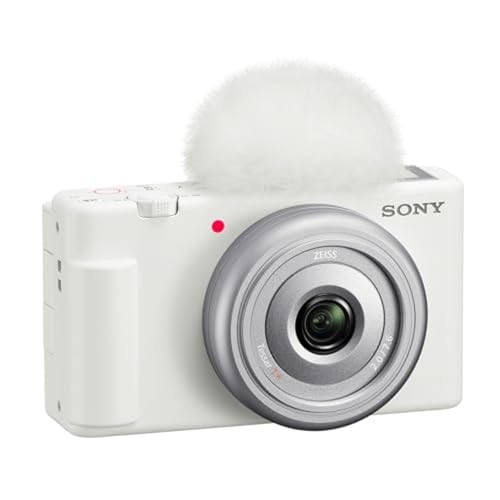
- Sony ZV-1F: check price on Amazon
- Sony Alpha 7 IV: check price on Amazon
- Canon EOS R6 Mark II: check price on Amazon
- Panasonic LUMIX S5IIX: check price on Amazon
- DJI Osmo Pocket 3: check price on Amazon
- Nikon Z50 II: check price on Amazon
This guide judges cameras on one faculty, examined from every side: how their autofocus behaves in the situations YouTube actually consists of. A face talking to camera for twenty minutes. A product lifted toward the lens and lowered again. A creator walking through a market, turning, gesturing, passing from shade to sun. Hands entering the frame over a workbench while the face is out of shot entirely. Each situation defeats a different weakness — hunting, drifting, breathing, surrendering to the background — and the six picks below are the cameras whose focus survives all of them with the fewest apologies.
Notice what is not being ranked: image quality in the abstract, stills performance, price per feature. Several superb cameras are absent because their autofocus, whatever their other glories, asks the creator to supervise it — and a solo creator has no supervision to spare. The picks that remain can be pointed at a face and forgotten, which is the highest state a YouTube camera’s focus can achieve.
Key Takeaways
- Sony’s ZV-1F pairs eye autofocus with a product-showcase mode that snaps focus to whatever a creator holds up.
- The Alpha 7 IV’s real-time eye tracking is the benchmark for walking, turning and talking without a focus failure.
- Canon’s R6 Mark II uses deep-learning subject detection that recognises people, animals and vehicles intelligently.
- Panasonic’s S5IIX finally gives the LUMIX line phase-detect autofocus, ending years of contrast-based pulsing in video.
- DJI’s Pocket 3 focuses fast and tracks subjects on a gimbal, for creators who film while moving.
- Nikon’s Z50 II brings genuine subject-detection autofocus to the most accessible price in this list.
In this guide
Quick Picks
| Camera | Badge | Why it is here |
|---|---|---|
| Sony ZV-1F | Best for desk creators and reviews | Eye autofocus plus a showcase mode built for holding products to the lens. |
| Sony Alpha 7 IV | Best tracking, full stop | Real-time eye AF that survives turns, distance changes and crowded frames. |
| Canon EOS R6 Mark II | Best subject intelligence | Deep-learning detection that knows a person from a prop and a face from a crowd. |
| Panasonic LUMIX S5IIX | Best for video professionals | Phase hybrid autofocus at last, inside the strongest video body in this list. |
| DJI Osmo Pocket 3 | Best for moving vloggers | Fast focusing and gimbal tracking in a pocket device that is always ready. |
| Nikon Z50 II | Best value creator camera | Subject detection and easy modes at the friendliest price here. |
What does YouTube ask of autofocus that other filming does not?
Solitude is the first condition. A film set has a focus puller; a YouTube creator has a remote control and hope. The camera must make every focus decision alone, correctly, for the length of a take, while its operator is busy being the talent, the director and the audience simultaneously. Autofocus that is merely good with supervision — the kind that needs a tap, a nudge, a second take — is therefore not good at all in this category. The standard here is trust over twenty unmonitored minutes.
The product moment is the second condition, and it is unique to this medium. Reviews, unboxings, tutorials and hauls all turn on the same gesture: an object raised toward the lens, held, returned. A camera must abandon the creator’s eye decisively, focus on the object at a hand’s distance, hold it while it rotates, and return to the eye without a visible hunt when the hand withdraws. Cameras differ enormously at this gesture — it is a designed behaviour in the leading pick below and an accident in lesser ones — and for review channels it is worth more than any resolution figure.
Movement is the third. The walking vlog subjects autofocus to continuous distance change, passing distractions, faces turning to profile and away, light swinging between shade and glare. Tracking systems must hold identity through all of it, and must do so smoothly: a focus system that arrives in visible steps, pulsing as it corrects, makes footage feel seasick even when it is technically accurate. The guide judges smoothness of arrival as heavily as accuracy of destination, because viewers feel the journey, not the endpoint.
Focus breathing is the fourth, quietest condition. As some lenses change focus, their framing subtly zooms — the background breathes in and out behind a talking head. Viewers rarely name it and always feel it. Modern creator cameras increasingly compensate for breathing in body, and two picks below make a feature of exactly that compensation; for static talking-head formats filmed for hours a week, it separates the professional-looking channels from the almost ones.
There is an economics of trust underneath all of this. A creator who cannot trust autofocus films defensively: shorter takes, safer framing, a monitor checked instead of a performance given, hours in the edit repairing what confidence would have prevented. The channels that look effortless are usually running on trusted focus, and the trust compounds — better performances, braver formats, a catalogue that grows because filming stopped being a gamble. That compounding is what the six budgets below are actually buying.
Finally, autofocus must survive the creator’s actual light. Kitchens at night, workshops under one bulb, bedrooms lit by a monitor’s glow: phase-detect systems keep working as light falls, while older contrast-based systems begin their visible search-and-pulse routine. The Panasonic pick’s presence in this guide is a direct consequence of that physics — its line’s conversion to phase detection is the single largest autofocus story in this list.

Sony ZV-1F — Best for desk creators and reviews
The ZV-1F was designed by asking review creators what their cameras got wrong, and the answer is built into its most famous behaviour: product showcase mode. Hold an object toward the lens and focus transfers to it — promptly, decisively, without the pleading wave-and-wait ritual older cameras demanded — then returns to your eye when the object leaves. For the enormous class of channels built on showing things, this single behaviour is worth more than a shelf of specifications, and it works with the unthinking reliability that lets a creator perform instead of operate.
Around that party trick sits a complete autofocus manner. Eye autofocus finds the creator’s eye and keeps it through the head movements, leans and glances at notes that desk filming consists of; the wide fixed lens keeps the depth of field forgiving, so small focus decisions never become visible failures; and the whole system operates at a level of quiet competence that suits a camera whose owner will never open its focus menu. Beginners are not condescended to by this design — they are liberated by it.
The wide lens deserves its autofocus footnote. At 20mm-equivalent, a desk creator’s world — face, hands, desk surface, the product’s journey between them — sits within a depth of field that forgiving physics grants, so the ZV-1F’s focus appears almost telepathic partly because the lens rarely lets it be wrong by much. Creators filming tutorials over a workbench, where hands and materials matter more than eyes, benefit doubly: the camera’s attention and the lens’s tolerance point the same way.
Background defocus switching adds the presenter’s other favourite trick: one button swaps between a soft, separated background and a deeper, everything-legible one, for the moments when the room itself is the subject — a setup tour, a before-and-after. It is focus used as a storytelling tool rather than a utility, and it signals how thoroughly this little camera was thought through from the creator’s chair rather than the engineer’s bench.
The boundaries are the fixed lens’s boundaries. There is no zoom to reframe with, no interchangeable mount to grow into, and the sensor’s low-light autofocus, while willing, is a compact camera’s rather than a full-frame system’s. Channels that outgrow the desk — travel, events, cinematic ambitions — will outgrow this camera, and the Sony above it in this list is the natural graduation. Within the desk’s world, though, the ZV-1F’s focus behaviour is not the budget option. It is the reference.
For review, beauty, unboxing, tutorial and talking-head channels — a fair description of most of YouTube — this is the camera whose autofocus disappears most completely into the work. The creator thinks about the product and the audience; the camera thinks about focus; the division of labour has never been cleaner at this size.
Beauty and craft channels should note a subtler gift: the showcase behaviour works at the speed of conversation. A creator mid-sentence — here is the shade, here is the texture — cannot pause the performance for a focus negotiation without breaking the spell that sells the video, and the ZV-1F’s transfer happens inside the rhythm of the sentence. Tutorials live or die on that continuity; a focus system that keeps the performance unbroken is doing editorial work, not just optical work.
- Type: compact creator camera, fixed wide lens
- Focus star: product-showcase mode plus eye AF
- Defocus: one-button background blur switching
- Format: 4K video, flip screen for self-framing
Strengths
- Showcase focus that simply works, every take
- Eye AF a beginner never has to manage
- Wide lens forgives what focus misses
Trade-offs
- Fixed lens, no zoom or growth path
- Compact-sensor limits in dim rooms
- Desk-bound by design
Best for: reviewers, unboxers and desk-based creators. Not suited for: travel channels or cinematic ambitions.

Sony Alpha 7 IV — Best tracking, full stop
The Alpha 7 IV’s autofocus has become the industry shorthand for trust, and using it explains why within one walking take. Its real-time eye autofocus does not merely find an eye — it adopts it, following through turns to full profile, through distance changes as the creator walks toward and away from the lens, through the moment a hand or a product crosses the face, and reacquiring instantly when the face returns. Creators describe the experience uniformly: they stopped checking. In a medium where checking costs a take, that sentence is the review.
The system’s intelligence extends past the eye. Focus maps, subject recognition for people and animals, and a willingness to hold a body when the eye is unavailable give the A7 IV a layered persistence — eye if possible, face if not, body in the worst case, and a graceful climb back up the ladder when the subject re-presents. Vloggers filming with pets, children or co-hosts wandering the frame will feel those layers working on every take.
Breathing compensation is the connoisseur’s line in its specification and deserves translation: with compatible lenses, the body corrects the subtle framing shift that focus changes cause, so a rack focus or a tracking adjustment happens without the background inhaling. Talking-head footage acquires a stillness that viewers read as production value without ever knowing its name. Channels filming long-form in one position — podcasts, courses, commentary — benefit from this more than from any other single feature here.
All of this rides on a full-frame body of genuine all-round excellence, which matters to autofocus in one specific way: the creator who trusts the camera entirely stops building the channel around its limitations. Low light stops being a scheduling constraint because phase detection keeps working as rooms dim; longer lenses become usable for compressed, cinematic framing because tracking holds at distances where lesser systems give up. The A7 IV is the pick for the creator whose ambitions have stopped fitting inside a compact.
The costs are a serious body’s costs — price, size, a menu system that rewards one proper setup session — and a lens decision that shapes the autofocus experience, since tracking can only be as fast as the glass it drives. Buyers should budget the lens with the body, favouring Sony’s modern focusing motors, because an A7 IV behind a slow old lens is a sports car on cart wheels.
As the autofocus benchmark of this guide — the camera against which the others’ tracking is measured — the A7 IV earns its place without a single caveat about the faculty it was chosen for. Creators who film people, moving, in real light, and who are tired of midnight discoveries in the edit, already know its name. This section exists to tell them their information is current.
Interviewers get a specific dividend from the layering. A guest who leans out of the agreed position, laughs forward, turns to address a second camera — the A7 IV’s hold degrades gracefully through face and body rather than snapping to the backdrop, so the editor inherits footage that stays usable through the guest’s most animated minutes. Solo creators feel the same grace in reverse when they are their own worst guest, which on a long filming day is most of them.
- Type: full-frame mirrorless camera
- Focus star: real-time eye AF with layered subject hold
- Breathing: compensation with compatible lenses
- Subjects: people and animals recognised
Strengths
- Tracking creators simply stop supervising
- Focus stays composed in low light
- Breathing correction for polished static shots
Trade-offs
- Serious price, lens on top
- Needs one real setup session
- Size ends pocket-and-go spontaneity
Best for: established creators filming people in motion. Not suited for: first channels on a budget.

Canon EOS R6 Mark II — Best subject intelligence
Canon’s approach to the autofocus problem is to teach the camera what things are. The R6 Mark II’s deep-learning detection distinguishes people from animals from vehicles, finds heads and eyes within a crowd, and — the behaviour creators remark on — keeps its chosen subject when the frame fills with rivals for its attention: the co-host who leans in, the dog that crosses, the audience member who stands. Where simpler systems focus on the nearest or the brightest, Canon’s behaves as if it understood the assignment, because in a statistical sense it does.
For YouTube, that intelligence expresses itself as calm. A creator filming a tutorial with a pet in the room, a parent filming a family channel, a presenter with a guest: the camera’s attention stays where the story is, and its corrections, when the subject moves, arrive as smooth transitions rather than visible decisions. Reviewers of autofocus often praise speed; the R6 II’s distinction is judgement, and judgement is what solo creators actually run out of.
The body around the brain serves the moving creator well. Tracking holds through the burst-fast, decisive acquisition that Canon’s dual-pixel system has refined for a generation; the in-body stabilisation steadies handheld vlogging so focus is not fighting shake as well as motion; and the whole package works in the dim, mixed light of real rooms with the confidence phase-based systems share. A creator walking a house tour, turning through doorways between bright and dark rooms, is this camera’s home fixture.
Product moments, the desk creator’s test, are handled by a tap or by the detection’s own initiative — an object presented to the lens is recognised as the new subject with a promptness close behind Sony’s showcase specialisation, and the return to the face is equally clean. Review channels loyal to Canon’s colour and lenses lose nothing of consequence here, which has not always been true in autofocus comparisons and is worth stating plainly.
Costs mirror its Sony rival’s: a serious body, lenses to budget, a size that announces a production. Canon’s lens mount strategy means the newest glass is the native path, and creators should price the lens they need — a fast standard zoom covers most channels — inside the same decision. The R6 II also rewards an hour of configuration: its detection options are powerful partly because they are numerous.
Chosen for the creator whose frames are crowded and whose subjects are plural — families, guests, animals, events — the R6 Mark II offers the most intelligent autofocus attention in this guide. The Sony tracks an eye harder; the Canon understands a scene better, and many channels need the understanding more.
Animal channels are the R6 II’s surprise constituency. A creator filming a dog’s training progress, a cat’s supervised adventures or a horse’s schooling needs detection that treats the animal as the subject rather than as noise in front of the human, and Canon’s animal recognition — eyes included, where the animal cooperates — delivers footage that phone-era pet channels could not approach. The fastest-growing formats on the platform are disproportionately furry, and this is the autofocus built for them.
- Class: full-frame mirrorless body
- Focus star: deep-learning subject detection
- Subjects: people, animals and vehicles
- Stabilisation: in-body, for handheld filming
Strengths
- Keeps the right subject in crowded frames
- Smooth, judgement-led focus transitions
- Confident tracking in dim, mixed light
Trade-offs
- Options reward real configuration time
- Body and lens are a joint budget
- Showcase behaviour a hair behind Sony’s
Best for: family, guest and event channels with busy frames. Not suited for: minimalists who refuse menus.

Panasonic LUMIX S5IIX — Best for video professionals
The S5IIX’s autofocus story is a redemption arc, and creators who know the history will feel its significance. Panasonic spent years as the video professional’s favourite body attached to the industry’s most criticised video autofocus — a contrast-based system that pulsed visibly while hunting, exiling its cameras from solo work. The S5 generation ended that exile with phase hybrid autofocus: phase detection for decisive acquisition, contrast refinement for precision, and tracking that a creator can finally leave alone. The S5IIX, the video-flagship variant, is where that redemption wears its best clothes.
In practice the hybrid system behaves the way the specification promises. It finds a face or eye promptly, holds it through the moderate movements of presented video, and — the historical test — does not breathe in and out around the subject while deciding. Long-form creators filming courses, interviews and commentary get the Panasonic virtues they always wanted, the colour, the stabilisation, the video toolset, without the asterisk that used to follow the brand into every recommendation.
Those video virtues remain the reason to choose it over the autofocus leaders. The S5IIX is the most production-minded body in this list: monitoring tools, recording options and stabilisation that lets a creator handhold a walking piece-to-camera with an steadiness that flatters the autofocus, since focus tracking and image stability are partners in every moving shot. Channels graduating toward client work, music videos or documentary will find this body keeps two careers in one bag.
Honesty about the remaining gap belongs in this section. In the most demanding tracking — fast, erratic subjects at long distances — the Sony’s eye-lock remains a shade more clairvoyant, and Panasonic’s subject-detection menu is younger than Canon’s. For the presented, walked and talked formats that constitute nearly all of YouTube, the difference is below the threshold of a ruined take; for sports-adjacent channels it might matter, and those creators have their own guide in this series.
The L-mount alliance supplies the lenses, including the fast-focusing modern glass the hybrid system deserves, and the body’s ergonomics — a working videographer’s layout — suit creators who film daily. Battery and heat behaviour across long recording sessions are engineered rather than hoped for, which long-form channels will register as an autofocus-adjacent virtue: the take that survives to its end is the only one focus gets to save.
For the creator who always wanted the Panasonic look and toolset and was kept away by one infamous weakness, the S5IIX is the answer arriving a generation late and exactly on time. Its autofocus is no longer the compromise in the purchase. For video-first channels, it may now be the reason.
Livestreaming is where the redemption gets tested in public, and the S5IIX passes in a way its ancestors could not. A two-hour live session offers autofocus no edit to hide in — every hunt would be broadcast, remembered and clipped — and the hybrid system’s composure across such sessions is the practical proof that Panasonic’s video autofocus problem is history rather than marketing. Live creators were the last constituency the brand had to convince, and this body was plainly aimed at convincing them.
- Class: full-frame mirrorless, video-flagship variant
- Focus star: phase hybrid autofocus
- Video: the deepest toolset in this list
- Stabilisation: strong in-body system
Strengths
- Phase autofocus ends the pulsing era
- Production video tools beyond every rival here
- Stabilisation partners the tracking beautifully
Trade-offs
- Extreme tracking still a shade behind Sony
- Detection menus younger than Canon’s
- Built for the committed, priced accordingly
Best for: video-first creators and graduating professionals. Not suited for: casual channels or sports-speed tracking.

DJI Osmo Pocket 3 — Best for moving vloggers
The Pocket 3 miniaturises the autofocus question into a device that fits a jacket, and its answer is speed. DJI calls its focusing fast, and for once the adjective undersells: the little gimbal camera snaps to a face as it wakes, holds it as the creator walks, and its ActiveTrack follows a chosen subject while the gimbal itself absorbs the footsteps — two systems, one mechanical and one computational, cooperating so completely that the footage reads as if a tiny, tireless operator were walking backwards in front of the creator all day.
That operator illusion is the product. Travel vloggers, market wanderers, campus tour guides, anyone whose format is walking and talking to a camera they are holding at arm’s length: the Pocket 3 keeps their face in focus and in frame through turns, crowds and doorways, in a device that was in a pocket thirty seconds earlier. The full-frame systems above outperform it in a studio; in the street, where their size keeps them in the bag, the Pocket’s autofocus is the one that actually gets used — and used autofocus beats perfect autofocus in every archive.
Its focus manners suit the selfie format specifically. At arm’s length, with the creator’s face large in frame and the background moving, the Pocket’s face priority is decisive and its transitions are damped by the gimbal into a floating smoothness. Product moments work too — a tap or its showcase-style behaviour brings a held object forward — making it a legitimate review tool for creators who film finds in the wild rather than at a desk.
The 1-inch sensor gives its autofocus better light to work in than pocket devices historically offered, so dawn markets and evening streets stay within its competence. Audio options, including DJI’s wireless microphones, complete a one-brand vlogging kit whose parts were plainly designed in the same room. The whole apparatus answers the vlogger’s first question — can I be filming, in focus, in ten seconds — with the fastest yes in this guide.
Limits are the format’s limits. The lens is fixed and wide, the device asks to be the main camera only for creators whose style is mobile and personal, and long static productions belong to the bodies above. Its tracking, while excellent, is a small system’s: a subject lost behind a crowd is reacquired gamely rather than clairvoyantly. None of this touches the walking creator’s brief.
For channels whose geography is the content — travel, food, cities, campuses, days out — the Pocket 3 is the autofocus recommendation, because it is the camera whose focus will be present for all of it. The best autofocus is the one that was switched on.
Food creators have adopted it for a reason worth recording: markets and kitchens are autofocus obstacle courses — steam, crowds, a subject who stops every six paces to hold something delicious toward the lens — and the Pocket’s combination of face priority, quick product transfer and gimbal calm produces the genre’s signature shot, the walking tasting, without a crew. A device that enables a genre’s signature shot stops being equipment and becomes infrastructure.
- Type: gimbal camera, 1-inch sensor
- Focus star: fast focusing with ActiveTrack
- Form: pocket-sized, ready in seconds
- Audio: wireless microphone ecosystem
Strengths
- Focus and framing survive walking, crowds, turns
- Always carried, therefore always used
- Gimbal smoothness flatters every focus shift
Trade-offs
- Fixed wide lens only
- Reacquisition gamely, not clairvoyantly
- Not a studio production body
Best for: travel and walking-format vloggers. Not suited for: static long-form studio channels.

Nikon Z50 II — Best value creator camera
Nikon’s Z50 II closes the list by democratising its subject. Subject-detection autofocus — the camera finding people, eyes, animals and vehicles on its own initiative — was recently a flagship behaviour; here it sits in the most accessible body in the guide, paired with easy colour presets and a flip screen, aimed squarely at the creator whose channel has outgrown a phone and whose budget has not outgrown sense. For that creator, its autofocus is not a compromise version of the leaders’. It is the technology arriving.
The detection’s manners in daily filming are modern and calm. It finds the creator’s face as they settle into frame, holds an eye through a presented piece, and manages the product moment by tap or by its own recognition with a competence that would have embarrassed professional cameras a few years ago. Creators upgrading from phones — whose autofocus they never thought about because it never failed them at arm’s length — will find the transition mercifully familiar: the camera simply handles it.
Growth room distinguishes it from the compact pick. The Z50 II takes Nikon’s Z lenses, so the creator whose channel matures can add the fast prime that transforms low-light focus, or the wider vlogging zoom, without replacing the body that learned their habits. Autofocus performance grows with the glass in a way fixed-lens cameras cannot imitate, and the body’s video quality — oversampled, colourful, honest — gives the channel years of headroom.
The flip screen and presets deserve their sentence for this audience: self-framing is immediate, the picture can be made handsome by preset while the creator learns the craft, and nothing about the camera punishes the beginner for being one. Nikon’s ergonomics, long the quiet favourite of people who hold cameras for hours, complete a package that respects its owner’s present and future equally.
Where it concedes ground is the summit: tracking tenacity below the Sony’s, detection breadth below the Canon’s, video tooling below the Panasonic’s, and an APS-C sensor’s low-light focus a step behind the full-frame systems as rooms grow dim. A creator should read those concessions as a map of their own future — each names an upgrade they may want in three years, which is another way of saying the Z50 II is correctly sized for today.
For the first serious camera of a growing channel — the purchase that converts a phone creator into a camera creator — the Z50 II offers the guide’s best ratio of autofocus intelligence to money. Its graduates, when they eventually shop beside the flagships above, will do so as experts, which is the finest thing a first camera can manufacture.
Student creators are its natural first owners, and the economics deserve respect rather than apology. A channel’s early years run on borrowed time and part-time wages; a camera that delivers modern detection autofocus at this level lets a student compete on the only axis the audience can see — whether the footage is in focus and the creator is present in it — while the axes money buys later wait their turn. Several working channels in every genre began on exactly this rung, and none of them apologise for the footage now.
- Type: APS-C mirrorless camera
- Focus star: subject detection for people and more
- Screen: flip screen for self-filming
- Growth: interchangeable Z-mount lenses
Strengths
- Modern detection autofocus at this price
- Beginner-kind, with room to grow
- Phone upgraders feel immediately at home
Trade-offs
- Tracking a tier below the leaders
- Dim-room focus trails full-frame
- Video tools shallower than Panasonic’s
Best for: growing channels buying their first real camera. Not suited for: professionals needing the deepest tracking.
How does autofocus behave across the formats YouTube is made of?
Talking-head and commentary formats ask for stillness more than pursuit: an eye held for twenty minutes, transitions when the creator leans or gestures, no breathing behind them. Every pick here passes, and the differentiators are the refinements — Sony’s breathing compensation, Canon’s refusal to be distracted by a busy shelf, Nikon’s calm at its price. Creators in this format should choose by lens and workflow, because the autofocus question, uniquely, is already answered by the whole list.
Review and tutorial formats live on the product gesture, and here the list separates. The ZV-1F’s showcase mode was designed for exactly this hand movement; the mirrorless systems answer with detection and tap focus that rehearsed creators find nearly as fluent; the Pocket transfers quickly for finds filmed in the wild. A review channel should weight this section above all others — the gesture is their format’s heartbeat, and a camera that fumbles it fumbles the channel’s reason to exist.
Walking, travel and event formats ask for pursuit through chaos, and the ranking inverts again: the A7 IV’s layered hold and the Pocket’s gimbal partnership lead, Canon’s scene intelligence follows closely, and the desk-bound designs recuse themselves. Live formats, finally, ask for composure without a safety net, which is why the Panasonic’s redemption and the Sony pair’s long record matter more there than any laboratory measurement. Name your format honestly and the shortlist shortens itself — the recurring lesson of every guide in this series, and the reason this one is organised by behaviour rather than by brand.
How do the six focus systems compare?
| Camera | Focus character | Signature strength | Watch out for |
|---|---|---|---|
| Sony ZV-1F | Showcase specialist | Product focus on demand | Fixed lens ceiling |
| Sony Alpha 7 IV | Relentless tracker | Eye AF through anything | Price and setup |
| Canon EOS R6 Mark II | Scene intelligence | Right subject in crowds | Menu depth |
| Panasonic LUMIX S5IIX | Phase convert | Video tools plus real AF | Extreme tracking shade behind |
| DJI Osmo Pocket 3 | Mobile tracker | Focus at walking pace | Fixed wide view |
| Nikon Z50 II | Value detection | Modern AF, friendly price | Dim-light step behind |
What changed in autofocus to make this guide possible?
A decade ago, video autofocus was the feature reviewers apologised for. Contrast systems hunted, early phase systems in video were crude, and serious creators focused manually or stood very still. Three developments rewrote the field: phase detection spread across sensors until it became the default rather than the flagship extra; processors grew fast enough to run genuine subject recognition — eyes, faces, animals, vehicles — in real time rather than as a menu curiosity; and the creator economy became large enough that manufacturers began designing focus behaviours, like Sony’s showcase mode and breathing compensation, for solo video specifically rather than borrowing stills logic and hoping.
The practical consequence for a buyer today is a pleasant inversion: autofocus has stopped being the reason to avoid a camera and become the reason to choose one. Every pick in this guide would have been the autofocus flagship of its line a few years ago. The differences that remain — tracking tenacity, scene intelligence, showcase fluency, performance as light falls — are differences of degree at a high level, which is why this guide can afford to rank by format fit rather than by competence. The incompetent options have simply left the market.
One frontier remains visibly unfinished, and naming it helps buyers calibrate expectations: autofocus in genuinely dark rooms, and autofocus on subjects the recognition libraries were not trained on — unusual crafts, machinery, extreme close-ups of materials. Creators in those niches should weight the rehearsal test in the next sections above every claim in this guide, including the confident ones, because their subject is precisely where the libraries thin out.
Which autofocus settings should a creator actually change?
Fewer than the menus suggest. The productive setup is an afternoon, once: choose continuous autofocus as the permanent mode, assign subject or eye detection as the default behaviour, set the tracking sensitivity to the middle of its range — eager enough to follow a gesture, patient enough not to leap at every passer-by — and save the result as the camera’s video custom mode. Every pick in this guide then wakes up in its best behaviour, and the creator’s focus decisions per shoot fall to zero, which was the point of buying autofocus this good.
Two behaviours deserve deliberate testing rather than defaults. The first is what your camera does when a product enters the frame: film the gesture ten times in your real room and learn whether your pick transfers focus on its own, wants a tap, or prefers its showcase mode — then build the habit it prefers into your presenting. The second is low-light behaviour in your actual filming room at your actual filming hour; the creator who has watched their camera hunt at 9 p.m. in rehearsal will fix the light, not discover the hunt at midnight in the edit.
Resist, finally, the forum habit of copying a professional’s full settings sheet. Autofocus tuning is personal to a format — a walking vlogger’s ideal sensitivity is a desk reviewer’s distraction — and the defaults of the six cameras here were set by engineers who know the median creator better than any forum does. Change what your own test footage indicts, and nothing else.
What about autofocus for livestreams and long sessions?
Live filming removes the editor from the chain of rescue, and autofocus behaviour changes its meaning accordingly: a hunt is no longer a ruined take to be discarded but a moment the audience watched happen. The qualities that matter live are therefore the conservative ones — a hold that prefers stability over eagerness, transitions that arrive gently, and a system whose behaviour across two continuous hours matches its behaviour across two rehearsed minutes. The Sony pair and the Panasonic have the deepest live records in this list; the Pocket serves the mobile live formats; and every pick should be rehearsed at session length, not gesture length, before a channel trusts it in public.
Heat and power join the focus conversation on long sessions, because a camera that throttles or sleeps mid-stream has failed more completely than any hunt could. Bodies engineered for video duty — the S5IIX most explicitly here — treat sustained recording as the design case. Desk creators streaming from the ZV-1F or Z50 II should arrange mains power and confirm their recording limits in rehearsal, so the only surprises in a live session are the welcome kind, in the chat.
How do you test a camera’s autofocus before committing?
Rehearse your own format, because autofocus quality is format-specific. Film the five gestures your channel consists of: the talking head with head turns and note-glances, the product raise-and-return, the walk toward and away, the doorway transition between bright and dark rooms, and the hands-over-workbench passage with no face in frame. Watch the footage at full size, at the focus points, with the sound off — sound forgives what vision does not — and count the hunts. The camera whose count is zero in your room, at your hour, is your camera, whatever any ranking including this one says.
Stores and rental weekends both permit this test, and for the full-frame picks it is worth the rental fee: autofocus trust is the entire purchase, and it can only be verified in the conditions of use. Bring your own card, film your own gestures, take the footage home. A camera that passes in your hands will not fail you in production.
A related trap deserves its own warning: judging autofocus from the camera’s rear screen while recording a test in a bright room, then filming the real video at night. Focus systems are at their most confident in exactly the conditions a showroom and a rehearsal provide, and at their least in the lamplit evening when most solo creators actually film. Rehearse at the hour you publish from, or accept that the first real video is the rehearsal — with an audience.
What focus mistakes do creators keep making?
Leaving the camera in single-shot focus inherited from stills mode leads the list — the first lean forward goes soft and stays there. Second is filming wide open on a fast lens for the look, shrinking depth of field until breathing alone breaks focus; stopping down one notch saves more takes than any tracking mode. Third is trusting the rear screen’s small image, on which everything looks sharp, instead of checking a recorded test at full size. Fourth is ignoring the product gesture in rehearsal and discovering the camera’s transfer behaviour live, on the only good take. Each is a habit, and each is cheaper to fix than the camera was.
Final Recommendation
One last piece of shopping discipline, specific to this faculty: never buy autofocus from a demonstration filmed by the manufacturer, and never judge it from a showroom’s fluorescent noon. Focus systems reveal themselves in dim rooms, against clutter, at the end of a long take — in conditions showrooms are designed to exclude. Your room, your hour, your five gestures, your footage: the test described above is short, decisive and entirely within your control, and it has the final word over every sentence in this guide, including this one.
Match the focus to the format. Desk reviewers and tutorial channels should buy the ZV-1F and its showcase certainty; creators who walk, turn and film people in the wild should take the A7 IV’s tracking or the Pocket 3’s portable version of it; crowded, plural channels belong to Canon’s intelligence; video professionals finally get their Panasonic in the S5IIX; and growing channels should start on the Z50 II, whose detection autofocus will teach them what good feels like. Whichever you choose, rehearse your five gestures before the first real upload — trust in autofocus, like trust in anything, should be earned in rehearsal and spent in performance.
And a word for creators choosing between two finalists on this list: pick the one whose autofocus matches the take you cannot redo. Every channel has one — the interview with the guest who will not return, the event that happens once, the demonstration that consumes its materials. Buy for that take’s demands and let ordinary Tuesdays inherit the surplus; the reverse purchase, optimised for Tuesdays, is how creators end up filming the irreplaceable on equipment that was almost good enough.
Frequently Asked Questions
What does focus breathing look like, and should I care?
Film a static scene and rack focus from near to far: if the frame’s edges appear to zoom slightly in and out, that is breathing. Talking-head viewers feel it as a subtle unease behind the speaker. Creators filming long, static pieces should care; creators whose frames move constantly will never see it. The A7 IV’s compensation and the naturally modest breathing of the compact and gimbal picks cover most channels without a thought.
Is eye autofocus really necessary for YouTube?
For any format with a face in frame, it is the single most valuable focus behaviour available, because the eye is where viewers look and where softness is unforgivable. Channels without faces — pure screen capture, hands-only crafts — can live happily on subject and tap focus, which is why the workbench test appears in this guide’s rehearsal list.
Why does my current camera pulse in and out of focus?
That pulsing is the signature of contrast-based autofocus hunting for its peak, most visible in video and in low light. It is the behaviour Panasonic’s move to phase detection was designed to end. If your camera pulses, more light and a smaller aperture will calm it; if it pulses in good light at sensible settings, the camera — not your technique — is the ceiling.
Does the lens matter as much as the body for autofocus?
Nearly. Focus motors live in the lens, and a flagship body driving an old, slow lens inherits the lens’s hesitation. Modern lenses from each system here focus quickly and quietly; when budgeting a body from this list, reserve for the current-generation standard zoom or prime your format needs, because the pairing — not either part — is the autofocus system you will actually experience.
Can autofocus handle two people on camera?
The detection systems in this guide manage it by priority — usually the nearer or the selected face — and the Canon and Sony picks let the creator designate the primary subject. For interview formats, rehearse the handover: when the guest speaks and turns, does focus follow your intention? Ten rehearsal minutes answer what no specification can.
How long does good autofocus stay good?
Focus systems age slowly and gracefully: the tracking in this guide’s bodies will still be competitive years from now, because the recognition libraries improve by firmware while the phase hardware does not wear. Buy the autofocus you need today with confidence that it is the part of the camera least likely to date — lenses and sensors will tempt you long before focus does.
Do I need a monitor to trust autofocus?
A larger screen helps judgement — focus that looks fine on a flip screen can be plainly soft at monitor size — but the systems in this guide were chosen so that trust does not depend on one. The practical arrangement is a rehearsal check at full size when a setup changes, then faith during takes. Creators who find themselves watching a monitor instead of performing should read that as a verdict on their current camera, not as a workflow to optimise.
Should I ever focus manually for YouTube?
For locked-off shots of static subjects — a product on a table, a fixed demonstration rig — manual focus is a legitimate, even superior choice, because it cannot wander. The moment anything in the frame moves with intent, the systems in this guide outperform a solo creator’s hand. Manual focus is a tool for the shots that stand still; autofocus is for everything that lives.
Related Guides
Creators filming whole matches and moving subjects outdoors should continue to the best cameras for youth sports guide, where tracking meets telephoto distances. The desk side of autofocus — calls, meetings and streamed lessons — is covered in the best cameras for work from home roundup, and teachers filming movement in small rooms will find kindred problems solved in the best cameras for yoga videos guide.


