reviewstook.com is reader-supported. When you buy through links on our site, we may earn an affiliate commission.
Where to Buy a Camera for a 13-Year-Old Who Has Outgrown Toys
Thirteen changes the camera conversation completely. The best cameras for 13 year old creators are not tougher toys; they are the first real tools of a person who now has an aesthetic — who edits, who posts, who has opinions about how their world should look and a growing impatience with equipment that cannot keep up. A camera for a thirteen-year-old succeeds when it respects that seriousness: real controls, real image quality, real video, and output that survives comparison with the phone in their pocket, because the phone is the competitor every camera at this age must beat or join.
That phone comparison is the honest starting point. A modern phone is a superb automatic camera, so a dedicated camera earns its bag space only by doing what the phone cannot: optical zoom and real depth, interchangeable lenses, stabilised video on the move, point-of-view mounting, instant prints with physical charm, or simply the creative separation of a device that is only for making things. Every pick below wins on one of those grounds, and the guide will tell you plainly when the phone is honestly enough and the money is better spent on light, a tripod or a course.
Six cameras follow for the six kinds of thirteen: the vlogger, the photographer-in-formation, the point-of-view storyteller, the pocket filmmaker, the instant-print romantic, and the budget system-builder. Four link to Amazon through verified listings; two are described without links. What unites them is respect — for the teenager’s eye, their audience and their growing independence, including the family’s legitimate interest in how images travel. Buy the one that matches the creator you actually live with.
Key Takeaways
- At thirteen a camera must beat the phone at something specific, or it will be left at home.
- Video, vertical formats and easy transfer matter as much as stills quality for this generation.
- Interchangeable lenses turn a gift into a multi-year system that grows with its owner.
- Instant prints remain magic at thirteen — parties, journals and bedroom walls run on them.
- Independence matters: a camera that needs a parent’s phone for everything will be resented and abandoned.
- Agree the sharing rules together; a teenager who co-authors the rules keeps them.
- Finish work monthly — ten edited photographs, one short film, one print run — because finishing is where taste forms fastest at any age.
- Let the teenager co-decide between the final two candidates; ownership of the choice predicts use better than any review score.
- Budget the second purchase together later — a lens, a microphone, a light — when the first month’s work has named it.
- A padded insert in the everyday school bag protects better than a precious case that gets left behind at home.
- If no specific hunger exists yet, upgrade the phone’s accessories and wait a season; the right camera announces itself through envy of a specific capability.
- Consent is a camera skill: ask people, respect a no, and credit friends when their photographs of you get used.
- Keep one printed portfolio season per year; paper remembers what feeds forget by Friday afternoon.
In this guide
Quick Picks
| Pick | Badge | Why it made the list |
|---|---|---|
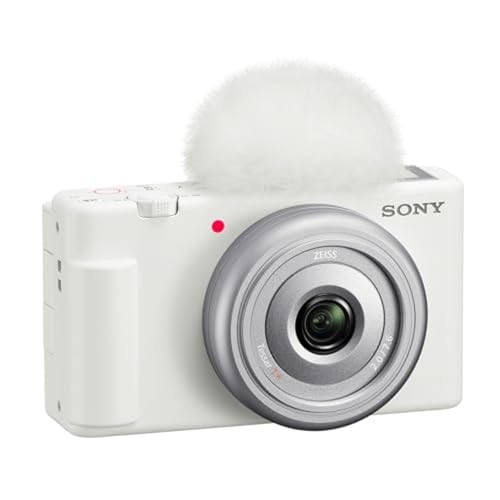
| Sony ZV-1F | Best for the teenage vlogger | A fixed-lens creator camera with a wide view, face-tracking autofocus and a screen that faces its presenter — the bedroom-to-broadcast starter. |
| Nikon Z50 II | Best first mirrorless for a serious young photographer | A compact interchangeable-lens camera with subject detection and colour presets — a real system a teenager can grow with for years. |
| Insta360 GO 3S | Best for point-of-view and social storytelling | A thumb-sized 4K camera that mounts anywhere — caps, chests, pets, instruments — for footage no phone can politely capture. |
| DJI Osmo Pocket 3 | Best pocket filmmaker for travel and days out | A gimbal camera that turns a teenager’s walk through a city, market or coastline into smooth, cinematic footage. |
| Fujifilm Instax Mini Evo | Best hybrid instant for prints and digital together | An instant camera that shoots digitally, lets the teenager choose what to print, and prints phone photos too — film discipline without film waste. |
| Canon EOS R100 | Best budget route into a real camera system | Canon’s entry mirrorless body with a proper viewfinder and the RF lens system ahead of it, described here as the value system-starter. |
How Did We Choose These Cameras for 13-Year-Olds?
We applied the phone test first: any camera whose entire output a current phone matches was cut, however charming. Survivors had to offer a decisive advantage — a lens system, a gimbal, a mount, a print — and then prove they could keep a teenager’s pace: fast sharing to their own devices, vertical video treated as a first-class format, controls that reward learning without punishing experimentation, and build quality that survives a school bag without demanding a shrine.
We also weighed the family’s position honestly. Thirteen is when images start to travel, so each pick was considered for how its sharing works, whether a parent can stay appropriately in the loop without operating the camera, and whether the device drags social media behind it or simply makes files the teenager controls. Six cameras passed, and they divide by creative identity rather than by price, because at thirteen the identity is the purchase.
Detailed Picks: Six Real Cameras for Six Kinds of Thirteen

Sony ZV-1F — Best for the teenage vlogger
For the thirteen-year-old whose camera roll is already ninety percent video of themselves talking, the ZV-1F is the first grown-up tool of their trade. The wide fixed lens frames a presenter and their room at arm’s length, the screen flips to face them, and face and eye autofocus hold them sharp while they think about what they are saying — which, at thirteen, is quite enough to think about. The result is footage that looks intentional in a way phone selfies, for all their quality, rarely do: stable framing, pleasing depth, and a presenter the viewer can settle on.
The details show a camera designed by people who watch young creators. A defocus button blurs the bedroom behind the presenter into respectability, a product mode snaps focus to whatever is held up to the lens, and the built-in directional microphone records a presentable voice before any accessory arrives. When the channel or the confidence grows, a microphone input waits for the next step, so the camera is a platform rather than a cul-de-sac.
Its limits are a fixed lens and a small sensor: no optical reach, and evening light asks for help from a lamp. But for the talking, reviewing, reacting formats that dominate young creators’ output, those limits rarely appear on screen. As the graduation from front-camera improvisation to actual craft, it is the most direct route in this guide.
Parents should appreciate the workflow’s transparency: footage lives on a card, edits happen on the family or the teenager’s own computer, and publishing remains a deliberate act rather than a reflex. The camera professionalises the making while keeping the sharing a decision — a combination that suits thirteen precisely.
- Camera: compact with a fixed wide lens and 4K video
- Screen: fully articulating for self-framing
- Autofocus: face and eye tracking for solo presenters
- Audio: directional built-in microphone, plus an input for more
Strengths
- Presenter-first design removes filming friction
- Face tracking and flip screen suit solo work
- Microphone input gives it a growth path
Trade-offs
- Fixed lens: no optical zoom
- Small sensor wants decent light
- No lens system to grow into
Best for: vloggers, reviewers and presenters aged thirteen.
Not suited for: photographers wanting zoom or lens craft.

Nikon Z50 II — Best first mirrorless for a serious young photographer
This is the pick for the thirteen-year-old who has started saying ‘photographer’ without irony. The Z50 II is a genuine system camera: lenses change, controls are real, and its subject-detection autofocus descends from professional bodies, so the dog, the football match and the school play all come home sharp while its owner learns the craft around that reliability. It is the camera in this guide most likely still to be in daily use at eighteen.
Nikon softened the learning curve in the right places. Colour presets deliver finished, characterful files straight from the camera for the teenager who is not yet ready to edit raw files at midnight, while the full manual controls and raw capture wait patiently for the term they become a photography student in earnest. The kit lens covers daily life; the system’s small fast primes are the birthday and holiday gifts that will extend it for years, each one teaching a new way of seeing.
Video is a strong second language rather than its mother tongue, and low light is good rather than magical — the honest taxes of its class. For a teenager whose centre of gravity is stills, with school projects, sport and family life as the beat, this is the most complete and durable answer here, and the one parents can buy with the pleasant feeling that they will not be buying its replacement next year.
School photography courses and GCSE or college pathways speak this camera’s language fluently: manual control, raw files, interchangeable lenses. A teenager arriving with two years on a Z50 II walks into formal study with the mechanics already in their fingers, free to spend the course on seeing rather than on buttons.
- Camera: APS-C mirrorless with interchangeable Z lenses
- Autofocus: subject detection for people, animals and vehicles
- Colour: ready-made creative presets for finished files
- Video: capable 4K for school and personal projects
Strengths
- A real system that grows for years
- Professional-bred subject detection
- Presets now, raw craft later
Trade-offs
- Video is second to its stills
- Kit grows by lenses, which cost
- Low light is good, not magical
Best for: serious young photographers and future students.
Not suited for: pure video creators or print romantics.

Insta360 GO 3S — Best for point-of-view and social storytelling
The GO 3S is the camera for the teenager whose stories happen at full participation: the skate line, the climbing wall, the horse ride, the cooking lesson, the dog’s-eye view of the morning walk. It weighs almost nothing, mounts magnetically to a pendant, a cap or a chest, and records stabilised 4K from exactly where the action is lived. Phones cannot go these places gracefully and action cameras go there heavily; this little module goes there like jewellery.
Its pod design solves the action camera’s oldest annoyance: the screen detaches with the camera living in it, flips for self-framing, and works as a remote viewfinder when the camera itself is mounted somewhere unreachable. For a generation fluent in vertical video, the whole system feels native — shoot point-of-view all afternoon, dock, review, and post the vertical cut before dinner, with stabilisation making the footage look produced rather than survived.
Respect its physics: a tiny sensor asks for daylight, battery life is measured in adventures rather than days, and it is a witness, not a portrait camera. Within its brief — capturing the teenager’s moving life from inside the action — nothing else in this guide is remotely as liberating, and its clips have a way of becoming the family’s favourite footage of these years.
Musicians and makers have adopted it for the overhead and in-hand angles their crafts need: clipped above a workbench, mounted on an instrument, worn while both hands work. For a teenager whose channel or portfolio is built on doing things, that hands-free evidence is the entire format, delivered by the smallest camera here.
- Camera: tiny modular 4K action camera with a flip-screen pod
- Mounts: magnetic pendant, cap clip and adhesive mounts
- Video: stabilised point-of-view footage, vertical friendly
- Use: hands-free storytelling and social clips
Strengths
- Mounts anywhere, weighs nothing
- Stabilised POV footage phones cannot match
- Pod screen makes review and self-framing easy
Trade-offs
- Daylight is its natural habitat
- Battery suits sessions, not days
- Not a portrait or low-light tool
Best for: sporty, hands-busy and POV storytellers.
Not suited for: evening filming or portrait work.

DJI Osmo Pocket 3 — Best pocket filmmaker for travel and days out
Watch a teenager film a day out on a phone and you will see the footage wobble with every step; hand them a Pocket 3 and the same walk becomes a tracking shot. The mechanical gimbal is the whole argument: it floats the lens through movement, producing the smooth, deliberate motion that viewers read as ‘film’ rather than ‘clip’. For the thirteen-year-old drawn to travel diaries, city days and family holidays retold beautifully, it is the most cinematic tool in this guide that fits in a jacket pocket.
The large sensor gives it evening manners its action rivals lack, so the day does not end at dusk: markets under string lights, promenades at blue hour and restaurant tables all film with a richness that flatters a young editor’s ambitions. Face and subject tracking keep a presenting teenager centred while the gimbal handles the walking, and the rotating screen reframes for vertical platforms without a second take.
Handle it as the precision instrument it is: gimbals dislike drops, sand and downpours, and the fixed wide view will not reach across a stadium. Teenagers who are careful with their kit — and thirteen is exactly when the careful ones reveal themselves — will produce footage on this that embarrasses adult phone archives. For the young filmmaker, it is the pick that feels like a destiny rather than a gadget.
Family holidays gain a quiet diplomat in this camera: the teenager with a filming mission walks further, complains less and returns with the holiday movie everyone actually watches. Parents have funded it for worse reasons than converting a reluctant walker into the expedition’s cinematographer.
- Camera: pocket gimbal with a large sensor and rotating screen
- Stabilisation: mechanical three-axis gimbal
- Focus: fast tracking for faces and subjects
- Formats: horizontal and vertical shooting by rotation
Strengths
- Gimbal footage looks genuinely cinematic
- Strong evening performance for its size
- Vertical and horizontal in one rotation
Trade-offs
- Gimbal needs careful handling
- Fixed wide framing only
- Not waterproof or knock-proof
Best for: young filmmakers, travellers and diary-keepers.
Not suited for: rough sport or careless kit habits.
Fujifilm Instax Mini Evo — Best hybrid instant for prints and digital together
The Mini Evo is the instant camera redesigned by someone who understood teenagers’ economics and aesthetics simultaneously. It shoots digitally with a screen, so the thirteen-year-old reviews, chooses and prints only the frames that deserve film — the party portrait, the perfect group shot — while the experiments cost nothing. The prints that emerge carry the whole instant romance: physical, giftable, wall-worthy objects in an otherwise weightless media life.
Creatively it is the most playful camera here. Combinations of lens effects and film styles let its owner develop a signature look rather than accepting a default, and the camera’s own design — dials, a print lever, retro confidence — makes it an object teenagers are proud to be seen using, which at thirteen is not vanity but fuel. It also prints from a phone, quietly becoming the household’s print station for everyone else’s photographs too.
As a pure camera it is modest: small sensor, simple lens, photographs that serve the print rather than the pixel-counters. That is the correct trade for its purpose. Teenagers drowning in ten thousand phone images often find the Evo’s discipline — choose, print, keep — teaches editing and value more effectively than any ‘serious’ camera in this guide, and their bedroom walls become the exhibition that proves it.
Journal and scrapbook culture runs on this camera: prints sized for diaries, tickets and polaroid-style walls, produced at the moment rather than ordered from an app weeks later. For the teenager whose creativity is as much paper as pixel, the Evo is not a compromise between worlds but the bridge built exactly for them.
- Type: hybrid instant camera with a screen and digital storage
- Prints: Instax Mini prints of chosen frames only
- Effects: lens and film effects combined in camera
- Extras: can print photographs from a phone
Strengths
- Print only the keepers: film without waste
- Effects build a personal signature look
- Prints phone photos for the whole household
Trade-offs
- Pure image quality is modest
- Film still costs per print
- Not a video camera in any real sense
Best for: print romantics, journallers and party photographers.
Not suited for: video creators or detail obsessives.
Canon EOS R100 — Best budget route into a real camera system
The R100 is the system camera for the family whose budget is real. It puts a thirteen-year-old inside Canon’s current RF mount — the same mount as professional bodies — with a proper viewfinder, a guided interface that teaches as it assists, and image quality that embarrasses every phone the moment light gets difficult or a subject gets distant. As a first step onto a ladder that reaches as high as photography goes, its value is difficult to argue with.
Canon’s guided menus deserve credit for respecting beginners without imprisoning them: the camera explains its own decisions in plain language, then steps aside as manual control takes over across the first year. The kit zoom covers school, family and travel; the system’s compact fast prime is the traditional second purchase that transforms portraits and evenings; and every lens bought serves whatever Canon body comes next, which is the definition of a system investment rather than a gadget purchase.
Its compromises are the visible seams of its price: the screen does not tilt or touch its way through menus as rivals do, video is capable rather than creator-focused, and the body asks its owner to learn photography’s classic way rather than through apps and automation. For a teenager whose interest is photography itself — and whose family wants the system years at a starter price — those seams are acceptable tailoring.
Second-hand and refurbished channels treat this body kindly, and families comfortable buying that way can put the saving into the fast prime immediately, arriving at the complete learning kit in one step. Check shutter counts and buy with returns, as with any used camera, and the value case becomes overwhelming.
- Type: entry APS-C mirrorless with an electronic viewfinder
- System: Canon RF lenses, from kit zooms to fast primes
- Controls: guided interface over real manual control
- Video: 4K recording for projects and practice
Strengths
- Cheapest door into a current pro system
- Real viewfinder and guided teaching
- Lenses serve every future Canon body
Trade-offs
- Fixed, non-touch screen frustrates some
- Video is capable, not creator-led
- Fewer modern conveniences than rivals
Best for: budget system-builders learning photography properly.
Not suited for: vloggers needing a flip screen.
How Do the Six Best Cameras for 13 Year Old Creators Compare?
| Pick | Best at | Watch out for | Ideal owner |
|---|---|---|---|
| Sony ZV-1F | Easiest serious vlogging start | Fixed lens ceiling | Teenage presenters |
| Nikon Z50 II | Longest-lived system for a teen | Growth costs lens money | Photographers-in-formation |
| Insta360 GO 3S | Freest point-of-view capture | Small sensor, session battery | Action storytellers |
| DJI Osmo Pocket 3 | Most cinematic pocket footage | Delicate mechanism | Teenage filmmakers |
| Fujifilm Instax Mini Evo | Instant prints with digital discipline | Modest pure quality | Print and journal teenagers |
| Canon EOS R100 | System value for real budgets | Screen and video compromises | Budget photographers |
Why Must a Teenager’s Camera Beat Their Phone, and Where Can It?
The phone wins on convenience, automatic polish and sharing speed, and pretending otherwise loses a teenager’s trust in the first paragraph. A dedicated camera wins where physics is non-negotiable: larger sensors in real darkness, lenses that actually zoom or melt a background, stabilisation that survives a downhill run, mounts that go where hands cannot, and prints that exist in the world. The six picks each stake one of those territories, which is why the first buying question at thirteen is not ‘which camera?’ but ‘which territory does my teenager actually live in?’
There is a second, quieter victory available: separation. A camera is for making; a phone is for everything, including every distraction ever engineered. Teenagers themselves often report that shooting on a camera feels different — deliberate, absorbing, offline in the best sense — and parents watching a hobby flourish without a feed attached tend to agree. That creative separation is a legitimate specification, and for some thirteen-year-olds it is the decisive one.
How Should Families Handle Sharing, Accounts and Safety at Thirteen?
With a conversation rather than a surveillance regime. Thirteen is when images begin to travel to friends and, often, to platforms whose minimum ages and cultures the family should discuss explicitly: what may be posted, whose permission is needed for photographs of other people, and what never gets photographed at all. Cameras in this guide help by keeping creation and publication as separate acts — files are made first and shared by decision — which gives the family’s rules a natural moment to operate in.
Agree the practicalities together: whether the teenager edits on their own device, which accounts are in play, and the standing rule that a parent can be shown anything without it becoming an incident. Teenagers who co-author these arrangements overwhelmingly keep them, because the rules protect their project — their channel, their portfolio, their reputation — rather than merely restricting it. The camera is the easy purchase; this conversation is the real gift that should accompany it.
How Can a 13-Year-Old Actually Improve With These Cameras?
By finishing things. A monthly set of ten edited photographs on one theme, a sixty-second film with a beginning and an end, a print run for the wall — finished work teaches what endless shooting cannot, because finishing forces selection, and selection is where taste forms. Every camera here supports a finishing workflow: prints from the Evo, edited sets from the mirrorless pair, cut sequences from the Pocket and GO. Parents can help most by being the audience that finished work deserves: watching the whole film, choosing a favourite photograph, asking how an effect was done.
Clubs, school courses and challenges supply the second engine: deadlines and peers. A teenager with a system camera and a term of photography club will outgrow this guide’s advice within a year, which is the outcome it exists to produce. Encourage the showing of work — competitions, school exhibitions, a family calendar — because an audience converts a hobby into an identity, and identities are what survive the distractions of the teenage years.
How Much Should You Spend, and What Should Come Second?
Buy the camera that matches the current obsession at full commitment, rather than a compromise ‘all-rounder’ at half: the vlogger’s ZV-1F, the photographer’s Nikon or Canon, the filmmaker’s Pocket. Then let the second purchase be dictated by evidence — the fast prime the portrait work is crying for, the microphone the channel’s comments keep requesting, the tripod the night photographs need. A teenager who participates in those decisions, ideally with some of their own money or labour in the second purchase, treats the system as theirs in a way no surprise gift achieves.
Protect the investment proportionately: a decent case, a strap, a spare card and battery before any glamorous accessory. Insurance conversations belong to the expensive mirrorless bodies, and even there, the family’s existing policies and calm habits usually serve better than panic products. The total first-year cost of any path here stays sane if the family resists the one temptation this guide keeps naming: buying for the teenager they imagine rather than the one filming in the kitchen right now.
What Changes Between a Camera for 11 and a Camera for 13?
Everything that matters. At eleven the guide optimised for survival and simplicity, because the child’s world is physical and their patience is for subjects. At thirteen the optimisation flips to capability and expression: the teenager’s world is social and aesthetic, their patience for learning a real tool is suddenly enormous when the tool serves their identity, and a ‘kids’ camera’ becomes an insult that guarantees the drawer. Families upgrading between our two guides should expect to sell or hand down the childhood camera without nostalgia on either side.
The safety conversation matures in parallel: from parent-controlled sharing to co-authored rules, from walled gardens to supervised open water. Cameras support that graduation by separating making from posting, but the real instrument is the family’s trust, built across the eleven-year-old years. This is one more reason the earlier camera mattered: it was rehearsal, for everyone, for exactly this moment.
How Do You Choose Between the Two Mirrorless Systems Here?
Handle both if you possibly can, because the decision lives in the hands and the menus more than in any specification. Nikon’s entry offers subject detection and colour presets that flatter a beginner’s first year; Canon’s offers the guided interface and a lens ecosystem of unmatched breadth at every price. A teenager with strong feelings about either should usually win the argument — motivation is a specification too, and the camera they reach for is the camera that teaches them.
Existing household equipment breaks ties honestly: a parent with Canon lenses owns a head start, a school club standardised on one system offers borrowed glass and fluent help. Neither body will limit a teenager’s first three years; both will be outgrown in ambition before they are outgrown in capability. Choose for the ecosystem and the ergonomics, then stop researching and start the first project, because the projects are indistinguishable between the two and entirely decisive.
Why Do Teenagers Still Love Instant Prints in a Digital Decade?
Because scarcity creates value and physicality creates meaning. A print is singular: it can be given, traded, pinned, lost, found in a drawer at twenty. In a media life of infinite identical copies, that singularity reads as authenticity, and teenagers — connoisseurs of authenticity — respond to it instantly. The Mini Evo’s hybrid design succeeds because it respects both economies: digital abundance for experimenting, physical scarcity for the frames that matter.
There is craft in it too. Choosing what deserves film is editing; arranging prints is sequencing; giving one away is publishing. Adults who dismiss instant photography as a novelty are missing a complete photographic education wearing a party outfit, and the teenagers filling journals and walls with prints are often learning composition faster than their peers with far more serious equipment and no reason to select.
What Should a Teenage Creator’s First Month Look Like?
Week one belongs to play: every mode, every effect, the family conscripted as subjects. Week two adds intention — one theme, one outing planned around the camera rather than endured by it. Week three introduces finishing: an edited set, a cut film, a print run, shown to somebody whose opinion matters. Week four is the review, where the teenager names what the camera cannot do that they now need, and that list — theirs, evidence-based — becomes the family’s upgrade map for the year.
Parents can mark the month with one contribution that is not equipment: an audience’s seriousness. Watch the films fully, choose favourite photographs specifically, and ask the technical questions that let a young creator teach you something. Nothing accelerates a thirteen-year-old’s craft like being treated as its author, and nothing in this guide costs less or returns more.
How Do You Keep an Expensive Teen Camera Safe Without Ruining It?
Proportion and systems, again. A case that lives where the camera lives, a strap used by habit rather than by rule-recital, and a household understanding that the camera is insured by calm rather than by anxiety. School bags are the statistical danger zone, so a padded insert that makes the camera part of the bag’s ordinary geography beats a separate precious case that gets left behind — the camera must travel at the teenager’s convenience or it will not travel at all.
Agree the lending rules before the first friend asks: who may borrow, for what, and what happens after an accident, decided in the abstract while everyone is friends. Teenagers enforce rules they helped write with a rigour that surprises parents, because the camera has become part of how they are known. Protect the identity and the object protects itself.
When Is the Phone Honestly the Right Answer?
When the teenager’s interest is casual, social and entirely satisfied by what the phone already produces — which describes many thirteen-year-olds and is a perfectly respectable outcome. In that case, spend the camera money on the phone-adjacent upgrades that genuinely change output: a small tripod and grip, a clip-on light for video calls and clips, a printing habit through the household, or a course that teaches the eye the phone then serves.
The dedicated camera earns its purchase when a specific hunger appears — for lenses, for prints, for point-of-view, for the feel of a real tool — and hungers that specific always announce themselves clearly. Buy for the announced hunger, in the season it announces itself, and the camera will be used the way the picks in this guide were chosen to be used: constantly, and as an extension of a person who knows what they are making.
How Does a Camera Fit a Teenager’s School and Social Life?
Practically, it must survive the bag, the bus and the borrowed moment. The compacts and pocket cameras here travel daily without ceremony; the mirrorless pair travel deliberately, in a padded insert, on the days photography is planned — and that distinction should be made honestly at purchase, because a camera bought for everyday carry that only travels on Sundays will feel like a failure by half-term. Match the camera’s travel style to the teenager’s actual timetable, including the clubs, matches and shifts where their real subjects live.
Socially, a camera changes a teenager’s role in a group in ways worth welcoming: they become the one who documents, the one whose photographs everyone requests, the one with a reason to be at everything. That role carries the responsibilities the safety section described — consent, care with other people’s images — and families find those responsibilities are taken seriously precisely because the role is valued. A camera at thirteen is rarely just equipment; it is a social position with a lens attached.
What Are the Signs a Teenager Is Ready to Graduate Further?
They hit a named wall repeatedly: the lens that cannot reach the stage, the low light that defeats the sensor at the evening fixtures they now cover, the video their audience asks for that the stills camera begrudges. Named walls, hit in real work, are the only reliable graduation signal — the same one this guide used for eleven-year-olds, scaled up. Vague dissatisfaction, by contrast, usually means the project has stalled rather than the equipment, and a new theme or club fixes it for free.
When the wall is real, upgrade the specific component: the lens before the body, the microphone before the second camera, the light before everything. Teenagers who learn that discipline own their systems rather than being owned by the upgrade cycle, and they arrive at adulthood — or at professional work — with a kit that tells the story of their development. That story, visible in the bag, is worth more than any single item in it.
How Should a Teenager Learn Editing Without Drowning in It?
Start with the smallest honest workflow: transfer, choose the best tenth, adjust light and crop, export, stop. Every camera here feeds that workflow, and the discipline of the best tenth matters more than any software choice, because editing is mostly selection wearing a technical costume. Free and bundled editors are entirely sufficient for the first years; the subscription suites can wait until a teenager can name the specific thing their current editor refuses to do.
Time-box the screen work ruthlessly. Teenage photography dies in the edit more often than in the field, buried under four hundred near-identical frames and a perfectionism that mistakes processing for progress. A rule many young photographers swear by: editing may take no longer than the shoot did. The rule protects the hobby’s centre of gravity — being out in the world with the camera — which is where every camera in this guide was chosen to shine.
Why Does Owning a Camera Change How a Teenager Sees Their Phone?
Unexpectedly, it often improves the phone’s photography too. A teenager who has learned framing, light and selection on a real camera starts composing phone photographs deliberately, editing them with restraint, and printing the keepers — the camera’s discipline leaks into the device that never leaves their pocket. Families sometimes find the dedicated camera was worth its price for that transfer alone, even in seasons when the camera itself travels less.
It also clarifies the phone’s honest role: communication, spontaneity, the photograph of opportunity. Freed from being the only camera, the phone stops being judged as one, and the teenager stops expecting one device to be their entire creative life. That separation — tool for making, tool for everything else — is a small, durable piece of adulthood, delivered by way of a birthday present.
How Can a Teenager Build a Small Portfolio That Matters?
Choose a subject the teenager can reach weekly and photograph it for a season: the local team’s season, a grandparent’s allotment, the high street at the same hour, a sibling growing. Portfolios built on access beat portfolios built on excursions, because repetition forces development — the twentieth visit must find something the first nineteen missed, and that necessity is the entire engine of photographic growth. Every camera here can carry such a project; the mirrorless pair carry it furthest.
Finish the season physically: a set of prints, a small book, a wall. Teenagers live in feeds that forget by Friday, and holding a finished body of work — being able to say ‘this is mine, it is complete’ — is a formative experience no platform provides. Schools, colleges and first employers all respond to it too, but that is the side effect. The main effect is a thirteen-year-old discovering they can sustain a creative intention across months, which is a discovery about themselves disguised as a photography project.
What Should Parents Photograph in Return?
The teenager working. The hunched concentration over a tripod, the camera raised at the match, the prints spread across the floor for selection — these are the photographs families treasure later, and they are usually missing because the young photographer is behind every camera in the house. Deliberately document the documenter, with their permission, at the moments the hobby is visibly becoming part of who they are.
It completes a symmetry the teenager will appreciate at twenty-five: their archive shows the world as they saw it at thirteen, and yours shows them seeing it. Between the two records a family owns something no single camera in this guide could have produced alone — the whole story, from both sides of the lens.
How Do You Gift a Camera Without Making It a Test?
Present it as equipment for a going concern, not as a hope with a receipt. If the teenager already photographs everything on their phone, the camera continues an established story and needs no speech at all. If the interest is newer, keep the occasion light: the camera, the first outing suggested rather than scheduled, and no audience for the first photographs unless the photographer invites one. Gifts that arrive carrying expectations produce performances; gifts that arrive carrying trust produce hobbies.
Include one sentence that experienced families swear by: ‘If you outgrow it or it turns out not to be your thing, tell me and we will trade it towards the next thing.’ That sentence removes the guilt that glues unused equipment to shelves and unused hobbies to consciences. A camera that can be honestly exchanged will be honestly tried, and a camera honestly tried at thirteen has done its work whichever way the verdict falls.
Which Mistakes Should You Avoid?
Buying a ‘kids’ camera for a thirteen-year-old. Nothing in this guide’s younger sibling belongs here. A toy-grade camera at thirteen reads as a misunderstanding of who they now are, and it will be politely shelved while the phone does all the real work.
Choosing by megapixels and zoom numbers. Teenagers’ output is decided by lenses, light, stabilisation and workflow — the territories where these picks actually differ. The specification that matters most is the one matched to their format: screen, mount, gimbal or print.
Forgetting the transfer workflow. A camera whose files are hard to reach will be abandoned by a generation raised on instant sharing. Check how photographs get to the teenager’s own editing device before buying, not after the first shoot.
Imposing rules you never discussed. Unilateral surveillance of a teenager’s camera teaches concealment, not safety. Co-author the sharing agreement, keep it about protecting their project and their friends, and the camera stays a shared family success.
Buying the whole system at once. Body, three lenses, lights and bag is a burden disguised as generosity. Buy the matched camera, let the teenager’s first month produce the evidence, and fund the second piece together when its need has a name.
Final Recommendation
Match the teenager’s format and the choice makes itself: the presenter takes the Sony ZV-1F, the photographer takes the Nikon Z50 II or the Canon R100 by budget and feel, the point-of-view storyteller takes the Insta360 GO 3S, the filmmaker takes the Osmo Pocket 3, and the romantic takes the Instax Mini Evo. Each is a real tool that will be judged, correctly, against their phone — and each wins its chosen territory outright.
Agree the sharing rules, fund the first project rather than the full system, and treat the teenager as the author they are becoming. A camera bought with that respect at thirteen does more than take photographs: it gives a young person a craft, an audience and a way of seeing that will outlast every device in this guide.
One last word to the teenager reading over a shoulder: the camera is the beginning, not the credential. The photographers and filmmakers you admire were once exactly here, holding a first real tool and a head full of other people’s work. Make yours, finish it, show it — the rest of the story is just that, repeated for years.
Related guides
Frequently Asked Questions
Is a mirrorless camera too much for a 13-year-old?
For a teenager showing real photographic interest, no — it is the appropriate tool, and modern guided modes make the first month gentle. For a casual snapper, yes, it is bag weight without purpose. The interest, not the age, decides; watch what they photograph with their phone and how they talk about it.
Should a 13-year-old have a camera instead of a phone upgrade?
If the hunger is creative, the camera wins: it adds capability a phone upgrade cannot, and it separates making from messaging in a way many families value. If the hunger is social and communicative, the phone is the honest tool. Ask which photographs or videos they wish they could make; the answer names the purchase.
How do prints work if we choose the hybrid instant camera?
The Mini Evo stores photographs digitally and prints only the ones selected, onto Instax Mini film. It can also print photographs sent from a phone. Film is a per-print cost, so teenagers learn to choose — which families consistently report as a feature disguised as an expense.
Can these cameras be used for school coursework?
Yes — the mirrorless pair especially, with manual control and raw files for photography courses, and the video-capable picks for media projects. Files transfer by card, cable or wireless to school and home computers, and none of the cameras depends on a personal social account to function.
What if my teenager wants to start a channel?
Start with the camera that matches the format — the ZV-1F for presenting, the Pocket 3 for moving, the GO 3S for point-of-view — and a family’s clear agreement about what gets published and when. Add a microphone before any second camera; young channels are abandoned for bad sound far more often than for modest pictures.
How long should a camera bought at 13 last?
The system cameras should serve to eighteen and beyond, growing by lenses. The specialists — gimbal, action, instant — last as long as the format holds the teenager’s interest, and hold their value as hand-me-downs and second cameras. Buy for three years of real use, not for a imagined decade, and every pick here clears that bar.
What about refurbished or second-hand for the system cameras?
An excellent route at thirteen, where budgets compete with growth spurts in every other department. Buy from sellers offering returns, check shutter counts where the model reports them, and put the saving towards the first extra lens or a year of prints. A refurbished body with a warranty often beats a new body bought by shrinking every other part of the gift.
Does my teenager need a laptop to use these cameras?
For the full workflow, access to some computer matters — editing, backing up and printing all live there — but a family machine serves perfectly well at this age. The cameras themselves shoot, review and organise independently, and several can move files to a phone or tablet for lighter edits when a computer is not available.
Should we insure a teenager’s camera?
For the dearer mirrorless bodies, check whether the household policy already covers it away from home before buying anything separate; for the rest, a good case and calm habits are the proportionate answer. What matters is agreeing in advance what an accident means financially, so a mishap becomes a logistics problem rather than a family summit.
Related Guides
The teenage creator’s shelf continues with these guides on the next skills and the next purchases: best first lenses for teenage photographers how teenagers can start a video channel safely best cameras for 11 year olds in the family


