reviewstook.com is reader-supported. When you buy through links on our site, we may earn an affiliate commission.
Where to Buy a First Camera a Five-Year-Old Can Actually Use
Five is not a small version of eleven, and the best cameras for 5 year old photographers are chosen by completely different rules than the ones for older children. A five-year-old is a pre-reader or an early reader, works in bursts of fierce concentration, drops everything eventually, and experiences a photograph as something that should exist in the world — printed, held, stuck on the fridge — rather than as a file inside a parent’s phone. The camera that succeeds at five is therefore closer to a well-designed toy than to a small adult camera: enormous buttons, instant results, no menus to get lost in, no account, no internet, and a body that treats the kitchen floor as a normal working environment.
Parents arriving at this search usually carry two anxieties: wasting money on something ignored by February, and handing over something fragile or connected. Both are answered by the same principle — at five, the camera’s job is to create the habit of noticing and framing, not to produce technically good photographs. A blurry picture of the cat, taken entirely alone, is a triumph. A technically lovely picture a parent set up is a souvenir of the parent. Every pick below was chosen to maximise the first kind and to survive the process, physically and financially.
Six cameras follow, and only two carry purchase links: the four true five-year-old cameras are described without links so you can compare them anywhere, while the two linked models are the family cameras a five-year-old can genuinely share with grown-ups — a tough waterproof camera and a budget action camera — for the households whose five-year-old is really a co-photographer on family adventures. Read the age-specific sections before choosing: the difference between a camera a five-year-old owns and one they borrow is the difference between a habit and an event.
Key Takeaways
- At five, instant and printable results beat image quality every time — the photograph must become an object.
- Pre-readers need icons and single buttons, not menus; if it needs reading, it needs a parent, and the magic leaks away.
- Drop survival matters more than waterproofing, though the best picks here offer both.
- No internet, no account, no chat: a five-year-old’s camera should be a closed, safe world.
- Weight is a specification: if small hands cannot hold it steady for a minute, it will live in a drawer.
- Buy the paper, film or card with the camera — a camera that runs out on day two teaches the wrong lesson.
In this guide
Quick Picks
| Pick | Badge | Why it made the list |
|---|---|---|
| VTech KidiZoom PrintCam | Best overall first camera for five (prose-only) | It prints a black-and-white photo seconds after the shutter press, which is exactly the feedback loop a five-year-old’s brain is wired for. |
| Fujifilm Instax Mini 12 | Best for instant colour prints and parties (prose-only) | Real colour instant film with fully automatic exposure — point, press, and a photograph develops in your child’s hand. |
| Kidamento Model C | Best gentle digital camera for careful starters (prose-only) | A featherweight, toxin-conscious kids’ camera with a simple screen and no games-first clutter, for children who treasure their things. |
| myFirst Camera 3 | Best tiny camera for small hands (prose-only) | A palm-sized camera with a selfie lens and simple controls, sized for the smallest photographers in this guide. |
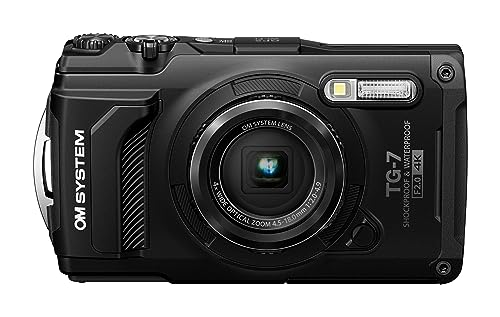
| OM SYSTEM Tough TG-7 | Best family camera a five-year-old can share | A genuinely waterproof, drop-proof real camera that a five-year-old can use in the pool and the garden while grown-ups get proper photos too. |
| AKASO EK7000 | Best for water play and bikes with grown-up setup (linked) | In its waterproof housing on a chest or helmet mount, the EK7000 lets a five-year-old film their own swimming and cycling point of view. |
How Did We Choose Cameras for Five-Year-Olds Specifically?
We tested every candidate against the realities of five: hands that are still developing grip strength and fine motor control, an attention span that rewards instant feedback and punishes loading screens, and a reading level that makes text menus a parent feature, not a child feature. Cameras that required an app, an account or a phone to do their main job were excluded outright. Cameras whose main job could be done with one or two chunky buttons, by a child who cannot yet read the word ‘menu’, made the shortlist.
Durability was assessed as a five-year-old applies it: drops onto hard floors from table height, being carried by one corner, being left in a sandpit or a puddle of juice. Manufacturer toughness claims were read sceptically, and designs with exposed lenses, delicate dials or tiny loose parts lost marks. We also checked the consumable situation for the printing cameras — a five-year-old can use a startling amount of paper in an afternoon of joy, and the running cost and availability of refills is part of the real product.
Finally, we considered the exit routes. A good five-year-old camera produces things a family keeps: prints for the fridge and the grandparents, a card of images a parent can back up, video clips short enough to send. Cameras whose output vanished into a proprietary viewer, or whose fun depended on effects a child tires of in a week, were ranked below simpler cameras whose pleasure — pointing at the world and keeping a piece of it — renews itself daily.
We also applied the birthday-morning test to every pick: could a five-year-old, with the box opened and no manual read by anyone, be taking satisfying photographs within five minutes, with an adult only supervising rather than operating? The PrintCam, Instax and myFirst pass outright; the Kidamento passes with its card pre-fitted; the TG-7 and EK7000 are exempted deliberately, because they are family cameras whose five-year-old role begins with an adult’s setup — and they are labelled as such everywhere in this guide so no buyer mistakes them for independent toys.
Detailed Picks: Six Cameras Matched to Five-Year-Old Life
VTech KidiZoom PrintCam — Best overall first camera for five (prose-only)
The PrintCam understands five-year-olds at a level most camera companies never reach. Press the big button, and a paper print rolls out of the camera itself, ready to be coloured in, traded, taped to a wall or presented to a grandparent with ceremony. The prints are black-and-white thermal images — closer to a receipt than a photograph, and completely beside the point. What matters is the loop: see, shoot, hold. That loop, repeated fifty times on the first afternoon, is the entire foundation of photographic thinking, taught at the exact speed a five-year-old learns everything else.
Around that loop VTech builds the right scaffolding: a chunky body with a flip lens for selfies, simple games and effects a child can find alone, a rechargeable battery, and paper rolls that are inexpensive and widely available — buy several with the camera, because the first roll will not survive the weekend. The honest limits are image quality, which is keepsake-grade rather than print-grade, and the effects menus, which some children strip-mine for a week before settling into real photographing. Neither matters. This is not the camera for the family archive; it is the camera that makes a five-year-old into a person who takes photographs, and at this age that is the whole job.
A practical note for gift-givers: set the PrintCam up before the party, not during it. Charge it, load a paper roll, and take the first print yourself so the mechanism is proven and a spare roll is already in the drawer. Five-year-olds experience setup time as pure delay, and a camera that works in the first minute becomes a possession, while one that needs twenty minutes of adult administration becomes an exhibit. The same logic applies to every camera in this guide, but the PrintCam rewards the preparation most, because its first print is the moment the hobby ignites.
Buy paper in multiples from the start and store the spare rolls where the child can fetch them independently; a printing camera that a five-year-old can reload — with the simple help the design allows — extends the independence that makes the whole device work.
- Type: kids’ digital camera with built-in thermal printer (prose-only pick)
- Output: instant black-and-white paper prints, plus digital files
- Controls: large buttons, icon-led menus, flip lens for selfies
- Power: rechargeable battery
- Consumables: thermal paper rolls — stock up at purchase
- Connectivity: none needed; no app, account or internet
Strengths
- Instant prints create the perfect learning loop at five
- Designed for small hands, drops and independent use
- Cheap paper refills keep the fun affordable
Trade-offs
- Print quality is playful, not archival
- Paper consumption on day one will astonish you
- Effects and games can distract before real shooting starts
Best for: a five-year-old’s first own camera — birthdays, starting-school gifts, and children who love making things they can hold.
Not suited for: parents wanting high-quality family photographs; use the family camera picks below alongside it.
Fujifilm Instax Mini 12 — Best for instant colour prints and parties (prose-only)
The Instax Mini 12 is the camera five-year-olds most often fall for in real life, because its magic is the oldest kind: a real photograph, in colour, developing in their palm while they watch. Operation could not be simpler — twist the lens to switch on, point, press — with automatic exposure doing all the thinking, and a selfie mirror and close-up mode that children discover by experimenting. The credit-card-sized prints become currency in a five-year-old’s economy: swapped with friends, given to teachers, arranged in rows and narrated like a storybook of their own life.
The adult considerations are cost and control. Film is a per-shot expense, so this camera teaches a gentle, useful lesson in choosing moments — though at five that lesson should stay gentle, and a household that will flinch at every frame should choose the PrintCam’s cheaper paper instead. There is no digital copy and no deleting, which most parents come to see as a feature: the archive is physical, finite and entirely offline. Supervise the film handling, keep spare packs for parties and holidays, and let the child own the results, smudges, thumbs and all.
Grandparents deserve a specific mention in the Instax’s favour: it is the rare modern gift whose results they can hold, display and understand without an app, a password or a tutorial. A five-year-old’s Instax prints arriving by post — one per envelope, annotated on the back by a parent — have a charm no shared cloud album has ever matched. If the camera is partly a bridge between a small photographer and distant family, the film cost buys something genuinely hard to obtain any other way.
If two adults are buying for the same child, coordinate: the Instax is the classic duplicated gift, and a duplicated camera is a wasted one. One camera plus a generous film supply beats two cameras competing for the same small hands.
- Type: instant film camera (prose-only pick)
- Output: colour instant prints, credit-card size
- Controls: twist-on lens, fully automatic exposure, selfie mirror
- Power: AA batteries
- Consumables: Instax Mini film packs — a real per-shot cost
- Connectivity: none; the archive is the shoebox, not the cloud
Strengths
- Real developing photographs feel like genuine magic at five
- Fully automatic — no settings for a child to get wrong
- Prints become gifts, swaps and stories immediately
Trade-offs
- Film cost per shot adds up at parties
- No digital backup of any image
- Credit-card prints are small for grandparents’ eyes
Best for: social five-year-olds, parties, and families who love physical photographs around the house.
Not suited for: households that will ration film anxiously — the flinching spoils it.
Kidamento Model C — Best gentle digital camera for careful starters (prose-only)
Not every five-year-old is a whirlwind. For the child who lines up their possessions and minds their own business beautifully, the Kidamento Model C offers a calmer proposition: a very light digital camera with a screen for reviewing pictures, a simple interface, and a design philosophy aimed at parents who read materials lists. It is among the lightest cameras here, which matters more than it sounds — a five-year-old’s arm tires quickly, and a camera that feels like nothing gets carried everywhere, which is where photographs come from.
Without printing or film, its feedback loop is the screen and the family ritual of looking through the day’s pictures together, so it suits households happy to make that ritual. Images save to a memory card a parent can back up, giving it an archival edge over the instant cameras. The trade-offs are the absence of instant physical output and a build aimed at ordinary knocks rather than the full toddler-grade abuse the VTech shrugs off. Choose it for the deliberate child, the eco-minded household, and the family that prints selected favourites properly at the end of each month.
The Model C also handles a subtle developmental point well: its images are good enough that a five-year-old’s favourites, printed properly by a parent at month’s end, look like real photographs on the wall. That moment — the child’s picture, framed by quality it did not know it had — is a powerful early experience of being taken seriously as a maker. Families who build that small ritual around this camera often find the child’s care for the device rises to meet it.
The Model C’s quiet temperament suits one more setting worth naming: the calm-after-school hour, when a five-year-old decompresses by wandering the garden photographing small things. Not every camera needs to survive the birthday party; some earn their place at the day’s gentle edges.
- Type: lightweight kids’ digital camera (prose-only pick)
- Output: digital photos and short videos on memory card
- Controls: simple buttons and screen review
- Power: rechargeable battery
- Build: very light body, gentle-use durability
- Connectivity: none required; files transfer by card
Strengths
- Featherweight body small arms can carry all day
- Digital files can be backed up and printed properly
- Calm, uncluttered design without games-first distractions
Trade-offs
- No instant print — feedback is screen-only
- Built for knocks, not for the roughest treatment
- Relies on a family review ritual to complete the loop
Best for: gentle, careful five-year-olds and parents who want keepable digital files without any app or account.
Not suited for: the drop-everything, sandpit-and-puddles five-year-old; choose the PrintCam or Tough TG-7 route.
myFirst Camera 3 — Best tiny camera for small hands (prose-only)
The myFirst Camera 3’s argument is size. It is built deliberately small and light for the youngest end of this age group — the just-five, the petite, the child for whom the VTech feels like a brick. It covers the essentials a five-year-old actually uses: photographs, short videos, a selfie camera they will adore, and a screen to admire the results on, all through controls simple enough to be mastered by experiment in an afternoon. A lanyard-friendly design keeps it attached to its owner, which at five is half the battle against loss.
Expect competent, cheerful image quality rather than anything a parent would print large, and a build that handles everyday knocks without pretending to be expedition gear. Battery life suits a day’s adventures with overnight charging as the family routine. Its real competition is the Kidamento above: the myFirst wins on compactness and selfie appeal, the Kidamento on lightness-per-size and parent-facing simplicity. For a small five-year-old who wants to document their world from their own height — a perspective adults find startlingly fresh — it is a well-judged little tool.
Size has a second benefit beyond grip: the myFirst is the camera most likely to be allowed everywhere, because it reads as unobtrusive in museums, cafés and relatives’ houses where a larger device attracts negotiation. A camera that is present for ordinary life photographs ordinary life — the dog asleep, the pancake stack, the bus window — and ordinary life, it turns out, is what families most want kept. Portability is not a convenience feature at five; it is the archive’s founding condition.
For travel, the myFirst’s size makes it the camera allowed in the child’s own hand-luggage and used through the journey — the window seat series a five-year-old shoots on a train or plane is a genre of its own, and families treasure those frames disproportionately.
- Type: compact kids’ digital camera (prose-only pick)
- Output: photos and short video clips on memory card
- Controls: simple buttons, rear screen, selfie lens
- Power: rechargeable battery, overnight-charge routine
- Build: palm-sized body, lanyard-friendly
- Connectivity: none required
Strengths
- Smallest and easiest for little hands to hold steady
- Selfie lens is a genuine delight at this age
- Simple enough to master entirely by experimenting
Trade-offs
- Image quality is cheerful, not detailed
- Everyday-knocks durability only
- Screen-only feedback, like all non-printing picks
Best for: smaller or just-turned-five children who need a camera that fits their hands, not the other way round.
Not suited for: rough-and-tumble use or families wanting instant prints.

OM SYSTEM Tough TG-7 — Best family camera a five-year-old can share
Some households do not want a toy at all; they want one family camera that a five-year-old is allowed to use without a ceremony of caution. The Tough TG-7 is that camera, and it is in our verified pool, so it carries a link. It is waterproof for real swimming and snorkelling, built to survive drops onto hard ground, and operable in a simple automatic mode a five-year-old can manage at the pool edge while an adult’s mind stays on swimming, not on the camera. Its photographs are proper photographs — the family’s holiday archive does not care which generation pressed the button.
Understand the sharing bargain clearly. This is a camera a five-year-old borrows with permission, not one that lives in their toy box; its menus are adult menus, its price demands a household rule or two, and its small buttons suit adult fingers better. In return you get microscope modes that turn a five-year-old’s fascination with bugs and leaves into astonishing close-ups, and a camera that will still be the family’s adventure camera when the child is ten. For outdoors families, that shared decade of service can be better value than any toy — provided the sharing is real and not a parent guarding a gadget.
One more TG-7 talent belongs in a five-year-old’s world: it is the camera that can be handed over at the aquarium, the rock pool and the snowy hill without the handing-over speech. Children rise to real equipment when the equipment is not precious, and the TG-7’s toughness is what removes the preciousness. Parents report the same arc repeatedly — the first outing is supervised, the third is not, and by the end of the holiday the five-year-old is the family’s designated underwater photographer, a title worn with enormous and justified pride.
Teach the rinse from the first sea day: fresh water, brief soak or rinse per the maker’s guidance, dried before the bag. A five-year-old who performs the ritual solemnly is learning the whole philosophy of looking after tools, on the one tool that can survive their learning curve.
- Type: waterproof tough compact camera
- Video: 4K video alongside strong stills
- Waterproof: swims without a housing; drop and freeze resistant
- Controls: full auto mode plus adult depth when wanted
- Standout feature: microscope modes for close-up nature finds
- Best paired with: a bright floating strap so it is findable in water
Strengths
- Real image quality for the family archive
- Survives the pool, the beach and the drop onto patio slabs
- Microscope modes feed a five-year-old’s nature obsession
Trade-offs
- Adult menus and price — it is shared, not owned
- Small buttons suit grown-up fingers better
- No instant output; the child waits for review time
Best for: outdoors families wanting one tough camera everyone uses, with the five-year-old as a genuine co-photographer.
Not suited for: a first own-it-yourself camera that lives in the toy box.

AKASO EK7000 — Best for water play and bikes with grown-up setup (linked)
The EK7000’s role at five is specific and joyful: point-of-view filming of the things a five-year-old does fastest. Fitted by a grown-up into its waterproof housing and onto a chest strap, handlebar or helmet mount, it turns a first solo bike lap or a swimming-pool afternoon into a film from inside the experience — footage no parent filming from the side can capture, and which five-year-olds watch with a pride out of all proportion to its technical quality. It is inexpensive enough that this experimentation carries no financial fear, and it is in our pool, so it carries a link.
The division of labour must be honest: adults do the mounting, the housing checks and the file transfers; the child does the living and the pressing of one big record button. Stabilisation is basic, so gentle activities film better than rough ones, and the housing seal must be clean before water — an adult job, every time. As a camera a five-year-old operates alone at the kitchen table, it fails the test the VTech passes. As the family’s adventure recorder for its smallest member’s biggest moments, nothing else at the price comes close.
The EK7000 has one more family role worth naming: the bath-and-garden camera for water play at home, where its housing makes it the only camera allowed inside the paddling pool’s splash zone. A five-year-old filming their own underwater hand, their toys diving, their sibling’s bubbles, is conducting genuine experiments in seeing. Keep sessions short, rinse the housing afterwards, and let the footage be silly — the comfort with water and cameras it builds pays off on every future beach holiday.
Set the housing-check as a call-and-response game — ‘seal clean?’ ‘seal clean!’ — and the EK7000’s one adult dependency becomes part of the adventure’s ceremony rather than a delay imposed on it. Rituals are how safety survives enthusiasm at this age.
- Type: budget action camera with waterproof housing
- Video: 4K at entry level, basic stabilisation
- Waterproof: via housing — an adult checks the seal
- Mounting: wide range of straps and mounts included and available
- Controls: one-button recording once set up by an adult
- Best paired with: a chest strap for bike and scooter point-of-view films
Strengths
- Captures the child’s own point of view of big moments
- Inexpensive enough for carefree experimental use
- Housing makes pool and beach filming possible
Trade-offs
- Needs adult setup, mounting and file handling
- Basic stabilisation suits gentle motion best
- Not an independent table-top camera for a five-year-old
Best for: active families filming a five-year-old’s swimming, cycling and sledging from the child’s own viewpoint.
Not suited for: independent everyday use by the child alone.
How Do the Six Best Cameras for 5 Year Old Photographers Compare?
For a five-year-old, the honest comparison is not about sensors. It is about what the child gets in their hands after pressing the button, and how much adult help stands between them and that moment. The table makes that trade visible.
| Pick | Best at | Watch out for |
|---|---|---|
| VTech KidiZoom PrintCam | Instant printed results with zero adult help | Keepsake-grade image quality and hungry paper use |
| Fujifilm Instax Mini 12 | Colour instant film with zero settings | Per-shot film cost and no digital copy |
| Kidamento Model C | Lightest carry with back-up-able files | No instant output and gentler build |
| myFirst Camera 3 | Palm-sized fit for the youngest fives | Modest images and durability |
| OM SYSTEM Tough TG-7 | Real camera quality with pool-proof toughness | Shared ownership and adult controls |
| AKASO EK7000 | Point-of-view adventure films at minimal cost | Adult-dependent setup and handling |
What Can a Five-Year-Old Actually Do With a Camera?
More than most adults expect, and less than camera marketing claims. A five-year-old can learn framing in its purest form — fill the picture with the thing you love — can operate one-button and twist-on cameras entirely alone, and can develop ferociously strong opinions about which pictures are good, usually based on story rather than sharpness. They can conduct interviews with a stuffed animal, document a snail’s entire afternoon, and produce self-portraits of an honesty professional photographers chase for years. What they cannot yet do is manage multi-step processes: menus, modes, charging routines, card management and careful handling all belong to the adults around the camera.
This is why the successful cameras at this age automate or eliminate every step except the essential one. It is also why the photographs delight: without technique to hide behind, a five-year-old’s pictures are pure seeing. Families who keep those early archives — the prints on the fridge, the backed-up card — find they become some of the most treasured objects in the house, precisely because no adult could have taken them. Your job is infrastructure: charged batteries, fresh paper, a backup routine, and applause delivered on schedule.
Print, Screen or Film: Which Feedback Suits Five Best?
Print, and it is not close. Developmental common sense says a five-year-old learns from things they can hold, and every teacher of this age group will confirm that a photograph on paper is an achievement while a photograph on a screen is a moment. The PrintCam and the Instax divide the print honours by budget and by kind: thermal paper prints are cheap, colourless and colour-in-able, perfect for volume and experimentation; Instax prints are real colour photographs, costlier per shot, and treated by children — correctly — as treasure. Many families run both systems across childhood: volume printing at five, film as the special-occasion camera.
Screen-only cameras like the Kidamento and myFirst are not wrong, merely dependent on a ritual: the evening review, pictures together on the sofa, favourites chosen for proper printing. Households that genuinely keep rituals will find digital files more useful in the long run, because they can be backed up, shared with distant grandparents and printed large later. Households that know they will not keep the ritual should buy the printer-camera and let the object do the work. Be honest about which household you are; the camera cannot fix that, only fit it.
How Tough Does a Five-Year-Old’s Camera Need to Be?
Tough enough for the drop from a dining table onto a hard floor, the tumble down the last three stairs, and the afternoon forgotten in the garden — because all three will happen in the first month, whatever you say at the unboxing. The dedicated kids’ cameras are engineered around exactly this abuse pattern, with recessed lenses and bodies that flex rather than crack. Ordinary cameras, however good, are not: a single lens-first landing can end them, which is why the only conventional camera on this page is the TG-7, a model specifically built and sealed for punishment.
Water deserves separate thought. At five, water resistance is less about snorkelling and more about juice, rain, wet hands and the paddling pool — the everyday wetness of childhood. The printing and instant cameras are not waterproof and should live away from the pool; the TG-7 and the housed EK7000 exist on this page precisely for the wet half of a five-year-old’s life. A floating wrist strap, brightly coloured, is the cheapest insurance in this entire guide: cameras are lost at five far more often than they are broken.
What About Safety, Privacy and Screens at Five?
The cameras in this guide share a deliberate absence: none connects to the internet, hosts chats, runs third-party apps or knows where your child is. That absence is the safety feature, and it is why a dedicated camera is a better gift at five than a hand-me-down phone or tablet with the SIM removed — those devices carry browsers, app stores and a hundred settings between your child and a closed world, while these cameras are closed by design. There is nothing to configure wrongly because there is nothing to configure.
The privacy habits worth teaching now are social, not technical, and five is old enough to start: we ask people before we photograph them up close; we do not photograph anyone in the bathroom or getting changed; pictures of friends get shared by grown-ups, not by us. Children absorb these as simple manners when they are introduced alongside the camera itself, and they carry them intact into the phone years. Review pictures together regularly — not as surveillance, but because the review is where the stories get told — and the camera stays a family pleasure rather than a private world you wonder about.
How Many Megapixels Does a Five-Year-Old Need?
None that you should count. At this age the destination of a photograph is a fridge door, a grandparent’s mantelpiece or a family screen, and every camera here clears that bar with room to spare. The numbers printed on kids’ camera boxes are inflated by interpolation and marketing, and chasing them leads buyers towards flimsy no-name cameras whose real specifications — build, battery honesty, paper availability — are where quality at five actually lives. Judge by the things in this guide’s criteria instead: button size, weight, drop survival, consumable cost and the feedback loop.
The one image-quality question worth asking is about light. Five-year-olds photograph indoors, at dusk, under kitchen lighting — the worst light there is — and the difference between the cheerful and the murky end of this market shows there. The branded picks above all handle ordinary indoor light acceptably; the anonymous ultra-cheap cameras often do not. Beyond that threshold, stop evaluating pixels and start evaluating whether your particular child will pick the thing up tomorrow. That, and only that, predicts the photographs you will have in a year.
How Do You Turn a Five-Year-Old’s Camera Into a Habit, Not a Novelty?
Novelty dies in about ten days unless the camera acquires jobs. Give it jobs. The five-year-old becomes the official photographer of specific, recurring things: the dog on Saturday mornings, new flowers in the garden, every visiting relative at the door, the progress of a sunflower or a snowman. Jobs create the two things habits run on — occasions and audiences. A print that goes straight onto the fridge, or into an envelope to a grandparent, closes the loop that makes the next photograph happen; a photograph nobody sees is a lesson in not bothering.
Keep the friction at zero. The camera lives in one accessible place, charged, loaded with paper or film, with its strap on. It comes on outings by default, in the child’s own small bag, carried by the child — ownership of the carrying is part of ownership of the camera. And when interest dips, as it will, let it dip. A camera rested for a month and rediscovered at the zoo has a longer life than one pressed on a reluctant child daily. At five you are planting a way of seeing, and plants are not hurried.
Should a Five-Year-Old Get a Camera, or Just Use a Parent’s Phone?
The phone photographs better, and that is nearly the only point in its favour. Against it: the phone is the parent’s, so every session is borrowed and supervised; the phone contains the entire internet one settings-slip away; the phone’s photographs vanish into a camera roll of thousands; and the phone, dropped, is a household financial event rather than a shrug. A five-year-old with their own camera has independence, a closed and safe device, an archive that is theirs, and losses the family can afford. The images will be worse and the childhood will be better, which at five is the correct trade by a distance.
The shared-camera middle path — the TG-7 on this page — suits outdoors families whose adventures genuinely need one waterproof camera and whose five-year-old is a real participant in them. But notice that even there, the child benefits most when some device is unambiguously theirs. If the budget forces one purchase, buy the child’s own camera first and let the parents’ phones cover family documentation. The archive of a childhood should include the world as the child saw it, at their height, of their subjects — and only their own camera produces that.
What Should a Five-Year-Old’s First Photo Walk Look Like?
Short, circular and snack-anchored. The ideal first outing with a new camera is a twenty-minute loop the child already loves — the garden, the street to the park, the beach’s first hundred metres — with no photographic agenda beyond ‘photograph anything you want to keep’. Resist locations chosen for their beauty; a five-year-old’s subjects are at knee height and close range: the gate latch, the interesting stone, the dog’s nose, their own shoes in a puddle. Walking at their pace, which is to say stopping every six steps, is not a compromise of the outing. It is the outing.
Bring the infrastructure of success: the camera charged and loaded, a spare roll or film pack in your pocket, and the strap actually on the child’s wrist. Review nothing on the move — let them shoot freely and save looking for the sofa afterwards, where the review becomes the day’s storytelling. End while it is still fun, even mid-enthusiasm; a photo walk that stops early is requested again tomorrow, and tomorrow is where habits come from. Within a month of such walks, most five-year-olds develop routes, rituals and favourite subjects entirely their own, and the family’s job shrinks to keeping the camera fed.
How Do Twins, Siblings and Sharing Change the Choice?
Sharing a camera at five is sharing at its hardest: the concept of turns is understood perfectly right up to the moment the other child is holding the interesting thing. If two children close in age will both use the camera daily, the economics of the printing and kids’ digital picks are forgiving enough that one each — in different colours where the range allows — is usually the peace-preserving answer, and the children gain something valuable: archives that differ, because two five-year-olds given the same afternoon photograph entirely different worlds.
Where one camera must serve, structure saves it. Alternate days rather than turns within an outing, keep a simple whose-day chart on the fridge, and make the review a joint ceremony where each child presents their best three. The instant cameras soften sharing naturally, because the prints divide fairly and each child keeps their own. What never works is the vague arrangement where the camera belongs to everyone and therefore to the child who shouts loudest; at five, ownership is not a legal concept but it is a photographic one — children photograph most with the camera that is theirs.
What Do Childminders, Nurseries and Grandparents Need to Know?
A five-year-old’s camera travels into other adults’ care, and a sentence of briefing prevents most friction. The useful briefing is: the camera cannot connect to the internet or send anything anywhere; the child knows the manners (ask first, no bathroom pictures); and prints or files belong to the child. Nursery staff, once they hear ‘it cannot connect to anything’, are generally delighted — a camera is a recognised early-years treasure for observation, storytelling and mark-making, and several settings actively encourage a child to document their own day with one.
Grandparents are the camera’s natural second audience and often its financiers, so close the loop for them deliberately: prints by post from the instant cameras, a monthly envelope of the digital favourites printed cheaply, a framed ‘best photograph of the season’ at birthdays. A grandparent who receives the output becomes the camera’s fiercest defender and its paper-and-film resupply service. In the economy of a five-year-old’s hobby, that alliance is worth cultivating from the very first roll.
When Should a Five-Year-Old Graduate to a Different Camera?
Graduation announces itself through frustration with the current camera’s ceiling, not through age. The signs: the child asks why they cannot photograph the bird on the fence (they need zoom or a real camera), complains that prints are too small or not colourful (they are ready for files and proper printing), or begins directing elaborate video productions the toy camera cannot stage (they are headed for the flip-screen world of six). Each frustration names its own successor, and the guides for six-year-olds in this series take it from there.
Do not graduate a contented child. A five-year-old still delighted by their printing camera is not behind; they are in the middle of the exact learning the camera exists to teach, and a premature upgrade swaps mastery for novelty. The old camera also rarely retires completely — printing cameras become the party camera, the first camera becomes the bath camera’s companion — because at this age cameras accumulate roles rather than replacing each other. Buy the next camera when the current one’s limits, in the child’s own words, are the obstacle. Not before, and not long after.
A Last Word for the Grown-Ups
Years from now, nobody in your family will remember which camera a five-year-old used. They will remember that the five-year-old had one — that their way of seeing was treated as worth equipping — and they will have the prints, files and fridge-door photographs to prove it. Buy the camera that fits your child’s hands and your household’s honesty about itself, stock it generously, and then enjoy the strangest, freshest archive your family owns. It is being made at knee height, right now, one small masterpiece at a time.
Which Mistakes Do Parents Make Buying a Camera for a Five-Year-Old?
The expensive mistake is buying a miniature version of an adult camera — small compact, real menus, delicate zoom lens — which frustrates the child, terrifies the parent and dies on the second drop. The reverse mistake is buying the cheapest no-name kids’ camera in existence, whose murky indoor images and unavailable paper refills kill the hobby from the other direction. A third classic is forgetting the consumables: the printing camera with one paper roll, the Instax with a single film pack, presented on a birthday morning and exhausted before lunch.
Parents also sabotage good cameras with good intentions: art-directing every shot until the child is holding a camera but taking the parent’s pictures; rationing film so anxiously that the child learns photographs are expensive rather than precious; and confiscating the camera as a punishment, which teaches that it was a treat, not a tool. Buy the right camera, stock it, set the manners, and then — the hardest instruction in this guide — hand it over and let the five-year-old’s eye be in charge.
A quieter mistake is the camera as surveillance bargain — ‘you may take photographs if you behave’ — which converts a creative tool into a compliance token and poisons both. Equally counterproductive is the parent as editor-in-chief, deleting the child’s strange frames from the card before the child has judged them. At five, the forty photographs of one shoe are data about a mind at work. Back them up, smile, and let the archive stay weird; taste is a later year’s curriculum.
Final Recommendation
For most five-year-olds, buy the VTech KidiZoom PrintCam and a generous stack of paper rolls: its instant prints, chunky controls and indifference to drops make it the most complete first camera at this age, and its running costs let a child experiment at the volume learning requires. Choose the Instax Mini 12 instead if your family prizes real colour photographs and occasions over everyday volume, or run it alongside as the special camera — the two together still cost less than most adult compacts.
Outdoors families should consider the shared route honestly: the Tough TG-7 as the family adventure camera, with the EK7000 capturing your five-year-old’s own point of view on bikes and in pools — both linked above. Whichever you choose, remember what is actually being bought. Not image quality, not specifications: a five-year-old who reaches for a camera when something wonderful happens. Everything in this guide is in service of that reach.
Frequently Asked Questions
Is five too young for a real camera?
Five is too young for a fragile camera, not for photography. Purpose-built five-year-old cameras with one-button operation and instant results suit the age precisely, and children this age produce genuinely distinctive photographs. The ‘real’ cameras on this page, the TG-7 and EK7000, work at five only as shared family tools with adult handling around them.
Which is better for a five-year-old, the PrintCam or the Instax?
The PrintCam for everyday volume: its paper is cheap enough for fifty experiments a day, and printing is built in. The Instax for treasure: real colour photographs that feel like magic and become keepsakes. Many families end up with both — the PrintCam as the daily camera, the Instax for parties and holidays.
Can a five-year-old break an expensive camera?
Yes, in about four seconds, which is why this guide’s structure exists. Dedicated kids’ cameras are engineered for the drops childhood guarantees; the one conventional camera recommended, the Tough TG-7, is specifically built and sealed against drops and water. Everything else fragile should stay in adult hands for a few more years.
How much should I spend on a first camera for a five-year-old?
Enough to buy a recognised brand with available refills and honest build quality; the dedicated kids’ cameras here sit in a modest band, and the false economy is the ultra-cheap unknown whose paper cannot be replaced. Budget for consumables from day one — paper rolls or film packs are part of the camera’s real price.
What do I do with all the photographs a five-year-old takes?
Curate lightly and visibly. A print on the fridge each week, a small album the child owns, digital files backed up monthly from the card-based cameras. Resist deleting the strange ones — the ceilings, the blurry dog, the forty pictures of one shoe are the authentic archive of being five, and they become funnier and more precious every year.
Are kids’ cameras safe regarding privacy and the internet?
The models in this guide have no internet connection, no accounts, no chat and no location tracking; they are closed devices by design. The privacy work at five is social rather than technical: ask before photographing people, no bathroom pictures, and grown-ups handle any sharing. Taught with the camera, these manners stick.
Related Guides
Keep exploring with best cameras for 6 year old and best cameras for 11 year old and best waterproof cameras for family holidays.


