reviewstook.com is reader-supported. When you buy through links on our site, we may earn an affiliate commission.
Where to Buy a Camera That Matches a Six-Year-Old’s New Abilities
Six is a hinge age, and the best cameras for 6 year old photographers are chosen for a child in the middle of changing. A six-year-old has survived a year of school: they can read simple words, follow a two-step process, sustain a project across days, and — new and important — they have an audience. Classmates, a teacher, show-and-tell. The camera that fits six is therefore a step more capable than the five-year-old’s first camera: still drop-tough and account-free, but ready for a child who wants to make things for other people — a printed photo for the classroom wall, a video tour of their bedroom for a grandparent, a documented science experiment with a beginning, a middle and an end.
The difference from five is subtle but decisive, and parents who simply re-buy the younger child’s camera miss it. At five the photograph’s destination was the fridge; at six it is increasingly the world — school projects, friends’ opinions, a growing sense of ‘my best ones’. Six-year-olds can also handle, with a little teaching, the first real photographic ideas: hold still, get closer, wait for the light. A camera for this age should have just enough depth to reward those ideas — a screen worth reviewing on, video worth narrating, prints worth giving away — without burying the child in menus designed for adults.
Six cameras follow. The four dedicated children’s cameras are described without links so you can compare them anywhere; the two linked models are the step-up family cameras — a tough waterproof compact and a budget action camera — for the six-year-old who is ready to be trusted with real equipment on real adventures. If you are upgrading from a five-year-old’s camera, read the sections on what changes at six before spending: for many children the right move is a new kind of camera, not a better version of the old one.
Key Takeaways
- Six-year-olds have an audience — school, friends, show-and-tell — so output that can be shown and given away matters more than at five.
- Reading simple words unlocks slightly deeper cameras, but menus should still be icon-led and shallow.
- Video becomes a first-class desire at six: bedroom tours, narrated experiments, messages for grandparents.
- A step-up year: many children are ready to graduate from printing toys to a first ‘real’ waterproof camera.
- Drop-toughness and no-internet design remain non-negotiable; what changes is capability, not safety.
- School projects are the secret weapon — a camera with a job at school gets used weekly, not monthly.
In this guide
Quick Picks
| Pick | Badge | Why it made the list |
|---|---|---|
| Fujifilm Instax Mini 12 | Best for prints that go to school (prose-only) | Real colour prints a six-year-old can take for show-and-tell, swap with friends and pin on the classroom wall. |
| VTech KidiZoom Creator Cam | Best for video makers and narrators (prose-only) | A flip-screen kids’ video camera with a tripod and green-screen style effects, built for the age of bedroom tours and narrated experiments. |
| Kodak Pixpro WPZ2 | Best first ‘real’ waterproof camera (prose-only) | A proper waterproof point-and-shoot with a real zoom and real menus, at a price that lets a six-year-old own it outright. |
| Kidamento Model K | Best for young photographers who love reviewing (prose-only) | A light digital camera with a clear screen and simple controls, for the six-year-old who studies their pictures and chooses favourites. |
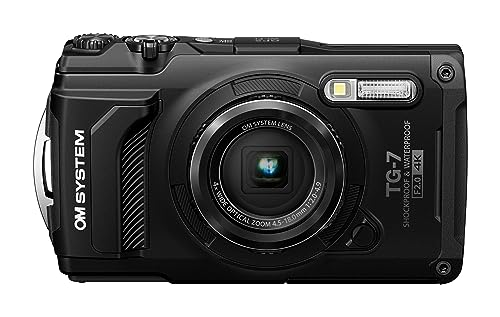
| OM SYSTEM Tough TG-7 | Best step-up for adventurous six-year-olds | Full waterproof toughness and microscope close-ups for the six-year-old ready to be trusted with the family’s real adventure camera. |
| AKASO EK7000 | Best action camera for six-year-old riders (linked) | Helmet, chest and handlebar mounts turn a six-year-old’s cycling and swimming into point-of-view films they narrate for weeks. |
How Did We Choose Cameras for Six-Year-Olds, and How Does Six Differ From Five?
We began from the developmental step-change. Six-year-olds can read simple labels, remember a charging routine with prompting, and — crucially — review their own work critically: they delete, they retake, they choose favourites. Cameras for this age were therefore judged on the quality of the review experience (screen size and clarity, simple favourite-marking or printing) as well as the taking. We also weighted video more heavily than in the five-year-old guide, because six is when narrated filming — tours, experiments, performances — becomes a dominant play pattern.
The safety and toughness filters did not move. Every pick is a closed device with no internet, account or chat, and every pick tolerates the drops, damp and neglect of ordinary six-year-old life, or — in the case of the two linked family cameras — is specifically engineered for water and impact. What relaxed slightly was the simplicity requirement: a six-year-old can learn a two-level menu and a mode dial with pictures, and cameras offering that small extra depth scored higher here than they would have a year earlier.
We also considered the school dimension explicitly, since it distinguishes six from every neighbouring age. Teachers set photographable homework; classrooms display prints; friends compare devices. Cameras whose output could travel to school — a print, a file a parent can send the teacher, a video for a class presentation — earned their places over equally good cameras whose pleasures stayed at home. A camera that becomes part of school life is a camera with fifty built-in occasions a year.
We also checked each pick against the school-bag test: could it survive a term of being carried by a six-year-old — in a bag, on trips, out at playtime under school rules — without becoming a problem for the child or the staff? The instant and kids’ digital cameras pass outright, being light, closed and obviously child-grade. The WPZ2 and TG-7 pass as trip-day equipment under a teacher’s usual ‘valuables’ rules rather than daily carry, and the EK7000 stays a home-and-family tool. The distinction is marked in each review so expectations arrive before the camera does.
Detailed Picks: Six Cameras for the Year of Starting School
Fujifilm Instax Mini 12 — Best for prints that go to school (prose-only)
At six, the Instax Mini 12 graduates from party trick to social instrument. Its fully automatic operation — twist on, point, press — still asks nothing of the child, but the prints now travel: into school for show-and-tell, into friends’ hands as swaps and gifts, into the front of a reading book as a bookmark with a story attached. A six-year-old can also begin, gently, to compose for the small square-ish frame and to spend film deliberately, because they can now hold the idea that some moments are worth the last three frames in the pack. That is a real photographic education disguised as fun.
Parents should budget film honestly — a six-year-old with a social camera uses more than a five-year-old at home — and consider the camera as the classroom-friendly choice it is: no screen, no files, no safeguarding complications, just photographs a teacher can pin up without a policy meeting. The limits remain no digital copy and credit-card-sized prints, and exposure is automatic, so the child’s growing skill expresses itself in choosing and framing rather than settings. For the six-year-old whose photography is fundamentally about people and sharing, that is exactly the right allocation of attention.
One classroom detail strengthens the Instax’s case at six: teachers can display its prints instantly, without printing queues, file transfers or safeguarding reviews of a device. A child whose photograph goes on the wall the same morning it was taken receives a public, professional validation that adults underestimate. If your six-year-old’s school runs topics, trips and dress-up days — and they all do — the Instax converts each into portfolio material with a press of one button.
Film discipline worth teaching with the Instax at six: the ‘one frame per subject, then move’ rule. It is astonishing how quickly a six-year-old’s eye sharpens when each press has a small cost — the first lesson in editing happening before the photograph, where all the great photographers say it belongs.
- Type: instant film camera (prose-only pick)
- Output: colour instant prints, made for pockets, walls and swaps
- Controls: twist-on lens, fully automatic exposure, selfie mirror
- Power: AA batteries
- Consumables: Instax Mini film — budget for a social life
- Connectivity: none; school-friendly by design
Strengths
- Prints have a school and social life of their own
- Automatic everything keeps focus on choosing moments
- No screen or files means no safeguarding headaches
Trade-offs
- Film costs rise with a six-year-old’s social calendar
- No digital backup; lost prints are lost
- Automatic exposure caps technical growth
Best for: social six-year-olds whose photographs are gifts, swaps and classroom exhibits.
Not suited for: children more interested in video or in how cameras work than in prints.
VTech KidiZoom Creator Cam — Best for video makers and narrators (prose-only)
Six is the age of the presenter, and the Creator Cam is the camera built for that exact child. Its flip screen lets a six-year-old frame themselves, its little tripod stands it on a desk or bedroom floor, and its built-in effects — backgrounds and playful overlays — feed the era’s dominant project: the narrated video. Bedroom tours, toy reviews, science experiments explained to camera, weather reports from the garden: this is the device those productions run on, with a rechargeable battery and a body that survives being knocked off the desk it stood on.
Parents understandably ask about the road this leads down, so be clear: the Creator Cam is a closed world. Videos live on its memory card; nothing uploads anywhere; any sharing happens when a parent moves a file, which keeps the adult as the publisher of everything — the correct arrangement at six. The effects deserve a word of guidance too: let the child binge them, then steer projects towards real subjects, because the camera’s microphone and flip screen serve genuine little documentaries just as happily. Image quality is cheerful rather than fine, and that is the right priority order for the age.
The Creator Cam’s tripod deserves more credit than accessories usually get: it changes the child’s relationship to the camera from holding to directing. A camera standing on its own invites staging — arranging the toys, positioning the experiment, rehearsing the introduction — and staging is where six-year-old productions leap in quality. Encourage the tripod habit and you will see the handheld wobble-phase end sooner, along with the first appearance of that most filmic of instincts: checking the frame before performing in it.
Suggest the Creator Cam’s first series be finite — five episodes of the garden weather, four rooms of the house tour — because six-year-olds finish finite things and abandon infinite ones, and a finished series on the family screen is worth ten abandoned epics.
- Type: kids’ video camera with flip screen (prose-only pick)
- Output: video and photos on memory card, parent-controlled sharing
- Controls: flip selfie screen, simple menus, included mini tripod
- Effects: built-in backgrounds and playful overlays
- Power: rechargeable battery
- Connectivity: none; files move by card, via an adult
Strengths
- Purpose-built for the narrated-video age
- Flip screen and tripod enable solo productions
- Completely closed system; parents control all sharing
Trade-offs
- Effects can dominate until projects take over
- Image quality is playful, not detailed
- Still photography is its second job, not its first
Best for: six-year-old presenters, narrators and experimenters who want to make videos of everything.
Not suited for: print-loving children or those headed straight for real photography.
Kodak Pixpro WPZ2 — Best first ‘real’ waterproof camera (prose-only)
The WPZ2 occupies the most interesting niche at six: it is a real camera — a recognised maker’s waterproof point-and-shoot with a genuine optical zoom, a proper screen and settings a child can grow into — at a price point where a family can hand it over as the child’s own property rather than a shared treasure. Waterproofing for pool and beach, shock resistance for the inevitable, and a wrist-strap life around a six-year-old’s neck make it the natural graduation for the child who has outgrown printing toys and wants equipment that looks like what grown-ups carry.
The step up is real in both directions. The child gains zoom — for the stage at the school play, the bird on the fence — and menus shallow enough to learn in layers, with adult help available for the deeper levels. The family accepts a rechargeable-battery routine and a memory card to manage, plus image quality that is honest rather than dazzling, particularly indoors. Judged as the bridge between toy cameras and the serious waterproof compacts, it has few rivals: it teaches real camera habits — zoom, review, delete, charge, carry — on hardware priced for childhood.
The WPZ2 also quietly teaches the economics of real photography: a battery that must be charged teaches planning, a card that fills teaches editing, and a zoom teaches that some pictures are earned by waiting in the right place. Parents should resist rescuing the child from every one of these small frictions. They are not flaws in the product; they are the curriculum of owning real equipment, arriving at exactly the age when a child can metabolise them into competence and pride.
The WPZ2’s zoom etiquette is a gentle social lesson too: zooming is for stages, birds and boats, not for photographing people who have not agreed to be photographed. The lens makes the conversation possible; have it once, kindly, at unboxing.
- Type: waterproof point-and-shoot camera (prose-only pick)
- Output: photos and video on memory card
- Waterproof: pool and beach ready; shock resistant
- Lens: real optical zoom for stages and wildlife
- Controls: proper but shallow menus, learnable in layers
- Power: rechargeable battery — a routine the child can own
Strengths
- A real camera the child can actually own
- Zoom opens up school plays, sport and wildlife
- Waterproof and tough enough for six-year-old life
Trade-offs
- Indoor image quality is honest, not dazzling
- Battery and card routines need light adult backup
- No instant output; review happens on screen
Best for: six-year-olds graduating from toy cameras who want real equipment of their own.
Not suited for: children whose joy is prints or video effects — see the picks above.
Kidamento Model K — Best for young photographers who love reviewing (prose-only)
The Model K suits the six-year-old whose pleasure is increasingly in the pictures themselves. It is light enough for all-day carrying, simple enough to operate without thought, and its screen-based workflow supports the new six-year-old rituals: reviewing the day’s shooting, picking favourites, deleting the failures with great seriousness. Files save to a memory card, so a parent can back up the chosen ones and print the best properly — an end-of-month album project that many families find becomes the child’s most treasured possession.
Against the WPZ2 it trades toughness and zoom for lightness and calm; against the instant cameras it trades physical output for an archive. Its build handles ordinary childhood rather than the pool, and there is no waterproofing, so it is the camera for the garden, the museum and the nature walk rather than the beach bag. For the deliberate, treasure-keeping six-year-old — the one with a box of special stones and a drawing folder — that trade is well judged, and its gentle design tends to be the one still in daily use when flashier gifts have been forgotten.
The Model K pairs unusually well with a simple home printer or a monthly online print order, and that pairing resolves its one structural weakness — the absence of instant output — into a rhythm many families prefer: shoot all month, choose together, print the best, album them. A six-year-old who has watched their archive become a physical book, season by season, owns something the instant cameras cannot give: a curated body of work, and the early identity of a person who makes things properly.
The Model K rewards a parent who learns its simple transfer routine cold, because the monthly album ritual dies the first time it requires forty minutes of cable-hunting. Five reliable minutes, same cable, same folder — that is the entire technology of a tradition.
- Type: lightweight kids’ digital camera (prose-only pick)
- Output: photos and short videos on memory card
- Controls: simple buttons, screen review for choosing favourites
- Power: rechargeable battery
- Build: very light; everyday-knocks durability, not waterproof
- Connectivity: none required; monthly backup by card
Strengths
- Supports the review-and-choose habit that builds an eye
- Files back up for proper printing and albums
- Light, calm and uncluttered to live with
Trade-offs
- No waterproofing and gentler build than rivals
- No instant physical output
- No zoom to speak of for distant subjects
Best for: deliberate six-year-olds who collect, review and keep their best work.
Not suited for: pool-and-beach-first children, who need the WPZ2 or TG-7.

OM SYSTEM Tough TG-7 — Best step-up for adventurous six-year-olds
By six, some children have earned — and can handle — a genuine step up, and the TG-7 is where this guide’s two worlds meet: it is a serious waterproof compact, in our verified pool and linked, that a trusted six-year-old can operate in its automatic mode on real family adventures. Snorkelling on holiday, rock pools, rainy hikes, the ski trip: the TG-7 goes everywhere without a housing, survives the drops childhood still supplies, and produces photographs good enough that the family’s archive and the child’s portfolio become the same thing.
Its secret weapon at this age is the microscope mode. Six is peak age for the close examination of the world — woodlice, snowflakes, the inside of a flower — and this camera’s extreme close-up ability turns that instinct into astonishing images no toy camera can approach. The adult side of the bargain is unchanged: it costs real money, its menus are adult depth, and the household needs a simple rule set (strap on, rinse after the sea, hand it back charged). For the outdoors family with a ready six-year-old, those are small prices for a camera that will serve from six to sixteen.
For families hesitating over the TG-7’s price, consider its cost against the alternative it replaces: it is simultaneously the child’s step-up camera and the family’s waterproof camera for a decade of holidays, swims and ski trips. Bought as shared infrastructure rather than as a toy, its economics are entirely different from the kids’ cameras — closer to buying the family’s one good umbrella than to buying a gadget. The households that regret it are those that bought it as a gift and then could not relax about it; the households that love it bought it as equipment and shared it as such.
If the TG-7 will be shared with siblings, agree the booking system before the holiday, not during it: a simple rota on the fridge has saved more family trips than any feature in this guide. Shared treasure needs visible fairness.
- Type: waterproof tough compact camera
- Video: 4K video with strong stills
- Waterproof: swims and snorkels without a housing; drop and freeze resistant
- Standout feature: microscope modes for extreme close-ups
- Controls: full auto for the child, full depth for adults
- Best paired with: a floating strap and a simple care routine the child owns
Strengths
- Real image quality that lasts a decade of growing up
- Microscope modes are made for six-year-old curiosity
- No housing, no fuss — just rinse and go
Trade-offs
- Real-camera price demands basic household rules
- Adult menus wait beneath the auto mode
- Heavier than the kids’ cameras for small hands
Best for: trusted, adventurous six-year-olds in outdoors families, especially nature obsessives.
Not suited for: a carefree toy-box camera or a child still in the drop-everything phase.

AKASO EK7000 — Best action camera for six-year-old riders (linked)
Six-year-olds move faster than five-year-olds, and the EK7000 — linked from our pool — is how their speed becomes film. On a chest strap or helmet mount, set up by an adult, it records the point of view of the first season riding without stabilisers, the swimming-pool underwater world, the sledge run from the rider’s seat. Six-year-olds narrate these films endlessly, show them to grandparents with commentary, and begin — without any lesson — to think in sequences: the start, the fast bit, the finish. That is film grammar arriving through play.
The adult jobs remain adult: fitting the housing, checking its seal before water, choosing mounts, charging, and moving files to where the family watches them. Stabilisation is basic, so footage is charmingly raw rather than smooth, and on a fast bike over rough ground it can be bouncy — film the gentler adventures for the best results. As the second camera in a six-year-old’s kit, alongside any of the stills cameras above, it covers the half of childhood that happens at speed, at a price that makes the experiments free of anxiety.
The EK7000’s files also open a first, gentle door into editing: a six-year-old choosing which ten seconds of the bike film to show Grandma is doing real editorial work, and free tablet editors let them trim and title with a parent’s light supervision. Keep the relationship straight — the child directs, the adult operates the software — and the skill transfers directly to the school presentations and projects that now punctuate the year. Few cameras at any price teach story structure as painlessly as a chest-strap film of a journey with a beginning, a hill and a triumph.
Rotate the EK7000’s mounts seasonally — chest strap for the cycling months, housing for the swimming months — and the camera renews itself twice a year without spending anything, which at six is the closest thing to a new camera that good sense allows.
- Type: budget action camera with waterproof housing
- Video: 4K at entry level, basic stabilisation
- Waterproof: via housing — adults check the seal every time
- Mounting: helmet, chest and handlebar mounts included or inexpensive
- Controls: simple recording once an adult has set it up
- Best paired with: a chest strap, the six-year-old point-of-view standard
Strengths
- Point-of-view films of riding, swimming and sledging
- Cheap enough for genuinely carefree use
- Teaches sequence and storytelling through play
Trade-offs
- Adult setup for mounts, housing and files
- Basic stabilisation shows on rough, fast rides
- A complement to a stills camera, not a replacement
Best for: active six-year-olds whose childhood happens on bikes, in pools and down hills.
Not suited for: independent indoor photography or print-making.
How Do the Six Best Cameras for 6 Year Old Photographers Compare?
At six the choice is between deepening the playful route — better prints, better video — and stepping up to real equipment. This table shows which direction each pick takes your child, and what it asks of the adults in return.
| Pick | Best at | Watch out for |
|---|---|---|
| Fujifilm Instax Mini 12 | Shareable real prints for school and friends | Film appetite and no digital copy |
| VTech KidiZoom Creator Cam | Solo video productions with a flip screen | Effects-first temptations and modest stills |
| Kodak Pixpro WPZ2 | Real zoom and waterproofing the child owns | Routines to manage and modest indoor quality |
| Kidamento Model K | Reviewing, choosing and album-making | No waterproofing or real zoom |
| OM SYSTEM Tough TG-7 | Decade-long real camera with microscope magic | Price, weight and adult menus |
| AKASO EK7000 | First-person films of an active childhood | Adult-dependent and modestly stabilised |
What Changes Between Five and Six That a Camera Must Match?
Three changes matter. First, audience: the six-year-old photographs for classmates, teachers and friends, so the camera’s output must be showable — a print that travels, a video that can be presented, a file a parent can send to school. Second, process: a six-year-old can hold a two-step intention (‘film the experiment, then show the result’) and sustain a project across a weekend, which makes slightly deeper cameras and longer projects viable for the first time. Third, judgement: they review, compare and delete. The six-year-old is the first critic of their own work, and cameras that support choosing — clear screens, printing, favourites — feed the critic who teaches the photographer.
What does not change is just as important for buyers. Six-year-olds still drop things, still lose things, still have no business on the internet, and still photograph in terrible light at arm’s length from subjects they love. The families who go wrong at six usually over-correct: seduced by the child’s new competence, they buy the fragile, menu-deep camera a ten-year-old would thrive on. Keep the toughness and the closed system; spend the upgrade money on capability the child’s new life actually uses — prints for school, video for narrating, zoom for the stage, toughness for the adventures.
How Does School Change What a Six-Year-Old Needs From a Camera?
School gives photography something home life cannot: assignments and an audience of peers. The nature diary, the local-history walk, the ‘photograph something that grows’ homework — a child with a camera of their own meets these as opportunities rather than chores, and teachers consistently report that camera-owning children treat documentation tasks with unusual seriousness. Prints are the classroom’s native format, which is the Instax’s structural advantage at this age: a photograph that can be glued into a project book beats a file in a parent’s downloads folder every time.
School also imposes the safeguarding frame, and it is worth stating plainly that every camera in this guide sits comfortably inside it: no connectivity, no accounts, no way for images to leave the device except through an adult. If a school asks about a child’s camera — and good schools do — the answer ‘it cannot connect to anything’ ends the conversation happily. Parents should still agree the family rules about photographing classmates: ask first, teacher’s rules rule at school, and pictures of friends are shared by parents, not passed around devices. At six these are learnable manners, and school is where they get practised.
Video at Six: Why the Flip Screen Changes Everything
Watch a six-year-old with a fixed-screen camera try to film themselves and you will see the problem the Creator Cam solves: they cannot see the frame, so they perform to a guess, drift out of shot, and abandon the project. The flip screen turns solo filming into a feedback loop — the child sees what the camera sees, centres themselves, checks the experiment is in frame, and performs with the confidence of someone watching it work. That single feature is why dedicated kids’ video cameras outsell their specifications at this age, and why bedroom tours and narrated science are the defining genres of six.
Parents can shape the habit without squashing it. Suggest series — a weekly weather report, a tour of every room the week the family moves house, interviews with relatives at gatherings — because series teach planning and give the audience a reason to return. Keep the publishing rule absolute and cheerful: videos live on the card, and anything the wider world sees goes through a parent, full stop. Children accept this as the natural order at six, and the norm, once set, carries into the years when it really matters.
Prints or Files at Six: Choosing Your Child’s Archive
The choice that quietly shapes everything is what a photograph is in your house. Print-first families (Instax, or last year’s printing cameras) get an archive that is physical, social and finite: albums, walls, swaps, a shoebox that grandchildren will open. File-first families (WPZ2, Model K, TG-7) get an archive that is backed up, printable at any size and shareable with distant relatives the same day. Neither is superior; they produce different childhoods, and the child’s temperament is the tiebreaker — the giver and shower needs prints, the collector and curator needs files.
The practical hybrid many families land on by six: a file camera as the main instrument, with a monthly ritual of printing the child’s chosen best ten. The ritual matters more than the technology. It teaches editing — the most photographic skill of all — and it converts a card full of moments into a small, deliberate body of work the child watches grow across the year. If your six-year-old already has a printing camera from age five, this ritual is also the natural upgrade path: keep the printer for parties, add the file camera for projects.
When Is a Six-Year-Old Ready for a ‘Real’ Camera?
Readiness shows in behaviour, not birthdays. The signs: they hand borrowed things back in the state they received them; they can state the care rules for a device unprompted (‘strap on, no sand in the buttons, tell you if it gets dropped’); they persist with a project after the first failure; and they ask questions about how the camera works rather than only what it does. A child showing three of those four is ready for the WPZ2 as their own real camera, and a child showing all four, in an outdoors family, can be trusted as a user of the TG-7.
Readiness also has a financial dimension that belongs to the adults: a real camera for a six-year-old must be priced so that its loss would be a disappointment, not a crisis. That is the WPZ2’s quiet genius and the reason the TG-7 is framed as a family camera the child uses rather than a gift the child owns. A child who senses that a mistake with the camera would be a family catastrophe learns anxiety, not care. Choose the level where everyone can stay relaxed, because relaxed children photograph more, and photographing more is the entire mechanism by which they get good.
How Do You Teach a Six-Year-Old Three Real Photographic Ideas?
Six-year-olds can absorb exactly three ideas if each is taught as a game. Get closer: the ‘three steps nearer’ rule, applied before every shot, transforms more children’s photographs than any other single change, because their instinct is to photograph beloved things from across the room. Hold still: the ‘statue game’ — freeze like a statue for one breath after pressing — cures the blur that frustrates them in their own pictures and gives them their first technical victory. Look at the edges: ‘what else is in your picture?’ teaches the frame as a choice, and produces the marvellous moment a child first moves two steps sideways to remove a wheelie bin from a portrait of the dog.
Teach one idea per outing, praise its appearance in the results at review time, and never stack corrections. Six-year-olds also learn enormously from sequencing: ask them to photograph a story in five pictures — the seed, the shoot, the flower, the bee, the honey on toast — and you have taught narrative, patience and editing in one garden afternoon. The cameras here all support this level of teaching; none requires more. Save composition theory for later years; at six, closer, stiller and story are a complete curriculum.
What About the Six-Year-Old Who Only Wants to Film Themselves?
Treat the desire seriously, because it is usually about performance and communication, not vanity: the six-year-old presenter is practising explanation, narrative and confidence, often copying the educational presenters they watch. The equipment answer is the flip-screen camera, a tripod and a corner of a room that becomes ‘the studio’ — a defined space with decent window light where productions happen. The content steering that works at this age is formats: interviews (relatives are willing and wonderful subjects), explainers (how to build the Lego set, how the volcano experiment works), and tours (the garden in each season).
The boundary to hold, warmly and without negotiation, is distribution. Everything is made for the family audience; anything beyond it passes through a parent; and the child’s understanding that this is simply how it works — like swimming with an adult present — keeps the arrangement from feeling like mistrust. Families who establish the norm at six, around a closed camera with no upload button to argue about, report that the conversation at eleven, when phones arrive, is remarkably short. You are not just buying a camera year; you are rehearsing the media household your child will grow up in.
How Do You Set Up a Six-Year-Old’s Camera Corner and Routine?
Six-year-olds thrive on systems they can see, so give the camera a physical headquarters: a small shelf or box where the camera, its charger, spare card or film, and the child’s album live together. The rule of the corner is completeness — everything returns there, every time — and it converts the two great enemies of children’s cameras, flat batteries and full cards, into a visible weekly ritual: charge night, offload night, album night. Many families anchor it to an existing rhythm, like the Sunday bath-and-book hour, and find the ritual becomes one of the week’s pleasures rather than a chore.
The routine also creates the natural moment for the parent’s invisible work: backing up the card, ordering prints of the chosen favourites, checking the camera for sand and damage, and restocking film before the party rather than after the tears. Six-year-olds can own the visible parts — plugging in the charger, carrying the camera to the corner, choosing the week’s best three — and that partial ownership is precisely calibrated to the age: real responsibility, with the safety net woven invisibly underneath by an adult.
What Projects Suit a Six-Year-Old Photographer This Term?
Projects work at six when they have a finish line and an audience. The four seasons project — the same tree, corner or window photographed monthly and printed — teaches time, patience and comparison, and produces a set of prints any classroom wall would be proud of. The A-to-Z project — photograph something beginning with each letter — powers a whole term of walks with a purpose and ends with an album that is also a literacy artefact. The interview project, on the Creator Cam or any video-capable pick, records grandparents answering the child’s questions and becomes, without exaggeration, a family heirloom in an afternoon.
Let the child choose between two or three offered projects rather than assigning one; ownership of the idea predicts completion far better than the idea’s brilliance. Display progress visibly — prints accumulating on a string across the bedroom wall beat any promise of a final reveal — and celebrate the finish with the full ceremony of an exhibition: family invited, best three framed, artist present to discuss the work. Six-year-olds who complete one project ask for the next one. That request, when it comes, is the sound of a photographer forming.
How Should You Handle the First Broken or Lost Camera?
It will happen, at six as at five, and the handling matters more than the hardware. The first principle is proportion: if the loss produces tears of genuine remorse, the lesson has already been delivered by events, and the adult’s job is comfort plus a practical post-mortem — where was it last, what will we do differently — rather than a lecture. A child who is careless repeatedly and unbothered is a different case, and there a contribution from pocket money towards the replacement teaches the economics without cruelty.
Practically, the cameras in this guide were chosen so that this day is survivable: the dedicated children’s models are modestly priced, the WPZ2 is the cheapest real camera worth owning, and even the TG-7 is a family asset whose loss the household, not the child, absorbs. What you must not do is let one accident end the hobby or convert the replacement into a fragile upgrade ‘because the cheap one broke’. Replace in kind, adjust the system — a brighter strap, a named shelf, a smaller bag — and photograph on. Resilience, in cameras as in children, is built by continuing.
Six or Eleven: Why Not Skip Straight to an Older Child’s Camera?
Parents sometimes ask whether a mature six-year-old should simply jump to the cameras recommended for eleven-year-olds, skipping the children’s category entirely. Occasionally the answer is yes — the outdoors child bound for the TG-7 is in this very guide — but as a default it mistakes what the older cameras assume: an eleven-year-old’s reading fluency, hand size, care instincts and social world. A six-year-old handed an eleven-year-old’s camera usually ends up using its automatic mode under supervision, which delivers neither the independence of a children’s camera nor the growth of a properly matched one.
The children’s cameras at six are not a waiting room; they are where the defining habits form — reviewing, choosing, narrating, printing, completing projects — because their simplicity leaves the child’s whole attention free for the photography rather than the device. The step to older cameras goes better, and faster, for children who arrive with those habits installed. Buy for the year you are in. Six is not a rehearsal for eleven; photographed well, it is one of the great subjects, and it deserves its own equipment.
A Last Word on the Year of Six
Six lasts one year, and it is unrepeatable: the first full year of school, friends, projects and opinions. The camera that fits it is not a toy and not yet a tool of the trade, but something rarer — an instrument sized to a child who is becoming a person with an audience. Equip that becoming properly, with prints that travel, videos that narrate and projects that finish, and the photographs will keep the year for everyone. The six-year-old is ready. The only question this guide leaves open is which of their joys you are buying for.
Which Mistakes Do Parents Make Buying a Camera for a Six-Year-Old?
The headline mistake is over-upgrading: reading a six-year-old’s new competence as readiness for a fragile, complicated camera, and spending the year managing the device instead of the child photographing with it. The mirror mistake is under-upgrading — handing down the five-year-old’s printing toy to a child whose life now runs on school projects and video narration, and wondering why the camera stays in the drawer. A third is ignoring the audience shift: buying a camera whose output cannot go to school, be shown to friends or be sent to grandparents, for the most audience-hungry age of early childhood.
Also common: forgetting that video eats memory cards and batteries at a rate stills never do, so the new filmmaker’s camera is always full or flat; solve it with a bigger card, a charging spot and a weekly family offload ritual. And do not let the older child’s hand-me-down phone become the default answer at six — it solves the camera question by creating every other question at once, years before you need them.
One more mistake is specific to this hinge age: buying the camera as a behaviour reward with conditions attached — grades, chores, sibling diplomacy — so the child’s creative tool is perpetually hostage to unrelated negotiations. Give the camera cleanly, set its own few rules, and let it belong to the child’s inner life rather than to the household economy. The six-year-old who photographs because the world is interesting will still be photographing at sixteen; the one who photographs to keep a privilege is one bad week from neither.
Final Recommendation
For the majority of six-year-olds, the choice is between the two joys: the Instax Mini 12 if your child’s photography is social and print-driven, carrying their work into school and friends’ hands; or the VTech Creator Cam if they are a presenter in the making, all narration and production. For the child graduating seriously, the Kodak Pixpro WPZ2 is this guide’s central recommendation — a real, waterproof, zooming camera they can own outright, teaching real habits at a childhood price.
The adventurous family’s step up is the Tough TG-7, linked above, with the AKASO EK7000 alongside it for point-of-view films of the year they learned to ride properly. Whichever you choose, buy for the six-year-old who actually exists — the audience, the schoolbag, the projects — and not for the five-year-old they were or the ten-year-old they will become. Six is a short year and a formative one; the right camera makes it the year photography became theirs.
Frequently Asked Questions
What is the difference between a camera for a 5-year-old and a 6-year-old?
Audience and process. Five-year-old cameras optimise for instant, holdable results and total simplicity. Six-year-olds can read simple labels, sustain projects and review their own work, and they photograph for school and friends — so their cameras add video narration, prints that travel, real zoom or review-and-choose depth, while keeping the same toughness and no-internet safety.
Is an Instax camera suitable for school use?
It is usually the most school-friendly camera of all: it makes physical prints for project books and displays, has no screen, no files and no connectivity, which satisfies safeguarding policies easily. Agree the family rules — ask before photographing classmates, teacher’s rules apply — and budget film for a social school life.
Can a six-year-old handle a real waterproof camera?
Many can, with the right model and honest pricing. The Kodak WPZ2 is built and priced for outright ownership at this age; the tougher TG-7 works as a family camera a trusted six-year-old uses under simple rules. Judge by behaviour — care with borrowed things, persistence, rule-keeping — rather than by the birthday alone.
My six-year-old only wants to make videos. Which camera?
The VTech KidiZoom Creator Cam: its flip screen, tripod and closed system are designed for solo narrated filming, and nothing can be uploaded anywhere without a parent moving the file. Steer the productions towards interviews, explainers and tours, and keep the family as the audience — the healthy norm to establish now.
How much film or memory should I budget for?
More than you expect. A social Instax user can go through a film pack at a single party, so buy multi-packs and treat film as a running cost of the hobby, like football boots. For video cameras, buy a generously sized memory card and set a weekly offload-and-charge ritual; a full card mid-project is a six-year-old’s tragedy.
Should a six-year-old have a second-hand smartphone as a camera?
We advise against it. It imports browsers, app stores and messaging questions years early, its photos vanish into an adult-style camera roll, and its breakage is expensive. Every camera in this guide is a closed, single-purpose device — and that closed quality, not the image quality, is what you are really buying at six.
Related Guides
Keep exploring with best cameras for 5 year old and best cameras for 11 year old and best kids video cameras for young creators.


