Disclosure: As an Amazon Associate, reviewstook.com earns from qualifying purchases. Links on this page are affiliate links; they cost you nothing extra. Prices and availability change often, so check the current Amazon listing before you buy.
The momentum true wireless 5 arrives carrying the heaviest inheritance in premium earbuds: Sennheiser’s Momentum line is where the company proves, generation after generation, that a true wireless earbud can be a hi-fi instrument first and a gadget second. The fifth generation’s verified listings describe the proposition plainly — active noise cancelling, lossless high-resolution audio, 3D Dolby Atmos, a total of 40 hours of battery, clear calls, touch controls and a feature that deserves its own paragraph later: a user-replaceable battery. This review examines the Momentum True Wireless 5 as an object of listening first, tests its claims against the realities of commuting, calls and long ownership, and places it beside its own predecessor, the Momentum True Wireless 4, which remains the value alternative in the same family.
Context sharpens the judgement. The premium earbud market has converged on similar promises — cancelling, codecs, cases with wireless charging — so differentiation now lives in tuning philosophy, call quality, fit and the unglamorous question of what the product is in year three. Sennheiser’s answers have historically been audiophile ones: a sound signature with genuine low-end authority and treble manners, an equaliser that respects the listener, and build decisions that assume the buyer keeps things. The True Wireless 5 will be judged here by those standards, because they are the standards its own lineage set.
Key takeaways
- The Momentum True Wireless 5 is Sennheiser’s flagship earbud: ANC, lossless high-resolution audio and 3D Dolby Atmos headline the verified listings.
- Total battery is quoted at 40 hours, and the battery is user-replaceable — a longevity feature almost no rival offers.
- Two colourways, Graphite and Copper, are the same earbud in different finishes; choose with your eyes, not the specification sheet.
- The Momentum True Wireless 4 remains on sale as the previous generation, with 30-hour battery and adaptive ANC, and is the value route into the same sound philosophy.
- Fit decides everything with earbuds this capable: budget time for tip selection before judging sound or cancelling.
In this guide
Who the Momentum True Wireless 5 is for
The natural owner listens seriously in motion: the commuter who treats the train as a listening room, the frequent flyer whose noise cancelling is a professional tool, the listener whose library is lossless and whose previous earbuds were chosen by a chart of features rather than by an hour of music. Sennheiser’s tuning rewards that listener with a presentation that has weight and air at once, and the feature set — lossless codecs, spatial audio, serious call hardware — assumes a phone and a library that can feed it. The casual listener who streams everything at default quality and loses an earbud every spring is not badly served here, merely over-served: the premium buys fidelity they will not use and a replaceable battery for a product they will not keep.
There is also a values buyer in this product’s sights, and the replaceable battery is the tell. Earbuds have been the most disposable category in premium audio — sealed batteries ageing into landfill on a two-year rhythm. A flagship that lets its owner renew the battery is making an argument about what premium should mean, and buyers who have buried two pairs of sealed earbuds will hear that argument clearly.
How this review’s earbuds were verified
Three Sennheiser listings are linked below, each confirmed against Amazon catalogue data before drafting. The first two are the Momentum True Wireless 5 itself in its Graphite and Copper finishes, whose listings confirm the 40-hour battery, ANC, lossless high-resolution audio, Dolby Atmos, replaceable battery, clear calls and touch controls. The third is the Momentum True Wireless 4 in Black Graphite, the previous generation, whose listing confirms Bluetooth 5.4, adaptive ANC, LE Audio and Auracast support and a 30-hour battery — included because the generational comparison is the one real shoppers make. No other earbud is linked; rival flagships are discussed in prose only, as this page links only what it checked.

Sennheiser Momentum True Wireless 5 (Graphite) review: the flagship statement
Badge: The flagship pick
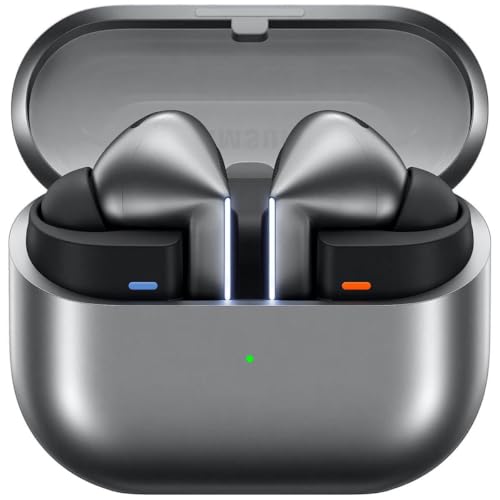
Graphite is the colourway that will furnish most desks, and it presents the fifth generation’s design language at its most understated: a sculpted bud, a case with the line’s familiar fabric-and-metal manners, and nothing about the object that shouts. The listening is the statement. Sennheiser’s house sound in this line gives music a foundation — bass with texture rather than mere thump — and a treble that resolves detail without turning sharp, over an ANC floor quiet enough that the music’s own quiet passages stay quiet on a train. Lossless high-resolution support means the earbuds can finally be fed what flagship phones and streaming tiers offer, and the difference, with a good seal and a good recording, is the difference between hearing a mix and hearing through it.
Mini spec box — Momentum True Wireless 5
- Type: true wireless earbuds with active noise cancelling
- Audio: lossless high-resolution audio, 3D Dolby Atmos per the listing
- Battery: 40 hours total per the listing; user-replaceable battery
- Calls: clear-call microphone system and touch controls per the listing
- Finish of this listing: Graphite
Noise cancelling on a flagship is judged by what remains: not silence in the abstract, but the specific erasures of a commute — the train’s roar reduced to weather, announcements still intelligible when transparency is summoned, wind handled without the pumping artefacts that betray lesser systems. The Momentum 5 plays in that top tier, where comparisons become about character rather than capability. Calls follow the same pattern: the microphone system isolates the voice with the confidence of a product whose maker also builds professional audio, and in the standard torture tests — a windy street, a station concourse — the voice arrives as a voice, not as a weather report with words in it.
Fit is the gate through which all of this must pass. Sennheiser supplies tip options because the seal is the specification: a poor seal costs bass, cancelling and security at once, while a correct one makes the earbuds disappear into the listening. Owners should treat the first evening as a fitting session, not a listening session, and the sections below return to that discipline because it decides more reviews than any driver can.
Strengths
- Reference-leaning sound with lossless support, presented over a genuinely quiet ANC floor.
- User-replaceable battery answers the category’s worst habit — sealed, disposable flagships.
- Call quality and touch controls are flagship-grade, matching the audio rather than trailing it.
Trade-offs
- The premium is real, and casual listeners will not hear what it bought.
- Full lossless and spatial benefits depend on your phone, your apps and your library cooperating.
- Like all earbuds, fit is personal; some ears will prefer a rival’s shape regardless of sound.
Best for: serious listeners, commuters and flyers who keep their gear for years. Not suited for: habitual earbud losers, or anyone whose listening is entirely casual background.

Momentum True Wireless 5 (Copper): the same flagship, worn differently
Badge: The finish alternative
The Copper listing is the identical earbud in a warmer finish, and its section exists to make one point cleanly: colourway is not a tier. Every specification in the Graphite review — the 40-hour total battery, the cancelling, the lossless audio, the Atmos, the replaceable battery — is shared, because the listings describe one product in two finishes. Choose Copper if your other objects run warm — brass, tan leather, wooden desks — or if you simply enjoy an earbud case that does not look like everyone else’s. Choose Graphite for invisibility. Then stop deliberating, because the listening will not know the difference.
Mini spec box — Momentum True Wireless 5 (Copper)
- Identical specification to the Graphite listing
- Battery: 40 hours total per the listing; user-replaceable battery
- Audio: lossless high-resolution, 3D Dolby Atmos, ANC
- Finish of this listing: Copper
Strengths
- Full flagship specification in a finish with genuine character.
- Easier to spot in a bag or on a desk than the ubiquitous dark finishes.
- Shares cases, tips and accessories with the Graphite version.
Trade-offs
- A distinctive finish is a commitment; it will not match every other object you own.
- Availability of a specific colourway can vary independently of the product itself.
- It tempts buyers to deliberate about colour while neglecting the fit session that actually matters.
Best for: flagship buyers who want the object to look like a choice. Not suited for: buyers who prefer their tech invisible.

Momentum True Wireless 4 review: the previous generation, honestly priced by time
Badge: The value alternative
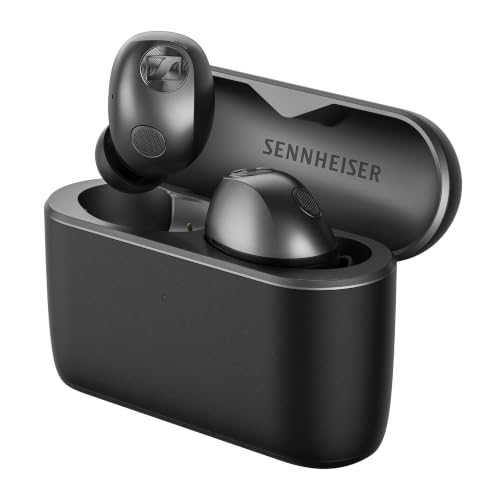
The True Wireless 4 is the comparison that disciplines the flagship’s price. Its verified listing confirms a specification that was flagship-grade at its launch and remains formidable: Bluetooth 5.4, adaptive ANC, a 30-hour battery, crystal-clear sound in Sennheiser’s description, a comfortable design, and support for LE Audio and Auracast — the broadcast audio technology that will matter in airports, gyms and cinemas as venues adopt it. What the fifth generation adds is the newer tuning, the longer battery figure, the spatial audio headline and the replaceable battery’s longevity argument. What the fourth retains is the family’s sound philosophy at a previous generation’s tier, which for many listeners is the rational purchase: the difference between the generations is refinement, and refinement is priced for those who can hear it and value it.
Mini spec box — Momentum True Wireless 4
- Type: true wireless earbuds, adaptive ANC
- Bluetooth: 5.4, with LE Audio and Auracast per the listing
- Battery: 30 hours per the listing
- Finish of this listing: Black Graphite
Strengths
- The family’s sound and cancelling character at a previous-generation tier.
- LE Audio and Auracast support give it a future-facing connectivity story.
- A known quantity: a mature product whose ownership experience is well documented by its generation of users.
Trade-offs
- Shorter total battery than the fifth generation, and no replaceable-battery longevity story.
- Lacks the newer model’s spatial audio headline and latest tuning.
- As the older model, its remaining shelf life in catalogues is naturally shorter.
Best for: listeners who want the Momentum sound with a cooler head about generations. Not suited for: buyers who specifically want the replaceable battery or the longest possible ownership runway.
Generation 5 vs generation 4: where the money goes
Line the listings up and the generational story is legible: ten more hours of total battery, spatial audio added, tuning renewed, and a battery the owner can replace, which quietly converts the fifth generation from a two-to-three-year product into a potentially much longer companion. The fourth generation counters with maturity and tier. The deciding question is ownership style. A buyer who replaces earbuds with each phone should buy the fourth and enjoy the saving. A buyer who keeps audio gear until it fails should buy the fifth, because its replaceable battery removes the most common cause of failure from the story entirely. Everyone else should decide by the fit session and the library: lossless listeners gain more from the fifth; casual streamers gain more from the fourth’s price discipline. Portable rivals frame the same money differently — see Cambridge Audio Melomania P100 SE over-ear headphones for the over-ear alternative and Moondrop Space Travel 2 earbuds reviewed for the budget end of the earbud world.
Buying guide: how to buy flagship earbuds without wasting the premium
Audit your chain before your earbuds. Lossless support matters only if your phone, your streaming tier and your listening habits deliver lossless files; spatial audio matters only if your content uses it; the finest ANC matters most to those who commute or fly weekly. Match the flagship’s strengths to your actual chain and the premium becomes engineering rather than decoration. Next, schedule the fit session: try every supplied tip size, walk around, shake your head gently, speak aloud — your own voice sounding natural is a seal diagnostic — and only then judge sound. Finally, decide your ownership horizon honestly, because it arbitrates the generational question above and the replaceable battery’s value, which is zero to a two-year owner and enormous to a six-year one.
How to fit and set up the Momentum True Wireless 5
Begin with tips, unhurriedly: insert, twist gently into place, then play a bass-heavy passage — a correct seal announces itself as fullness, an incorrect one as thinness, and no equaliser can repair a seal that physics denied. Set the ANC to its adaptive or full mode for travel and experiment with transparency levels for the street, where awareness is a safety feature. Walk through the touch controls once with the manual open and customise the one gesture you will use hourly — usually play and pause or transparency — until it is reflex. Enable the highest-quality codec your phone offers in its Bluetooth settings, confirm your streaming application is set to its lossless tier if you pay for one, and only then sit down for the first real listen, with a recording you know well enough to hear what the flagship is doing. Owners of the family’s over-ear cousins will find the philosophy familiar from beyerdynamic MMX 330 Pro headset review.
Common mistakes flagship earbud buyers make
Judging sound in a loud shop with the wrong tips is the founding error of the category. The second is buying lossless hardware for a lossy life — default streaming settings, an old phone, a library of rips — and concluding the earbuds were oversold. The third is wearing ANC at full strength on streets where traffic awareness matters, a safety mistake dressed as a feature. The fourth is neglecting the case’s battery in the total figure: the 40 hours here is buds plus case, as everywhere, and travel planning should count charges, not miracles. The fifth is ignoring the replaceable battery’s implication — owners of this model should actually plan to keep it, tips refreshed and firmware updated, rather than drifting into the two-year replacement habit the product was designed to break.
The replaceable battery: a small feature with a long shadow
It deserves its own section because it changes the product’s category. Sealed earbuds carry a built-in expiry: the cells age with every charge, capacity fades, and a product that sounded flagship in year one becomes a half-day companion in year three, destined for a drawer. A user-replaceable battery interrupts that story at its root. The owner who renews the cells renews the product — the drivers, the tuning, the fit already learned — and the economics and the ecology of the purchase transform together. Rivals will likely follow, because the argument is unanswerable, but the Momentum True Wireless 5’s listings show Sennheiser making it now, at the flagship tier, where the rest of the product justifies the long life the battery enables. When this review calls the fifth generation the keeper’s earbud, this feature is the reason.
Calls, work and the earbud as a professional tool
A generation of workers now takes its calls through earbuds, and the flagship tier is where that stops being a compromise. The Momentum 5’s call system, described in its listing as clear-call hardware, aims at the two environments that defeat lesser buds: wind and crowd noise, where beamforming and processing must decide what is voice. Paired with multipoint-style working habits — laptop for the meeting, phone for the call that interrupts it — a flagship earbud becomes the office’s most personal instrument. The honest caveat is fit again: a bud that shifts during a long call degrades both your hearing and your voice, so the fitting session in the setup section is professional preparation, not audiophile ritual.
Final recommendation
Buy the Momentum True Wireless 5 — in whichever finish suits your life — if you listen seriously, travel noisily and keep your audio gear long enough for a replaceable battery to matter. Buy the Momentum True Wireless 4 if the same sound philosophy at a previous generation’s tier matches your horizon better. Both are verified above with their listings checked. Complete the picture with the wired in-ear world at Moondrop Aria 2 reviewed in full and the story of its predecessor at the original Moondrop Aria and its successor.
Sound character: the Sennheiser argument, made in music
Describing sound honestly requires examples, so take three recordings any listener can find. A well-recorded acoustic trio shows the tuning’s manners: the double bass has pitch and wood, not just weight; the piano’s decay survives the ANC floor; the room around the instruments is audible, which is the signature of treble that resolves rather than merely sparkles. A dense electronic production tests the opposite virtues — sub-bass control at volume, separation when the mix refuses to separate itself — and the Momentum line’s foundation keeps the low end authoritative without letting it annex the midrange where voices live. A live concert recording tests the stage: crowd, hall and the space between the singer and the band, rendered by the spatial processing as a place rather than a panorama effect. Across all three, the fifth generation’s claim is consistent: this is a music product that happens to cancel noise and take calls, not a convenience product that happens to play music.
ANC in the real world: trains, offices and streets
Noise cancelling is a set of different tools wearing one name. On trains and planes it fights a constant drone and wins by large margins. In offices it fights the irregular — the colleague’s call, the printer, the door — and wins by smaller, still valuable ones, mostly by lowering the floor so your music can stay at a healthier volume. On streets it should be used with transparency engaged, because the same erasure that blesses a carriage endangers a crossing. The flagship skill is adaptivity: systems that read the environment and adjust spare the owner the constant manual toggling that makes lesser buds feel like appliances. Judge the Momentum 5 in each of your own three environments during the return window, because ANC satisfaction is a property of your routes, not of a laboratory’s pink noise.
Battery arithmetic for travellers
The 40-hour figure is a system figure — buds plus the charges the case carries — and travellers should translate it into their own itineraries. A long-haul day of two flights and a layover consumes perhaps half the system; a commuting week consumes it in slices, with the case topping the buds between journeys like a power bank with one job. The replaceable battery changes the long arithmetic rather than the weekly one: year three’s system figure, which on sealed rivals has sagged with the cells, can be restored to the original number. Carry the cable on trips anyway — cases forgive planning, they do not repeal it — and the Momentum 5 becomes the rare travel product whose endurance story improves the longer you own the ticket.
Firmware, features and the product that improves
Modern flagships are partly software, and ownership includes a rhythm of updates that refine cancelling, add codec support and polish controls. Sennheiser’s companion application is also where the equaliser lives, and the Momentum philosophy shows there too: the EQ is presented as a tool for the listener’s taste and hearing, with sound personalisation options that adapt the tuning to the individual ear rather than imposing a house curve as law. New owners should update once, personalise once, and then leave the application alone for a month — the earbuds’ character should be learned as shipped before it is edited, or the owner will never know what the maker intended and whether they actually disagreed with it.
The first month: how a flagship earbud settles into a life
Week one is fitting and fascination: tips auditioned, codecs enabled, favourite recordings revisited for details the old earbuds withheld. Week two is routine: the buds learn your commute, your gym bag’s pocket, your meeting cadence, and the gestures become reflexes. Week three is where the flagship justifies itself quietly — a call taken on a windy street without apology, a delayed flight absorbed without fatigue, a late-night listening session at low volume where the tuning’s low-level clarity, the virtue no shop demo reveals, becomes the reason you reach for these over everything else you own. Week four is the verdict, and it is usually delivered by the old earbuds: tried once for comparison, they sound like a memory of listening rather than listening itself. That arc is what the premium buys, and it cannot be unboxed in a day, which is why this review keeps prescribing time — a fitting evening, a month of routes — as the honest audition.
Earbuds versus over-ears: the Momentum owner’s other question
Many readers of this review own, or are choosing against, a full-size headphone like the Melomania P100 SE reviewed elsewhere in this cluster, and the comparison deserves a direct answer. Over-ears win on stage size, on battery by the day rather than the hour, and on the physicality of bass. Earbuds win on everything involving motion, weather, pockets and discretion — and the Momentum 5 narrows the sound gap to the point where the choice becomes logistical rather than sonic for most listeners. Households commonly end with both: the over-ear as the home instrument, the Momentum as the world’s. Buyers choosing only one should choose by where their listening hours actually occur, a statistic your last month can supply more honestly than your aspirations can.
Care and feeding: tips, cases and the long life
A keeper’s earbud deserves a keeper’s habits. Clean the tips weekly — they are both a hygiene item and an acoustic component, since a clogged tip muffles the treble you paid for. Keep the case’s contacts clean and the case itself out of the bottom-of-bag gravel. Store the buds in their case rather than in pockets, update firmware when the application offers it, and when the day eventually comes that endurance fades, remember that this model’s battery was designed to be renewed rather than mourned. None of this is burdensome; it is the ordinary respect owed to an instrument, and it is what separates a five-year flagship from a two-year gadget in practice.
Spatial audio, without the fog
3D Dolby Atmos in an earbud listing deserves translation, because the term covers real engineering and real marketing in equal measure. At its best, spatial processing places sounds in a three-dimensional field around the listener — a film’s rain above, a game’s environment around, a live recording’s hall behind — using the earbuds’ processing to render what stereo alone flattens. Its value depends entirely on content mixed for it: films and a growing music catalogue reward it, while ordinary stereo tracks gain little and can lose focus if the processing is applied carelessly. The Momentum 5’s inclusion of Atmos is best read as readiness: as catalogues grow, the flagship is equipped, and owners can enable it per content type rather than as a permanent flavour. Treat spatial audio as a room you visit for the right recordings, not as the house you live in, and it will delight rather than distract.
The gym, the rain and the honest limits
Flagship earbuds are not sports earbuds, and pretending otherwise serves nobody. The Momentum 5 will survive workouts for many owners — the fit is secure when the tips are right — but its design priorities are acoustic and electronic rather than athletic: no fins or hooks, a case built for desks and coat pockets, and a price that makes a dropped bud on a running route a small tragedy. Runners and heavy trainers should consider a dedicated sports model for the violent hours and keep the flagship for the listening hours, a division of labour that protects both purchases. Commuters in ordinary weather, by contrast, are squarely in this product’s intended world, and need no such hedging.
Value across the category, judged coldly
Flagship earbuds cluster tightly in price because their ingredients — drivers, cancelling systems, radios, cases, microphones — cost what they cost at this level. Within that cluster, value is decided by the features that change ownership rather than by the features that decorate launches. By that test the Momentum 5’s case is strong: its replaceable battery alters the product’s lifespan, its call system alters its working usefulness, and its tuning alters every listening hour. The fourth generation’s counter-case is equally cold: it surrenders the lifespan feature and some refinement, and returns a substantial saving to buyers whose horizon is short. The incoherent purchase in this category is the flagship bought casually and lost or abandoned within a year — no feature survives that ownership pattern — and the coherent one is either of these Sennheisers bought deliberately, fitted properly and kept. Deliberation is the discount that always applies.
What we would change
The next generation should make the battery renewal a tool-free, thirty-second ritual if it is not already, because a longevity feature’s value scales with its convenience. A smaller case would widen the product’s pocket appeal without touching its acoustics. And the fitting system — the quiet determinant of everything — deserves the flagship treatment too: more tip geometries in the box, and a guided seal test in the application that tells a new owner, in plain language, whether physics has been satisfied. None of these wishes concerns the sound, which is this review’s way of reporting that the sound is where it should be: settled, serious and ready to be lived with.
Hearing, volume and the flagship’s responsibility
Effective noise cancelling carries an underappreciated health-adjacent virtue: it lets music stay at lower volumes, because the listener is no longer competing with the train. Owners should claim that virtue deliberately — set your level in the quiet of home, then resist raising it in the noise the ANC has already handled — and treat post-listening ringing or fatigue as information, not as the cost of enthusiasm. This is general listening sense rather than medical advice, and persistent symptoms belong with a professional. But a review of a product this capable of quiet owes its readers the observation that the quiet is the feature, and the volume knob’s restraint is how you keep it.
The verdict, restated for the listener at the till
Strip the review to its sentence: the Momentum True Wireless 5 is the earbud for the listener who hears the difference, travels in the noise and keeps the product — and Sennheiser has, unusually, built the product to survive being kept. The fourth generation is the same sentence with a shorter horizon and a smaller bill. Between those two honest options, the wrong choice is nearly impossible; the only failure available is buying either carelessly, without the fitting evening and the chain audit that let a flagship be a flagship.
For the buyer upgrading from bundled or budget earbuds
The jump from bundled earbuds to a flagship like this is the largest single upgrade in personal audio, larger than any step between flagship generations, and it is worth describing what actually changes so the buyer can listen for it. The noise floor drops away, and with it the need to listen loudly. Bass acquires pitch — you hear the note, not just the impact. Voices in calls stop sounding like they are arriving from inside a pipe. And the objects themselves acquire the density of instruments: a case that closes like it means it, buds that sit like they were measured. New owners should give the upgrade a week of ordinary life before judging it, because the flagship’s virtues are cumulative and contextual — they live in commutes, calls and quiet rooms, not in a thirty-second comparison at a kitchen table, where the old earbuds’ exaggerated bass often wins the sprint and loses the month.
A short history of the line, for context
The Momentum true wireless line began as Sennheiser’s declaration that earbuds could carry the company’s hi-fi credibility, and each generation since has been an argument about what to fix: the early models proved the sound and were forgiven their bulk; the middle generations refined fit, cancelling and calls; the fourth added modern connectivity including LE Audio and Auracast; the fifth, by its listings, completes the arc with spatial audio, a longer battery and the replaceable cell that answers the category’s oldest criticism. Reading the line’s history clarifies the fifth generation’s identity: it is not a reinvention but a settling — a flagship that has stopped auditioning and started keeping house. Buyers who value maturity in a product line, the kind that comes from a maker iterating on its own homework for years, will find the Momentum story unusually legible, and the fifth chapter its most considered.
Gift guidance, briefly
Flagship earbuds are a favourite gift for graduates, new job starters and the family audiophile, and the Momentum 5 is a safer gift than most flagships for one reason: its virtues do not depend on the recipient sharing the giver’s phone ecosystem or streaming tier. The sound, the cancelling and the calls impress on any modern phone, and the replaceable battery means the gift is built to still be working at the recipient’s next milestone. Choose Graphite for the professional, Copper for the characterful, include the receipt against the possibility that their ears prefer another shape entirely, and the gift carries its own insurance.
The one-paragraph version
Sennheiser’s fifth Momentum earbud is a flagship that behaves like an heirloom: serious tuning, serious cancelling, serious calls, spatial and lossless readiness for the libraries that offer them, forty hours across buds and case, and a battery its owner can replace when the years finally fade it. Its predecessor offers most of the music for less, to owners with shorter horizons. Fit either properly, feed either honestly, and the Momentum name — carried now through five generations of exactly this discipline — will do the rest.
One closing observation belongs to the category rather than to Sennheiser alone. Earbuds spent a decade racing toward disposability — smaller, cheaper, sealed, replaced — and the most interesting flagship story of this generation is the counter-current: products designed to be kept, serviced and handed on. The Momentum True Wireless 5 is this review’s clearest example of that counter-current at the premium end, and whether or not it is the earbud you buy, its replaceable battery is a standard you should now demand of every flagship that asks flagship money. Categories change when buyers change their questions. Ask the longevity question loudly enough, and the sealed era ends.
Transparency mode and the art of staying aware
Flagship earbuds are judged by their silence, but they are lived with through their transparency — the mode that admits the world for a platform announcement, a barista’s question, a child’s sentence from the next room. The quality that matters is naturalness: a good transparency mode sounds like the earbuds have vanished, while a poor one sounds like the world is being broadcast through a phone line. Owners should rehearse the gesture that summons it until the motion is thoughtless, because the moments that need awareness rarely announce themselves politely. Cyclists and runners should go further and treat transparency as the minimum, with one bud out the safer custom in traffic. A flagship that handles both silence and awareness with equal grace is rarer than the specification sheets suggest, and it is one of the daily virtues by which the Momentum line has kept its commuters across five generations.
Multipoint and the two-device working life
The modern listener’s earbuds serve two masters — the laptop that hosts the meeting and the phone that hosts everything else — and the handover between them is where premium products earn their calm. The discipline for owners is to decide the hierarchy in advance: which device wins an interruption, which one the buds should rejoin after a call, and to set that hierarchy once rather than negotiating it daily. Paired with the Momentum’s call clarity, a well-arranged two-device life turns the earbuds into the office’s most personal infrastructure — the microphone your colleagues know you by and the speakers your music arrives through, in one object that fits in a coat pocket. It is worth the ten minutes of setup, because the alternative — a daily pairing ritual — taxes every working day the product will ever serve.
How the Momentum 5 handles a long-haul itinerary, hour by hour
Take the flagship’s hardest ordinary day: a dawn taxi, a morning flight, a layover, a second flight and an evening arrival in another time zone. The buds work in shifts — cancelling at full strength in the air, transparency in the terminals, calls in the taxi, music at a tired low volume on the final leg — while the case refills them in the layover’s margins. The 40-hour system figure stops being a specification somewhere over the second flight and becomes a simple fact: the earbuds are never the part of the journey that runs out. What the traveller notices, arriving, is what did not happen — no ear fatigue from a pressurised fit, no missed announcement, no battery arithmetic performed at a gate. Flagships justify themselves in journeys like this or not at all, and the replaceable battery extends the same competence to the same itinerary in year four, which no sealed rival in the bag can promise.
The Momentum sound for newcomers: what to listen for first
Listeners arriving from mainstream earbuds often ask what, concretely, a flagship tuning does that theirs does not, and three passages answer faster than any explanation. Play a recording with a real double bass and listen for pitch: on the Momentum, the notes are notes, distinct and woody, where lesser buds offer a dignified rumble. Play a dense chorus and listen for the backing voices: they occupy their own places instead of merging into the lead’s shadow. Play a quiet passage in a quiet room and listen for the recording’s own atmosphere — the hall, the breath before the phrase — which a low noise floor and honest treble preserve. None of this requires golden ears; it requires only the comparison, made once, at matched volume, with the tips fitted. After that comparison, the flagship’s price stops being abstract, which is precisely why shops that let you make it sell so many of them.
There is a fitting postscript to the generational comparison that runs through this review. Products that can be kept — battery renewed, tips refreshed, firmware tended — develop a different relationship with their owners than products on a countdown do: they get named in wills of the desk, lent with confidence, and recommended without the usual caveat about waiting for the next model. The Momentum True Wireless 5 was designed, visibly and on its own listing, to be that kind of product. Whether the rest of the industry follows is its problem. For the buyer reading this page, the opportunity is already on the table.
A note on buying either generation as a gift for a musician
Musicians are the hardest gift audience in audio because they listen professionally, and they are the audience this family most reliably delights — the tuning respects recordings because it was made by a company whose other customers mix them. For a working musician, choose the fifth generation and its replaceable battery, because their earbuds are tools that will be used to the edge of their endurance. For a student, the fourth generation’s tier leaves budget for the instrument’s other needs while still putting a serious reference in their ears. Either way, include the fitting sermon from this review’s setup section, delivered kindly: even musicians, especially musicians, judge earbuds through the wrong tips in the first ten minutes.
Why the fifth generation’s quietest feature may be its fit system
Flagship launches celebrate drivers and codecs, but a month of ownership celebrates whatever keeps the buds seated, sealed and forgotten. Sennheiser’s accumulated fit knowledge — shell geometry refined across five generations of ears, tip options that acknowledge human variety — is the Momentum 5’s least advertised and most used technology. It shows in the small statistics of a life: fewer reseats per commute, fewer one-bud-out conversations, fewer evenings where the left ear declares a different opinion from the right. Buyers auditioning rivals should weight this inheritance heavily, because a flagship that fits is a flagship every hour, while a flagship that merely measures well is one only on the first evening. The fitting session this review prescribes is how you collect the inheritance; the generations of refinement are how Sennheiser paid it in.
One more inheritance deserves naming before the questions, because owners discover it slowly: the Momentum’s resale and hand-down value. A flagship whose battery can be renewed does not fall off the value cliff that sealed earbuds do, and a unit passed to a family member in year three arrives as a gift rather than as a cast-off. Plan for that second life when you choose the finish — Graphite travels between owners more anonymously, Copper more personally — and keep the box, the tips and the cable together, because a complete kit is what turns a used flagship back into a present.
A complete kit, kept together, also protects the first owner’s options: a Momentum 5 sold or gifted with its case, tips and cable intact is a flagship changing hands, while the same earbuds loose in a drawer are merely electronics. The difference is five minutes of housekeeping across the whole ownership — the cheapest value preservation in the category, and the fitting final expression of the keeper philosophy this product embodies.
Frequently asked questions
Is the Momentum True Wireless 5 worth it over the 4?
It depends on your ownership horizon and your library, and the listings make the differences concrete: the fifth generation offers a 40-hour total battery against 30, adds 3D Dolby Atmos and the latest tuning, and — decisively — makes its battery user-replaceable, which extends the product’s useful life beyond the sealed-battery norm. If you keep earbuds for many years or listen losslessly, those are worth paying for. If you replace earbuds every couple of years and stream at standard quality, the fourth generation delivers the family’s sound and cancelling character for less, and the honest answer is to save the difference.
What does a user-replaceable battery actually change?
It removes the expiry date that sealed earbuds carry. All rechargeable cells lose capacity with age and use; in a sealed product that fading is the product dying slowly, while in the Momentum True Wireless 5 the owner can renew the cells and restore the original endurance. Practically, it means the earbuds can remain a daily companion for far longer, the purchase’s cost spreads across more years, and one fewer electronic product reaches the bin on schedule. It is the single most consequential difference between this generation and the sealed flagships it competes with.
Do I need a special phone to benefit from lossless audio?
You need a chain that cooperates: a phone and Bluetooth codec path that support high-resolution transmission, a streaming service or local library that supplies lossless files, and listening habits quiet enough to hear the benefit — a sealed fit on a calm commute, not a windy platform. Where any link is missing, the earbuds still sound excellent at ordinary quality, because their tuning and cancelling do not depend on the codec. Think of lossless as headroom the flagship provides for the listeners whose chain can use it, rather than a tax on those whose cannot.
How good is the noise cancelling for flights?
Flights are the ANC use case in its purest form — a constant, predictable roar that adaptive systems are built to erase — and a flagship Sennheiser plays in the tier where engine drone recedes to a background hush and cabin announcements can be admitted through transparency without removing a bud. Pair that with the 40-hour total battery across buds and case and a long-haul day is covered with charges to spare. The remaining flight variable is fit across hours: bring the tip size that survived your fitting session, and a spare size in the case, because ears and altitude have their own negotiations.
Graphite or Copper — is there any functional difference?
None. The two verified listings describe the same earbud — same battery, cancelling, audio features and controls — in two finishes. The choice is aesthetic and practical in small ways: Graphite disappears into a professional wardrobe and shows pocket wear less obviously, while Copper has character and is easier to spot in a bag. Buy the one you will enjoy seeing every day, because you will see it every day, and spend the deliberation you saved on the fitting session, which is where this product’s performance is actually decided.
Can the Momentum True Wireless 5 replace a wired hi-fi earphone?
For most listening in real environments, it makes the wired pair optional: the tuning is serious, the lossless path is real and the cancelling buys a quiet that a wired earphone on a train cannot. The wired pair keeps two honest advantages — zero latency for gaming and video-critical work, and freedom from batteries altogether — which is why many owners keep both, the Momentum for the world and a wired in-ear for the desk. Readers curious about that desk partner will find the Aria 2 review linked in the recommendation above a congenial next step.