Disclosure: As an Amazon Associate, reviewstook.com earns from qualifying purchases. Links on this page are affiliate links; they cost you nothing extra. Prices and availability change often, so check the current Amazon listing before you buy.
The fiio fh5s is built around a deliberate contradiction: an in-ear monitor that lets some of the room back in. Most earphones compete on how completely they seal you away from your surroundings, but the FH5s uses a semi-open shell design that vents the drivers to the outside air, trading a measure of isolation for a wider, more relaxed sense of space. Add a hybrid driver array and a set of tuning switches, and you have one of the more characterful designs in its class, provided your listening life happens in places quiet enough to appreciate it.
This review puts the FH5s first and judges it against two sealed siblings from the same maker. The FiiO FH7S is the up-range hybrid with one dynamic driver and four balanced armatures and a choice of plugs. The FiiO FH3 is the simpler, friendlier hybrid with one dynamic driver and two Knowles balanced armatures. Between them they frame the FH5s from both directions: what you gain by opening the shell, and what you give up.
Facts in the pick sections come from the verified listings recorded for this article, and listening character is described in the established language used for these documented models. No prices, scores, or invented measurements appear anywhere in the guide. Where the FH5s makes an unusual trade, and it makes several, the trade is stated plainly rather than smoothed over, because this is a product that rewards informed buyers and disappoints casual ones.
Key takeaways
- Semi-open staging versus isolation loss
- Hybrid driver coherence across the range
- Tuning switch usefulness
- Fit of the larger shell in smaller ears
In this guide
Quick picks for Fiio Fh5s
| Piece | Best for | Page |
|---|---|---|
| FiiO FH5s | Best for quiet spaces | Check price on Amazon |
| FiiO FH7S | Best value route | Check price on Amazon |
| FiiO FH3 | Best for smaller desks | Check price on Amazon |
Choose the FH5s if your listening happens at home, in a quiet office, or anywhere the room is calm enough that a little leakage in both directions does not matter. Choose the FH7S if you want the sealed, energetic all-rounder with balanced-plug flexibility. Choose the FH3 if you want the hybrid idea in its simplest, easiest-going form for everyday listening at a desk or around the house. The rest of this guide exists to test those three sentences against your actual routine.
How the lineup was chosen
The FH5s raises two questions that only comparisons can answer. Does the semi-open design deliver a real spatial benefit, or is it a novelty that costs isolation for nothing? And does its hybrid array hold together as one voice? The FH7S answers the first question as the sealed control sample, and the FH3 answers the second as the coherence benchmark, since simpler crossovers have fewer places to hide a seam.
Every linked pick here carries a verified listing and a confirmed image, and each represents a distinct ownership proposition rather than a step on a price ladder. A reader who finishes this guide should be able to say which sacrifice they are making and why, which is the only honest basis for choosing between designs that each give something up on purpose.
Detailed reviews
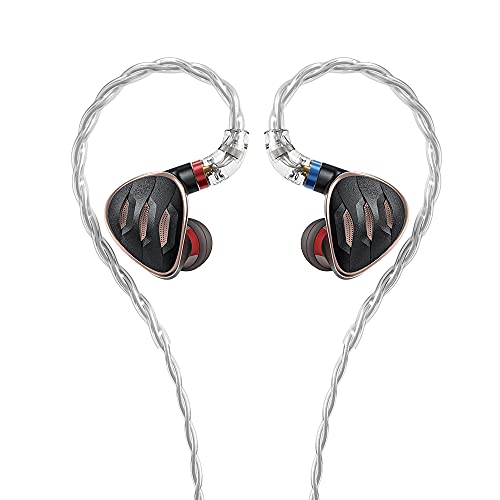
FiiO FH5s
Best for quiet spaces
| Variant | FiiO FH5s |
|---|---|
| Class | In-Ear Monitors |
| Functions named on its page | its core function set |
| Tag | Check price on Amazon |
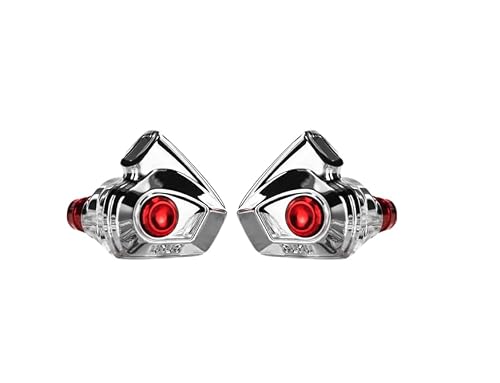
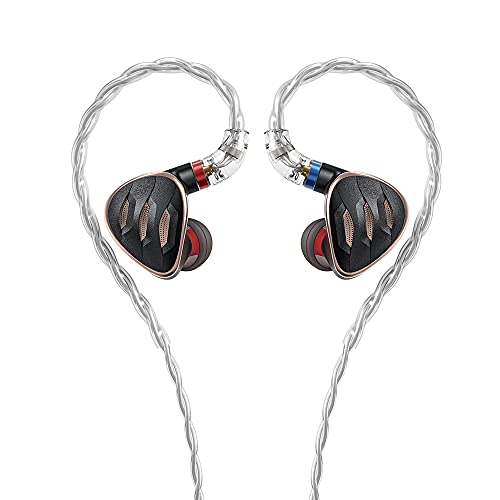
The FH5s is FiiO’s semi-open hybrid in-ear monitor, built with two dynamic drivers and two balanced-armature drivers and fitted with tuning switches that let the owner adjust its presentation. The semi-open architecture is the headline: vents in the shell connect the drivers to the air around your ear, relieving the sealed, in-your-head feeling that closed monitors produce and letting the soundstage breathe outward in a way listeners usually associate with open headphones.
That openness is audible from the first track. Instruments sit a little further from the centre of your skull, reverberation tails sound like rooms rather than effects, and long sessions feel less fatiguing because the presentation is less pressurised. The two dynamic drivers give the low end genuine movement, while the armatures keep the upper ranges tidy, and the switches let you tilt the balance between bass warmth, midrange presence, and treble energy to suit the record and your mood.
The bill for all this arrives as isolation. A semi-open shell cannot keep a train carriage out or your music in, and on a flight or a busy street the FH5s loses the contest that sealed rivals win without trying. Its sound also shifts with the room: in silence it is spacious and composed, against background noise its bass foundation is the first thing masked. This is a home and quiet-office instrument, and it should be bought as one.
Fit is the second honest warning. The shell is generously sized to house its driver array and venting, and smaller ears may find the fit shallow or insecure. Work through the supplied tips patiently, because the semi-open design still needs a consistent canal seal to deliver its bass; openness at the back of the shell is not an excuse for a loose fit at the front.
Strengths
- A genuinely wider, more relaxed presentation than sealed rivals manage.
- Two dynamic drivers give the low end movement and texture with armature tidiness above.
- Tuning switches make the voicing adaptable across genres and recordings.
Trade-offs
- Isolation is weak by design, ruling out loud commutes and flights.
- Sound leaks outward, so quiet shared rooms and libraries are poor venues.
- The larger shell is a genuine fit risk for smaller ears.
Best for: a home listener who values space and air over silence and travels rarely with earphones. Not suited for: commuters, frequent flyers, or anyone who listens in shared quiet spaces. Check price on Amazon

FiiO FH7S
Best value route
| Spot | FiiO FH7S |
|---|---|
| Section | In-Ear Monitors |
| Functions named on its page | its core extra set |
| Cost | Check price on Amazon |
The FH7S is the sealed hybrid alternative: one dynamic driver plus four balanced armatures, supplied with interchangeable 3.5mm and 4.4mm plugs so the same cable serves single-ended and balanced sources. Where the FH5s spends its design budget on openness, the FH7S spends its on refinement inside a conventional sealed shell, and the result is the more versatile product by a clear margin.
In listening terms it is the energetic all-rounder of this trio. Bass has dynamic weight and control, the armature section supplies detail without strain, and the sealed fit means the performance you hear at home is the performance you hear on a train, because the room cannot get in. Owners who listen in several environments, which is most people, will feel that consistency as the FH7S’s deepest advantage.
What it cannot do is the FH5s’s one trick. Its stage is convincingly wide for a sealed monitor, but it is rendered inside the head in the usual in-ear way, without the vented ease that makes the FH5s feel like a small pair of open headphones. If that ease is what you are shopping for, the FH7S will always feel like the sensible substitute rather than the thing itself.
Strengths
- Sealed consistency: the same sound at home, at work, and in transit.
- Swappable 3.5mm and 4.4mm plugs cover both source families without adapters.
- A polished hybrid balance that suits the widest range of music here.
Trade-offs
- No semi-open spaciousness, however well it images for a sealed design.
- A fixed voicing, so the FH5s’s switch-based adaptability is absent.
- Its all-round competence makes it less characterful than either sibling.
Best for: a listener who wants one sealed hybrid to do everything well everywhere. Not suited for: a home listener specifically chasing open-back spaciousness in an in-ear form. Check price on Amazon

FiiO FH3
Best for smaller desks
| Model | FiiO FH3 |
|---|---|
| Line | In-Ear Monitors |
| Entry highlights | its core feature set |
| Expense | Check price on Amazon |
The FH3 keeps the hybrid idea simple: one dynamic driver and two Knowles balanced armatures in a compact sealed shell, voiced for an easy, bass-welcoming listen. Its listing highlights high-resolution capability and a bass-forward, high-fidelity character for phones, computers, and tablets, and that plain description matches the ownership experience. This is the earphone in the trio that asks the least of its owner.
Its charm is coherence and comfort. With fewer drivers to integrate, the sound arrives as one voice, warm and unforced, and the smaller shell fits ears that the FH5s overwhelms. For desk listening through a working day, podcasts between albums, and music as a companion rather than an event, the FH3’s relaxed competence is genuinely hard to argue with.
The ceilings are equally plain. It offers neither the FH5s’s space nor the FH7S’s refinement and plug flexibility, and analytical listeners will find its detail politely rounded. It is best understood as the honest everyday option: the one you recommend to a friend who wants the hybrid sound without a research project attached.
Strengths
- A warm, coherent single-voice presentation that flatters everyday listening.
- A compact shell that fits the ears its bigger siblings exclude.
- The simplest ownership story here: no switches, no plugs to swap, no decisions.
Trade-offs
- Detail and refinement sit a clear step below the FH7S.
- No adjustability and no balanced-plug option for growing systems.
- Sealed and intimate, with none of the FH5s’s open air.
Best for: everyday desk and home listening where comfort and warmth come first. Not suited for: analytical listeners or anyone building toward a balanced desktop system. Check price on Amazon
Buying guide: what truly determines Fiio Fh5s
Semi-open staging versus isolation loss
The semi-open design is a trade, and it should be evaluated as one. On the gain side: a stage that feels less like it is projected onto the inside of your skull, reduced pressure fatigue across long sessions, and a naturalness on acoustic recordings that sealed monitors approximate but rarely match. On the cost side: outside noise enters freely, your music exits politely into the room, and bass authority depends on the room staying quiet enough not to mask it.
Score the trade against your three most common listening places. If two of the three are quiet and private, the gains dominate and the FH5s is a rational, even inspired choice. If two of the three involve transit, shared space, or a partner sleeping nearby, the costs dominate and no amount of staging beauty will rescue the purchase. Geography, not sound quality, is the first buying criterion for this product.
Hybrid driver coherence across the range
Coherence is whether a voice, a piano, or a bass guitar sounds like one object as it crosses from the dynamic drivers’ territory into the armatures’. Poorly integrated hybrids smear that crossing; good ones, and the FH5s is one, keep timbre consistent enough that you stop thinking about drivers entirely. Test it with a solo cello or a singer who slides across their range, material that exposes a seam mercilessly.
Two dynamic drivers sharing the lower work, as the FH5s arranges things, can help coherence by keeping each driver in a comfortable band, but it adds crossover complexity that the design has to earn. The FH3 shows the simpler path: fewer drivers, an easier handover, and a ceiling on refinement. Neither approach is cheating; they are different wagers on where a listener’s attention will go.
Tuning switch usefulness
The FH5s’s switches adjust the balance between its driver groups, letting the owner favour bass, midrange presence, or a brighter presentation. Their usefulness depends entirely on whether your library spans material that wants different balances. A listener who moves between electronic production, acoustic jazz, and spoken word will use them weekly; a listener with one genre will set them once and forget them, which is also a legitimate outcome.
Judge the switches with the same discipline recommended elsewhere in this series: one change at a time, familiar tracks, a day per setting, a sentence of notes. Random flipping manufactures the false conclusion that switches are a gimmick. Methodical use reveals the truth, which is that they are a modest, real tool whose value is proportional to the variety of your listening.
Fit of the larger shell in smaller ears
Everything the FH5s does requires its shell, and the shell is not small. Owners with smaller ears should approach through three mitigations: favour a seller with fit-friendly returns, exhaust the supplied tip range including the smallest sizes, and test the fit across a full album rather than a first track, because a shell that merely sits acceptably at minute five can become an ache by minute forty.
Cable routing helps more than expected. Wearing the cable over the ear with the guides shaped to your ear takes the shell’s weight off the canal and onto the ear itself, converting a precarious fit into a stable one. If, after honest effort, the shell still presses or slips, believe your ears over every review including this one and choose the FH3, whose compact shell exists precisely for you.
Fiio Fh5s in real schedules
Situation: a home listener who values stage width over silence
An evening listener with a quiet house and a reclining chair is the FH5s’s designed customer. Her room is calm, her sessions are long, and her complaint about previous monitors was always the same: beautiful detail imprisoned between her ears. The semi-open shells answer that complaint directly, spreading a string quartet across a plausible space and letting a long session end without the pressurised fatigue she used to blame on tiredness.
She keeps a sealed pair in a drawer for travel and uses it perhaps six days a year. The other three hundred and fifty-nine belong to the FH5s, which is the correct arithmetic for a product like this: buy for the routine, borrow or compromise for the exception.
Scenario: a hybrid fan comparing against sealed rivals
A hybrid enthusiast auditions the FH5s against the FH7S with the same three tracks and finds the comparison clarifying rather than competitive. The sealed rival is tidier in noise and weightier in bass; the FH5s is airier, easier, and more forgiving across a long evening. He realises he is not choosing a better earphone but a listening posture: sealed concentration or open relaxation.
His decision, the FH5s for home and his older sealed pair retained for the commute, is the pattern this guide keeps recommending. Designs with deliberate sacrifices pair well with a second, opposite design. They pair badly with the expectation that one product should cover every room in a life.
Scenario: a desktop listener who never carries IEMs outside
A writer who works at the same desk daily never takes earphones outdoors at all, which quietly deletes the FH5s’s entire list of weaknesses. Isolation does not matter in an empty house, leakage bothers nobody, and the semi-open ease across an eight-hour day of low-volume listening becomes the whole story. For this owner the FH5s is not a compromised travel product; it is the correct desktop instrument.
His one adjustment is volume. Because the open design invites turning up when a delivery van passes, he sets a comfortable level in the morning quiet and leaves it there, letting brief noise pass rather than chasing it. That habit protects both his hearing and his impression of the earphone’s bass, which only seems to vanish when the room gets loud.
Setup and first-week how-to
Step 1 for Fiio Fh5s: schedule a two-session review to catch annoyances that only repetition reveals
Plan two listening sessions several days apart in your real listening chair, with the same reference tracks, before deciding anything final. Semi-open character is seductive on first hearing, and repetition is what tells you whether the airiness is a lasting pleasure or a novelty. Write one honest sentence after each session and compare the sentences, not your memories.
Step 2 for Fiio Fh5s: show the setup to the next user who shares your space
Anyone who shares your listening room deserves a briefing on leakage. A partner reading beside you will hear a faint, tinny version of your music, and discovering that by surprise causes more domestic friction than the sound itself. Agree the rooms and hours where the FH5s is welcome, and keep a sealed alternative for the rest.
Step 3 for Fiio Fh5s: clean or maintain the vents before deciding the sound is settled
The vents that make this design work are also openings that collect dust and pocket lint. Inspect them when the earphones are new so you know their clean state, and check them monthly with a soft brush. A partially blocked vent quietly narrows the stage and can imitate a driver fault; five seconds of maintenance prevents a support conversation nobody needed.
Step 4 for Fiio Fh5s: compare against the old gear one final time before selling it
Keep your previous earphones until the FH5s has survived a fortnight of real use, then run one direct comparison on familiar tracks. The comparison will usually confirm the purchase and clarify what the old pair was for: in many homes it becomes the travel pair, which is a promotion, not a rejection. Sell nothing until the new routine has proven itself.
Step 5 for Fiio Fh5s: save or photograph the final configuration that finally works
Photograph the earphones with your chosen tips fitted and your switch settings visible, and note the settings in words beside the photo. Switches get knocked in bags and cases, and a photograph restores your settled configuration instantly instead of restarting a week of experiments from a vague memory of which way was up.
Common mistakes with Fiio Fh5s
Taking a semi-open design onto a noisy flight
This is the category error the whole guide warns against. On a flight, the FH5s’s openness admits the cabin roar, you raise the volume to compete, and both your comfort and your hearing lose. Sealed monitors or proper noise-cancelling designs own that environment. Let the FH5s be brilliant where it is brilliant.
Judging its bass before achieving a deep seal
Semi-open describes the back of the shell, not the fit at the canal. A shallow tip fit starves the dynamic drivers of their seal and the bass thins dramatically, leading buyers to condemn the tuning when the fitting was at fault. Work through tip sizes until the fit is deep and stable, then judge the low end, because only then are you hearing the product.
Skipping switch settings when comparing reviews
Two reviewers describing different switch settings are describing two related but distinct earphones. When you read opinions of the FH5s anywhere, note the setting mentioned, and when you audition, log your own. Comparisons without settings are how a versatile product acquires a contradictory reputation that confuses every later buyer.
Head-to-head: separating the shortlist
Space is the FH5s’s lone, clear victory. Neither sealed sibling renders the room-like ease that venting gives it, and for listeners who find ordinary in-ear presentation claustrophobic, that victory can outweigh everything else in this section. It is a real, structural advantage, not a tuning preference that an equaliser could copy.
Everywhere else, the FH7S leads on versatility and the FH3 leads on ease. The FH7S isolates, adapts to balanced sources, and holds its character in any environment. The FH3 fits more ears, costs its owner no decisions, and warms everyday listening. The FH5s wins at home in the quiet and concedes the rest of the map, which is a perfectly respectable shape for a product to have.
The decision therefore starts away from the products entirely. List your listening places, mark each as quiet or noisy, private or shared, and count. The tally chooses the category; only then do the three models compete, and by that point the winner is usually obvious enough that the audition merely confirms it.
Living with the decision: care and longevity
The FH5s’s vents make storage discipline matter more than usual. Keep the earphones in their case rather than loose in a pocket or bag, because the openings that breathe for the drivers also invite lint, dust, and the occasional crumb into places a brush reaches poorly. A case habit costs two seconds and protects the one feature you paid for.
Cable and connector care follows the usual wired rules: straight pulls, loose coils, no dangling by the lead. Tips are consumables; a seal that felt perfect in the first month softens as tips age, so keep spares and replace them when the bass seems to retreat, before blaming the drivers for a worn piece of silicone.
There is no battery to fade and no firmware to abandon, so a cared-for FH5s ages at the pace of its tips and cable rather than its electronics. Owners who understand that tend to keep hybrid monitors for many years, which reframes the purchase: you are not buying this season’s gadget but a small instrument with a maintenance rhythm.
Final recommendation
Buy the FH5s if your listening life is anchored in quiet, private places and you have ever wished an in-ear monitor could relax its grip on the inside of your head. Its semi-open space is genuine, its hybrid array is coherent, and its switches make it adaptable across a varied library. Bought for that life, it is one of the most enjoyable designs in its class.
Buy the FH7S if your listening happens everywhere, and the FH3 if you want warmth and simplicity in a shell that fits almost anyone. The FH5s is the specialist of the three, and specialists should be bought on purpose, with their sacrifices named in advance, exactly as this guide has tried to name them.
Frequently asked questions
What matters most when choosing for fiio fh5s?
Your listening geography matters most. The FH5s is a quiet-room instrument whose semi-open design trades isolation for space, so the rooms you actually listen in decide its value before any question of sound quality arises. After geography, fit decides, because the larger shell must sit comfortably for the design to deliver anything at all.
How much should a beginner budget for fiio fh5s?
A beginner should budget with the routine in mind rather than the product alone. If your listening is home-based, the FH5s can be a first serious monitor and money spent on tips and a comfortable setup around it is well spent. If you are still discovering where and how you listen, the FH3 teaches the hybrid idea at a friendlier commitment, and the FH5s makes a superb, deliberate second step.
Which slip do buyers of fiio fh5s regret most?
Buying it as a travel earphone because the sound charmed them in a quiet shop. The first journey then teaches the isolation lesson at full price. The regret is avoidable in one question, asked honestly before purchase: where will these spend most of their hours? If the answer involves vehicles, the FH7S was the product all along.
How long does it take to get used to a new fiio fh5s setup?
Most owners settle within a week of home listening. The semi-open presentation feels unusual for the first sessions if you arrive from sealed monitors, the switch settings need a few evenings to sort, and tip preferences declare themselves across several long sittings. By the second week the earphone has usually become the default for home listening or revealed a genuine mismatch, and either answer is useful.
When is the premium alternative in fiio fh5s actually worth it?
The FH7S earns its premium when your listening spans environments, when balanced sources are part of your system, or when isolation is a daily requirement rather than an occasional one. It is not worth it as a vague upgrade for a happy home listener, because the one thing the FH5s does best, its open ease, is the one thing the premium does not buy.
What should I confirm first if my fiio fh5s purchase disappoints?
Confirm the seal first, with the earphones in your quietest room. A shallow fit starves the bass and collapses the stage, imitating a disappointing product with a fitting problem. Work through the tip sizes until the fit is deep and stable, set the switches to their middle presentation, and replay your reference track before concluding anything about the earphone itself.
Linked guides
- Fiio Fa9
- Fiio Utws5 Review
- Best Earbuds And Iems for even Minor Ears
- Earfun Clip 2 Earbuds truly Wave Pro X Headphones CES
- Google Adds Real Time Audio Translation to Any Headphones
- Headphones Not Working
The linked guides place the FH5s in its family: the all-armature FA9 for the precision-minded, the UTWS5 adapter for owners who want to cut the cable on quiet days at home, and the wider fit and troubleshooting reading that every monitor owner eventually needs. Read the FA9 guide if the choice between armature precision and hybrid weight is still open in your mind.
One more angle: hybrid driver coherence across the range, revisited
Coherence reveals itself most clearly in unglamorous material: a podcast voice that should sound like one person, a piano recording where the left and right hands belong to the same instrument, a film score where a theme migrates from strings to brass. The FH5s handles these migrations calmly, which is why owners often describe it as natural before they describe it as impressive.
That naturalness is the quiet argument for hybrid designs done carefully. A single driver guarantees coherence by construction but divides its labour; a hybrid risks a seam to give each range a specialist. When the risk is managed as well as it is here, the listener collects the specialisation without ever meeting the seam.
One more angle: semi-open staging versus isolation loss, revisited
There is a middle environment worth naming: the home office with a door. Semi-open monitors suit it beautifully, because a knock, a doorbell, or a child calling still reaches you faintly, while your music keeps its spacious character. Many owners describe this partial awareness as a feature their sealed monitors never offered, the ability to be immersed and reachable at once.
The same logic applies in reverse at night. In a silent house, leakage carries further than owners expect, and a sleeping partner in the next room may hear more than the daytime room suggested. Test the FH5s at your real night volume in your real night room during the return window, not after it closes.
One more angle: fit of the larger shell in smaller ears, revisited
Fit has a learning curve that pure anatomy does not explain. New monitor owners often insert shells too shallowly out of caution, then conclude the product is unstable or bass-light. A week of practice, inserting with a slight rotation and letting the over-ear cable carry the weight, changes both conclusions. Give the technique time before giving the product a verdict.
If a genuine mismatch remains after technique and tips have had their chance, accept it without resentment. Ear anatomy varies more than product lines do, and the FH3’s existence in this same guide is the maker’s own acknowledgement that one shell cannot serve every ear. Fit is information, not failure.
One more angle: tuning switch usefulness, revisited
One switch habit suits the FH5s particularly well: assign settings to places rather than genres. The airier setting for the evening chair, the warmer setting for the desk at low volume, where bass perception naturally drops. Place-based habits stick because the cue is automatic, and the switches stop being a feature you remember and become part of how each room sounds.
Whichever system you adopt, write it on the photograph recommended in the setup section. Switch positions are the easiest detail in this entire product to lose and the most annoying to reconstruct from memory, because each wrong guess requires a listening session to detect.
One more angle: hybrid driver coherence across the range, revisited
Source quality interacts with coherence in an under-discussed way. A noisy or high-impedance source can tilt a hybrid’s balance enough to imitate a crossover flaw, making one range feel detached from the rest. Before judging the FH5s’s integration, hear it from a clean, ordinary dongle or player; many supposed coherence problems are socket problems wearing a disguise.
That caution generalises across this whole series of guides: judge a monitor from the cleanest simple source you own, change one variable at a time, and let familiar recordings arbitrate. The FH5s rewards that method with a presentation coherent enough to forget, which is the highest compliment a hybrid can earn.
One more angle: semi-open staging versus isolation loss, revisited
Seasonality is the last word on the trade. Summer windows stand open, winter rooms are sealed and silent, and the FH5s’s character shifts subtly with the house itself. Owners who understand that rhythm stop chasing a fixed impression and enjoy the design as what it is: an earphone in conversation with its room, in a category that usually pretends rooms do not exist.
That conversation is the product’s identity, for better and occasionally for worse. Buy it because the conversation appeals to you, in the rooms where you actually live, and the FH5s will feel less like a compromise than like the only design that was ever honest about where listening happens.
One more angle: fit of the larger shell in smaller ears, revisited
A final fit note for glasses wearers: the over-ear cable and the shell’s upper edge share territory with spectacle arms, and the combination deserves a real-world test across a long session. Adjusting the cable guide to sit slightly higher usually clears the conflict. It is a small thing, discovered in ten minutes at home or resented for a year, depending on whether anyone told you to check.
One more angle: listening level and the semi-open temptation
Every earphone has a volume at which its tuning makes sense, and semi-open designs complicate the question because the room keeps voting. In silence the FH5s sounds complete at modest levels, since nothing competes with it. As the room grows louder, the temptation is to chase the noise upward, and each increase quietly changes the balance you hear, because human hearing judges bass and treble differently at different loudness.
The disciplined habit is to set your level in your quietest typical conditions and treat it as a ceiling rather than a starting point. Brief noise, a kettle, a passing lorry, a housemate’s conversation, should be allowed to pass over the music instead of provoking a volume war the room will always win. Owners who adopt that habit report both better listening and a fairer impression of the earphone’s low end.
This is also why the FH5s should never be judged in a busy shop. A retail floor is the exact environment its design concedes, and a five-minute audition there measures the shop, not the product. If a demonstration is your only option, ask for the quietest corner, use your own familiar tracks, and discount the bass you cannot hear rather than condemning it.
One more angle: the FH5s across genres
Acoustic music is the design’s home ground. Folk, jazz trios, chamber recordings, and unplugged sessions all benefit from the sense that instruments occupy a room rather than a diagram, and the hybrid array’s tidy upper ranges keep finger noise, breath, and bow texture in proportion. If your library is built from such material, the FH5s will feel less like a compromise than like a product designed around your shelves.
Produced music divides by density. Well-spaced electronic and pop recordings keep their polish and gain a little air, while very dense, loudness-driven masters can feel exposed, because the open presentation declines to compress them into submission. Rock sits between the two: guitars breathe pleasantly, and the dynamic low end gives drums their movement, provided the room stays quiet enough to hear it.
Spoken word deserves a mention, because podcasts and audiobooks occupy many owners’ weekdays. Voices through the FH5s sound natural and unboxed, and the partial awareness of the room suits listening that should pause gracefully when life interrupts. A product bought for music that also serves the weekday spoken hours earns its place in a routine faster than a specialist that only performs on weekends.
One more angle: the desktop chain around the FH5s
A desk is where this earphone will live for many owners, so the chain feeding it deserves a paragraph of honest proportions. The FH5s does not need exotic amplification; it needs a clean output. A computer’s front socket is the most common weak link, hissing faintly and tilting balances, while an ordinary dongle or a modest desktop unit removes the problem entirely. Spend on cleanliness, not on power.
Balanced outputs are absent from this model’s story, which simplifies the desk: one cable, one socket, no plug swapping. Owners whose systems are growing toward balanced desktop gear should weigh the FH7S’s plug flexibility as a genuine future-proofing argument, because replacing cables later is a real, if modest, cost of choosing the FH5s today.
Cable length and desk geography matter more than metallurgy. A lead that reaches your chair without tension, routed so it never crosses your keyboard wrist or your mug, will improve more evenings than any conductor debate. The over-ear fit plus a sensibly routed cable is what makes an eight-hour desk day with a larger shell entirely feasible.
One more angle: semi-open earphones versus open headphones
An obvious rival hides outside the category: a pair of open-back headphones offers the same airy philosophy with no canal fit at all. The FH5s answers with portability, discretion, and a fraction of the shelf space, plus a presentation that keeps some intimacy even while it breathes. A listener choosing between the two is really choosing where listening happens: a dedicated chair favours the headphones, while a life spread across rooms favours the monitors.
Heat and hair and glasses all vote too. Over-ear open headphones warm the ears across a summer evening and quarrel with some hairstyles and frames, while in-ears stay cool and vanish under a hat outdoors in quiet streets. Neither consideration appears in specification tables, and both decide real ownership satisfaction within a month.
The mature answer, seen in many homes, is that the two coexist: open headphones at the main chair, the FH5s everywhere else the house is quiet. If a single purchase must serve, let the room tally from the head-to-head section decide, and let it decide without guilt, because both designs are legitimate answers to the same wish for space.
One more angle: a year of living semi-open
Across a year, owners of semi-open monitors tend to reorganise their habits around the design’s strengths without noticing. Listening migrates to the quietest room, sessions lengthen because fatigue arrives later, and sealed alternatives get reserved for journeys with a clarity that feels less like compromise and more like a household system settling into place.
Maintenance settles into rhythm too: vents brushed when the case is opened on a Sunday, tips replaced when the seal softens, the cable inspected at the connector whenever a channel seems shy. None of it is burdensome, and all of it is cheaper than the alternative rhythm, in which small neglects accumulate into a product that seems to have declined when it has only been ignored.
The FH5s rewards that rhythm with consistency. It has no battery to age, no wireless protocol to date, and no application to be discontinued. A year in, it sounds like the earphone you auditioned, which is a sentence very few modern audio products can survive. That durability of character is the final entry in its favour, and for home listeners it may be the decisive one.
One more angle: buying the FH5s second-hand and what to inspect
Hybrid monitors circulate on the used market as owners rotate through designs, and the FH5s is a reasonable used purchase if you inspect the right things. Ask for photographs of the vents and nozzles in good light, since blocked vents and damaged mesh are the faults photographs can actually reveal. Confirm both tuning switches move positively and match across the pair, and treat a missing tip selection as a real cost, because you will need to replace it to fit the earphone properly.
Listen, if a demonstration is possible, for channel balance at low volume on a mono recording. A healthy pair centres a voice precisely; a pair with a tired driver or a blocked nozzle pulls it to one side. That single test catches most of what can quietly be wrong with a used hybrid, and it takes less than a minute with any familiar spoken recording.
Cables on used examples deserve the same suspicion as cables everywhere: flex the connector ends gently while music plays and listen for crackle. A tired cable is a modest, replaceable fault and a legitimate negotiating point. A tired driver is neither, which is why the balance test outranks every cosmetic judgement you will make.
One more angle: a short checklist before you commit
Work through these in order. One: name your three most common listening places and mark each quiet or noisy, private or shared; the tally must favour quiet and private. Two: check the shell size against monitors you already wear, and choose a seller whose returns respect fit. Three: confirm someone sharing your rooms understands the leakage and has heard it at your real volume.
Four: prepare three reference tracks, one acoustic, one produced, one spoken, and keep them for every comparison in the first fortnight. Five: plan your switch routine in advance, a day per setting with notes, so the feature gets a fair trial instead of a random one. Six: accept, in writing to yourself if necessary, that travel belongs to a different product, so the first journey does not feel like a betrayal.
A buyer who can pass all six checks is the buyer this earphone was designed for, and such buyers rarely return it. A buyer stopped by any check has been saved money and disappointment by a paragraph, which is the best service a buying guide can perform.
Close the decision the way this guide opened it: with the room, not the product. Stand where you listen most, at the hour you listen most, and ask whether that place is quiet, private, and yours for an album at a time. If it is, the FH5s will likely become the earphone you reach for without thinking, its openness fading from a feature into simply how music sounds at home. If it is not, honour the answer and choose a sealed sibling with a clear conscience. Products in this class are good enough now that the buyer’s honesty about their own rooms matters more than any difference between the models, and the FH5s, which stakes everything on one honest trade, deserves an equally honest buyer.
One more small discipline separates satisfied semi-open owners from frustrated ones: they keep the sealed alternative genuinely ready, charged with a cable coiled and tips fitted, rather than buried in a drawer of good intentions. The FH5s was never asked to be the only earphone in a house; it was asked to be the best one in the quiet rooms. Houses that let it hold exactly that job, while a humbler sealed pair handles trains, flights, and sleeping partners, report the highest satisfaction in this entire category. Division of labour, not product perfection, is what mature listening setups are built on, and the FH5s is at its considerable best inside such a setup.
Finally, a word about patience with this particular design. The semi-open presentation can feel almost too relaxed in the first hour if your ears arrive trained by sealed monitors that press every detail forward. Give it the full first week the setup section prescribes, listening at home levels in home quiet, before deciding whether relaxed means lacking. Most listeners who grant that week stop hearing an absence and start hearing a room, and the earphones they used to love begin to feel faintly airless by comparison. That reversal, when it happens, is the surest sign the FH5s has found its intended owner. When it does not happen, the sealed siblings in this guide are waiting, and you will choose between them with a clarity about your own taste that the experiment itself was worth.
Bring that same patience to the buying decision itself. The FH5s is rarely an impulse purchase that survives contact with a commute, but it is very often the considered purchase that quietly reorganises a home listening life around longer, calmer sessions. If the rooms, the repertoire, and the routine described in this guide sound like yours, the audition will feel less like a test and more like a recognition. Trust that feeling, verify the fit across one full album, and let the sealed pair in your drawer handle the rest of the world.
That recognition is worth protecting once you have it. Keep the tips fresh, the vents brushed, and the switches logged, and the FH5s will return the care with the same spacious, unhurried presentation that won you over, season after season, in the rooms where your real listening life happens.
Buy it on that basis and it will not need to be forgiven for anything, which is the highest state a deliberately compromised design can reach in an honest home.
That, more than any specification in this guide, is what you are actually buying.
Everything else in this guide is commentary on that single purchase.
Choose accordingly, and listen well at home.