Disclosure: As an Amazon Associate, reviewstook.com earns from qualifying purchases. Links on this page are affiliate links; they cost you nothing extra. Prices and availability change often, so check the current Amazon listing before you buy.
The etymotic er3xr occupies the most argued-over seat in its range. Below it, the ER2 models offer Etymotic’s deep-seal accuracy through a dynamic driver at the friendliest tier the company sells. Above it, the ER4 series carries the flagship’s reputation and price. The ER3XR’s claim is that the essential upgrade — the move from a dynamic driver to a balanced-armature driver, with the finer detail retrieval that follows — should not require the flagship’s full commitment. XR marks it, as elsewhere in the range, as the extended-response tuning: the house reference balance with a measured lift in the bass, chosen by listeners who want accuracy to arrive with some warmth in its step. Whether that middle seat is the range’s sweet spot or a compromise that satisfies neither camp is the question this article exists to answer honestly.
The short version: the ER3XR is for the listener who has already decided that the deep-fit Etymotic way of listening suits them, and who listens closely enough that the texture of recordings — bow on string, breath before a phrase, the room around a piano — is part of the pleasure. Its balanced-armature driver trades a little of the dynamic models’ low-end ease for precision further up the range, and it keeps everything else that defines the family: the deep seal, the serious isolation, the plain presentation, the dependence on fit for all of it. Readers still deciding whether deep insertion is for them at all should start with the fit sections here before the sound sections, because on this earphone, as on its siblings, the seal is the gate through which every other virtue must pass.
Key takeaways
- The ER3XR is the balanced-armature step in Etymotic’s range: finer detail and texture than the dynamic-driver ER2 models, at a tier below the ER4 flagships.
- XR tuning means the reference balance carries a deliberate bass lift; the flatter studio presentation lives in the SE variants of the range.
- Fit is not a preference on this earphone — insertion depth governs the seal, and the seal governs the bass, the isolation, and the treble smoothness together.
- Against the ER4XR, the ER3XR concedes the last degree of resolution and refinement; against the ER2SE, it concedes some low-end naturalness and a friendlier price tier.
- Tips and nozzle filters are running costs of the design, and ownership satisfaction tracks how willingly a listener adopts that small maintenance rhythm.
In this guide
Rapid picks for Etymotic Er3xr
| Product | Best for | Page |
|---|---|---|
| Etymotic ER3XR | Best for lengthy bouts | Check price on Amazon |
| Etymotic ER4XR | Best for shared spaces | Check price on Amazon |
| Etymotic ER2SE | Best for tinkerers | Check price on Amazon |
Three earphones, one family, three different answers to where money should go. The ER3XR in the middle is the article’s subject and the balanced choice for a listener who wants the armature driver’s detail without auditioning the flagship’s invoice. The ER4XR above it is the range’s fullest expression — the earphone for listeners who have heard the ER3XR, understood exactly what it holds back, and decided the remainder is worth its tier. The ER2SE below is the contrarian pick: a dynamic driver, a flatter tuning, and a lower tier, which a certain kind of listener — represented in the table as the tinkerer, the one who equalises, experiments, and values the dynamic driver’s character — will prefer on merit rather than on budget. None of the three is the beginner’s casual purchase, because all three share the deep fit; the table is a map for readers who have accepted that premise and are choosing where in the range their listening lives.
How the shortlist was chosen
This comparison stays inside one family on purpose. The ER3XR’s genuine rivals are its siblings, because a shopper comparing it against wireless buds or fashion earphones is comparing lifestyles, not earphones. Each model here was verified through the site’s own Amazon data when the article was prepared, and the listings supply the facts this page relies on: the ER3XR’s listing names it as the Extended Response earphone; the ER4XR’s likewise; the ER2SE’s identifies it as the Studio Edition. Everything beyond those identities — driver behaviour, tuning character, fit — is discussed as the family’s established design, with no specification invented for the occasion and no performance figure quoted that a listing did not state. Where the article compares, it compares qualities a listener can verify in an audition rather than numbers a brochure can inflate.
Two exclusions are worth explaining. The ER2XR, the dynamic sibling with this model’s own tuning, is discussed in the buying guide where the value question demands it, but it is not a linked pick here, because this page’s table is reserved for the step-up, the flagship, and the flat-tuned alternative — the three directions an ER3XR shopper most plausibly moves. And no model from outside the family is linked, because the mainstream alternatives answer a different question — how to avoid the deep fit — and that question belongs to a different article.
Detailed reviews

Etymotic ER3XR
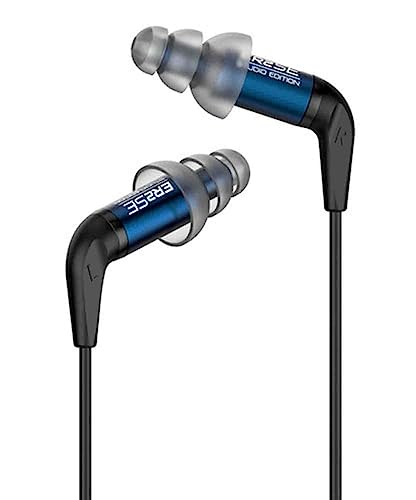
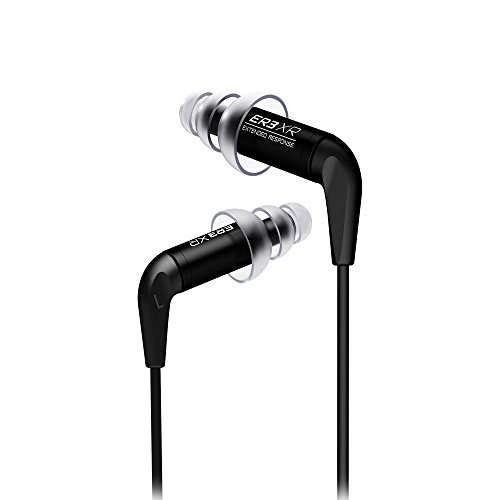
The armature step, taken seriously. The verified listing names this model plainly — Etymotic ER3XR Extended Response Earphone, in black — and the plainness suits it. What you are buying is a single balanced-armature driver in the family’s deep-insertion shell, tuned with the XR bass lift. Balanced-armature drivers move air with a tiny reed inside a sealed chamber rather than a cone, and their virtues are precision and speed: transients start and stop cleanly, dense passages separate into their strands, and quiet detail — the mechanics of a piano, the texture of a bow, the breath a singer takes — survives at listening levels where dynamic drivers blur it into the background. On the ER3XR that precision is presented through Etymotic’s measurement-led tuning, so the detail arrives without the treble glare that gives many armature earphones their fatiguing reputation.
| Name | Etymotic ER3XR |
|---|---|
| Class | In-Ear Monitors |
| Functions named on its page | Extended Response earphone — balanced-armature model in the deep-fit range |
| Page cost | Check price on Amazon |
The “best for lengthy bouts” label the comparison table gives it is earned in an unexpected way: detail at low volume. Because the armature resolves quiet information and the deep seal excludes the room, the ER3XR delivers a complete musical picture at levels well below what most earphones need, and low-volume completeness is precisely what a three-hour session wants — no fatigue from level, no fatigue from glare, nothing pushing back. The XR shelf plays its part here too, keeping the low end present at those modest volumes, where human hearing naturally discounts bass. Listeners whose sessions are long, quiet, and attentive — the evening album listener, the score follower, the editor working through takes — are this model’s natural constituency, and they tend to describe it with a word rarely applied to earphones: sufficient. It does not leave them shopping.
Certain recordings function as this earphone’s natural demonstration material, and naming them helps a prospective owner predict their own reaction. A string quartet recorded closely shows the armature’s manners at their best: four instruments, each with its own bow noise and vibrato, held apart in a shared acoustic without any of them stepping on another’s decay. A solo piano in a live room shows the pedal mechanics and the hall answering each chord. Dense electronic production shows the opposite virtue — separation under load, kick and bassline and arpeggio each keeping their edges where a lesser earphone fuses them into a general surge. And a familiar vocal recording, the one an owner has heard a thousand times, shows the most persuasive thing of all: a breath, a consonant, a doubled harmony that was always on the record and never previously in the listener’s awareness. Owners who light up at that list are the ER3XR’s people; owners who shrug at it have learned something equally valuable about which rung is theirs.
Strengths
- Balanced-armature precision separates dense recordings and preserves quiet detail at modest volumes.
- XR tuning keeps the presentation warm enough for long sessions while the midrange stays honest.
- The deep seal’s isolation is the family’s full measure, undiluted by the step down from the flagship.
Trade-offs
- Low frequencies carry armature character — precise and textured rather than weighty — which dynamic-driver listeners may find lean on first hearing.
- It sits close enough to the ER2 tier that casual listeners may not hear what the step bought them.
- The deep fit remains compulsory, with its learning curve and its exclusion of awareness-demanding situations.
Best for: attentive listeners who hear detail as content, listen long and quietly, and want the armature experience without the flagship tier. Not suited for: listeners who want bass to arrive as physical weight, or anyone still hoping for a shallow, casual fit. Check price on Amazon

Etymotic ER4XR
The flagship reference, for listeners who have identified exactly what they want more of. The verified listing names the Etymotic ER4XR Extended Response Earphone — the senior model of the range, carrying the ER4 line’s long-standing role as the company’s reference in-ear monitor. Its relationship to the ER3XR is the classic flagship relationship: the same design language, the same deep fit, the same XR tuning philosophy, executed with the final measure of resolution and refinement the company knows how to extract. Owners who step up typically describe the gain not as a different earphone but as the same earphone with the last veil removed — fine spatial cues settle, treble texture gains a degree of realism, and very quiet detail stops requiring concentration to follow.
| Unit | Etymotic ER4XR |
|---|---|
| Segment | In-Ear Monitors |
| Entry highlights | Extended Response earphone — the range’s flagship model |
| Tag | Check price on Amazon |
The table’s “best for shared spaces” label deserves its explanation, because it is really a statement about leakage and level. In a shared office, a library reading room, or a bedroom where someone else is sleeping, the ER4XR’s combination of total outward quiet — a deep seal leaks essentially nothing — and satisfying low-volume detail means the listener disturbs nobody and compromises nothing. That is a flagship virtue of an unglamorous kind: not drama, but completeness at a whisper. The honest counterweight is proportionality. The ER4XR’s advantages scale with the listener’s attention and the recording’s quality; played from compressed streams in a noisy kitchen, it and the ER3XR are separated by far less than their tiers suggest, and the flagship’s premium purchases nothing the situation lets you hear.
Flagship ownership also has a quieter economics that rarely appears in comparisons. Models at the top of a long-lived range hold their value and their support: tips, filters, cables, and service knowledge remain available because the installed base justifies them, and a buyer of the ER4XR is buying into the most populated tier of expertise in the family — every question they will ever have has been asked and answered by earlier owners. The ER3XR shares most of that ecosystem, which is part of its value case, but the flagship’s constituency is the one the ecosystem serves first and longest. For a listener planning a decade of ownership, that infrastructure is a real feature, as real as any driver.
Strengths
- The range’s fullest resolution and refinement, for listeners equipped to hear the difference.
- Complete, detailed listening at very low volumes suits shared and quiet environments perfectly.
- Flagship of a long-lived line, with the accessory and support ecosystem that status sustains.
Trade-offs
- The premium over the ER3XR buys refinement, not transformation — value depends entirely on the listener’s ear and library.
- It is the least forgiving model here of poor recordings and noisy sources.
- Same compulsory deep fit; the flagship tier does not buy a gentler relationship with your ear canals.
Best for: experienced listeners upgrading with a specific, articulable idea of what they want improved. Not suited for: first-time deep-fit buyers, who should learn whether the concept suits them at a lower tier. Check price on Amazon

Etymotic ER2SE
The flat, dynamic alternative — cheaper, and for some listeners simply better. The verified listing identifies the Etymotic Research ER2SE Studio Edition in-ear earphones. On an ER3XR page its role is to represent the road downward that is not a descent: a dynamic driver in place of the armature, a flat studio tuning in place of the XR shelf, and a lower tier in place of the middle one. The dynamic driver’s low end has a physical ease that armature designs imitate rather than reproduce, and listeners raised on good dynamic earphones sometimes hear the ER3XR as the technically superior instrument and the ER2SE as the one they would rather listen to after dinner. Both reactions are coherent; they are preferences about driver character dressed up as arguments about quality.
| Piece | Etymotic ER2SE |
|---|---|
| Class | In-Ear Monitors |
| Extras named on its entry | Studio Edition in-ear earphones — flat tuning, dynamic driver |
| Entry cost | Check price on Amazon |
The table calls it the pick for tinkerers, and the label points at a real behaviour: the SE’s flat response is the range’s best blank canvas for equalisation. A listener who enjoys shaping sound — lifting the bass for one genre, trimming a peak for another, saving profiles per source — gets more from a neutral starting point than from a tuning that has already made its decisions, and the dynamic driver responds to low-frequency equalisation with a willingness that suits the hobby. Add that the SE is the natural first Etymotic for the fit-curious, since its tier limits the cost of discovering that deep insertion is not for you, and its place in this comparison is fully earned: it is simultaneously the experimenter’s choice, the cautious entry point, and the dynamic driver’s advocate.
Strengths
- Flat tuning is the ideal starting point for listeners who equalise deliberately.
- Dynamic-driver low end has a natural weight that some listeners prefer to armature precision.
- Lowest tier in this comparison, which caps the cost of testing the deep-fit concept.
Trade-offs
- Fine detail and separation sit a clear step below the armature models on demanding material.
- At flat settings, bass-shy for listeners whose libraries expect warmth.
- Shares every fit and maintenance demand of the dearer models — the savings are in the driver, not the discipline.
Best for: equalisation enthusiasts, the fit-curious entering the family, and dynamic-driver loyalists. Not suited for: listeners seeking the armature detail that defines the ER3XR’s appeal. Check price on Amazon
Before the criteria, a word about who should walk past this entire range, because the handbook that follows assumes a reader the design can serve. If your listening happens while cycling, running roads, minding children, or doing any work where an approaching sound can be a warning, deep isolation is the wrong tool whatever its fidelity. If your ears have a history of infections, perforations, or surgery, deep-insertion earphones are a conversation to have with a clinician before they are a purchase to make. And if your honest listening pattern is ninety seconds of a podcast while a kettle boils, the family’s virtues will never be switched on. The criteria below are for the remaining reader — seated, attentive, and bothered by noise — for whom the decisions are real: which driver, which tuning, which rung.
Buying handbook: what genuinely decides Etymotic Er3xr
Balanced-armature detail versus dynamic timbre
The driver question is the ER3XR’s whole reason for existing, so it deserves an unhurried treatment. A dynamic driver is a miniature loudspeaker: a diaphragm moved by a voice coil, pushing air in a way listeners have a lifetime’s experience of. Its strengths are low-frequency naturalness — bass that decays the way bass in a room decays — and a forgiving, coherent presentation across the range from a single moving surface. A balanced armature is a different machine: a tiny balanced reed, pivoting inside a magnetic field, driving a rod that moves the diaphragm. It is far more efficient, responds faster, and renders fine detail with a clarity that dynamic drivers reach only at greater cost and size. Its historical weakness is the bottom octave, where moving enough air is a physical struggle for so small a mechanism.
Etymotic’s engineering position — visible across this whole range — is that the seal changes the arithmetic. Deep in the canal, coupled to a small sealed volume of air, an armature does not need to move the air of a room; it needs to pressurise a thimbleful, and within that thimbleful its precision tells. This is why the ER3XR’s bass, properly sealed, surprises listeners who expected armature thinness: the quantity is moderated by the XR tuning’s restraint, but the texture — the difference between a bass note’s fundamental and its finger noise, its fret buzz, its room — is rendered with a clarity the dynamic models trade away for weight. Choose by what your favourite recordings are made of. Music built from texture and interplay rewards the armature. Music built from impact and sustain rewards the dynamic. Most libraries contain both, which is why this argument has lasted decades and why the range sells both answers.
Deep insertion ease over lengthy sessions
Comfort on a deep-fit earphone is a trajectory, not a first impression, and it follows a recognisable curve. The first sessions are dominated by awareness: the canal is not accustomed to occupation, the seal feels intrusive, and every jaw movement registers. Across the first week, with sessions lengthened gradually, awareness fades for most listeners as technique improves — the angle becomes repeatable, the depth consistent, the correct tip identified. What remains after adaptation is a specific and underrated comfort: an earphone that touches almost nothing. The slim shell sits in the canal rather than hanging from it, no part hooks over the ear or presses on the outer ear’s cartilage, and there is no headband, no clamp, no weight to redistribute across a long session. Listeners who cannot abide over-ear headphones’ pressure or ordinary buds’ constant reseating often find, to their surprise, that the deepest fit is the one they forget.
The honest exceptions must be stated with the same clarity. Some canals are too small, too sharply bent, or too sensitive for deep insertion at any tip size, and no technique fixes anatomy. Wax production varies, and deep tips meet more of it, so some owners need a stricter tip-cleaning rhythm than others. Pressure equalisation on flights can feel more pronounced with a deep seal during descent, managed by removing and reseating the earphones as the cabin pressure changes. And the first week’s soreness, if it appears, should be mild and fading; pain that sharpens or persists is a stop signal, not a toll — the correct response is to stop, reassess tips and depth, and accept the possibility that this design family is not your family’s shape.
Isolation performance in actual noise
Isolation figures are usually quoted as single numbers, but real noise has a spectrum, and the deep seal’s advantage is that it works across all of it at once. Low rumble — aircraft engines, train bogies, air-conditioning plant — is where active cancellation specialises and where a shallow earbud barely helps; the deep seal attenuates it physically, by walling the canal with fitted material. Midrange noise — voices, office machinery, café clatter — is where cancellation does least and the seal does most, which is why these earphones are as much concentration tools as travel tools. High-frequency noise — hiss, clatter, brake squeal — is attenuated by any decent seal, deep or shallow. The practical outcome across a whole journey or workday is a noise floor lowered evenly rather than sculpted, and listeners experience that evenness as calm: there is no frequency band left poking through to anchor attention.
Actual noise also exposes the seal’s one mechanical weakness: consistency. A seal that is perfect at a desk may loosen across a walk to the gate, a conversation, a sandwich. Foam tips, which expand to fill the canal, hold their seal through jaw movement better than flanges for many listeners, at the cost of a slower fitting ritual each time and a shorter service life. Flanges reseat in a second and last for months, but ask for the canal’s cooperation. Experienced owners often end up owning both and choosing by itinerary — flanges for the desk, foam for the journey — which is less indecision than it is the correct engineering answer to two different problems wearing one earphone.
Value stage over the ER2XR
The step from the ER2XR to the ER3XR is the range’s most scrutinised, because the two share a tuning philosophy and a fit, and differ principally in driver and tier. The value case for the step rests on listening habits. A listener whose sessions are active — music as accompaniment to work, travel, exercise of attention elsewhere — will harvest little of the armature’s advantage, because detail unlistened-to is detail unbought. A listener whose sessions are the point — the album played to be heard, the recording studied — harvests it constantly, in every quiet passage. There is also a longevity argument that cuts in the ER3XR’s favour: buyers who start at the ER2 tier and love the concept often buy the armature model within a year or two anyway, and the two-step path costs more than the direct one. Against that, the ER2-first path lets the fit question be settled at the lower tier, and a listener who discovers deep insertion is not for them has spent the smaller sum learning it. The guide’s resolution: if you have worn deep-fit earphones before and know the seal suits you, the ER3XR is the rational first purchase in the family. If the seal itself is the experiment, run the experiment at the ER2 tier.
The traveller scenario has a second chapter worth telling, because it is where the ER3XR’s low-volume completeness changes behaviour rather than merely improving it. Travellers with ordinary earphones typically spend flights in a negotiation with fatigue: the volume needed to hear a film’s dialogue over the cabin is a volume that tires the ears across a long sector, so they alternate between straining and resting. With the seal excluding the cabin and the armature resolving dialogue at modest level, that negotiation ends — films, podcasts, and music all sit at one calm setting for the whole flight. The traveller lands with ears that feel unused, which sounds like a small thing until a trip involves three sectors in a day. It is also why this family, designed long before noise-cancelling became a travel category, never left the frequent flyers’ kits when the cancelling headphones arrived: the new technology solved the drone, and the seal had already solved everything.
Etymotic Er3xr in actual routines
Situation: a detail listener who analyses recordings for fun
There is a kind of listener for whom a favourite album is a place revisited to notice new things, and the ER3XR is built for their evenings. The armature’s separation turns a dense mix into a score that can be followed part by part — the inner string line under the melody, the second guitar’s answering figure, the engineer’s decision to bury a harmony vocal until the final chorus. Such listeners develop rituals: the same recording across weeks, notes compared, the flat response trusted not to flatter or conceal. For them the buying question is never really “is it worth it” but “how much of my listening is this kind,” and the ER3XR’s tier makes the answer affordable for anyone whose evenings regularly look like that. Their one caution is source quality: an earphone this revealing makes the difference between a careful master and a careless one into content, and some beloved recordings will not survive the scrutiny unchanged.
Situation: a long-haul traveller building a tiny carry kit
The traveller’s constraint is volume — everything in the carry-on must earn its space — and the ER3XR’s case is almost absurdly strong: reference-grade listening that occupies less room than a phone charger, needs no charging itself, and turns the noisiest cabin into the quietest listening room the traveller owns. In a minimal kit it replaces both the travel earbuds and the noise-cancelling headphones, and the weight saving is real across a long trip. The traveller’s disciplines are the family’s disciplines, sharpened by distance: spare tips and filters packed because they cannot be bought at the destination, foam tips chosen for the flight’s jaw movements and naps, and the earphones reseated during descent to manage pressure. Travellers who adopt those habits describe the same conversion: the flight stops being the dead time between places and becomes the best listening of the trip.
Scene: an office worker in a noisy open-plan space
Open-plan offices present a specific acoustic problem: the distracting element is speech, and speech is exactly what cancellation handles worst and a deep seal handles best. The ER3XR’s office routine is therefore compelling — seal in, volume low, the room’s conversations reduced to an unintelligible murmur that the brain can finally ignore, with the added privacy that nothing leaks out to neighbours. Two social mechanics need managing. Colleagues cannot tell, from across a desk, whether you are sealed in or available, so offices develop signals — a hand raised, a message sent first — and the worker who adopts them early avoids the tapped-shoulder startle that deep isolation otherwise guarantees. And meetings, calls, and the ordinary awareness of an office require the earphones to come out often, which favours flange tips and a desk-side case over the slower foam ritual.
The office worker’s routine points at a general truth about this family: the earphones reward households and workplaces that organise around them slightly. A case that lives in one place, a spare set of tips in the desk, a shared understanding with the people nearby about signals and availability — these tiny arrangements are the difference between an earphone that integrates into a life and one that generates small daily frictions until it is quietly abandoned for something worse but easier. The steps below are written as a first fortnight’s programme, and their common theme is that nothing about the ownership should be left to improvisation: not the fit, not the maintenance, not the social mechanics, not the moment of judgement.
Arrangement and initially-spell how-to
Step 1 for Etymotic Er3xr: save or photograph the quietly configuration that finally operates
When a fit finally works — tip model, size per ear, insertion depth — record it before anything changes. Deep-fit ownership involves periodic tip changes, and each change is an opportunity to lose the working combination in a drawer of near-identical silicon. A photograph of the fitted tips beside a note of the sizes converts every future tip change from a research project into a lookup.
Stage 2 for Etymotic Er3xr: tidy or maintain the unit after ahead of deciding it is settled
Before judging the earphone settled, run its first maintenance cycle: inspect the nozzle filters, clean the tips as the maker directs, and confirm both channels are clean and even. A surprising share of “this earphone sounds dull on one side” verdicts are filter verdicts, and clearing them before the judgement hardens protects both the purchase and the return window.
Shift 3 for Etymotic Er3xr: schedule a two-seven days review to catch annoyances fully that just repetition reveals
Put a date a fortnight out and review the ownership deliberately: seal consistency across your real routines, comfort at the end of your longest session, cable behaviour with your actual coats and bags, and whether the tuning still pleases you now that novelty has worn off. Annoyances that only repetition reveals — a tip that loosens only when you talk, a cable that only tangles in one bag — are precisely the ones a fortnight review exists to catch while remedies are still easy.
Stage 4 for Etymotic Er3xr: display the setup to the roughly next user who shares your area
If anyone else will ever use or borrow the earphones — a partner, a bandmate, a colleague — walk them through the fit rather than handing over the case. Deep-fit earphones borrowed without instruction come back with verdicts about the borrower’s technique, and a two-minute demonstration of insertion and tip choice protects the earphones’ reputation and the borrower’s ears alike.
Step 5 for Etymotic Er3xr: compare against the old gear one almost final period ahead of selling it
Keep your previous earphones until the ER3XR has survived your full routine, then do one deliberate back-to-back session on familiar recordings before selling anything. The comparison confirms what the new earphone actually changed — and occasionally reveals that the old pair did one thing, usually bass weight or careless convenience, that you will miss enough to keep it for that role.
Common mistakes with Etymotic Er3xr
Paying the stage-up tag expecting more bass
The step from the ER2 tier to the ER3XR buys detail, not bass, and buyers who climb the range expecting the low end to grow are climbing toward a disappointment the range never promised. The XR shelf is common to both tiers; the armature’s low end is, if anything, the more disciplined of the two. A listener whose actual want is more bass should stay with the dynamic models, equalise, or look at warmer designs entirely — while a listener whose want is more information in the same balanced presentation is exactly who the step exists for.
Forcing the fitting deeper than the instructions intend
Depth is the mechanism, but depth has a correct address, and forcing past it converts a fitting exercise into an injury risk. The seal should be achieved by tip selection and angle, not by pressure; if the correct depth cannot be reached comfortably, the tip is wrong — wrong size, wrong material — and the remedy is in the tip box, not in your hand. Any sharp discomfort, and any soreness that outlasts the session by hours, means stop and refit from the beginning.
Utilising foam tips past their hygienic life
Foam tips are consumables with a visible decline: they stop expanding briskly, they hold the canal’s shape permanently, they discolour, and their seal quietly degrades while their owner compensates with volume. Keeping them in service past that point costs sound, isolation, and hygiene simultaneously, and the replacement cost is small enough that there is no economy in the stretching. Owners who rely on foam should hold spares as a matter of routine and treat a slow-expanding tip as a spent tip.
Head-to-head: separating the lineup
Set side by side, the three linked models divide by a single question each. The ER2SE asks: do you want the family’s concept at its flattest and most affordable, with a dynamic driver’s manners? The ER3XR asks: do you listen closely enough that armature detail, delivered at low volume across long sessions, is worth a middle tier? The ER4XR asks: having heard what the middle tier holds back, do you want the remainder regardless of proportionality? The questions are cumulative — each assumes the previous one’s answer was interesting — and a buyer who works through them in order usually finds the decision makes itself. What the comparison refuses to do is crown a winner, because the range is a ladder of attention more than of quality: the right rung is the one matched to how you actually listen, and a rung too high is not a better purchase, only a more expensive one.
It is worth placing the ER3XR against the outside world once, briefly, to clarify what its tier competes with. At a comparable commitment, the mainstream offers wireless earbuds with cancellation, microphones, cases that charge, and an ecosystem of taps and assistants — a genuinely rich bundle for a listener whose life is calls, commutes, and convenience. The ER3XR offers none of that bundle and beats it, for its constituency, on the two axes those products treat as secondary: the completeness of its quiet and the honesty of its sound. Neither product is confused about its purpose, and the buyer should not be either. The cross-shopper who wants both bundles is really shopping for two products — and many owners end up exactly there, with the wireless pair for the world’s business and the Etymotic for listening, each used for what it is.
Living with the choice: care and longevity
One more head-to-head consideration appears only after months of ownership, and it is the one that most often settles the ER3XR-versus-ER4XR question retroactively: repertoire drift. Listeners change. The owner who bought the middle tier for rock production discovers chamber music; the detail listener takes up editing work; the traveller becomes a home worker. Each drift re-prices the rungs, because each changes how much of a higher model’s advantage would actually be collected. The practical wisdom is to buy for the listening you have, not the listening you imagine — the ER3XR’s tier is precisely the one that leaves the flagship available later without waste, since a middle-tier model that has been outgrown still sells, still serves as a travel spare, and still anchors a second listening station. A flagship bought for an imagined future, by contrast, spends its premium immediately on a listener who may never arrive.
Long ownership of any model in this family
is a small set of habits repeated without drama. Filters are inspected when a channel dulls and changed as a pair, so the balance never tilts. Tips are washed or replaced on a rhythm set by use rather than by failure. The cable — detachable, and therefore a spare part rather than a death sentence — is coiled loosely and kept out of zips and casters. The case is used every time, because nearly every sad story in this family’s long history begins with earphones loose in a bag. Owners also learn to keep listening levels modest as a matter of identity: the seal makes low volumes complete, and the listeners who keep these earphones for a decade tend to be the ones whose hearing, protected by that completeness, still rewards them for it.
Second-hand, these earphones deserve the same structured caution as any precision instrument. The drivers and shells are durable, so a used ER3XR can be an intelligent buy — but price it as hardware only, and budget fresh tips and filters from the first day, for hygiene as much as for sound, since a previous owner’s worn tips will misrepresent a healthy earphone completely. Check the cable’s strain reliefs and the connectors for play, listen for channel balance on a mono recording, and treat any imbalance as a filter question before treating it as a driver question. A used pair that passes those checks, refitted with fresh consumables, delivers nearly the whole ownership experience — one more consequence of a design whose wearing parts were always meant to be replaced rather than mourned.
A note on gifts and shared purchases closes the practical side of the guide. This family makes a poor surprise gift and an excellent chosen one, because the fit apprenticeship must be volunteered for; a listener who has asked for deep-fit earphones by name will persist through the first week, while a recipient ambushed by them will judge the design by its strangest hour. Households splitting the cost of a shared pair should also reckon with tips honestly — each listener needs their own set, fitted to their own canals, both for hygiene and because a fit is personal property in this design. None of this diminishes the earphones; it simply places them in the category of equipment, like good boots or a proper bicycle, that must be fitted to its owner rather than merely handed over.
Final recommendation
The ER3XR is the range’s argument that refinement should be priced within reach, and for its intended listener the argument succeeds: armature detail, honest tuning with a humane bass shelf, total passive quiet, and a fit that — once learned — disappears for hours at a time. Choose it if your listening is attentive and your seal is proven. Choose the ER2SE if either condition fails, and the ER4XR only when you can name, from experience, the specific refinement you are paying for. And whichever rung you choose, spend the first week on fit with the patience the design expects — in this family, the listener who masters the seal owns a different, better earphone than the one who merely bought it.
Frequently asked questions
What counts most when choosing for etymotic er3xr?
Listening style counts most. The ER3XR’s premium over the dynamic models buys detail that only attentive listening collects, so the honest first question is how much of your listening is deliberate. Fit certainty counts second — the step is best taken by listeners who already know deep insertion suits them — and tuning third, since the XR shelf is shared across the tiers and rarely decides between them.
How much should a beginner budget for etymotic er3xr?
A beginner should budget the earphone, a stock of the tips they settle on, and spare filters — the consumables are part of the design’s cost of ownership, modest but real. Beginners entirely new to deep fit should also weigh the ER2 tier as the cheaper classroom for the same lesson, accepting that a later step up makes the total path costlier. What should not be budgeted is amplification or exotic cabling; this design asks for a clean ordinary source and nothing more.
Which slip do buyers of etymotic er3xr regret most?
Stepping up for bass that the step does not contain — the ER3XR refines; it does not warm. The regret is usually cured by an honest relisten once expectations reset, because the detail that was actually purchased is considerable. The second regret is skipping the tip ritual and judging the earphone through a half-sealed fit, which misrepresents every model in this family identically.
How much adjustment time does the ER3XR need?
Expect the family’s standard apprenticeship: several short sessions across the first days, a reliable fit inside a week for most listeners, and automatic insertion soon after. The armature’s sound may take a similar period to appreciate, because detail is a pleasure that announces itself gradually — most owners report noticing, around the second week, things in familiar recordings they had never heard, which is the moment the configuration stops feeling new.
When is the premium alternative in etymotic er3xr genuinely worth it?
The ER4XR is worth its premium when the listener can already hear the ER3XR’s limits — when quiet detail occasionally smears, when a familiar recording’s finest texture feels summarised rather than shown. That perception is the qualification for the flagship, and listeners who have it find the step proportionate. Listeners who do not yet hear those limits are better served by a year at the middle tier, after which the flagship question answers itself one way or the other.
What should I check at the outset if my etymotic er3xr purchase disappoints?
Check the seal with the press-deeper test, work through the tip sizes and both tip materials, and inspect the nozzle filters for a clogged channel. Then check your expectations against the design: if a properly sealed, clean-filtered listen still feels lean, the likeliest truth is a preference for dynamic-driver weight, which the ER2 models answer directly. Disappointment diagnosed this way ends in the right swap rather than in a drawer.
Linked guides
Best Earbuds And Iems plainly for Minor Ears
Earfun Clip 2 Earbuds genuinely Wave Pro X Headphones CES
Google Adds Real While Audio Translation to Any Headphones
Headsets vs Headphones What Is the Difference
One more angle: deep insertion ease over lengthy sittings, revisited
Long-session comfort improves across the first month, not just the first week, as the canal’s sensitivity settles and insertion becomes a single practised motion. Owners judging comfort should therefore schedule their verdict late — an earphone that is merely tolerable on day three is frequently invisible by day thirty, and returning it on day three prices the apprenticeship at its most expensive moment.
One more angle: balanced-armature detail versus dynamic timbre, revisited
The driver argument softens with experience in a predictable way: owners stop describing one driver as better and start describing them as instruments suited to repertoires, the way a listener might keep both a piano and a guitar. If your budget and curiosity eventually allow both an ER2 and an ER3 model, the family’s internal argument becomes a choice you make per recording — which is the happiest ending this comparison offers.
One more angle: value step over the ER2XR, revisited
Revisit the step-up decision whenever your listening changes rather than whenever a sale appears. A new habit — score study, editing work, a quieter house, a longer commute — can move the armature’s advantage from theoretical to daily, and that change in your life, not a discount in a shop, is the signal that the middle tier has become the right tier.
One more angle: isolation performance in concrete noise, revisited
Test the isolation where your noise actually lives before the return window closes: your train, your office at its loudest hour, your flight’s cruise. Isolation that wins in a quiet showroom proves nothing, and this family’s entire reputation rests on performance in the concrete noise of real routines — which is, happily, exactly where it performs best.