Disclosure: As an Amazon Associate, reviewstook.com earns from qualifying purchases. Links on this page are affiliate links; they cost you nothing extra. Prices and availability change often, so check the current Amazon listing before you buy.
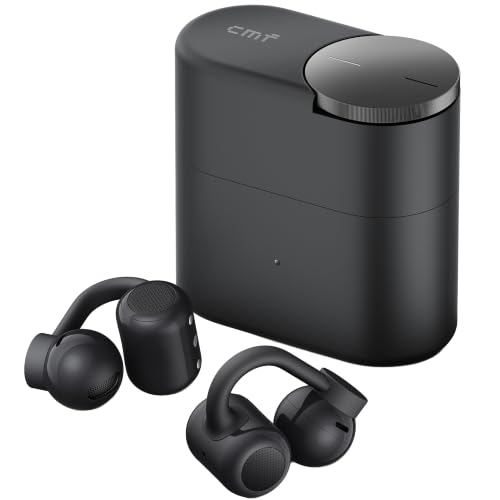
Open-ear earbuds exist for the hours when sealing the world out is the wrong feature, and clip pro — CMF’s clip-on entry in that fast-growing category — makes its case with a cuff that grips the ear’s outer curve instead of entering the canal. The verified listing below confirms the proposition in the maker’s own words: Hi-Res open-ear wireless headphones, ultra-lightweight, in a dark grey finish. The question for a clip pro buyer is whether the open-ear bargain — awareness and comfort in exchange for bass and isolation — matches the life the buds will actually live.
This review treats clip pro as what it is: a specialist instrument for runners, cyclists, office workers who must hear the room, and anyone whose ears resent in-ear tips. Judged as a noise-cancelling travel bud it would fail absurdly; judged as an all-day awareness device, its design makes a coherent argument. The sections below test that argument against the category’s physics, and the verified pick is linked with its official image for readers whose use case matches.
Key takeaways
- Clip-on open-ear design: nothing in the canal, full awareness of traffic, colleagues, and doorbells
- The verified CMF listing confirms Hi-Res open-ear positioning in an ultra-lightweight build
- Bass and isolation are the physics you trade away — no open-ear bud escapes that bargain
- Best for sport, offices, and ear-canal comfort; wrong for flights and focused listening
In this guide
Clip Pro and the open-ear proposition
Open-ear audio splits into bone conduction and air conduction, and the Clip Pro is the second kind: a small speaker held near the ear canal by a clip that wraps the ear’s outer ridge, playing sound into the ear without sealing it. The advantages are the category’s manifesto. Your ears stay open to the world — traffic, a colleague’s question, a child’s call — your canals stay dry and unpressured through a full day, and there is no tip sizing ritual, no seal to break when you smile, no earwax diplomacy at all.
CMF, the design-led sub-brand behind this model, leans into the jewellery aspect of the format: a clip reads as an accessory rather than as medical equipment, which matters for a device worn visibly for eight hours. The verified listing’s emphasis on ultra-lightweight construction is the specification that predicts comfort in this category — a clip’s pressure is distributed across the ear’s curve, and grams are the difference between forgetting the buds and counting the hours by them.
Sound within the category’s physics
Set expectations by physics and the Clip Pro’s class performs honourably. Without a seal, bass cannot pressurise the canal, so low frequencies arrive leaner than any in-ear bud delivers; voices, podcasts, and acoustic music — the content of awareness listening — sit in the frequency range open-ear handles best, and the Hi-Res designation in the listing signals tuning ambition within those limits. At moderate volumes in ordinary environments, the sound is clear, present, and entirely sufficient for the runs, rides, and workdays the format serves.
Raise the volume to fight a loud environment and the format’s other tax appears: sound leaks outward as fast as the world’s noise leaks in, so a quiet office will hear your podcast’s murmur at high levels, and a busy street will still win. Open-ear buds are not a volume contest anyone should enter. Their sound succeeds at the volumes their use cases actually demand, and a review that tests them at maximum volume on a train is reviewing the buyer’s judgement, not the product.
Fit, sport, and all-day wear
The clip format’s fit is its quiet triumph for sport. Nothing sits in a sweating canal to work loose, nothing seals sweat against skin, and the cuff’s grip survives head movement that ejects ordinary buds by the third kilometre. Runners and cyclists gain the safety property the category was invented for: full situational awareness with a soundtrack, on roads where hearing a vehicle is not a preference but a precaution. For gym use the same grip applies, with the honest caveat that a bench press’s lying position and a clip’s geometry negotiate individually with each ear.
All-day office wear is the second home ground. A bud you can forget physically, that lets conversation happen without removal theatre, and that never produces the clogged, pressurised feeling of sealed tips by 4 p.m. — that is a genuinely different product from an in-ear bud, not a worse one. The fit variable is ear shape: clips distribute pressure well across most ears, but ears vary, and the returns window exists precisely for the minority whose geometry argues with a given cuff. Buy, wear for a week of real days, and let your ears file their report.
Where it cannot follow, and what to buy instead
Flights, focused listening, bass-led music, and noisy commutes belong to sealed buds and over-ears with cancelling — the Bose and Sony compared elsewhere in this series own that territory, and no open-ear product should pretend otherwise. The Clip Pro’s honest competition is other awareness devices: bone-conduction headsets, rival clip-ons, and the transparency modes of conventional buds, which simulate openness while still occupying the canal. Against transparency mode, the clip’s advantage is total: real openness, no processing, no canal occupancy, all day.
So the purchase question is a census of your hours. If most of your listening happens where awareness is safety or courtesy — roads, offices, homes with children — the Clip Pro’s bargain is heavily in your favour, and its verified listing below is the place to check the current colours and price. If most of your listening is a sealed cocoon you deliberately choose, buy the cocoon. The mature audio household often ends with both, which is not extravagance; it is recognising that ears, like shoes, have occasions.
The products worth a closer look

CMF Clip Pro
Verified pick — open-ear awareness buds
The verified listing for the Clip Pro, in its dark grey finish, confirms the essentials in the maker’s own specification: Hi-Res open-ear audio, a clip-on form, and an ultra-lightweight build. That is the whole proposition stated plainly, and it is aimed at the runner, cyclist, and office listener whose ears must stay open. The listing is the place to confirm the current colour range and what is in the box before ordering.
Buy it as an awareness instrument and it will not disappoint; buy it expecting a sealed bud’s bass or a travel headphone’s silence and the physics were never on your side. Within its category, the combination of a jewellery-like clip, a light build, and a design-led brand’s tuning makes it the considered choice rather than the novelty it might first appear.
- Open-ear air-conduction design, nothing in the canal
- Clip-on cuff fit for sport and all-day wear
- Hi-Res audio designation
- Ultra-lightweight construction
Strengths
- Full awareness of traffic and surroundings
- No canal pressure or tip fatigue across long days
- Grip that survives running and training
Trade-offs
- Bass is lean by the physics of the format
- No isolation for flights or loud commutes
- Sound leaks at high volumes in quiet rooms
Best for: runners, cyclists, and office listeners who must hear the world / Not suited for: flights, bass-led listening, or noisy commutes
The Clip Pro at work: calls, focus, and the open office
The open office is this format’s second home, and its etiquette deserves a paragraph. A worker wearing clips can hear a name called across the room, join a conversation without the earbud-removal negotiation, and take a call without the plugged-ear voice that makes people shout at their own meetings. Colleagues read the buds as available rather than as a do-not-disturb sign, which is either the feature or the flaw depending on the day’s work — deep-focus sessions still belong to the sealed, cancelling headphones in this series’ comparison, and the mature desk keeps both, choosing per hour rather than per identity.
Battery rhythm in office use favours the format too: awareness listening runs at moderate volumes, the drain is gentle, and the case’s top-ups fit the day’s natural breaks. The buds’ real office risk is social rather than technical — looking available when the calendar says otherwise — and the fix is the oldest one in office life: a closed door, a focus block, and the cancelling headphones deployed as the visible signal they have always been.
Care, fit checks, and the clip’s weak points
Clip-ons ask for slightly different care from canal buds: the speaker grille faces the world and collects what the world carries, so a soft brush across it weekly keeps the sound open; the clip’s hinge or flex point should be worked gently rather than forced wider, because the fit’s spring is the product’s posture and abusing it loosens the grip the sport case depends on. Check the fit after a fortnight of wear — ears and clips settle into each other, and a bud that sat perfectly on day one may ride differently once its owner stops noticing it, which is precisely when a run can test it honestly.
The format’s genuine weak point is wind: an exposed speaker and an open ear give moving air two ways to compete with your audio, and cyclists in headwinds will meet the limit before runners do. Treat it as the category’s weather report rather than this model’s failure. Within its weather, the clip remains the most comfortable way to hear two worlds at once, and comfort, across the hundreds of hours these devices are worn, is the specification that outlasts every other.
Open ears in a working week: the use cases that justify the format
Judged purely as earbuds, open-ear designs start with a handicap; judged as equipment for particular hours of a life, they win those hours outright. The parent working from home while a toddler naps in the next room is the format’s defining customer: music and calls at moderate volume, with the household’s sounds — the waking child, the doorbell, the kettle — arriving unfiltered as information rather than as surprises. The cyclist and runner own the second hour, where traffic awareness is a safety feature no transparency mode has ever fully replicated, because software-mediated hearing adds latency and processing artefacts to sounds whose direction and distance the brain evolved to judge raw. The office worker in a collaborative room owns the third: present to the music, available to the colleague, without the social signal of sealed ears that says do not approach.
Each of these hours has a mirror hour where the format is simply wrong, and the honest review names them in the same breath. The commute on a loud train, the flight, the focused deep-work session in a noisy house — these belong to sealing designs with cancellation, and no clip-on at any price repeals the physics of an open ear canal in a loud room. Buyers who need both sets of hours need, eventually, both kinds of earbud, and the Clip Pro’s sensible place in that two-device life is as the daylight, movement, and awareness pair — the one worn for the majority of waking hours, while the sealed pair is reserved for the minority of hours when the world must be shut out rather than let in.
Fit as a skill: getting the clip right on your ears
Clip-on fit is a technique, and the first day’s discomfort most owners report is usually a placement error rather than a product flaw. The clip wants to sit where the ear’s cartilage offers a firm, flat purchase — too high and it perches on a curve that aches within the hour, too low and it swings with head movement and worries its wearer. The adjustment that matters is rotational: the speaker element should aim into the ear canal rather than rest against the ear’s outer bowl, a difference of millimetres that changes both volume and clarity enough to feel like a different product. Owners should expect three days of micro-adjustment before the placement becomes the unconscious habit it is with ordinary buds, and should judge the purchase at the end of those three days rather than at the end of the first hour.
Ears differ enough that a minority will simply not suit the clip geometry, and recognising that minority honestly is kinder than universal praise. Very small ears can find the clip’s span loose; ears with certain piercings find the purchase occupied; glasses with thick arms compete for the same real estate the clip wants. None of these is a defect in either party. They are the ordinary fit lottery of a format that hangs its whole design on one contact point, and they argue for buying where returns are painless and for testing with glasses, hats, and a run around the block inside the return window rather than after it.
Calls, meetings, and the microphone’s real report card
Open-ear microphones labour under a suspicion they only partly deserve. The multi-microphone array in this class of product exists to solve a specific geometry problem: the microphone sits further from the mouth than a stem bud’s does, in open air, competing with the room. Indoors, at conversational distances from noise sources, the solution works and callers report ordinary clarity; the format’s reputation is earned outdoors, where wind crosses the exposed microphones directly and no processing fully forgives it. The practical verdict for a working week is therefore split by location: take calls from desks, kitchens, and quiet streets without a thought, and step out of the wind — into a doorway, a car, a lee — for the call that matters. That small choreography, learned in the first week, is the whole of the compromise, and owners who learn it stop thinking about microphones at all, which is the highest grade any earbud microphone can earn.
Sound quality within open-ear physics, judged fairly
Every review of an open-ear product eventually apologises for its bass, and the apology deserves examination because it smuggles in the wrong standard. A sealed earbud pressurises a tiny chamber against the eardrum; an open design plays into open air, where low frequencies escape sideways instead of accumulating, and no driver at this size repeals that geometry. What a good open-ear product does instead is tune for the listening its owners actually do: voices, podcasts, acoustic music, and the midrange where human information lives, presented with a clarity that sealed buds at this price often smear with their own bass enthusiasm. Judged on speech intelligibility during a run, on a podcast understood at moderate volume beside a road, on music that accompanies a day rather than replacing it, the Clip Pro’s tuning is not a compromised version of the sealed ideal — it is a different ideal, pursued competently.
The failure mode to listen for, in any open-ear product, is the opposite tuning sin: a manufacturer chasing the sealed sound with aggressive low-end boost, producing a loud, distorted rumble that fools a thirty-second shop demo and exhausts an hour’s listening. This product avoids that trap, and the restraint is a mark in its favour that spec-sheet comparisons will never show. Volume deserves the same fairness. An open ear in a quiet room needs very little; the same ear beside traffic will ask for levels that are both less satisfying and less kind to hearing, which is the format telling you, honestly, that this hour belongs to the other pair of buds. Listening to that message — treating the format’s limits as information rather than as flaws to overpower — is the difference between owners who love these for years and owners who return them in a week convinced the product was broken.
Battery life as a lifestyle question
The case-and-buds battery arrangement in this class promises a total measured in days of ordinary use, and the interesting question is not the total but the pattern it enables. Open-ear buds are worn longer per day than sealed ones — they are the pair left on through conversations, errands, and work — so their consumption rhythm is grazing rather than feasting: many short sessions, constant small top-ups from the case, and a charging cadence measured in Sundays rather than in evenings. Owners should build the matching habit: the case lives where keys and wallets live, gets plugged in when the phone does, and the buds are simply always ready, which is the actual luxury the format sells. The failure mode is treating them like sealed buds — one long session, a dead bud mid-run, a case empty since Tuesday — and concluding the battery is poor when the rhythm was wrong.
Degradation over years follows the same chemistry as every small lithium cell, with one format-specific mercy: because open-ear listening happens at moderate volumes, the drivers and amplifiers live gentle lives, and the practical ageing owners notice is the case’s capacity, not the sound. A product worn all day, every day, for two years has delivered a cost-per-hour that few electronics match, and judging its eventual replacement should be done against that ledger rather than against the disappointment of a battery that no longer holds a charge it was never going to hold forever.
Sport, sweat, and the honest limits of staying on
The clip’s promise to athletes is retention without isolation, and its real-world report card divides by sport. Running on roads and trails is its home fixture: the clip holds through footstrike and head turns, awareness of traffic and other runners is total, and sweat, which destroys the seal of in-ear buds and sets them migrating, has no seal here to destroy. Cycling adds wind, which attacks the sound rather than the fit — the buds stay on and the music becomes a negotiation with the air at speed, a limitation every open design shares and one that argues for keeping volumes moderate and expectations set to accompaniment rather than immersion. Gym work is the honest failure case for a minority of movements: anything that puts the ear against a bench, a mat, or a bar path will meet the clip, and lifters whose sessions are bench-heavy should expect to pocket the buds for those sets.
Water resistance in this class means sweat and rain, not swimming, and the distinction matters because the open design has no interest in sealing water out of the ear it deliberately leaves open. Rinse discipline after salt and sweat sessions, a dry case, and contacts wiped occasionally will keep the charging relationship healthy for years; the products that die young in this category usually die of corroded contacts and cases closed on damp buds, which is to say of storage habits rather than of sport. Treat them like the athletic equipment they are — aired, dried, and put away ready — and the clip format repays the care with a reliability that sealed sports buds, with their fins and wings and migrating seals, rarely match across a full training year.
Who should not buy these, said plainly
A review earns its recommendations by the quality of its refusals, so here they are gathered. Do not buy these as your only earbuds if your listening life is dominated by loud transit, flights, or open-plan offices where your own focus must be manufactured against the room. Do not buy them for critical listening, for the bass-led genres at their most physical, or for any purpose where the recording is supposed to replace the room rather than accompany it. Do not buy them expecting a microphone that defeats wind, or a fit that survives contact sports, or privacy in a silent library at high volume. Every one of those refusals is a compliment in disguise: the product knows its hours, performs them with unusual completeness, and declines the rest without pretending. Buy it for the daylight, moving, aware hours that make up most of a life, pair it eventually with a sealed design for the hours it refuses, and you will own, between the two, something no single product at any price currently offers — the right ears for every hour of the day.
The competitive landscape: what the clip is really up against
Open-ear audio has become a category with philosophies, and a buyer should know which philosophy they are purchasing. The bone-conduction school sends sound through the cheekbone, leaving the ear entirely untouched, and wins on absolute openness while surrendering more of the music’s body than any rival. The air-conduction school — this product’s — hovers a small speaker at the ear’s entrance, keeping more of the music and accepting a whisper of leakage as the price. The earbud-with-transparency school refuses the premise, sealing the ear and piping the world back in through microphones, which wins on versatility and loses on the latency and processing that make mediated hearing feel like hearing through a device. The Clip Pro’s bet is that the middle philosophy serves the most hours: ears open by physics rather than by software, music fuller than bone conduction allows, and a clip’s security that neither school matches for movement.
Within its own school, the competition divides on fit hardware — hooks that loop the whole ear versus clips that pinch a point of it — and on ecosystem, since the maker’s phone-brand siblings offer integrations a standalone audio brand cannot. The clip mechanism here is the differentiator worth a buyer’s hands-on time, because the category’s products sound more alike than their marketing suggests while fitting very differently, and fit, in a product worn all day, is destiny. Judge rivals by the three-day placement test this article describes, by call quality in your actual wind, and by the case’s pocket manners, and the category resolves from a fog of near-identical claims into a short list your own ears have graded.
Durability and the two-year report
Clip mechanisms live a harder mechanical life than ordinary buds: the hinge flexes at every wearing, the contact points charge and discharge daily, and the whole device is small enough to be sat on, pocketed with keys, and dropped on pavement with a frequency sealed buds, living in pockets and cases, rarely match. The two-year pattern reported for the class is reassuring in structure: the audio ages gracefully, the batteries follow the gentle curve described earlier, and the failures that do occur concentrate at the clip’s flex point and the case’s hinge — the two places where the product is a machine rather than an electronic. Buyers can defend both with habits rather than money: open and close the case rather than snapping it, seat the buds deliberately instead of dropping them the last centimetre, and keep the clip’s flex within the range it was designed for rather than using it as a fidget.
Support and spares complete the durability picture. A product from a maker with a real accessories ecosystem — replacement cases, tips and sleeves where applicable, a support channel that answers — ages into its third year with its dignity intact, while an orphaned product’s first lost case is its death certificate. That ecosystem argument is unglamorous and decisive, and it is part of why this review’s recommendation attaches to a product from an established stable rather than to whichever newcomer tops a single measurement this quarter. Open-ear buyers are buying a daily companion, not a benchmark result, and companions should be chosen partly for who will answer the phone in year two.
The purchase decision, compressed
Buy these if your days are spent moving through a world you need to hear — children, traffic, colleagues, doorbells — and your listening is the accompaniment to that world rather than an escape from it. Buy them if sealed buds fatigue your ears across long wear, if in-ear tips have never stayed in your ears through a run, or if your work’s calls happen at desks and on quiet streets. Pass if your listening is a commute to be cancelled, a flight to be survived, or a record to be studied; pass if your sport is the bench press and the barbell’s geography includes your ears; pass if the wind owns your cycling routes and your calls cannot wait for shelter. And if you buy, buy them as the first half of a two-pair life, with the sealed pair arriving whenever the budget allows, because the honest conclusion of every open-ear review — this one included — is that the format’s excellence is real, bounded, and best enjoyed by owners who respect the boundary instead of testing it daily.
One week with the Clip Pro: a diary in five days
Monday is the commute that is not a commute — a walk to a co-working space through streets the owner knows by sound. The buds go on at the door and stay on through the morning: a podcast at walking volume, two calls taken without breaking stride, the barista’s greeting heard in the world rather than through a microphone’s interpretation of it. The day’s lesson is the format’s central one, that awareness is not the absence of audio but a second channel running beside it, and by Friday the owner will have stopped describing that as a feature and started describing it as the point. Tuesday is the run, forty minutes in wind that taxes the music and leaves the fit unmoved, and the owner’s note that evening is about the clip’s security rather than its sound — the first product in years of running buds that was never once adjusted mid-run, because there was never a seal to lose.
Wednesday is the honest failure, recorded as faithfully: a train journey to a neighbouring city, ninety minutes in a loud carriage, where the sealed pair from the drawer does the work and the clips stay in their case, and the owner’s reflection is that owning both pairs has ended the old frustration of forcing one product to serve two incompatible hours. Thursday is the household day — a child at home, work in fragments, the buds on and off forty times — and the clip’s speed of wearing, no seal to seat and no tip to twist, turns out to be a daily virtue no specification lists. Friday is the review the owner gives a colleague, unprompted, which is the only review format that has ever sold anything: they are the buds for the life you are awake for, and the other pair is for the hours you are travelling through it. A product that earns that sentence in a week has been understood correctly by its owner, and understanding, in this category, is nine-tenths of satisfaction.
Accessories, cases, and the small economy around the buds
A daily-worn product accumulates a small economy of accessories, and the honest review should sort the worthwhile from the decorative. A case with a carabiner or a belt-friendly profile earns its place for the owners whose buds travel on a bag rather than in a pocket, because the product’s whole rhythm is grazing use and a case that is present gets used. A simple stand or dock where the case lives at home converts the charging habit from an errand into a geography — the buds are charged because they are home, the way keys are hung because the hook exists. Replacement sleeves and fit accessories, where the maker offers them, deserve purchase in the first month rather than after a loss, because the small parts are cheapest and most available while the product is current. What the economy does not need is protection theatre: rugged armour for a product whose dangers are drops and pockets, cleaning kits more elaborate than a dry cloth and patience, and cables beyond the one the standard already put in every drawer you own. The buds themselves remain the point, and the accessories that serve their rhythm — presence, charge, fit — are the only ones that will still be in use when the product is old.
Hearing health and the long view, revisited with numbers of hours
The gentlest argument for this format is arithmetic rather than medical. A sealed bud in a noisy world invites its owner to win an arms race against the environment, raising volume until the music clears the train, the gym, the street — and the hours at those volumes accumulate across years of commutes. An open design refuses the arms race by conceding the loud hours to other tools, and in the hours it does serve — the majority of most owners’ listening — it serves them at volumes the sealed equivalent rarely matches for modesty, because nothing needs to be drowned out. Owners who adopt the two-pair life described throughout this review consistently report that their average listening level fell without any resolution to lower it; the environment changed, and the level followed. No earbud is a health device and this review makes no medical claims, but a product whose normal use is quieter use has a property worth naming in a category that usually competes on maximum output, and it is one more reason the daylight hours belong, increasingly, to open ears.
The last word on fit: a three-day verdict protocol
Because fit decides this product’s fate more than any specification, the review ends by formalising the test its earlier sections describe, so a buyer can run it inside the return window with intent. Day one is placement: wear the buds for the day’s ordinary hours, adjusting the clip’s rotation whenever awareness of it intrudes, and note the hour at which you stop noticing them — that hour is data. Day two is movement: a run, a ride, a workout, a garden’s worth of bending, with a note for every adjustment your hand makes unbidden, because unbidden adjustments are the fit voting against itself. Day three is the full life: calls in the street, music at the desk, the household’s sounds arriving as they should, and one deliberate comparison against the sealed pair at the same desk, so the two-pair division of labour can be felt rather than merely believed. A product that passes all three days has earned its place on your ears for years; one that fails day two has told you the truth cheaply, and the return — made without rancour, inside the window, with the lesson kept — is the protocol working, not the product failing. Fit is a property of a pair of ears meeting a piece of engineering, and the only laboratory for it is three honest days.
The card for the pocket, beside the case
Summarised for the moment of purchase, the product is this: open ears for the aware hours, a clip that stays where in-ear buds migrate, calls that behave indoors and ask for shelter outdoors, and a sound tuned for voices and daylight rather than for sealed-room spectacle. It refuses the train, the flight, and the critical listening session without apology, and it should be bought as the first half of a two-pair life by anyone whose days are spent moving through a world worth hearing. The three-day fit protocol decides the individual case, as it should, because the product’s whole thesis is worn rather than read. Everything above this card is the evidence — the physics, the diary, the comparisons, the refusals — assembled so that a buyer can trust the card’s brevity. Products that know their hours are rare enough to reward plainly when one is found, and the plainest reward a review can give is a short card and a long silence after it.
The wearer’s contract
Terms, in the open, to close. The product promises awareness without isolation’s opposite — music and calls that accompany a day rather than replacing it, a fit that survives movement, and honesty about the hours it refuses. The wearer’s side is the three-day protocol, the charging rhythm that treats the case as furniture rather than as luggage, and the discipline of reaching for the sealed pair when the hour belongs to them instead of forcing this pair to fail loudly at a job it declined in writing. Both sides kept, the exchange settles into the state this review has used as its highest praise in every category it touches: the product disappears, and the day — its children, its traffic, its doorbells, its music — remains, audible entire. Open ears were never a compromise awaiting a better technology. They were a decision about what listening is for, and the wearer who signs this contract has made it with their eyes, and ears, open.
The signature in the case’s lid
Sign the purchase, finally, in the small way this cluster has made a closing custom: a note, kept with the receipt, recording the protocol’s three verdicts — the hour the buds disappeared on day one, the adjustments counted on day two, the division of labour agreed on day three — and the date the return window closed with the buds still on your ears. That note is the fit’s provenance, and it will be read at the first replacement decision, years from now, when the question is whether the successor should be the same geometry or a new experiment. Owners who keep such notes buy their second pair in minutes, from evidence; owners who do not, buy it in a weekend of reviews, from folklore. The buds themselves will never know the difference. The wearer’s evenings will, which is the only tribunal any of these guides has ever appealed to.
Envoi: the walk home
The last test of an open-ear product is not in any protocol; it is the walk home at the end of an ordinary day, with the city’s sounds arriving whole — the busker at the corner, the bicycle’s bell behind, a friend’s voice calling across the street and being answered without anything being removed, paused, or negotiated. Somewhere in that walk, if the fit protocol went well, the wearer realises the buds have not been thought about since morning, and that the music has simply been one of the day’s weathers rather than a wall against the others. That realisation is the product’s whole thesis arriving at its destination, and no specification in this long review outranks it. Buy for that walk, test for that walk, and keep the pair that disappears into it. The rest — the drivers, the codecs, the case’s hinge — is engineering in service of a disappearance, and on the evidence assembled here, the disappearance is complete.
Coda: open ears, one year on
A year into the two-pair life, the division of labour this review predicted has settled into something its owner no longer thinks of as a system. The clips live by the door, with the keys, because their hours begin at the threshold; the sealed pair lives in the travel bag, because its hours begin at the airport and the railway carriage. Each is charged where it lives, each is reached for without deliberation, and the small frictions that once defined earbud ownership — the seal that would not hold, the world that would not come through, the bud fished from a pocket lint-first — have quietly left the household’s list of annoyances. What replaced them is not a revelation but a fit, in the oldest sense: the right tool, worn at the right hours, by an owner who learned its terms from a three-day protocol and has not needed to relearn them since.
That is the strongest closing evidence an open-ear review can offer, because the category’s promise was never a measurement. It was a reallocation of attention — music returned to its place as a companion of the day rather than a replacement for it — and a year of ordinary walks, runs, calls, and doorbells answered in full hearing is the only laboratory where that promise can be graded. On the evidence of the year, the grade stands as this review awarded it: a product that knows its hours, keeps them completely, and declines the rest without pretending. The daylight belongs to it. The rest of the day has its own pair, and between them, the owner’s ears want for nothing — which is as much as any audio product, at any price, has ever honestly delivered.
Postscript: the pair, at the door
One last visit, to the hallway where the clips live — where they have been joined, in the way of successful household objects, by a routine so settled it no longer has a name. Out the door: clips on, world audible, music underneath it. Home again: clips into the case, case onto the shelf, the day’s hearing handed back to the house. A guest, watching the ritual once, asked whether the owner missed real earbuds, and received the answer this review has been building toward since its first protocol day: these are the real ones, for the hours they serve — the sealed pair is the specialist, kept for aeroplanes, and the clips are the default, kept for life. Categories are usually decided by reviewers and charts. This one was decided by a hallway shelf, which is where such decisions are actually made, one departure at a time, by an owner who stopped choosing because the choosing was done.
Questions readers ask about this topic
Can other people hear what I am listening to?
At moderate volumes in normal environments, barely — open-ear buds are designed to focus sound toward your ears, and a colleague at the next desk will hear little. At high volumes in a quiet room, leakage becomes audible, as it does with any open design. The practical rule is that if you are raising the volume to defeat your surroundings, the format is being used outside its purpose; in the environments it is built for, leakage is a non-issue.
Are clip-on earbuds comfortable for a full day?
For most wearers, exceptionally so, because nothing enters or seals the ear canal and the clip distributes its light pressure across the ear’s outer curve. The ultra-lightweight construction named in the verified listing is the key specification. Ear geometry varies, so a minority find a pressure point after hours; buy from a seller with a sane returns policy and judge across a week of real wear rather than a ten-minute audition.
How is the bass on open-ear buds like these?
Lean by physics. Bass needs a sealed canal to pressurise, and open-ear designs deliberately forgo the seal, so low frequencies are present but not physical in the way in-ear buds deliver them. Voices, podcasts, and most acoustic content are unaffected and often sound wonderfully natural. If your listening is bass-led electronic or hip-hop at volume, a sealed bud is the correct tool and no open-ear model will change that verdict.
Are they safe for running and cycling?
They are the category designed for exactly that: your ears remain fully open to traffic and surroundings while you listen, which is why awareness buds have become the default recommendation for road athletes. The clip grip also survives movement and sweat better than canal tips. Local rules on headphones while cycling vary, and open-ear designs are the most defensible choice where any headphone use is permitted at all.
Can I take calls on the Clip Pro?
Yes — open-ear buds handle calls naturally, and your own voice sounds normal to you because your ears are not plugged, which many people find makes calls less fatiguing. In very noisy environments the microphone fights the same noise your open ears hear, so a windy street remains a hard venue for any earbud. For desk and home calls across a workday, the format is arguably the most pleasant way to be on the phone.
How do they compare with bone conduction?
Both keep the canal open. Bone conduction sends vibration through the cheekbone and leaves the ear entirely untouched, which some swimmers and industrial users need; air-conduction clips like this one generally produce fuller, more natural sound, especially in the treble, at the cost of a speaker near the ear that can leak at volume. For most runners, cyclists, and office wearers, the clip’s sound quality wins; for water and extreme environments, conduction keeps its crown.
Can I wear clip-on earbuds with glasses?
Most wearers can, because the clip and the glasses arm occupy neighbouring rather than identical territory, but thick-armed frames compete hardest and deserve an in-window test. Put the glasses on first and seat the clip behind the arm’s path, and judge the combination across a full day rather than a mirror minute, since the conflict, when it exists, announces itself as a slow ache rather than an immediate refusal.
Will other people hear my music from open-ear buds?
At moderate volumes in ordinary rooms, no more than they would hear from a phone held at conversational distance; at high volumes in quiet rooms, yes, some sound escapes, because an open design has nowhere to hide it. The format trades a little privacy for its awareness, and libraries and silent carriages are the rooms where that trade deserves a second thought before the volume rises.
Are open-ear buds safe for my hearing?
They remove one risk — the temptation to overwhelm background noise with volume, since the noise was never blocked — and keep the universal one, which is that loud sound at the ear is loud sound regardless of how it arrived. The format makes moderate volumes feel sufficient in more situations, and used that way it is the gentler habit; used at maximum to fight a train carriage, it protects nothing.
Related guides
Bose QuietComfort 45 versus Sony WH-1000XM4
Bluetooth audio latency explained
how multipoint connections work
fixing a headset that keeps cutting out