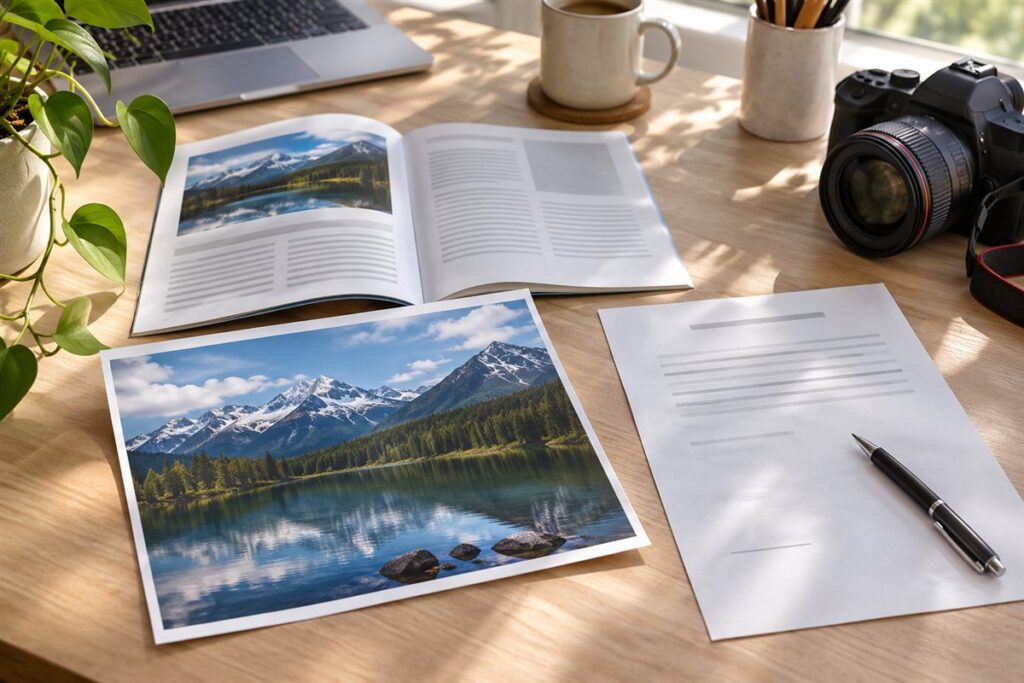
Fair use is a legal idea in some countries that allows limited use of copyrighted material without permission in certain situations, and it is decided case by case. Other countries use different concepts, such as fair dealing or specific exceptions. This article describes general ideas only. It is not legal advice, and no one can promise that a use is fair, so consult a qualified professional before relying on it.
Why There Is No Simple Rule
Fair use is not a checklist with a guaranteed outcome. Courts and advisers usually look at several considerations together, and a result can differ even for similar-looking cases. Common ideas include the purpose of the use, the nature of the original work, how much of it is used and the effect on the market for the original.
- Purpose: commentary, criticism, education or news versus plain decoration or promotion
- Nature of the work: creative photographs often receive strong protection
- Amount: using a whole image can weigh differently from using a small part
- Market effect: whether the use could substitute for a licence
In this guide
Common Misunderstandings
- Giving credit does not automatically make a use acceptable.
- Adding a disclaimer such as “no infringement intended” does not change the legal position.
- Being non-commercial or free does not guarantee fairness.
- Finding an image online does not mean it is free to use.
- Small size or low resolution is only one factor among many.
Practical Questions Before You Use Someone’s Photo
- Can I ask the photographer for permission or a licence?
- Is there a licensed or openly shared alternative with clear terms?
- Why exactly do I need this image, and would a different one do?
- Will the use be commercial, public or likely to compete with the original?
- Does my country recognise fair use, or a different exception?
- Should I ask a qualified professional before publishing?
If You Are the Photographer
If you notice someone using your work and suspect it is not fair, collect records and talk to a qualified professional before sending any demand. Responding with a calm, factual message is often a good first step. Remember that your own jurisdiction’s rules apply, and an informed adviser can tell you how.
Alternatives Worth Considering
Where possible, use images with clear licences, commission your own photographs or ask the photographer. Many photographers are happy to grant permission when approached politely, and openly licensed collections can offer ready options with stated conditions.
Situations Where Fair Use Gets Argued
Fair use is rarely discussed in the abstract. It comes up when someone wants to use a photograph in a specific way, and the details of that use shape how a court or adviser would think about it. This article offers general ideas only and is not legal advice, so use it to ask better questions, not to reach a verdict.
One common situation is commentary or criticism. A writer may reproduce a photograph in order to discuss it, for example to analyze its composition or to respond to how it was used. In that case the image is the subject of the discussion, and the use may have a stronger claim than when the same image is just decoration. Another is news reporting, where an image may be central to a story about the image itself or about events it shows. Whether any exception applies depends heavily on local law and on the facts.
Education is another. Teachers and students often use photographs in lessons, but a classroom setting does not automatically make a use acceptable. The extent of copying, how widely the material is shared and whether the original is sold for the same purpose all matter. Parody and transformation raise their own questions, because a use that changes the purpose or message of the original may be treated differently from one that simply copies it.
Then there are everyday cases: thumbnails in a search tool, screenshots in a review, or a picture in a social post. Each has different considerations, and none has an automatic answer.
- Ask what the image is doing in your work: being discussed, or simply decorating.
- Consider how much you use and whether a smaller or lower-detail version would do.
- Remember that every case is separate, so a past similar use does not guarantee anything.
Fair Use, Fair Dealing and Other Exceptions
People often say “fair use” as if it were a worldwide rule, but countries handle limited exceptions to copyright in different ways. Understanding the difference helps you avoid assuming that a rule you read about applies where you live.
Some legal systems have an open-ended idea of fair use, in which a court weighs several factors in light of all the circumstances. Others use a model often called fair dealing, which lists specific purposes, such as criticism, review, news reporting, research or parody, and applies a fairness test within those purposes. If your use does not fit a listed purpose, the exception may not be available at all. Still other places rely on a list of narrow exceptions written into their copyright statutes, with detailed conditions about what is allowed and for whom.
These differences matter for anyone who publishes online. A site hosted in one country, run by someone in another and read by people in many more can raise questions about which law applies. Platform rules add another layer, since a service may remove content under its own policy even where a legal exception could apply.
The safest approach is to learn what your own jurisdiction says, using the official copyright agency or a qualified professional as a source. Be cautious with articles written for a different country, including this one. Where the stakes are real, such as a commercial publication, an advertising campaign or a book, get advice before you publish, not after a complaint arrives.
- Look up your national copyright office for official guidance.
- Do not assume an exception exists because you saw one mentioned online.
- Treat professional advice as part of the cost of publishing significant work.
Understanding Licences and Openly Shared Images
Often the simplest way to avoid a fair use debate is to use an image whose licence clearly allows what you want to do. Licences vary a great deal, so reading the terms matters.
Many image collections state conditions. Some require attribution, meaning that you must credit the photographer in a specified way. Some forbid commercial use, which may include blogs with advertising or product pages, depending on the wording. Some forbid changes, so you cannot crop, filter or combine the image with others. Some require that anything you make with the image be shared under the same terms. A few release works with very few restrictions, but even then, check the exact wording, because definitions can differ and the person who uploaded an image may not have had the right to license it.
Stock libraries and licensing services sell rights with defined scopes, such as size, duration, region and type of use. A licence for web use may not cover print, and a licence for one project may not cover another. Read the terms before you pay, and keep a copy of the licence and the receipt with the image file.
If you are unsure what a licence means, ask the provider or a qualified professional. Do not guess, and do not assume that a tag such as “free” means free for every purpose.
- Note the licence name or text and the source address when you download.
- Follow credit instructions exactly if attribution is required.
- Check for people and property in the image, since a licence from the photographer may not cover them.
Other Rights That Can Apply to a Photograph
Copyright in the photograph is only one issue. A picture can also involve other rights and rules, and clearing the copyright does not automatically clear them.
People shown in photographs may have privacy or publicity rights, which can limit commercial use of their likeness. These rules differ by place and by context, so a picture of a recognizable person used in advertising raises different questions from a news photo. A photograph of someone’s property, artwork, building or trademark may involve additional rights, depending on where it was taken and how it is used. A picture of another artist’s work, such as a mural or sculpture, may include that artist’s copyright in addition to the photographer’s.
The way an image is shared can bring other considerations. Embedding an image from another site, sharing through a social platform or reposting a screenshot each have their own rules and platform terms. Some platforms give users tools to share content within the platform, and their terms describe what that allows. Those terms do not necessarily give you rights outside the platform.
Context matters too. A photo used in a way that suggests endorsement, or that places the subject in a misleading light, can lead to complaints beyond copyright. Sensitive subjects, such as children, medical situations or private events, deserve extra care.
- Ask who and what appears in the image, not only who took it.
- Check platform terms before relying on built-in sharing tools.
- Seek advice for commercial uses with identifiable people or branded items.
Asking Permission and Handling Disputes Calmly
Asking for permission is often quicker than expected, and many photographers respond kindly to a clear, polite request. A good message says who you are, what you want to use, where and for how long, whether the use is commercial, and how you would credit the photographer. Attach or link the image you mean so there is no confusion. Ask about terms and any fee, and keep the reply and the agreement in writing.
If you are the one using an image and someone objects, respond promptly and politely. Do not ignore a message or argue in public. Check whether you can remove the image quickly, and consider doing so while you sort out the details. Keep records of where the image came from, any licence and your messages. If a formal notice arrives, read it carefully, note any deadlines and consider consulting a qualified professional before you respond.
If you are the photographer, document the use before you contact anyone. Save screenshots with dates and addresses, and keep your original files with their metadata as evidence of authorship. Start with a calm, factual message that identifies the image and explains what you want, such as credit, a licence fee or removal. Avoid threats and exaggerated claims. If the matter does not resolve, a qualified professional can explain the options in your jurisdiction.
- Keep everything in writing, including permission and terms.
- Do not rely on verbal agreements for important uses.
- Stay courteous: many disputes end with a credit, a small fee or a removal.
A Short Checklist Before You Use Someone Else’s Image
Fair use is a legal defense, not a permission slip, and the answer depends on the facts of each case. Still, a few simple questions can show whether you are on safe ground or heading for trouble. Work through them before you publish anything.
- Do you already have a license or written permission?
- Could a free or licensed alternative do the same job?
- Is your use commentary, criticism or teaching about the photo itself?
- Are you using the whole image when a smaller piece would make your point?
- Could your use replace the photographer’s chance to license the work?
If most answers point toward a risk, look for a different image. The effort of finding a properly licensed photo is usually small compared with the cost of a dispute.
Common Scenarios Compared
People often ask how the idea plays out in everyday situations. The table below describes general tendencies in the United States and is not legal advice. Courts weigh every case on its own facts, and other countries use different rules.
| Scenario | General view | Why it matters |
|---|---|---|
| Quoting a photo in a critical article about that photo | More likely to be defended | The use comments on the work itself |
| Using a photo as decoration on a business page | Hard to defend | It serves a commercial purpose and replaces a license |
| Posting a news photo to illustrate an unrelated post | Risky | The use does not require that specific image |
| Showing a thumbnail in a search tool | Often argued as allowed | The use is different from the original purpose |
Notice that credit alone rarely changes the outcome. Adding a name or a link is polite, but a credit line does not turn an unlicensed use into a permitted one.
Why Credit and Disclaimers Do Not Settle the Matter
A very common belief is that writing “no copyright infringement intended” or naming the photographer makes a use acceptable. It does not. Copyright law looks at what you did with the image, not at what you wrote underneath it. A disclaimer is not part of the legal tests, and courts do not treat it as a shield.
The same goes for a statement that you are not making money. A non-commercial purpose can help one part of the analysis, but it does not decide the question by itself. Likewise, an image found through a search engine or on a social platform is still protected by copyright unless the owner has said otherwise. Being easy to copy is not the same as being free to reuse.
When to Ask a Professional
Some situations are too serious to handle by guesswork. If you plan to use a photo in advertising, on products, in a book or in anything you will sell, consider talking to a qualified lawyer who works with copyright. The same applies if you have received a takedown notice or a demand letter. Responding without advice can make things harder.
For simple cases, official sources are a good first stop. Government copyright offices publish plain-language guidance, and many photo libraries explain their license terms clearly. Reading the license itself is a habit worth building, because terms differ between sources and between uses.
Plain Meanings of Terms You May Meet
Public domain describes works that are no longer protected or that were never protected. License is the permission to use a work under stated terms. Transformative is a word courts use for a use that adds new meaning or purpose instead of copying the original function. Derivative work refers to a new work built on an existing one. Takedown means a formal request to remove content. Learning these terms makes it easier to read license pages and to talk with a professional if you need to.
Habits for Staying on Safer Ground
You can avoid most trouble with a few routines that cost very little. Keep a record of where each image came from, including the license terms and the date you accepted them. If a source later changes its terms or someone challenges a use, that record shows what you relied on. A simple spreadsheet or note file is enough.
Prefer images from sources that state their terms clearly. Public domain collections, open license libraries and stock services each explain what you may do, and the rules often include conditions such as attribution or limits on commercial use. Read those conditions, because they differ from one source to another and sometimes from one image to another.
- Ask the photographer directly when the contact is easy to find. Many will agree, sometimes for a credit and sometimes for a fee.
- Commission or take your own photo when the image is central to your project.
- Use a clearly licensed image when the picture is only decoration.
- Save written confirmation of any permission you receive.
If your use involves people who are recognizable, remember that other rights can apply beyond copyright, such as privacy or the right to control commercial use of a likeness. Rules vary by place, so check official guidance for your location or speak with a legal professional when the stakes are high.
Walking Through the Four Fair Use Factors With a Photograph
When courts in the United States consider fair use, they weigh four factors together rather than applying any single test, and it helps to see how each one touches a photograph. The first factor looks at the purpose and character of the use: whether it is commercial or non-profit, and whether it transforms the image into something with a new meaning or merely copies it. The second looks at the nature of the work, and photographs sit awkwardly here, because a picture can be both a factual record and a creative expression. The third asks how much was taken, and using a whole photograph, as people usually do, weighs differently from quoting a small part of a text. The fourth asks about the effect on the market for the image, including the licensing market the photographer could reasonably serve.
No factor decides alone, and outcomes are famously hard to predict, which is precisely why this guide keeps returning to permission as the safer path. The factors are still worth understanding, because they explain why two seemingly similar uses can be treated differently: a small image inside a critical review that discusses the photograph itself is a very different case from the same image decorating a commercial page that could have licensed it. Purpose, amount and market effect move the balance, and they move it in ways a non-lawyer can reason about even though only a court can settle a real dispute.
A classroom example and a shop example
Imagine a teacher showing a famous photograph in a lesson about composition, discussing its light and framing with students. Now imagine a shop using the same photograph on its website because it looks attractive. The image is identical; the use is not. The lesson comments on the work, happens in a non-profit teaching setting and does not replace a sale. The shop use is decorative and commercial, and a licence market for exactly that use exists. Walking through contrasts like this trains the instinct better than memorising rules, and it shows why blanket claims that educational or non-commercial use is always safe are wrong: they take one factor and pretend it is the whole test.
Photographs Are Different From Text, and It Matters
Much fair use discussion grew up around writing, where quoting a paragraph leaves the rest of a book unquoted. A photograph resists that logic. Most uses take the entire image, because a corner of a photograph is rarely the part anyone wants. Courts have noticed this, and it is one reason image cases can be harder for the person reusing the work. Cropping tightly, using a thumbnail, or showing the image at low resolution may matter in some arguments, particularly where the use is a search tool or a commentary that needs only a small version, but none of these is a general permission slip for ordinary publishing.
The creative nature of photography matters too. A snapshot of a public event and a carefully staged studio portrait both receive protection, but arguments about how creative a work is can influence the second factor. For the everyday user, the practical lesson is simpler: assume a photograph you find is protected, assume taking all of it counts as taking a lot, and let those two assumptions push you toward licensing, commissioning or choosing openly licensed material, all of which are cheaper than a dispute.
News, Commentary and Criticism: Where Arguments Are Strongest
The fair use arguments people rely on most often involve reporting and commentary about the photograph itself or about the event it records. A news report about a picture that has itself become the story, or a review analysing a photographer’s exhibition, uses images in a way that is difficult or impossible without showing them. Even here, context decides: the image should be tied to the commentary, sized and placed for that purpose, and not used as free decoration for an unrelated article. The further a use drifts from discussing the image or its subject matter, the weaker the argument becomes.
Blogs and social accounts blur these lines constantly. A post that uses a photograph to illustrate a general topic, such as a travel article decorated with a stranger’s striking image, is making an illustrative use, not a commentary use, and illustrative uses are the ones licensing exists for. Asking one question sorts most real cases: could this page work with a licensed or openly shared image instead? If yes, the fair use argument was probably a convenience rather than a necessity, and convenience is a weak foundation.
What Photographers Can Do Before Any Dispute Exists
Photographers who expect their work to travel can make later questions easier to answer. Keep original files and raw files, preserve metadata rather than stripping it, publish through channels that record dates, and register work where your country’s system rewards registration. None of this prevents copying, but it strengthens your position if copying happens and makes honest users more likely to find and credit you. Clear contact information on your own site also matters: many infringements begin as failed attempts to ask permission, and a visible licensing page converts some of them into customers.
If you find your photograph used without permission, the calm sequence still applies: preserve evidence with dates, check whether any licence or exception might genuinely apply, contact the user with a specific request, and escalate gradually. Some uses turn out to be honest mistakes by people who believed a circulating claim about free images; a polite first message resolves those faster and more cheaply than threats, and it protects your reputation in the small world of your field.
More Questions Worth Asking
Does changing a photo, such as cropping or filtering it, make reuse fair?
Altering an image does not by itself create a fair use. Courts look at purpose and market effect as well as at how the work was changed, and a filtered or cropped version can still substitute for the original in the market. Transformation in the legal discussion means a new purpose or meaning, not merely a new look, which is why simple edits rarely rescue a decorative use.
Can I use a photo if it has no watermark or copyright notice?
Yes, you still need permission in the general case. Modern copyright protection does not depend on a notice or watermark in most countries, so their absence tells you nothing about the image’s status. Treat every unattributed image as protected, and try to trace its source through reverse image search or the site where you found it before deciding anything.
What about photos taken in public places?
Where a photograph was taken affects other rights, such as privacy and property rules, but it does not remove the photographer’s copyright in the image. A picture shot on a public street still belongs to its maker. Your own freedom to take photographs in public, which varies by place, is a separate question from your freedom to reuse someone else’s.
Are government photographs always free to use?
Not always, and it depends on the country and the body involved. Works of some national governments are public domain in their own jurisdiction, while other states and agencies retain rights or use licences. Check the specific source’s stated terms rather than assuming, and remember that a government site may also host images it licensed from private photographers.
How the Rise of Image Sharing Changed Everyday Habits
A generation ago, most people encountered professional photographs in print, where reproduction required effort and expense. Sharing platforms removed that friction, and a habit formed: an image seen is treated as an image available. Understanding this habit helps both sides of a dispute stay calm. Many reuses are not theft in the user’s mind; they are the product of an environment that taught them images flow freely. Education works better than outrage for these cases, and a photographer or publisher who explains the position plainly, offers a licence where appropriate, and reserves firmness for deliberate commercial misuse will resolve most encounters well.
The same environment created tools that help careful users. Reverse image search can trace a photograph to its maker. Licence filters on search engines surface openly shared material. Stock and commissioning have become cheaper and faster. A modern publisher has fewer excuses than ever for using an unlicensed image, because the alternatives are genuinely convenient, and building a small library of trusted, cleared sources is now a basic professional habit rather than a luxury.
A Note on Jurisdiction for Online Publishing
Online publication crosses borders instantly, while copyright exceptions remain national. A use that seems defensible under one country’s doctrine may be judged under another’s rules if the audience, the server or the parties sit elsewhere. This is one more reason that general guides can only teach caution, not clearance. Publishers who work internationally usually adopt the stricter habit: license it, commission it, or use material whose terms clearly allow the use everywhere the page will be read. When a specific campaign matters, advice from a professional in the relevant jurisdiction is the only reliable route.
How Publishers Build a Safe Image Workflow
Organisations that publish images daily do not rely on individual judgement at the moment of upload; they build a workflow in which the safe choice is the easy choice. It usually has four parts. First, a short list of approved sources: the company’s own commissioned library, reputable stock agencies, and collections with clear open licences whose terms the team has actually read. Second, a rule that any image from outside those sources needs a named person to approve it and record where it came from. Third, a habit of saving the licence evidence with the image file, so a question two years later can be answered in minutes. Fourth, a simple takedown and response procedure, agreed in advance, so a complaint is handled calmly rather than debated in a panic.
Small publishers and solo bloggers can adopt the same workflow at kitchen-table scale. One folder for cleared images with a note of their source and terms, one rule that found images are guilty until proven licensed, and one saved template message for responding to a rights holder will prevent nearly every problem described in this guide. The workflow matters more than legal knowledge, because most infringements are process failures, not legal judgements: someone needed an image quickly and the system offered no fast safe route. Build the fast safe route and the failures mostly stop.
Transformative Use, Explained Carefully
No phrase in this area is used more loosely than transformative. In the legal discussion it does not mean that the copier changed the work, added a filter, cropped it or placed it in a collage. It points to a new purpose or character: the image is being used to say something different from what it was made to say, as when a photograph becomes the subject of criticism, scholarship or parody. Even then, transformative character is one consideration among the factors, not a trump card, and recent court decisions have narrowed some broad readings of it, particularly where the new use shares the original’s commercial purpose.
For the everyday reader, the safe translation is this: if you are using a photograph to do the same job it was made to do, illustrate, decorate, advertise, entertain, do not expect the transformative idea to protect you, however you have altered the file. If you are genuinely writing about the photograph itself, your position is stronger, though still not guaranteed, and the image should be no larger, and used no more widely, than the commentary needs.
Parody, Satire and Memes: A Short, Cautious Note
Parody has received some protection in fair use discussions because it needs to conjure up its target to comment on it, but the protection is narrower than internet culture assumes. A meme that uses a photograph as a reaction image is usually not commenting on the photograph at all; it is borrowing its impact for an unrelated joke, which is closer to satire or plain reuse in the eyes of the analysis, and commercial accounts add further weakness. Individuals sharing jokes and brands building campaigns stand in very different positions, and brands in particular should treat meme formats built on others’ photographs as licensed material or avoid them.
Photographers, for their part, increasingly find their work travelling as memes. The calm sequence from earlier in this guide still applies, with one addition: decide what outcome you actually want, credit, removal, a licence, or simply to let a harmless joke pass, before writing. Not every unauthorised use is worth your energy, and choosing your cases is a professional skill rather than a surrender.
How Long Copyright Lasts, and Why Old Does Not Mean Free
A common shortcut claims that old photographs are free to use. In most countries copyright in a photograph lasts for decades, commonly measured from the photographer’s death, so images from living memory, and many far older, remain protected. Genuinely old material does enter the public domain eventually, and archives and museums publish such collections with clear statements, which is where old-image hunters should work. The age of the subject in a photograph tells you nothing; a new photograph of an ancient building is a new work. Even the age of the photograph itself must be checked against the rules of its country rather than assumed, because terms differ and some categories, such as official or anonymous works, follow different clocks.
Public domain status, where it genuinely applies, also has edges. A public domain photograph reproduced in a modern book may sit inside a protected layout, a restored or colourised version may raise its own questions, and the archive supplying the scan may set contractual terms for its service even where the underlying image is free. Read the source’s statement carefully, keep a copy of it with the file, and you can use historical material with the confidence that decorative guessing never provides.
Model Releases, Property and the Rights Beyond Copyright
Clearing copyright is only the first gate. A photograph of an identifiable person used to advertise a product normally needs that person’s permission, usually through a model release, whatever the copyright position. Photographs of private property, trademarks, artworks and events can each carry their own restrictions, especially in commercial use. Editorial use, reporting and illustrating an article about the subject, is generally freer than advertising use, which is why the same photograph can be acceptable inside a news story and unacceptable on the packaging of the product the story discusses.
Practical publishers therefore ask two questions of every image, not one: may I copy it, and may I use it this way? The first is the photographer’s; the second belongs to the people, owners and brands inside the frame. Stock agencies organise their libraries around exactly this distinction, marking images for editorial or commercial use, and following their labels, or obtaining releases yourself for commissioned work, keeps both gates in view.
What To Do in the First Hour After Finding Your Photo Used
If you discover your photograph on someone else’s page, the first hour decides how the rest goes. Resist writing immediately. Take dated screenshots that show the image, the page, the surrounding context and any advertising or shop elements nearby, and save the page address. Check your own records for any licence that might cover it, including old agreements and agency distributions. Only then decide the category of the case: probable mistake, probable carelessness, or probable deliberate commercial use. Each deserves a different first message, and the evidence you gathered while calm is what makes any of those messages effective.
Photographers who follow this order resolve cases faster and with less personal cost than those who fire off an accusation and assemble facts later. The hour of documentation also protects you if the page changes or vanishes after your message, which happens often enough that professionals treat screenshots as standard practice rather than suspicion.
A Note for Teachers, Students and Community Groups
Schools, clubs and community groups often assume their good purpose settles the question, and are surprised to learn that newsletters, fund-raising pages and public displays can raise the same issues as commercial publishing. Teaching contexts do enjoy particular exceptions in many countries for certain classroom uses, but those exceptions are narrower than the folklore around them and rarely extend to public posting or fund-raising. The safe habits cost little: use openly licensed images whose terms you have read, commission or photograph your own, keep the licence notes with the files, and teach students the same habits as part of the project. A school that models good image practice is teaching something as durable as the content of the lesson itself.
Fair Use in Other Creative Fields: Why Photography Feels the Squeeze
Comparing photography with neighbouring fields clarifies its position. Musicians sample seconds of recordings and litigate fiercely over them; writers quote paragraphs under well-worn conventions; film-makers clear nearly everything that appears on screen. Photography sits exposed because a single image can be taken whole in one click, used at full strength, and published worldwide in a minute, while the photographer’s licensing market, the thing the fourth factor protects, is exactly the market that casual reuse erodes. Understanding this squeeze helps users sympathise with photographers’ firmness and helps photographers explain it without sounding possessive: the issue is not one picture, it is whether a market for pictures can exist at all.
For the reader who simply needs images, the conclusion is practical and even cheerful. The licensed, commissioned and openly shared supply of photographs has never been larger, cheaper or easier to search. Building your work on that supply is not a restriction on creativity; it is how every mature visual industry already operates.
A One-Page Summary To Keep Beside Your Computer
Distilled, the working rules of this guide fit on one page. Assume every photograph you did not make is protected. Ask who made it, and whether the use you plan is one a licence exists for. Prefer permission, open licences with terms you have read, stock from reputable sources, or your own commissioned work. Remember that credit is courtesy, not payment, and that changing, cropping or shrinking an image does not free it. Check the people and property inside the frame as well as the photographer behind it. Keep the evidence of every permission with the file. If a rights holder contacts you, answer promptly and calmly. And when a use truly matters and the position is unclear, ask a qualified professional before you publish rather than after. Followed consistently, those rules will keep almost every ordinary publisher out of trouble entirely, which is the realistic goal: not mastery of a difficult doctrine, but habits that make the doctrine rarely relevant to your working life.
Does fair use ever clearly apply to a photograph?
Some situations sit close to the doctrine’s heart: a scholar analysing a photograph in a work of criticism, a news report about a picture that is itself the event, a teacher using an image in a closed classroom exercise in a country whose teaching exception covers it. Even in these heartland cases, the honest answer remains that fair use is determined case by case, and the user carries the risk of being wrong. Recognising the heartland helps you judge how far a proposed use sits from it; the further away, the more the answer depends on permission rather than on argument.
Where can I find images I can use without worry?
Start with collections that state their terms clearly: public domain archives from museums and libraries, openly licensed collections whose licence conditions you read and follow, reputable stock libraries, and photographers who publish a simple licensing page. Save the terms page or licence text with each file you download. The few minutes that habit costs is the entire price of sleeping soundly about an image, and it compares favourably with the cost of even one awkward email from a rights holder.
FAQ
Is using a photo for a blog post fair use?
It depends on the details, such as purpose, amount and effect on the original. Seek a licence or professional advice where the stakes are real.
Is fair use the same in every country?
No. Many countries use different exceptions with different limits, so check your local rules.
Does using a low-resolution version of a photo make it fair use?
Not automatically. Size and quality can be one factor among several, but they do not decide the matter alone. The purpose of the use and its effect on the original still count.
Can I use a photo if I link back to the photographer?
A link or credit does not by itself give permission. Some licences require attribution, but credit is separate from the right to use. Ask for permission or use an image with a clear licence.
Are screenshots of social media posts safe to reuse?
Not necessarily. The post may contain someone's photograph or text protected by copyright, and platform terms may apply. Consider asking permission or quoting only what you need, and take advice for significant uses.
What should I do if I receive a takedown notice?
Read it carefully, note any deadlines and consider removing the content while you check the facts. Keep records of where the image came from, and consult a qualified professional if the matter is serious.
Does an open licence always allow commercial use?
No. Different licences have different conditions, and some forbid commercial use or changes. Read the exact terms for the image you plan to use.
Do I need a release for people in a photo?
Copyright and personal rights are separate. Some uses, especially commercial ones, may require a release from identifiable people, depending on local law. Ask a qualified professional if unsure.
How can a photographer prove they own an image?
Keeping original files, raw files and metadata, along with dated records of publication, can help show authorship. A qualified professional can explain how to register or prove rights in your country.
The Short Version
Fair use is a case-by-case idea, not a safe harbour you can claim in advance. When in doubt, get permission or a licence, or consult a qualified professional.
Related Guides
- What Is a DSLR Camera and How Does It Work for Photographers
- How to Fix SD Card Not Recognized Errors on Your Camera
- Why Your Camera Will Not Focus and How to Fix Autofocus
- Chess With a Kid Who Always Loses: Play Fair, Keep It Fun
- Material Odds and Time Odds: Fair Chess Games With Your Child
