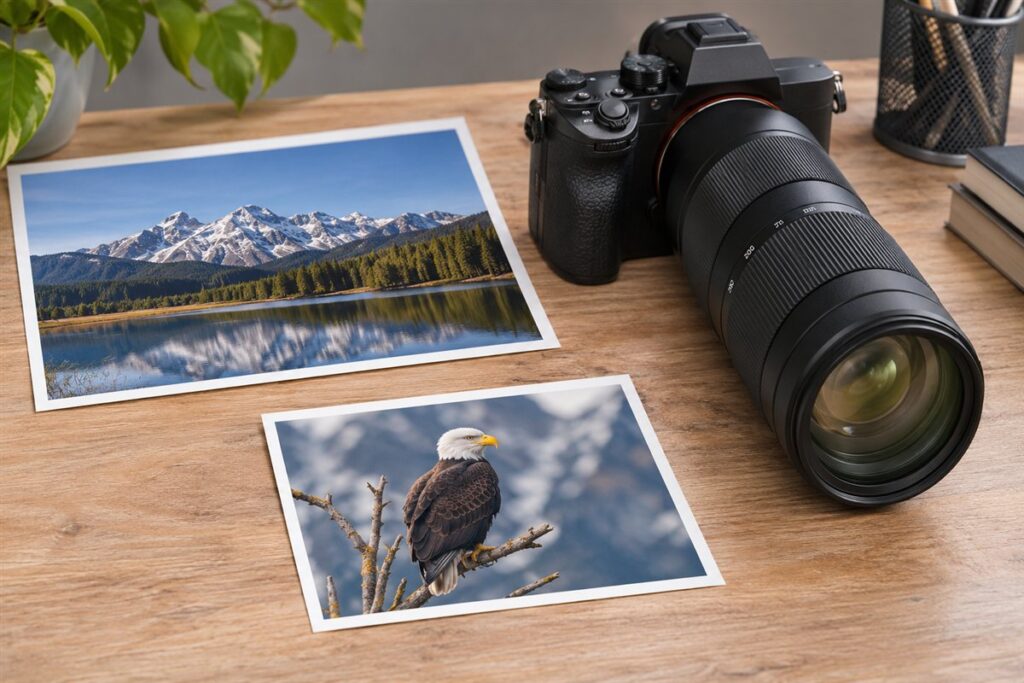
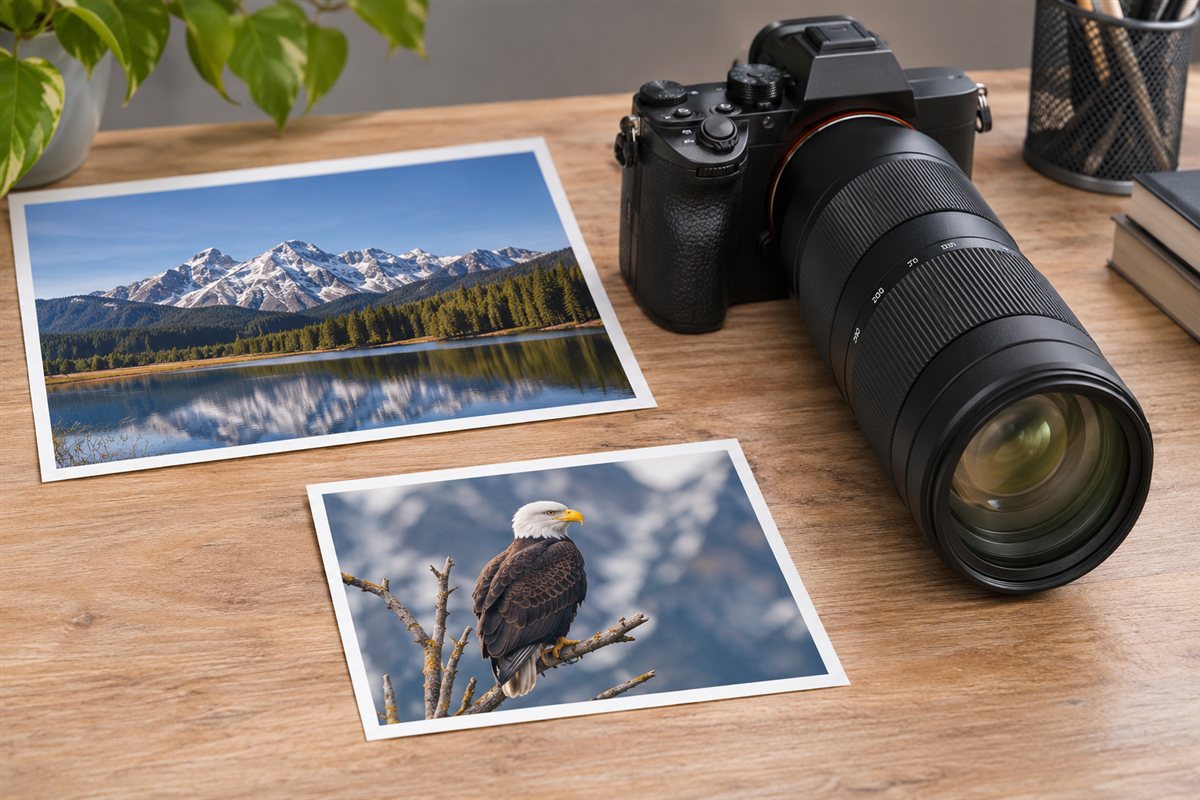
The Tamron 28-180mm f/2.8 Di III VC VXD is a long-range zoom for Sony full-frame mirrorless cameras that keeps a constant f/2.8 aperture from wide angle to telephoto. That combination is unusual, and it suits photographers and video shooters who want one lens for events, travel and portraits. Confirm exact specs on Tamron’s page.
What Makes This Lens Different
Most lenses with this much reach have an aperture that gets slower as you zoom in. This one holds f/2.8 across the whole range, which keeps exposure consistent and allows softer backgrounds even at longer focal lengths.
It also includes Tamron’s VC stabilization system, and the VXD name refers to the linear focus motor type used for quick, quiet autofocus. Both features are useful for handheld shooting and for video.
In this guide
Who It Suits
- Event shooters who need to move from wide group shots to tight portraits without changing lenses.
- Travelers who want one fast lens for city scenes, details and people.
- Video makers who value a constant aperture while zooming.
- Photographers replacing a pair of zooms with a single lens.
Trade-Offs to Weigh
Covering a big range at f/2.8 takes a larger lens. It is bigger and heavier than a compact f/4 zoom or a typical standard zoom, so it is worth thinking about the weight on your camera body, your bag and your shooting day.
| Consideration | What it means for you |
|---|---|
| Constant f/2.8 | Steady exposure and brighter view while zooming |
| Long range | Fewer lens changes |
| Larger size | More weight to carry |
| Stabilization | Helps with handheld shots and video |
How to Get Good Results
- Balance the setup. A larger lens on a small body can feel front-heavy, so use a good grip or strap.
- Keep the shutter speed high enough for the focal length. At 180mm, a shutter speed of roughly 1/250 and faster is a reasonable guide for still subjects, though stabilization may allow slower speeds.
- Use f/2.8 for low light and background separation, then close down a stop or two when you want more depth or extra detail.
- Check whether lens corrections are applied in your camera or editing software.
- Update lens firmware through Tamron’s tools if the maker offers an update for your body.
One Lens Versus a Pair of Zooms
The main reason to consider a lens like this is to replace two or three others, so it helps to compare the single-lens approach with the usual alternative of carrying a standard zoom plus a telephoto zoom. Each path has real strengths, and the right one depends on how you work.
With one lens you never miss a moment while changing optics, you avoid dust on the sensor from swaps and you carry a lighter, simpler kit overall, even if the lens itself is large. This matters at weddings, family events and street scenes, where the action does not wait. A single lens also means one set of filters, one hood and one focus character to learn, which makes video footage match more easily between wide and long shots.
With a pair of zooms, each lens can be optimized for its job, and each can be smaller than one big all-range zoom. You may also get a different balance of aperture, weight or image character, depending on the lenses you choose. The cost is lens changes and a heavier total kit. For some people, a pair is easier to hold, because each lens balances better on a small body.
- Choose the single zoom if speed of framing and a light overall bag matter more than getting the most from each focal length.
- Choose a pair if you often shoot at one end of the range for hours and want a lens that suits that job.
- Think about video: one constant-aperture lens keeps exposure steady as you reframe, which is convenient for run-and-gun clips.
Whichever way you lean, compare the weight on the maker’s page with the combined weight of the lenses you would replace, because the saving is not always as large as it looks.
Video and Gimbal Practicalities
A constant f/2.8 zoom with stabilization appeals to video shooters, but video brings its own checks. Before relying on the lens for paid or important work, test how it behaves on your own camera.
Look at zoom behaviour first. Does the lens change length when you zoom, and does the front or the barrel shift your balance? A lens that extends as you zoom moves the center of gravity, which matters on a gimbal because it may need rebalancing at different focal lengths. Check the gimbal’s payload information, and balance with the lens at the position you use most. If your gimbal struggles, shoot at a single focal length per take.
Next, check focus breathing, which is a change in the field of view as focus shifts. Many photo-oriented lenses show some, and it is most visible when you pull focus between near and far subjects. Test by focusing near and far on a fixed scene and watching the frame edges. Also listen for noise from the focus and stabilization systems if you record sound on the camera.
The lens may work with the camera’s own stabilization modes. Read your camera manual to see how lens and body stabilization combine, and whether an active mode adds a crop to the image.
- Use a fixed shutter speed around double the frame rate and control exposure with ND filters outdoors.
- Use a matte box or hood to control flare, and check whether the front barrel accepts your filters.
- Record a short test clip at both ends of the range before a shoot.
Good results come from knowing the quirks of your specific setup.
Planning a Travel or Event Kit Around It
If this lens will be your main lens, the rest of your kit should be built to support it. The aim is to carry less and still be ready for the situations you expect.
For travel, a common approach is to take this zoom, a small wide-aperture prime for evenings and dim interiors, and perhaps an ultra-wide lens for architecture and landscapes if you care about that. The prime fills the gap in low light, where even f/2.8 can run short, and the wide lens covers views the zoom cannot reach. Keep the kit modest enough that you actually carry it all day.
For events, bring spare batteries and cards because a long day with a stabilized lens and video uses more power. A bright, compact flash can help indoors, and bouncing it from a ceiling or wall gives softer light than pointing it directly at a person. Carry a cleaning cloth and a blower for dust.
Choose a bag that fits the lens attached to the camera, since taking it apart every time is slow. A padded strap that spreads weight across your shoulder or a sling-style strap can make a long day easier. Think too about how you will protect the front element; a hood is usually the first line of defense.
- Test your bag with the actual lens and camera before the trip.
- Pack a backup such as a compact lens or a second body, if the trip matters, in case of damage or malfunction.
- Charge and format batteries and cards the night before.
Planning the whole kit prevents the situation where the lens is good but the support gear lets you down.
Making the Most of the Long End
At 180mm the lens behaves like a short telephoto, and a few habits improve results. Start with the background. Longer focal lengths compress the scene, so distant objects look closer to your subject. Use this to your advantage by choosing a clean background, such as foliage, a plain wall or open sky, and place the subject some distance in front of it. The farther the background, the softer it will appear at f/2.8.
Mind your distance. Close portraits at the long end can feel flat if you stand too near, so try a slightly wider focal length and a step back to keep natural proportions. For candid shots of people who do not know the camera is there, the long end lets you keep your distance and avoid changing the moment.
Focus carefully. At f/2.8 and 180mm, depth of field is shallow, so focus on the nearest eye for portraits and check the result at high magnification. If a moving subject is hard to keep sharp, raise the shutter speed, use continuous autofocus and take short bursts. Stabilization helps with your shake, but it does not freeze subject movement.
- Use the zoom ring to compose, but move your feet to adjust perspective.
- Stop down a little for groups or when a moving subject is likely to shift in depth.
- Watch the light behind a subject and use the hood to reduce flare.
Spend an hour at a single location practicing the extremes of the range to learn how the view changes between 28mm and 180mm.
Before You Buy: Questions and Limits
A large-range fast zoom is a convenient tool, but it is not the right answer for everybody. A few honest questions help.
First, how much weight can you carry comfortably? If you shoot all day, a heavy lens may reduce the number of good pictures you take, even if its specifications are impressive. Handle the lens on your camera in a shop or rent it for a weekend if possible. Second, do you need the very widest views or the longest reach? A lens that starts at 28mm is not ultra-wide, and one that ends at 180mm will not fill the frame with distant wildlife. Third, how important is background blur? A constant f/2.8 zoom gives pleasing blur, but wide-aperture primes give more.
Fourth, what is your plan for service and updates? Check Tamron’s page for firmware support and for warranty terms in your region. Fifth, if you use an APS-C Sony body, remember the image will be cropped and the effective view will be different, so think about whether the range still suits you.
- Signs it may not suit you: if you rarely use more than two focal lengths, a lighter prime or smaller zoom may serve you better.
- Signs it may suit you: if you constantly swap lenses and miss shots, a single fast zoom may solve a real problem.
- Used copies: test zoom smoothness, focus accuracy and stabilization before committing.
Knowing what you give up helps you enjoy what you gain.
A Pre-Shoot Checklist for a Big Zoom
A lens with this much reach rewards a little preparation. Run through a short routine before an event or a trip, and you will spend your time making pictures instead of fixing small problems.
- Update your camera firmware and check the maker’s page for any lens notes that apply to your body.
- Wipe the front and rear glass with a blower and a clean microfiber cloth.
- Set the camera to a sensible default, such as aperture priority with auto ISO and a minimum shutter speed.
- Confirm that stabilization is switched on, and turn off any camera mode that conflicts with it.
- Pack a spare battery, since a lens that is heavy on autofocus and stabilization can ask more of the camera.
- Carry a lens cloth and a hood that is fitted correctly.
It takes only a few minutes, and it replaces guesswork with a repeatable habit.
Choosing Settings by Situation
Different scenes call for different starting points. Use the guide below as a general framework and adjust to your light and your subject.
| Situation | Focal range | Approach |
|---|---|---|
| Indoor event | Mid to long | Keep the wide aperture, raise ISO as needed |
| Street or travel | Wide to mid | Use the hood, stay light on your feet |
| Portraits | Long end | Open the aperture and mind the background |
| Distant details | Full reach | Raise shutter speed, brace the camera |
Constant aperture means exposure stays predictable as you zoom, which is a real convenience when the scene changes quickly and you do not want to relearn your settings after every framing change.
Reading the Specification Sheet
Lens pages are full of abbreviations, and a few of them explain the name itself. Treat the maker’s official specification page as the authority and use these plain-language hints as a guide.
- Di III: a designation for lenses built for mirrorless cameras.
- VC: vibration compensation, the maker’s term for optical stabilization.
- VXD: the focus motor type used for quick, quiet autofocus.
- f/2.8: the widest aperture, which stays the same through the zoom range.
- Minimum focus distance: how close the lens can focus, which changes how close your subject can be.
Once you know the vocabulary, comparing this lens with alternatives becomes much easier, because you are weighing the same features rather than being swayed by unfamiliar labels.
Caring for the Lens in the Field
A big zoom extends and retracts, so dust and moisture deserve a little respect. Change lenses in a sheltered spot, point the camera body downward when the mount is open, and keep caps on whenever the lens is stored. Use a hood to reduce stray light and to protect the front element from knocks.
For cleaning, use a blower first and a clean lens cloth second, working gently from the center outward. Avoid household cleaners. If you notice a stiff zoom ring, fogging inside the barrel or a focus problem, stop using the lens and ask the maker or an authorized repair service for advice rather than opening it yourself.
Slip-Ups That Waste Good Frames
Most disappointing shots from a long zoom come from a few repeat habits rather than from the lens. Spotting them early helps you improve quickly.
- Leaving the shutter speed too slow at the long end, so even stabilized shots show a little blur.
- Shooting everything wide open when a stop or two smaller would give more depth and a crisper subject.
- Forgetting that zooming changes the framing, then cropping heavily later.
- Holding the camera by the body alone and letting the heavy barrel droop.
- Ignoring the focus mode, so a moving subject slips out of sharpness.
None of these are hard to fix. A quick glance at your settings between scenes often does the trick.
Standing and Holding for Steadier Shots
Technique matters as much as gear when the focal length grows. Plant your feet about shoulder width apart, tuck your elbows against your ribs and support the barrel with your left hand underneath rather than gripping from above. Exhale gently as you press the shutter, and let your finger squeeze rather than jab.
When you can, lean against a wall, a railing or a tree to add stability. For video, a smooth walking motion helps more than any setting, so bend your knees and roll from heel to toe. These simple habits let the stabilization system do its best work instead of fighting your movement.
When Light Fades and Plans Change
A constant wide aperture gives you flexibility, but it does not remove the limits of the light. As evening arrives, you will raise ISO or slow the shutter, and each choice has a cost in noise or blur. Decide in advance which compromise suits the shot: a grainy but sharp frame often reads better than a clean but soft one.
Have a fallback ready, such as moving closer to the subject, finding a brighter corner or switching to a lens you already own. Flexible thinking turns a difficult scene into a usable one, and it keeps the zoom from feeling like a limitation when conditions change.
Living With One Lens: A Week of Shooting Scenarios
The best way to judge a lens like the 28-180mm f/2.8 is to walk it through a realistic week. Monday is a school concert in a dim hall: the wide end takes the whole stage and the choir, the long end picks out your child, and f/2.8 keeps shutter speeds workable without flash. Wednesday is a work trip: city streets at 28mm in the morning, a colleague’s portrait at 135mm over lunch, details of architecture in the afternoon — all without opening the bag. Saturday is a family walk: landscapes at the wide end, compressed layers of hills at the long end, and a heron across the river that a standard zoom would have left as a speck. That breadth, in one barrel, is the entire argument for the lens.
The same week exposes the costs honestly. The lens is a substantial presence on the camera all day, every day; there is no lighter option in the bag because this is the bag. Background blur at the wide end is modest, so environmental portraits look documentary rather than dreamy. And at 180mm, camera shake and subject movement demand the same discipline as any telephoto. Owners who accept those terms tend to love the freedom; owners who secretly wanted a bag of primes in one lens tend to sell within a year. Knowing which you are is the purchase decision.
Settings That Suit a Constant f/2.8 Superzoom
A long-range f/2.8 lens rewards a few deliberate settings. Set a minimum shutter speed floor in your auto-ISO configuration that respects the long end — the speed that keeps 180mm frames sharp for your hands — and let the ISO climb to meet it, because a noisy sharp frame beats a clean blurred one. Use a single focus area or a small zone for deliberate subjects rather than the widest area mode, so the camera does not choose a nearer distraction at long focal lengths. For video, the constant aperture means you can zoom during a take without the exposure stepping, which is one of this lens’s quiet superpowers.
Aperture discipline changes with focal length. At 28mm, f/2.8 still gives workable depth of field for scenes; at 180mm it isolates a subject beautifully but punishes a focus miss. Build the habit of glancing at the focal length before choosing the aperture: wide and fast for scenes, long and fast for single subjects, stopped down a little for groups at any length. That one habit, more than any feature, is what separates owners who get consistent results from a lens like this from those who call it inconsistent.
Comparing It With the Two-Zoom Alternative, Honestly
The realistic alternative is a 24-70mm-class standard zoom plus a 70-200mm-class telephoto. That pair beats the single lens in specific ways: each is optimised for its half of the range, and either can stay home when its half is not needed. The single lens wins on readiness, weight of the total kit, one filter size, and never missing a moment to a lens change or introducing dust doing it. Photographers whose work is planned — studio one day, sport the next — often prefer the pair. Photographers whose work is reactive — events, travel, family — often prefer the one lens. Neither preference is a verdict on quality.
Money follows the same shape: one lens is one purchase, one filter set, one insurance entry. If you already own a good standard zoom, the maths changes and a telephoto may be the smarter addition; if you are starting from a kit lens, the single-lens route reaches a complete f/2.8 outfit in one step. Start from where your shelf actually is, not from a blank page.
Care and Handling for a Large, Long-Range Zoom
Support the lens with your left hand whenever it is mounted; a lens of this size and leverage should not hang from the mount by the camera strap for hours. Attach a strap to share the load sensibly, keep the hood fitted for protection and flare control, and store the lens at a mid-range zoom setting in a dry place. The extending mechanism, if it moves as you zoom, pumps air like any long-range zoom, so caps and basic dust discipline apply. Check the maker’s page for the firmware route and keep the lens current, because long-range zooms lean heavily on their electronics for focus and stabilisation behaviour.
The Background-Blur Question, Answered With Distances
Buyers often ask whether f/2.8 across this range replaces a fast prime for portraits. The answer lives in distances: at 180mm and f/2.8, with a subject a few metres away and a background well behind them, blur is strong and flattering, and the compression is kind to faces. At 28mm, the same aperture keeps much of the scene recognisable, which suits environmental portraits where the place is part of the story. A fast prime still wins for the dreamiest backgrounds and the dimmest rooms, but for the majority of real portraits — family, travel, events — this lens at its long end produces results most viewers cannot distinguish from prime work. Judge by your distances, not by the aperture number alone.
Practically, get closer to the subject and further from the background when you want blur, whatever the lens. Those two moves do more than any equipment change, and with a zoom this long you can make both moves from one spot by zooming and stepping. That is the creative heart of the lens: composition by focal length, available instantly.
One Lens, Many Genres: A Realistic Map
It is worth mapping what a week of varied photography actually asks of this lens, genre by genre, because its appeal is breadth and breadth should be audited. Landscape: strong, with the wide end for scenes and the long end for compression, short of only the ultra-wide drama. Portrait: strong at the long end, with blur and compression that satisfy most briefs. Event: very strong, arguably the lens’s home, because nothing needs changing as the room changes. Sport: capable for school and amateur levels from sensible positions, short of professional reach and speed. Wildlife: opportunistic — the heron, the deer at the field edge — rather than a birding tool. Night sky: workable at 28mm and f/2.8 for bright displays, not a specialist. That map, honestly drawn, is why the lens has a devoted following: it is genuinely good at the centre of photographic life and honest at the edges.
The photographers who sell it usually discover their centre was elsewhere — they were birders, or astro specialists, or prime-lens portraitists all along. The photographers who keep it for a decade are the generalists, and generalism is not a failure of specialisation; it is the most common real photographic life.
Accessories That Earn Their Place With This Lens
A short list serves this lens better than a long one. A strap or sling that supports the outfit properly, because it will be carried constantly. A quality protective filter if your environments are harsh, in the correct thread confirmed on the maker’s page. A compact tripod for the landscape and night work the lens invites. A blower and cloth that live in the bag, not at home. And spare power: a lens with stabilisation and a linear motor, used all day for stills and video, draws on the body’s battery like a second camera feature. Everything else — and the accessory industry will offer plenty — should have to argue its way into the bag against the one-lens philosophy that justified the purchase.
How This Lens Changes Your Relationship With Your Bag
A one-lens philosophy reorganises more than the camera shelf. The bag gets smaller and stops being a decision; the car boot loses the equipment case; the holiday packing list loses a column. Owners consistently underestimate this effect before buying and cite it afterwards as the thing they would not give back. The counterweight is concentration of risk: one lens is one point of failure, one item to insure carefully, one piece of glass whose loss ends the photography rather than inconveniencing it. Travellers mitigate with insurance and, for critical work, a backup body plan; families mitigate by accepting that a phone covers a ruined day. Weigh the freedom against the concentration honestly, because both are real and both are permanent features of the choice.
There is also a creative consequence: constraint. A single lens with a defined range forces composition decisions that a bag of options postpones, and many photographers find their work sharpens under the discipline — the same reason prime-lens photographers praise their limitation. The 28-180mm is a gentler constraint than a prime, but it is a constraint, and its owners’ best work tends to show the coherence of pictures made with one instrument’s character.
FAQ
Is this lens good for portraits?
It can be. The longer end gives a flattering compression, and f/2.8 helps blur backgrounds. For the softest backgrounds, a fixed-focal-length lens with a wider aperture is still an option.
Does it work with Sony APS-C cameras?
The E mount fits, though the image will be cropped by the smaller sensor. Check Sony and Tamron notes on compatibility.
Is a lens with this much range sharp at all focal lengths?
Results vary by lens and by focal length, and we have not tested it ourselves. Look at sample images from users of your camera body, and test your own copy at wide, middle and long settings. Stopping down slightly often improves results at any lens.
Will the lens balance well on a gimbal?
It depends on the gimbal's payload rating and on whether the lens changes length while zooming. Check the lens weight on Tamron's page against your gimbal's limits, and balance at your most used focal length.
Do I need a filter on the front?
It is optional. A hood gives physical and flare protection, and some people add a clear filter for extra safety. Choose a good-quality filter if you do, and check the filter thread size on the maker's page.
Is it good for travel?
It can be, because one lens covers wide views through short telephoto. The trade-off is weight and size compared with a compact zoom, so think about how far you will walk each day.
How should I carry a large zoom on a small camera?
Use a strap or sling that spreads weight, support the lens with your left hand, and consider a grip that fills the hand. Avoid hanging the camera by the lens for long periods.
What shutter speed should I use at 180mm?
For still subjects, around 1/250 or faster is a reasonable guide, and stabilization may allow slower. Moving subjects need faster speeds. Check your results at high magnification and adjust.
Should I buy a used copy?
A used lens can be good value if it has been looked after. Check the zoom and focus rings, look through the glass for haze, and test autofocus and stabilization. Ask about returns and the remaining warranty.
Is the 28-180mm a good choice for a wedding guest who loves photography?
It is close to ideal for that role: one lens covers the venue, the groups, the candid faces across the room and the details, at an aperture that handles church and reception light without flash. Be considerate — stay in your seat during the ceremony, skip the flash, and let the official photographer work — and you will come home with a set that tells the whole day. The lens is large enough to be noticed, so if discretion matters, that is its one social cost.
How does it handle photographing pets?
Very well, because pets refuse to pose at a chosen distance. The range lets you frame a dog across the garden or a cat on the windowsill from wherever you are sitting, and f/2.8 helps indoors where pets live. Use continuous autofocus with the animal-eye mode if your body offers it, keep shutter speeds up for movement, and get down to the pet’s eye level for the pictures that work. The long end from a distance also avoids crowding a nervous animal, which makes for more natural expressions.
Can it be the only lens for a photography holiday?
For most holiday styles, yes: landscapes, streets, people, food and details all sit inside its range at a useful aperture, and one lens means a light bag and no swaps in dusty or crowded places. The gaps are the true ultra-wide view for grand interiors and the long telephoto reach for wildlife; if the holiday is built around either, plan a second lens or a rental for those days. Otherwise, the freedom of one lens is itself a holiday feature, and many owners report shooting more, not less, because the camera is simply always ready.
What tripod should I use with it for landscapes?
A tripod rated honestly for the combined weight, with the camera mounted so the lens is supported in balance — at the long end, a front-heavy setup creeps on weak heads. You do not need a huge tripod for a lens of this class, but avoid the lightest travel legs if you shoot at 180mm in wind. Use a remote release or timer for slow work, switch stabilisation off on the tripod if the maker advises it, and stop down for depth of field. The lens’s range makes it a fine landscape tool; the tripod discipline is the same as for any zoom.
Does a lens with this range need more careful storage?
Only the usual care, applied consistently: dry storage, caps on, away from heat and direct sun, and a desiccant if your home is humid. Long-range mechanisms have more moving groups, so avoid storing the lens fully extended under load, and exercise the zoom occasionally if it sits unused for months. Have any stiffness or unusual noise checked early. Treated normally, there is no reason a lens like this should not serve for many years and several camera bodies.
How do I know if my copy is a good one?
Run a structured first week: frames at 28mm, mid-range and 180mm, wide open and stopped down, of detailed subjects near and far; a backlit frame for flare; a video clip for focus noise and stabilisation behaviour; and a low-light set at the long end. Compare corners for evenness and check focus consistency by refocusing between frames. A good copy is boringly consistent. If yours is not, exchange it while the returns window is open rather than adapting your photography to a faulty tool.
Will this lens make my kit lens redundant?
For most owners, yes — it covers the kit lens’s range and well beyond it, at a faster constant aperture, so the kit zoom’s remaining virtues are its small size and low weight for casual days. Keep it for a while if you like a minimal outfit for walks where photography is secondary; sell it when you realise it has not been mounted in months. Many owners also keep the kit lens as a loaner or a backup, roles where its lightness is a genuine asset.
How fast is the autofocus for children’s sports?
The VXD linear motor design is built for quick, quiet focusing, and on a modern Sony body it handles the stop-start movement of children’s sport well when paired with sensible settings: continuous autofocus, a zone area, and a shutter speed that respects the action. The long end helps from the touchline of a full-size pitch. As with any lens, the keeper rate rises with anticipation — focus where the play is going, not where it was — and a morning of practice before an important match is time well spent.
Should I use in-body or lens stabilisation settings in any particular way?
Follow the guidance in both manuals for how the lens’s VC and your body’s stabilisation combine, because the correct switch positions vary by body generation. As a rule, let the system designed to work together do so, turn stabilisation off for tripod work if advised, and use the active or panning modes your body offers for the subjects they name. Test your own combination with a short handheld sequence at 180mm so you know what your settings deliver before an important shoot depends on them.
How does the lens perform for photographing documents and flat artwork?
Use a mid-range setting where geometry is calmest, keep the camera parallel to the work, light evenly from both sides, and focus with magnification. At those settings the lens copies documents, artwork and product flat-lays perfectly well for most purposes. Stop down a little for even sharpness across the surface. It will not match a dedicated macro or copy setup for archival work, but for the everyday need — a certificate, a child’s drawing, a page — it is the tool already on the camera, which is the recurring theme of this lens’s usefulness.
Can I use it for close-up photography of flowers and insects?
Check the maker’s published close-focus figures for the exact behaviour, then experiment: long-range zooms often focus surprisingly close at some settings, giving pleasing flower portraits with soft backgrounds at the long end. True macro — a small insect filling the frame — is beyond its design, and extension tubes or a close-up lens are the inexpensive experiments before a macro purchase. For garden flowers, food and details, most owners find the lens sufficient, and its range lets you choose the background by zooming, which is a creative control macro shooters envy.
What is the best way to learn this lens quickly?
Spend the first month with it as your only lens — which is its natural state — and add one discipline: review each day’s pictures sorted by focal length, and notice where you actually lived. Most owners discover a personal pattern, often a favourite third of the range, and that discovery tells them both how to use this lens better and what, if anything, deserves to be their next purchase. A lens with this much range is a diagnostic instrument for your own eye; let it report before you spend again.
Is this lens a good choice for a photography student?
For a student whose course covers many genres, it is close to a designed answer: one lens for the portrait assignment, the landscape trip, the documentary project and the event module, at a constant aperture that teaches exposure properly. The cautions are budget and the value of learning with a prime’s discipline at some point in a course. If the programme allows one lens only, this class of lens is the sensible shape; add a fast prime when the syllabus turns to low-light specialisation.
How do I handle the lens in very cold weather?
Batteries fade first, so keep a spare warm in an inside pocket and rotate them. Metal and glass grow cold enough to make handling unpleasant, so gloves with grip are equipment, not comfort. When returning indoors, seal the outfit in a bag before entering so condensation forms on the bag rather than inside the zoom’s long mechanism, and let it warm for an hour before use. Focus and zoom rings stiffen slightly in deep cold on most lenses; work them gently rather than forcing a cold mechanism.
What insurance and records should a one-lens owner keep?
Because the lens is the kit, treat its paperwork like the kit’s: serial number recorded in two places, invoice kept, photographs of the lens stored with them, and cover checked for use away from home and abroad if you travel. If the lens is stolen or fails before an important event, a hire replacement is the working photographer’s bridge, and knowing the local hire source in advance is part of the one-lens discipline. None of this is pessimism; it is the administrative shadow of a simple, concentrated kit.
How does this lens suit photographing a school sports day as a parent?
It is close to a designed brief: from the roped line, the wide end takes the whole class and the podium, the middle range takes the races as they pass, and the long end takes your child’s finish-line moment without you leaving your spot. f/2.8 is unnecessary in daylight but harmless, and the one-lens outfit means no bag at your feet in a crowd of parents. Arrive early for a position with the sun behind you and a plain background beyond the track. Among parents’ lenses, a long-range f/2.8 zoom is the one that comes home with the complete day.
What is the best way to photograph a city break with only this lens?
Let the range replace the itinerary of lenses: mornings at the wide end for streets and markets before the crowds, middays for museums and interiors where its aperture helps, evenings at the long end for the compressed, lit city from a bridge or a hill. Carry the camera on a sling, keep the outfit to the one lens, and let the absence of choices become the trip’s photographic style. The set that results has a coherence multi-lens travel sets often lack, because every frame shares one instrument’s way of seeing.
How do I know if the stabilisation is working as it should?
Test it directly: at 180mm, take a series of handheld frames of a detailed subject at a shutter speed a couple of stops slower than your usual safe speed, with stabilisation on, then off, and compare the sets at full magnification. A healthy system wins clearly. Also listen and watch as it engages — a gentle settling is normal. If the viewfinder image drifts continuously or the results show no benefit, have the lens checked while its warranty or returns window makes that painless. Two minutes of testing replaces all speculation.
How does this lens suit photographing a village show or a sports day from the crowd?
From within a crowd, a long-range zoom is the polite photographer’s tool: you frame the tug-of-war, the dog show and the sack race from where you stand, without pushing to the front or blocking a child’s view. The wide end still takes the whole showground when you step back. Keep the outfit on a sling so it moves with you through the crowd, and be generous with the pictures afterwards — village shows run on goodwill, and the photographer who shares the set is invited back to the best spots next year.
The Short Version
The Tamron 28-180mm f/2.8 is a long-reaching, constant-aperture zoom for Sony E mount that suits events, travel and video. The trade-off is size and weight. If one lens that covers most situations appeals to you, it deserves a close look on the maker’s page.