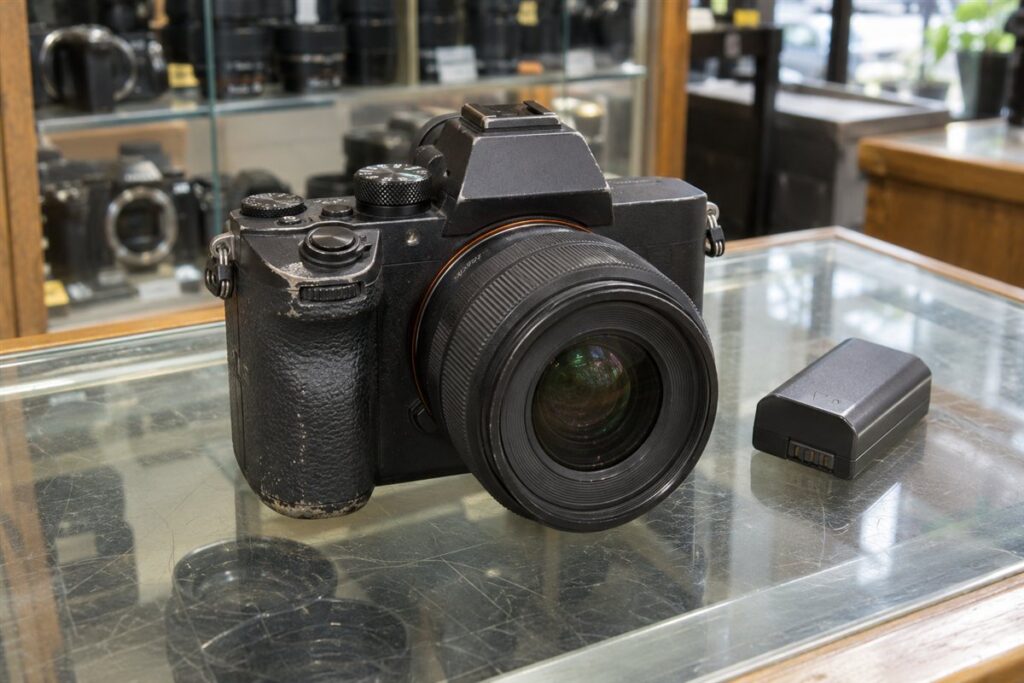
When a camera like the Sony A9 II is described as discontinued, it means the maker no longer builds it new, though you may still find leftover new stock or used bodies. A discontinued camera can remain a fine tool for sport and action work, but you should check availability, support and condition before you buy. Confirm current status on Sony’s official site, since stock changes over time.
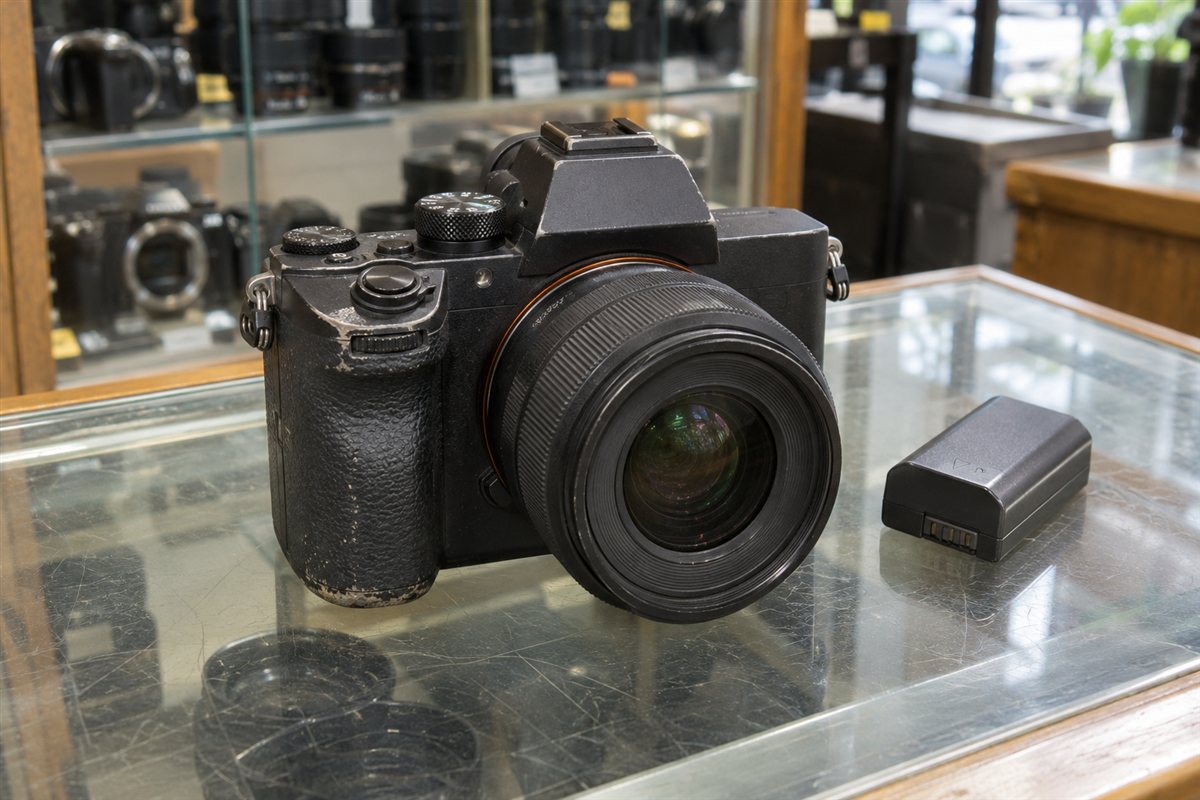
What Discontinued Means in Practice
A body leaving production does not make it stop working. Lenses, batteries and accessories in the same system continue to function, and many photographers keep using older cameras for years. What changes is availability: new units become scarce, and the market shifts toward used and refurbished sales.
- New stock may be limited to remaining inventory at retailers.
- Used bodies become the main route for most buyers.
- Repair parts and service support follow the maker’s own policy, so ask.
In this guide
Checking a Used Body
For an action-oriented camera, wear matters, because heavy shooters can use up a lot of shutter actuations. Work through a simple list.
- Ask for the shutter count if the seller can give it, and compare it with the maker’s stated shutter durability guidance.
- Inspect the sensor area for dust or marks with a bright, plain surface.
- Test every button, dial and the screen.
- Check the mount, ports and card slots for damage.
- Confirm the battery holds a charge and that a charger is included.
- Ask about a return window so you can test it properly.
Alternatives to Weigh
| Option | Why consider it |
|---|---|
| A newer body in the same A9 family | Newer technology, same lens mount |
| A high resolution body with fast modes | Cropping room for wildlife |
| A different brand’s sport camera | Only if you are ready to change lens systems |
Sticking with Sony E-mount keeps your lenses working, which is often the biggest saving.
Protecting Yourself as a Buyer
Buy from sellers who describe condition honestly, show clear photos and offer a return window. Keep proof of purchase and check what accessories are included, such as batteries, a charger and a body cap. If a deal looks unusually good, be cautious. A fair offer from a reliable seller is usually a safer route than a bargain from an unknown listing.
Questions to Ask the Seller
With a used or leftover camera, the seller’s answers are part of the product. Prepare a short list of questions before you reach out, and note whether replies are clear and consistent. A seller who knows the camera’s history is usually easier to trust than one who gives vague answers.
- How long have you owned it, and what was it used for, such as sport, events or casual shooting?
- Is the shutter count known, and was it read from the camera or estimated?
- Has the camera been repaired, serviced or had parts replaced?
- Does it come with the original box, charger, battery, strap and manual?
- Has it been exposed to rain, sand, salt air or knocks?
- What is the return policy, and who pays for shipping on a return?
Ask for current photos of the actual camera, not stock images, including the mount, ports, sensor area and screen. If something is missing from the listing, ask for it before paying.
Firmware, Support and Service Status
A camera that is no longer made may still receive firmware updates and repair support, but this is the maker’s decision. Check Sony’s official support pages for the model to see the latest firmware and any listed service information. If the camera has not been updated, install the latest version after you buy, following the maker’s instructions carefully and using a fully charged battery.
Ask a local service center whether they can repair the model and how long parts are expected to be available. Repair availability can differ by region. If you plan to use the camera professionally, consider having a backup body, since a repair can take time.
Also check the camera’s warranty status. Some used cameras are sold by retailers with their own warranties, and some are covered by the maker only for the original buyer. Keep the receipt and any warranty paperwork.
Using an Action Camera Well
A camera built for fast subjects rewards correct setup. Learn the autofocus modes, the tracking options and the way you set burst speed and buffer behavior. Use continuous autofocus and choose a focus area suited to the subject, such as a small zone for a single athlete or a wider zone for a group. Set a shutter speed fast enough to freeze motion, and increase it for faster sports.
Think about the memory cards you use. Fast cards help clear the buffer during bursts and avoid slowdowns at key moments. Check the manual for suitable card types and how the dual slots behave. Keep spare batteries on hand, since long events and cold weather drain power.
Finally, practice before the event. Photograph moving people or traffic near you to get used to the tracking. Review your results, adjust settings and repeat. A camera suited to action still needs a photographer who has learned its controls.
Lenses That Pair Well With the Body
An action camera is only as good as the lens on it. For sport and wildlife, telephoto lenses of various lengths are common, along with standard zooms for general coverage. Choose a lens whose autofocus is quick and whose weight you can manage for long sessions. Because the camera uses the E mount, you can find lenses from Sony and from independent makers, which gives you options at different budget levels.
Check each lens’s compatibility with the camera’s features, such as high-speed bursts, since some lenses may not support the fastest modes. Read the camera manual and the lens page for any notes. If you already own E-mount lenses, check how they perform on this body at its fast settings.
When planning a kit, think about what situations you will shoot and build a small set that covers them. Adding a monopod can make heavier lenses more manageable and steadier.
Comparing With Newer Models Before Deciding
Before you commit, compare what the older camera offers with newer models in the same family and with cameras in other classes. List the features you need, such as burst speed, autofocus tracking, video options and handling, and check whether the older body meets them. If it does, the savings can be put toward lenses.
Consider also how long you plan to keep the camera. Newer bodies typically receive support longer and may keep resale value better. If you plan to use the camera for years, that factor matters. If you want a lower-cost tool for a few seasons, an older body can make sense.
Finally, do not forget the cost of accessories. Batteries, cards and chargers for older models may be easy to find, but check compatibility. Make a total budget before you start looking.
Why Sports Shooters Looked at This Body in the First Place
To judge whether an older action camera still makes sense, it helps to remember what it was built to do. The Sony A9 II belongs to a family of full-frame mirrorless bodies designed around speed: quick burst shooting, a viewfinder that does not black out in the usual way during a sequence, and autofocus that follows moving subjects across the frame. Photographers who cover football, motorsport, wildlife and fast indoor events were the audience.
That purpose shapes how you should read any listing you find. A body made for sport is judged on how it behaves when the action is unpredictable, not on how it looks in a studio test chart. When you consider a used or leftover copy, think about your own subjects first. If you mostly photograph landscapes, portraits or slow family moments, a camera tuned for speed may give you capabilities you will rarely use. If you shoot moving subjects weekly, the same capabilities become the main reason to look at it.
Write down the three situations in which you expect to use the camera most often, then keep that list beside you while reading seller descriptions. It stops you from paying attention to impressive-sounding features that do not touch your actual photographs.
Shutter Types and What They Mean for Action Work
Modern mirrorless cameras can expose the picture with a mechanical shutter, an electronic shutter, or a mix of both. Each has trade-offs that matter to sports photographers, and an action-focused body usually gives you good options for each.
A mechanical shutter is a physical blade that opens and closes. It wears with use, which is why the shutter count is a common question when buying used. An electronic shutter reads the sensor without moving parts, so it is quiet and can allow very fast bursts. In some lighting, such as certain artificial lights, electronic shutters can show banding in the picture, and fast-moving subjects can appear slightly skewed. How visible this is depends on the camera design and the light, so check the maker’s documentation and sample material from reliable sources.
Practical advice
- Learn how to switch shutter modes quickly, because you may want different modes in different venues.
- Try a short burst under the lights you plan to shoot in before you rely on silent mode.
- Remember that a quiet shutter is a courtesy at events where noise would bother people, such as tennis or indoor performances.
Autofocus Setup for Moving Subjects
Good autofocus hardware still needs sensible settings. If you buy a body for action work and leave everything on default, you may feel disappointed when the camera locks onto the wrong thing. Spend an evening with the manual and a moving subject, such as people walking along a street or cars passing, and learn the basics.
First, understand focus area modes. A small single point gives precise control but demands steady aim. A wider zone is more forgiving when a subject moves unpredictably. Tracking modes follow a subject once you have selected it. Second, learn how to adjust how quickly the camera reacts when something passes in front of your subject; too sensitive and it jumps away, too slow and it holds on to the wrong thing.
Third, find out whether the camera offers subject recognition for people or animals and how to turn it on. Features of this kind differ across generations, so look at what the maker’s pages say this model offers rather than assuming it matches newer cameras. Finally, assign a button to switch between focus modes quickly. In fast sport, the ability to change approach in a second is worth more than a long menu of options you cannot reach.
Cards, Buffers and Getting Pictures Off the Camera
A fast camera can create a large number of files in a short time, and those files must be written to a card and later moved to a computer. Weak links in this chain slow you down more than the camera does.
Check which card types the body supports and how many slots it has. Dual slots allow backup or overflow, which is valuable at events you cannot repeat. Use cards that the maker recommends for sustained speed, because a slow card can make the camera pause after a burst while it clears its buffer. Look at the maker’s pages for compatibility information and keep a few reliable cards instead of one large card holding everything.
Think about your computer too. High burst rates produce hundreds of images from a single event, and culling them is a job in itself. Use software that lets you flip through quickly, mark favorites and reject the rest. Many sports photographers pick only one or two frames from each burst, so efficient sorting matters as much as shooting.
- Format cards in the camera, not on the computer.
- Copy files to two places before wiping a card.
- Label cards so you know which are fresh and which are full.
Comparing Ways to Buy
Where you buy matters almost as much as what you buy. The table below summarizes common routes and what to weigh about each. It is a general guide, so check each seller’s own return and support terms.
| Route | What to like | What to watch |
|---|---|---|
| Leftover new stock | Unused body, normally with maker coverage | Stock may be limited and age of the unit can vary |
| Established used dealer | Condition grading, return period, sometimes a short coverage | Read the grading terms carefully |
| Private seller | Possible flexibility and direct questions | Fewer protections, so inspect in person if you can |
| Auction listing | Wide choice | Photos may hide wear; ask for extra pictures |
For a body that may have been used heavily at events, a dealer with a clear return period gives you room to run your own checks without pressure. Whichever route you choose, keep all messages and listing text in case something needs to be resolved later.
Budgeting for the Whole Kit, Not Only the Body
A fast body without suitable lenses is like a sports car on bald tires. Action photography usually needs longer focal lengths, quick focusing motors and lenses strong enough to handle rain, dust and bumps. Add up what you would need: at least one long zoom or prime, spare batteries, fast cards, a strap or harness that spreads weight, and a bag that keeps everything dry.
Plan a total figure before you look at the camera itself. If the body takes up most of your budget, the remaining gear may force you to compromise on lenses, and the lens usually has a bigger effect on your results. Consider whether a slightly less expensive body paired with a better lens would serve you better.
Also leave room for small but important extras: a rain cover, a lens cloth, and a spare memory card. Those costs seem minor until you need them on a wet afternoon.
Looking After an Older Camera Between Events
An older body can keep working for years with sensible habits. After each outing, wipe down the exterior with a soft, clean cloth, and use a blower rather than breath or a rough fabric to remove dust from ports and lens contacts. Store the camera in a dry place with the caps on, and avoid leaving it in a hot vehicle.
Keep batteries healthy by following the maker’s guidance on charging and storage, and rotate your batteries so that none sits unused for months. When you change lenses, do so out of the wind with the camera pointing downward, and keep the sensor protected whenever possible. If you ever notice persistent dust spots on pictures, follow the maker’s instructions for cleaning or consult a professional service rather than attempting risky fixes.
Finally, look for firmware updates on the maker’s official support page from time to time, and read the notes before installing. Always follow the maker’s steps exactly and make sure the battery is full.
A Simple Decision Checklist
- Do my subjects move fast enough to justify an action-focused body?
- Have I confirmed its current support and service status on the maker’s pages?
- Do I have a long lens or a plan to buy one?
- Have I set aside money for cards, batteries and a rain cover?
- Does my seller offer a return window that gives me time to inspect the camera?
- Can my computer handle the number of files this camera can produce?
If most of your answers are yes, an older action body may still be a sensible tool. If you hesitate on several, take another week to think it through, because patience costs less than the wrong purchase.
Working Around Venue Conditions
Action cameras earn their keep in difficult places: dim gyms, floodlit fields, wet pitches and crowded sidelines. Each setting asks for a slightly different approach, and an older body will reward you if you prepare. In a bright outdoor stadium, you can keep the shutter speed high and the sensitivity low, which keeps files clean. In a poorly lit hall, you will push sensitivity higher, and you should look at sample files from your own camera at those settings so you know your comfortable limit.
Flickering lights are another issue. Some venues use lighting that pulses faster than the eye can notice, and certain shutter speeds can produce uneven exposure between frames. If you see this in a sequence, try a different shutter speed or switch shutter mode, and check whether your camera offers an anti-flicker option in its menus. The maker’s manual explains what is available on this model.
Weather matters too. Carry a simple rain cover and a microfiber cloth, and avoid changing lenses in blowing dust. If you move from cold air into a warm building, let the camera adjust gradually inside its bag so condensation does not form on the lens or in the viewfinder.
Learning From Your Own Keepers Rate
A camera is only half of the success of a sports photograph. The other half is your timing, position and preparation. After each event, count how many frames you shot and how many were worth keeping. That ratio is a useful personal measure. If it is low, the cause is rarely the camera alone. Common reasons include standing in the wrong spot, using a shutter speed that is too slow, or reacting a moment late.
Try small experiments. Shoot the same kind of play with a slightly faster shutter speed, then compare. Move twenty steps along the sideline and see whether the background improves. Pre-focus on a spot where the action will pass, then wait. Keep notes in your phone, and after a few outings you will see which changes made the greatest difference. These habits matter more than the exact model of the body, and they travel with you if you change cameras later.
Putting the choice to work: four real situations
Specifications only become useful when they meet an actual day of photography. The four situations below are the ones readers most often describe when weighing the Sony A9 II against the its newer alternatives, and each one shifts the balance in a slightly different direction. Read them against your own calendar rather than against an abstract idea of a typical photographer, because the right answer for a wedding shooter can be the wrong answer for a landscape walker even when both are choosing between the same two products.
A sports shooter finds a clean used example
For a photographer covering school sport, local leagues, or club events, a well-kept used flagship can be the smartest money in the bag: professional focusing and a body built for long days, at a fraction of its launch cost. The checks that matter are shutter count where available, the condition of the mount and dials, and a burst test with your own card to confirm the camera behaves under load. If those pass and the seller offers a sensible return window, a discontinued flagship is not a compromise; it is a deliberate, experienced purchase.
A wedding photographer needs a second body
A used flagship as a second body solves a real problem: it shares lenses with your main camera, focuses like a professional tool during the reception, and costs far less than a new body that would spend most of its life as insurance. Confirm battery compatibility with your existing kit, because a second body that needs its own charger and battery type quietly adds cost and bag complexity. Used this way, discontinued status barely matters, since the job is reliability on the day, not the newest features.
A buyer choosing between used flagship and new mid-range
This is the classic crossroads, and the answer depends on what you shoot. The used flagship brings professional build, focusing pedigree, and handling designed for long lenses and long days; the new mid-range body brings a warranty, newer menus and processing, and support that is easier to arrange. For action subjects, the flagship strengths usually win. For mixed family, travel, and video use, the newer body often fits better. Write down your three most common subjects and let that list arbitrate, because both choices are defensible and only your subjects can separate them.
Planning to keep it for many years
Buying a discontinued body is a commitment to the used market for parts, batteries, and eventually service, so think like a long-term owner from day one. Buy the best condition example you can find rather than the cheapest, keep the sensor and mount clean, store batteries sensibly, and consider a second battery and any hard-to-find accessories while they are still easy to source. Treated that way, a discontinued flagship can give years of professional service; treated as a bargain to be used hard and replaced, it will eventually disappoint.
Setup and first-session checks that pay off
Start with the unglamorous foundations. Charge every battery the night before, format cards in the camera you will use rather than in a computer, and set the date, time, and copyright information once so every file is correctly stamped from the first frame. Then set the camera to record the file type you actually edit: raw if you process your pictures properly, raw plus a small jpeg if you also share quickly. These habits sound basic, but they remove the three most common causes of a ruined shoot, which are a flat battery, a card the camera dislikes, and files you cannot organize afterward.
Next, build two or three saved configurations around your real subjects rather than around the menu itself. One setup for still subjects, one for moving subjects, and one for video if you film is enough for most photographers. Give each a sensible focus mode, a drive mode, and an exposure approach, and save them where your body allows it. The point is not to collect settings; it is to make the camera predictable under pressure, so that when a subject appears you are thinking about position and light instead of hunting through pages of options you set once and forgot.
Focus deserves its own deliberate pass. Learn how your body selects and tracks a subject, practice moving the focus point or area quickly with your eye at the finder, and test the behavior on the subjects you really photograph: a child crossing a room, a dog changing direction, a bird against a busy hedge. Automatic subject detection is a powerful helper, but it is not magic, and the photographers who get the most from it are the ones who have watched it fail in practice and know which simpler mode to fall back on without panic.
Exposure discipline matters more as files get larger and more detailed, because mistakes are easier to see. Decide how you will protect highlights, since bright areas that clip to pure white rarely recover gracefully, and learn to read the histogram or highlight warnings as a quick field check rather than as decoration. Set an upper sensitivity limit you are genuinely happy with, not the maximum the camera offers, and review a test frame at full magnification early in every session so a systematic problem, a dirty sensor, a wrong focus mode, a shutter speed quietly too slow, is caught while it can still be fixed.
Technique: getting consistent results in the field
Technique with a modern body is mostly about removing hesitation. Keep the camera ready at settings that suit the scene in front of you rather than the scene you hope for later, because the first frame of a moment is often the best one and a camera set for a different subject will miss it. Review less than beginners do and zoom in more when you do review: a quick full-size check of focus and exposure at the start of a session, then trust yourself and work. Chimping after every frame breaks your connection with a moving subject and drains batteries, while never reviewing at all lets a small error ruin an entire set.
For moving subjects, your feet and your anticipation matter as much as the tracking system. Position yourself where the action will come to you, keep backgrounds as clean as the location allows, and begin following the subject early so the focus system settles before the decisive moment. Shoot in short, deliberate bursts rather than holding the button down in hope, and cull honestly afterward: keeping a handful of strong frames teaches you more than archiving hundreds of near misses, and it keeps your storage and your editing time under control as file sizes grow.
For still subjects, slow down and spend the time the subject gives you. Work the angles, watch the edges of the frame, and use the larger file as permission to refine composition rather than as an excuse to crop carelessly later. A detailed sensor rewards precision in focus placement, so put the focus point exactly where the picture lives, the eye, the inscription, the leading flower, and confirm it at magnification when the subject allows. Photographers often discover that the upgrade they needed was not a new body but this slower discipline applied to the body they already owned.
In poor light, technique becomes a negotiation among shutter speed, aperture, and sensitivity, and there is no setting that wins all three. Decide what the picture cannot sacrifice: a moving subject needs shutter speed, a group needs depth of field, and a printable file needs restraint with sensitivity. Brace against walls, use stabilization properly by giving it a moment to settle, and take several frames of important moments because one will usually be sharper than the others. Grain can be beautiful and can be reduced in editing; motion blur from a timid shutter speed is forever.
Care, storage and troubleshooting
Care for a modern body is mostly cleanliness and calm storage. Keep the sensor protected by changing lenses with the body facing down, away from wind and dust, and use a blower before any contact cleaning. Learn to recognize sensor dust for what it is, small dark spots that appear in plain areas like sky at narrow apertures, and do not panic the first time you see it; a blower cures most cases, and a proper wet clean or a service visit cures the rest. Wipe the body with a slightly damp cloth after dusty or coastal days, because salt air and fine grit are quiet enemies of dials, seals, and screens.
Batteries reward simple habits. Rotate your packs so they age together, store them partly charged if they will sit for months, and keep them warm in cold weather, where a spare in an inside pocket can rescue a winter shoot. Cards deserve the same respect: format them in camera, retire any card that has ever corrupted a file, and never fill a card completely on an important job when a swap costs nothing. None of this is exciting, and all of it is the difference between a tool you trust and a tool you worry about.
Troubleshooting should start with the boring causes, because they are the usual ones. Soft pictures are most often focus placement, a shutter speed too slow for the subject, or a dirty front element, in that order, before they are a faulty camera. Strange exposure is usually a metering mode meeting a scene it was not chosen for. A camera that seems to hunt for focus in dim rooms is often asking for a higher-contrast target or a different focus area, not for a repair. Change one variable at a time, test against a known subject, and keep notes; methodical checking finds faults faster than forum folklore.
When something is genuinely wrong, document it before you seek help: example files, the settings in force, and a plain description of when the fault appears. Makers and repairers solve documented problems quickly and vague ones slowly. Keep firmware notes as part of your records too, updating deliberately when an update addresses your subjects or your lenses, and never on the morning of an important shoot. A camera system is a small ecosystem of body, lenses, cards, and software, and treating it as one, with occasional calm maintenance, is what keeps it invisible in your working life.
Mistakes that make good equipment look bad
The commonest mistake with a capable body is letting its automation make every decision and then blaming the camera for the results. Automatic modes are excellent servants for exposure in changing light, but focus placement, shutter speed for moving subjects, and the choice of what to photograph remain yours. A second mistake is pixel-peeping every frame at maximum magnification and judging a camera by a standard no print or screen will ever apply; evaluate files at the size you will actually share or print, and you will make calmer, cheaper decisions. Finally, many photographers upgrade bodies to fix problems that were actually lens, light, or technique problems, so before any purchase, name the specific failure you keep meeting and confirm that the new body, and not practice, is what removes it.
More questions readers ask about this comparison
Does discontinued mean the camera stops working with new lenses?
No. A body leaving production does not change its mount or its ability to use lenses made for that mount, including many released afterward. Firmware compatibility notes for specific new lenses are worth a quick check on the maker site, but in general a discontinued body keeps working with its ecosystem.
Can a discontinued camera still be repaired?
Manufacturers typically support service for a period after production ends, and independent repairers often continue longer, but exact availability changes over time and by region. If long-term service matters to you, check the maker current support information for your area before buying, and factor a clean, low-wear example into the decision.
Is shutter count important on an electronic-shutter camera?
Action cameras often do much of their work with the electronic shutter, so a mechanical shutter count alone does not tell the whole story of wear. Ask about overall use, look at the physical condition of dials, mount, and screens, and test every function during the return window rather than relying on a single number.
Should I buy leftover new stock instead of used?
Leftover new stock brings a warranty and an untouched body, which is worth a premium to many buyers, provided the seller is reputable and the warranty is genuine in your region. Compare the total honestly against a clean used example with a return policy; either can be the right buy depending on the gap and your appetite for risk.
Field notes: habits that improve results with either choice
A useful exercise before any upgrade decision is the two-week diary. For two ordinary weeks of shooting, note every moment your current camera frustrated you and every moment it delighted you, in plain words, at the moment it happens. Patterns emerge quickly: focusing complaints cluster around particular subjects, handling complaints around particular lenses or weather, and many photographers discover their frustrations point at one lens or one habit rather than at the body at all. A diary like this turns a vague urge to upgrade into a specific shopping list, or into the satisfying discovery that the money is better spent on travel to better subjects.
Renting is the most underused tool in camera buying. A weekend rental of the body you are considering, used on your own subjects with your own lenses and cards, answers questions that no comparison table can: how the finder feels after an hour, whether the menus disappear under pressure, how the files behave in your editing software, and whether the size encourages or discourages you from carrying it. Rental fees are small against the cost of a body kept for years, and a rental that talks you out of a purchase has saved you far more than it cost.
Think about the second body question early if you shoot anything unrepeatable. Weddings, travel to distant places, and paid work all carry the same risk: a single body is a single point of failure. Your older camera, kept when you upgrade, often makes the ideal backup because it shares lenses, batteries, and your muscle memory. Photographers who plan this way upgrade less often and worry less, because each purchase has a role waiting for it in the kit rather than a predecessor heading for a drawer.
Editing is where large files either reward or punish you, so set your software habits before the new body arrives. Learn to cull at full speed with flags rather than deleting in the field, apply a consistent starting preset so you judge pictures rather than processing, and archive with a folder structure you can still understand in five years. Storage is cheap compared with reshooting an unrepeatable day, but disorganized storage is its own kind of loss: the photograph you cannot find might as well not exist.
Light remains the cheapest upgrade in photography. A photographer who learns to see window light, open shade, and the blue minutes after sunset will improve more in a season than a body swap delivers in a day. When you test any new camera, test it in the light you actually love, at the hours you actually shoot, and judge whether it helps you work in that light with less friction. Tools that serve your light serve your style, and style is what makes a body of work recognizably yours.
Finally, give any new body a proper settling-in period before judging it. Menus, dial positions, and focus behavior all feel wrong for the first few sessions simply because they are new, and many returned cameras were victims of unfamiliarity rather than faults. Commit to a month of regular use, customize the controls once you know your habits, and only then decide what the camera truly is. Familiarity is a feature, and it is one you build yourself.
Second-hand buying deserves a method rather than a hunch. Handle the body, work every dial and button, mount your own lens, and shoot a deliberate test set: a plain sky or wall at a narrow aperture to reveal sensor marks, a detailed subject at your usual distances, and a short burst to hear and feel whether the camera behaves evenly. Check the screen, the finder, the ports, and the battery door, because small faults in these areas are the ones that annoy daily. A seller who welcomes this routine is telling you something good about the camera history.
Weather changes how a camera should be judged. A body that feels perfect in a warm shop may feel cramped with gloves, slippery in rain, or blinding in bright sun at the finder. If your photography lives outdoors, test in conditions close to your real ones, or at least simulate them honestly: gloves on, strap over a jacket, screen in sunlight. Handling is not a soft, secondary quality; it is the interface between you and every photograph you will ever make with the tool, and it deserves the same seriousness as any specification.
Sound and discretion are real working qualities that specification sheets ignore. In a ceremony, a theater, or a quiet street, how a camera sounds and how large it feels to the people around you can decide whether you are welcome to keep photographing. Electronic shutter options, smaller bodies, and calm handling all contribute to a lower profile. Photographers who work in sensitive places should weigh this as a first-order quality, because access is worth more than resolution once you are asked to stop.
A word about megapixel expectations, because disappointment often starts there. More resolution does not make a bad photograph better; it makes a good photograph bigger and a flawed one more visibly flawed. Photographers who thrive with detailed sensors are the ones who enjoy that honesty: they refine focus, light, and composition because the file shows them exactly what they did. If that feedback loop excites you, a high resolution body will make you better. If it irritates you, a more forgiving camera may suit your temperament, and temperament is a legitimate buying criterion.
Accessories should be bought in the order your failures demand them. A spare battery after the first day you ran dry, a faster card after the first burst you missed, a better strap after the first long walk, a small blower after the first dusty sky. Bought in that order, every accessory has a job waiting for it. Bought in advance from a checklist, accessories become drawer clutter and the money that should have funded a trip sits in a pouch. Let the work write the shopping list.
Insurance and records sound dull until they are suddenly the whole story. Photograph your gear and serial numbers, keep receipts somewhere searchable, and note firmware versions when you update. If you travel for photography, check what your household or travel cover actually says about equipment before you need it. None of this improves a single frame, but it protects the ability to keep making frames, which is the asset that actually matters.
Learning a new body is fastest with a project, not with a manual. Give yourself a small, definite assignment for the first month: one subject, one lens, a fixed number of finished pictures. A project forces the repetitions that build muscle memory, exposes the settings you actually need to customize, and produces a set of pictures by which the camera can be judged fairly. Manuals answer questions; projects create the questions worth answering.
FAQ
Is a discontinued camera a bad buy?
Not by default. It depends on condition, seller reliability and whether you can get service. Judge the specific unit, not just the label.
Will my lenses still work?
Yes, E-mount lenses continue to work on E-mount bodies regardless of what is in production.
How can I check the shutter count?
Some cameras show it through software or a website that reads file data from a recent picture. Ask the seller for a recent photo file or check what tools the maker or other users recommend for your model.
Should I buy from a retailer or a private seller?
Retailers often offer return windows and warranties, while private sellers may offer lower prices with fewer protections. Choose based on how much risk you accept.
What should I do right after buying a used camera?
Update firmware, format your cards in the camera, test every function and shoot a range of test pictures. Report problems to the seller within the return period.
Are old batteries a problem?
Batteries lose capacity with age. Test the one that comes with the camera and consider buying a fresh, compatible battery from a reputable source.
Will accessories for the camera stay available?
Common accessories such as batteries and cards are likely to remain available, but this can change. Check availability before buying.
Is it wise to buy an older action body for a first serious camera?
It can be, if you know the camera's limits and buy from a reliable seller. Beginners may prefer a simpler body with easier handling.
How do I protect the camera from sports-related risks?
Use a strap, avoid spraying water and dust, and use a rain cover in bad weather. Wipe the camera down after use and store it dry.
The Short Version
A discontinued camera is still a working camera, but you must be more careful about condition and support. Check the status with the maker, inspect any used body closely, and compare it against newer bodies that use the same mount.
