The Sony A7C II and the Nikon Z5 II are both full frame mirrorless cameras, but they follow different design ideas and use different lens mounts. The A7C II focuses on a compact body, while the Z5 II offers a more traditional, grip-forward layout from Nikon. Choose the Sony if portability leads your list; choose the Nikon if you prefer Nikon handling and its Z lens family.

What Each Camera Is For
The A7C II is a travel and everyday camera that keeps full frame quality in a smaller shell. The Z5 II sits in Nikon’s entry-to-mid full frame space, aimed at enthusiasts who want a capable body without moving to a flagship. Always confirm exact specs on each maker’s official page.
In this guide
Key Differences
| Area | Sony A7C II | Nikon Z5 II |
|---|---|---|
| Lens mount | Sony E | Nikon Z |
| Body idea | Compact, light | Traditional with fuller grip |
| Typical user | Traveler, vlogger | Enthusiast, general shooter |
| Third-party lens choice | Very wide | Growing |
| Handling feel | Small and neat | Substantial in the hand |
The Lens System Matters Most
Choosing a body is also choosing a lens family. The E mount has a long history and many lenses from Sony and independent makers, which gives flexibility at all sizes. Nikon’s Z mount has a strong lineup of its own lenses and is growing in third-party support. If you already own lenses from either system, that usually decides the question before the body does.
How to Choose
- Check which lenses you already own or plan to buy.
- Decide how much body size matters to you on a long day.
- Handle both if possible. Menus and buttons feel very different between brands.
- Think about the color look of each maker’s JPEG files if you do not edit often.
- Choose the system whose lenses cover your next two purchases.
Handling and Ergonomics
Ergonomics are personal, and brand differences show up here more than anywhere. Nikon bodies tend to have a deeper grip and a menu layout familiar to long-time Nikon shooters, while Sony bodies in the compact line favor a minimal form and a different menu logic. If you wear gloves, have larger hands or use heavy lenses, a bigger grip may be more comfortable over a long day. If you want a camera that disappears in a small bag, the compact body has the edge.
Also consider accessories you already own, such as straps, bags, batteries and filters. Some carry over between bodies of the same brand, which can influence the total cost of switching.
The true cost of switching or committing to a system
Choosing between these two cameras is a system decision as much as a body decision. Lenses typically cost more than camera bodies over time, and they outlast several bodies. If you are starting fresh, you are free to pick the system that suits you. If you already own lenses, flashes or accessories, switching means replacing a chunk of kit.
List what you own and what you would need to rebuy. Include lenses, adapters, flash units, filters, cases and batteries. Then estimate how much you would recover by selling the old gear, remembering that resale value is often lower than expected. Sometimes the best move is staying put and buying lenses, even if another body looks attractive on paper.
- Check which lenses in each system fill your next two needs, such as a standard zoom and a portrait prime.
- Look at the range of third-party lenses available for each mount at the time you buy.
- Ask whether your current flash will work fully with the new body.
- Consider the cost of learning a new menu and control layout.
A cheaper body in the wrong system can cost more than a pricier body in the right one.
Travel photography and carrying comfort
If travel is your main use, the camera body is only part of the weight. A small body paired with a large lens does not feel small, and a larger body with a compact lens can feel just fine. Think in terms of the whole kit you will carry for a day: body, lens, spare battery, cards and a small cleaning kit.
Consider how you carry the camera. A neck strap, wrist strap and sling each distribute weight differently, and a deep grip can reduce hand fatigue even if the body is heavier. Compact bodies can slip into a jacket or small bag, which means you take it out more. Also check weather resistance claims in each maker’s documentation if you travel in rain or dust.
- Choose one or two compact lenses rather than a bag of options.
- Check battery life figures in the manuals and plan to carry a spare or a USB charging option.
- Use a protective filter or hood to guard the front element during rough days.
- Test the camera’s screen visibility in bright sunlight.
The best travel camera is the one that you will carry all day without complaint.
Also build a simple routine for your images: back them up each evening and delete obvious mistakes, so you never return home with a huge, unsorted pile.
Autofocus and subject tracking in everyday use
Modern full frame bodies offer subject recognition for people, animals and sometimes vehicles. How well it works in practice depends on the body, lens, light and your settings. Read the maker’s current descriptions and sample material, and then test the camera on your regular subjects if you can borrow or rent one.
Think about the situations that will challenge autofocus: children running, pets, low light, backlit scenes and busy backgrounds. Look at the available focus modes, the ability to change the tracking sensitivity, and how easily you can switch between wide area and single point.
- Set a custom button to toggle between tracking and a fixed point.
- Use continuous autofocus with a fast enough shutter speed for moving subjects.
- Check how the viewfinder behaves with a fast burst: does it blackout or lag?
- Update firmware, as autofocus performance sometimes improves through updates.
Treat autofocus claims as a starting point and your own test results as the final word.
Think about how you shoot people. Portrait and family photographers rely on eye detection that stays on the nearest eye, and it helps to see how the camera behaves when a subject turns away or is partly covered by hair or glasses. Pet owners should check how animal detection copes with fur and quick direction changes. Sports and wildlife shooters should check the burst speed with tracking enabled, because some cameras slow down in certain modes. Try several scenarios and write down what you learn.
Video and hybrid shooting considerations
Both cameras can record video, but the details matter if you shoot more than the occasional clip. Check the resolutions, frame rates, recording limits and heat behavior in the manuals. Look at the stabilization options, the articulating screen and the available ports for microphones and headphones.
Also think about workflow. Higher quality formats produce larger files and need faster cards and more storage. If you edit on an older computer, test a short clip before committing. For vlogging, check whether the screen faces forward, whether a tally light is present, and how the camera behaves with a wide lens.
- Check which card slot types and speeds are required for the modes you want.
- Look at autofocus behavior in video, including smoothness and subject switching.
- Consider a small external microphone and its mounting options.
- Check how long the battery lasts while recording and whether USB power is supported.
If video is a minor use, avoid paying for features you will not touch.
Pay attention to rolling shutter, which is the skew that appears when you pan quickly or film fast movement. Sensor readout speed varies between cameras, and it affects both video and electronic shutter stills. Look at independent examples to see how pronounced it is. Also check how the camera handles autofocus in low light during video, and whether the menu allows quick access to settings you change often, such as frame rate and picture profile. A short test on your usual subject beats reading specifications.
Buying new or used, and warranty questions
Both cameras may appear on the used market over time, and buying second hand can be a smart way to afford better lenses. Check seller reputation, return terms and whether the camera comes with the original battery, charger and caps. Ask about shutter count or usage history where applicable.
New purchases come with a warranty whose terms depend on the region and retailer. Read what it covers and how to make a claim. Be careful about imported or grey-market products, which may not be covered locally. Register the camera if the maker offers it, and keep your proof of purchase.
- Inspect the sensor, mount and ports for damage or dust on used bodies.
- Test every button, dial, card slot and the screen before the return window closes.
- Check that firmware is current, and that the camera is not locked to an account.
- Consider protection plans only after reading what they actually cover.
Whichever route you choose, take test shots straight away so any problem appears during the return window.
Consider the accessories that come with the body as well. A charger, strap, caps and cables add value, and missing parts can be annoying to replace. When comparing offers, make sure they are for the same variant and region, because some bundles differ. Take your time with this comparison, since the cheapest listing is not always the best once all details are included.
Which full frame camera should you buy: the Sony A7C II or the Nikon Z5 II?
Buy the Sony A7C II if you want the smallest body you will actually carry every day, and buy the Nikon Z5 II if you want a fuller grip and the Nikon way of working. Both give you a full frame sensor, so the decision rests on size, handling and lenses rather than on a single big quality gap.
Use these pairings as a starting point, then confirm details on the listing and the maker’s page.
- If you travel, walk a lot or vlog, go for the Sony A7C II. A compact body gets taken out more often, and a camera in your hand beats a better one left at the hotel.
- If you have large hands, wear gloves or use bigger lenses, choose the Nikon Z5 II. The deeper grip is easier to hold for hours.
- If you already own Nikon lenses or flashes, stay with the Nikon Z5 II and avoid rebuying kit.
- If you want the widest range of independent lenses, lean toward the Sony A7C II and its E mount.
- If you are new to full frame and unsure, hold both in a shop. Whichever one feels natural in your hands is usually the right answer.
Neither choice is a mistake for an enthusiast. The wrong choice is the one that fights your habits every time you pick it up.
What to check before you buy a full frame mirrorless camera
Before buying any full frame mirrorless camera, confirm the lens mount, what is in the box, the return terms and the memory cards it needs. A few minutes on the listing now prevents most of the disappointments buyers report later.
- Mount and lenses. Make sure the lenses you plan to use are made for that exact mount, or that you understand the limits of an adapter.
- What is included. Check whether the listing is body only or a kit, and whether a charger, strap, battery and body cap are in the box.
- Variant and region. Bundles and regional versions can differ, so compare like with like before judging one offer against another.
- Memory cards. Look in the manual for the supported card types and the speed needed for the burst and video modes you want.
- Battery plan. Decide whether you need a spare and whether USB charging in the field is possible.
- Warranty and returns. Read who honors the warranty in your country, how long the return window lasts and who pays for a return.
- Care needs. Think about a lens hood, a protective filter, a cleaning kit and a bag that fits the body you choose.
Shoot a test set of photos in your first days with the camera, so any fault shows up while returns are still possible.
Is a compact full frame camera a compromise?
A compact full frame camera trades some comfort and control space for portability, but it does not trade away the sensor size that makes full frame attractive. The real cost is in how it feels with heavier lenses and how many dedicated controls fit on a small body.
Small bodies have less room for buttons, dials and a deep grip. That can mean more menu diving or custom button setups, and it can feel cramped if you have large hands. Pairing a compact body with a big telephoto or fast zoom can also feel unbalanced, because the lens outweighs the camera.
On the other side, a larger body such as the Nikon Z5 II is easier to hold steady with a long lens, and the extra grip can reduce hand fatigue on a long day. The price of that comfort is bulk. It takes more space in a bag and is more noticeable on the street.
- Choose compact if your lenses are small and your sessions are mostly walking.
- Choose the fuller body if you use larger lenses or hold the camera for long stretches.
- Test the grip with the lens you will use most, not with the shop’s lightest one.
Be honest about your hands and your kit, because that is where the trade-off actually shows up.
How do Sony E-mount and Nikon Z-mount lenses differ for everyday use?
For everyday use, the main difference is choice and size: the E mount offers a long history and many independent options, while the Z mount offers a strong first-party range that keeps growing. Check the exact lenses you want rather than comparing totals.
A practical lens plan usually has three roles: a standard zoom for general use, a fast prime for low light and portraits, and one specialist lens such as a wide angle or a telephoto. List one lens for each role in each system and compare what is available when you buy.
- Standard zoom. Check size, weight and how it feels on the body you prefer.
- Fast prime. A bright prime is often the biggest upgrade for portraits and dim rooms.
- Specialist lens. Check whether the focal length you need is offered natively, since adapters can limit features.
Also look at the second-hand market for each mount. A good used lens can stretch a limited budget further than a new body ever will. Keep in mind that lenses last longer than bodies, so the mount you pick shapes your spending for years.
Is it worth paying more for a better body or better lenses?
For most photographers, putting more of the budget into lenses pays off more than stepping up to a pricier body. A good lens improves sharpness, low light results and the look of your images on any camera you mount it to.
Bodies change often, and the next model will always add something. Lenses hold their usefulness longer and move from one body to the next. If your budget is tight, consider buying the camera that suits you now and a single excellent lens, then add accessories over time.
Budget tiers are easy to describe without numbers:
- Tight budget. Buy one body, one versatile lens, a spare battery and a good card. Skip extras until you know what you miss.
- Middle budget. Add a fast prime and a sturdy bag, and consider a flash if you shoot indoors.
- Larger budget. Add a second lens for a role your first one cannot cover, and a backup card or battery for important events.
Paying more makes sense when a feature solves a problem you have today. It does not make sense when it only sounds impressive on a spec sheet.
Who should skip each camera, and what should you do next?
Skip the Sony A7C II if you often use heavy lenses or find small bodies fiddly, and skip the Nikon Z5 II if every gram in your bag matters to you. Being honest about these limits saves money and frustration.
- Skip the A7C II if you want a lot of dedicated dials and a deep grip, or you shoot long sessions with a big telephoto.
- Skip the Z5 II if you want the smallest possible kit for travel, or you are already invested in Sony lenses.
- Skip both if your main need is specialist sport or very high resolution work, where other bodies are built for that job.
There is also a quiet downside worth stating: any change of system costs time as well as money, because you must relearn menus and controls. If you are happy with your current kit, ask whether a new lens would help more than a new body.
Compare the two cameras above against your lens plans, check the current listing for the variant and what is included, then choose the one that fits how you will carry and use it.

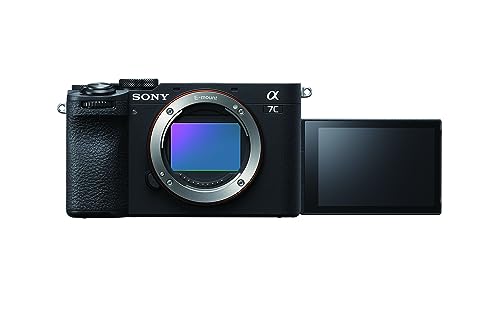
Ready to Buy? Start Here
If this guide helped you decide what to look for, these products are a place to start.

As an Amazon Associate we earn from qualifying purchases. Prices and availability are shown on Amazon.
Video and Hybrid Shooting in Practice
Hybrid shooting, stills and video on the same outing, is where the Sony A7C II and the Nikon Z5 II reveal their working styles. Switching modes should not mean rebuilding your settings from scratch. Look at how each body remembers separate stills and video settings, how quickly you can change frame rate or picture profile, and whether the controls you need sit in the same places in both modes. A camera that treats video as a first-class citizen encourages you to capture the clip as well as the photograph, and over a year that doubles the record you bring home.
Colour is the other practical divide. Some shooters want footage that looks finished straight from the camera for family and social sharing. Others prefer a flatter profile that grades well alongside stills from the same scene. Try both approaches on each body with the same subject: a face in window light is the most revealing test you own. Skin tones, highlight roll-off on a bright background and how the camera handles mixed indoor lighting will tell you more than any chart, and they will tell you in the vocabulary of your own work.
Finally, think about the whole chain after the shoot. Video files are large, and a happy hybrid workflow needs cards with room to spare, a card reader that does not bottleneck your evening, and a simple folder routine you will actually follow. Back up footage before you format a card, every time, without exception for small shoots. The Sony A7C II and the Nikon Z5 II both produce files your future self will value; the discipline of keeping them safe and findable is yours to build, and it is worth building in the first week rather than after the first loss.
A Note From the Field: What Actually Decides This One
The Sony A7C II and the Nikon Z5 II frame the same decision in two dialects. The Sony speaks compact: a small body, a vast lens catalogue, and a system that scales from a pocketable prime kit to serious hybrid work. The Nikon speaks classic: a centred finder, a grip shaped for longer sessions, dual card slots for reassurance, and handling that feels familiar from the first hour. Event shooters who cannot reshoot a moment often lean toward the reassurance of the Nikon layout. Everyday carry photographers who want the camera along without planning around it often lean Sony. Both dialects are fluent; pick the one you will enjoy speaking every day.
Planning Lenses Around the Body You Choose
A camera body is a five-year decision, but a lens collection is a fifteen-year one, so plan the glass before you finalise the body. Start with the focal lengths your existing photographs actually use. Most photographers discover their work clusters around two or three lengths, with everything else shot rarely. For the Sony A7C II and the Nikon Z5 II, list the lenses that cover your cluster well, check their size against your bag, and be honest about which single lens would live on the camera most days. That everyday lens, more than the body, defines the kit you will experience.
Everyday choices usually come down to a flexible zoom against a small fast prime, and the right answer depends on your subjects. A zoom suits unpredictable days: travel, family events and work where you cannot move freely. A prime suits repeatable days: portraits, street walks and low-light evenings where its wider aperture and smaller size change both the pictures and your willingness to carry the camera. Many photographers end up owning one of each, bought in the order their shooting demands, and that sequence is a better plan than buying a large set at once.
Leave room in the plan for the unglamorous essentials. A second battery, a fast card and a spare, a comfortable strap and a simple cleaning kit will improve more shooting days than a third lens bought too early. When you do add lenses, buy for a named purpose, a trip, a project or a recurring frustration in your current photographs, rather than for a gap in a focal-length chart. Collections built by purpose stay small, stay used and hold their value. Collections built by chart tend to stay at home, which is the most expensive place a lens can be.
Batteries, Cards and a File Routine That Holds Up
Battery behaviour differs enough between bodies that it should be tested, not assumed. The Sony A7C II and the Nikon Z5 II draw power differently depending on finder use, screen brightness, stabilisation and how much video you mix into a day. For a week, note what a full charge actually delivered in your shooting and write it on a card in your bag. That personal number, unglamorous as it sounds, ends battery anxiety more completely than any accessory, because planning replaces guessing. A small USB power bank can top up many modern bodies between locations, which suits travel days well.
Card speed is worth understanding at a practical level. A card that is fine for single photographs may stall a long burst or refuse a demanding video mode, and the failure always appears at the worst moment. Test your cards at home with your longest burst and your highest video setting before trusting them at an event. Keep one known-good card reserved for important shoots, and retire cards that have ever behaved oddly; storage is cheap compared with an unrepeatable moment. Label cards with numbers so your notes can refer to them unambiguously.
Finally, decide how you will cull and keep. A workable rule is to delete only the obvious failures, technical misses and true duplicates, and to keep everything else in the dated archive, because storage grows cheaper while moments do not repeat. Star or flag your favourites during the first review and build small collections around projects and people rather than around camera models. Whether your files come from the Sony A7C II or the Nikon Z5 II will matter far less in five years than whether you can find the photograph you are looking for in under a minute.
Setting Up Either Body During the First Week
The first week with the Sony A7C II or the Nikon Z5 II sets habits that last for years, so spend an evening on setup before the first real shoot. Begin with the basics that protect files: set the clock correctly, choose your file format deliberately rather than by default, and decide whether you want the camera to write smaller companion files for quick sharing. Photographers who shoot family and travel often appreciate an easy sharing copy, while those who edit everything can keep things simple. There is no universal right answer, only an answer that matches your routine.
Next, assign the custom buttons while your needs are fresh. Put the settings you reach for mid-shoot, focus mode, subject detection, exposure compensation or silent shooting, on the controls your fingers find without looking. Resist copying a stranger’s full configuration from a video; their subjects and habits are not yours, and an inherited setup full of mysteries will confuse you under pressure. Change one thing at a time, shoot with it for a day, and keep a short note of what you changed and why. That note becomes your personal manual supplement.
Finish the week by rehearsing recovery from the common accidents. Switch the camera to fully manual and back. Find the format command and the reset options so you are never hunting for them in a panic. Practise changing a battery and a card in the dark, slowly, until it is boring. Cameras rarely fail photographers at convenient moments, and the difference between a lost minute and a lost shoot is usually familiarity earned in calm conditions. Both of these bodies reward that investment quickly, because their depth is there to be used, not to intimidate.
Care, Troubleshooting and Sensible Used-Buying Checks
Troubleshooting works best as a short ladder you climb in order. First, confirm the obvious: battery charge, card space, lens seated properly and contacts clean. Second, check the settings that silently change results, drive mode, focus mode, exposure compensation and any bracketing left over from an experiment. Third, reset only the shooting settings if the camera still behaves strangely, keeping your custom configuration noted somewhere safe. This ladder solves the great majority of field problems on the Sony A7C II and the Nikon Z5 II alike, and it solves them without the regret of a full reset performed in frustration.
Firmware updates belong on the same calm list. Manufacturers use them to refine autofocus, add lens support and fix rare faults, and installing them is a five-minute job with a charged battery and the instructions open beside you. Read the release notes before updating; if nothing in them touches your shooting, there is no urgency, and if something does, update before your next important shoot rather than after it. Keep a note of the version you are running in the same place you keep your setup notes, so troubleshooting conversations with support start from facts.
A used purchase of the Sony A7C II or the Nikon Z5 II should also include the accessories in your inspection. Check that the battery holds a plausible charge through an afternoon, that the charger works, and that the finder and screen are free of marks that would annoy you daily. Cosmetic scuffs on corners are honest wear and often priced in your favour; gritty dials, a loose mount or intermittent errors are not. Spend your first used-camera week shooting everything, portraits, bursts, video, low light, so any hidden fault surfaces while returning the body is still simple.
More Field Notes Worth Keeping
Weather and wear belong in a handling discussion too. Neither camera should be treated as waterproof, but sealing, port covers and the feel of the dials with cold or gloved fingers all affect whether you keep shooting when conditions turn. Build a small habit kit around whichever body you choose: a wrist strap for street work, a comfortable neck strap for long days, a blower and cloth in every bag. Cameras survive years of use mostly through small habits like these, not through any single rugged feature.
Build the home routine while your archive is small. Copy files to a dated folder the day you shoot, back that folder up to a second drive or a cloud service, and only then format the card. Rename or tag the keepers while the day is fresh in your memory, because future you will not remember which frame of a burst was the good one. Ten unhurried minutes after each shoot keeps a library searchable for years. The Sony A7C II and the Nikon Z5 II both produce files worth keeping; the routine is what makes them findable when it matters.
Autofocus is where the Sony A7C II and the Nikon Z5 II stop being spec sheets and start being personalities. On paper both systems promise subject detection and tracking, but what you feel in the field is how each one behaves when the subject is small in the frame, partly hidden, or moving toward you rather than across it. Spend time with the focus area modes rather than leaving the camera on its widest setting. A smaller, deliberately placed area often beats a clever wide mode when the scene is busy, because you are telling the camera which subject matters instead of asking it to guess among several.
Many buyers of the Sony A7C II and the Nikon Z5 II will shoot far more video than they expect, because family moments, trips and work projects all drift toward motion. Judge the video side by your real clips rather than by headline formats. Most people need clean, reliable footage at normal frame rates, focus that follows a face without pulsing, and audio that does not embarrass the picture. Test exactly that: film someone walking and talking toward the camera, indoors and out, and listen back on headphones before you look at the image quality at all.
Low light is the other honest test. Focus that feels instant in a bright shop can hunt in a candlelit room or a hall with mixed lighting, especially with a slower lens fitted. If you shoot events, receptions or evening street scenes, test both bodies in genuinely dim conditions with the lens you plan to use, not the fastest lens in the cabinet. A body that stays decisive in poor light saves frames that no amount of later editing can recover, and that reliability is worth weighing heavily against smaller differences elsewhere.
Pay attention to how focus behaves at the edges of the frame. Subjects rarely stay centred, and the area a camera can cover with its sensitive points shapes how freely you can compose. With the Sony A7C II, try composing with the subject well off centre and letting tracking hold it while you refine the framing. With the Nikon Z5 II, try the same and notice whether you reach for a joystick, a touch screen or a recompose out of habit. Neither method is superior in the abstract; the better one is the one your hands learn until it disappears.
A useful handling exercise is to change your three most-used settings with your eye held to the finder, without looking at the camera. On the Sony A7C II, find exposure compensation, ISO and focus mode by touch. On the Nikon Z5 II, do the same. Every photographer has a personal trio, and the body that lets you adjust yours blind will feel faster in real work regardless of processor speeds. Dials with clear detents, buttons you can tell apart by shape, and menus that remember where you left them all contribute to that feeling of a camera that cooperates.
FAQ
Can I use Sony lenses on the Nikon?
Not directly. The mounts are different, so lenses are not interchangeable without special adapters, and adapters may limit features.
Which is better for video?
Both can record video, but features differ. Compare the recording formats and limits on each maker’s page based on what you plan to shoot.
Which system has more lens choice?
The answer changes over time, so check current lens lists from the makers and third parties. Compare the specific lenses you want rather than the total number available.
Can I adapt lenses from older systems?
Often yes with the right adapter, though autofocus and stabilization may be limited. Check the adapter and lens compatibility notes before buying.
Is a smaller body harder to hold?
It can be with large lenses or big hands. Try the camera with the lens you plan to use, and consider a grip accessory if one is offered.
Do both cameras have in-body stabilization?
Check each maker's specifications for stabilization and how it combines with lens stabilization. The effect depends on the lens and the focal length.
How important is the viewfinder?
It matters for bright conditions, action and eyeglass wearers. Look through each camera if possible and check size, brightness and refresh behavior.
What memory cards should I buy?
Check the card types supported in each camera manual and choose a speed that suits your photo and video modes. Buy from reputable sellers.
Should I buy a kit lens with the body?
It can be good value if it matches your needs, and you can sell or keep it later. Check the lens specifications and compare with separate options.
Is the Sony A7C II good for travel?
Yes, its compact body is the main reason people choose it for travel. A smaller body is easier to carry all day, though the total weight still depends on the lens you attach. Pick one or two compact lenses to keep the kit light.
Is the Nikon Z5 II a good camera for beginners moving to full frame?
It can be, because its fuller grip and traditional layout feel familiar to many people. Beginners should still hold it and read through the menus, and check that the lenses they want are available in the Z mount.
Can I use my DSLR lenses on a mirrorless camera?
Often you can with the right adapter, but autofocus and stabilization may be reduced. Check the adapter notes and the lens compatibility list from the maker before you rely on it.
Should I buy the body only or a kit with a lens?
Buy a kit if the included lens matches what you shoot, since kits are often easier to start with. Buy body only if you already have lenses or want to choose a better one separately. Compare the lens specifications on the listing.
Do I need a spare battery for a mirrorless camera?
Yes, a spare is a sensible purchase, since mirrorless cameras use power for the screen and viewfinder. Check the battery life notes in the manual and whether the camera can charge over USB.
Is full frame always better than a smaller sensor?
Not always. Full frame generally helps with low light and shallow depth of field, but it also means larger lenses and higher costs. Choose it if those benefits matter to your shooting.
What is the best way to compare two cameras in a shop?
Hold both with the lens you plan to buy, and use the menus to change a few settings you use often. Take a few test shots and check how the viewfinder and controls feel after several minutes, not just seconds.
How do I know when it is time to replace my camera?
Replace it when a clear limit, such as autofocus, low light results or a broken part, keeps costing you shots. If your lenses are the limit, upgrade those first.
How important is the screen mechanism for everyday use?
More than most buyers expect. A screen that flips forward changes how easily you record yourself and shoot from very low or high angles, while a tilting design keeps the camera slimmer and the operation centred. Think about your last month of photographs and count the awkward angles honestly. The mechanism that serves your real habits beats the one that wins a feature comparison.
Should you buy Sony A7C II or Nikon Z5 II if you mostly photograph family life?
Family life rewards reliability over specialisation: focus that finds a child’s eye without ceremony, a body small enough to be present at ordinary moments, and files that look good with minimal editing. Try both with your own children or relatives if you can, in your own home’s light. The body that gets out of your way and comes along most often is the right one, and that answer differs between households more than any specification does.
How long can you expect either camera to stay relevant?
Bodies in this class stay capable for many years because their sensors, mounts and file quality age slowly. What ages fastest is convenience: focus intelligence, video features and connectivity. If you buy the Sony A7C II or the Nikon Z5 II for what it does today rather than for future promises, it will serve until your needs genuinely change, and lenses bought for it will usually outlast it into the next body as well.
Is it sensible to buy the body first and lenses later?
Yes, provided the first lens is a versatile one you will actually use daily. A body with one well-chosen zoom or a single fast prime teaches you more in a month than a body with a shelf of lenses you rotate anxiously. Add glass when a real limitation appears in your photographs, name that limitation, and buy the lens that answers it. That order keeps both spending and learning honest.
What should you check in the first week if you buy used?
Shoot everything: bursts, video, low light, bright backlit scenes and long sessions. Check the sensor with a plain bright frame at a narrow aperture, test every dial and port, and confirm the battery holds a plausible charge. Any hidden fault is most likely to surface under varied use, and varied use in week one is also exactly how you learn a new camera, so the diligence costs you nothing.
The Short Version
The Sony A7C II favors a small body and a broad lens market. The Nikon Z5 II favors a classic grip and Nikon’s own ecosystem. Choose by lens plans and by how each one feels in your hands.
Related Guides
- Nikon Zf vs Sony A7C II: Retro Dials or Compact Full-Frame
- Canon EOS R8 vs Sony A7C II: Compact Full-Frame Compared
- Sony A6700 vs Sony A7C II: APS-C or Compact Full-Frame?
- Sony A6600 vs A7 IV: APS-C Compact or Full-Frame Hybrid?
- Sony A6700 vs Sony A7 IV: Compact APS-C or Full-Frame?
