The Nikon Zf and the Nikon Zfc are both retro-styled Z-mount mirrorless cameras, and the main difference is sensor size: the Zf is full-frame, while the Zfc is a DX-format (APS-C) camera. Choose the Zf if you want full-frame image quality and a more premium body; choose the Zfc if you want a lighter, smaller retro camera for everyday carrying. Confirm exact specs on Nikon’s product pages.

What each camera is for
The Zf is aimed at enthusiasts who want classic styling together with full-frame performance. It suits street, travel, portrait and low-light work.
The Zfc is a compact, stylish camera for people who want an easy-to-carry body with a nostalgic look. It works well for travel, family photos and casual creative work.
In this guide
Key differences to weigh
- Sensor format: full-frame generally handles dim light better and gives a shallower depth of field. DX is smaller, which also means smaller and lighter lenses.
- Lens size: DX lenses are often compact, which keeps the whole kit light. Full-frame lenses tend to be bigger.
- Build: the Zf sits higher in the lineup and is built for more demanding use.
- Crop factor: a full-frame lens on a DX body gives a tighter view, which helps with distant subjects but limits wide-angle shots.
- Lenses: both use the Nikon Z mount, so full-frame lenses fit the Zfc, and DX lenses can be used on the Zf in a cropped mode.
Think about the whole kit rather than only the body. A DX camera with a small zoom or prime can fit in a coat pocket or small bag, which means you are more likely to bring it along. A full-frame body with a fast prime is more capable in tough light, but it is a bigger commitment to carry. The best camera is often the one you actually have with you.
Both cameras suit photographers who like the look and feel of classic gear, so the choice usually comes down to image needs, the room you have in your bag, and how often you shoot in poor light.
Quick comparison
| Trait | Zf | Zfc |
|---|---|---|
| Sensor format | Full-frame | DX (APS-C) |
| Style | Retro | Retro |
| Lens mount | Nikon Z | Nikon Z |
| Carry weight | Heavier | Lighter |
How to decide
- Think about low-light shooting. If you work in dim rooms often, full-frame helps.
- Consider how much you carry. A small DX kit is easy to take everywhere.
- Look at how you will grow. Z-mount lenses move between both cameras.
- Compare current features on Nikon’s pages for stabilization, card slots and video.
Understanding Crop Factor in Practice
The Zf and Zfc use different sensor sizes, and the practical effect shows up as a change in field of view. A full-frame sensor is larger than a DX sensor, so the same lens shows a narrower slice of the scene on the DX body. For Nikon DX cameras the commonly quoted multiplier is about 1.5, which means a 35mm lens on the Zfc shows roughly the view that a 52mm lens would show on a full-frame camera. Check Nikon’s pages for the exact figure.
This has consequences for lens choice. If you love a wide-angle view, you need a wider lens on the DX body to get the same scene. A lens that feels like a classic wide-angle on the Zf may feel like a normal lens on the Zfc. On the other hand, the DX body gives you extra reach with telephoto lenses, which can be helpful for wildlife, sports and distant details. A 200mm lens behaves more like a 300mm lens on the DX camera.
Depth of field also changes slightly. At the same aperture and the same framing, a larger sensor gives a shallower depth of field than a smaller one, so full-frame bodies tend to create more background blur. This is a general principle, and the difference is modest, so do not assume that the DX camera cannot produce soft backgrounds. Use a wide-aperture lens, get close to your subject and keep the background far away.
- Multiply focal length by the crop factor to compare fields of view.
- Choose wider lenses on DX for landscapes and interiors.
- Use longer lenses on DX when you need reach.
When comparing lenses, look at the equivalent view and decide what suits your style.
Choosing Lenses for a Compact Retro Kit
A retro camera looks best with lenses that match its size, and a compact kit is part of the appeal. For the Zfc, DX lenses are designed to be small and light, so a compact standard zoom or a small prime keeps the whole camera easy to carry. Prime lenses with a modest maximum aperture can fit in a coat pocket and give a sharp, simple setup. A pancake-style lens, if available in the system, can be especially portable. Check Nikon’s pages for what is available.
For the Zf, you can choose among full-frame lenses, which are generally larger. Smaller primes will keep the camera compact, while zooms with a constant wide aperture will make it bulkier. Think about the balance: a long, heavy lens on a retro body can feel awkward, as the grips are shallow. Choose lenses you can hold steadily and carry comfortably.
Plan your kit around the way you shoot. For street and travel photography, a single standard prime or a small zoom is often enough. For portraits, a short telephoto prime gives pleasing perspective. For landscapes, a wide-angle zoom helps. Do not buy too many lenses at once. Start with one that covers most of your needs, use it for a few months and then add another if something is missing.
Consider lens controls too. Some lenses have aperture rings or control rings that complement a retro design. Check the lens specifications for ring functions and whether you can customize them. Look at the filter size, so you can share filters among lenses. Always confirm mount compatibility, since DX and full-frame lenses both fit but show different areas of the sensor.
Low Light Performance and Exposure Choices
The post notes that full-frame generally handles dim light better, and it is worth understanding why. A larger sensor collects more total light for the same exposure, which tends to reduce visible noise at a given ISO. In practice, this gives the Zf an advantage in dark rooms, at night and indoors, particularly with moderate lenses. The Zfc can still make good photos in low light, but you may need to accept a higher level of noise or use a faster lens.
You can help either camera in dim conditions. Use the widest aperture of your lens, and choose a lens with a bright maximum aperture if you shoot at night often. Set auto ISO with a limit and a minimum shutter speed that suits your subject. For static scenes, use image stabilization if the camera offers it, and brace the camera. Shoot raw files, so you can reduce noise and adjust exposure later.
Light itself can be improved. Move near a window or a street lamp, ask your subject to face the light, or use a small flash bounced off a wall. A tripod or a flat surface allows slower shutter speeds with low ISO. Avoid underexposing and then brightening in editing, since it increases noise.
Check the actual high-ISO behavior of both cameras by viewing sample images from sources you trust, or by testing a camera in a shop. Decide how much noise you can accept for your kind of pictures. A small amount of grain can be attractive in black and white photos.
Handling Differences in Everyday Use
Although both cameras share a retro look, the details of handling differ. The Zf is a larger body with a more premium feel, and the Zfc is smaller and lighter. Think about how each fits your hand. Photographers with larger hands may find a small body cramped, while those with smaller hands may appreciate the compact size. The rear screen, the viewfinder, the position of buttons and the dial layout differ between models, so check Nikon’s pages and handle both in a shop.
Consider how you will carry the camera. A smaller body slips into a small bag or a coat pocket, and a strap or wrist strap keeps it handy. A bigger body needs a more substantial bag. If you walk long distances, weight adds up. If you travel, a lighter kit can mean fewer aches and more photos.
Think about accessories. Some cases, grips and straps are made for specific models, so check what is available. A thumb grip or a small hand grip can improve comfort on a compact body. Consider screen protection, and a lens hood to protect the front element.
Both cameras can feel more fun when you take time to learn the dials. Practise changing settings without looking, set a custom function for the setting you change most, and enjoy the tactile feeling of the controls. Over time, the camera becomes a natural extension of your hands.
Care, Resale and Upgrade Thinking
A retro camera is as much a lifestyle object as a tool, and keeping it in good condition helps with both enjoyment and resale value. Protect the finish with a case or a soft pouch, avoid scratching the top plate, and wipe fingerprints from the body. Keep the dials clean, and avoid forcing them if they feel stiff. Use caps when you are not shooting, and change lenses in a clean place.
If you buy used, check the dials, the shutter count, the screen, the sensor and the battery. Look at the edges of the body for wear in the finish, and ask whether the camera has been repaired. Make sure the lens mount is undamaged. Confirm that it works with your lenses, and test autofocus. Check for the original box and accessories, which can help value.
When deciding between the two, think about how your needs may change. If you are starting with a small DX kit and later find that low light or shallow depth of field limits you, you could move to full-frame and keep your Z-mount lenses that fit both sensors. If you start with the Zf and find the kit too big for daily use, the Zfc could become a second, lighter camera for travel.
Signs that it is time to replace include failing controls, unreliable autofocus, a battery that no longer lasts and limits that you hit repeatedly. Sell or trade your old camera while it is still in good condition.
A Checklist for Choosing Between the Zf and the Zfc
Both cameras share a retro look and a lens mount, which makes them easy to confuse. The real differences show up when you think about how you will use the camera week after week. Run through these questions and see which body wins more of them.
- Do you want the larger sensor and its shallower depth of field, or is a smaller sensor enough?
- Is a compact, light camera more important than the most premium build?
- Will you use older or heavier lenses that would benefit from in-body stabilization, if the camera offers it?
- Do you plan to buy mostly small, light lenses, or are you open to larger full-frame glass?
- Do you want the retro dials for exposure control, and how important is a vari-angle screen to you?
- Will you often travel with the camera in a small bag or on a strap all day?
Be honest about your answers. People sometimes buy the larger sensor on principle, then find the extra size and weight discourages them from carrying the camera. Others pick the smaller body for convenience and later miss the abilities of the larger sensor in dim rooms. We have not used either camera, so confirm the exact features in the makers’ own documentation before buying.
Comparing the Bodies Side by Side
The table below sets out general differences that owners and the makers’ own descriptions point to. Details can change with firmware and with the specific unit, so treat this as a guide to what to look at.
| Area | Zf | Zfc |
|---|---|---|
| Sensor size | Full-frame | DX, smaller than full-frame |
| Body | Larger, more premium, heavier | Smaller and lighter |
| Stabilization | In-body stabilization | Relies on lens stabilization when available |
| Lens effect | Lenses show their full field of view | Lenses show a tighter, cropped field of view |
| Typical lens size | Can be larger and heavier | Often paired with small, light lenses |
| Everyday feel | Serious, solid tool | Casual, carry-everywhere camera |
Neither is a bad choice. The Zf suits people who want a stylish camera that does not compromise on sensor size, while the Zfc suits people who want style in a lighter, more modest package.
Mistakes People Make When Choosing a Retro Camera
The vintage look can pull attention away from practical points. Watch for these slips.
Buying for looks alone
A beautiful body is wonderful, but you will spend most of your time using it, not admiring it. Make sure the controls and the handling suit you.
Forgetting the lens budget
A camera body is only part of the cost. Think about which lenses you will need and what they will weigh, especially if you choose the full-frame model.
Assuming crop factor is a flaw
A smaller sensor gives extra reach on telephoto lenses and keeps kits compact. It only becomes a drawback if you need very wide views or shallow depth of field above all else.
Skipping a grip test
Retro bodies often have shallow grips. If you have large hands or use heavy lenses, try holding the camera first or plan to add a grip accessory.
Ignoring battery habits
Mirrorless cameras consume power quickly. Plan on carrying a spare, particularly for travel or long days.
Choosing by Shooting Situation
Picture the places you will take the camera, and use that to guide the decision.
City walks and street scenes
Both cameras fit the style, but the lighter Zfc is easier to carry all day. A small prime lens keeps the kit discreet.
Low light and indoor events
A larger sensor generally gathers more light, which favors the Zf. Use a bright lens with either body for the best results.
Travel and family trips
Weight matters across long days. The Zfc and a small zoom make a handy combination, while the Zf rewards you when image quality is the priority.
Wildlife and distant subjects
The crop factor of the Zfc extends the reach of a telephoto lens, which can help when you cannot get closer.
Handy Terms for Comparing Cameras
Words like these appear in almost every comparison, so a quick glossary helps.
- Full-frame: a sensor roughly the size of a frame of traditional thirty-five millimeter film.
- DX: the maker’s name for its smaller APS-C sensor format.
- Crop factor: the number that describes how much narrower a lens view looks on a smaller sensor.
- In-body stabilization: a system that moves the sensor to counter small shakes of the hand.
- Depth of field: the range of distance in a photo that looks acceptably sharp.
Knowing these terms lets you read the makers’ own pages with more confidence, and it helps you compare listings fairly. Always double check the exact specifications for the model and firmware you intend to buy, since manuals and official pages are more reliable than any general summary.
Setting Up a Retro Body for Comfortable Use
Retro cameras reward a little customization. Out of the box, the dials and buttons may not match how you like to work, so spend an hour in the menus after the camera arrives.
- Decide which exposure controls you want on the physical dials and which on the command wheels, then set them accordingly.
- Assign a function button to something you reach for often, such as focus mode or a quick sensitivity change.
- Check the screen and viewfinder brightness in the light where you shoot most.
- Choose a strap that spreads the weight, since retro bodies can feel top heavy with larger lenses.
- Pick a memory card type that the maker recommends and format it in the camera.
If you add a grip, a half case or a thumb rest, make sure it does not block the battery door or card slot. Look at the maker’s accessory notes before buying anything, and keep the manual close until the controls feel natural. After a few outings, revisit your settings and adjust them to match what you actually do.


Ready to Buy? Start Here
If this guide helped you decide what to look for, these products are a place to start.

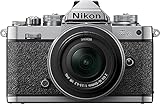
As an Amazon Associate we earn from qualifying purchases. Prices and availability are shown on Amazon.
How the Two Cameras Feel After a Month, Not a Day
First impressions of a retro-styled camera are dominated by looks and dials, but ownership is decided by smaller things that only appear after weeks of use. Notice how often you reach for the camera when leaving the house. A body that feels like a burden stays at home, and a camera left at home takes no photographs at all. The smaller, lighter DX body has an advantage here that spec sheets understate: it slips into a small bag with a compact prime and asks very little of your shoulder, so it joins walks, commutes, and family visits where a larger kit would be debated and then left behind.
The full-frame body earns its extra size on the days when light is poor or the subject matters enough to bring the bigger kit deliberately. Evening gatherings, indoor events, and winter afternoons reward its sensor and its handling with larger lenses. Many photographers who own both sizes of system settle into exactly this pattern without planning it: the small body becomes the everyday camera and the large body becomes the deliberate camera. If you are choosing only one, ask which of those two roles your photography actually needs most weeks, rather than which camera wins a list of features.
Dial habits also settle over time. Some photographers find that physical shutter and sensitivity dials genuinely slow them down in a good way, checking settings with a glance before raising the camera. Others discover they mostly shoot in one automatic mode and rarely touch the dials they admired in the shop. Neither answer is wrong, but it is worth knowing which photographer you are. Borrow, rent, or spend unhurried time in a store working the controls with the camera off as well as on, because the feel of a dial under your fingertip is a real part of what you are buying with either of these bodies.
Building a Lens Kit Around Each Body
The body decision is really a lens decision in disguise, because the lenses you add over the next few years will cost more, weigh more, and stay with you longer than the body itself. Around the DX body, a sensible kit grows from compact primes and a versatile standard zoom. The crop factor turns modest telephoto lenses into genuinely long tools, so a small kit can cover street, portrait, and light wildlife work without any single lens dominating the bag. This is where the smaller system is at its most coherent: body, lenses, and bag all agree about travelling light.
Around the full-frame body, the same focal lengths become wider in effect, and the kit tends to grow toward faster primes and larger zooms. That growth brings real benefits for low light and subject separation, and real costs in size and spending. Plan the second lens before you buy the first body. If the lens you want next is only practical, affordable, or available in one of the two formats, that fact should weigh heavily, because a camera system is bought one lens at a time and regretted the same way.
Adapted older lenses add another dimension to both bodies. The retro styling invites experimentation with manual-focus glass, and the experience of slowing down with an adapted lens suits these cameras well. Remember that an adapted full-frame lens behaves as a longer lens on the DX body, which can be a benefit for portraits and a frustration for wide scenes. Try one adapted lens before building a collection, confirm that you enjoy manual focus with the aids each body provides, and check that the adapter you need is a simple, well-made ring rather than a source of play and frustration.
A Sensible Order for Adding Lenses
Start with the lens that covers your most common subject at a focal length you will actually carry. Live with it long enough to learn what it cannot do. The gap you feel repeatedly, whether that is width indoors, reach at the park, or speed in the evening, is the honest specification for your second lens. Buying in that order prevents the classic mistake of owning three lenses that overlap while the one focal length you need every week is missing. It also keeps the smaller system small, which is the entire point of choosing it.
Shooting Situations Worked Through in Detail
Consider a dim restaurant celebration. The full-frame body holds an advantage in sensitivity and in the shallow depth of field that separates a subject from a cluttered background, and its larger grip steadies a faster prime. The DX body can absolutely work here, but it asks more of the photographer: choose your position near a window or a lamp, watch for the moment faces turn toward the light, and accept a little more depth in the scene. The difference is real but it is a difference of degree and effort, not of possible and impossible.
Consider instead a week of travel on foot. Here the calculation reverses. The DX kit is lighter every hour of every day, its lenses are smaller in the bag, and the extra reach helps with details across a square or wildlife at a viewpoint. The full-frame kit produces its best work in the evenings, but you pay for those evening frames by carrying the weight through every afternoon. Photographers who walk all day and shoot mostly in daylight often find the smaller kit returns with more good frames simply because it was present and ready more often.
For family photography, both bodies succeed, and the deciding factors become autofocus behaviour, how quickly the camera wakes, and whether the photographer is comfortable handing the camera to someone else. A retro body with dials set sensibly can be handed over in an automatic mode without drama. Think about who else may use the camera, how you share images afterward, and whether video of children or events matters to you, because those everyday questions predict satisfaction better than any single technical comparison.
Colour, Files, and Your Editing Habits
The two bodies invite slightly different relationships with the finished file. Photographers drawn to the DX body often enjoy in-camera colour styles and sharing images with minimal editing, which suits a camera carried daily and used socially. The full-frame body is frequently paired with raw shooting and a considered editing workflow, where its files give more room to recover highlights, lift shadows, and print large. Neither habit is superior, but be honest about yours. Buying the camera that matches the workflow you will actually follow produces better results than buying for a workflow you keep meaning to adopt.
Test this before deciding if you can. Download sample files from both formats, edit them the way you normally edit, and print or view them at the size you actually use. Most people discover that at their real output sizes the gap is smaller than forum arguments suggest, and that composition, light, and timing dominate the difference. That discovery is liberating: it moves the decision back to handling, lenses, and price, where the differences are concrete and personal.
Storage and backup habits scale with the larger files, modestly but noticeably over years of shooting. Cards, drives, and backup time all grow. None of this should decide the purchase alone, yet it belongs in a complete account of ownership, especially for photographers who shoot in bursts at events or who travel for long stretches between chances to back up.
Money Matters Beyond the Body Price
Compare the cost of the kit you will own in two years, not the cost of the body on the shelf. Add the second lens, a spare battery, cards, a bag that fits, and any grip or adapter you already know you want. The DX route usually leaves meaningful money unspent, and that remainder can fund the trips and occasions where photographs actually happen. The full-frame route concentrates spending in equipment. Both are legitimate choices, but they should be made knowingly, with the whole kit priced, rather than discovered one accessory at a time.
Resale and upgrade paths differ too. Bodies in both lines hold value reasonably when bought sensibly, especially if bought used after the first owner has absorbed the steepest drop. Lenses hold value better than bodies in almost every system, which is another reason the lens plan matters more than the body badge. If you expect to trade up within a few years, buy lenses you would keep across that change, and avoid building a large collection in a format you suspect you will leave.
Insurance, repair access, and warranty terms are unglamorous but real. Check how service is handled in your country for each body, what a shutter or screen repair typically involves, and whether loan equipment is available through any local scheme if you shoot for clients. A camera that can be repaired locally and quickly is worth more to a working photographer than a small advantage on a specification list.
A Final Decision Exercise
Write down your last twenty outings with a camera and mark each one for light level, subject, and how far you carried the kit. Count honestly. If most marks fall in daylight, on foot, with family or street subjects, the smaller body is speaking clearly. If most fall in the evening, at events, or on deliberate photo trips where the kit was the point of the outing, the full-frame body has the stronger claim. This exercise works because it uses your own evidence instead of imagined future photography, and imagined photography is the most expensive kind to buy for.
Then handle both bodies one more time with that evidence in mind. Set the dials, raise each camera to your eye, work the controls with gloves if you shoot in winter, and mount the lens you would buy first. The body that disappears into the task is usually the right one. Photographers keep cameras that feel natural long after they forget the details of a comparison table, and keeping the camera, carrying it, and using it weekly is what turns either of these retro bodies from a beautiful object into the tool that made your best pictures.
Video and Hybrid Use on Both Bodies
Photographers who also record family video, travel clips, or short pieces for sharing should test the video side with the same seriousness as stills. Work through how each body starts recording, where the controls fall while you hold it at arm’s length or on a small tripod, and how the screen behaves in bright light. A retro body encourages stills first, yet many owners find video becomes a regular part of trips and gatherings. The camera that makes starting a clip effortless is the one whose video features you will actually use, whatever the menus promise.
Sound deserves a quick practical test as well. Built-in microphones on any camera are vulnerable to wind and handling noise, so think about whether you will add a small external microphone for speech and events. Check where that microphone mounts, whether it blocks the dials or the viewfinder, and how the combination fits in your bag. These small ergonomic questions decide whether a hybrid setup feels like one coherent tool or a pile of attachments, and they are almost impossible to judge from a specification list alone.
Heat and recording length matter for a narrow set of users: those filming ceremonies, talks, or performances in full. If that is your work, look up the maker’s stated limits for the settings you plan to use, test in conditions like your own, and plan card and battery changes around real behaviour. For short clips gathered through a day, either body is more than adequate, and the choice returns to handling and lenses. Matching the test to your actual recording pattern prevents both overbuying and disappointment.
Accessories That Change the Experience
A small grip, a thumb rest, a wrist strap, or a half case can transform how a retro body feels, and owners of both cameras commonly add one or two of these. Budget for the accessory you already suspect you need instead of pretending the body alone must be perfect. At the same time, resist building a collection of attachments in the first month. Live with the plain camera first, note exactly where your hand tires or your fingers search, and solve that specific problem. Accessories bought against a felt need earn their place; accessories bought speculatively become drawer clutter in every system.
Screen protection, a spare battery, and a card you trust are the unglamorous essentials that protect real outings. A retro dial camera invites slower, more deliberate shooting, which often means fewer frames per outing and gentler battery use, but a long travel day with the screen in use can still empty a pack. Carry the spare in the same place every time, rotate the two batteries evenly, and format cards in the camera after your files are safely backed up twice. Habits like these matter more to a year’s photography than the small differences between these two bodies.
Bags deserve the same fit test as the camera. A bag that suits the smaller body may swallow the larger one awkwardly, and a bag bought for the larger kit makes the smaller kit rattle. If you already own a bag you love, bring it to the handling test. The right system is the one that slides into your existing life, your existing bag, and your existing routines with the least friction, because friction is what leaves cameras at home.
Learning Curve and Growing Room
For a first interchangeable-lens camera, the smaller body offers a gentler financial and physical step, and its dials teach exposure fundamentals visibly. You can see and feel what the shutter speed dial does, which makes the relationship between settings and results easier to grasp than burying the same lesson in menus. A beginner who carries the camera daily will learn quickly, and the system’s smaller lenses keep each new capability affordable to explore.
For an experienced photographer adding a second, more enjoyable body beside a work system, the full-frame model often fits the intention better. It shares the sensor size of a main kit, gives a familiar field of view with adapted lenses, and delivers its best exactly in the low-light, deliberate situations where an enthusiast reaches for a camera for pleasure. Knowing whether this purchase is a first system or a companion system clarifies the choice more than any single feature comparison.
Either way, allow a month of regular use before judging. Dial layouts that feel strange in a shop become automatic, and small annoyances either fade or identify themselves clearly enough to solve with a setting or an accessory. Photographers who switch systems after a single weekend rarely give a camera its fair trial. Commit to learning the body you choose, work through its manual with the camera in hand, and set it up deliberately. The reward is a tool that responds without thought, which is the real promise behind the retro design of both of these cameras.
What Ownership Costs in Attention, Not Just Money
Every system asks for a little ongoing attention, and planning for it keeps ownership pleasant. Firmware updates occasionally improve autofocus behaviour, add lens support, or fix small faults, so check the maker’s support pages a few times a year and install updates with a charged battery and a few unhurried minutes. Keep the sensor clean by changing lenses with the mount facing down, away from wind, and use a blower before reaching for anything that touches the sensor. These habits are identical for both bodies, yet they are worth stating, because a camera that is maintained stays enjoyable and a neglected one slowly becomes a source of spots, frustration, and repair bills.
Insurance and records matter once a kit grows. Photograph your serial numbers, keep receipts together, and note which lenses you own in a simple list stored with your other household documents. If anything is lost or stolen, that list turns a bad day into a manageable claim. It also helps at resale time, when a documented, well-kept body with its box and charger inspires more confidence than a bare camera with a story. Neither body in this comparison is unusually fragile, but both reward the ordinary care any precision instrument deserves.
Finally, think about the photographs themselves as part of ownership. Back up each outing before you edit, keep a second copy somewhere separate from the computer, and cull with a light hand until you know your own taste. The camera decision that started this comparison will fade quickly; the archive you build with whichever body you chose is the part that lasts. Choose the camera that you will carry, maintain, and learn without resentment, and the archive will take care of itself.
One Body, Two Photographers: Two Honest Verdicts
Imagine a photographer who walks to work through a city, photographs friends, street scenes, and weekend trips, and prints little beyond sharing online. For that photographer the smaller body is not a compromise at all. It is the camera that is present, the kit that fits the bag already owned, and the system whose lenses can grow without changing the character of the outfit. Recommending the larger body to this photographer because its sensor is bigger would be poor advice, however impressive that sensor is in the evening.
Now imagine a photographer who shoots community events, evening performances, and family milestones in halls and homes, and who prints for the wall. For that photographer the full-frame body’s low-light strength, its steadier handling with faster lenses, and its shallower depth of field are not luxuries; they are the working tools of every assignment. The smaller body could cover some of those evenings, but it would be fighting its nature each time, and the photographer would feel the difference in keeper rates and in confidence.
Most readers sit between those two portraits, which is why the honest answer to this comparison is a method rather than a winner. List your real subjects, price the whole kit for each body, handle both with your chosen first lens, and weigh presence against low-light strength using your own calendar as evidence. Do that work carefully and either camera becomes a good decision, because it will have been chosen for the photography you actually do, in the light you actually shoot in, with the bag you actually carry.
A Note on Renting and Borrowing Before You Commit
If the decision stays close after every test, rent each body for a few days or borrow from a fellow photographer, and shoot your ordinary life rather than a special occasion. Ordinary days reveal the truth about weight, dials, and enthusiasm, because there is no event adrenaline to carry a heavy or awkward kit through the hours. Photograph the commute, the family meal, the walk you always take. At the end of each rental, ask a single question: did I reach for this camera without deciding to? The body that was reached for, unprompted, on ordinary days is the body that will still be in use when the newness has worn off, and that is the only verdict that really matters in a comparison between two cameras this capable.
What to Do If You Still Cannot Decide
When every test ends in a draw, decide by the photograph you most regret missing in the last year. If the missed frame was an evening scene that your current camera could not hold cleanly, weight the full-frame body’s strengths. If the missed frame happened because the camera was at home while you were out living your life, weight the smaller body’s presence. Regret is honest data about your photography, and it points at the limitation that actually costs you pictures. Buy against that limitation, set the camera up carefully, and then stop comparing. The energy spent second-guessing a close decision is better spent on the first hundred outings with whichever body you chose, because those outings, not the comparison, are where your next year of photographs is waiting.
FAQ
Can I use the same lenses on both?
Yes, native Z lenses fit both. DX lenses on the Zf use a cropped portion of the sensor.
Does the Zfc look the same as the Zf?
They share a retro design theme, but they are separate bodies with different layouts, sizes and controls.
What is crop factor?
It describes how much narrower the view is on a smaller sensor compared with full frame. For Nikon DX cameras the commonly quoted figure is about 1.5.
Will the Zfc take good low-light photos?
Yes, though full-frame generally has an advantage in dim light. A fast lens and careful exposure help the Zfc.
Do DX lenses fit the Zf?
Yes, but the camera uses a cropped area of the sensor. Check the camera's menu for the setting and the effect on resolution.
Which camera is better for travel?
The lighter Zfc is easier to carry, while the Zf offers more image quality in tough light. Choose based on how much weight you will accept.
Can both cameras use the same filters?
Filters depend on the lens thread size, not the camera. Check the filter size on each lens you own.
Is it worth buying a grip accessory?
It can improve comfort with larger lenses. Check which accessories are available for your model.
The Short Version
The Zf is the full-frame retro model, and the Zfc is the compact DX retro model. Choose the Zf for image quality and build, and choose the Zfc for lighter carrying. Check Nikon’s pages for details.
