Disclosure: As an Amazon Associate, reviewstook.com earns from qualifying purchases. Links on this page are affiliate links; they cost you nothing extra. Prices and availability change often, so check the current Amazon listing before you buy.
Asking is a baby security camera worth it is really asking what a parent is buying, because the honest answer is not a product verdict — it is a household calculation, and it comes out differently for different floor plans, different caregivers, and different temperaments. So: is a baby security camera worth it, in the end, for you? For most families, yes — provided the camera is matched to the household and bought for the right reasons, and provided the family understands what it is and is not buying. This article works the calculation in the open, step by step: what you actually get, what it really costs beyond money, the households it pays off for, the households it plainly does not, and a checklist that settles the question for your family specifically, rather than for some average family that does not exist.
Worth it if your home has distance in it — a nursery you cannot hear from the sofa, a garden, a home office, a return to work — or if other caregivers share the watching, or if you are the kind of parent whom information calms. Not worth it if your baby sleeps steps from where you spend your evenings, if a live feed would wind you up rather than settle you, or if what you are actually shopping for is safety — because no camera sells that. A camera is a monitoring convenience, never a safety or medical device; it cannot prevent SIDS or any other harm. Safe sleep protects your baby. The camera, at its best, protects your rest.
Between those two poles sits the honest middle where most households actually live, and this article is written for them: parents who could manage without a camera — parents managed for millennia — and are asking whether managing would be poorer than buying. That framing matters, because it sets the bar correctly. The camera does not need to be necessary to be worth it; very few of the nursery’s contents are necessary. It needs to return more, in sleep, freedom, and calm, than it costs in money, attention, and obligation, across the years it will serve. Judged at that bar, the answer for the middle household is usually yes — with the size of the yes set by the household’s distance, its care-sharing, and its temperament, and the tier of the yes set by how much refinement it will genuinely use. The sections that follow exist to locate your household on those three scales, honestly, so the verdict at the end is yours rather than this article’s.
Key Takeaways
- The value of a baby camera is measured in avoided wake-ups and reclaimed evenings, not in the features printed on its box — a distinction that decides every honest version of this calculation, for every household, every time.
- Its worth scales with distance in every sense: the further the nursery is from your life — by floor, by garden, by working day — the more the camera earns its place on the wall.
- The true costs are attention and temperament as much as money — a feed that feeds anxiety instead of settling it is a bad purchase at any price, in any tier, from any brand.
- Buy-once systems and subscription systems have genuinely different worth shapes over the years; know which one you are signing before the first night, not when the first renewal arrives.
- A budget general camera captures most of the core value on offer; the premium tiers buy refinement and interpretation, and whether those are worth it is a question about your household’s appetite for both.
- The camera never buys safety, at any price or tier. That line is simply not for sale, and any product or salesperson implying otherwise should be refused on the spot, however good the camera itself may be.
In this guide
What You Actually Get
Strip the marketing away and a baby security camera delivers four concrete goods. The first and largest is the silent check: the ability to answer “is she okay?” without opening a door, spilling light, and converting a resettling baby into a wide-awake one. This sounds small and is, in aggregate, enormous — it operates every night, often several times a night, across years. Parents do not describe it as a feature; they describe it as the difference between sleeping in the same house as a baby and sleeping on duty beside one.
The second good is freedom of movement. A monitored baby untethers the evening: cooking, gardening, working in another room, sitting outside — the ordinary geography of adult life resumes, with the nursery a glance away instead of an earshot away. For a parent working from home with a napping baby, or returning to an office while a caregiver is in the house, this freedom is not a luxury layered on parenting; it is what makes the household’s other obligations possible.
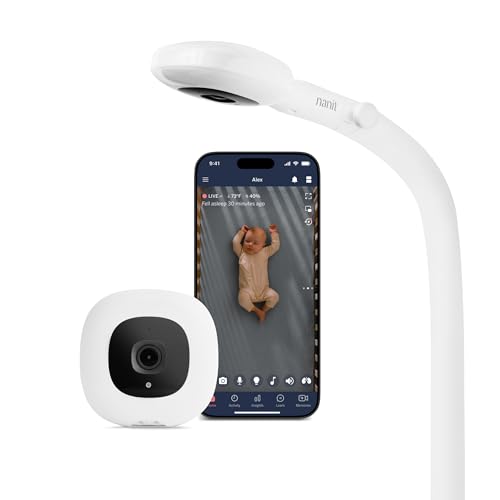
The third good is information you can act on. A night’s record — when sleep came, how long the waking lasted, whether the new routine worked — replaces exhausted folklore with something shared and factual. On the systems that interpret the night, like the Nanit Pro, that information arrives pre-digested. Treated as routine information rather than health data, it genuinely improves decisions, and it gives a pediatrician a clearer account of sleep patterns than two tired memories can.
The fourth good is shared vigilance. A camera lets vigilance be distributed — between partners in shifts, to a grandparent in the house, to a sitter on a Friday — instead of concentrating it in whichever parent has the lightest sleep. That distribution is worth more than any single feature, because parental exhaustion is a household systems problem, and the camera is one of the few purchases that addresses it as one.
There is a fifth good, quieter than the others, which owners mention only when asked what surprised them: the record of a vanishing stage. The saved clips and the remembered mornings — the first roll, the dawn babbling, the small person standing in the crib surveying their kingdom — become family material of a kind no one planned to collect. It would be a strange reason to buy a camera, and this article does not offer it as one. But in the honest ledger of what owners actually got, it appears too consistently to omit, and for some households it is, in retrospect, the line that tips a close calculation.
Is a Baby Security Camera Worth It? The Money, Worked Honestly
Since worth is a calculation, here is the money side done properly — in tiers and shapes rather than figures, because figures expire and shapes do not. At the entry tier, a general smart camera buys the core goods outright: one payment, local recording, no plan, and a second career anywhere in the home when the nursery is done with it. Its worth question is the easiest in the category — the outlay is small enough that a single season of reclaimed evenings answers it. At the mid tier sit the buy-once dedicated systems, the closed Infant Optics and the hybrid VTech: a larger single payment, nothing thereafter, and value that accumulates silently across every night of a multi-year service life. Their worth question is about longevity — the longer the household keeps them, the more obviously the answer is yes.
At the premium tier, the connected flagships change the shape of the spending: a substantial purchase plus a subscription that renews across the years, possibly per camera. Their worth question is therefore not “is the camera good” — it is — but “will we still be using the paid layer in year two, and is it worth rent?” Households that use the sleep insights weekly answer yes and mean it; households that let the plan renew unexamined are paying for a feature they framed in the shop and forgot by spring. The honest premium calculation also counts the second camera honestly: twins, a sibling, a second room — each multiplies the plan as well as the hardware.
Across all tiers, one piece of arithmetic disciplines the whole question: divide the total ownership cost by the nights of service. A camera used nightly for three years serves over a thousand nights; even the premium ledger, divided honestly, comes out at a modest nightly figure for the goods described above — the silent checks, the reclaimed evenings, the distributed vigilance. That arithmetic is why the category survives its sceptics. But it only works if the nights actually happen: a camera abandoned in month two, because its alerts were never tuned or its feed wound up the wrong temperament, divides its cost by sixty nights and fails the calculation completely. Worth, in other words, is decided less at the checkout than in the first fortnight of use — which is why this article keeps returning to fit, tuning, and the trial.
The Real Costs Beyond Money
The money cost is real but legible — a tier, a possible subscription, a possible second camera — and baby security camera buying guide prices the shapes honestly. The costs that decide worth are the other ones. Attention is the first: a feed in your pocket asks to be looked at, and for some temperaments the asking never quiets. The parent who checks forty times a night has not bought peace of mind; they have bought a beautifully rendered anxiety channel, and its worth to that household is negative at any price.
The second cost is a subtle shift in trust. A household with a camera can drift toward verifying instead of knowing — checking the sitter, checking the partner’s check, letting the feed mediate relationships that ran on trust before. Managed consciously, with the camera treated as a shared household tool, the drift is avoidable; unmanaged, it is a real price paid in a currency no refund returns. The third cost is maintenance of the small kind: updates, passwords, re-aiming, re-tuning, the occasional midnight reconnection ritual. Individually trivial, collectively a standing obligation that lands, as all household obligations land, unevenly.
The fourth cost is opportunity. Nursery budgets are finite, and a premium camera plus its plan is the same money as other things a family might value more — a better mattress for the parents’ own wrecked sleep, help in the house, a contribution to the unglamorous essentials. Worth is always relative to the alternative purchase, and an honest calculation names the alternative rather than comparing the camera against nothing.
The fifth cost is the one nobody lists and everybody pays once: the learning curve landing in the least teachable month of your life. Every architecture asks something of its owners in the early weeks — an app to learn, alerts to tune, a parent unit’s habits to form — and it asks during the newborn fog, when the household’s capacity for new systems is at its lifetime minimum. This is an argument not against the camera but for timing: bought and installed before the baby arrives, its learning curve is paid in a rested currency; bought in week three, the same curve is paid in sleep. The worth calculation quietly includes whichever exchange rate your timing chooses.
Who It Pays Off For
The family in the spread-out house. Distance is the camera’s raw material. Where the nursery is a floor away, where evenings happen in a garden or a kitchen the baby cannot be heard from, the camera converts anxiety and stair-climbing into a glance. These households report the highest satisfaction in the category, and it is not close: the product was, in effect, designed for their floor plan.
The household of shared care. Where grandparents, partners in shifts, and sitters divide the watching, the camera pays off as infrastructure — a common picture everyone can see, a handover that does not depend on description. Hybrid systems with a parent unit, like the VTech VM901, shine brightest here, because the shared screen asks nothing of anyone’s phone or technical confidence.
The information-calmed parent. Temperament is destiny in this category, and for the parent whose mind settles when it can see — who would otherwise lie awake imagining — the camera is worth it almost regardless of tier. The feed answers the question the imagination was answering worse. These parents should buy without guilt and choose the depth of information they will actually enjoy, up to and including the interpreted night.
The parent working from home. A distinct and growing profile: the baby naps in the nursery, the parent works two rooms away with a door closed against calls, and the working day is only possible because the monitor bridges the gap. For this household the camera is not a parenting accessory but work infrastructure, and its worth should be calculated like it — against the cost of the alternatives, which are a shorter working day or paid care for the nap hours. The calculation is rarely close. These households should weight alert reliability and background audio above every other feature, because those two are the job.
The family with a baby who has additional needs. Some households watch more closely for reasons their pediatrician knows and this article does not need to: a baby whose early months came with extra vigilance at home, a feeding or sleeping situation the parents have been asked to keep an eye on. For these families, the ability to observe without disturbing — to check a sleeping baby’s position and settledness without waking a fragile routine — carries a weight the general calculation understates. The boundary still holds absolutely: the camera observes, it does not monitor health, and anything it shows that worries you belongs in a call to your clinician, not in a settings menu. Within that boundary, these households consistently judge the camera among the most worthwhile purchases of the first year.
Who Should Skip It
The small-home household. In a flat where the nursery is an open door away and every stir is audible in person, the camera’s goods shrink toward zero: the silent check duplicates your ears, the freedom of movement duplicates your floor plan. An audio monitor — or nothing — serves these homes honestly, and the camera money earns more elsewhere.
The feed-wound parent. The mirror of the information-calmed parent: the one who knows, or discovers, that a live window into the crib winds them tighter — checking compulsively, scoring nights, sleeping worse with the monitor than without it. For this household the camera is not worth it at any tier, and recognising it is wisdom, not failure. A parent-unit system that can be left in the kitchen, or audio alone, returns the night to its owner.
The safety shopper. Anyone whose real purchase intention is protection should skip the camera and spend the money and attention on the things that protect: a safe sleep setup, a bare crib, a firm flat mattress, back sleeping, and the household’s own habits. A camera bought as a safety device delivers neither safety nor satisfaction, because it will be judged nightly against a job it cannot do.
The short-horizon household. Worth needs time to accumulate, and some households do not have the runway: the family moving abroad in four months, the baby about to graduate to a shared sibling room where one camera already serves, the temporary living arrangement that will dissolve by spring. For them, the honest options are the entry-tier general camera — cheap enough to justify over a short life and redeployable afterwards — or borrowing the category entirely: a hand-me-down closed system from a family whose nursery days are done. Buying a premium connected setup for a single season is the one configuration in this article whose arithmetic almost never closes.
The Strengths and Trade-Offs of Owning One
Strengths of ownership
- Nightly, compounding value: the silent check operates for years, across siblings, at a cost per use that falls toward zero.
- Evenings returned: adult life resumes its geography while the baby sleeps, which sustains the parents who sustain everything else.
- A second career: playroom, toddler room, pet and home duty extend the working life well past the crib.
Trade-offs of ownership
- A standing temptation to check, which the household must govern rather than be governed by.
- For connected models, a standing relationship with a network, an account, and possibly a plan.
- A device in the child’s room whose presence must be re-decided as the child grows into a person.
The balance-sheet view is developed in full in baby security camera pros and cons; this article’s concern is narrower — whether the balance, for your household, clears the bar of worth.
Read the two lists once more and notice their asymmetry, because it is the whole worth question in miniature. The strengths are all things the camera does for the household’s scarcest resources — sleep, time, attention, the ability to be in two places — and they recur nightly. The trade-offs are all things the household must do for the camera — govern it, feed it a network, re-decide its presence as the child grows — and they recur occasionally. Products whose benefits recur nightly and whose costs recur occasionally are, as a class, worth buying; the exceptions are never about the product’s quality and always about a household where the nightly benefit happens not to be scarce. If your evenings are already free and your sleep already sound, the camera has nothing to sell you. If they are not — and for most new parents they are very much not — the asymmetry above is the sound of a calculation resolving itself.
Alternatives to Consider
The audio-only monitor is the strongest alternative and the one this category’s marketing hopes you forget. It tells you your baby needs you, costs the least of anything here, involves no feed to obsess over and no account to secure, and for compact homes it is not a compromise but the correct tool. What it cannot do is the silent check — every ambiguous noise stays ambiguous — which is either a small loss or the whole ballgame, depending on your floor plan.
It is worth pausing on why the audio monitor survives every wave of camera marketing, because the reason disciplines the whole worth question. Audio delivers the one piece of information that is never optional — my baby needs me, now — with total reliability and zero interpretation. Everything a camera adds is, by comparison, refinement: knowing sooner, knowing more precisely, knowing without moving. Refinements can be worth a great deal; the history of the category proves they are, to millions of households. But a refinement’s worth is always measured against a working baseline, and the parent who understands that the baseline costs very little is the parent who cannot be upsold past their own calculation. Start from audio’s price and audio’s competence, and make the camera justify every step above it. In the right household it justifies them all. In the wrong one, the justification fails early and cheaply — which is also a service.
The general smart camera — the TP-Link Tapo C210 or C120 — is the value alternative: most of the video benefit, local recording, no nursery-specific tuning, at an entry-level tier. For households whose worth calculation fails at the dedicated monitors’ prices but succeeds at the essentials, this is not settling; it is the calculation working. Our roundup in baby security camera reviews places it honestly among the dedicated models.
The closed dedicated system — the Infant Optics DXR-8 Pro — is the alternative for households whose objection is not price but connection: the full in-home monitoring experience with no internet, no account, and no subscription, ever. And doing nothing deserves its sentence: generations of babies were raised unmonitored in homes small enough to hear them, and a household that hears its baby plainly and sleeps soundly is missing nothing it needs.
How to Get the Most Value If You Buy
Buy the architecture your household believes in, because a camera at war with its owners’ values is returned or resented, and both outcomes waste the whole outlay — how to choose a baby security camera runs that decision properly. Install it like you mean it: the full-crib view, the cord routed and secured well out of reach, the night test run before the first real night; how to install baby security camera is the method. Tune the alerts once, properly, in real evening conditions, because trustworthy alerts are the difference between a monitor and a noise source. Decide the household’s checking norms while rested — who responds, when the feed gets opened, when it stays closed — because norms set at 3 a.m. are set by the worst negotiator in the house, exhaustion. Use the returns window as the trial it is. And plan the second act at purchase: the mount that suits the toddler bed, the second room the camera will serve, the sibling it may watch — value in this category is mostly longevity, and longevity is mostly planned.
Two smaller habits protect the value after purchase. The first is the annual review: once a year, ask whether the plan — if you pay one — was used enough to renew, whether the sharing list still names the right people, and whether the camera’s place in a growing child’s room is still the household’s decision rather than its default. Subscriptions and cameras both fail by inertia, and an hour’s honesty a year keeps both earning. The second habit is resisting the upgrade itch. This category improves incrementally and markets aggressively, and a camera that fits your household does not become less fitting because a newer one exists. The worth you calculated was in the fit; protect it from the brochure.
The Worth Question at Each Stage
The answer to this article’s question is not constant across the camera’s life, and pretending otherwise flattens the calculation. In the newborn weeks, the camera’s worth is at its most contested: feeds are constant, the parents are often in the room anyway, and the feed’s emotional charge is at its peak — reassurance and anxiety in their purest forms. Households split honestly here, and a camera bought in this phase should be judged in the next one before any verdict is carved. In the long middle — the sleep-consolidating months — the worth peaks and stays peaked: this is the era of the silent check, the reclaimed evening, the sitter handover, the routine tuned by evidence. Most of the value a camera will ever deliver is delivered in these months, nightly, unglamorously.
In the toddler stage, the worth changes currency rather than disappearing: the questions become about beds and boundaries rather than breathing-adjacent stillness, and the camera answers them with the same glance. Some households find this stage the most valuable of all, because a toddler’s night contains decisions a newborn’s does not. And in the final stage — the camera’s afterlife in a playroom, a sibling’s nursery, a grandparent’s spare room — the worth is pure dividend: the purchase price is long amortised, and every additional night is free. A household deciding today should weight the middle stage most heavily, treat the newborn weeks as a probationary period rather than the main event, and count the afterlife as a genuine, plannable part of the return.
What Owners Say a Year Later
Anniversary verdicts in this category follow patterns consistent enough to be useful. The satisfied say some version of the same sentence: we cannot imagine the year without it — and when pressed, they cite evenings and sleep, never specifications. The dissatisfied split into two camps with opposite complaints. The first bought too much connection: the plan renewed, the feed nagged, the cloud sat uneasily in a private room, and the camera became a small standing resentment — a household that would have been happy with a screen and a closed link. The second bought too little simplicity: an app-only system in a house run by grandparents, a feed that needed a phone that was always elsewhere, a monitor that worked beautifully for its purchaser and baffled everyone else. Notice that neither camp complains about picture quality, and neither praises it either. A year in, worth has nothing to do with the image and everything to do with the fit — which is the entire argument of this article, confirmed by the only jury that matters.
The Trial: How to Test Worth Before You Commit
Because worth is household-specific and revealed by use, the rational purchase is structured as an experiment. Choose the architecture your checklist points to, buy from a retailer whose returns window is measured in weeks rather than days, and install the camera as if it were permanent — full view, cord secured, alerts configured — because a half-installed trial measures the installation, not the product. Then define, in advance and in writing, the three observations that will decide it. Ours, offered as a template: the number of door-openings the camera prevents in a typical week; whether the alerts were trusted — acted on without a confirming listen — by the end of the fortnight; and whether the adults’ total sleep and evening freedom feel larger than before the camera arrived. Run the fortnight. If the observations come back positive, the question in this article’s title has been answered by the only authority qualified to answer it, and the plan renewal, when it comes, will be a decision rather than a default. If they come back negative, return the camera inside the window and take the alternative your checklist ranked second — the audio monitor, the closed system, the budget camera — with the trial’s knowledge in hand. A household that buys this way cannot really lose: it either gains a tool it has verified or gains the certainty that the tool was not for them, at the cost of a fortnight’s attention.
If Your Home Already Has Cameras
A common version of the worth question arrives from households already equipped with security cameras: is a dedicated nursery camera worth it when a camera already watches the hall, the door, the drive? The answer turns on specialisation. The home’s existing cameras watch thresholds — who arrived, what moved, which door opened — from positions chosen for coverage of a property. The nursery’s job is the opposite: one small subject, in one known place, in the dark, with alerts tuned to a baby’s sounds and a view composed for a crib. A general camera can be repositioned to do that job approximately, and the budget route in this article is exactly that idea, bought new. But repurposing the hallway camera usually delivers the approximation without the saving, since the hallway then needs its own replacement. Households with a spare general camera genuinely idle — the one from the old flat, the retired door camera — have the one case where the repurposing arithmetic closes: try it in the nursery for the trial fortnight, and let the checklist judge it. Everyone else is really asking whether the dedicated tool is worth its tier over a new general camera, and that question is answered by the refinements: crib-designed mounting, nursery-tuned alerts, temperature in context, and an app that treats the night as a story. For the primary nursery of an information-hungry household, the refinements usually earn it. For the second room, they usually do not — which is why so many two-camera homes run one of each, and report the arrangement as the worth calculation’s natural resting point.
The Gift Question
A surprising share of these cameras are bought by grandparents and friends rather than parents, so the worth question has a gift form: is it a good present? The honest answer is that it is a wonderful present when it matches the parents’ chosen architecture and a delicate one when it does not, because a camera is not a neutral object — it embodies decisions about clouds, accounts, and subscriptions that belong to the household it will watch. The gift that lands perfectly is the one bought from the parents’ own list, or funded rather than chosen: the contribution toward the system they selected, with the receipt kept and the returns window explained. The gift that lands awkwardly is the premium connected camera presented to privacy-first parents, who must now choose between their principles and their gratitude. Givers should also count the plan: a camera whose best features rent by the month hands the parents a bill with the bow, unless the giver covers the first period and says so. None of this makes the camera a bad gift — for the matched household it is among the most useful presents of the first year, used nightly for years. It makes it a gift that rewards five minutes of asking before it is bought, which is, not coincidentally, the same advice this article gives the parents themselves.
The Decision Checklist
Answer honestly; the tally is the verdict.
- Is the nursery far enough from your evening life that you cannot reliably hear a cry in person?
- Will anyone besides the two parents — grandparent, sitter, partner at work — genuinely use the view?
- Does seeing settle you, honestly, more than it winds you up?
- Can your home give the system what it needs — Wi-Fi in the nursery, or a parent unit’s range?
- Have you priced the whole ownership, plan and second camera included, and still nodded?
- Is the camera replacing a door-opening habit, or decorating a room you already hear perfectly?
- Are you buying information and rest — not safety, which is not on offer?
Mostly yes: buy, and buy the architecture that fits. Mostly no: the honest purchase is the audio monitor, the budget camera, or nothing — and making it is this checklist working, not failing. Split answers: the hybrid exists for you, or the budget route lets you test the proposition cheaply before committing to a tier.
One question on the list deserves its weight doubled, because households consistently misjudge it in advance: the temperament question. Parents forecast their checking behaviour badly — the serene imagine serenity, the anxious imagine the feed will fix the anxiety — and the truth arrives in the first fortnight either way. That is the deepest reason this article prescribes the trial structure: the checklist locates your household on every scale except the one that can only be measured live. Answer the seven questions, buy the architecture they indicate, and let the fortnight cast the deciding vote on temperament. A worth-it verdict reached that way — by the household, in its own nursery, with its own baby asleep in the frame — does not need this article’s permission, and will not be shaken by next season’s marketing.
The Verdict, Stated Plainly
For the household with distance in its floor plan or its schedule, the camera is worth it, and the only real question is the tier. For the household that shares care, it is worth it as infrastructure. For the parent whom information calms, it is worth it as temperament management of the most legitimate kind. For the small, quiet, single-room household, it is probably not worth it, and the money is better spent on the parents’ own sleep. For the anxious checker, it is worth it only in its set-down-able forms, if at all. And for every household, in every tier, the worth is conditional on the same two disciplines: install it properly and tune it once, and never — not on the tiredest night, not in the most reassuring feed — mistake it for the thing that keeps your baby safe. That job belongs to the bare crib and the back-sleeping baby in it, and it is not for sale at any tier. Buy the camera for your rest. It is enough. It is, on the evidence of a great many households, considerably more than enough.
The Usage Audit: Does a Baby security camera Earn Its Place in Your Routine?
Worth-it questions are really usage questions. A baby security camera earns its place through the hours it is used, the annoyances it removes and the problems it quietly prevents, so the honest way to answer is an audit of your own routine rather than a verdict in the abstract. Run the audit below against your last month, not your best intentions, and the answer usually becomes obvious.
Judge a baby camera first by the reliability of its connection in the room where it will live, then by image clarity in low light, since most checking-in happens in a darkened nursery. Sound behaviour matters too: how the monitor handles background noise and how quickly it wakes when the baby stirs. Walk the nursery and pick the mounting point before buying: the camera needs a view of the whole crib, a safe cable route well out of reach, and a signal path to the parent unit or router that does not cross the whole house. Check viewing angle against the crib position you actually use, not the one in the brochure.
For night checks, a monitor that wakes instantly and shows a clear low-light picture saves you opening the nursery door and risking a full wake-up. For a toddler room, a wider view and a talk-back feature earn their keep as the child moves from crib to bed. For travel to family homes, a camera that sets up without tools and joins a guest network easily is worth more than extra features. Be strict about the difference between use you can point to and use you merely intend. A baby security camera bought for a routine you do not have will not create the routine; it will join the cupboard of good intentions.
Apply all of this to the listings in front of you. When a listing such as the Nanit Pro, VTech VM901 and TP-Link Tapo C210 catches your eye, resist judging it by its headline claim and instead run the checks above against it: does its stated role match the room you measured, does its control path suit your household, and does the maker’s own guidance support the job you have in mind. A model that answers those questions cleanly on paper usually answers them cleanly in the home, and one that dodges them in the listing will dodge them on your wall, shelf or desk as well.
Thick walls, metal doors and a router at the far end of the house are the classic recipe for dropouts, whatever the range claim says. A camera placed for a newborn’s crib may frame a standing toddler badly, so plan a second mounting position from the start. If the picture freezes at night, test the camera closer to the router for one night to separate a signal problem from a faulty unit. Audio lag or echo usually comes from the monitor and camera being in earshot of each other; distance and lower volume fix most cases.
- Count the days in the last month this product would genuinely have been used for your baby security camera.
- Name the annoyance it removes and how often that annoyance occurs for your baby security camera.
- Check whether something you own already covers the same job for your baby security camera.
- Decide the chore you accept in exchange and who will do it.
- Set a review date a month after purchase to judge it on evidence for your baby security camera.
- Be honest about the difference between your routine and your intentions for your baby security camera.
If the app shows the camera offline while the local monitor works, the home network, not the camera, is the weak link. Wipe the lens with a soft dry cloth, keep firmware updated through the maker’s app, use a strong unique password for any account-based camera, and re-check the mount’s tightness whenever the crib position changes.
If the audit shows steady use and removed annoyances, the baby security camera has already answered the worth-it question in the only currency that counts. If it shows good intentions and an empty routine, the honest answer is to wait until the routine exists.
It also helps to think in seasons rather than in days. A baby security camera that seems ideal in the week it arrives may face different light, different temperatures, different routines and different demands a few months later, and the models that age well are the ones chosen with that longer view in mind.
Keep the household in the loop as you decide. The person who did not choose the baby security camera is usually the person who discovers its most annoying habit first, and a two-minute conversation before buying can surface the objection that saves a return.
Documentation is an underrated feature of ownership. Keep the manual, the receipt and a note of your settings together, because the day something needs adjusting is never the day you want to reconstruct how it was set up.
When two models seem equal, prefer the one whose maker publishes clearer guidance, steadier updates and easier access to spares or support. That difference is invisible in a feature table and decisive in the third year of ownership.
Finally, resist upgrading the whole room around a single purchase. Live with the baby security camera as it is for a few weeks, learn what it actually changed, and only then decide what else, if anything, the room still needs.
Frequently Asked Questions
Is a baby security camera worth it for a small apartment?
Usually not, or only marginally. The camera’s value scales with distance and divided attention, and a small apartment offers little of either: you can hear the baby, the door is steps away, and the silent check duplicates what your ears and a short walk already do. An audio monitor covers the genuine need at the lowest tier. The exception is the apartment dweller who works in a separate room with the door closed, or whose baby is cared for by others during the day — distance by schedule rather than by floor plan.
Is a Wi-Fi baby camera worth it over a non-Wi-Fi one?
It is worth it if you will use what the connection buys: viewing from outside the home, smart alerts, a recorded and interpreted night. If your watching happens inside the house, the non-Wi-Fi system’s simplicity, privacy, and buy-once economics make it the better value for the same core job. The connection is a feature with a price in money, dependence, and exposure; it earns its worth only in households that spend what it buys.
How long will a baby camera stay useful?
Years, if you let it. The crib phase is the first act; the toddler-bed phase reuses the same installation with a wider brief; and most cameras then retire into playroom, pet, or general home duty, or hand down to a sibling’s nursery. That longevity is central to the worth calculation — the cost per night of even a premium system becomes very small across a full service life, which is why the buy-once and durable choices tend to win the long arithmetic.
Is a baby camera worth it for a second child if I skipped it for the first?
Often yes, and the reason is arithmetic of attention: a second child divides the household’s vigilance while adding a second sleeper to monitor, and the camera’s shared-vigilance good appreciates accordingly. Parents who managed happily without one for a first baby in a small home frequently find the two-child household — toddler to watch, baby to hear, evenings to reclaim — is exactly the household the product was designed for. Run the checklist against the new household, not the old one.
Can a baby camera help my baby sleep safely?
No, and this is the most important answer in the article. A camera does not make sleep safer; it makes sleep observable. Safety is produced by practice — back sleeping, a bare crib, a firm flat mattress, a comfortable room — and by nothing else. Some parents find that watching helps them keep the practice honest, and that is a fair, modest claim. Any larger claim, from any product, should end the conversation. Buy the camera, if you buy it, for your rest and your information.
What is the cheapest way to get most of the value?
A general indoor smart camera, honestly installed. Models like the TP-Link Tapo C210 deliver the core goods — the silent check, alerts, remote view, local recording — at an entry-level tier, missing the nursery-specific refinements rather than the essentials. For a household whose checklist answers are mixed, it is also the rational experiment: a full season of real use at the lowest commitment, after which the household knows, rather than guesses, whether the premium refinements would earn their tier.
Related Reading
Decided it is worth it for your household? baby security camera review examines the category’s benchmark model in depth. Still weighing the connected-versus-closed fork in particular, security camera vs video doorbell clarifies how the nursery’s camera differs from the home’s other eyes, and why the two jobs are bought separately.