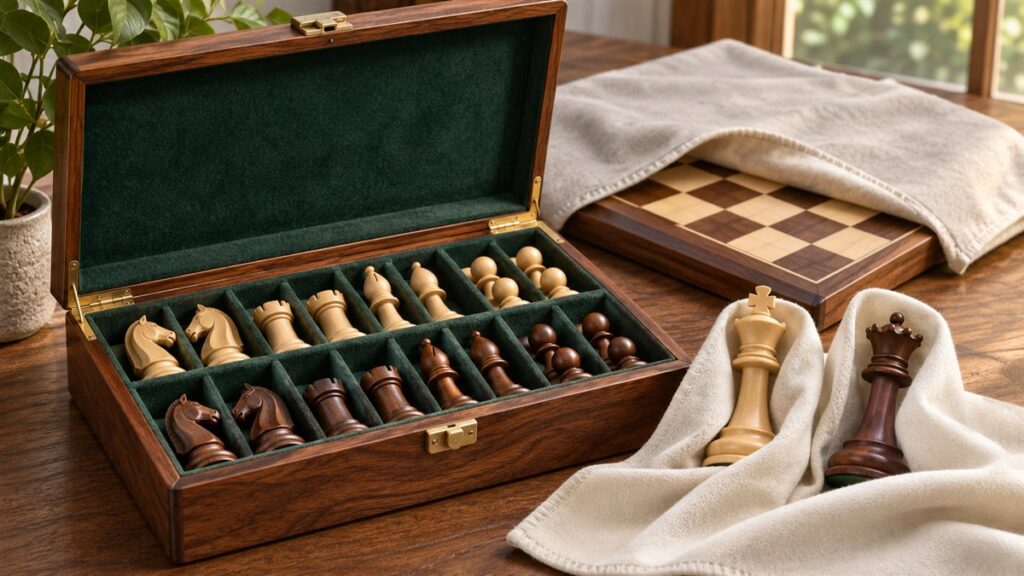
To store a chess set well, clean the pieces, wrap them so they do not knock together, keep the board flat and choose a dry, steady room. A little care when you put the set away stops chips, fading and lost pieces.
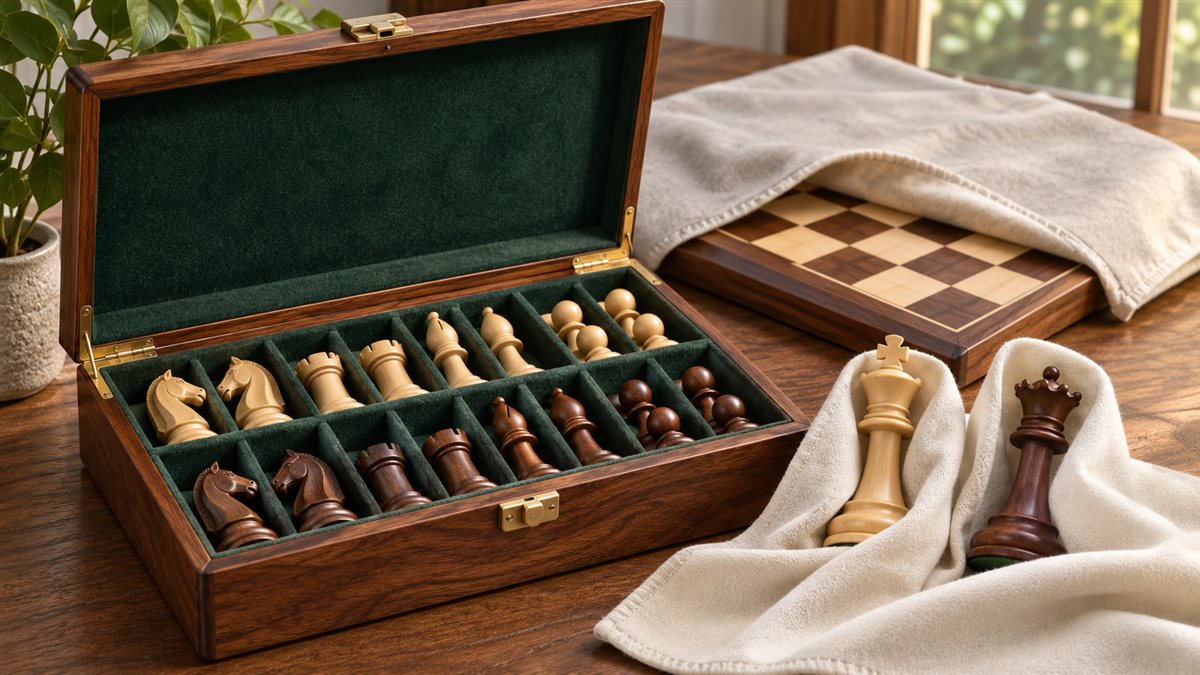
Step by Step Packing
- Wipe each piece with a clean, dry, soft cloth to remove dust and finger marks. For stubborn dirt, follow the maker’s care advice.
- Let everything dry fully before it goes into any container.
- Count the pieces. A full set has sixteen per side, and it is easier to spot a missing one now than months later.
- Wrap delicate pieces, such as tall kings and queens, in soft cloth or tissue. Avoid wrapping that traps moisture.
- Place heavier pieces at the bottom of the box and lighter ones on top.
- Close the box and label it if it goes on a shelf with other items.
Choosing the Container
The best container fits the pieces closely enough that they cannot rattle. A lined box with separate compartments is ideal. Fabric pouches suit travel sets, while a hard case protects against knocks. Avoid sealed plastic bags for wooden pieces for long periods, since trapped moisture can cause problems.
| Container | Good for | Consider |
|---|---|---|
| Lined wooden box | Display and long storage | Heavier, takes space |
| Fabric pouches | Travel and short-term | Little impact protection |
| Hard case with foam | Tournament carrying | Foam must be clean and dry |
| Original packaging | Fits the set exactly | May wear out with use |
Looking After the Board
Store boards flat whenever you can. A wooden board that is stood on its edge for a long time may bow. Fold-out boards should be closed gently, and roll-up boards are best kept loosely rolled or flat rather than creased. Slide a sheet of soft paper or cloth over the surface if you stack items on top, and never put heavy things on the board.
Choosing the Right Spot
- Choose a cool, dry room with steady conditions.
- Keep sets away from direct sunlight, which can fade finishes.
- Avoid damp basements, hot attics and spots near heaters or radiators.
- Keep the set out of reach of small children and pets.
If you travel with the set, take extra care. Use a firm case, keep the pieces from touching, and carry it in your hand luggage rather than a packed bag where it could be crushed.
Storage Advice by Piece Material
Chess pieces are made from many materials, and each has different weak points. Wooden pieces react to changes in humidity and temperature, so they like a steady room and soft wrapping that lets them breathe. Plastic pieces are tough but can scratch each other, and some plastics may soften or warp in heat, so keep them away from hot spots and do not stack heavy items on them.
Metal pieces can tarnish or scratch, so wrap them separately in soft cloth and check the maker’s care notes before using polish. Stone, marble and glass pieces are heavy and can chip when they knock together, so each one needs its own padded space and the box needs to be sturdy. Weighted pieces with felt bases need care to protect the felt from crushing and dust.
- Check the product listing or manual for the material and any care guidance.
- Keep different materials in separate compartments, because a hard piece can scratch a softer one.
- Store delicate crowns and points where nothing presses on them.
- Avoid cleaning products that the maker does not recommend, especially on painted or lacquered surfaces.
If you own a mixed or inherited set, treat it according to the most delicate piece in it.
Protecting Felt Bases and Finishes
The bottoms and surfaces of pieces are easy to overlook, but they decide how a set looks and plays years later. Felt or cloth bases protect the board and quiet the movement of pieces. They can flatten, pick up dust or peel with age, especially if pieces are stored under pressure or in damp places. Check the bases whenever you put the set away, and brush off any grit that could scratch a board.
Finishes such as lacquer, varnish, wax and paint can be sticky or soft in warm rooms, causing pieces to stick together or to the wrapping. If you notice tackiness, store the pieces with a clean separating layer such as acid-free tissue and relocate them to a cooler place. Avoid wrapping in newspaper or coloured paper that may transfer ink.
- Do not store pieces upside down with weight on their bases.
- Replace worn felt using a suitable adhesive recommended by the maker or a repair specialist.
- Keep the board and pieces apart if the finish is sticky.
- Handle pieces with clean, dry hands to limit oils and marks.
These small checks take a minute but prevent long-term damage.
Organising Multiple Sets and Spare Parts
If you have more than one set, a simple system prevents mix-ups and losses. Label each box or pouch with the set name, number of pieces and the board that goes with it. Keep a short list inside the lid, noting special features such as an extra queen or a missing piece. When pieces are similar in style, a small coloured dot on the box can help you match them quickly.
Spare parts deserve a home too. Keep spare queens, felt pads, small tools and clocks in a labelled bag or compartment so they do not roll around. If your club or family uses the same sets often, designate one person to check them after each session. Counting at the end of each session is quicker than searching for a missing pawn later.
- Use a single shelf or drawer for chess items, so everything is in one place.
- Store score sheets, notebooks and clocks separately from pieces, to avoid scratches.
- Photograph the full set arranged on the board, which helps you check it later.
- Keep receipts or maker information with the set in case you need replacement parts.
Good organisation also makes it easier to share the sets with friends or classes without anxiety about losses.
Moving House and Shipping a Set
Moving a chess set safely needs more care than putting it on a shelf. Use a box with some rigidity and plenty of padding, so it can survive bumps. Wrap each piece individually, with extra padding around tall or thin parts, and fill empty space so nothing can shift. Place the board flat and protected, perhaps between sheets of card, and keep it separate from the pieces during transport.
If you ship the set, use a reliable carrier and consider insurance for valuable items. Ask the carrier about packaging requirements and handling. Mark the box as fragile, and consider keeping a list of contents with photographs. When you receive a set, open it soon, check each piece and report damage quickly according to the carrier’s instructions.
- Avoid leaving boxes in hot vehicles or unheated storage during extreme weather.
- Give wooden sets time to adjust slowly to a new room before unpacking.
- Keep valuable sets with you instead of putting them in the hold when you travel, if the rules allow.
- Check the weight limits and rules for the carrier.
Spending time on packing is far cheaper than repairing or replacing broken pieces.
Inspecting Stored Sets and Knowing When to Repair or Replace
Stored items still benefit from the occasional look. Every few months, open the box and check for dust, moisture, odd smells, chips, cracks or stuck pieces. Make sure nothing has changed in the room, such as a leak or a new radiator. Catching a small problem early often means a simple fix.
Minor damage such as loose felt, light scratches or a small chip can often be repaired at home or by a specialist. Check the maker’s care notes and consider a professional if the set is valuable or sentimental. Some signs mean it is time to replace the container: a box that no longer closes, a cracked lid, a musty interior, or lining that sheds fibres. A damaged board with warping that will not flatten may need replacing too.
- Replace pieces or sets only if repair is not practical, and compare sizes before ordering.
- Check that a new board’s square size suits your pieces.
- Throw away any bags or wrapping that smell damp or show mould.
- Keep a record of the date you last inspected the set.
A short routine of inspection and care keeps the set ready whenever someone wants a game.
Cleaning Pieces Before You Pack Them Away
Storage is a good moment for a gentle clean, because dirt and oils left on pieces can slowly damage finishes. For wooden pieces, a soft dry cloth removes dust, and a slightly damp cloth, wrung out well, handles stubborn marks on sealed surfaces. Dry them immediately, as water can cause swelling and cloudy patches. Plastic pieces can usually be wiped with a damp cloth and mild soap, then dried completely. Glass, metal or stone pieces generally benefit from a soft microfiber cloth that does not scratch.
Avoid strong chemicals, abrasive pads and heavy polishes unless the maker recommends them. If you own an antique or sentimental set, work slowly and consider consulting a conservator or a reputable restorer before attempting anything beyond dusting. Whatever the material, let every piece dry fully before it goes into a container.
Wrapping Methods That Prevent Chips and Rubs
Pieces are most often damaged by knocking against each other. A little wrapping makes a big difference. Soft cloth bags, felt pouches, acid-free tissue and foam trays each provide a layer of protection. For delicate pieces with thin crowns or points, such as kings and knights, wrap each one individually. Sturdier pawns can often be grouped in a small bag. Avoid wrapping in newspaper, since ink can transfer, and avoid plastic wrap against wood for long periods because trapped moisture can cause marks.
| Material | Good for | Notes |
|---|---|---|
| Soft cloth bag | Everyday sets | Easy to make and wash |
| Acid-free tissue | Antique or fine pieces | Gentle, but replace if it yellows |
| Foam tray | Large or valuable sets | Cut spaces to fit each piece |
| Felt pouch | Small groups of pieces | Soft, but check for dye transfer |
Choosing Where the Box Sits in Your Home
Location matters as much as packaging. Avoid attics, garages and basements, where temperature swings and damp are common. Avoid spots next to radiators, direct sunlight and exterior walls. A closet shelf in an interior room, or a drawer in a living area, is usually steadier. Keep the set off the floor in case of leaks, and away from food and chemicals. If your home is very humid, consider moisture absorbing packets designed for storage, following the instructions on the product.
Think about easy access as well. A set stored so well that nobody can find it will rarely get played. Put it where you can reach it without moving heavy objects, and note its location in a household list.
Caring for the Board During Storage
Boards need their own plan. Fold-out boards can hold pieces inside when closed, but be careful that loose pieces do not rub the playing surface. Flat wooden boards should lie flat, not on their edge, to reduce the chance of warping. Roll-up vinyl or cloth boards are best stored loosely rolled with the playing surface outward or in a way the maker suggests, rather than folded sharply. Place a layer of cloth or paper between stacked boards to prevent sticking and scratching.
- Store wooden boards flat in a stable room.
- Avoid stacking heavy objects on top.
- Do not store boards in direct sun, which can fade colors.
- Check for slight warping every few months and adjust if needed.
Keeping the Clock, Notation Pads and Extras Together
A complete kit includes more than pieces and a board. Many players have a clock, scoresheets, pens, spare pieces and perhaps a bag. Keep these together in a small box or pouch so that you can set up quickly. Remove batteries from clocks if the set will sit for a long time, since leaking batteries can ruin the device. Put a small card in the box listing what it should contain, which makes it easy to confirm nothing is missing when you pack up.
Seasonal Checks and Simple Records
Twice a year, open the storage container and inspect. Look for dust, damp, insects, warping or any sign of trouble, and act early. Take a quick photo of the set laid out, which provides a record for insurance or for replacing a lost piece. If you travel with the set, pack it so that nothing can move: fill empty spaces with soft cloth, and carry it in hand luggage when you can rather than risking a hold.
A Short Storage Checklist
- Clean and fully dry every piece.
- Wrap fragile pieces separately.
- Place the board flat or loosely rolled according to its type.
- Choose a stable, dry, interior spot away from sun.
- Label the container and note its contents.
- Inspect twice a year.
Different Materials, Different Worries
Every material ages in its own way. Wood can dry out, crack or warp if the air is too dry, and swell if it is too damp. Weighted pieces may have felt or leather bases that wear or peel, so check them occasionally and repair with an appropriate adhesive. Stone and marble can chip at corners and may stain if exposed to oils or acids. Metal pieces may tarnish, so a soft cloth and, if the maker suggests, a suitable polish keep them bright. Plastic can yellow or become brittle with heat and sunlight, so store it away from windows and heaters.
Glass pieces need extra care because they chip easily and can scratch each other. Wrap them individually and avoid stacking heavy items on the box. For any antique or unusual material, seek advice from a specialist before using any cleaning product.
| Material | Main risk | Storage tip |
|---|---|---|
| Wood | Warping, cracking, damp | Stable room, wrapped, off the floor |
| Plastic | Yellowing, brittleness | Away from sun and heat |
| Metal | Tarnish, scratches | Soft wrap, dry place |
| Stone or marble | Chipping, stains | Individual wrapping, no stacking |
| Glass | Chips, scratches | Padded compartments |
Making Your Own Storage Box
If a set came without a suitable container, a simple homemade box can work well. Choose a sturdy box with a lid that fits snugly. Line the bottom with a layer of soft foam or felt, and cut a second layer with spaces for each piece. Label each space lightly so that pieces return to the same spot each time. Include a small compartment for spare items such as extra queens. A neat layout makes setting up fast and shows at a glance if a piece has gone missing.
Teaching Children to Put Pieces Away
Shared sets used by children need habits. Make tidying part of the game: after the last move, everyone helps pack the pieces. Use simple cues, like placing the king in first and the pawns last. A picture on the lid showing where each piece goes helps younger players. Praise careful handling, and explain why pieces should not be thrown or chewed. These small routines protect the set and teach respect for shared belongings.
Handling a Lost or Damaged Piece
If a piece goes missing, search thoroughly before replacing it: under furniture, in the vacuum bag, inside pockets. A temporary replacement such as a coin or a button upside down can stand in for a queen until you find a match. For damage, small chips can often be smoothed or repaired by a craftsperson. Keep a spare set or similar piece if the set is used often. Matching a replacement to an older set can be hard, so contact the maker or a specialist shop if you want an exact match.
- Count pieces before and after every game.
- Keep a photograph of the full set for reference.
- Store any repaired pieces with a note about what was done.
FAQ
Should pieces be kept in sets by colour?
It helps. Separate pouches for each side make setup quick and reduce the chance of mixing pieces from different sets.
What if a piece goes missing?
Use a coin, a bead or a spare pawn as a temporary stand-in, and ask the maker or a chess shop about replacements.
Can I store a chess set in the original box?
Yes, if it is clean, dry and still fits well. If the box is worn or loose, add padding or move to a better container.
How often should I check a stored set?
A look every few months is enough for most people. Check more often after weather extremes or if the storage place changes.
Is it okay to store a chess set in the garage or attic?
These spaces swing in temperature and damp, so they are poor choices for most sets. A stable indoor room is safer.
Should I remove the felt before storing?
No, unless it is already loose. Keep it clean and avoid pressure on the bases, and repair it if it peels.
What do I use to clean pieces before storage?
A dry soft cloth is the safest start. For anything more, follow the maker's care guidance, since materials and finishes vary.
Can pieces from different sets be stored together?
They can, but mixing makes sorting harder and may cause scratches. Separate pouches or labelled compartments are better.
How do I stop a roll-up board from creasing?
Roll it loosely with the playing surface facing outward or inward as the maker advises, and avoid tight bands. Flat storage is better when you have space.
The Short Version
Clean, dry, count, wrap and box your set, then keep the board flat in a cool, dry place away from sunlight. Those few minutes of care keep a set playable for many years.