Glossy objects reflect their surroundings. Treat the visible reflections as part of the scene design.
What to do
Examine the object from the camera position, move distracting items and adjust the light or camera angle. Use clean, appropriate surfaces outside the frame to shape reflections where practical.
A mistake to avoid
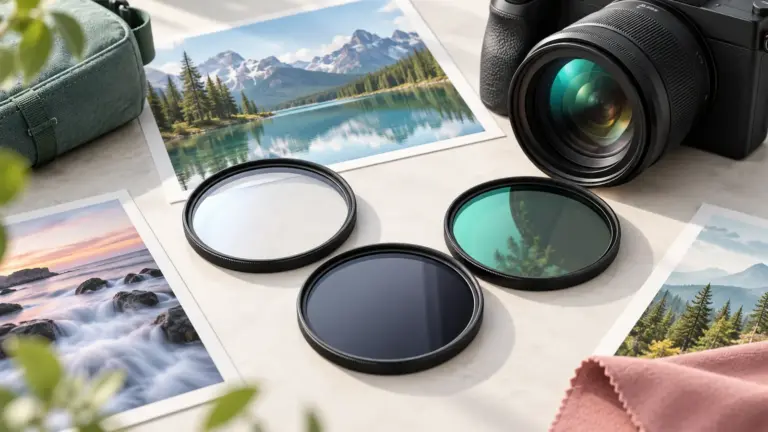
Do not assume a polarizer removes every reflection from every material. Check the actual result and preserve the shape cues that make the object readable.
A detail worth checking
Check reflected text, faces and equipment at full composition size. A subtle reflection may be invisible in a thumbnail yet obvious in a product-page image. Simplify the setup before relying on difficult retouching.
Try this practical check
Photograph a glossy mug before and after simplifying its surroundings. Compare the reflected shapes rather than only overall brightness.
Related reading
UV, CPL and ND Filters: What Each Does (2026)