Disclosure: As an Amazon Associate, reviewstook.com earns from qualifying purchases. Links on this page are affiliate links; they cost you nothing extra. Prices and availability change often, so check the current Amazon listing before you buy.
The eos r6 mark iii arrives with the hardest job in Canon’s mirrorless line: succeeding the EOS R6 Mark II, a camera so well-judged that its owners have spent years asking what a successor could possibly add that would matter. This review answers that question the way a working photographer would ask it — not from the launch sheet, but from the three cameras an actual buyer weighs against each other. The Mark III itself, verified here against its live listing. The Mark II, still sold, still superb, and now carrying the discount that discontinued-adjacent models always carry. And Sony’s a7 IV, the cross-system alternative that enters every full-frame conversation at this level whether Canon invites it or not. Between those three, every reader of this page will find their answer, though not always the answer they first arrived here expecting.
A discipline before the argument, because camera launches attract invented numbers the way lenses attract dust: this review works only from what the verified listings and the makers’ own published material establish, and it will not decorate the Mark III with specifications it cannot source. Where the generational story is about approach — autofocus philosophy, video intent, stabilisation behaviour, the accessory ecosystem a Mark II owner already owns — the review argues fully. Where a number would be needed, the review says what to check on the listing in front of you rather than printing a figure it cannot stand behind. Photographers deserve that honesty from a camera review more than from most pages, because they will build a lens collection on top of it.
The reader profiles are distinct and the review will keep them separate. The Mark II owner deciding whether the successor earns an upgrade. The first-time full-frame buyer choosing a system to grow into. And the Sony-curious Canon shooter wondering whether the grass is genuinely greener or merely differently lit. Each gets a verdict; none of the verdicts is “buy the newest”, because at this level of camera, newest is the least interesting variable in the room.
It is worth pausing on how unusual that is, because it shapes everything below. A generation ago, a successor body transformed its predecessor’s files so completely that the upgrade argued itself. Today’s full-frame cameras are separated by refinements in assistance — detection that misses less, video that runs longer, stabilisation that forgives more — rather than by revelations in image quality, and assistance only matters on the work that needs assisting. The photographer whose subjects sit still in good light is, photographically, already home. The photographer chasing subjects that refuse both is the one the new generation was built for. Knowing which of those you are is worth more than any specification in this review, and the review is organised to help you find out.
Key takeaways
Four properties decide this three-way choice: autofocus subject detection in the field, video behaviour and its thermal limits, in-body stabilisation with the lenses you actually own, and how much of a Mark II kit carries over. The sections that follow take them in that order.
- Autofocus subject detection for your subjects
- Video recording limits and heat behaviour
- In-body stabilisation with your lenses
- Whether your Mark II accessories carry over
In this guide
Brief verdict for Eos R6 Mark Iii
The trio at a glance: the successor, the still-excellent predecessor at its friendlier price, and the rival system’s benchmark. The detailed reviews argue each one’s case, and the handbook after them converts the arguments into checks.
| Unit | Best for | Page |
|---|---|---|
| Canon EOS R6 Mark III | Best upgrade stage | Check price on Amazon |
| Canon EOS R6 Mark II | Best for travellers | Check price on Amazon |
| Sony a7 IV | Best for hushed spaces | Check price on Amazon |
How the lineup was chosen
The lineup is the real shortlist, assembled the way photographers actually assemble it. The Mark III is the subject. The Mark II is the value gravity well — every successor review that ignores the predecessor’s discounted price is advertising, not advice, and this one puts the older camera in a full section with its case made properly. The a7 IV is the system question: not whether Sony’s camera is good — it demonstrably is — but whether its goodness is the kind that should pull a Canon shooter, or a new buyer, across the mount line, with everything that crossing costs in lenses and habits. A fourth camera would only dilute the three decisions that matter, and this review would rather argue three real choices thoroughly than survey a catalogue politely.
Criteria were set from working photographers’ days rather than launch presentations. Subject detection, because modern autofocus is the feature that changes what a photographer attempts. Video limits and heat, because hybrid shooters discover thermal behaviour in the field, not in the brochure. Stabilisation with your lenses — the ones you own, at the focal lengths you use — because a system figure means little against a specific lens’s behaviour. And carry-over: batteries, cards, grips, cages, habits, the unglamorous inventory that decides what an upgrade actually costs. Each camera was verified against its live listing before inclusion, and the comparisons below stay inside what those listings and the makers’ documentation can support.
Detailed reviews

Canon EOS R6 Mark III
Best for Canon shooters who want the current generation’s autofocus and video intent in the R6 line’s balanced body
| Spot | Canon EOS R6 Mark III |
|---|---|
| Class | Cameras |
| What its entry leads with | a full-frame sensor |
| Cost | Check price on Amazon |
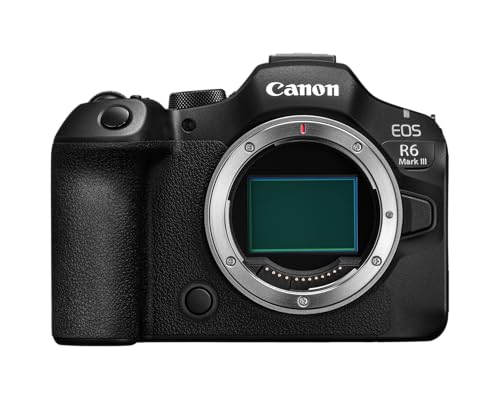
The R6 line’s identity has always been balance: the enthusiast body that borrows the flagship’s brain without inheriting its bulk or its invoice. The Mark III continues that identity into the current generation, and its case rests on the two systems that define modern mirrorless progress. The first is autofocus as a subject-recognition discipline — the camera’s ability to find and hold eyes, animals, vehicles and the other subjects its detection is trained on, and to keep holding them through the clutter of a real frame. Each Canon generation has widened that discipline, and the Mark III is where the R6 line receives the current state of it: the practical consequence is not a number but a change in the photographer’s behaviour, attempting frames — the bird through branches, the child through a crowd — that the older camera’s focus would have made a lottery.
The second system is video intent. The R6 line has been a hybrid line from birth, and the Mark III’s generation treats video as a first-class citizen of the body rather than a mode — which is precisely why this review insists on the field questions over the launch claims. What matters is not the menu of modes but their behaviour across a real shoot: how long the demanding modes run in your climate, how the camera warns and recovers, how the stabilisation behaves at your focal lengths. Those answers live in the listing’s documentation and in owner reports, and the buying handbook below turns them into checks. What can be said from the verified listing is the positioning: this is Canon’s current answer for the hybrid shooter in this class, and it is priced and built as the line’s present tense.
For the Mark II owner, the upgrade case is therefore specific rather than general: it is strong if your work lives where the new generation’s detection and video behaviour operate — wildlife, weddings, events, hybrid production — and weak if your Mark II already returns every frame you attempt. Cameras at this level do not become obsolete; they become outpaced in particular disciplines. The honest upgrade question is never “is it better” but “is it better at my subjects”, and the sections below are organised to answer exactly that.
Strengths
- The current generation of Canon’s subject-detection autofocus in the R6’s balanced body
- Hybrid video intent carried forward as a first-class design priority
- Full continuity with the RF lens ecosystem its buyer is likely growing into
Trade-offs
- Launch pricing against a discounted, still-excellent Mark II
- Generational gains concentrate in detection and video; stills shooters gain least
- Thermal behaviour in demanding video modes must be checked against your climate and work
Best for: the hybrid shooter, the wildlife and events photographer, the Canon user building forward. Not suited for: the satisfied Mark II stills shooter, or the buyer whose budget the Mark II’s discount would complete into a lens. Check price on Amazon
One ownership note that launch coverage always skips: a new generation’s first months are when its firmware matures and its accessory ecosystem catches up — cages, grips and third-party batteries arrive on a lag. The photographer who buys at launch buys into that lag knowingly, and is repaid in kind with the longest ownership of the current generation. The photographer who buys a season later buys the matured version of the same camera. Neither is wrong; they are different purchases wearing the same name, and choosing between them consciously is worth more than either choice made by accident.

Canon EOS R6 Mark II
Best for value-focused photographers who want a proven hybrid body and would rather spend the difference on glass
| Piece | Canon EOS R6 Mark II |
|---|---|
| Line | Cameras |
| Headline extras from its page | a full-frame sensor |
| Entry price | Check price on Amazon |
The Mark II’s section can be short in its praise because the camera’s reputation does the work: this is the body that defined its class for its generation — fast, sure-footed in autofocus, capable in video, stabilised, and proven across years of weddings, wildlife and production work in owners’ hands rather than reviewers’. Its presence in this review at its successor-era price is the single most important fact on the page for a certain reader: the one whose budget stretches to exactly one of two baskets: the Mark III body alone, or the Mark II body plus a lens. For that reader the answer is almost always the lens, because glass outlives bodies, shapes images more than sensors do at this level, and the Mark II’s compromises are the kind a photographer grows around rather than into.
Its honest limits are generational, not flaws. The subject detection is the previous state of a fast-moving art. The video behaviour, including thermal management in demanding modes, reflects its design era. And its remaining years of firmware attention will naturally yield to its successor’s. A buyer who understands those as the ordinary physics of product generations — rather than as defects — is buying one of the best-value full-frame bodies of its era, with an owner community and an accessory ecosystem at full maturity. This review’s only warning is against buying it accidentally: know that you chose the value, and the value will serve you for years.
There is a rental-market corollary that quietly confirms the Mark II’s standing: it is the body working photographers hire when their own is in for service, the body photo schools and workshops standardised on, the body whose used listings move fastest in its class. Equipment earns those roles by surviving other people’s deadlines. A new buyer inheriting that ecosystem of confidence — the tutorials, the settings guides, the repair familiarity — is buying something the specification table cannot list: a solved camera, whose every question has already been asked and answered in public by someone with your exact problem.
Strengths
- A proven, class-defining hybrid body at a successor-era price
- Mature firmware, accessories and owner knowledge from day one
- Frees budget for the lenses that shape images more than bodies do
Trade-offs
- Previous-generation subject detection and video behaviour
- The upgrade itch will visit sooner than with the Mark III
- Firmware attention naturally migrates to the successor over time
Best for: the first full-frame buyer, the glass-first budget, the stills-leaning hybrid shooter. Not suited for: the detection-hungry wildlife specialist, or the professional whose clients’ work lives in the newest video modes. Check price on Amazon
If the Mark II is your answer, spend the savings deliberately rather than letting them evaporate into the general budget: the fast prime or the standard zoom your kit lacks is the purchase that will still be defining your photographs when both bodies in this review are history. Photographers remember their lenses by the images; they remember their bodies by the invoices. Allocate accordingly, and the value play becomes the connoisseur’s play — which, at this level of equipment, it genuinely is.

Sony a7 IV
Best for buyers choosing a system from scratch, or Sony-curious shooters whose lens maths genuinely favours the switch
| Spot | Sony a7 IV |
|---|---|
| Segment | Cameras |
| Headline extras from its entry | a full-frame sensor |
| Page expense | Verify cost on Amazon |
The a7 IV is the benchmark the whole class is measured against, and its case does not need this review’s charity: a deeply capable hybrid body, a mature autofocus system with its own subject-detection strengths, and — the argument that actually moves people — the E-mount’s lens ecosystem, the broadest in mirrorless, with first-party glass and a third-party catalogue that gives buyers at every budget a genuine choice. For the new buyer choosing a system with no legacy glass, that ecosystem breadth is a legitimate, possibly decisive argument, and any Canon review that pretends otherwise is protecting its reader from the truth at the cost of their money.
For the existing Canon shooter, the same camera presents a different equation, because switching systems is not buying a camera — it is selling a lens collection at used prices and rebuying it at retail, retraining the hand’s menu habits, and rebuilding the accessory drawer. The a7 IV’s advantages must clear that entire cost before they are real, and for most Canon shooters whose RF kit is established, they do not — not because the Sony is lesser, but because the ecosystems at this level are closer in capability than the switching cost is small. The photographers for whom switching pays are specific: those whose needed lens exists only across the line, those at the very start of a kit, and those whose work has genuinely changed direction. Everyone else is buying a new menu system at the price of a lens.
Strengths
- The class benchmark’s all-round hybrid capability
- The broadest lens ecosystem in mirrorless, across every budget
- A mature, deeply supported system with a vast owner community
Trade-offs
- Switching costs a Canon owner their lens investment’s full value
- A different handling and menu philosophy to relearn
- Its own generation’s age shows in the same places the Mark II’s does
Best for: the system-free first buyer, the lens-led switcher with a specific reason. Not suited for: the established RF owner browsing out of curiosity — curiosity is cheaper satisfied by renting. Check cost on Amazon
The rental suggestion in that verdict is the section’s practical heart: a weekend with the a7 IV and your most-used focal length will answer the system question more honestly than any review, including this one. Photographers’ hands have opinions that specifications cannot overrule, and the body that feels inevitable after two days of shooting is usually the right system answer regardless of which logo it wears. Rent before you emigrate; emigration is the most expensive decision in photography that isn’t a lens.
One asymmetry deserves naming before the verdicts, because switchers consistently underweight it: file character. Each system’s colour science and default rendering have a personality that photographers develop loyalties to without always noticing, and a switcher may find the new system’s files subtly foreign in ways no specification predicts — skin tones that grade differently, greens that sit elsewhere. Process a weekend of the a7 IV’s files through your full pipeline before the emigration maths is finalised. The camera you love on paper must also be the camera whose files you love at midnight, because midnight is where photography actually happens.
Buying handbook: what genuinely determines Eos R6 Mark Iii
Autofocus subject detection in the field
Subject detection should be judged as a field behaviour, not a feature list, because its value is entirely in the frames it rescues. The questions that matter are the photographer’s own: does it find the eye through branches, hair, glasses, the chaos of a wedding’s group photographs? Does it hold the subject your work actually features — your dog’s breed, your sport’s helmets, your birds’ plumage against their habitat — when the background competes? And when it loses the subject, does it lose it gracefully to the face or the body rather than to the scenery? Every generation of both Canon’s and Sony’s systems answers these better than the last, which is why the honest comparison is not brand against brand but generation against your subjects: the Mark III’s detection is the current Canon state of the art, the Mark II’s is one step behind it, and the a7 IV’s is Sony’s corresponding step of its own lineage.
The practical test, if you can arrange it, is a borrowed or rented hour with your hardest subject — the photograph you currently lose. Detection marketing is shot on cooperative subjects in clean light; your subjects are neither, and the camera that finds your bird in your thicket has told you more than a hundred demonstration reels. Failing a rental, weight the owner reports from your specific discipline over the general press: the wedding photographer’s detection experience and the birder’s are different sports sharing a vocabulary.
Video limits and heat management
Every hybrid body has a thermal personality, and the only honest way to buy for video is to match the personality to your climate and your takes. The variables are knowable: the demanding modes generate the most heat; ambient temperature and sunlight move the limits substantially; long continuous takes stress the camera as short clips never do. A wedding videographer in a warm climate shooting long ceremonies and a studio creator shooting short takes in air conditioning own the same body in name and different cameras in practice. Before choosing among these three on video grounds, define your worst real take — its mode, its length, its weather — and check each camera’s documented behaviour and owner reports against that take specifically. General video praise is worthless; your worst take is the specification.
Heat management also has a workflow dimension the brochures omit: how the camera warns, whether it recovers quickly in shade or with a battery swap, and whether your rig — cage, monitor, recorder — helps or traps the warmth. The mature response to a thermal limit is usually a workflow, not a different camera: an external recorder for the long takes, a second body for the ceremony, a shaded position for the camera between speeches. Judge each of these three as a system with its mitigations priced in, and the video criterion stops being a lottery and becomes an engineering decision — which is what professional video buying always was.
IBIS performance with your lenses
In-body stabilisation is a partnership between the body’s sensor shift and the lens’s own correction, and its published figures are measured in the partnership’s best case — a specific lens, a specific focal length, a tester’s steady hands. Your case is your lenses: the wide prime whose stabilisation the body must mostly supply itself, the long telephoto where the lens’s own system leads, the vintage adapted glass with no electronics at all, which the body stabilises blind and often surprisingly well. The useful question for each camera here is not its headline figure but its behaviour across your shelf: coordinated control with stabilised lenses, body-only behaviour with unstabilised ones, and the video walk — the handheld moving shot where stabilisation’s character shows most.
Judge it, again, by your own footage and frames: the shutter speeds you actually hand-hold at, the focal lengths you actually own, the venues whose light actually challenges you. A stop of stabilisation you use nightly is worth more than two stops measured on a lens you will never buy, and the photographer who audits their own archive — what did I shoot, at what speeds, in what light — buys stabilisation with data instead of hope. All three cameras here are competent; your archive decides which competence is yours.
Which Mark II accessories carry over
The upgrade’s true price is the body plus everything the body orphans, so the carry-over audit is a financial instrument, not a footnote. Work the drawer honestly: batteries and chargers first — shared battery families across generations are one of Canon’s quiet kindnesses, but confirm the exact type on both listings rather than assuming; memory cards, where a changed slot configuration can strand a fast card collection; grips, cages, brackets and plates, which are body-shaped and therefore generation-specific almost by definition; and the soft inventory — your menu configuration, your custom modes, your muscle memory — which carries over within a line far more cheaply than across one. The a7 IV’s column in this audit is simply everything, which is the switching cost made visible.
Price the audit before the verdict, because it routinely moves the answer: a Mark III whose batteries, cards and habits carry over may cost its owner less in total than its sticker suggests, while a bargain body that orphans a drawer of accessories is a bargain with a tail. Photographers who keep a kit inventory — a simple list, updated at each purchase — perform this audit in minutes. Photographers who do not, perform it at the checkout, which is the most expensive place to learn arithmetic.
Eos R6 Mark Iii in concrete habits
Situation: a wedding shooter deciding between generations
The wedding is the hybrid brief in its purest form: stills and video, candlelight and noon, subjects who will not repeat the moment for a hesitant autofocus. For this shooter the generational question is detection and low-light behaviour under pressure, and the Mark III’s current-generation systems are aimed at exactly their failures — the eye lost in the crowd, the processional frame that must land. But the Mark II built its reputation on this same work, and the two-body professional should consider the mixed fleet: the Mark III as the primary, the Mark II — bought at its successor-era price — as the second body, sharing batteries, cards and habits. That fleet, for many wedding businesses, is a better purchase than either camera bought twice, and it is the kind of answer a three-camera review exists to find.
Scene: a wildlife photographer weighing detection gains
Wildlife is where subject detection earns its keep most visibly, because the subjects are fast, distant, camouflaged and uncooperative in combination. The birder weighing the Mark III against their Mark II should think in terms of keeper rate on their hardest regular subject — the species, the habitat, the light — and be honest that the gain, while real in each generation, is a percentage rather than a transformation. The other half of the wildlife equation is the lens, and it outranks the body: the photographer choosing between the Mark III and a longer lens for their Mark II should buy the lens, every time, because reach is the discipline’s true currency. Detection decides among bodies; glass decides the photographs.
Scenario: a first full-frame buyer picking a system
The system-free buyer is the only reader for whom all three cameras are truly equal candidates, and their decision should be made in a specific order: lenses first, body second, brand last. Choose the two or three lenses your photography actually needs, price them in both ecosystems — where Sony’s third-party breadth often changes the arithmetic — hold both bodies with those lenses mounted, and let the total system cost and the hand’s verdict decide. The body is the component you will replace soonest; the mount is the decision you are actually making. All three cameras here will take superb photographs. The system that puts the right glass in front of you at a price your future self can sustain is the correct answer, whichever badge it wears.
Configuration and initially-seven days how-to
A camera of this class rewards a deliberate first week more than any gadget in this cluster, because its configuration is deep and its defaults are written for a stranger. These steps sequence the week.
Step 1 for Eos R6 Mark Iii: neat or maintain the piece once past prior to deciding it is settled
Before the setup is declared finished, do the camera’s version of the settle-check: clean the sensor’s chamber habits in — check for dust with a stopped-down frame against a plain sky or wall, confirm the mount contacts are clean, verify the firmware version against the maker’s current release, and format the cards in-camera. A new body’s first frames are its baseline, and dust or an old firmware discovered at a wedding is a debt collected at the worst rate. Ten minutes of housekeeping at the desk buys the confidence the first real shoot deserves.
Step 2 for Eos R6 Mark Iii: unpack slowly, keeping each accessory safe until the new setup has come through a full week
Keep the box, strap, cables, battery paperwork and every insert until the camera has survived a full week of real shooting. The body-shaped accessories you will inevitably evaluate — grips, cages, plates — are returnable decisions of their own, and the camera’s own bundle is the warranty’s evidence and the resale’s completeness. More practically, a week is the minimum honest trial for a body: the hand’s verdict on a grip, the eye’s verdict on a viewfinder, and your subjects’ verdict on the detection all need real frames behind them, not an evening’s novelty.
Move 3 for Eos R6 Mark Iii: connect or match the unit only as its guidebook describes ahead of changing any setting
Shoot the camera as it comes for the first sessions — factory autofocus configuration, standard picture settings, the maker’s recommended card and battery routine — before rebuilding it in your image. The defaults are the control group: without them, every later adjustment is unfalsifiable, because you cannot know whether the change or the camera produced the improvement. Photographers who skip the baseline spend months tuning against a stranger’s settings they never met. A day on defaults is the cheapest education in the entire purchase.
Move 4 for Eos R6 Mark Iii: save or photograph the configuration that finally functions
When the menus settle, save them properly: export the camera settings to a card where the system allows, and photograph the key menu pages regardless. A modern body’s configuration is a hundred small decisions — button assignments, detection priorities, custom modes — and a factory reset, a service visit or a loaned body can scatter them in a moment. The saved configuration is also your audit trail for the carry-over question if you ever change generations: what you set is what you will need to re-set, and the record prices the migration honestly.
Stage 5 for Eos R6 Mark Iii: schedule a two-week review to catch annoyances that solely repetition reveals
Calendar the review for a fortnight of real shoots — not a fortnight of ownership, which may contain no photography at all. The late truths of a body are specific: the button your thumb still misses, the detection mode that fails on your actual subject, the battery appetite of your actual video settings. Bring the baseline frames from the default-settings day, compare them against the tuned camera’s work, and let the comparison confirm the configuration or send it back for one more pass. Let that comparison, not the launch week’s excitement, decide whether the body stays — while returning it is still paperwork rather than a private sale.
Common mistakes with Eos R6 Mark Iii
Buying it for a minor worktop it physically dominates
The camera version of the size mistake is buying a body for a bag — and a working life — it dominates: the full-frame body plus its lenses is a system whose weight and volume the owner carries every single shoot, and the photographer who chose it for specifications they rarely use, while resenting its mass daily, has repeated the oldest error in the craft. Match the system to the carrying reality: the travel photographer’s best camera is the one at hand, and an R6-class body earns its bulk only when its capabilities are exercised weekly. If your honest shooting is lighter, the honest purchase is lighter too — this review’s three cameras are all commitments, and commitment should follow use, not aspiration.
Rushing the two-spell adjustment period
A new body’s first fortnight lies in both directions: the detection feels magical on cooperative subjects and the menus feel hostile on real ones, and neither impression survives a month of work. Photographers who verdict early return bodies their hands were three shoots from loving, or keep bodies whose one unforgivable flaw — for their subjects — repetition would have exposed. Serve the fortnight with real assignments, keep the old body un-sold until it ends, and let the keeper rate on your hardest regular work cast the vote. Cameras are judged by archives, not by evenings.
Leaving the sensor dusty until image quality turns gritty
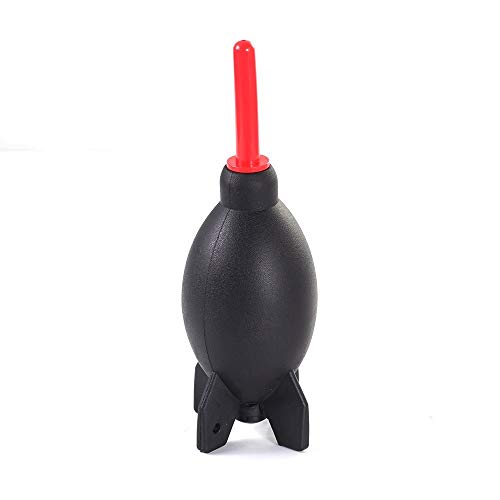
The maintenance mistake, translated faithfully: the mirrorless sensor sits exposed at every lens change, and the photographer who never checks it discovers the dust as a constellation of spots across a sky-heavy portfolio — each spot cloned out of a hundred frames that a thirty-second check would have saved. The discipline is the stopped-down test frame after any dusty environment, the blower before the wet clean, and lens changes made with the mount facing down and the wind at your back. A camera maintained this way delivers its sensor’s full quality for its whole life; neglected, it delivers retouching. Maintenance, in photography, is image quality by another name.
Head-to-head: separating the lineup
Mark III against Mark II is the generation question, and it resolves by discipline. Stills-led photographers lose the least by choosing the older body and gain a lens’s worth of budget; detection-led and video-led photographers gain the most from the successor and should not let the discount talk them out of their own work’s requirements. The mixed fleet — Mark III primary, Mark II second — deserves its place as a third answer rather than a compromise, because shared batteries, cards and handling make it the professional’s arithmetic as much as the enthusiast’s temptation.
Either Canon against the a7 IV is the system question, and it resolves by inventory. Count your lenses honestly, price the emigration in full, and require the other side’s advantages to be specific — a lens, a behaviour, a workflow — rather than atmospheric. Systems at this level are separated by ecosystems and ergonomics far more than by image quality, and the photographer who chooses on those grounds chooses durably. The one who chooses on a launch week’s excitement will be re-choosing at the next launch, at emigration prices, forever.
Living with the choice: upkeep and longevity
A body’s longevity is shutter, sensor and support. Keep the sensor discipline from the mistakes section, treat the shutter count as the odometer it is — heavy burst disciplines spend it faster, which is information for the professional’s replacement planning rather than a cause for anxiety — and keep firmware current, because in the detection era a firmware update is occasionally a capability update in disguise. Store the body dry, cycle its batteries rather than entombing them charged, and keep the settings export with the kit inventory. A body maintained this way serves until its generation’s ideas do, which at this class’s current pace is a long and productive life.
The kit around the body ages on its own schedule: straps fray, cage screws wander, cards slow and quietly retire. The quarterly kit audit — ten minutes with the bag emptied on a table — catches the small failures before they schedule themselves for a wedding. Photographers think of maintenance as something cameras need; in truth it is something archives need, because the archive is what the whole system exists to produce, and every dusty sensor and dead card is a tax levied directly on it.
Final recommendation
Choose the Mark III if your work lives in the current generation’s strengths — subject detection on hard subjects, hybrid video with intent — and you are building forward in the Canon system. Choose the Mark II if your photography is stills-led or your budget completes a lens by choosing it, and buy it knowingly as the value it is. Choose the a7 IV if you are system-free and its lens ecosystem’s arithmetic wins your specific kit list, or if a specific Sony-side advantage has survived the full pricing of the switch. All three verdicts assume the fortnight’s real shooting and the carry-over audit are honoured first.
The R6 line’s story has always been balance, and the Mark III’s generation keeps the story’s moral intact: the right camera is the one whose strengths map onto your subjects and whose costs map onto your budget, and the launch calendar is the least reliable narrator in photography. Shoot the trial, audit the drawer, price the glass — and the body will choose itself.
Finally, a word for the reader who came here hoping to be told that one of these cameras is simply the best, full stop. At this level, that sentence no longer exists in honest reviewing, and its absence is good news: it means the class has matured to the point where the decision is about fit — your subjects, your lenses, your hands, your budget’s shape — rather than about avoiding a bad camera, because there is no bad camera on this page. Fit decisions age well. Superlative decisions age like launch weeks. Choose for fit, and whichever badge ends up on your strap, the photographs will not know the difference — but your hands, your drawer and your bank balance will, and they are the reviewers you live with.
Frequently asked questions
What counts most when choosing for eos r6 mark iii?
Your subjects, stated concretely. The detection and video systems that separate these generations earn their price only on the work that exercises them — the uncooperative wildlife, the hybrid wedding, the production schedule — while the stills photographer in good light is served nearly identically by the older body and a better lens. Write down the frames you actually lose today and the lenses you actually lack; the camera decision is whichever purchase addresses the longer list. Everything else in the comparison is commentary on that single audit.
How much should a beginner spend for eos r6 mark iii?
A beginner to full-frame should spend as much on the first lens as the body allows them to — which usually means the Mark II’s tier rather than the Mark III’s, with the difference committed to glass before it evaporates. The exception is the beginner who is not really a beginner: the working hybrid shooter upgrading from a smaller format, whose clients and subjects already exercise the new generation’s systems. That buyer’s “beginner” status is a format technicality, and they should buy for the work they already do. Everyone else: body one tier down, lens one tier up, and a year of shooting before the next decision.
Which error do buyers of eos r6 mark iii regret most?
Buying the generation instead of the photograph: the body upgraded while the lens the work actually needed stayed on the wish list, because bodies launch with events and lenses merely exist. The regret’s second form is the unpriced switch — the system changed for a feature, the lens collection rebuilt at a loss, the feature used monthly. Both regrets are arithmetic that was available before the purchase, which is what makes them regrets rather than misfortunes. The carry-over audit and the lost-frames list, both in this review, are the two documents that prevent them.
How long until a new EOS R6 Mark III body feels familiar?
Within a system, about a fortnight of real shooting: the hand learns the new body’s small differences, the detection settings settle against your subjects, and the custom modes become reflexes. Across systems, budget a season — the menus, the lens behaviour, the colour habits of a new ecosystem all re-learn at their own pace, and the photographer should keep the old kit until the new one’s keeper rate on real work has honestly overtaken it. Selling the old system in the first month is the classic way to be camera-less in two systems at once.
When is the premium alternative in eos r6 mark iii really worth it?
When the premium buys capability your work invoices for: detection that raises a professional’s keeper rate on paid subjects, video behaviour that removes a workaround from a production, or — in the a7 IV’s case — a lens ecosystem that lowers the whole system’s cost across the years. It is not worth it for launch-week completeness, for specifications your subjects never invoke, or for the feeling of currency. Professionals can usually name the exact frame the premium rescues; if you cannot name yours, the premium is a donation to the launch calendar.
What should I confirm initially if my eos r6 mark iii purchase disappoints?
Confirm the configuration, the firmware and the test itself, in that order. Return the autofocus to the maker’s defaults and re-shoot your hardest subject, because a disappointing body is very often a misconfigured one — detection set for the wrong subject class, a case setting fighting your panning. Update the firmware, which in this era genuinely changes behaviour. And check the sensor for the dust that softens a new owner’s first impressions more often than any optical flaw. If the body still disappoints on defaults with clean glass, the disappointment is data: your subjects and this generation are mismatched, and the Mark II plus glass — or the rival system, honestly priced — is the answer the trial was for.
Related guides
- Canon Eos R6 Mark Iii
- Canon Eos R6 Mark Iii And Rf 45mm F 1 2 Stm
- Canon Eos R6 Mark Iii vs Canon Eos R5 Mark Ii
- Canon Eos R6 Mark Iii vs Canon Eos R6 Mark Ii
- Canon Eos R6 Mark Iii vs Nikon Z6 Iii
- Canon Eos R6 Mark Iii vs Sony A7 V
Companion reading for the camera bag: the lens guides for both mounts, the accessory coverage, and the wider photography section for whichever system you choose to build in.
One more angle: autofocus subject detection, revisited
Audit your detection settings whenever your subjects change season — the configuration tuned for summer’s birds is not the one for autumn’s indoor sport, and the camera remembers your last discipline with perfect, unhelpful fidelity. Keep a per-discipline settings note with the exported configuration: subject class, case behaviour, the custom mode each lives in. Detection is a per-subject instrument wearing a general-purpose costume, and the photographers who treat it that way are the ones whose keeper rates make the generation’s marketing look understated.
One more angle: video limits and heat, revisited
Log your thermal experience the way pilots log weather: the mode, the ambient temperature, the take length at the first warning, the recovery time in shade. A season of that log converts your camera’s video behaviour from folklore into a personal specification you can plan productions around — which is the difference between a shooter who fears the limit and one who schedules inside it. Share the log with your discipline’s community, too; the owner knowledge that makes a body a safe professional purchase is built from exactly such records.
One more angle: IBIS with your lenses, revisited
Re-test your stabilisation whenever a lens joins the kit, because the partnership is per-lens and the new arrival’s behaviour — coordinated or body-only, graceful or hunting at your focal length — is unknown until your own footage says so. Five minutes of deliberate handheld tests at your working speeds, filed with the kit notes, is the whole cost. The archive of those tests, across a shelf of lenses, becomes your personal stabilisation chart: worth more than any headline figure, because it was measured on the only hands and glass that will ever use your camera.
One more angle: Mark II accessory carry-over, revisited
Extend the carry-over audit beyond the body drawer to the software shelf: your editing presets and colour profiles are calibrated to a sensor’s habits, and a generation change — let alone a system change — shifts them subtly. Budget an evening to re-baseline your processing on the new body’s files before judging its colour against the old one’s; photographers have returned cameras for a colour cast that lived entirely in their presets. The kit you carry into a new generation includes your post-production, and it deserves a line in the inventory like any lens.
One more angle: renting before you switch systems
Make the rental a working test rather than a honeymoon: shoot the candidate body on a real assignment’s terms — your subject, your light, your deadline — with your most-used focal length, and process the files through your real workflow the same evening. Honeymoon rentals flatter everything; working rentals tell the truth about menus under pressure, files in your pipeline, and the hand’s opinion at hour six. The rental fee is the cheapest line in any system decision, and the photographers who pay it are conspicuously absent from the forums’ switching-regret threads.