Disclosure: As an Amazon Associate, reviewstook.com earns from qualifying purchases. Links on this page are affiliate links; they cost you nothing extra. Prices and availability change often, so check the current Amazon listing before you buy.
Full modular vs semi modular psu is a narrower question than it first appears, and that is its virtue. Both designs agree on the hard part — the cables you may never need, the extra SATA strands and peripheral leads, unplug from the power supply and stay in the box. They disagree about exactly one bundle: the cables every build uses. A semi-modular unit keeps the 24-pin motherboard lead and the CPU power lead permanently attached, because no living build omits them. A fully modular unit lets even those two unplug. Everything else in this comparison — the money, the cable management, the small-case behaviour, the resale value — flows from that single difference in what stays fixed.
So this guide refuses to pad the question into a general power-supply survey. It takes the one decision seriously: given that the optional cables detach on both designs, what does detaching the essential ones actually buy you, in which cases does it buy nothing, and when is the semi-modular unit’s fixed bundle a genuine obstacle rather than a theoretical one? The three power supplies reviewed below are all fully modular 850 W units — deliberately so, because the fully modular side of the argument is the one you pay extra for, and it should have to justify itself with concrete hardware while the semi-modular case is argued on its merits in the text.
Key takeaways
- Which cords stay fixed on semi-modular units
- Small-case cord management reality
- Cost gap and where it really goes
- Cord compatibility warnings among brands
In this guide
Full Modular vs Semi Modular PSU at a glance
| Example variant | Detail | Entry |
|---|---|---|
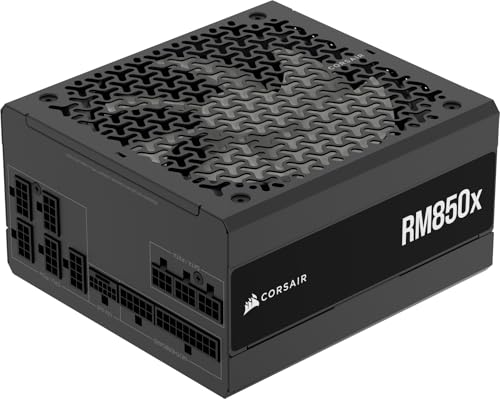
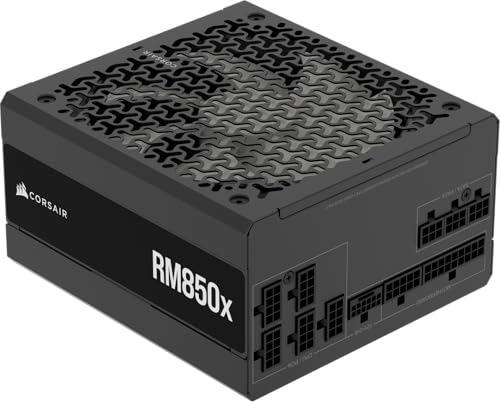
| Corsair RM850x | See the detailed parts below | Check price on Amazon |
| Seasonic Focus GX-850 | See the detailed sections below | Check price on Amazon |
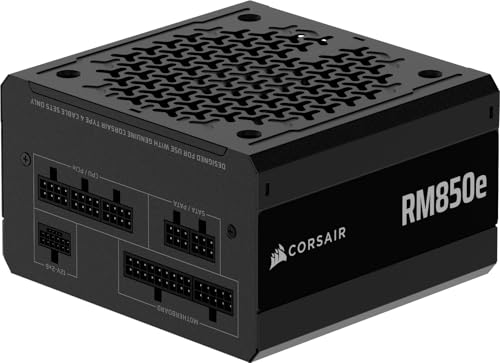
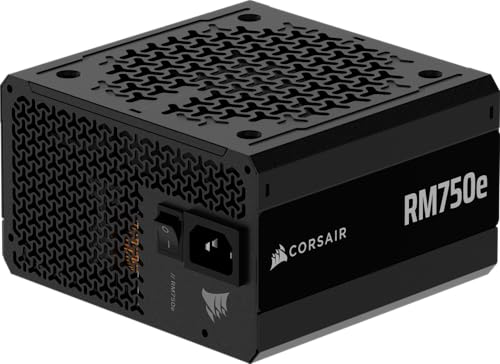
| Corsair RM850e | See the detailed parts below | Confirm cost on Amazon |
The glance-level truth is that the two designs converge more than marketing suggests. In a finished mainstream build — motherboard, CPU, one graphics card, a drive or two — a semi-modular and a fully modular unit of the same wattage leave the case in nearly identical states, because the cables the fully modular owner unplugged are precisely the cables the semi-modular owner was always going to use. The differences appear at the edges of the build spectrum: very small cases where every fixed lead must be threaded through a gap before the unit can sit down, custom-sleeved cable projects where the stock 24-pin is being replaced rather than routed, and workbenches where the supply is installed and removed often enough that disconnecting two more plugs is a real saving of minutes and knuckles. Price those edges honestly against your own plans and the choice usually makes itself. If a build will include a second user — a machine being assembled for a family member or a colleague — the calculus tilts a little further toward whichever design the maintainer, rather than the owner, prefers, because the maintainer is the one who will meet the cabling again.
One clarification belongs at the top, because a persistent myth distorts this comparison: modularity has no electrical meaning. A fully modular and a semi-modular version of the same platform deliver the same voltages with the same stability; the detachable joints on the essential cables are engineered to carry their loads without meaningful loss, and no benchmark has ever found performance hiding in a fixed 24-pin. What you are choosing between is purely mechanical and financial — how the cables behave in your hands and your case, and what that behaviour is worth. Buyers who suspect the fully modular unit is somehow the more serious piece of engineering can set the suspicion aside and judge the question on the grounds where it actually lives.
How the selection was chosen
All three units sit at 850 W because that is the wattage where the modularity question is asked most often — enough for a strong single-graphics-card build with headroom, short of the territory where buyers stop comparison-shopping altogether. All three are fully modular, current-generation ATX 3.1 units with the native 12V-2×6 graphics connector, because a head-to-head about cable systems should be judged on the cable system a buyer would actually receive today, including the high-power GPU lead that has replaced the old bundles of PCIe cables. They differ in the things that separate fully modular units from each other — fan behaviour and noise tuning, efficiency certification paths, warranty posture and cable feel — which is the right set of differences to expose: once you have decided the modularity class, these are the grounds on which the units themselves compete, and a semi-modular buyer should apply the same grounds within their class.
Detailed reviews
Corsair RM850x
Best for specialists
| Unit | Corsair RM850x |
|---|---|
| Class | Power Supplies |
| Entry highlights | fully modular cabling |
| Price | Check price on Amazon |
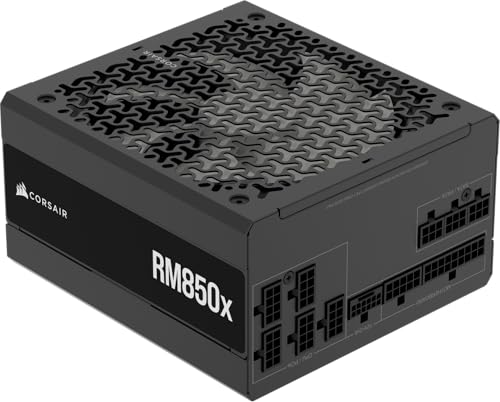
The RM850x is the reference point for what the fully modular premium buys when it is spent well. Every lead detaches, including the 24-pin and CPU power, so the unit can be seated in a case empty-handed and wired afterwards in the order the case allows — a sequence that matters more than it sounds in a small chassis, where threading a fixed 24-pin through a grommet while the supply is half-mounted is the worst five minutes of the build. Its cables are individually sleeved in appearance and flexible in hand, its fan stays off at low loads and behaves politely above them, and the platform’s long production run means its cable ecosystem — replacements, extensions, sleeved sets made for this exact pinout — is the deepest of the three here.
As evidence in the modularity argument, it cuts both ways, and honestly. In a mid-tower with a power-supply shroud, an RM850x build and a semi-modular build photograph identically from the front, because the shroud hides the one place they differ. The Corsair’s advantages declare themselves at build time and at change time: swapping this unit into a different case, lending it to a test bench, or replacing one damaged cable rather than a whole loom are all operations the fully modular design makes trivial and the semi-modular design makes fiddly. Buy it when those operations are plausibly in your future; admire it and buy cheaper when they are not.
Strengths
- Every cable detaches, so installation order is dictated by the case, not the loom
- Deep ecosystem of exact-fit replacement and sleeved cables for this pinout
- Quiet fan behaviour that holds up in a living-room build
Trade-offs
- You pay the fully modular premium whether or not your case can show it
- Its cables are model-family specific — they must never wander to another brand’s unit
- 850 W is generous for modest builds, and the surplus buys nothing by itself
Best for: builders who swap cases, bench-test, or plan custom cables. / Not suited for: a shrouded mid-tower that will be built once and closed for years. Check price on Amazon
Seasonic Focus GX-850
Best upgrade move
| Spot | Seasonic Focus GX-850 |
|---|---|
| Line | Power Supplies |
| Functions named on its page | fully modular cabling, 80 Plus efficiency certification |
| Price | Verify cost on Amazon |
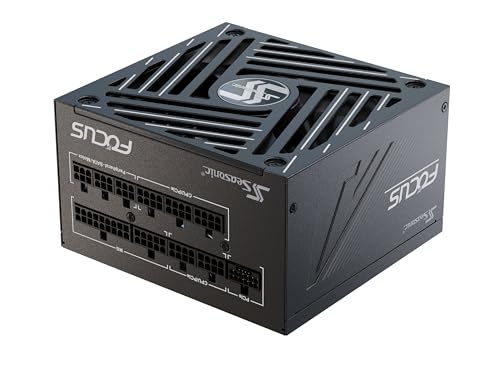
Seasonic’s Focus GX-850 makes the fully modular case with an engineer’s accent: fully detachable cabling, a hybrid fan control that lets the fan rest at low load, and a warranty posture that signals how the maker expects the unit to age. In the context of this comparison its most interesting trait is cable discipline — the supplied leads are sensibly gauged and length-judged for mainstream cases, and the connector housings seat with a positive feel that matters when a plug is being connected blind, by fingertips, at the back of a mounted supply. That blind-connection moment is where fully modular units earn or lose their reputation, and the Focus handles it well.
Against the semi-modular alternative, the Focus argues the long game. A power supply outlives graphics cards and often motherboards; a fully modular unit is the easiest kind to carry across those generations, because each new build starts from an empty socket panel and takes only the cables it needs, while the spares stay labelled in the box rather than coiled in the case. The counter-argument is the same as ever — in a single long-lived build, that flexibility is exercised once and then sits idle for a decade — and the Focus’s price asks you to decide which story your next ten years tell. As a unit it is easy to recommend; as a modularity lesson it teaches that fully modular is best understood as insurance for changes you can name, not as a general upgrade.
Strengths
- Fully detachable cabling with connectors that seat positively when worked blind
- Hybrid fan control keeps low-load operation silent
- Long warranty posture suits a unit meant to cross several builds
Trade-offs
- Premium pricing for flexibility a static build uses exactly once
- Cable set is Seasonic-specific; borrowed cables from other brands are forbidden
- The fan-mode switch is easy to set and forget in the wrong position
Best for: a long-horizon builder who expects this supply to power two or three successive machines. / Not suited for: a single fixed build where the semi-modular saving could fund storage or memory instead. Check price on Amazon

Corsair RM850e
Best for tinkerers
| Unit | Corsair RM850e |
|---|---|
| Segment | Power Supplies |
| What its entry leads with | fully modular cabling |
| Listing cost | Confirm expense on Amazon |
The RM850e is the fully modular idea at its most accessible in this trio: the same detach-everything cable philosophy, ATX 3.1 readiness with the native 12V-2×6 lead, and a specification pitched at builders who want the current platform without paying for the flagship’s quieter fan programme and finer trims. Its presence in this guide is a useful corrective to a lazy assumption — that fully modular is a luxury tier. Here it is simply the design, offered at the tier where most 850 W buyers actually shop, which reframes the head-to-head honestly: the semi-modular saving has to be measured against units like this one, not against the most expensive fully modular supply on the shelf.
Where the RM850e concedes ground to its RM850x sibling is in refinement rather than function — fan tuning and component trims are where the family ladder is climbed — and a buyer cross-shopping the two should decide whether a quieter fan curve under load is worth the step up in their room, with their case, at their seating distance. For the modularity question itself the RM850e is arguably the strongest exhibit: it demonstrates that the fully-versus-semi decision and the premium-versus-value decision are separate axes, and that a builder can choose fully modular for case-swap freedom without also choosing to spend flagship money. Its cables, like every modular set here, belong to its own family and must be treated as such.
Strengths
- Fully modular cabling at the accessible end of the 850 W market
- Current ATX 3.1 platform with the native high-power GPU connector
- Makes the fully modular choice available without a flagship budget
Trade-offs
- Fan refinement sits a step below the RM850x for noise-sensitive rooms
- Cables are family-specific and must not be mixed with other units’ sets
- Still costs more than a comparable semi-modular unit doing the same daily work
Best for: value-conscious builders who want detach-everything cabling on a current platform. / Not suited for: the quietest possible living-room build, where the flagship’s fan programme earns its keep. Check price on Amazon
Buying guide: what really determines Full Modular vs Semi Modular PSU
Strip the marketing away and four questions decide this head-to-head. Which cables are fixed, and do you care? How small is the case, really? Where does the price gap actually go? And do you understand the one rule of modular cables that protects your hardware? Answer those and the fully-versus-semi question answers itself; skip them and you are choosing by vibe.
Which leads stay fixed on semi-modular units
A semi-modular supply fixes the cables that are universal: the 24-pin ATX lead that powers the motherboard, and at least one 8-pin CPU power lead. Everything else — additional CPU leads, PCIe leads for the graphics card, SATA strands, peripheral cables — plugs in as needed. The design logic is sound: since every build ever assembled uses a 24-pin and a CPU lead, making them detachable saves no space in the finished machine; it only adds two connectors’ worth of cost and two more joints in the highest-current paths. The fixed bundle is therefore not a compromise the maker apologises for but a deliberate deletion of pointless modularity.
The exceptions are worth knowing because they are the whole argument for paying more. A second CPU power lead — needed by some high-end boards — is detachable on semi-modular units, which is where a fixed-bundle owner can still be caught out: the cable exists, but it is in the box, and if the box is in a loft, the build pauses. And on a handful of compact semi-modular units the fixed bundle includes a PCIe lead, which can strand an unwanted heavy cable in a small case. Read the specific unit’s cable list rather than trusting the class label; “semi-modular” describes a philosophy, and each maker implements the fixed bundle slightly differently.
The fixed bundle has one more subtlety: its length is chosen for the average tower, and it is not negotiable. In a large case that is invisible. In a compact case, the fixed 24-pin may arrive with a third more length than the run requires, and that surplus must live somewhere — folded against the supply, looped behind the tray if the tray gap allows, or dressed along a wall it was not shaped for. None of this is unbuildable, and experienced small-case builders do it weekly, but it is fair to count it when pricing the classes: the fully modular owner facing the same surplus can simply fit a shorter lead, while the semi-modular owner negotiates with the cable as given. Modularity, in the small-case context, is partly a length-tailoring service.
Modest-case lead management reality
Case size is where this comparison stops being theoretical. In a mid-tower with a shroud and room behind the motherboard tray, a semi-modular unit’s fixed leads route exactly like a fully modular unit’s connected leads, and the surplus length hides in the same places. The finished builds are indistinguishable, and any claim otherwise is photography, not engineering. Shrink the case and the physics change: in a small-form-factor enclosure the supply often mounts in a cage or a front position with centimetres of clearance, cables must be bent to their working shape before the unit slides home, and a fixed 24-pin — the thickest lead in the machine — must be threaded, bent and dressed while attached to a supply you are simultaneously trying to seat. Fully modular cabling converts that wrestling match into two calm operations: mount the empty supply, then connect leads one at a time in the order the space allows.
Airflow follows the same gradient. In a large case, an unused cable coiled behind the tray costs nothing measurable. In a small case with a single intake path, a fixed lead you cannot remove is a permanent obstruction you route around forever, and the detachable-everything design’s ability to start from an empty socket panel is worth real degrees. The honest summary: the smaller and denser the case, the more the fully modular premium is buying physics rather than tidiness; the larger the case, the more it is buying tidiness alone.
The modern graphics lead deserves a footnote in the fixed-cable discussion, because it is the cable builders most often ask about. On current ATX 3.1 units of both classes, the 12V-2×6 lead is detachable — it has to be, since not every build needs it and it is far too bulky to strand in a case — and on semi-modular units it joins the PCIe and SATA leads in the box of cables you fit as required. This is worth knowing when reading older advice: comparisons written before the 12V-2×6 era sometimes describe semi-modular units as fixing a graphics lead, which described a minority of older designs and describes essentially nothing a buyer will meet today. Judge the specific unit’s cable list, as ever, rather than the folklore of its class.
Form factor sharpens the case-size argument once more. The smallest builds often use SFX supplies, a market where fully modular design is close to universal — not because SFX buyers are extravagant, but because in a two-litre enclosure a fixed bundle is a genuine engineering obstacle and makers know it. The practical consequence for a mainstream buyer is that the fully-versus-semi debate is mostly an ATX-tower debate; step down in case size and the market has largely decided for you. Knowing that can save a small-case builder an hour of comparison shopping: spend the hour on wattage and fan behaviour instead, where the SFX field genuinely differs.
Cost gap and where it really goes
Fully modular units cost more, and it is worth understanding what the money physically is: additional connector housings and pins on the supply’s output panel, the matching plugs on every cable including the two a semi-modular unit hard-wires, and the assembly and testing time those joints add. You are not paying for better electricity — the same platform is often sold in both forms with identical electrical performance — you are paying for joints. That framing clarifies the value question: joints are worth money exactly when you will use them, at build time, at case-swap time, at cable-replacement time. A builder who will use them twice in a decade is buying cheap convenience at a fair price; a builder who will never use them, not once in the machine’s whole life, is buying jewellery for the inside of a closed case.
The gap also competes with other line items, and a disciplined builder prices the alternatives. The saving from choosing a good semi-modular unit over a fully modular one is typically the size of a meaningful storage upgrade or the step from a bronze-rated afterthought to a properly certified unit — and between a better-certified semi-modular supply and a lesser fully modular one, the better-certified semi wins every time, because efficiency, protection circuitry and component quality protect the machine daily while modularity visits occasionally. Modularity is the last attribute to spend on, after wattage headroom, certification and platform currency are secured.
Resale is the cost gap’s echo, and it behaves asymmetrically in a way worth pricing. A fully modular supply sold second-hand without its complete, original cable set is a diminished object — the buyer faces the cost and effort of sourcing family-correct cables — while a semi-modular unit carries its two most important cables permanently, so its second-hand completeness is easier to judge at a glance. Owners who keep the box, the full cable set and the receipt together preserve most of a fully modular unit’s value; owners who scatter the set across drawers discover at sale time that the premium they paid has quietly evaporated. None of this should drive the original choice, but it rewards the tidy and taxes the careless with unusual precision.
Lead compatibility warnings among brands
One rule governs every modular cable in this guide, and breaking it is the most expensive mistake in the whole topic: modular cables are wired for the specific supply family they shipped with, and the pinout at the supply end is not standardised between brands — or always between models of one brand. The connector may fit perfectly while the voltages land on different pins, and the result can be a dead drive, a dead graphics card, or a dead supply, instantly and without smoke to warn you. The device ends of the cables are standard; the supply ends are dialects. Treat every modular cable as married to its unit: keep each set in its unit’s box, label sets that must share a drawer, and when a supply is replaced, retire its cables with it or keep them quarantined and marked.
This rule reframes one of fully modular’s selling points with a necessary caution. Yes, a damaged cable on a fully modular unit can be replaced individually — but only with a cable made for that exact family, bought from the maker or a reputable cable specialist who lists the model explicitly. The bargain universal modular cable does not exist, and a listing that implies otherwise is selling the most dangerous object in PC building. Semi-modular owners face the same rule for their detachable leads; the fixed bundle at least cannot be misplaced into another machine, which is a small, unglamorous safety point in the semi design’s favour.
The semi-modular side deserves its exemplars described in prose, since no semi-modular unit is linked in this guide. A typical good semi-modular 850 W unit presents exactly the picture the class promises: the 24-pin and one CPU lead emerge from the unit’s grommet, and a row of sockets waits for the GPU lead, a second CPU lead if the board wants it, and the SATA strands the build requires. Fitted into a tower, the only visible difference from the fully modular builds above is at the supply’s face, hidden behind the shroud — which is to say, in the finished machine there is no visible difference at all. That is the semi-modular argument in its strongest form, and this guide states it without dilution: for the mainstream build, the class gives up nothing in the result, only in the process.
Full Modular vs Semi Modular PSU in actual habits
Situation: a modest-form-factor build where each cord fights for space
The small build is fully modular’s home fixture. The sequence tells the story: the supply mounts empty into its cage; the 24-pin is connected at both ends and dressed flat against the case wall; the CPU lead follows the channel the case provides; the GPU lead arrives last, cut to the run the layout needs. At no point is the builder holding a supply in one hand and a fistful of fixed cabling in the other. A semi-modular unit in the same case can be built — people do it constantly — but the fixed bundle must be pre-bent into its final shape before the supply seats, and every later change, a different GPU with its connector elsewhere, means disturbing that dressed bundle. For a case measured in litres, pay the premium without resentment; it is buying working room, not looks.
There is a maintenance corollary to the small-case story. When a small build needs its graphics card reseated or its CPU cooler replaced, the work happens in the same crowded centimetres the cables occupy, and a loom that can be partly disconnected at the supply end opens the workspace like a door. Owners of dense builds learn to value this out of proportion to its build-day importance, because upgrades in a small case are where knuckles are lost. It is the scenario most likely to convert a semi-modular owner at replacement time — not the first build, but the third intervention inside it.
Situation: a mainstream tower with chamber to hide spare leads
The mainstream tower is semi-modular’s home fixture, and the honest report is that nothing about the finished machine betrays the choice. The shroud covers the supply and its sockets, the tray hides the runs, the fixed 24-pin and CPU leads take the same paths their detachable twins would have taken, and the spare detachable leads live in a drawer either way. The builder’s money, redirected, bought a larger SSD or a quieter cooler — improvements the machine demonstrates daily. Reviewers who score this scenario for fully modular are scoring the build afternoon, which is a real but one-time pleasure, against years of use, which is where the semi-modular saving quietly wins.
The tower story has a flip side that honesty requires: the builder who chooses semi-modular for a tower and then falls for a small case at upgrade time. The supply itself still fits only if it is SFX or the new case accepts ATX units, so the modularity regret usually arrives bundled with a form-factor regret, and the pair of them mean a new supply regardless. The lesson is not to buy fully modular as insurance against a case change you cannot describe — it is that case changes cascade, and the builders who genuinely make them often are exactly the ones whose fully modular premium was already justified on other grounds.
Scenario: a builder planning a future case swap
The case swap is where the semi-modular owner pays the toll. Moving a supply between cases means extracting the fixed bundle through the old case’s grommets — the 24-pin must be unthreaded from the motherboard and pulled through, usually with the graphics card removed for access — then threading it into the new case before the supply can be seated. The fully modular owner unplugs everything at the supply, lifts the bare unit out, seats it in the new case, and connects fresh runs in the new geometry. Neither operation is hard; one is twenty minutes tidier, twice per swap, for the whole working life of the supply, and those minutes are the entire product being sold. A builder who swaps cases the way others swap phones should price that honestly into the fully modular column, and a builder on their third case in a decade should not.
Custom-sleeved cables are the one growth hobby that changes the modularity answer retroactively, so they deserve a paragraph in the buying guide rather than the scenarios. A sleeving project replaces the visible leads — above all the 24-pin, the build’s visual centrepiece — with made-to-measure cables in chosen colours and lengths. On a fully modular unit that is a straightforward exchange of one family-correct cable for another. On a semi-modular unit the centrepiece cable is the fixed one, and the project is limited to extensions that add length and bulk to exactly the run the builder wanted to slim. Anyone who suspects the sleeving hobby is in their future should treat that suspicion as a named occasion and buy fully modular the first time; it is cheaper than buying the supply twice.
Setup and first-build how-to
A working sequence for either design, with the steps where the two diverge called out.
Step 1: list the connectors the build actually needs
From the parts list, count: motherboard 24-pin, CPU leads (one or two), GPU leads (the native 12V-2×6 on current units, or PCIe leads on older ones), SATA strands for each drive group, and any peripheral cable for a fan hub or lighting controller. This list is the cable set. On a fully modular unit every item on it gets connected; on a semi-modular unit the first two are already attached and the rest come out of the box. Anything not on the list stays in the box — that is the entire point of both designs.
Step 2: connect at the supply before mounting, where the case is small
In a roomy tower, mount the supply first and connect at leisure. In a small case, reverse it where the design allows: on a fully modular unit, attach the leads the case’s geometry makes awkward — usually the CPU lead — while the supply is still in your hand, route them as you seat the unit, then add the rest. The semi-modular builder’s equivalent discipline is to pre-dress the fixed bundle into its approximate final shape before the supply goes in, rather than discovering its stiffness afterwards.
Step 3: seat every plug until it clicks, then tug-test
Modular plugs that sit half-home are the leading cause of “my new build randomly restarts” that is actually a cable story — the 12V-2×6 GPU connector above all, which must be fully seated with no gap at the housing. Connect each lead with a firm push until its latch engages, confirm no visible gap, and give it a gentle tug. Do the same at the component end. Thirty seconds of this prevents the most misdiagnosed fault in modern building.
Step 4: dress the runs for the next person who opens the case
Route cables so that the components most likely to change — the graphics card, the drives — can be removed without disturbing the rest. Keep the spare modular leads out of the case entirely, in the supply’s box, with the box labelled with the unit’s model. Future you, mid-upgrade, is the audience for every one of these courtesies.
Step 5: power on and verify under a real load
First boot proves little; a supply and its cabling declare themselves under load. Run the machine through its heaviest realistic work — a game or a render — and confirm stability, then shut down and re-check the GPU connector’s seating once the machine is cool. A connector that was marginal often announces itself in the first hot hour; catching it on day one is the difference between a reseat and a repair bill.
A word on the swap scenario’s mirror image: the fully modular owner who never swaps anything. Their unit’s sockets were exercised once, on build day, and the cables have not moved since — which means their premium bought a single pleasant afternoon. There is no shame in that purchase if it was made cheerfully, and this guide’s objection is only to making it accidentally, under the impression that the finished machine would somehow be better. It is not better; it is identical, with a tidier memory attached. Price memories honestly and both classes sell themselves to the right buyers.
Common mistakes with Full Modular vs Semi Modular PSU
Mixing modular leads among force supply brands
The gravest mistake in this topic, repeated here because repetition is what safety rules run on: a modular cable from one supply plugged into another, because it fit. Fit is not compatibility. The supply-end pinouts differ, the damage is instant, and the victims are usually drives and graphics cards that were innocent bystanders. Every cable set stays with its unit, labelled, for the unit’s whole life — and a second-hand supply bought without its cables is not a bargain but a problem wearing one.
Paying the modular premium in a case with a full shroud
A shrouded case hides the supply, its sockets and the first stretch of every cable — the exact theatre where fully modular cabling performs. Owners who pay the premium there are buying an experience limited to build afternoon, which may still be worth it to them, but should be bought knowingly. The same money spent on the semi-modular version of the platform plus a storage or cooling upgrade returns value every day the machine runs.
Forgetting the fixed cords are the ones you ever employ
Semi-modular’s fixed bundle is chosen with intent: the 24-pin and CPU lead are the two cables no build omits, which is why their permanence costs the finished machine nothing. Buyers who reject semi-modular on the grounds that “some cables cannot be removed” without asking which cables, and whether they would ever remove them, are declining a saving for a freedom they would never exercise. Ask the question concretely — when, in this case, with these parts, would I unplug the 24-pin from the supply while leaving the build otherwise intact? — and most builders find the honest answer is never.
There is a bench-test habit that separates the two classes in daily professional life and deserves a place in the head-to-head: fault-finding. When a machine misbehaves and the supply is a suspect, a fully modular unit can be lifted out and a known-good unit dropped in with the case’s cabling left entirely in place — provided the substitute is the same family, or its own cables are used — turning a PSU swap test into minutes. The semi-modular swap drags its fixed bundle through the case in both directions. Technicians and reviewers who perform this test weekly are fully modular’s most rational customers, and their preference is sometimes mistaken for snobbery by builders who perform it never.
Head-to-head: separating the shortlist
Among the three fully modular units, the separation is refinement, not capability. The RM850x is the polished all-rounder: the deepest cable ecosystem, a well-mannered fan, and the longest track record, priced accordingly. The Focus GX-850 is the long-horizon choice, with its warranty posture and disciplined cable set aimed at a supply that will be carried across builds — the very duty where fully modular design justifies itself most completely. The RM850e is the value expression of the same idea, conceding fan refinement to its sibling while keeping the detach-everything design and the current platform intact. Against the semi-modular field none of them competes on price, and that is the point of the exercise: a buyer who has walked the four buying questions and landed on fully modular should choose among these on noise, warranty and ecosystem; a buyer who landed on semi should apply the same three criteria one class down and pocket the difference without a backward glance.
One more longevity note, aimed at the connector itself: modular sockets are rated for a limited number of mating cycles, generous for a builder but not infinite, and they prefer to be connected squarely and left alone. The owner who unplugs the whole loom for every dusting is spending that rating on ceremony. Blow the case out with the cables in place, reserve disconnection for real changes, and the joints will outlast the platform they feed — which is, after all, the lifespan the fully modular premium was calculated against.
Living with the decision: upkeep and longevity
A power supply asks little: an occasional blast of air through its intake, a fan that still spins freely, and cables that are left alone. The modular-specific duties are clerical rather than mechanical. Keep the spare leads in the unit’s box, keep the box findable, and never let a cable migrate into a general spares drawer where a future builder — possibly you, tired, mid-repair — might marry it to the wrong supply. When the unit eventually retires, its cables retire with it or are destroyed; the second-hand market’s saddest stories begin with a box of anonymous modular leads. Dust is the other slow enemy, and a supply whose intake filter is cleaned on the same schedule as the case’s other filters will hold its temperatures, and its fan’s good behaviour, for the whole of its long life.
A final calibration for the undecided: think about who will open this case next, and why. If the answer is a technician, a future you mid-upgrade, or a buyer inspecting a second-hand machine, the fully modular design’s courtesies compound. If the answer is nobody, for years, behind a shroud, under a desk, the semi-modular unit’s silence on the subject is its own recommendation. The question was never which design is better in the abstract — in the abstract they are separated by two plugs — but which design matches the life the machine will actually lead.
Final recommendation
Decide by case and by calendar. In a small-form-factor case, or in the hands of a builder who swaps cases, benches parts, or plans custom sleeved cables, fully modular earns its premium in working room and minutes saved, and the RM850e makes that choice at the gentlest price while the RM850x and Focus GX-850 refine it. In a mainstream tower that will be built once and run for years, a good semi-modular unit is the rational purchase: the fixed leads are the ones every build uses, the finished machine is indistinguishable, and the saving buys components the machine will appreciate daily. What neither buyer should do is choose the class before the platform — wattage, certification and ATX 3.1 currency first, modularity last, and cables treated as married to their supply forever.
Environmental honesty closes the buying guide: the fully modular design ships with the same full cable set as its semi-modular sibling, so there is no waste argument between them — the unused leads exist in both boxes. The difference is only where the unused length of two particular cables spends the machine’s life: in the box, or in the case. Owners who find that framing clarifying are usually ready to decide; the classes differ by the storage location of two cables and the price of the sockets that make the choice possible, and everything else said about them, in this guide and elsewhere, is commentary on that single fact.
Frequently asked prompts
What counts most when choosing for full modular vs semi modular psu?
Your case’s size and your own habits, in that order. Small cases convert fully modular cabling from tidiness into working room; large shrouded cases reduce it to a build-day pleasure. After those come your plans — case swaps, bench work, custom cables — each of which is a concrete future use of the detachable 24-pin and CPU leads, and the only honest justification for paying to detach them.
How much should a beginner budget for full modular vs semi modular psu?
Budget for the platform first — adequate wattage with headroom, proper efficiency certification, a current ATX standard — and let modularity take what remains. For most beginners in a standard tower, that arithmetic lands on a good semi-modular unit and money left for storage or cooling. The fully modular step is a modest premium, best spent when a small case or a named future plan calls for it.
Which mistake do shoppers of full modular vs semi modular psu regret most?
Two share the title. The expensive one is mixing modular cables between supplies and destroying hardware that a label would have saved. The quiet one is paying the fully modular premium for a shrouded case and realising, at the first upgrade, that the money could have been a bigger SSD — a regret with no smoke, just arithmetic done too late.
How long does it take to get used to fully modular cabling?
There is nothing to get used to in daily use — a finished build hides its own cabling philosophy completely. The adjustment is at build and upgrade time: fully modular owners develop the habit of connecting in case-friendly order, and semi-modular owners the habit of pre-dressing the fixed bundle. Both habits form in a single build and feel native by the second.
When is the premium alternative in full modular vs semi modular psu truly worth it?
When you can name the occasion that will use it: the small case on the parts list, the case swap already planned, the bench the supply will visit, the sleeved cable set you intend to commission. A premium justified by a named occasion is a tool purchase. A premium justified by a general feeling that detachable must be better is a donation — sometimes a cheerful one, but a donation all the same.
What should I verify at the outset if my full modular vs semi modular psu purchase disappoints?
First, that every modular plug is fully seated — a half-home connector causes more “disappointing supply” stories than any electrical fault. Second, that the cables in use are the unit’s own, verified against its box. Third, that the disappointment is really about modularity: fan noise, coil whine and shutdowns are platform matters that the other modularity class would not have cured either.
Associated guides
- Fully Modular vs Semi Modular vs Non Modular PSU
- Atx 3 0 vs Atx 2 4 PSU
- Atx PSU Explained
- Best 1000w PSU for Beginners Under 100
- Best 1000w PSU for Beginners Under 1000
- Best 1000w PSU for Beginners Under 200
One more angle: minor-case cable management reality, revisited
A detail the small-case discussion earns: cable length, not just detachability, is the small builder’s real currency. A fully modular unit lets you fit shorter aftermarket leads cut for compact cases, turning a bundle of surplus cable — which in a small case is literally displaced air — into runs that match the geometry. Semi-modular’s fixed leads come in one length chosen for towers, and in a small case that length is a permanent resident. For the smallest builds, this, more than the build-day convenience, is the premium’s substance.
One more angle: which leads stay fixed on semi-modular units, revisited
It is worth checking one implementation detail before buying any semi-modular unit: whether the graphics card lead is among the fixed cables. Most makers keep PCIe leads detachable, but a fixed PCIe lead on a unit destined for a build whose GPU will change — or a build with no discrete GPU at all — strands a heavy, useless cable in the case for the machine’s whole life. The cable list in the manual settles it in a minute, and it is the minute that separates a semi-modular bargain from a semi-modular annoyance.
One more angle: cord compatibility warnings between brands, revisited
The compatibility rule has a second-hand corollary that deserves emphasis: a used fully modular supply is only as complete as its cable set. Missing leads must be replaced with cables made for that exact family, sourced deliberately — and if the seller cannot say which cables are original, the prudent price for the unit is the price of the unit plus a full replacement set, which usually dissolves the bargain. New buyers get this safety free; the label-the-box habit is how they keep it.