Disclosure: As an Amazon Associate, reviewstook.com earns from qualifying purchases. Links on this page are affiliate links; they cost you nothing extra. Prices and availability change often, so check the current Amazon listing before you buy.
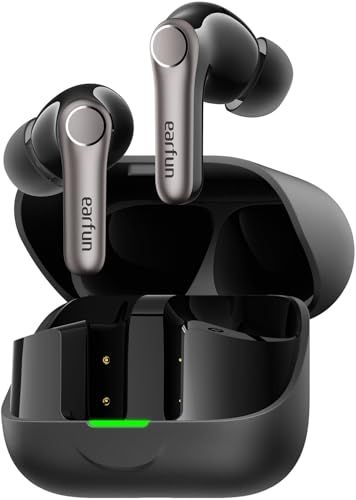
This earfun free pro 3 review begins with the situation its readers are actually in: the Free Pro 3 — EarFun’s stemless, wing-tipped exercise in how much technology fits in a pebble — no longer has a listing we could verify, so the earbuds themselves are assessed here in prose, on their documented design and their considerable reputation, while the two linked products are the current, purchasable answers to the same brief: EarFun’s own Air Pro 4 and Soundcore’s Liberty 4 NC. Read the page in that spirit. The Free Pro 3 sections tell you what the design was and what it was for; the product reviews tell you what to buy instead, today, with a listing that exists.
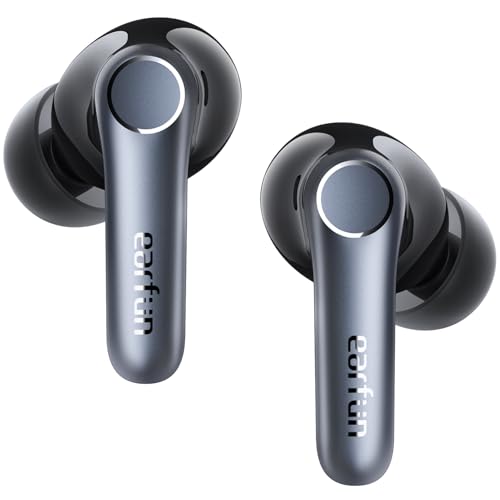
The Free Pro 3’s idea deserves the prose. At its launch it was the budget line’s overachiever: a stemless shell with stabilising wings for the gym, active noise cancelling for the commute, and Qualcomm’s aptX Lossless among its codec credentials — a combination that read like a flagship’s specification at a fraction of a flagship’s commitment. Its compromises were equally characteristic: a tiny case with no lanyard loop that owners learned to fear losing, call quality that served in calm air and struggled in wind, and a fit that was superb for the ears the wings suited and opinionated for the rest. Those strengths and compromises structure this review, because the two linked alternatives divide them between themselves — the Air Pro 4 inherits the codec-and-calls ambition, the Liberty 4 NC inherits the noise-cancelling value brief — and a reader who understands the original can choose its heir intelligently.
There is a wider reason this category rewards a careful review. Budget wireless earbuds improved faster than almost any other product class in the last few years, which means the differences between a good pair and a great pair have moved from the headline features — everyone has ANC now, everyone claims long battery — into the second-order details this page spends its length on: which codec your phone can actually use, how the microphones behave in weather, whether the case survives your bag. A buyer choosing on headlines will be satisfied; a buyer choosing on second-order details will be satisfied for years, and the distance between those two satisfactions is exactly one honest review.
Both linked products were verified against their current listings, and the links lead to those listings. Where the Free Pro 3 is discussed, it is discussed as a design that existed and can still be found in the used market and in owners’ pockets — not as a product this page can send you to buy today.
Key takeaways
Four properties defined the Free Pro 3 and still define its class. They are the criteria by which its two heirs are judged below, and they are worth memorising before the product sections, because every claim in those sections is one of the four in disguise.
- Noise cancelling strength on public transport
- AptX Lossless and codec support on your phone
- Fitting stability from the stemless shell
- Call calibre in wind and traffic noise
In this guide
Quick picks for Earfun Free Pro 3 Review
The purchasable shortlist in one view: EarFun’s current flagship-tier answer and Soundcore’s noise-cancelling value answer. The Free Pro 3 itself is covered in prose throughout, for the reasons given above, and its owners should read the two reviews as a map of where its virtues went.
| Piece | Best for | Entry |
|---|---|---|
| EarFun Air Pro 4 | Best for lengthy bouts | Check price on Amazon |
| Soundcore Liberty 4 NC | Best for shared chambers | Check price on Amazon |
How the selection was chosen
The selection logic is inheritance logic. The Free Pro 3’s brief had four corners — transport-grade noise cancelling, high-quality codecs, a secure active fit, and calls that survive weather — and no single current product at a similar standing inherits all four, so the shortlist takes the two strongest heirs and lets them split the estate. The Air Pro 4, from EarFun’s own line, carries the codec and call ambitions furthest, with adaptive hybrid noise cancelling of its own. The Liberty 4 NC carries the noise-cancelling value argument, from the other great budget-premium house. A reader whose Free Pro 3 is dying can identify which of its virtues they actually used, and buy the heir that kept that one.
That last discipline — buying the virtue you used, not the specification you admired — is the selection principle this whole review is built on, and it generalises far beyond EarFun. Owners consistently overbuy the features they enjoyed reading about and underbuy the ones their Tuesdays actually exercise. The Free Pro 3’s estate is a tidy test case because its virtues were so distinct: fit, codecs, cancelling, value. Name yours before the product sections, and the reviews below become a confirmation exercise instead of a seduction.
Criteria were fixed from the original’s reputation, in both directions: what owners praised (the fit’s security, the codec support, the value) and what they forgave (the case, the wind calls). Each linked product was verified against its live listing with its full specification — drivers and codecs from the maker’s own title, battery figures as the maker states them — and the Free Pro 3’s prose treatment is labelled as prose wherever a claim cannot be tied to a current listing. That discipline is the difference between a review and a memorial, and this page intends to be the former.
Detailed reviews
EarFun Air Pro 4
Best for Free Pro 3 owners who used the codecs and the calls, and want the line’s current best
| Unit | EarFun Air Pro 4 |
|---|---|
| Category | Wireless Earbuds |
| Headline features from its page | wireless operation, Bluetooth connectivity, active noise cancelling |
| Entry tag | Check price on Amazon |
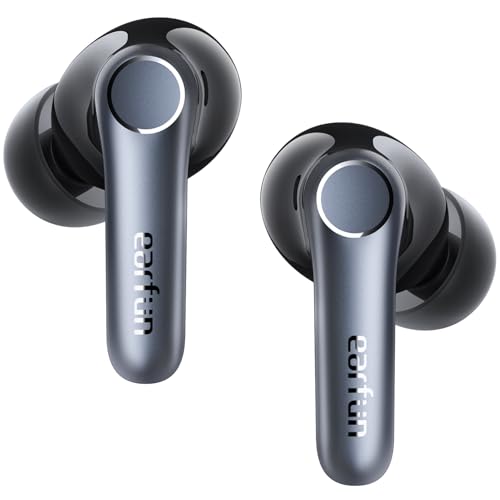
The Air Pro 4 is what EarFun did next, and its listing reads like a point-by-point answer to the Free Pro 3’s compromises. The codec ambition is kept and crowned: Qualcomm Snapdragon Sound with aptX Lossless, plus LDAC for high-resolution audio — the two headline wireless codecs, in one pair of earbuds, which remains a rare sentence at any price. The calls are rebuilt around six microphones with AI-assisted voice isolation, a direct reply to the wind-and-traffic weakness that Free Pro 3 owners learned to route around. And the noise cancelling graduates to an adaptive hybrid system that adjusts to the environment rather than offering a single fixed strength, with a quoted 52 hours of total playtime from buds and case, Bluetooth 5.4, and in-ear detection rounding out a specification that has stopped apologising for anything.
The form factor is the honest trade: the Air Pro 4 is a stem design, not a stemless pebble, so the specific fit magic of the Free Pro 3 — the wing-locked, barely-there bud that gym owners prized — is exchanged for the stem’s better microphone geometry and more universal fit. Most ears will find the Air Pro 4 secure and comfortable; the minority who chose the Free Pro 3 specifically for its shape should try before they commit, or read the Liberty section with the gym scenario in mind. Sound follows EarFun’s house direction of the period: capable, energetic, and happiest when the codecs are fed properly — which, given the aptX Lossless and LDAC support, mostly depends on your phone, a dependency the buying guide examines in full.
As an heir, then, the Air Pro 4 is the ambitious one: it assumes the Free Pro 3 owner valued the technology — the codecs, the calls, the adaptive cancelling — more than the silhouette. Its price stands above the Liberty’s, and the review’s judgement is that the difference buys real things (codec breadth, call hardware, adaptive ANC) rather than badge value, provided your phone and your habits can use them. An owner whose Free Pro 3 lived on an iPhone and never left the house for a run will find some of that specification theoretical; an Android user with a Snapdragon phone and a commute will find it all suddenly practical.
Strengths
- aptX Lossless and LDAC together, with Snapdragon Sound — the broadest codec support here
- Six-microphone call system with AI voice isolation, answering the original’s wind weakness
- Adaptive hybrid noise cancelling and a quoted 52 hours of total playtime
Trade-offs
- A stem design, so the Free Pro 3’s stemless wing fit is not reproduced
- The codec crown jewels need a compatible phone to exist at all
- The pricier of the two heirs, for features some owners will never unlock
Best for: the Android-equipped Free Pro 3 owner who used the original’s technology to its fullest. Not suited for: the gym devotee of the stemless fit, or an iPhone owner paying for codecs their phone cannot speak. Verify cost on Amazon
One first-week instruction for Air Pro 4 buyers: verify your codec before you judge the sound. Dig into your phone’s Bluetooth settings for the connected device and confirm which codec is actually live — aptX Lossless, LDAC, or the plain fallback — because the earbuds will accept whatever the phone offers and the difference between the flagship experience and the ordinary one is decided in that menu, not in the hardware. Owners who skip this check sometimes review the wrong product for a month.
The Air Pro 4 also rewards a word about its case and charging rhythm, because 52 hours of total playtime changes behaviour: the case becomes a weekly appliance rather than a nightly one, and the buds spend their lives ready. In-ear detection — the buds pausing when removed — sounds like a convenience bullet and becomes, within a week, the feature owners mention first, because it removes the small daily friction of the paused podcast and the missed sentence. Flagship ownership is mostly the absence of small frictions, and EarFun has clearly studied which frictions its owners actually reported.

Soundcore Liberty 4 NC
Best for commuters who want the strongest noise cancelling per pound spent
| Whole | Soundcore Liberty 4 NC |
|---|---|
| Family | Wireless Earbuds |
| Headline functions from its entry | wireless operation |
| Price | Check price on Amazon |
The Liberty 4 NC is the value heir, and its argument is the one the Free Pro 3 originally made: that the expensive part of the wireless earbud experience — serious noise cancelling for public transport — had become a commodity, and a well-made pair at a friendly price could deliver most of it. Soundcore, Anker’s audio house, built the Liberty 4 NC around that argument, with noise cancelling as the headline and everything else — sound, calls, battery, case — engineered to a standard that refuses to feel like a compromise purchase. Its stem design and fit follow the mainstream, which in practice means most ears are accommodated without drama.
Against the Air Pro 4, the Liberty’s strategy is focus: it does not chase the codec crown, and its call system is competent rather than theatrical. What it offers instead is the commuter’s core experience — a train carriage made quiet, a library of music presented with Soundcore’s energetic house tuning, a case and battery arrangement that survives a week of commuting — at a standing that makes it the easiest recommendation in this review for a buyer replacing a lost or dying Free Pro 3 without ceremony. It is also the safer gift and the safer spare pair, because its virtues need no compatible phone, no settings archaeology and no explanation.
The honest limits mirror its strategy. Codec explorers will find the menu shorter than EarFun’s; callers in genuinely windy conditions will find the Air Pro 4’s six-microphone array the stronger tool; and the gym’s wing-locked security of the original Free Pro 3 is, again, not reproduced by a mainstream stem fit. None of these are failures — they are the price of the value argument, stated in advance. A buyer who reads them and still nods is exactly the buyer the Liberty 4 NC was built for, and this review expects that buyer to be numerous.
Soundcore’s wider ecosystem is the Liberty’s quiet asset: the app that manages it is mature, the accessories and replacement tips are easy to source, and the brand’s support operation has the scale that small brands struggle to match when a case hinge or a bud fails in year two. None of that photographs well, and all of it matters more than a launch-day feature once the earbuds become furniture in your life. Value, properly understood, includes the cost of things going wrong — and on that ledger the Liberty’s big-house backing is a line item the specification table never shows.
Strengths
- Noise cancelling aimed squarely at public transport, at a friendly standing
- A complete, no-drama package that needs no special phone or setup to shine
- Soundcore’s energetic tuning and Anker’s accessory ecosystem behind it
Trade-offs
- A shorter codec menu than the Air Pro 4’s
- Calls are competent rather than class-leading in wind
- Mainstream stem fit, not the original’s stemless wing security
Best for: the commuter replacing a Free Pro 3 on a budget and prioritising the quiet carriage. Not suited for: codec maximalists, or windy-route callers who need the strongest microphone array. Verify cost on Amazon
A practical note for Liberty buyers: spend the first commute on the noise-cancelling levels rather than assuming the maximum is the answer. The strongest setting is for the train’s steady roar; platforms, streets and offices often sit better a notch lower, where announcements and traffic remain perceptible and the slight pressure sensation some ears report fades. The commuters who love this class of earbud are the ones who learn its two or three useful levels the way drivers learn gears — by route, automatically, within the first week.
Buying walkthrough: what actually settles Earfun Free Pro 3 Review
Noise cancelling strength on public transport
Transport noise is the friendliest possible target for active noise cancelling: low, steady, predictable — engine drone, rail rumble, air-conditioning wash — and both heirs handle it as their home fixture. The differences appear at the edges of the commute: the adaptive system in the Air Pro 4 follows you from the roaring train to the merely humming platform without manual adjustment, while a fixed-strength system asks you to ride the levels yourself, which experienced commuters do by route without thinking. Battery arithmetic belongs in this conversation too, because ANC is the hungriest feature the buds run: read the makers’ quoted totals as a week’s rhythm rather than a laboratory number — the Air Pro 4’s larger reserve suits the owner who charges on Sundays, the Liberty’s arrangement suits the owner happy to top up midweek — and know that your own charging temperament is a legitimate way to choose between them. Judge cancelling not by the silence in a shop demo but by what it does to fatigue across a week: the right level arrives with your ears unclenched, your volume a few steps lower than the uncancelled commute demanded, and your podcasts intelligible without effort. That lower volume, compounded over years of commuting, is the healthiest feature any of these earbuds sells.
Voices and announcements are the cancelling system’s honest limit, and expecting otherwise sets buyers up for disappointment. ANC erases drones, not speech: the platform announcement will still reach you, reduced and distanced, which is arguably the correct behaviour for a device worn in public. If your commute’s torment is a loud talker rather than a loud train, the remedy is a better seal and a modest volume, not a stronger cancelling mode — and foam tips, where they fit these buds, do more against voices than any algorithm in this price class.
AptX Lossless and codec support on your phone
A codec is a language, and an earbud’s fluency is wasted on a phone that cannot speak it. aptX Lossless — the Air Pro 4’s crown — requires a Snapdragon Sound phone on the other end; LDAC requires an Android phone with the setting enabled and the quality mode chosen; an iPhone speaks neither, and renders both earbuds’ codec menus moot, leaving their sound, fit and cancelling as the whole decision. This is not a flaw in the earbuds; it is the physics of an ecosystem, and it is why this review keeps asking about your phone before praising anyone’s codec list. Check yours before you shop: the Bluetooth device settings will tell you what your current earbuds are actually using, which is the most honest preview of what the next pair will use.
Manage expectations about what the better codecs buy. On a quiet evening with good recordings, LDAC and aptX Lossless deliver a measurable, sometimes audible refinement — air around instruments, a cleaner edge to cymbals. On a train, over the cancelling, with a streaming service’s ordinary catalogue, the difference narrows toward the theoretical. Buy the codec support if your listening includes the quiet evening; do not buy it as a promise about the commute. The Free Pro 3’s own owners learned this hierarchy in order, and its heirs teach the same lesson.
Fitting stability from the stemless shell
The Free Pro 3’s stemless, winged shell was its most loved and most divisive trait: for ears it suited, the wing locked the bud with a security no stem design matches, through sprints, presses and burpees; for ears it did not suit, the same wing was a pressure point with a grudge. Neither heir reproduces it, and this review will not pretend a stem fit is the same thing. What the heirs offer instead is the mainstream compromise — tips doing the work, a lighter hold, compatibility with more ears — which serves most owners well and the vigorous minority less completely. If the gym scenario below is your life, weigh fit above every codec in this guide, consider foam tips for either heir, and use the return window as the fitting room it legally is.
Fit has a second, quieter dimension: the seal’s effect on sound and cancelling, which the mistakes section treats as the category’s original sin. A bud worn loosely for comfort is a bud whose bass and ANC have both been quietly halved, and the owner then reviews the product rather than the fit. With either heir, spend the first session on tip sizes with the same discipline the Dunu owners in this site’s other reviews apply — the right size disappears, and disappearing is the entire specification.
Call standard in wind and traffic noise
Calls are where budget earbuds historically went to die, and the Free Pro 3’s wind struggles were the era’s typical story: fine at a desk, ragged on a breezy street, the microphones faithfully amplifying weather. The heirs divide the progress. The Air Pro 4’s six-microphone array with AI voice isolation is the direct, engineered answer — more ears on the problem, and software trained to keep the voice and discard the street. The Liberty 4 NC’s system is the competent mainstream: clear in ordinary conditions, honest about its limits in a gale. Judge by your own routes: a caller whose commute is a windy bridge should buy the array; a caller whose calls happen indoors should save the difference without a qualm.
Technique still matters more than owners expect. A bud’s microphones sit where they sit, and turning your head so your body shelters them from the wind, or pausing in a doorway for the important sentence, improves any of these systems more than an upgrade does. Test a new pair with a real call on your real route in the first week — not a voice memo in a quiet kitchen — because the route is the specification your callers will actually experience.
There is one more call variable that belongs to the owner rather than the earbuds: the app and phone settings that govern microphone behaviour, voice isolation at the system level, and which device a call routes to when several are paired. A new pair of earbuds often inherits a phone’s confused audio routing and is blamed for echoes that belong to the settings page. Spend five minutes in the call audio settings during the first week, confirm the earbuds own the microphone during calls, and the review you form afterwards will be of the product rather than of the phone’s defaults.
Earfun Free Pro 3 Review in real habits
Situation: a train commute with constant platform announcements
The commuter’s morning is a sequence of acoustic zones — street, platform, carriage, platform, street — and the earbuds’ job is to make the sequence bearable without making it dangerous. Both heirs serve: cancelling up for the carriage, a lighter level or transparency for the platform, where the announcements are information you are paying to travel by. The Air Pro 4’s adaptivity smooths the transitions automatically; the Liberty asks for a tap at each change, which its owners quickly build into the commute’s choreography. The Free Pro 3’s ghost presides over this scenario because it defined it for its owners — and its lesson survives in both heirs: the best commuter earbud is not the quietest, but the one whose levels you can work blind, with gloves, half asleep.
Scene: gym sittings where a stemless bud holds put
This is the scenario the heirs must answer with humility. The Free Pro 3’s winged pebble stayed in ears through movements that eject stem buds — the bench press’s head turn, the rowing machine’s rhythm, the run’s accumulated sweat — and an owner replacing it for the gym will feel the difference in the first session. Mitigations exist: the right tip size, foam tips for their grip, and an honest warm-up test before the working sets. But a dedicated gym-first buyer should know that the market’s answer to this scenario is a winged or hooked sport bud, a category neither heir belongs to. Buy the heirs for the other twenty-three hours; if the gym hour is the one that matters most, let it choose a different product, and let this review be the one that told you.
The gym also administers the sweat test, which no specification in this review can simulate: an hour’s honest exertion loosens fits that felt carved in stone at the desk. Judge either heir’s gym worthiness at the end of the hardest session of your week, not the easiest, and judge it by whether you thought about the buds at all during the working sets. The Free Pro 3 passed that test by disappearing; a stem heir that also disappears, for your ears, has answered the scenario completely, whatever the silhouette difference says on paper.
Scenario: calls taken as walking a dog on a breezy street
The dog walk is the call-quality exam nobody designs for: one hand occupied, wind unsheltered, traffic passing, and a conversation that matters. The Air Pro 4 was built for this exam — its microphone array and voice isolation exist precisely for the caller in weather — and it is the heir this scenario crowns without much contest. The Liberty manages the calm version of the walk and struggles gracefully in the full breeze. The Free Pro 3’s owners, veterans of this exact exam, developed the workarounds the buying guide mentioned — body as windbreak, doorway pauses — and those habits remain worth more than the price difference between the heirs. Buy the array if the exam is daily; keep the habits regardless.
Arrangement and initially-week how-to
Wireless earbuds are judged in the first fortnight or not at all, because their faults are daily and their return windows are short. These steps sequence the trial.
Stage 1 for Earfun Free Pro 3 Review: clean or maintain the model once past before deciding it is settled
Before you call the setup finished, do the small maintenance once: seat the tips fully, clean the charging contacts in the case with a dry cloth, and confirm both buds charge to full and report evenly. Earbud faults love to masquerade as product flaws — a dirty contact becomes “the left bud dies early”, a half-seated tip becomes “the bass is weak” — and a two-minute inspection in week one separates the product you bought from the grime it collected in transit. Settle the hardware, then settle your opinion of it.
Relocate 2 for Earfun Free Pro 3 Review: change one variable at a while
Tips, then levels, then codec settings, then equaliser — in that order, days apart. Earbuds are systems in which every variable moves the others: a bigger tip changes the bass, which changes the EQ you want, which changes the volume you choose. Owners who change everything on day one spend a month chasing a sound they cannot describe, because they never met the product at any single, stable configuration. One variable, one commute to judge it, one note. The discipline sounds slow and is in fact the fastest route to a setup you stop touching.
Step 3 for Earfun Free Pro 3 Review: run one typical sitting at default controls and write down what bothers you
Day one, factory settings, your real commute, notebook open. Record the irritations in the moment — the tip that works loose at the station stairs, the cancelling level that eats the announcements, the call where the wind won. This baseline list is your configuration agenda for the fortnight and your evidence at its end. Without it, you will fix the most recent annoyance repeatedly and call the process customisation; with it, each fix has a name and the final setup can be checked against the original complaints one by one.
Stage 4 for Earfun Free Pro 3 Review: re-verify relief following an session of employ
After the longest session of the first week — the full commute, the long call, the gym hour — audit comfort honestly: pressure points, the ear that tires first, the tip that migrates. Earbud comfort is asymmetric in most humans, and the fix is often different sizes per ear, which the included selection supports and owners rarely try. Judge comfort at the end of the longest session, never at the unboxing, because a bud that charms for five minutes and aches at fifty has told you its truth at exactly the moment most trials have already ended.
Move 5 for Earfun Free Pro 3 Review: schedule a two-week review to catch annoyances that solely repetition reveals
Put the verdict in the calendar for day fourteen. The faults that repetition reveals are specific to this category: the case that is fiddly with gloves, the touch control you trigger adjusting the fit, the battery rhythm that does not match your week. None of them appear in a weekend’s trial, and all of them decide year-long satisfaction. Bring your baseline notes to the review, check them off, and let what remains — usually a short, fixable list — determine whether the earbuds are keepers or returns while the window is still open.
Common mistakes with Earfun Free Pro 3 Review
Assuming each Android phone unlocks the best codec
Android is not one thing, and the codec menu proves it: aptX Lossless needs specific Snapdragon hardware, LDAC needs the setting found and enabled, and several manufacturers ship phones that speak neither dialect despite the logo on the box. Buyers who order the Air Pro 4 for its codec crown without checking their phone’s actual capabilities are buying a coronation for a king who may not exist. The check takes one minute in your current Bluetooth settings. Do it before checkout, and let the result — not the marketing — decide how much of the Air Pro 4’s premium is real for you.
Judging ANC with a poor ear-tip seal
Noise cancelling is a partnership between electronics and plumbing: the microphones cancel what the seal has already reduced, and a leaking seal hands the electronics a flood they were not sized for. The owner then concludes the ANC is weak, returns a competent product, and repeats the experiment with the next pair and the same tips. Break the cycle at the fitting stage: work the sizes, test the seal by the bass on a familiar track, and only then evaluate the cancelling on your loudest route. Half the ANC disappointment in this category is a millimetre of silicone, and it is the cheapest disappointment in audio to cure.
Losing the tiny case as it has no lanyard loop
The Free Pro 3’s case taught its owners a household lesson that applies to its heirs as well: a small, smooth case with no attachment point will eventually be left in a pocket, a bag’s black corner, or a café table, and the earbuds inside it are exactly as lost as the case is. Build the counter-habit with whichever heir you buy — one designated pocket or pouch, a tile tracker if your life justifies it, a case colour you can see in a dark bag. The lesson generalises beyond EarFun: in this category, loss is a bigger statistical risk than failure, and the owners who keep their earbuds for years are the ones who organised against the mundane enemy.
Head-to-head: separating the lineup
Air Pro 4 against Liberty 4 NC is ambition against focus. The EarFun buys codec breadth, a six-microphone call system and adaptive cancelling — a specification for the user whose phone and habits can spend it. The Soundcore buys the commuter’s core experience at a friendlier standing and asks nothing of your phone or your patience. The deciding audit is your own week: count the windy calls, the quiet-evening listening sessions, the Snapdragon features your phone actually has. If the count is high, the Air Pro 4’s premium is a purchase; if the count is low, it is a donation, and the Liberty is the honest heir to the Free Pro 3’s value crown.
Price movement deserves one sentence of strategy, because this class discounts rhythmically: both heirs see their standings soften around the big sale seasons, and the gap between them narrows and widens with the calendar. A buyer whose need is not urgent can legitimately let the calendar arbitrate — set the audit of phone, calls and commute first, decide which heir your life chooses, and then let a sale decide the week. Deciding the product by your life and the timing by the market is the only order of operations that never produces regret.
Both heirs against the ghost is the comparison owners will make anyway, so let it be made fairly: the Free Pro 3’s fit, for its ears, remains unmatched by either successor, and its value at launch remains the family’s high-water mark. What the heirs add — adaptive cancelling, serious call hardware, modern Bluetooth, codecs without asterisks — is the progress of a few years, honestly delivered. The original’s owners are not being left behind by this review’s recommendations; they are being handed the map of where their earbud’s virtues went to live.
Living with the decision: upkeep and longevity
Wireless earbuds age on three clocks: the battery’s, the tips’, and the case’s hinge. You cannot stop the first, but you can slow it — avoid baking the case in a hot car, do not store the buds flat for months, and top up little and often rather than running to empty as a habit. The tips are consumables and should be budgeted as such: silicone washes and lasts, foam grips and fades, and a tired tip quietly taxes both sound and cancelling until it is replaced. The case wants its contacts cleaned and its hinge kept out of pockets full of keys, because the case is the earbuds’ home, charger and life-support in one small box.
Firmware is the fourth clock, and the modern one: keep the app, apply the updates in the first months when they arrive most frequently, and re-check your codec and level settings afterwards, because updates occasionally reset the choices you made. Owners who treat the first month as the product’s adolescence — updated, re-fitted, re-checked — end up with the mature version of the earbuds they bought. Owners who never update own the launch-day draft forever, bugs included.
A final longevity habit separates owners who replace earbuds yearly from owners who replace them rarely: the designated place. Earbuds that live in one pocket, one pouch, one shelf corner are earbuds that get charged on rhythm, cleaned on sight, and noticed immediately when missing. Earbuds that migrate around a home are lost in instalments — first the rhythm, then the case, then the pair. It is not a glamorous tip, and it will add more months to your earbuds’ life than any specification in this review.
Final recommendation
Choose the Air Pro 4 if your phone can speak its codecs and your life includes the calls and commutes its hardware was built for — it is the Free Pro 3’s technological ambition, completed. Choose the Liberty 4 NC if your brief is the quiet carriage at a fair price and your phone or your habits would leave the EarFun’s crown jewels unworn. Choose neither, and a winged sport bud instead, if the gym hour is the hour that matters — this review would rather send you to the right category than win you for the wrong one.
Whichever arrives, run the fortnight’s protocol: baseline notes, tips before settings, one variable at a time, the worst morning scheduled, the verdict calendared. Earbuds are the most returned product in audio, and nearly every return is a trial that was never properly run. Run yours, and the pair you keep will feel less like a purchase and more like a decision — which, at the end of a review this long, is the most useful thing it can give you.
A closing note for the Free Pro 3 owners who arrived here with a working pair and a curiosity rather than a need: nothing in this review is an instruction to upgrade. Your earbuds’ virtues are the standard the heirs were measured against, and a working pair of a design your ears love is worth more than a newer specification your ears have not met. Replace when yours retire — by battery, by loss, by damage — and let this page wait patiently as the map for that day. It will still be accurate, because it was written about your life rather than about a launch window.
Frequently asked queries
What signifies most when choosing for earfun free pro 3 review?
Your phone, unusually, comes first — because it decides whether the Air Pro 4’s defining features exist in your life at all. With a Snapdragon Sound or LDAC-capable Android phone, the codec contest is real and the EarFun’s premium has substance; with an iPhone or a basic Android, the contest collapses to sound, fit, cancelling and calls, where the Liberty’s value argues strongly. After the phone, rank your windy calls and your commute’s length. The buyer who answers those three questions honestly has effectively chosen, and the rest of this review is confirmation.
How much should a beginner outlay for earfun free pro 3 review?
A beginner should budget at the Liberty 4 NC’s level and hold the difference in reserve. First earbuds are diagnostic — they teach your ears’ fit, your commute’s demands and your codec reality — and the Liberty teaches all three while being a genuinely good commuter instrument in its own right. The Air Pro 4 is the informed second step for the beginner whose phone and habits prove the premium’s features real. Beginners who start at the flagship tier often pay for a specification their phone cannot unlock, which is the most avoidable waste in this category.
Which error do shoppers of earfun free pro 3 review regret most?
Buying the codec specification without checking the phone — and its mirror image, judging the noise cancelling with a bad seal and returning a competent pair. Both regrets share a shape: the product was evaluated in conditions that prevented it from being itself. The fortnight protocol in this review is built to prevent exactly those two evaluations, which is why it insists on the Bluetooth settings check on day one and the tip ritual before any verdict on the cancelling.
How much adjustment time do new EarFun Free Pro 3 earbuds need?
The fit settles in days; the habits take the fortnight. Your ears learn the insertion and the seal within the first several uses, but the level choreography — which cancelling strength for which part of the route, when to reach for transparency — becomes automatic only after a week or two of real commutes. Callers should also expect their own technique to adjust: the microphone array rewards a normal speaking voice, and owners who keep shouting as they did into older, weaker buds sound worse, not better, for the first days.
When is the premium choice in earfun free pro 3 review truly worth it?
When the premium’s features map onto your counted week: a compatible phone in your pocket, windy calls on your route, quiet-evening listening in your habits. The Air Pro 4’s extra money buys those three things, and for the owner who has all three it is not a premium but a bargain. For the owner who has none of them, the same money buys a specification sheet to admire, and the Liberty plus a set of foam tips is the wiser allocation. Premium is a relationship between a product and a life, never a property of the product alone.
What should I confirm initially if my earfun free pro 3 review purchase disappoints?
Confirm the seal and the codec, in that order, before the product is allowed to be guilty. Change the tip size and replay your reference track; open the Bluetooth settings and read which codec is actually connected; clean the case contacts and confirm both buds charged evenly. Those three checks acquit the majority of disappointing earbuds in this class. If the pair still disappoints with fit, codec and contacts verified, the disappointment is information about your preferences — return it inside the window and buy the heir whose virtues your disappointment just described.
Related guides
- Dji Air 3s vs Dji Mavic 3 Pro
- Dji Mavic 4 Pro vs Dji Mavic 3 Pro
- Earfun Clip 2 Earbuds Wave Pro X Headphones CES
- Dt 1990 Pro Mkii
- Earfun Updates Air Pro 4 Plus
- Elecom Deft Pro Review
Companion reading for the rest of the audio day: the studio headphones for home listening, the CES earbud stories, and the wider earbud roundups for other budgets.
One more angle: aptX Lossless and codec support on your phone, revisited
Do the codec audit as a household, not as a solo. The phone you will own next year matters to a pair of earbuds bought today: if your upgrade path runs through a Snapdragon flagship, the Air Pro 4’s codec support is a future asset already in your pocket; if it runs through an iPhone, that support is permanently decorative and should be priced as such. Earbuds outlive phones regularly in this category, so the honest question is not “what does my phone speak” but “what will my phones speak across these buds’ working life”. Answer that, and the codec section of this review prices itself.
One more angle: noise cancelling strength on public transport, revisited
Learn your route’s acoustic map and set the earbuds by zone until the choreography is reflex: full cancelling for the tunnel sections, a step down for the open-air platforms, transparency for the ticket hall and the road crossing. The point is not fussiness — it is that a commuter who works the levels spends the journey safer and less fatigued than one who sets maximum in the morning and lets the platforms shout through it. Within a month the taps become as automatic as holding the handrail, and the earbuds have become part of the route rather than a device you operate on it.
One more angle: call standard in wind and traffic noise, revisited
Ask your regular callers for one honest review in the first week: not “can you hear me” — the answer is always yes — but “how do I sound compared to before”. Callers are the only true instrument for call quality, and their comparison against your old earbuds is the datum that matters. If the verdict is worse, work the variables in order — fit, head position relative to wind, the app’s call settings — before blaming the array. Most call problems in this class are geometry wearing a technology costume, and geometry is free to fix.
One more angle: fitting stability from the stemless shell, revisited
For the ears the Free Pro 3’s wings suited, a closing word of respect for the design: it solved, with a gram of silicone geometry, the problem the industry now throws batteries and sensors at — keeping a bud in a moving ear. Owners replacing theirs should expect a small grief in the first gym session with any stem design, and should judge the heir across the whole week rather than by that session alone. And if the grief proves permanent, the used market still holds Free Pro 3s; buying a clean used pair of a design your ears love is not nostalgia, it is fit, and fit outranks novelty in every section of this review.