A zoom lens lets you change your framing without changing your position, which is why it is the everyday choice for travel, family events, weddings, sports and casual video. One lens can cover a wide room view and a distant subject, so you carry less and miss fewer moments. The trade-off is usually size, weight and a narrower maximum aperture than a fixed focal length lens offers.
This guide is here to help you choose. We have not used these products ourselves, so nothing here is a claim of personal use; the advice draws on general knowledge and listing information. Treat the sections below as a way to decide what matters for your camera and your subjects, then verify every detail on the listing before you order.
As an Amazon Associate we earn from qualifying purchases. Links on this site are affiliate links, and they do not change the information we give.

In this guide
Quick Picks
| Pick | Product | Best For |
|---|---|---|
| 1 | Tamron 28-75mm f/2.8 Di III VXD G2 (Sony E) | Fast standard zoom |
| 2 | Canon RF 24-105mm f/4L IS USM | All-round zoom for Canon RF |
| 3 | Nikon NIKKOR Z 24-120mm f/4 S | Travel zoom for Nikon Z |
| 4 | Tamron 18-400mm f/3.5-6.3 Di II VC HLD (Canon EF) | One-lens superzoom |
| 5 | Sony FE 200-600mm f/5.6-6.3 G OSS | Sports and wildlife reach |
Our Picks

1. Tamron 28-75mm f/2.8 Di III VXD G2 — Best fast standard zoom for Sony E
If you shoot Sony full-frame and want one fast zoom for most days, the Tamron 28-75mm f/2.8 G2 is the natural starting point. Its constant f/2.8 aperture holds across the whole range, so exposure stays consistent when you zoom and backgrounds soften more than a variable-aperture kit zoom allows. The VXD linear motor focuses quickly and quietly, which suits both stills and video work. Tamron lists a minimum focusing distance of 0.18 m at 28mm with 1:2.7 magnification, unusually close for a standard zoom, so small details and food shots are within reach. At roughly 540 g with a 67mm filter thread it is light for an f/2.8 zoom, and the construction is moisture-resistant. There is no stabilizer in the lens itself, so it pairs best with a body that has in-body stabilization. Choose it for weddings, portraits, travel and everyday video on Sony E-mount.

2. Canon RF 24-105mm f/4L IS USM — Best all-round zoom for Canon RF
Canon EOS R owners who want a single lens that stays on the camera will find the RF 24-105mm f/4L hard to beat. The 24-105mm span runs from wide interiors to short-telephoto portraits, and the constant f/4 aperture keeps exposure and depth of field predictable at every setting. Canon’s Nano USM motor is fast for stills and smooth and quiet for video, while the optical stabilizer is rated for up to five stops of shake correction. Close focusing reaches 0.45 m with 0.24x magnification at the long end, enough for product details and food. As an L-series lens it has dust- and moisture-resistant sealing and a metal mount, and at about 700 g with a 77mm filter thread it balances well on full-frame bodies. Pick it for travel, events and hybrid photo-video work where swapping lenses is not practical.
View Canon RF 24-105mm f/4L IS USM on Amazon

3. Nikon NIKKOR Z 24-120mm f/4 S — Best travel zoom for Nikon Z
Nikon Z shooters who travel light often settle on the 24-120mm f/4 S, because the 5x range reaches a little further than most standard zooms without giving up a constant aperture. The f/4 opening stays fixed from 24mm to 120mm, so you can set exposure once and reframe freely. A stepping motor drives focus quietly, which video shooters will appreciate, and the lens focuses as close as 0.35 m across the range for detail shots. Nikon gives it S-Line optics and dust- and moisture-resistant sealing, yet it weighs only about 630 g and takes common 77mm filters. There is no stabilizer built into the lens; it relies on the in-body stabilization of Z cameras. Choose it for landscapes, reportage, events and travel on the Nikon Z system, especially if you prefer one lens over a bag of primes.


4. Tamron 18-400mm f/3.5-6.3 Di II VC HLD — Best one-lens superzoom for Canon EF
For Canon APS-C DSLR owners, the Tamron 18-400mm is the definition of a one-lens kit. Its 22.2x range runs from 18mm wide views to a 400mm telephoto end, equivalent to about 28.8-640mm, so landscapes, street scenes and distant wildlife all fit without a lens change. Tamron’s Vibration Compensation steadies the view at long settings, and the HLD motor focuses quickly and quietly enough for casual video. It focuses down to 0.45 m with 1:2.9 magnification, and the construction is moisture-resistant. The trade-offs are the variable f/3.5-6.3 aperture, which gathers less light as you zoom, and a 710 g weight that is still modest for this reach. The filter thread is 72mm. Pick it for travel, family days out and beginner wildlife photography on Canon EF-mount crop bodies, when convenience matters more than the last stop of aperture.

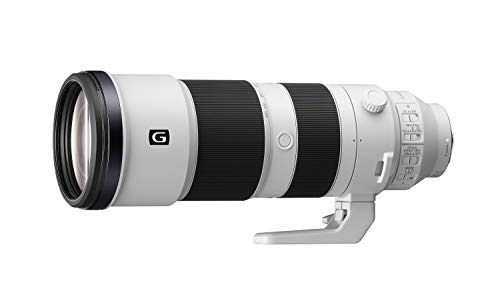
5. Sony FE 200-600mm f/5.6-6.3 G OSS — Best zoom for sports and wildlife
When your subjects are birds, field sports or aircraft, the Sony 200-600mm G is the zoom built for the job. The 200-600mm range pairs with Sony’s Optical SteadyShot, including a mode for panning, and the internal zoom design means the barrel does not extend as you zoom, which keeps handling consistent on a monopod. A Direct Drive SSM motor delivers the fast, precise autofocus that tracking distant action demands. Five ED elements and one aspherical element control chromatic aberration across the range, closest focus is 2.4 m, and the lens accepts Sony’s 1.4x and 2.0x teleconverters for up to 1200mm. Dust- and moisture-resistant sealing suits outdoor use, but at about 2,115 g with a 95mm filter thread this is a deliberate carry, not a casual one. Choose it for wildlife and sports on Sony E-mount.
What to Look For
| Factor | Why it matters | What to check |
|---|---|---|
| Mount and sensor coverage | The lens must fit your camera body and cover its sensor size. | Confirm the mount name and whether the lens is made for your sensor format. |
| Focal range | A wide span is convenient, while a shorter span often gives better consistency. | Match the range to the scenes you shoot most, such as rooms, streets or distant action. |
| Maximum aperture | A wider opening helps in dim light and gives softer backgrounds. | See whether the opening stays constant or narrows as you zoom in. |
| Image stabilization | It helps keep handheld shots and video steadier at longer settings. | Look for the maker’s stated stabilization system and whether your body adds its own. |
| Autofocus motor | Fast, quiet focus matters for moving subjects and recorded sound. | Read the motor type and any notes on focus noise during video. |
| Size and weight | A lens you leave at home does not help anyone. | Check length, weight, filter thread and whether the barrel extends when zooming. |
| Build and sealing | Zoom barrels have moving parts that meet dust and weather. | Read the maker’s claims about sealing and check the mount material. |
Setup and Care Tips
- Attach a clear filter or a hood to guard the front glass from bumps and stray light.
- Use a blower first to remove dust, then a clean lens cloth for fingerprints.
- Check the focus and stabilization switches before shooting so settings are not a surprise.
- Lock the zoom ring if the barrel tends to creep out while the lens hangs from a strap.
- Store the lens with both caps on in a padded pouch, and keep it away from damp places.
Mistakes to Avoid
- Choosing the longest range available when a shorter span would be sharper and lighter.
- Ignoring that a variable aperture narrows as you zoom in, which affects low light shooting.
- Buying a lens made for a different mount and counting on an adapter without checking compatibility.
- Judging a lens from a single sample photo instead of looking at several settings and distances.
- Forgetting the weight, then leaving the lens at home because it is tiring to carry.
Zoom Ranges and the Jobs They Do
Zoom lenses are named by their focal range, and the range tells you most of what the lens is for. Ultra-wide zooms, which start below 20mm, suit architecture, interiors and sweeping landscapes. Standard zooms such as the Tamron 28-75mm and the Canon 24-105mm in this guide cover the view from moderately wide to short telephoto. They handle portraits, events, travel and everyday use, and for many people they are the one lens that stays on the camera most of the time.
Telephoto zooms begin around 70mm and run to 200mm or beyond, reaching distant subjects and compressing perspective so backgrounds look closer. They suit sports, stage performances and portraits with softened backgrounds. Super-telephoto zooms like the Sony 200-600mm reach far enough for birds and wildlife, but they are big, heavy and slow to handle in tight spaces.
Superzooms, such as the Tamron 18-400mm in this guide, try to cover everything in one barrel. The convenience is real: you can shoot a wide landscape and then a distant bird without changing lenses. The trade-off lies in the optics. Designing a lens to span a huge range forces compromises in sharpness, distortion and brightness, and the longest end often has a narrow aperture. For travel and family snapshots those compromises are often acceptable, while for demanding work a shorter-range lens usually produces cleaner results.
A useful way to choose is to ask what range you will actually use. Look through your recent photos and see which focal lengths cluster. If you rarely shoot beyond 105mm, paying for and carrying a 400mm reach is a waste. If you constantly wish you were closer, a longer lens will fix that more reliably than cropping.
Reading Aperture Numbers Across the Range
Aperture ratings look simple but hide detail. A lens listed as f/4 holds that value across its range, so exposure stays steady as you zoom. A lens listed as f/3.5-6.3 starts at f/3.5 at the wide end and slides toward f/6.3 as you zoom in. The longer the focal length, the dimmer the image becomes, and the camera has to compensate with a slower shutter or higher ISO.
Take a closer look at what this means in practice. At the long end of a variable-aperture superzoom, you are working with an aperture around f/6.3. In bright daylight that is fine. In shade, indoors or at dusk, the camera will push the ISO up or drop the shutter speed, and moving subjects blur. Stabilization helps with camera shake but cannot freeze a running dog or a moving player.
Wide apertures also change the look of the image. At f/2.8, a 75mm portrait separates the subject from the background more strongly than at f/4 or f/5.6. If background blur is a priority, a fast standard zoom, like the Tamron f/2.8 in this guide, does more than a slower lens with a longer range. If you mostly shoot landscapes at f/8 and smaller, the maximum aperture matters little, and a lighter f/4 lens can serve just as well.
Another factor is how the lens behaves wide open. Many zooms are softer in the corners at their widest aperture, and sharpen when closed down by a stop or two. Review the sample photos shot at the apertures you will use rather than relying on a single hero image.
Stabilization, Focus Motors and Handling
Stabilization in a zoom lens comes in a few forms. Lens-based stabilization shifts an element to counter movement, and it is rated in stops, with higher numbers meaning slower usable shutter speeds. Some camera bodies add sensor-shift stabilization, and the two systems may work together. When shopping, check whether your body already stabilizes the sensor, because a lens without stabilization may be perfectly acceptable on such a body, especially at moderate focal lengths. On a long telephoto, lens stabilization often still helps because it steadies the viewfinder image.
Autofocus motors differ in speed and noise. Ultrasonic and linear motors tend to be fast and quiet, which suits action and video. Stepping motors are quiet and smooth for video but vary in speed. A listing might name the motor type, and user reviews often comment on focus hunting in low light or while zooming.
Handling details matter for a lens you carry all day. Some zooms extend the barrel as you zoom in, which keeps the lens short when stored but pulls in dust and can creep out under its own weight. Others zoom internally and stay a fixed length, which is better for balance and for sealing. A zoom lock switch holds the barrel at the shortest setting. Look at the size of the zoom and focus rings, and think about whether you can reach them comfortably. Also look at the filter thread size and whether the front element rotates, which matters for polarizers.
Weight and balance deserve their own attention. A long, heavy lens on a small camera body can feel front-heavy, and may need a tripod collar or a neck strap that spreads the load. If the lens has a tripod foot, use it when working on a tripod, as it protects the camera mount from strain.
Matching the Lens to Your Camera and Sensor
Mount compatibility is the first filter. Lenses made for one system will not fit another without an adapter, and adapters can change autofocus performance and stabilization. The superzoom in this guide is listed for the Canon EF mount, which is an older system for DSLRs. Owners of newer mirrorless bodies would need to check adapter support and any limits before ordering.
Sensor size is the next filter. Lenses designed for smaller APS-C sensors are often labeled Di II, DX or similar. They can be smaller and lighter, but on a full-frame body they may crop the image or show dark corners. Full-frame lenses work on smaller sensors, though the field of view looks narrower, which turns a 200-600mm lens into a longer effective reach on a crop body. This crop can help wildlife shooters, and it can hurt travelers who want wide scenes.
Also consider the camera’s own features. Bodies with high-resolution sensors reveal lens weaknesses more readily, so a modest lens may look fine on a lower-resolution body and disappoint on a demanding one. Video users should look for smooth focus transitions and minimal focus breathing.
Which Zoom Fits Which Photographer
| Type of photographer | Range to consider | Main priority |
|---|---|---|
| Family and travel | 24-105mm or a superzoom | Range in one light lens |
| Weddings and events | 24-70mm or 70-200mm class | Constant aperture and fast focus |
| Landscape | Ultra-wide to standard | Corner sharpness and filter support |
| Wildlife and birding | 200-600mm class | Reach, stabilization and handling |
| Sports | 70-200mm to 400mm class | Fast autofocus and bright aperture |
| Video and vlogging | Standard zoom | Quiet focus, stabilization, constant aperture |
If you are torn between a pair of lenses, consider a two-lens kit instead of one big superzoom. A standard zoom paired with a telephoto zoom covers a similar span at higher quality, and each lens is easier to carry on its own. The downside is the need to swap in the field.
Questions to Ask Before You Order
- Does the lens fit my camera mount and my sensor size without an adapter?
- What focal range have I used most in the past year?
- Do I shoot indoors or at dusk, where a variable aperture will hurt?
- Does my camera body already stabilize the sensor?
- Is the lens weather sealed, and does that matter where I shoot?
- Can I rent it first, or does the seller have a clear return policy?
Renting is a smart move for expensive lenses. A weekend rental shows you how the weight feels on your shoulder, how the autofocus behaves on your body and whether the range is the right one. Many camera shops offer rentals for a modest daily fee.
Protecting a Zoom Lens in the Field
Zoom barrels move, and moving parts let in dust and moisture over time. Avoid changing lenses in wind, sand or spray, and point the camera downward while the mount is open. After shooting at the beach or in rain, wipe the outside with a slightly damp cloth, let the lens dry in open air and leave the caps off for a short while before storing. Extending the barrel and then collapsing it in dusty places pumps air in and out of the lens. When you can, keep the zoom retracted while walking and extend it only to shoot.
How to Test a Zoom Lens in the First Week
A new zoom earns trust through tests that mirror your real work, not through test charts alone. Start with the walk test: take the lens out for the kind of shoot you bought it for, and use the whole range on purpose — wide for the scene, mid range for the subject in its place, long for the detail. At home, look at the shots at full size and ask plain questions. Is the centre sharp at the settings you use? Do the corners hold up at the wide end, where zooms work hardest? Does focus land where you put it, shot after shot, or does it hunt and miss in low light? A lens that does your work well is a good lens, even if a chart on the web says a rival is a hair sharper.
Check a few known zoom weak spots while the returns window is open. Zoom in and out on a fixed subject and see if focus holds or drifts — some designs shift a little, and it pays to know yours. Shoot a bright subject against the light to learn how your lens flares and how much contrast it keeps; every zoom flares in some way, and the skill is knowing when yours does. Test the stabilisation at the shutter speeds you really use, hand held, at the long end — that is where it earns its keep. And check the copy, not just the model: if one side of the frame is soft at all settings while the other side is sharp, that is a decentred copy, and the fix is an exchange, not a setting.
Focus breathing, parfocal claims and video use
Still shooters can ignore focus breathing — the slight change in framing as focus shifts — but video shooters cannot. On a zoom used for video, test a focus pull from near to far and watch the edges of the frame: if the image seems to zoom a touch as you focus, that is breathing, and you plan around it with wider framing or a lens known to control it. True parfocal behaviour, where focus holds as you zoom, is rare in photo zooms; most shift a little, so video users should refocus after a zoom change as a habit. None of this makes a lens bad — it makes it known, and a known lens is a tool while an unknown one is a gamble.
Carrying and Working With a Zoom All Day
A zoom is the lens you carry when you do not know what the day holds, so how it carries matters as much as how it shoots. Weight sits in the hand and on the shoulder for hours; a lens that is a joy for ten minutes can be a drag by the end of a wedding or a hike. Support it properly: a strap on the lens foot for the big tele zooms, a hand under the barrel when you shoot, and a bag that lets the lens ride mounted if you need speed, or packed if you need the weight spread. Hood on, always — it shades the front glass, guards against knocks and rain, and costs nothing. When you change lenses in the field, turn your back to the wind, keep the mount facing down, and make the swap a practised ten second drill rather than a fumble over open bags.
Zoom rings and focus rings should fall where your hand expects them, and on a new lens that takes a week of use to learn. Note which way your zoom turns — brands differ — and drill the motion until it is thoughtless, because the shot you miss while you zoom the wrong way is gone for good. If your lens has a zoom lock, use it in transit; creep is harmless to the glass but it changes your framing and bangs the barrel against your hip all day. A lens you can work without looking at it is worth more on a real shoot than a small edge in lab sharpness.
Weather, dust and the long life of a zoom
Zooms pump air as they extend, and with air comes dust. You cannot stop it, but you can slow it: avoid zooming in and out in dusty wind for fun, store the lens short, keep caps on, and blow dust off the barrel before you retract it into the body. Weather sealing, where a lens offers it, works with a sealed body and a filter on the front; it shrugs off showers and spray, not a soak, so dry the lens well after wet work and leave it out of the bag overnight if it got damp. A soft cloth and a blower handle most field care. Fungus and internal haze are storage problems — cool, dry, airy storage prevents them — and a lens used often and kept dry will serve for many years.
Comparing the Picks by the Day You Shoot
The Tamron standard zoom here is the fast all day lens for its mount: a bright aperture that stays through the range, a size you can carry, and the range that covers most of a normal shoot — events, travel, people, places. It suits the shooter who wants one lens on the camera and primes left at home. The Canon RF standard zoom is the system loyalist’s answer, with the build, focus and stabilisation tuned to its bodies and a range that leans a bit wider in use. The Nikon Z travel zoom trades a touch of speed for reach at both ends, which is the right trade for trips where the lens you have beats the lens you left behind. The Tamron superzoom is the one lens answer for crop bodies: vast range, real compromise at the ends, and a freedom that suits walks, family days and travel where you pack light and accept the trade with open eyes. The Sony long zoom is a tool for a job — sport and wildlife — where reach and focus speed rule and the rest of the kit bends around it.
So pick by the day, not by the chart. A travel day wants range and low weight. An event day wants a fast, steady standard zoom. A field sports day wants reach and focus that keeps up. Most keen shooters end with two zooms that share the work — a standard and a tele — plus the self knowledge of which days are which. Buy the one that covers your most common day first; the second lens decision gets much easier once the first is a known friend.
Filters, hoods and small add-ons that earn their place
A clear protective filter is a choice, not a rule: it guards the front glass in rough use and costs a small risk of flare, which a good multi-coated filter keeps low. Polarising filters earn their bag space for travel and landscape work — cutting glare on water, glass and leaves — but they cost light, so they come off for low light work. Variable neutral density filters belong to video kits. What every zoom needs is its hood, a cap you can work with gloves on, and a pouch or wrap for the bag. Skip the gadget pile; a zoom kit should stay light enough that you take it out the door without a debate.
Extended FAQ
Why are my shots soft at the long end of the zoom?
Work through the usual causes in order. Shutter speed first: the long end needs a faster speed than the wide end for the same hand shake, so raise it or lean on the stabilisation and test what it truly gives you. Focus next: at long range the depth of field is thin, so a small miss shows; use the focus mode that suits a moving or still subject and give the lens a high contrast point to lock onto. Air itself is third: heat haze and distance haze soften long shots on warm days no matter what the lens cost. Last, the lens at its widest aperture may be a touch soft at the extreme end; stop down a little and compare. One of those four is nearly always the answer.
Should I buy one superzoom or two shorter zooms?
If your days are mixed and light — travel, family, walks — one superzoom keeps you shooting and the kit simple, and its limits at the ends rarely spoil a good day. If your work has a core — events at one end, sport at the other — two lenses that each do their job well will serve you better and last longer in your bag. The honest test is your last fifty shoots: count how often you truly needed the far ends of the range, and buy for the pattern you find, not the trip you dream of.
How do I know if a used zoom is a good buy?
Check the glass under a bright light for scratches, haze and fungus. Work the zoom and focus rings through their full travel: they should feel smooth, with no grit, tight spots or play in the barrel. Mount it and shoot a flat, detailed subject at each end of the range, wide open and stopped down, and view the corners at full size. Test focus at near and far distances, test the stabilisation and the aperture by taking shots at a run of settings. A clean, smooth, even copy at a fair price is a fine buy; walk away from grit in the rings or one soft side, which no bargain can fix.
Last, keep the habit that makes any zoom look good: get closer before you zoom. Zooming changes how much of the scene you take in; moving changes the picture itself — the space, the angles, the feel. The best zoom users treat the ring as fine tuning after their feet have done the real work, and their shots show it.
Building a Two-Zoom Kit That Covers a Life
Most kits settle into a pair: a standard zoom that lives on the camera, and a second that answers the call of your main subject — a tele for sport, wildlife and school plays, or a wide zoom for interiors, cities and landscapes. Buy the standard first and shoot it for a season. Your own shots will tell you which way you lean: the frames you crop hard want a tele, the rooms you could not fit want a wide. That evidence is worth more than any forum thread, because it is drawn from your days, your subjects and your eye. When the second lens arrives, the two should overlap a little in range; overlap is not waste, it is the freedom to leave one at home on light days and still cover the story.
Keep the pair honest with use. A lens that has not left the bag in a year is money asleep; lend it, sell it, or set yourself the task that uses it. Zooms reward the shooter who knows them by heart, and that only comes from days carried and frames made. Choose well, carry often, and the right zoom stops being gear and becomes habit.
Aperture habits that get the best from any zoom
Every zoom has a sweet range where it is at its best, and it is rarely wide open at the far end. Learn yours with a simple run of shots of the same scene at each aperture, at the wide, mid and long settings, and view them at full size. Most zooms sharpen up a stop or two down from wide open and stay strong until diffraction softens the smallest settings. In real work that means: open up without fear in low light, because a sharp-enough shot beats a missed one, but stop down a touch for the shots that matter when light allows. Pair that with an honest shutter speed and sound focus, and you have the whole craft of zoom sharpness — there is no fourth secret.
Carry that knowledge lightly. The point of learning a lens’s habits is to free your mind for the scene in front of you, not to add sums to do under pressure. A week of tests, then trust: that is the deal a good zoom offers, and it is why the lens you know beats the lens you just read about, every single time.
And do not forget the dullest, most useful test of all: the family test. Shoot the people and places you love, on an ordinary day, with no care for charts. If those shots please you — the colour, the ease, the hit rate — the lens has passed the only exam that counts. Keep it, learn it, and spend your next free hour out with it rather than reading about its rivals.
Rent before you buy when you can. A weekend with the exact lens on your own body, on your own subjects, settles more than a month of reviews — how the weight sits by hour three, how the rings turn under your hand, how the files look in your light. If the rental makes you reach for the camera more, that is data. If it stays in the bag, that is data too, and cheaper than the purchase would have been.
Keep the box and the paperwork, too. A zoom with its box, caps and papers holds its value and its welcome if you ever sell or trade it toward the next lens — and the day you learn your kit’s true pattern, trading the wrong lens for the right one is a smart move, not an admission of defeat.
Choose once, then shoot for a year. That is the rhythm that turns a good zoom into great pictures.
And share the lens now and then. Let a friend shoot it for a day and watch what they find hard or love at once; fresh hands spot habits you have gone blind to, and teaching the lens’s quirks is the fastest way to learn them yourself.
The bag check the night before a shoot — lens, hood, caps, cloth, spare card — takes two minutes and saves shoots. Make it a ritual and the zoom will never be the thing that lets you down.
Rituals beat gear. That is the last lesson every zoom teaches.
Matching the Picks to Real Shooting Days
Seen side by side, the five picks divide less by quality than by the shape of the day they suit. The fast standard zooms, led by the Tamron option in this list, suit days where you move between people, details and interiors and want a bright aperture for subject separation and low light. The Canon and Nikon mid-range zooms suit days built around travel and events, where a moderate range carried comfortably matters more than the widest aperture. The superzoom suits days where changing lenses is impossible or unwise, such as dusty travel or a family outing. The long Sony telephoto suits a different life entirely: planned outings for sport and wildlife where reach is the whole point and the bag is built around the lens.
Testing a zoom during the return window
Use the first week with any of these lenses deliberately. Photograph a flat, detailed subject at the wide end, the middle and the long end, and compare the corners rather than admiring the centre. Shoot a backlit scene to see flare behaviour, a low-light interior to judge stabilisation and focus confidence, and a moving subject to learn how the focus motor keeps up on your body. Check that the zoom ring turns smoothly without creep when the lens points down, and confirm the mount, hood and caps all fit as they should. Problems found in week one are a simple exchange; the same problems found in month three become a repair conversation.
Care that keeps a zoom honest for years
Zooms ingest dust through their extending barrels, so store them retracted, capped and dry, and avoid extending the barrel in blowing sand or rain without protection. Clean the front element with a blower first and keep the hood fitted as physical insurance. Support a long, heavy zoom by its own barrel or tripod foot rather than letting it hang from the camera mount, especially the telephoto pick here. Periodically check that image stabilisation still settles quickly and that no grinding has crept into the rings. With those habits, a good zoom remains a good zoom long after newer models arrive, which is why experienced photographers buy the range they need once and keep it.
Choose by the day you shoot most, test thoroughly while returns are easy, and care for the barrel and mount. The right range, kept well, disappears into your work.
Renting and borrowing before the big commitment
Because these lenses span very different prices and purposes, a short rental or a borrowed weekend is unusually valuable before buying the longer or brighter options. Rent the exact lens, use it on your own body, and shoot your real subjects rather than test charts alone. Pay attention to weight across a full day, focus behaviour in your typical light, and whether the range makes you leave other lenses at home or merely adds to the bag. Keep the files and review them a week later with fresh eyes, when the excitement of new gear has faded and only the pictures argue. If the lens still earns its place in that cooler review, buy with confidence. If it does not, the rental has saved you the far larger cost of owning the wrong flagship.
FAQ
Is a zoom lens better than a fixed focal length lens?
Neither is better in every case. A zoom gives flexibility and convenience, while a fixed lens is often smaller and has a wider opening. Many people carry one zoom for general use and add a fixed lens for low light.
What does a constant aperture mean on a zoom lens?
It means the widest opening stays the same across the whole zoom range. That keeps exposure and background softness consistent, which many video shooters and event photographers like, though such lenses tend to be larger and heavier.
What does the f-number range on a zoom lens mean?
A range like f/3.5-6.3 means the widest aperture is f/3.5 at the shortest focal length and narrows to f/6.3 at the longest. The smaller the f-number, the more light enters. Variable-aperture lenses are lighter and cheaper, but they are dimmer when zoomed in.
Are superzoom lenses sharp?
Superzooms trade some sharpness, distortion control and brightness for range. Results are often good enough for travel and family photos, especially when stopped down slightly. For demanding work or large prints, a lens covering a shorter range usually produces cleaner results.
Do I need image stabilization in a zoom lens?
It helps most at long focal lengths and in dim light, where small shakes blur the image. If your camera body has sensor-shift stabilization, the lens may not need its own, though lens stabilization can still steady the viewfinder image. Check what your body offers.
Can I use a full-frame zoom lens on an APS-C camera?
Yes, in the same mount, a full-frame lens works on an APS-C body. The smaller sensor crops the image, so the view looks narrower, similar to a longer lens. The reverse, using a crop-sensor lens on full frame, often crops the image or darkens the corners.
What is zoom creep?
Zoom creep is when a lens barrel slides out under its own weight while it hangs from a strap, changing the focal length. Many lenses offer a lock switch at the shortest setting. Holding the lens pointing upward or using the lock prevents unwanted movement.
The Short Version
Pick the mount first, then decide how much range you truly need, and weigh aperture and stabilization against size. A lens you enjoy carrying will serve you better than a larger one that stays at home.