The best selling home theater projectors are the projectors that buyers keep choosing, because they give a big, bright, sharp picture in a dark room at a fair cost. A home theater projector turns a wall into a screen of 100 inches or more, and it does it with a picture that a TV of the same size cannot match for the money. The projectors in this guide are all home theater models, and all six give a bright image, a sharp resolution, and a long lamp or laser life.
A home theater projector suits the movie fan who wants a cinema at home, the gamer who wants a huge game view, and the family who wants movie nights on a big screen. The projectors in this guide run from 1080p to 4K, from lamp to laser, and from short throw to standard throw, so the guide covers the main uses. All six are home theater projectors, and all six state their resolution, brightness, and light source in the listing title.
The projectors in this guide cover the main choices. The Epson Home Cinema 5050UB is the cinema pick, the Epson Home Cinema LS11000 is the laser pick, the BenQ TK700 is the gaming pick, the BenQ HT5550 is the color pick, the Optoma GT1090HDR is the short throw pick, and the ViewSonic PX701-4K is the value 4K pick. All six are home theater projectors, and all six are sold as new listings.
This guide covers six best selling home theater projectors: two Epson, two BenQ, one Optoma, and one ViewSonic. All six are home theater models, all six give a bright picture, and all six state their resolution and brightness in the listing title. The comparison table below gives the short version, and the sections after it give the detail.
In this guide
Quick picks: best selling home theater projectors
| # | Product | Where to buy |
|---|---|---|
| 1 | Epson Home Cinema 5050UB | Check on Amazon |
| 2 | Epson Home Cinema LS11000 | Check on Amazon |
| 3 | BenQ TK700 | Check on Amazon |
| 4 | BenQ HT5550 | Check on Amazon |
| 5 | Optoma GT1090HDR | Check on Amazon |
| 6 | ViewSonic PX701-4K | Check on Amazon |
How the picks were chosen for the best selling home theater projectors
Every projector below started as a listing returned by the reviewstook.com product lookup, and every listing was checked the same way. First, the title had to name the exact brand and the exact model, because an Epson Home Cinema 5050UB is not a 3800, and a BenQ TK700 is not a TK710, and a buyer who orders the wrong model gets the wrong projector. Second, the title had to state the home theater use, because a business projector is made for bright rooms and slides, not for movies in a dark room.
The projectors were also checked for the details that decide real use. The resolution decides the sharpness, and the projectors here are 4K PRO-UHD, true 4K, or 1080p, so the picture is sharp. The brightness decides the image in a dim room, and the projectors here run from 2,500 to 4,200 lumens, so the picture stays bright. The light source decides the life, and the projectors here cover lamp and laser, so the guide covers both.
One more check shaped the list: the projector must be a home theater projector, not a business projector, not a mini portable projector, and not a soundbar. Listings for business SVGA projectors, for classroom projectors, for mini projectors, and for soundbars were left out, because a buyer searching for the best selling home theater projectors wants a home cinema projector. The six projectors below are all home theater projectors, sold as new listings, with the brand, the model, the resolution, and the brightness stated in the title.
What a home theater projector is, and who should buy one
A home theater projector is a projector made for movies in a dark room, with a bright image, a high contrast, and a color range that suits films. It throws a picture of 100 inches or more on a wall or a screen, and it does it with a resolution of 1080p or 4K, so the image is sharp from the sofa. A home theater projector is the cinema at home, and it is the pick for a room that can be darkened.
A home theater projector suits the movie fan who wants a big screen, the gamer who wants a huge game view, and the family who wants movie nights together. It is the right choice when the room can be darkened, when the wall or screen is large, and when the viewer sits a few meters away. It is not the right choice for a bright living room, because sunlight will wash the picture out, and it is not the right choice for a small room, because the projector needs throw distance.
The six projectors in this guide cover the main buyers. The cinema pick is for the movie fan who wants the best picture, the laser pick is for the buyer who wants a long life without lamp changes, and the gaming pick is for the player who wants low lag. The color pick is for the viewer who wants accurate colors, the short throw pick is for the small room, and the value 4K pick is for the buyer who wants 4K at a modest cost.
A home theater projector also suits a viewer who already owns a good sound system, because the projector gives the picture and the speakers give the sound. A buyer should check the throw distance in the listing before buying, because it decides where the projector must sit. The right projector is the one that fits the room, the screen, and the budget.
What makes a good home theater projector
Resolution is the first test, and it decides the sharpness. A 4K projector shows a sharper picture than a 1080p projector, and it suits a big screen, because the pixels stay small. The projectors here are 4K PRO-UHD, true 4K, or 1080p, and a buyer who watches on a 120-inch screen should choose 4K, while a buyer who watches on a 100-inch screen can use 1080p with ease. Check the resolution in the title before buying, because it decides the sharpness.
Brightness is the second test. The brightness in lumens decides how bright the picture is, and the projectors here run from 2,500 to 4,200 lumens, so the picture stays bright in a dim room. A buyer should check the lumens in the title before buying, and should darken the room, because even a bright projector will wash out in sunlight. A dark room is the projector’s best friend.
Light source is the third test. A lamp projector gives a bright picture and costs less, but the lamp needs changing after a few thousand hours, while a laser projector costs more and lasts for tens of thousands of hours without a change. The projectors here cover lamp and laser, and a buyer who watches every night should choose laser, while a buyer who watches on weekends can use a lamp.
Throw distance is the fourth test, and it decides where the projector must sit. A standard throw projector sits a few meters from the screen, and a short throw projector sits close, so a buyer should check the throw in the listing before buying. The projectors here cover standard and short throw, and a buyer with a small room should choose short throw. A good home theater projector is bought once for the room and used for years.
Quick picks at a glance
| Projector | Resolution and brightness | Light source | Best for |
|---|---|---|---|
| Epson 5050UB | 4K PRO-UHD, 2600 lumens | Lamp | Cinema picture |
| Epson LS11000 | 4K PRO-UHD, 2500 lumens | Laser | Long-life laser |
| BenQ TK700 | 4K HDR, 3200 lumens | Lamp | Gaming and movies |
| BenQ HT5550 | True 4K UHD, HDR-PRO | Lamp | Accurate color |
| Optoma GT1090HDR | 4K HDR input, 4200 lumens | Laser | Short throw rooms |
| ViewSonic PX701-4K | 4K UHD, 3200 lumens | Lamp | Value 4K |
The best selling home theater projectors
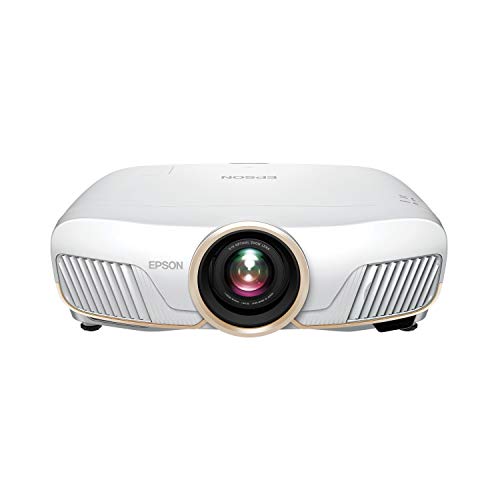
Epson Home Cinema 5050UB 4K PRO-UHD 3-Chip 3LCD Projector with HDR
The Epson Home Cinema 5050UB is the cinema pick, and it is the best picture in this guide. A 4K PRO-UHD 3-chip 3LCD projector with HDR gives a sharp, bright, colorful image, and the 2,600 lumens of color and white brightness keep the picture vivid in a dark room. The title states the brand, the Home Cinema 5050UB model, the 4K PRO-UHD resolution, the 3-chip 3LCD design, and the HDR support, and it names the advanced pixel-shift processing.
A cinema projector should give deep blacks and rich colors, and this one does, with a 3-chip design that shows color and white at the same brightness. The projector is a lamp model, so the lamp will need changing after a few thousand hours, but the picture is worth it. It suits a movie fan who wants the best image in a dark room.
Key specs:
- Resolution: 4K PRO-UHD
- Brightness: 2600 lumens color and white
- Design: 3-chip 3LCD
- HDR: yes
- Light source: lamp
Strengths:
- Excellent cinema picture with deep blacks
- 3-chip 3LCD gives equal color and white brightness
- HDR support for movies
Trade-offs:
- Lamp needs changing after a few thousand hours
- Large projector needs a sturdy mount
- Costs more than the value picks
The Epson Home Cinema 5050UB fits the movie fan who wants the best picture. It is the pick for film nights, for a dedicated theater room, and for a viewer who cares about color, and it rewards a room that can be darkened.
Best for: Cinema-quality movies in a dark theater room. Not suited for: A bright living room, or a buyer who wants laser life.
Check price on Amazon: Epson Home Cinema 5050UB


Epson Home Cinema LS11000 4K PRO-UHD Laser Projector with HDR10+
The Epson Home Cinema LS11000 is the laser pick, and it is the longest-lived projector in this guide. A 4K PRO-UHD laser projector with HDR10+ gives a sharp, bright image, and the 2,500 lumens of color and white brightness keep the picture vivid, while the laser light source lasts for tens of thousands of hours without a lamp change. The title states the brand, the Home Cinema LS11000 model, the 4K PRO-UHD resolution, the laser design, and the HDR10+ support, and it names the 3-chip 3LCD design.
A laser projector should be bought once and used for years, and this one is, with a light source that outlasts lamps many times over. The projector gives a sharp 4K image with HDR10+, so movies look rich and detailed. It suits a buyer who watches every night and never wants to change a lamp.
Key specs:
- Resolution: 4K PRO-UHD
- Brightness: 2500 lumens color and white
- Design: 3-chip 3LCD
- HDR: HDR10+
- Light source: laser
Strengths:
- Laser light source lasts for years
- Sharp 4K PRO-UHD image with HDR10+
- No lamp changes to plan
Trade-offs:
- Costs more than the lamp picks
- Large projector needs a sturdy mount
- 2500 lumens needs a dark room
The Epson Home Cinema LS11000 fits the buyer who watches every night. It is the pick for a dedicated theater room, for a family that watches daily, and for a viewer who wants laser life, and it rewards a room that can be darkened.
Best for: Daily movie watching with a long-life laser. Not suited for: A bright living room, or a tight budget.
Check price on Amazon: Epson Home Cinema LS11000

BenQ TK700 4K HDR Home Entertainment Gaming and Movie Projector
The BenQ TK700 is the gaming pick, and it is the fastest projector in this guide. A 4K HDR projector with 3,200 lumens gives a bright, sharp image, and the 4.2ms latency keeps games responsive, so a fast game feels quick on a huge screen. The title states the brand, the TK700 model, the 4K HDR resolution, and the gaming and movie use, and it names the 3,200 lumens, the 16ms input lag, and the HDMI 2.0 port.
A gaming projector should be fast and bright, and this one is, with low latency and a bright image that holds up in a dim room. The projector is a lamp model, so the lamp will need changing after a few thousand hours, but the picture is bright and the games are quick. It suits a gamer who wants a huge screen without lag.
Key specs:
- Resolution: 4K HDR
- Brightness: 3200 lumens
- Latency: 4.2ms
- Input lag: 16ms
- Ports: HDMI 2.0
Strengths:
- Very low 4.2ms latency for gaming
- Bright 3200 lumens image
- 4K HDR for movies and games
Trade-offs:
- Lamp needs changing after a few thousand hours
- Gaming features add cost a movie-only viewer may not need
- Needs a dark room for the best picture
The BenQ TK700 fits the gamer who wants a huge screen. It is the pick for fast games, for movie nights, and for a living room that can be dimmed, and it rewards a player who wants low lag on a big screen.
Best for: Gaming and movies on a huge bright screen. Not suited for: A bright living room, or a buyer who wants laser life.
Check price on Amazon: BenQ TK700

BenQ HT5550 True 4K UHD Home Theater Projector with HDR-PRO
The BenQ HT5550 is the color pick, and it is the most accurate projector in this guide. A true 4K UHD projector with HDR-PRO gives a sharp image, and the 100% DCI-P3 and 100% Rec. 709 color coverage shows films as the director made them, so colors look rich and true. The title states the brand, the HT5550 model, the true 4K UHD resolution, and the HDR-PRO support, and it names the full DCI-P3 and Rec. 709 coverage and the frame interpolation.
A color-accurate projector should show films faithfully, and this one does, with a wide color range that covers the cinema standard. The projector is a lamp model, so the lamp will need changing after a few thousand hours, but the colors are worth it. It suits a movie fan who cares about how a film looks.
Key specs:
- Resolution: true 4K UHD
- Color: 100% DCI-P3, 100% Rec. 709
- HDR: HDR-PRO
- Extras: frame interpolation
- Light source: lamp
Strengths:
- Excellent color accuracy for films
- True 4K UHD resolution
- HDR-PRO for rich contrast
Trade-offs:
- Lamp needs changing after a few thousand hours
- Brightness is lower than the bright picks
- Costs more than the value picks
The BenQ HT5550 fits the movie fan who cares about color. It is the pick for film nights, for a dedicated theater room, and for a viewer who wants the film as the director made it, and it rewards a room that can be darkened.
Best for: Color-accurate films in a dark theater room. Not suited for: A bright living room, or a buyer who wants laser life.
Check price on Amazon: BenQ HT5550
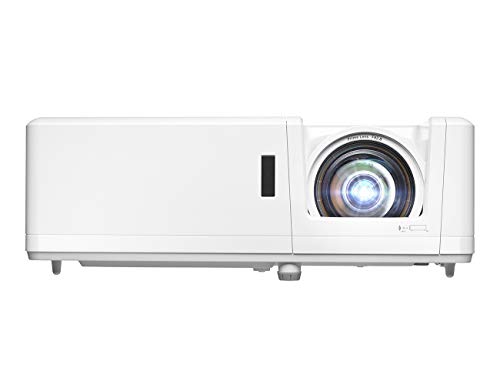
Optoma GT1090HDR Short Throw Laser Home Theater Projector
The Optoma GT1090HDR is the short throw pick, and it is the brightest projector in this guide. A short throw laser projector with 4K HDR input gives a big picture from close to the screen, and the 4,200 lumens keep the image bright, while the lamp-free laser lasts for 30,000 hours. The title states the brand, the GT1090HDR model, the short throw laser design, and the home theater use, and it names the 4K HDR input, the 4,200 lumens, and the 30,000-hour life.
A short throw projector should fit a small room, and this one does, because it sits close to the screen and still throws a huge image. The laser light source lasts for years without a change, and the bright image holds up in a dim room. It suits a buyer with a small room who wants a big screen.
Key specs:
- Throw: short throw
- Brightness: 4200 lumens
- Input: 4K HDR
- Light source: laser, 30000 hours
- Design: lamp-free
Strengths:
- Short throw fits small rooms
- Very bright 4200 lumens image
- Laser lasts 30000 hours with no lamp change
Trade-offs:
- Short throw needs a flat screen for the best image
- Laser projectors cost more than lamp models
- Fan noise can be heard in a quiet room
The Optoma GT1090HDR fits the buyer with a small room. It is the pick for apartments, for bedrooms, and for a living room where the projector must sit close, and it rewards a buyer who wants a big screen in a small space.
Best for: Big-screen movies and games in a small room. Not suited for: A large theater room, or a buyer who wants a standard throw.
Check price on Amazon: Optoma GT1090HDR
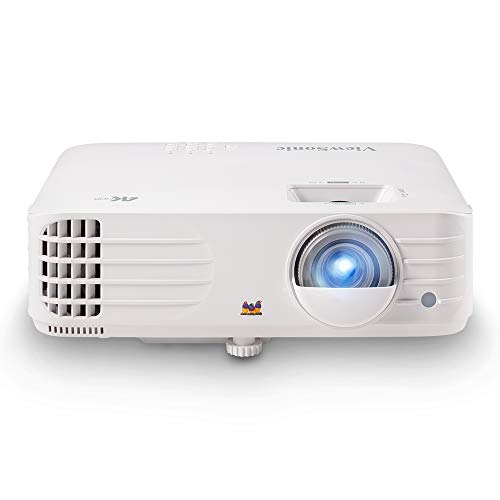
ViewSonic PX701-4K UHD Projector, 3200 Lumens, 240Hz HDR, Auto Keystone DLP
The ViewSonic PX701-4K is the value 4K pick, and it is the most affordable 4K projector in this guide. A 4K UHD DLP projector with 3,200 lumens gives a bright, sharp image, and the 240Hz refresh rate keeps fast motion smooth, so movies and games look good on a big screen. The title states the brand, the PX701-4K model, the 4K UHD resolution, and the 3,200 lumens, and it names the 240Hz HDR, the auto keystone, and the dual HDMI ports.
A value 4K projector should give the big picture without the big cost, and this one does, with a bright image and a fast refresh rate. The projector is a lamp model, so the lamp will need changing after a few thousand hours, but the picture is sharp and the cost is modest. It suits a buyer who wants 4K on a budget.
Key specs:
- Resolution: 4K UHD
- Brightness: 3200 lumens
- Refresh: 240Hz HDR
- Design: DLP, auto keystone
- Ports: dual HDMI
Strengths:
- Good value for a 4K projector
- Bright 3200 lumens image
- 240Hz refresh rate for smooth motion
Trade-offs:
- Lamp needs changing after a few thousand hours
- DLP color is less rich than 3LCD
- Auto keystone can soften the image slightly
The ViewSonic PX701-4K fits the buyer who wants 4K at a modest cost. It is the pick for movie nights, for gaming, and for a first home theater, and it rewards a buyer who wants value first.
Best for: Value 4K movies and games on a big screen. Not suited for: A buyer who wants the best color, or a laser light source.
Check price on Amazon: ViewSonic PX701-4K
Buying guide for the best selling home theater projectors
Measure the room and the throw distance first
Start with the room, because the projector must sit at the right distance from the screen. Measure the distance from the projector spot to the wall, and check the throw ratio in the listing, because a standard throw projector needs a few meters, and a short throw projector needs less. A buyer who measures first will buy a projector that fits, and a buyer who guesses may find the picture too big or too small.
The screen size matters too, because a projector that throws a 100-inch image needs a wall or a screen of that size, and a bigger image needs more distance. Check the screen size in the listing before buying, because it decides the picture. A dark room is the projector’s best friend, so a buyer should plan to darken the room with curtains or blinds.
Resolution: 1080p or 4K
The resolution decides the sharpness, and a 4K projector shows a sharper picture than a 1080p projector, especially on a big screen. A buyer who watches on a 120-inch screen should choose 4K, because the pixels stay small, while a buyer who watches on a 100-inch screen can use 1080p with ease. Check the resolution in the title before buying, because it decides the sharpness.
A buyer who watches mostly streaming shows can use 1080p, because many streams are 1080p, and a buyer who watches 4K films should choose 4K, because the detail is worth it. The resolution is the picture, and the picture is the purchase.
Brightness: how many lumens
The brightness in lumens decides how bright the picture is, and the projectors here run from 2,500 to 4,200 lumens. A buyer should check the lumens in the title before buying, and should darken the room, because even a bright projector will wash out in sunlight. A dark room makes a 2,500-lumen projector look bright, and a bright room makes a 4,200-lumen projector look dim.
A buyer who watches at night can use fewer lumens, and a buyer who watches in the evening with some light should choose more. The lumens decide the brightness, and the room decides the lumens.
Lamp or laser: the light source
The light source decides the life and the cost, and a lamp projector costs less but needs a new lamp after a few thousand hours, while a laser projector costs more and lasts for tens of thousands of hours. A buyer who watches every night should choose laser, because the lamp changes add up, and a buyer who watches on weekends can use a lamp with ease. Check the light source in the title before buying, because it decides the running cost.
A laser projector also turns on fast and stays bright, while a lamp projector needs time to warm up and dims over time. A buyer who wants no fuss should choose laser, and a buyer who wants the lowest cost should choose lamp. The light source is the running cost, and the running cost is part of the purchase.
Sound: the projector is only half the cinema
The projector gives the picture, and the sound must come from elsewhere, because built-in speakers are small and quiet. A buyer should plan for a soundbar or a speaker system, because the sound is half the cinema, and a big picture with small sound will disappoint. Check the audio output in the listing before buying, because it decides how the sound connects.
A buyer who owns a sound system already can connect it on HDMI ARC or optical, and a buyer who does not should budget for one. The picture is the projector, and the sound is the system, and both matter.
Using and caring for a home theater projector
Set the projector up straight and level
Place the projector straight in front of the screen and level, because a projector that sits at an angle will give a crooked picture. Use the feet to level it, and use the keystone correction only a little, because too much keystone will soften the image. A buyer should take the time to set it right on the first day, because a straight picture is the whole point.
After setting it, check the focus, because a soft picture is often a focus problem. Turn the focus ring slowly until the text is sharp, and check the corners, because the whole screen should be sharp. A projector that is set right will look sharp for years.
Keep the air filter and the vents clean
A projector needs air, because the lamp or laser gets hot, and a clogged filter will overheat it. Clean the air filter once a month, and check that the vents are clear, because a hot projector will dim or shut down. A buyer should check where the filter is on the first day, because a filter that is hard to reach will not be cleaned.
Use a soft brush or compressed air for cleaning, because a rough cloth can damage the filter. A clean projector will run cool, and a dusty one will run hot. Good habits keep the projector working well.
Look after the lamp or laser for the long term
A lamp projector needs a new lamp after a few thousand hours, and a buyer should check the lamp hours in the menu now and then, because a dim picture often means an old lamp. A laser projector needs no lamp, but it still needs clean air, because dust will dim it too. Check the hours, and plan the change, because a lamp that fails in the middle of a film will spoil the night.
Keep the projector out of direct sun and damp, because both can damage the optics. A buyer who moves the projector should carry it by the body, not by the lens, and a buyer who stores it should keep the lens cap on. A little care keeps the projector working.
Common mistakes when buying home theater projectors
Buying a business projector for movies
The most common mistake is buying a business projector for movies, because a business projector is made for bright rooms and slides, not for films in a dark room. A buyer should check the words home theater in the title before buying, and should check the resolution and the color, because a business SVGA projector will look poor for movies. A home theater projector is made for films, and a business projector is made for slides.
A buyer who is unsure should read the title twice, and should check the listing for the home theater use. The use is the purchase, and a business projector will not give a cinema picture.
Ignoring the throw distance
The second mistake is ignoring the throw distance, because a projector that needs three meters will not fit a room of two meters. A buyer should measure the room before buying, and should check the throw in the listing, because it decides where the projector must sit. A buyer with a small room should choose a short throw projector, and a buyer with a big room can use a standard throw.
A projector that sits too close will give a small picture, and one that sits too far will give a picture that is too big for the wall. Measure the room, because the distance decides the picture.
Watching in a bright room
The third mistake is watching in a bright room, because sunlight will wash the picture out, even on a bright projector. A buyer should darken the room with curtains or blinds, because a dark room makes a 2,500-lumen projector look bright, and a bright room makes a 4,200-lumen projector look dim. The room is the screen, and a dark room is the projector’s best friend.
A buyer who cannot darken the room should choose a TV instead, because a TV works in bright light and a projector does not. The room decides the projector, and the projector decides the room.
Forgetting the sound
The fourth mistake is forgetting the sound, because a big picture with small sound will disappoint. A buyer should plan for a soundbar or a speaker system, because the sound is half the cinema, and a projector’s built-in speaker is small. Check the audio output in the listing before buying, because it decides how the sound connects.
A buyer who owns a sound system already can connect it on HDMI ARC or optical, and a buyer who does not should budget for one. The picture is the projector, and the sound is the system, and both matter.
Final recommendation
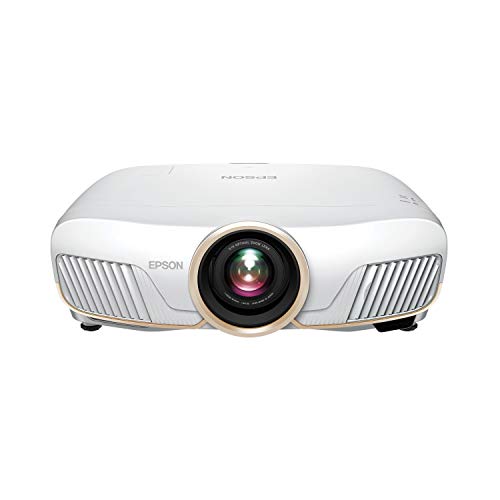
The best selling home theater projector for most buyers is the Epson Home Cinema 5050UB, because its 4K PRO-UHD picture, its 3-chip color, and its HDR give the best cinema image in this guide. A movie fan who wants the best picture in a dark room should buy this one, because it is sharp, colorful, and bright, and it rewards a room that can be darkened.
A buyer who watches every night should buy the Epson Home Cinema LS11000, because its laser lasts for years without a lamp change, and a gamer should buy the BenQ TK700, because its low latency keeps games quick on a huge screen. A movie fan who cares about color should buy the BenQ HT5550, because its full DCI-P3 coverage shows films as the director made them, and a buyer with a small room should buy the Optoma GT1090HDR, because its short throw fits a small space. A buyer who wants 4K at a modest cost should buy the ViewSonic PX701-4K, because its bright image and fast refresh rate cover movies and games.
Whichever projector is chosen, measure the room before buying, check the words home theater in the title, darken the room, and plan for sound, because a home theater projector rewards a dark room with a picture that a TV cannot match for the money.
Related reading on Reviewstook: see our guides to best home theater projector under 1000, best home theater projector for gaming under 1000, best home theater projector for movies under 150 for more on this topic.
Frequently asked questions about home theater projectors
Is a home theater projector better than a big TV?
A home theater projector is better than a big TV for a dark room, because it gives a picture of 100 inches or more at a lower cost than a TV of the same size, and the image feels like a cinema. A TV is better for a bright room, because it works in sunlight and a projector does not, and a TV is better for a small room, because it needs no throw distance. A buyer who can darken the room should choose a projector, and a buyer who watches in daylight should choose a TV.
How far should a home theater projector sit from the screen?
A standard throw home theater projector should sit a few meters from the screen, and the exact distance depends on the throw ratio and the screen size, so a buyer should check the throw in the listing before buying. A short throw projector sits close to the screen, often less than a meter away, and it suits a small room. A buyer should measure the room first, because a projector that sits too close will give a small picture, and one that sits too far will give a picture that is too big for the wall.
Do home theater projectors need a dark room?
A home theater projector needs a dark room for the best picture, because even a bright projector will wash out in sunlight. A buyer should darken the room with curtains or blinds, because a dark room makes a 2,500-lumen projector look bright, and a bright room makes a 4,200-lumen projector look dim. A buyer who watches at night can use fewer lumens, and a buyer who watches in the evening with some light should choose more lumens and darker curtains.
How long does a projector lamp last?
A projector lamp lasts a few thousand hours, and the exact life depends on the mode, because eco mode lasts longer than bright mode. A buyer should check the lamp hours in the menu now and then, because a dim picture often means an old lamp, and should plan the change before the lamp fails. A laser projector lasts for tens of thousands of hours without a lamp change, so a buyer who watches every night should choose laser.
Can a home theater projector be used for gaming?
A home theater projector can be used for gaming, and the best gaming projectors have low latency, so a fast game feels quick on a huge screen. The BenQ TK700 in this guide has a 4.2ms latency, which suits fast games, and a buyer who plays shooters should look for low latency in the title. A projector with high latency will feel slow, so a gamer should check the latency before buying, because it decides how the game feels.