A retro style camera borrows the look of classic film bodies, with dials, metal trim and compact lines, while using a modern digital sensor inside. We have not used these products ourselves, so this guide does not rank or promise anything. It shows how to choose, which details deserve attention and which claims to read with care.
Use the guide below to compare cameras that mix vintage design with current features. Read each maker’s specification sheet, think about how you like to work, and treat the table as a checklist you can carry from one listing to the next. Think about the controls too: physical dials for shutter speed and exposure suit people who like to set things by touch, but they can be slower for others. Check the lens setup, because some bodies have a fixed lens and others accept changeable ones. Also consider size and weight, since a pretty camera that stays at home does not help you make pictures.
As an Amazon Associate we earn from qualifying purchases. Links on this site are affiliate links, and they do not change the information we give.

In this guide
Quick Picks
| Pick | Product | Best For |
|---|---|---|
| 1 | Fujifilm X100VI | Best fixed-lens retro experience |
| 2 | Nikon Z fc | Best dial-driven interchangeable-lens body |
| 3 | Fujifilm X-T50 | Best resolution in a classic body |
| 4 | Leica D-Lux 8 | Best premium compact zoom |
| 5 | Ricoh GR IIIx | Best pocketable street camera |
Our Picks

1. Fujifilm X100VI — Best for the Fixed-Lens Retro Experience
The X100VI is the camera most people picture when they think of retro style done right: a silver-and-black body with engraved shutter speed and exposure compensation dials, an aperture ring on the lens, and a hybrid viewfinder that flips between optical and electronic views. Inside sits a 40.2MP APS-C X-Trans CMOS 5 HR sensor paired with a fixed 23mm f/2 lens (35mm equivalent), so the framing discipline the guide describes is built in. It adds in-body stabilization rated up to 6 stops, 6.2K/30p video, a built-in ND filter for bright days, and Fujifilm’s film simulations for ready-to-share JPEGs. At about 521 g it is not the smallest option here, and there is no zoom or lens swapping, but for everyday carry, street work and travel where one focal length is enough, it matches the guide’s dials, build and files criteria almost perfectly.


2. Nikon Z fc — Best for Dial-Driven Handling with Interchangeable Lenses
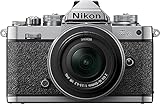
The Z fc borrows its looks directly from Nikon’s FM2 film SLR, with machined aluminum dials for ISO, shutter speed and exposure compensation across the top plate. Unlike the fixed-lens picks here, it takes interchangeable Nikon Z mount lenses, which answers the guide’s lens-options question directly. The sensor is a 20.9MP DX-format CMOS chip with the EXPEED 6 processor, good for 11 fps bursts and UHD 4K/30p video. A 2.36M-dot OLED viewfinder and a fully articulating touchscreen cover framing from any angle, and SnapBridge handles wireless transfer to a phone. The body weighs about 445 g without a lens, keeping it travel-friendly, though the grip is shallow in the classic style and the battery is a small EN-EL25 cell, so a spare is wise on long days. If you want authentic tactile controls plus the freedom to grow a lens kit, this is the pick.
3. Fujifilm X-T50 — Best for High Resolution in a Classic Body
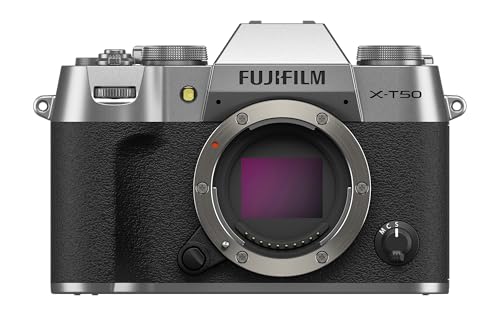
The X-T50 keeps the traditional Fujifilm layout of top-plate dials and an aperture-ring lens system, then adds a first for the line: a dedicated film simulation dial, so switching looks is a physical twist rather than a menu dive. It shares the 40.2MP X-Trans CMOS 5 HR sensor with Fujifilm’s flagships, records 6.2K/30p video, and includes in-body stabilization rated up to 7 stops, which helps handheld shooting in low light. The body is compact at roughly 438 g including battery and card, with a 2.36M-dot electronic viewfinder and a tilting touchscreen. It accepts the full X mount lens range, from small primes that preserve the retro silhouette to zooms for travel. The Charcoal Silver finish suits the vintage brief. Photographers who want the classic control layout but modern resolution and stabilization will find this the most complete package here.

4. Leica D-Lux 8 — Best for a Premium Compact Zoom
The D-Lux 8 takes Leica’s minimalist rangefinder styling and applies it to a compact zoom camera. Its Four Thirds sensor records 17MP stills in a choice of aspect ratios, and the fixed Leica DC Vario-Summilux lens covers a 24–75mm equivalent range with a bright f/1.7–2.8 aperture, so it handles the travel brief in the guide where a compact zoom matters. Controls follow the classic pattern of an aperture ring, shutter speed dial and aspect-ratio switch, and it shoots DNG raw files alongside JPEGs, which suits photographers who edit. A 2.36M-dot OLED viewfinder and a fixed 3-inch touchscreen handle composition, and the metal body weighs about 397 g. There is no tilting screen and the sensor is smaller than the APS-C picks, but as a single, elegant carry-everywhere camera with real manual controls, it earns its place.

5. Ricoh GR IIIx — Best for a Pocketable Street Camera
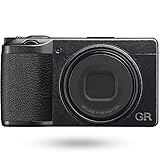
The GR IIIx is the minimalist end of retro: no big dials, just a slim black body that slides into a jacket pocket, exactly the everyday-carry case the guide raises. It hides a 24.2MP APS-C sensor behind a fixed 26.1mm f/2.8 lens (40mm equivalent), a slightly tighter view than the classic 35mm that many street photographers prefer for isolating subjects. Snap Focus lets you pre-set a distance for instant, discreet shooting, and 3-axis in-body stabilization supports slower shutter speeds at dusk. The 3-inch touchscreen is fixed and there is no built-in viewfinder, which is the honest trade-off for a camera that weighs only about 257 g. Files transfer over Wi-Fi via the Image Sync app. If your priority is a serious sensor in the smallest possible package, and you compose happily on a screen, this is the one to carry daily.
What to Look For
| Factor | Why it matters | What to check |
|---|---|---|
| Dials and controls | They shape how fast and how comfortably you work. | Look at the dial layout and whether the camera has an auto mode. |
| Sensor size | It affects image detail, low light and lens size. | Read the stated sensor format. |
| Lens options | Fixed and changeable lenses suit different habits. | Check the mount and the lenses available for it. |
| Viewfinder and screen | You frame the picture through them. | Look for a built-in finder and a tilting screen if you want one. |
| Build and size | Metal bodies feel solid but can weigh more. | Compare weight and grip shape in the listing. |
| Files and sharing | You may want fast transfer to a phone. | Check wireless features, card type and file formats. |
Setup and Care Tips
- Learn each dial one at a time in a quiet place before heading out.
- Set the camera to save both a standard file and a RAW file if you plan to edit.
- Keep the lens and viewfinder clean with a soft cloth.
- Carry spare batteries, because small bodies often hold small cells.
- Store the camera in a dry bag or case when you are not using it.
Mistakes to Avoid
- Choosing on looks alone and ignoring the lens options.
- Expecting a vintage body to behave like a film camera inside.
- Forgetting that metal trim shows scratches.
- Skipping a spare battery for a long day.
- Leaving the camera in a hot car where the finish and parts may suffer.
Which retro style camera should you buy?
The best retro style camera depends on whether you want a fixed lens or interchangeable lenses, and how much you value pocket size over a viewfinder. Match your habits to the picks below, then confirm details on the listing.
- If you want a fixed-lens camera for everyday carry, street work and travel, go for the Fujifilm X100VI. It has dials, a hybrid viewfinder and one built-in focal length that teaches framing.
- If you want authentic dials and the freedom to grow a lens kit, choose the Nikon Z fc. It takes interchangeable Nikon Z mount lenses and borrows its looks from a classic film SLR.
- If you want classic controls with high resolution and stabilization, pick the Fujifilm X-T50. It accepts the full X mount range, from small primes to travel zooms.
- If you want a single elegant compact zoom, the Leica D-Lux 8 covers a useful range in a metal rangefinder-style body, though its sensor is smaller than the APS-C picks.
- If you want the smallest serious camera for a jacket pocket, the Ricoh GR IIIx is the one, with the honest trade-off of no built-in viewfinder.
A quick rule helps when two picks seem close. People who enjoy changing lenses should lean toward the Z fc or the X-T50. People who prefer to commit to one view and travel light should lean toward the X100VI, D-Lux 8 or GR IIIx.
Think too about where your pictures go. If you mostly share online, any of the five will do the job. If you plan to edit raw files and print, check the file formats and sensor sizes on the listings and weigh them against your habits.
What should you check before you buy a retro style camera?
Before you buy a retro style camera, confirm the lens setup, the controls you want, the battery and card details, and what is in the box. These checks matter more than the finish or the badge.
- Fixed or changeable lens: A fixed lens keeps the camera small, while a mount lets you grow. Read the listing to see which you are getting.
- Whether a lens is included: Interchangeable-lens bodies are sometimes listed as body only or as a kit. Confirm this before you order.
- Viewfinder and screen: Decide if you need a built-in finder, and whether a tilting or fixed screen suits how you shoot.
- Battery and charging: Small bodies often use small batteries. Check the battery type, how it charges and whether a spare is easy to find.
- Memory card type: Make sure you buy the card format the camera uses.
- Wireless features: If you want quick transfer to a phone, check the app and connection details listed by the maker.
- Warranty and returns: Read the seller, the warranty terms and the return window on the listing.
- Care needs: Metal trim shows scratches, so consider a case, half case or strap from the start.
It also helps to decide on one or two lenses you would use most. A compact prime keeps the retro silhouette, while a zoom adds range at the cost of size.
If you can, hold the camera in a shop. Feel how the dials turn and whether your fingers fall naturally on the controls. A camera that feels good gets carried more, and carried cameras take more pictures.
Are dials really better than menus on a retro style camera?
Dials are better if you like setting exposure by touch, and menus are better if you want many settings in one place. A retro style camera usually offers a mix, so the real question is how you like to work.
Dial-driven handling has clear strengths:
- You can see your shutter speed or exposure compensation at a glance, even with the camera off.
- Changes feel direct, which suits slow, deliberate shooting.
- Learning the dials one at a time builds a better grasp of exposure.
It has trade-offs too:
- Dials can be slower when light and subjects change quickly.
- Fewer custom buttons can frustrate people who rely on many shortcuts.
- Dials can move in a bag or pocket, so check them before you shoot.
The picks here show the range. The Fujifilm X100VI and X-T50 and the Nikon Z fc lean into top-plate dials. The Leica D-Lux 8 mixes an aperture ring and a shutter dial with a compact zoom. The Ricoh GR IIIx is more minimal, with a slim body and fewer large dials.
If you are unsure, start with a body that has both dials and an automatic mode. You can shoot in auto while you learn, then switch to manual control as your confidence grows.
Most people settle on a middle path. They set aperture and compensation by dial, leave other settings in automatic, and use the menu rarely. That balance is part of the appeal.
How do you get the most from a retro style camera day to day?
You get the most from a retro style camera by carrying it often, learning its controls in a quiet place, and keeping its accessories simple. A good camera that stays at home does not make pictures.
These habits help:
- Start with one lens: Living with a single focal length for a few months teaches framing and keeps the kit light.
- Save both file types: If you plan to edit, record a standard file and a raw file together.
- Keep spare batteries: Small bodies hold small cells, so a spare saves a long day.
- Clean gently: Use a soft cloth on the lens, screen and viewfinder.
- Store it dry: A dry bag or case protects the finish and the electronics.
Be realistic about what a retro look does. A vintage body still behaves like a modern digital camera inside, so it is worth learning its autofocus, stabilization and film-style color modes as they are described in the manual.
Signs that it may be time to move on include a lens range that no longer covers what you shoot, controls that feel limiting as your skills grow, or a battery and card setup that has become a hassle. If none of these apply, your camera is probably doing its job.
Treat accessories as optional. A strap, a spare battery and a simple case cover most needs, while extra gear can quickly make a small camera feel large.
Is a retro style camera worth it, and who should skip it?
A retro style camera is worth it if you value handling, design and a carry-everywhere body, but it is not the best tool for every job. If you chase fast action or heavy video work, a modern speed-focused camera may suit you better.
Consider the honest downsides:
- Styling does not change performance: The look is a bonus, not a feature that improves pictures.
- Controls can be limiting: People who rely on many custom buttons may find vintage layouts restrictive.
- Grips can be shallow: A classic shape sometimes feels less secure with heavier lenses.
- Metal trim can scratch: A case or half case helps.
- Smaller sensors and fixed lenses: They keep bodies compact, but they limit flexibility.
Who should skip it? Sports and wildlife shooters, people who need a deep set of long lenses, and anyone who wants the lightest, cheapest way to take pictures. A phone may be enough for casual snapshots.
Who is it for? Street and travel photographers, hobbyists who enjoy the process of shooting, and people who want a camera they look forward to picking up.
If the price tier worries you, think in terms of use. A simpler body you carry daily beats a premium one you leave on a shelf. Consider how often you would really shoot, and whether the lens range fits your favorite focal lengths.
Compare the picks above, check the current listing for the lens, battery and what is included, then choose the camera that fits how you will carry and use it.
Film Looks, Recipes and Shooting JPEG on Purpose
For many buyers the real attraction of a retro style camera is not the dials themselves but the pictures that come straight out of it. Cameras in this class often lean into film-inspired colour profiles, grain options and highlight handling that flatters everyday scenes without editing. If that appeals to you, judge the camera by its JPEG output first and its raw files second. Shoot the same street scene on the profiles the camera offers and look at skin tones, reds and deep shadows, because those are the places where a pleasing profile and a garish one part company.
Community recipes, where photographers share combinations of profile, grain, highlight and shadow settings, can transform how a camera feels to own. A recipe you love becomes a reason to carry the camera daily, which matters more than a small difference in specifications. Check whether the camera lets you save several custom combinations and recall them quickly from a dial or menu position, because a look you cannot reach in two seconds is a look you will stop using. Also check whether recipe settings can be applied to raw files later in the maker’s software if you want to revisit a frame.
Shooting JPEG on purpose changes your discipline. Exposure and white balance decisions happen at the moment of capture rather than at a desk, which many photographers find liberating and others find stressful. A sensible middle path is recording both formats while you learn the camera, then reviewing which files you actually used. If the JPEGs keep winning, you have learned something real about how you work, and you can simplify your storage and editing around that discovery.
One caution deserves emphasis: a strong built-in look is a commitment. Heavy grain and lifted shadows suit a birthday party beautifully and a product shoot badly. Before falling for a camera based on sample images in one style, look for samples in the subjects you actually photograph, in flat light as well as golden light. The right retro camera gives you a look you can dial up for fun and dial back for serious work, rather than trapping every photograph in the same mood.
Using the Dials to Actually Learn Photography
A retro layout can be a teaching tool, because the exposure triangle sits on the outside of the camera where you can see cause and effect. Set a deliberate practice routine: one walk where you control only aperture and watch depth of field change, one where you control only shutter speed and study motion, and one in fading light where you manage sensitivity by hand. Photographers who do this for a few weeks develop an instinct for settings that menu-driven shooting rarely builds, because the dial forces a decision before every frame instead of an apology afterwards.
The engraved markings help in subtler ways too. You can set the camera by feel while it hangs on a strap, pre-focus a manual lens by its distance scale for street work, and check your settings at a glance in bright sun without waking a screen. If you shoot with friends or family, the visible settings also make the camera a conversation piece that demystifies photography for beginners in a way a blank touchscreen never does. Several owners report that this visibility is what finally got a partner or teenager interested in learning.
Be honest about the learning curve if you are coming from a phone. The first weeks will include missed shots while you fumble a dial, and that is a fair trade only if the process itself gives you pleasure. If your priority is never missing a child’s goal or a pet’s expression, a retro camera can still serve you, but you will lean on its automatic modes more than the styling suggests, and you should confirm those modes are as good as the manual experience. The dials are an invitation, not an obligation.
A useful test in a shop is to hand the camera your three most common situations: a portrait in window light, a moving subject outdoors, and a dim restaurant table. Set each one up from scratch and time how long it takes until it feels natural. Retro cameras differ widely in how gracefully they handle this, and the one that clicks with your hands will teach you faster than the one with the longest feature list.
Lenses: Native Glass, Vintage Glass and the Real Size of the System
A retro body is only half the purchase; the lenses decide what the system can become. Start with the native range for the mount and mark the focal lengths you would genuinely carry: a fast prime for evenings, a standard zoom for travel, perhaps a short telephoto for portraits. If the mount’s native range covers your list with lenses whose styling and aperture rings match the body’s philosophy, the system will feel coherent every time you change lenses. Aperture rings on the lens, in particular, complete the retro handling in a way a control dial never quite does.
Adapting vintage film lenses is the hobbyist heart of this category. Old manual lenses are plentiful, characterful and often inexpensive, and a retro body with good focus peaking and magnification makes them genuinely usable rather than merely mountable. Expect to give up autofocus, automatic aperture and sometimes exposure convenience, and expect rendering that ranges from swirly and soft to surprisingly clinical. Buy one adapter and one well-regarded vintage lens first, live with it for a month, and let that experience tell you whether adapting is your pleasure or your chore.
Size accounting matters because retro bodies are often bought to be carried. Add the lens you will use most, not the smallest lens in the range, when you judge weight and bulk. A compact body wearing a large fast zoom is a large camera, whatever the brochure says about the body alone. Lay your intended two-lens kit out in the bag you already own before committing, and be suspicious of any plan that requires a new bag, because that is the system quietly outgrowing the reason you bought it.
Finally, consider how the lens range handles resale and longevity. Popular mounts hold value and offer deep used markets, which makes experimenting cheaper: you can buy a used lens, learn from it for a season and sell it on with little loss. A niche mount with a thin used market asks for more commitment up front. Neither is wrong, but the difference should be a conscious choice rather than a surprise discovered when you first try to trade up.
Ergonomics Over a Full Day, Not a Five-Minute Demo
Retro styling sometimes trades grip for looks, and the cost only appears after hours of carrying. A shallow grip that feels charming in a shop can tire fingers on a long walk, especially with a heavier lens fitted, because your fingertips do the work a sculpted grip would share with your palm. If you plan long days, test the camera with the largest lens you intend to own, hold it one-handed at your side as you would between shots, and notice where the pressure concentrates. A small add-on grip can transform some models, so check whether one exists before ruling a camera out.
Eyepoint and viewfinder design matter if you wear glasses. Some retro finders sit close to the body and force glasses wearers to press in to see the whole frame, while others give a comfortable view with the frame edges visible. Dioptre adjustment range is worth checking too, since a finder you cannot quite sharpen undermines the manual focusing that drew you to the camera. If the camera offers both an optical-style and electronic finder experience, try focusing a manual lens in poor light on each, because that is where finder quality stops being a preference and becomes a capability.
Strap lugs, dial stiffness and button placement sound like trivia until weather arrives. Dials that turn too freely get knocked between shots; dials that are too stiff discourage the adjustments the camera exists to encourage. With gloves on, in cold conditions, many retro controls become fiddly, so winter photographers should test with the gloves they actually wear. None of these details appear in headline comparisons, yet together they decide whether the camera is a daily companion or a shelf ornament by spring.
Weight distribution deserves a final word. A metal-topped body with a dense prime lens can be front-heavy in a way that twists the camera on a neck strap and bangs it against your hip as you walk. A cross-body sling strap, a wrist strap for short outings, or simply choosing the lighter of two similar lenses can fix the carry completely. Budget a little attention, and possibly a little money, for how the camera hangs, because the best retro camera is the one that is on your shoulder when something worth photographing happens.
Video on a Retro Camera: Modest Expectations, Pleasant Surprises
Most retro style cameras treat video as a supporting act, and buying one primarily for video usually ends in compromise. Stabilisation may be absent or basic, autofocus in video may hunt in ways stills shooters never notice, and small bodies can limit recording time in warm conditions. If your video needs are family clips, travel moments and the occasional deliberate short piece, that level of performance is honestly enough, and the film-inspired colour can make casual footage look better than a more clinical camera would. Judge with your own clips rather than with specification tables.
Audio is the weak point to plan around. Built-in microphones on compact bodies pick up handling noise, dial clicks and wind, and not every model offers a microphone input. If voices matter in your videos, check the input options before buying and consider how you would mount a small microphone on a body that may lack a generous hot shoe arrangement. Headphone monitoring is rarer still in this class, so if you record interviews, test the workflow in a shop with your own ears rather than assuming.
Where retro cameras quietly shine for video is in deliberate, tripod-based work: a cooking channel filmed in a kitchen, a craft tutorial, a musician recording practice sessions. Manual controls, pleasing colour and a flip screen on some models make a calm, repeatable setup, and the camera’s looks suit being seen on a desk or in the background of a frame. For that kind of creator, a retro camera can be a better video tool than a more powerful body that invites endless menu diving.
The practical rule is proportion. If video is a tenth of what you shoot, let stills handling and lenses choose the camera and accept the video you get. If video is half your work, be honest and shop in a different aisle, because no amount of charm compensates for missed focus in the only take of a moment that mattered.
Buying Previous Generations and Used Retro Cameras
This category rewards patient buyers, because retro models are often replaced by successors that change styling and processing more than fundamentals. A previous generation can offer the same dials, a similar sensor experience and the lenses you want, while leaving budget for the glass that improves pictures more than a newer body does. Compare generations on the specific points that changed, such as finder quality, subject detection or the colour profiles you care about, rather than assuming newer means better for your subjects.
Used retro cameras need a particular inspection. Check dial detents for looseness, since worn dials undermine the whole premise of the camera. Examine the sensor for dust that will not shift with the cleaning function, test every custom function button, and confirm the shutter sounds consistent across speeds. Cosmetic wear on a retro body bothers some owners more than on a plain body, because the looks were part of the purchase, so grade condition by your own feelings rather than by a seller’s description.
Shutter count matters less than how the camera was used, but it still informs price. A low-count camera that lived in a damp bag can be a worse buy than a higher-count camera that was serviced and stored dry. Ask about storage, check the battery compartment for corrosion, and if the camera uses a proprietary battery, confirm spares are still obtainable, because an orphaned battery quietly ends a used bargain’s useful life. Factor a new battery and a quality strap into the true price of any used purchase.
Finally, buy used from sellers who accept returns when you can. A weekend of real shooting reveals finder misalignment, intermittent dials and focus quirks that no doorstep inspection catches. The small premium for that safety is usually worth it in a category where the feel of the specific example in your hands is half the product.
Ownership: Firmware, Community and Keeping the Charm Alive
Retro cameras often enjoy long software lives, with makers adding colour profiles, refining autofocus behaviour and improving app connections well after launch. Make a habit of checking for updates a few times a year, and read what each update changes before installing, because occasionally a change to a dial’s behaviour or a menu layout will undo a setup you liked. Photograph your key settings before a major update so you can restore your way of working in minutes rather than rediscovering it over weeks.
The community around these cameras is part of the product. Recipe exchanges, adapted-lens databases and monthly photo walks built around particular models extend the pleasure of ownership in ways a specification sheet cannot promise. If you are choosing between two similar cameras, spending an evening in each community’s forums and groups is a legitimate research step: the tone, generosity and activity level you find there predict how enjoyable the next few years of ownership questions, inspiration and troubleshooting will feel.
Care for the finish as you would for any instrument you enjoy looking at. Soft cloths rather than solvents on painted dials, a blower rather than a sleeve for the sensor area, and a dry storage spot away from radiators keep engraving crisp and leatherette from lifting at the corners. Leatherette and grip materials age differently by model, so learn your camera’s known weak points from owner discussions and inspect them occasionally rather than discovering a peeling corner the day you decide to sell.
Above all, protect the habit that makes a retro camera worthwhile: carrying it. Keep it charged, keep a card in it, and keep it somewhere you will grab on the way out rather than in a cupboard that requires a decision. The photographers who love these cameras longest are not the ones with the rarest bodies; they are the ones whose cameras have been present for the most ordinary, unrepeatable moments of their lives.
A Sensible Way to Decide in the Shop
Bring your own memory card and ten unhurried minutes. Photograph the same corner of the shop with each camera you are considering, using the settings you would use at home, then review the files later on your own screen at full size. Shop lighting flatters nothing and reveals a great deal: finder clarity, dial feel under mild time pressure, how the camera handles a bright doorway against a dim interior, and whether the JPEG look you admired online survives ordinary conditions. A camera that delights you in this unglamorous test will delight you for years.
Handle the cameras in the order of your real priorities. If you shoot family life, test how fast each one wakes, focuses and shoots from off, because the best retro handling in the world cannot recover a moment that happened while the camera was waking. If you shoot landscapes on a tripod, test the screen tilt, the remote options and how the dials behave with the camera mounted low. Matching the test to your subjects sounds obvious, yet most buyers test whatever the salesperson suggests, which is usually a specification rather than a situation.
Then leave without buying. Live with your test files for a day, read the manual sections for the two features you will use weekly, and check the true cost of the system you would build: body, the lens you actually want, a spare battery, a strap that suits the lugs and a bag that fits the combination. Retro cameras are emotional purchases, and there is nothing wrong with that, provided the emotion survives contact with the total. The camera you still want after that pause is almost always the right one.
One last consideration is who else will use the camera. A retro body in a household often becomes the shared camera, borrowed by a partner for a trip or handed to a teenager learning the craft. If that sounds like your home, favour the model whose automatic mode is genuinely trustworthy and whose dials return to a known state easily, so the next person is not defeated by the settings you left behind. A small laminated note in the camera bag, listing your three favourite setups in plain language, turns a personal instrument into a household one without dumbing it down, and it is often the borrowed weekends, not your own shoots, that produce the photographs the family keeps.
FAQ
Do retro style cameras use film?
Most current models are digital and only copy the look of older cameras. Some makers also offer film bodies, so read the listing to see which type you are looking at.
Are dials better than menus?
It is a matter of taste. Dials give direct access and a tactile feel, while menus can hold more settings. Many cameras offer both, which lets you decide as you learn.
What is the best retro style camera for beginners?
A body with an automatic mode alongside its dials is a good start, because you can learn manual control gradually. Interchangeable-lens bodies such as the Nikon Z fc or Fujifilm X-T50 let you grow, while the fixed-lens options keep things simple. Check the listing for the controls and lens setup.
Are retro style cameras good for street photography?
Yes, many are well suited to it because they are compact and look discreet. A fixed lens or small prime and a quiet shutter help. The Ricoh GR IIIx and Fujifilm X100VI are examples of picks in this guide that fit that style.
Is a fixed lens camera a limitation?
It limits flexibility but teaches framing and keeps the camera small. Many photographers enjoy committing to one focal length. If you want to change views, choose an interchangeable-lens body instead.
Do I need a viewfinder on a retro style camera?
It is not essential, but it helps in bright light and gives a steadier hold. Some compact bodies skip it to stay small. Decide whether you are happy composing on a rear screen.
Should I shoot raw or JPEG on a retro style camera?
Raw gives more room to edit, while JPEG is ready to share. Many cameras can save both at once, which suits people who are still deciding. Check how the camera handles each format in its manual.
How do I protect a metal-bodied camera from scratches?
Use a soft case, half case or padded strap and keep it away from keys and coins in a bag. Wipe it with a soft cloth. Some wear is normal and many owners like the look.
Are retro style cameras more expensive than regular ones?
Not always, because price depends on the model, sensor and features rather than the styling. Compare specifications on the listings. Judge each camera by what it offers, not by the retro look alone.
Questions to Ask Before You Buy
- Do I want physical dials for exposure, or am I happy with a menu?
- Is the body small enough for a jacket pocket, or will it hang from a strap?
- Can I swap lenses, and does the mount have a wide selection of options?
- Does the viewfinder suit my eye, or will I rely on the rear screen?
- How does the grip feel after an hour of walking?
- Which memory cards and charging method does the camera use?
Matching It to Your Use
Street photographers often favor a quiet shutter and a discreet look. Travelers appreciate light bodies and sensible battery life. People who simply enjoy the tactile feel of a dial-driven camera may care most about build and finish.
| Use | Priority | Consider |
|---|---|---|
| Street | Discreet, quiet | Fixed or pancake lens |
| Travel | Light, versatile | Compact zoom option |
| Everyday carry | Pocket fit | Smaller sensor design |
Who Should Skip One
If you shoot fast action, low light in poor conditions, or need heavy video features, a modern body focused on speed may suit you better. Nostalgic styling is attractive, but it does not change how the camera performs. Photographers who depend on a deep menu of custom buttons might find vintage layouts limiting.
Also think about the lens ecosystem. A handsome body with few lens choices can feel restrictive after a year. Browse the lens range for your preferred focal lengths before falling for the look.
Feel in the Hand
If possible, hold a few bodies in a shop. Notice how the dials turn, whether clicks are firm, and whether your fingers fall naturally on the controls. Straps, half cases and thumb grips can change the handling a lot, so factor in small accessories. A camera that feels good tends to get carried more often, and that is what produces pictures.
Pairing with Lenses
Compact primes keep the whole package small, while a zoom adds range at the cost of size. Consider beginning with one lens and living with it for a few months. Many people discover that a single focal length teaches them more than a bag of options, and it keeps the camera light enough to carry daily.
The Short Version
Look past the design and compare sensor size, lens choice and controls with how you shoot. Treat maker claims as details to confirm, and pick a body you will enjoy carrying.
Related Guides
- Nikon Zfc vs Fujifilm X-T50: Retro APS-C Cameras Compared
- Fujifilm vs Canon Cameras: Which Brand Fits Your Style
- How to Choose the Best Blackmagic Cameras: Buyer's Guide (2026)
- How to Choose the Best Canon Cameras: Buyer's Guide (2026)
- How to Choose the Best Cinema Cameras: Buyer's Guide (2026)


