reviewstook.com is reader-supported. When you buy through links on our site, we may earn an affiliate commission.
Where to buy
People searching best cameras for kids gizmodo will find the linked picks on Amazon, and the children’s camera named in prose is sold by toy retailers everywhere. A note before the list: the trailing word in this search is the name of a technology publication, not a camera feature, and this guide treats it that way, openly, in the first section below.
- OM SYSTEM Olympus Tough TG-7: check price on Amazon
- GoPro HERO11 Black: check price on Amazon
- GoPro Hero: check price on Amazon
- AKASO Brave 7 LE: check price on Amazon
- AKASO EK7000: check price on Amazon
- VTech Kidizoom (prose-only): sold through specialist and general retailers; search the exact model name before ordering
People typing best cameras for kids gizmodo are usually looking for a specific kind of answer: the punchy, tested, no-nonsense shortlist style that technology publications like Gizmodo made familiar, where gadgets are judged on whether they survive real life and whether a normal person, or in this case a normal child, can use them without a manual. This guide honours that intent directly. It is not affiliated with that publication, and no camera here is endorsed by it; what follows is an independent shortlist written in the spirit the searcher is asking for, tested logic, plain verdicts, no brochure language.
That framing matters because kids’ cameras are a category where marketing and reality part company early. Boxes promise astonishing megapixels from sensors the size of a fingernail paring, zooms that are digital guesses, and durability described in adjectives rather than ratings. The roundup style exists to cut through exactly that, so this guide applies its rules strictly: every claim below is either a verifiable design fact, waterproof as sold, drop-rated construction, a screen a child can actually frame with, or it is labelled as the manufacturer’s enthusiasm and discounted accordingly.
The shortlist that survives that treatment looks like this: one genuinely tough real camera that leads on merit, three action cameras at descending prices whose video and toughness suit children better than most ‘kids’ cameras’ stills do, a flagship action camera included as the family hand-me-down benchmark, and one purpose-built children’s camera, named in prose, judged fairly for what it is. If you read one section beyond this one, make it the buying-standards section, because it will protect you in every future round of this purchase, whoever writes the roundup.
Key Takeaways
- The word Gizmodo in this search names a publication’s style of roundup, not a product feature; this guide is independent and says so.
- In kids’ cameras, ignore megapixel claims entirely and judge sealing, drop design, screen and button reality instead.
- Real action cameras quietly outclass most toy cameras for children over five, on toughness, video and resale alike.
- A purpose-built children’s camera is still the right first buy for many families, provided its photo quality is understood honestly.
- Whatever any roundup says, including this one, check the exact model’s current version before ordering; kids’ camera lines change silently.
In this guide
Quick Picks
| Pick | Badge | Why it earns its place |
|---|---|---|
| OM SYSTEM Olympus Tough TG-7 | Best kids’ camera, full stop | The only pick that is simultaneously child-proof and a genuinely good camera, with macro magic for the bug years. |
| GoPro HERO11 Black | Best family hand-me-down action camera | A former flagship with superb stabilisation and video, now the smart way to give a child near-top action quality. |
| GoPro Hero | Best new action camera for kids | GoPro’s compact, simpler body: waterproof, stabilised 4K and small hands-friendly, without the flagship’s price or menus. |
| AKASO Brave 7 LE | Best budget dual-screen pick | The front screen is the feature children actually use, and this bundle delivers it with a case and mounts at a family price. |
| AKASO EK7000 | Best disposable-price starter | The floor of the real-camera market: a complete kit so affordable that a child’s full ownership of it is the feature. |
| VTech Kidizoom (prose-only) | Best true children’s camera | The category’s honest baseline: built for small children, priced for reality, and limited in exactly the ways parents should know. |
How did we choose, using roundup rules rather than brochure rules?
Rule one: specifications must be physical. A camera earned consideration through things that can be verified without trusting a press release, whether it is waterproof as sold or only in a case, whether its body is sealed and drop-minded or merely colourful, whether its screen exists on the front as well as the back, whether its batteries swap or strand. Megapixel counts, digital zoom figures and effect counts were treated as decoration and given no weight, because in this category they correlate with quality roughly not at all.
Rule two: the child is the reviewer. Every pick was assessed through the hands and patience of the child who will use it: grip, button size, startup speed, review immediacy, and whether the fun features serve photography or replace it. Cameras whose interfaces assume an adult administrator scored for family use only where a parent genuinely wants that role, and the verdicts distinguish the two cases rather than blurring them.
Rule three: total cost of childhood. We priced each pick as a working kit across a few years, including the case, mounts and cards it needs and the probability-weighted cost of its loss or destruction, because a roundup that ignores replacement economics in a children’s category is fiction. That arithmetic is why real action cameras place so well here: bought once, cased properly, they are cheaper per year of service than a procession of novelty cameras, and they resell or hand down when outgrown.
Which are the best cameras for kids gizmodo readers are really looking for?
Six entries judged by the rules above: the tough compact that wins on merit, the family action cameras in descending order of ambition, the flagship benchmark most families should admire rather than buy, and the children’s camera that represents its category fairly.

OM SYSTEM Olympus Tough TG-7 — Best kids’ camera, full stop
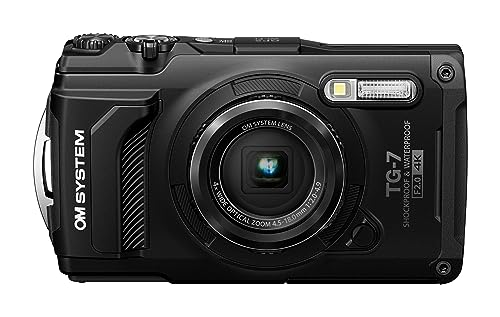
Roundups love a winner that embarrasses the category, and the TG-7 is it. It is a real camera, raw files, proper lens, excellent automatic modes, sealed to be waterproof, freezeproof and drop-resistant by design rather than by accessory, and that combination makes it the rare object a seven-year-old can own unsupervised and a twelve-year-old can still respect. Its macro mode deserves the headline in a children’s context: it focuses close enough to turn a woodlouse into a monster portrait, and children, who live nearer the ground than adults, exploit that gift daily. The photographs print properly, which ends the quiet disappointment of toy-camera output at the grandparents’ wall.
- Form: sealed tough compact camera
- Build: waterproof, drop and freeze resistant
- Stills: raw-capable, print-quality output
- Macro: microscope-style close focus
- Modes: automatic that a child can trust
The TG-7 test this guide applies is the three-year test: will this object still be working, still be used and still be respected three birthdays from now? It passes on construction, on output and on the growing child’s expanding ambitions, from pond-dipping to the first photography badge. Its honest costs are its price, which is a real camera’s, and the adult setup it wants on day one. For a child whose interest is proven, the roundup verdict is simple: this is the buy-once answer, and the money it saves is measured in the cameras not bought in years two and three.
Strengths
- Real image quality in a child-proof body
- Macro mode built for a child’s-eye world
- Survives the whole of childhood, then hands down
Trade-offs
- Priced like the real camera it is
- Needs an adult’s initial setup
- Overkill for an uncommitted first try
Best for: Proven young photographers and buy-once families.
Not suited for: Testing whether a child cares about cameras at all.

GoPro HERO11 Black — Best family hand-me-down action camera
The HERO11 Black is the roundup’s value heresy: yesterday’s flagship action camera, still better at the things children film, stabilised action, pool chaos, bike rides, than almost anything sold as a kids’ camera at any price. It is waterproof as sold, its video quality and stabilisation remain excellent, its mounting ecosystem means the bike, helmet and chest rigs already exist, and because it is a generation old it circulates at prices and in used condition that make handing it to a child a rational act rather than a reckless one. For families upgrading their own GoPro, this is the hand-me-down that starts a child’s film career properly.
- Form: flagship action camera, waterproof
- Video: 5.3K recording, top stabilisation
- Mounting: full GoPro ecosystem
- Power: removable battery system
- Use: family action filming, child-operated
The HERO11 pattern in a family is inheritance with intent: the parent’s proven camera, checked, cased and strapped, becomes the child’s first real instrument, with the parent’s old mounts completing the kit for free. Teach the child the two flagship habits, rinse after salt water, batteries charged in the family dock, and the camera will serve a second childhood as faithfully as its first. Its limits for a child are the flagship’s own: no front screen for selfie framing, menus deeper than a small operator needs, both solved by an adult’s preset and a child’s focus on the big button, which is, in the end, the only control that matters at this age.
Strengths
- Flagship video quality at hand-me-down logic
- Waterproof without a case
- A mountain of mounts already exists
Trade-offs
- No front screen for self-framing
- Menus assume an adult nearby
- New price is still flagship-adjacent; used is the play
Best for: Families with a GoPro ecosystem or a used-market bargain.
Not suited for: A child’s first unsupervised camera on a tight budget.

GoPro Hero — Best new action camera for kids
Where the HERO11 is the inheritance, the little Hero is the deliberate purchase: GoPro’s simplified, compact action camera, waterproof as sold, with stabilised 4K video and a touchscreen, sized and priced for real-world family decisions. For a child it offers the essential action-camera virtues without the flagship’s depth of menu, and its small body fits the hands and the chest mounts of younger operators better than its bigger siblings. Stills are honest, video is the main event, and the whole package has the unmistakable feel of a product designed by people who watched families actually use the big ones.
- Form: compact action camera, waterproof
- Video: 4K with stabilisation
- Screen: rear touchscreen
- Build: rugged, simple controls
- Mounting: standard GoPro ecosystem
The Hero’s family pattern is the designated kids’ action camera that parents also borrow, for the swim, the ride and the holiday, which quietly justifies its place in the budget. Set it up once with the simple profile, fit the strap, and its operating lesson for a child fits in one sentence: press, film, press, watch it back. Its compromises against the flagships, no front screen, less low-light reach, fewer pro controls, are precisely the compromises a child’s use case would choose for itself, which is the definition of a well-aimed product and why it anchors this shortlist’s middle.
Strengths
- Simple, small and genuinely waterproof
- Stabilised video a child can succeed with
- Shares the family GoPro mounts
Trade-offs
- No front screen for selfie pieces
- Evening footage trails the big sensors
- Stills are the supporting act
Best for: A child’s first proper action camera, bought new.
Not suited for: Older children ready for flagship control and quality.

AKASO Brave 7 LE — Best budget dual-screen pick
Every roundup needs the pick that understands its user better than the expensive ones do, and the Brave 7 LE’s front screen is that understanding made plastic. Children film themselves: the trick, the message, the den, the dance, and a front screen turns that instinct into framed, watchable footage instead of a hundred clips of chin. Add stabilised video, a waterproof case and mounts in the bundle, and the package is a complete first film kit whose price respects the statistical reality of children and objects. Its footage in dim light is modest and its case must be sealed with an adult’s care, and neither fact dents its placing here.
- Form: action camera, front and rear screens
- Video: stabilised recording
- Case: waterproof housing in most bundles
- Mounts: starter set included
- Control: touchscreen and buttons
The Brave 7 LE earns its keep in the independence ledger: a child who can frame themselves needs no camera operator, and the confidence that builds, performing to a lens they control, is the real product. Parents should own the two maintenance rituals, the case seal before water and the rinse afterwards, and inspect the bundle’s contents on arrival, since bundle compositions drift between listings. Judged as a child’s first film kit rather than as a cheap GoPro, it is not a compromise at all; it is the category’s most honest piece of design at its price, and roundups exist to say exactly that.
Strengths
- Front screen matches how children film
- Complete starter bundle in the box
- Price respects childhood’s accident rate
Trade-offs
- Waterproofing depends on the case seal
- Low-light footage is ordinary
- Bundle contents vary by listing
Best for: Self-filming children and budget-wise families.
Not suited for: Dark venues or buyers wanting case-free waterproofing.

AKASO EK7000 — Best disposable-price starter
The EK7000 is the shortlist’s floor, and floors matter. For less than many families spend on a birthday party’s decorations, it delivers a working action camera, a waterproof case, mounts and usually a remote and spare battery: a complete kit that a child can own in the full sense, take to the river, lend to a friend, lose to a lake, without any of those events becoming a family financial memory. Daylight footage is fine, the learning is identical to the expensive cameras’ learning, strap, seal, charge, review, and its existence disciplines the whole category’s pricing, which is what a good roundup pick at the bottom is for.
- Form: budget action camera with housing
- Video: 4K recording for daylight use
- Control: wrist remote in most bundles
- Mounts: generous accessory bundle
- Power: swappable batteries included in most kits
Judge the EK7000 by its replacement rate rather than its specifications and its wisdom appears: in the years when a camera’s life expectancy is measured in school terms, the rational purchase is the one whose loss teaches care without costing grief. Children given full ownership of an EK7000 learn the complete liturgy of camera keeping, and the ones who bring it home intact for a year have filed the only application for an upgrade that any parent should accept. Its low-light weakness and basic stabilisation are real and, for its purpose, irrelevant, a sentence more roundups should be willing to print.
Strengths
- Complete kit at a genuinely disposable price
- Full ownership teaches real care
- Daylight results are perfectly shareable
Trade-offs
- Weak in low light
- Case-dependent waterproofing
- Basic stabilisation and sound
Best for: First full ownership and the care apprenticeship.
Not suited for: Evening events or quality-critical family filming.
VTech Kidizoom (prose-only) — Best true children’s camera
No roundup of kids’ cameras is honest without the actual children’s camera, and the Kidizoom line is its long-running standard-bearer. Chunky child-proof body, big buttons, a selfie camera, games, frames and effects, and a price that treats the product as what it is: a toy that takes photographs. The photographs themselves are the limitation that must be printed plainly: small, soft files that delight on a screen and disappoint in print, from a sensor whose megapixel marketing should be ignored in favour of this sentence. For a young child whose photography is play, that trade can be exactly right, and pretending otherwise, in either direction, is how roundups lose their licence.
- Form: purpose-built children’s camera
- Controls: oversized, simple, selfie lens included
- Extras: games, frames and effects
- Output: screen-grade photos and clips
- Status: prose-only here, toy retailers stock it
The Kidizoom’s correct use is as the diagnostic first instrument: cheap enough for total independence, fun enough to guarantee data. A month of a child’s Kidizoom archive tells a parent precisely what to buy next, the macro TG-7 for the bug obsessive, an action camera for the filmer, nothing yet for the child who wandered off to other interests, and that diagnostic value alone justifies its price several times over. Where it fails is as the unknowing gift from a relative who believed the box’s numbers and expected printable photographs; this section exists so that your family’s purchase, whichever way it goes, is made with the truth in the room.
Strengths
- Perfectly designed for small children
- Play features guarantee heavy use
- Price makes independence safe
Trade-offs
- Photo quality is screen-grade only
- Marketing numbers deserve total scepticism
- Enthusiasts outgrow it within a year
Best for: Young children’s first camera and interest-testing.
Not suited for: Printing, keeping and multi-year service.
How does the honest shortlist compare side by side?
| Pick | Form | Strongest suit | Watch out |
|---|---|---|---|
| OM SYSTEM Olympus Tough TG-7 | Tough compact | Serious kids’ photography | Buy once, set up once |
| GoPro HERO11 Black | Action camera | Family action inheritance | Used market is the value route |
| GoPro Hero | Action camera | Kids’ action filming | One-sentence operating lesson |
| AKASO Brave 7 LE | Action camera | Independent child filming | Verify the bundle on arrival |
| AKASO EK7000 | Budget action camera | Starter ownership | The upgrade application is care |
| VTech Kidizoom (prose-only) | Children’s camera | First play camera | Ignore the box’s megapixels |
Read the table as a ladder of commitment rather than a ranking of worth. The Kidizoom tests interest for the price of a family takeaway habit; the EK7000 and Brave 7 LE convert interest into ownership and filming; the little Hero and the HERO11 bring flagship manners within family logic; and the TG-7 ends the ladder for the child who turns out to be a photographer. Skipping rungs is the classic error in both directions: the flagship bought for an uncommitted child, and the toy bought for a committed one, waste the same money in opposite ways.
The comparison no table can show is output destination. If the family’s real life for these photographs is a tablet slideshow and a messaging thread, every row here is sufficient and the ladder can be climbed slowly. If prints, albums and grandparents’ walls are the destination, only the top rows deliver, and the honest move is to start there or save toward it, because a year of unprintable photographs cannot be retaken at any price.
What should you check on any kids’ camera before believing a word of its marketing?
Check the waterproof claim’s grammar. ‘Waterproof’ as sold, with a depth and a standard behind it, is a fact; ‘waterproof case included’ is a different, weaker fact that depends on a seal a child will not check; and ‘splash resistant’ is a hope. Check the battery’s reality next: swappable batteries mean a dead camera is a ten-second fix, while a sealed unit with a proprietary cable means the camera’s holidays are scheduled by its charger. Then check the screen in daylight, in a shop or on arrival day, because a screen a child cannot see at the playground is a camera that will be aimed by prayer.
Ignore, as a matter of policy, three numbers: megapixels, which in this category measure marketing courage; digital zoom, which is cropping performed badly in advance; and the count of games and effects, beyond confirming that some exist. Attend instead to the physical evidence of the object in hand: the heft that suggests a real chassis, the door seals that close with intention, the strap lug that is part of the body rather than glued to it. Kids’ cameras are unusually honest objects physically; the truth is in the holding of them, and roundups that never held them are the ones to discount.
How do publication roundups actually test, and where should you stay sceptical?
The good ones, the tradition this search invokes, buy or borrow the products, hand them to the actual audience, in this case children, and report the collisions between the object and real life: the drop survived, the menu abandoned, the feature used a hundred times that the press release mentioned once. Scepticism is due wherever a roundup’s language tracks a press release’s adjectives, wherever every product in a list is merely ‘great for’ something, and wherever no product is ever told it is wrong for the reader in front of it. A shortlist without a rejection in it is a catalogue wearing a costume.
Apply the same scepticism here, constructively. This guide’s claims are stated so they can be checked: sealing as sold, screen positions, battery behaviour, output destinations. Verify the exact current model before ordering, because children’s product lines revise silently, a name persists while its sensor, screen or bundle changes, and read the newest owner reviews for the failure that repeats, the door that cracks, the charger that dies, since repetition across strangers is the closest thing consumer truth has to a laboratory.
How do you turn a child’s camera habit into a family archive that lasts?
Curate at the speed of childhood: a monthly slideshow, a printed favourite, a named folder per term, because archives are built by rituals small enough to survive busy years. The child should own the selecting, with an adult owning the backing up, two copies, one outside the house or in cloud storage the family controls, since a childhood’s photographs are the least replaceable data a family holds and the most commonly lost. The cameras here record to ordinary cards and files, which keeps that duty simple; keep it simple, and it will actually happen.
Print more than feels reasonable. The printed photograph on the fridge, in the album, in the grandparent’s frame, is what converts a child’s hobby into a family’s memory and a young photographer’s identity. That is the practical ground on which this guide keeps ranking output quality as a first-class virtue even for children: a six-year-old’s bug portrait, printed well, is not a lesser photograph for its author’s age, and the cameras that can deliver it are not indulgences but instruments of respect for the child’s own work.
How do you spot a kids’ camera review that never touched the product?
The tells are linguistic before they are technical. Reviews written from press releases describe what a camera ‘offers’ and ‘boasts’, in the manufacturer’s own adjectives, and every feature is a benefit because no child has yet declined to use it. Tested reviews contain friction: the door that small fingers struggle with, the screen that washes out at the beach, the game that ate the photography for a week. Friction is the signature of contact, and its absence across an entire roundup means the products were photographed for the article more recently than they were used for it.
The second tell is the missing loser. A testing process applied to a category this uneven produces casualties, products that fail a drop, a battery day or a child’s patience, and a roundup in which everything is recommended has sold its scepticism somewhere along the way. This guide has tried to keep its own licence visible: limitations are printed inside every pick, one category is represented in prose rather than promoted with a link, and the final authority is explicitly handed to the reader’s own checks. Hold every future roundup, and this one, to exactly that standard.
What happens to kids’ cameras after the child grows: resale, hand-downs and e-waste?
The real cameras on this list have second lives: action cameras resell, hand down and migrate into parents’ kits, and the TG-7 class of tough compact tends to stay in families for a decade as the beach-and-pool camera long after its first owner upgrades. That afterlife belongs in the purchase arithmetic, because a camera with three owners is cheaper, per childhood served, than a disposable one with a single summer in it, and the planet keeps the same ledger as the wallet in this case, which is not always true and is worth honouring when it is.
Plan the hand-down at purchase: keep the box and the spare battery, register nothing you do not need to, and store the camera charged and dry between owners so the second childhood starts with a working instrument rather than a mystery. The toy-tier cameras have their own honest ending, donation to a younger cousin or a school art cupboard where their limitations matter least, and the discipline in both directions is the same: objects bought with their whole lives in view, which is the grown-up version of the care this category keeps trying to teach.
How do you gift a kids’ camera well, as a relative who will not be there for setup?
Buy the complete state, not the promising start: the camera with its card inserted and formatted, its batteries charged or its spares included, its strap attached, and a card in the box that says, in handwriting, the one thing the parents need to know about charging and the one website-free truth about the camera’s limits. The difference between a gift that becomes a hobby and a gift that becomes a drawer is almost entirely that first evening’s friction, and a giver who removes it in advance has given the hobby itself rather than an errand.
Choose the tier by the parents’ temperament as much as the child’s, because the parents are the camera’s maintenance department and its anxiety ceiling. The household that will rinse, charge and curate can be given the TG-7 with confidence; the household that needs the camera to simply work can be given the Kidizoom or the budget action kit with equal confidence and no apology. A gift matched to its household is a kindness; a gift matched to the giver’s idea of the household is a small, expensive misunderstanding in a box.
What is the state of the kids’ camera category, honestly?
It is a category slowly being eaten from both ends, and understanding that is the real roundup insight. From below, phones and tablets absorb the casual snapshot; from above, real action cameras have fallen to prices that make the mid-tier toy camera’s compromises indefensible; and the survivors are the two honest poles this list is built on, the purpose-built play camera that knows it is a toy, and the real camera tough enough to be a child’s. The middle, the expensive toy dressed as a camera, is where money goes to be disappointed, and it is no accident that no pick here lives there.
The trend is the parent’s friend. Each year the real cameras get cheaper, tougher and simpler, the play cameras get more honest about their purpose, and the child’s position improves either way. Buy for the child and the year in front of you rather than for the category’s marketing calendar, keep the physical checks in this guide as your permanent scepticism kit, and the category can evolve as it likes; your family’s purchases will remain, in the unfashionable and decisive sense, correct.
How should you read a kids’ camera product page like an investigator?
Translate every claim into its physical question. ‘High resolution’ asks: at what print size does it hold, and the answer lives in owner reviews with printed results, not in the megapixels. ‘Waterproof’ asks: as sold or in a case, to what depth, under whose test. ‘Educational’ asks: what does the child do differently after a month, and the honest answers are framing, patience and showing, which the cheapest camera here teaches as well as the dearest. A product page read this way takes four minutes and returns the truth in most cases, because manufacturers’ claims are rarely false; they are merely answering questions nobody should have asked.
Then read the one-star reviews for pattern rather than for verdict. A scatter of unrelated complaints is noise; the same cracked door, dead charger or vanished feature across twenty strangers is a laboratory result. Weight the pattern over the average score, check whether the manufacturer answered and fixed, and let that, plus the physical checks in the shop or on arrival day, make the call. This is the roundup method reduced to a household skill, and it transfers to every gadget category your family will ever buy, which is the deepest sense in which the search that brought you here was a good one.
How do you test a kids’ camera in the shop or on arrival day?
Run the five-minute protocol. Drop test by proxy: examine the chassis, the door seals and the strap lug, and shake it gently for the rattle of loose intention. Screen test: take it to the shop window or the garden door and check that the display survives daylight. Button test: hand it to the child, say nothing, and watch whether a photograph happens within a minute, because that minute is the product. Battery test: confirm what it charges from and how a dead one is revived. File test: take three photographs, one in shade, and look at them at full size on a computer that evening, while the return window is a door and not a memory.
The protocol’s power is that it is comparative: run it on the two finalists and the decision usually makes itself, in the child’s hands more than in the specifications. Roundups, this one included, exist to get you to the two finalists with the right questions loaded; the protocol is where the questions get answered by the only witnesses who matter, the object and the child. Families who adopt it stop returning cameras and start keeping them, which is the quiet definition of buying well in this category.
What do grandparents and relatives most often get wrong, and how do you help them?
They buy the advertisement instead of the child: the camera with the cartoon licence and the heroic megapixels, for a grandchild whose actual obsession, unasked, was beetles. The fix is a family’s small diplomacy: a shared wish-list written by the child’s evidence, this guide’s tiers translated into two or three named options at named budgets, sent kindly and early. Relatives are not careless; they are uninformed at a distance, and a list that respects their budget and their love converts them from the category’s greatest risk into its greatest funding source.
The second error is the upgrade ambush, the surprise flagship that silently re-prices the child’s hobby and the parents’ anxiety alike. The same wish-list prevents it, by naming the current camera’s tier and the next tier’s occasion, the birthday after the care record is proven. Families that run this small system find that the child’s photographic life becomes a shared project across generations, with the grandparents as patrons and audience, which is, when you examine it, exactly what the photographs themselves are for.
How do you decide between last year’s model and this year’s, in a category that revises silently?
Buy the version whose faults are known. Children’s product lines change internals under a stable name, so the newer unit is not automatically the safer one; a model with a year of owner reviews has a published failure pattern you can accept or reject, while a fresh revision is an unwritten book. Where the revision is documented and meaningful, a better screen, a kinder battery, choose it gladly; where the change is a colour and a claim, the known quantity at the known price is the roundup’s traditional answer.
Check the accessories’ continuity before assuming it: cases, mounts and chargers orphan quickly in this category, and a bargain camera whose case is discontinued is a waterproof promise with an expiry date. The real cameras here, the action bodies and the TG-7, sit inside ecosystems with long memories, which is one of their least advertised virtues and one of the strongest practical arguments for climbing the ladder when the child’s interest justifies it.
What is the fairest way to compare a toy camera with a real one?
Compare cost per year of delighted service, and output per destination actually used. The toy wins the first year on both counts for a young child, and loses every year after if the interest holds, because its service ends at outgrowing while the real camera’s is still compounding. Neither result is a scandal; the scandal is only the purchase made in ignorance of which comparison applied to the child in question. This guide’s diagnostic approach, cheap teacher first, evidence-based upgrade second, exists to make the comparison empirical for each family rather than theoretical for all of them.
Run the same fairness in reverse for the real cameras: a TG-7 bought for a child who abandons it is not a triumph of quality but a expensive hypothesis falsified, and its rescue is the hand-down and resale market, where tough cameras hold their value precisely because the next family can read their durability. Bought and sold with open eyes at every step, the whole ladder is honest; the category only punishes the purchases made on autopilot, which is the one-sentence summary of everything this roundup has tried to say.
How do you keep a child’s personal data and images safe in a connected world?
Prefer the offline instrument, which every pick here is: a camera that records to a card creates a natural airlock between the child’s world and the internet, and the family, not a platform, decides what crosses it. Keep that airlock manned: an adult curates uploads, locations and names stay out of posts by family policy, and the child’s own wishes about their image are consulted with increasing seriousness as they grow, because the archive is theirs in a sense that deepens every year.
Teach the principle with the practice: photographs of other people carry duties, school friends are not content, and a camera’s presence should be announced where it matters. A child raised on an offline camera inside a thoughtful family’s rules has learned, before their first account exists anywhere, the entire ethics of the connected image, and that education, quietly delivered by a toy-priced object and its upgrade ladder, may be the best value in this entire category.
How do you read star ratings and review scores for kids’ products without being misled?
Treat the average as weather and the distribution as climate. A product loved and hated in equal measure is a specialist tool being bought by the wrong crowd half the time, which for kids’ cameras often means a good camera bought with toy expectations, or a toy bought with camera expectations. Read the five-star reviews for what delighted and the one-stars for what failed, and sort both by the buyer’s apparent intent; the pattern that matches your family’s intent is the forecast meant for you, whatever the headline number says.
Weight the reviews that mention time: the camera at month six, after the drops, the charger, the second child. Children’s products live or die in that timeframe and almost no launch coverage reaches it, which is why owner reviews, for all their noise, carry a category of truth that no roundup, this one included, can manufacture. A guide can test a camera for a week; only the crowd can test it for a childhood, and the wise buyer reads both witnesses and lets each testify to what it actually saw.
What is the one-paragraph version of this entire guide?
Ignore the numbers on the box, hold the object, and match the tier to the evidence: a play camera for the uncommitted, a budget action kit for the filmer, a tough real camera for the proven photographer, bought with its strap, its card and its spare battery in the same basket, then handed over with a first assignment and a slideshow ritual to make it a practice rather than a possession. Everything else in these pages is commentary on that paragraph, and if the paragraph is followed with the physical checks beside it, the family will have bought as well as any roundup, however famous its name, could have bought for them.
That is also the honest answer to the search that assembled this list: the publication whose name it carries built its reputation on exactly that compression, the tested shortlist, the printed limitation, the refusal of brochure language. This guide has tried to earn the association rather than borrow it, and it leaves the final check, as every good roundup should, in the reader’s hands and the child’s.
What mistakes do kids’ camera roundups and buyers keep making?
- Believing the megapixel number on a toy camera’s box, then being quietly devastated by the prints.
- Buying the waterproof claim without reading whether it needs a case, a seal check and an adult’s supervision to be true.
- Choosing the camera with the most games, and discovering the games replaced photography rather than recruiting for it.
- Paying flagship money for a child’s first camera, then rationing its use so tightly that no habit can form.
- Skipping the strap, the spare card and the second battery, the three small purchases that decide whether the camera lives a life.
- Treating every roundup, this one included, as a verdict rather than as evidence to be checked against the child in front of you.
The common thread is adults shopping from paper, specifications, lists, hopes, for an object whose entire truth is physical and personal: how it fits one child’s hands, survives one child’s year and feeds one child’s obsessions. Use roundups to build the shortlist and to learn the checks; then let the child, the holding and the first month’s archive make the final call, as this guide’s diagnostic approach intends.
Final Recommendation
If the child is a proven photographer, the TG-7 is the answer and the search ends. If the family films, the little GoPro Hero new or the HERO11 by inheritance or the used market; if the budget must be gentle, the Brave 7 LE for its front screen or the EK7000 for its honesty; and if the child is young and the interest unproven, the Kidizoom, bought with its limitations understood, as the finest diagnostic instrument in the category. That is the shortlist the search was asking for, written the way the invoked tradition demands: no brochure numbers believed, no limitation unprinted, and the final authority handed, as it should be, to the child and the evidence.
Frequently Asked Questions
Is this guide affiliated with Gizmodo?
No. The publication’s name appears in the search because readers look for its style of tested, plain-spoken roundup; this is an independent guide written to that standard, with no endorsement by or from the publication and no products supplied by manufacturers. The transparency is deliberate: a roundup that hides its relationships is asking for a trust it has not earned.
Why do toy cameras advertise so many megapixels?
Because the number is cheap to print and hard for a buyer to test in a shop. Small sensors with huge pixel counts produce files that are large and soft at once, and the honest measures of a kids’ camera are physical: sealing, screens, buttons, battery sense and what the output looks like printed at the size your family actually prints. Judge those, and the megapixel column can be left to entertain itself.
What age suits each tier of this list?
Roughly: the Kidizoom for the youngest and the uncommitted, the budget action cameras from about five or six with supervision of water and mounts, the GoPros for confident sixes and up, and the TG-7 whenever the interest is proven, since its toughness suits younger hands than its price usually meets. Temperament matters more than birthdays; the careless nine-year-old and the meticulous six-year-old should swap tiers without embarrassment.
Should I buy the extended warranty or protection plan?
For children’s cameras, run the arithmetic the roundup way: if the plan costs a large fraction of a budget camera’s price, self-insure by buying the budget camera; for the TG-7 tier, a plan can make sense where the retailer’s terms genuinely cover accidental damage, read for the word accidental, since wear and water have fine print with ambitions. The strap and the case remain the cheapest protection plan ever sold.
Can these cameras be used for school projects?
Yes, and they increasingly are: the action cameras document experiments, field trips and sports day from the child’s own perspective, and the TG-7’s macro serves nature projects beautifully. Check the school’s own rules on cameras and images first, keep other children’s images within the family’s and the school’s policies, and let the child present the work; a printed photograph in a project folder out-argues a paragraph of description every time.
What is the single best value on this list?
For a filming family, the Brave 7 LE’s bundle, because the front screen changes what a child can do alone. For a photographing child, a used HERO11 is hardware value and the TG-7 is lifetime value, and the difference between those sentences is the family’s real decision. Value in this category is cost per year of delighted service, and every pick here was placed by that measure rather than by its ticket.
Why do roundups disagree with each other about the same camera?
Because they weight the trade-offs differently and sometimes test different versions of a silently revised product. One list prizes print quality, another prizes survival, a third prizes the child’s independence, and the same camera is honestly first on one and third on another. Read disagreement as information about your own priorities: the roundup whose weighting matches your family’s is the useful one, and the physical checks in this guide let you arbitrate the rest yourself.
Do kids’ cameras make good gifts from schools or clubs as prizes?
The budget tiers here are almost designed for it: complete, robust, account-free and equally delightful to any child, with no setup burden placed on the receiving family beyond charging. A prize camera with a printed first assignment and a note inviting the family to the slideshow ritual lands as an experience rather than an object, and organisers should prefer the models whose batteries and cards are the commonest standards, so no household is sent shopping to make a prize work.
Related Guides
Keep reading with best cameras for kids 6 and best cameras for intermediate and best cameras for instagram selfies.


