A smoke detector is the cheapest life-safety device in your home, and the one most likely to be out of date. The alarms in most houses are ten or fifteen years old, chirping for batteries nobody replaces, and they cannot tell you about a fire when you are not home. Modern residential detectors fix both problems: sealed 10-year batteries that never need changing, interconnected alarms that all sound together, and smart models that send a phone alert the moment smoke or carbon monoxide is detected, whether you are in the next room or on the other side of the world.
The detectors below cover the three ways a home is usually protected. Wired models draw power from the house wiring and interconnect through it, which suits homes that already have wired alarms. Battery models with sealed 10-year batteries suit homes with no wiring and rentals where you cannot rewire. Smart models add phone alerts, voice warnings that name the room and the danger, and integration with Ring, Alexa, or Google Home. Most homes end up with a mix: wired or smart alarms in the hallways and bedrooms, and simple 10-year battery alarms everywhere else.
Before the list, check what your home already has. If your ceilings have wired alarm bases, replacing them with wired models is a straightforward swap. If they are battery alarms, a 10-year sealed battery model is the drop-in replacement. Count the rooms: building codes generally call for an alarm inside every bedroom, outside each sleeping area, and on every level including the basement, and a combination smoke and carbon monoxide alarm covers both dangers in one device. Buy one spare.
In this guide
Quick picks: best residential smoke detectors
| # | Product | Where to buy |
|---|---|---|
| 1 | Google Nest Protect – Smoke Alarm – Smoke Detector and Carbon Monoxide Detector – Wired, White | Check on Amazon |
| 2 | First Alert SC5 Hardwire Smart Smoke & Carbon Monoxide Alarm | Check on Amazon |
| 3 | Kidde Smart Smoke & CO Detector with Ring, AA Battery, RGCUDR-RW | Check on Amazon |
| 4 | X-Sense Smart WiFi Smoke Detector, UL 217 Certified, App Alerts, XS01-WX | Check on Amazon |
| 5 | Kidde Smoke & Carbon Monoxide Detector, 10-Year Battery , 30CUD10, 1 Pack | Check on Amazon |
| 6 | First Alert 10-Year Battery Combination Smoke & Carbon Monoxide Alarm | Check on Amazon |
| 7 | X-Sense Interconnected Smoke and CO Detector, SC07-W, 3-Pack | Check on Amazon |
Quick comparison
| # | Product | Best for |
|---|---|---|
| 1 | Google Nest Protect Wired Smoke and CO Alarm | Best smart smoke and CO alarm overall |
| 2 | First Alert SC5 Hardwire Smart Smoke and CO Alarm | Best hardwired smart alarm for existing wiring |
| 3 | Kidde Smart Smoke and CO Detector with Ring | Best smart alarm for Ring homes |
| 4 | X-Sense XS01-WX Smart WiFi Smoke Detector | Best Wi-Fi smoke alarm with no hub |
| 5 | Kidde 10-Year Battery Smoke and CO Detector 30CUD10 | Best set-and-forget battery alarm |
| 6 | First Alert 10-Year Battery Smoke and CO Alarm SMCO210 | Best slim-profile battery alarm |
| 7 | X-Sense SC07-W Interconnected Smoke and CO Detector 3-Pack | Best value interconnected set for whole-home coverage |
The table above is a shortcut, not a verdict. Two products can look close on a spec line and feel very different in daily use, so use it to narrow the field to two or three candidates, then read those full sections before deciding.

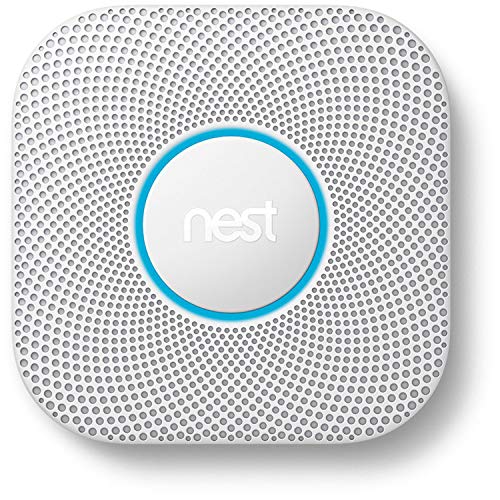
1. Google Nest Protect Wired Smoke and CO Alarm
The Google Nest Protect is the smart alarm most homes should start with. It is a wired smoke and carbon monoxide alarm that speaks instead of just beeping: it tells you which room has smoke and whether it is smoke or carbon monoxide, in a calm voice, before the loud alarm starts. It sends alerts to your phone and tests itself every month.
On paper, the headline facts are straightforward: Wired smoke and carbon monoxide alarm; Voice alerts name the room and the danger; Phone alerts through the Google Home app; Self-tests monthly and reports status; 10-year sensor life. None of that makes it the right pick for everyone, but it does define the audience clearly. If those headline facts match what you actually need day to day, this is a shortlist candidate rather than a curiosity. If they do not match, the rest of this section will make that obvious quickly, and you can move on to the next pick without losing anything.
What stands out
- Wired smoke and carbon monoxide alarm
- Voice alerts name the room and the danger
- Phone alerts through the Google Home app
- Self-tests monthly and reports status
- 10-year sensor life
The voice alert is the feature that changes how an alarm works in practice. A beep at 3 a.m. tells you something is wrong; a voice saying there is smoke in the kitchen tells you what to do. The phone alerts mean you know about a problem while you are away, and the monthly self-test with a report in the app means you actually know the alarm is working instead of assuming it is. The wired version never needs a battery change.
Before you buy, it is worth checking the practical details that cause most returns. Confirm that the listing shows the exact model name and configuration you expect, because similar models often share a name and differ in one specification that matters. Check the size and the connections against your setup, and make sure you know what is included in the box and what is sold separately. Read the return policy before ordering, and when the product arrives, test it with your real setup in the first few days rather than leaving it in the box. A quick check at the start saves a return later, and it is the simplest way to be sure the product you receive is the one you meant to buy.
Trade-offs to weigh
It costs several times more than a basic alarm, so protecting a whole house with Nest Protects is a real investment. It needs Wi-Fi and the Google Home app for the smart features, and the wired version needs existing alarm wiring and a compatible base. If your home has no wired alarms, the battery version of the same alarm is the alternative, and a house full of basic 10-year battery alarms costs far less for the same coverage.
Who it fits best
Best for homeowners who want the smartest alarm available, with voice warnings, phone alerts, and self-testing, and who already have wired alarm bases.

2. First Alert SC5 Hardwire Smart Smoke and CO Alarm
The First Alert SC5 is the smart hardwired alarm for homes that already have wired alarm bases. It fits the standard hardwired footprint, connects to the house wiring and to the other wired alarms in the home, and adds smart phone alerts on top. When it detects smoke or carbon monoxide it sounds with the rest of the system and sends an alert to your phone, and its battery backup keeps it working through a power cut.
On paper, the headline facts are straightforward: Hardwired smart smoke and CO alarm; Model SMCO600NV-AC, replaces wired alarms; Smart alerts on your phone; Interconnects with other hardwired alarms; Battery backup if power fails. None of that makes it the right pick for everyone, but it does define the audience clearly. If those headline facts match what you actually need day to day, this is a shortlist candidate rather than a curiosity. If they do not match, the rest of this section will make that obvious quickly, and you can move on to the next pick without losing anything.
What stands out
- Hardwired smart smoke and CO alarm
- Model SMCO600NV-AC, replaces wired alarms
- Smart alerts on your phone
- Interconnects with other hardwired alarms
- Battery backup if power fails
The drop-in fit is the main advantage: if your home has First Alert or BRK wired alarms, the SC5 replaces them without rewiring or new bases, which makes a whole-house upgrade a weekend job rather than an electrician visit. The smart alerts mean you hear about a problem away from home, and the hardwired interconnection is the most reliable way to make every alarm in the house sound together. First Alert is the brand most American homes already have on the ceiling, so parts and replacements are easy to find.
Before you buy, it is worth checking the practical details that cause most returns. Confirm that the listing shows the exact model name and configuration you expect, because similar models often share a name and differ in one specification that matters. Check the size and the connections against your setup, and make sure you know what is included in the box and what is sold separately. Read the return policy before ordering, and when the product arrives, test it with your real setup in the first few days rather than leaving it in the box. A quick check at the start saves a return later, and it is the simplest way to be sure the product you receive is the one you meant to buy.
Trade-offs to weigh
It is a hardwired alarm, so it only fits homes with existing alarm wiring; battery-only homes need a different model. The smart features depend on your Wi-Fi and the app, and the alarm itself is more expensive than the basic hardwired alarms it replaces. Pairing the alarm and getting the alerts working can take longer than the physical installation.
Who it fits best
Best for homes with existing hardwired alarms that want smart phone alerts without rewiring, using the same brand already on the ceiling.
Check price on Amazon: First Alert SC5 Hardwire Smart Smoke & Carbon Monoxide Alarm
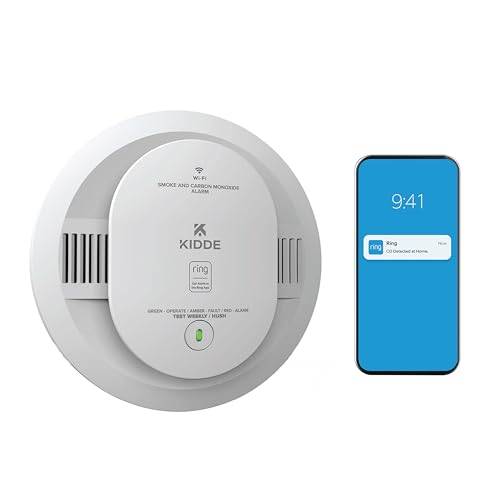
3. Kidde Smart Smoke and CO Detector with Ring
The Kidde Smart Smoke and CO Detector with Ring is the alarm for homes that already use Ring for security. It is a battery-powered smart alarm that joins the Ring app and the Ring Alarm system, so smoke and carbon monoxide alerts appear alongside door and motion alerts in one place. It interconnects wirelessly with other Ring-compatible alarms, sends real-time alerts to your phone, and uses voice alerts to say what the danger is.
On paper, the headline facts are straightforward: Smart smoke and CO detector, AA battery; Model RGCUDR-RW, works with the Ring app; Wireless interconnect with other Ring alarms; Real-time mobile alerts and voice alerts; Ring Alarm integration for whole-home alerts. None of that makes it the right pick for everyone, but it does define the audience clearly. If those headline facts match what you actually need day to day, this is a shortlist candidate rather than a curiosity. If they do not match, the rest of this section will make that obvious quickly, and you can move on to the next pick without losing anything.
What stands out
- Smart smoke and CO detector, AA battery
- Model RGCUDR-RW, works with the Ring app
- Wireless interconnect with other Ring alarms
- Real-time mobile alerts and voice alerts
- Ring Alarm integration for whole-home alerts
The Ring integration is the reason to buy it: one app for security and fire safety, and the Ring Alarm base station can sound its siren and alert the monitoring service when the alarm triggers. The wireless interconnect means every alarm sounds together with no wiring at all, which suits homes and rentals that cannot be rewired. The AA battery power means it mounts anywhere, and the voice alerts are clearer than a bare beep in the middle of the night.
Before you buy, it is worth checking the practical details that cause most returns. Confirm that the listing shows the exact model name and configuration you expect, because similar models often share a name and differ in one specification that matters. Check the size and the connections against your setup, and make sure you know what is included in the box and what is sold separately. Read the return policy before ordering, and when the product arrives, test it with your real setup in the first few days rather than leaving it in the box. A quick check at the start saves a return later, and it is the simplest way to be sure the product you receive is the one you meant to buy.
Trade-offs to weigh
It only makes sense if you use Ring; without the Ring app and base station you pay for integration you cannot use. Battery-powered alarms need their batteries watched, even with long-life cells, and the alarm is more expensive than a basic Kidde alarm that does the same sensing without the smart features. A house full of these costs noticeably more than a house full of standard alarms.
Who it fits best
Best for Ring households that want fire and CO alerts in the same app as their security system, with wireless interconnect and no wiring.
Check price on Amazon: Kidde Smart Smoke & CO Detector with Ring, AA Battery, RGCUDR-RW

4. X-Sense XS01-WX Smart WiFi Smoke Detector
The X-Sense XS01-WX is a smart Wi-Fi smoke detector that connects straight to your home Wi-Fi with no hub and no base station. It sends smoke alerts to your phone through the X-Sense app, it is UL 217 certified, and it is designed to cut down on the cooking false alarms that make people take the batteries out of their alarms — which is the most dangerous thing a smoke alarm can cause. It runs on battery power, so it mounts on any ceiling in minutes.
On paper, the headline facts are straightforward: Smart Wi-Fi smoke detector, model XS01-WX; UL 217 certified, app alerts, no hub required; Helps reduce cooking nuisance alarms; Direct Wi-Fi connection to your phone; Battery powered for any ceiling. None of that makes it the right pick for everyone, but it does define the audience clearly. If those headline facts match what you actually need day to day, this is a shortlist candidate rather than a curiosity. If they do not match, the rest of this section will make that obvious quickly, and you can move on to the next pick without losing anything.
What stands out
- Smart Wi-Fi smoke detector, model XS01-WX
- UL 217 certified, app alerts, no hub required
- Helps reduce cooking nuisance alarms
- Direct Wi-Fi connection to your phone
- Battery powered for any ceiling
The no-hub design keeps the cost and the complexity down: buy the alarm, connect it to Wi-Fi, and the phone alerts work. The nuisance-alarm reduction matters more than it sounds, because an alarm that cries wolf over toast gets disabled, and a disabled alarm protects nobody. The price is well below the big-name smart alarms, so protecting several rooms is affordable.
Before you buy, it is worth checking the practical details that cause most returns. Confirm that the listing shows the exact model name and configuration you expect, because similar models often share a name and differ in one specification that matters. Check the size and the connections against your setup, and make sure you know what is included in the box and what is sold separately. Read the return policy before ordering, and when the product arrives, test it with your real setup in the first few days rather than leaving it in the box. A quick check at the start saves a return later, and it is the simplest way to be sure the product you receive is the one you meant to buy.
Trade-offs to weigh
It detects smoke only, not carbon monoxide, so you need a separate CO alarm or a combination model for full protection. The app and the smart features are X-Sense’s own, so it does not join Ring, Alexa routines, or Google Home the way the bigger brands do. Wi-Fi alarms depend on your router, so a dead router or a power cut takes the phone alerts offline even though the local alarm still sounds.
Who it fits best
Best for renters and budget-conscious homes that want phone alerts from a smoke alarm without buying a hub or rewiring anything.
Check price on Amazon: X-Sense Smart WiFi Smoke Detector, UL 217 Certified, App Alerts, XS01-WX

5. Kidde 10-Year Battery Smoke and CO Detector 30CUD10
The Kidde 30CUD10 is the simplest good alarm you can buy: a combination smoke and carbon monoxide detector with a sealed 10-year battery. You mount it, it works for a decade, and then you replace it. There are no batteries to change, no chirping at 3 a.m. because a battery died, and no app to set up. It covers both smoke and carbon monoxide in one device, which is the combination most bedrooms and hallways need.
On paper, the headline facts are straightforward: Smoke and CO detector, 10-year sealed battery; Model 30CUD10, 1 pack; No battery replacements for the life of the alarm; No low-battery chirps; LED status lights. None of that makes it the right pick for everyone, but it does define the audience clearly. If those headline facts match what you actually need day to day, this is a shortlist candidate rather than a curiosity. If they do not match, the rest of this section will make that obvious quickly, and you can move on to the next pick without losing anything.
What stands out
- Smoke and CO detector, 10-year sealed battery
- Model 30CUD10, 1 pack
- No battery replacements for the life of the alarm
- No low-battery chirps
- LED status lights
The sealed battery is the whole point. The most common reason alarms fail is dead or missing batteries, and a sealed 10-year battery removes that failure mode entirely. The combination sensing covers the two dangers that matter in a bedroom — fire smoke and carbon monoxide from a faulty heater — in a single device at a low price. The LED status lights make it easy to check at a glance that the alarm is working, and Kidde is the brand most hardware stores stock, so replacements are easy.
Before you buy, it is worth checking the practical details that cause most returns. Confirm that the listing shows the exact model name and configuration you expect, because similar models often share a name and differ in one specification that matters. Check the size and the connections against your setup, and make sure you know what is included in the box and what is sold separately. Read the return policy before ordering, and when the product arrives, test it with your real setup in the first few days rather than leaving it in the box. A quick check at the start saves a return later, and it is the simplest way to be sure the product you receive is the one you meant to buy.
Trade-offs to weigh
It is a standalone alarm: it does not interconnect with other alarms, so a fire in the basement will not set off the alarm in the upstairs bedroom, and it sends no phone alerts. That means it is best used alongside interconnected or smart alarms, or in smaller homes where one alarm can be heard everywhere. After ten years the whole unit must be replaced, battery included.
Who it fits best
Best for bedrooms, hallways, and rentals where you want a fit-and-forget alarm that covers smoke and CO for a decade with no maintenance.
Check price on Amazon: Kidde Smoke & Carbon Monoxide Detector, 10-Year Battery , 30CUD10, 1 Pack

6. First Alert 10-Year Battery Smoke and CO Alarm SMCO210
The First Alert SMCO210 is a slim, low-profile combination smoke and carbon monoxide alarm with a sealed 10-year battery. Its slim design suits low ceilings, small bedrooms, and hallways where a bulky alarm looks out of place, and it covers both smoke and CO in one unit. One button tests the alarm and silences a nuisance alarm, and the sealed battery means a decade with no battery changes and no midnight chirping.
On paper, the headline facts are straightforward: 10-year battery combination smoke and CO alarm; Model SMCO210, slim profile design; Sealed battery, no replacements needed; Slim profile fits low ceilings and small rooms; Single test and silence button. None of that makes it the right pick for everyone, but it does define the audience clearly. If those headline facts match what you actually need day to day, this is a shortlist candidate rather than a curiosity. If they do not match, the rest of this section will make that obvious quickly, and you can move on to the next pick without losing anything.
What stands out
- 10-year battery combination smoke and CO alarm
- Model SMCO210, slim profile design
- Sealed battery, no replacements needed
- Slim profile fits low ceilings and small rooms
- Single test and silence button
The slim profile is genuinely useful in rooms with low ceilings or where the alarm sits above a door, and the combination sensing means one device instead of two on the ceiling. The sealed 10-year battery removes the main cause of alarm failure, and the single-button test and silence keeps operation simple for everyone in the house, including older relatives. First Alert’s alarms are widely stocked, so matching replacements are easy to find years later.
Before you buy, it is worth checking the practical details that cause most returns. Confirm that the listing shows the exact model name and configuration you expect, because similar models often share a name and differ in one specification that matters. Check the size and the connections against your setup, and make sure you know what is included in the box and what is sold separately. Read the return policy before ordering, and when the product arrives, test it with your real setup in the first few days rather than leaving it in the box. A quick check at the start saves a return later, and it is the simplest way to be sure the product you receive is the one you meant to buy.
Trade-offs to weigh
Like other standalone battery alarms it does not interconnect, so it will not trigger the alarms in other rooms, and it sends no alerts to your phone. It is a detector, not a smart device, so if you want remote alerts you need one of the smart models above as well. The slim design also means a smaller speaker than some larger alarms, so check it is loud enough for the room it protects.
Who it fits best
Best for small rooms, low ceilings, and hallways where a slim alarm that covers smoke and CO for ten years with no maintenance is the right fit.
Check price on Amazon: First Alert 10-Year Battery Combination Smoke & Carbon Monoxide Alarm

7. X-Sense SC07-W Interconnected Smoke and CO Detector 3-Pack
The X-Sense SC07-W 3-pack is the cheapest way to get whole-home interconnected protection without wiring. The three combination smoke and CO detectors link wirelessly, so when one detects smoke or carbon monoxide, all three sound together — which is the feature that saves lives when a fire starts in a room nobody is in. Each unit has a sealed 10-year battery.
On paper, the headline facts are straightforward: Interconnected smoke and CO detector, 3-pack; Model SC07-W, wireless interconnect; 10-year sealed battery in each unit; All alarms sound together; Whole-home coverage without wiring. None of that makes it the right pick for everyone, but it does define the audience clearly. If those headline facts match what you actually need day to day, this is a shortlist candidate rather than a curiosity. If they do not match, the rest of this section will make that obvious quickly, and you can move on to the next pick without losing anything.
What stands out
- Interconnected smoke and CO detector, 3-pack
- Model SC07-W, wireless interconnect
- 10-year sealed battery in each unit
- All alarms sound together
- Whole-home coverage without wiring
The value is hard to beat: three interconnected combination alarms for less than the price of one big-name smart alarm, covering smoke and CO in three rooms with whole-home alerting. The wireless interconnect is the key safety feature — a fire in the basement wakes the upstairs bedroom — and it works in any home, including rentals, because there is no wiring to install. The 10-year sealed batteries mean the set is fit-and-forget, and buying a 3-pack or 6-pack covers a whole house in one purchase.
Before you buy, it is worth checking the practical details that cause most returns. Confirm that the listing shows the exact model name and configuration you expect, because similar models often share a name and differ in one specification that matters. Check the size and the connections against your setup, and make sure you know what is included in the box and what is sold separately. Read the return policy before ordering, and when the product arrives, test it with your real setup in the first few days rather than leaving it in the box. A quick check at the start saves a return later, and it is the simplest way to be sure the product you receive is the one you meant to buy.
Trade-offs to weigh
There is no phone alert and no smart home integration, so you only hear about a problem if you are home to hear the alarm. The alarms are X-Sense’s own system, so they do not interconnect with Kidde, First Alert, or Nest alarms you may already own. And like all battery alarms, the units must be replaced wholesale after ten years.
Who it fits best
Best for whole-home coverage on a budget: three interconnected smoke and CO alarms that all sound together, with no wiring and no monthly cost.
Check price on Amazon: X-Sense Interconnected Smoke and CO Detector, SC07-W, 3-Pack
Buying guide
Warranties, returns, and checking your purchase
Most products in this guide come with a manufacturer warranty, and the length and coverage vary by brand, so check the warranty terms before you buy rather than after something goes wrong. Keep the packaging until you have tested the product, because a return is much easier with the original box. When the product arrives, check that the model name, the configuration, and the included accessories match the listing, and test it with your real setup in the first few days. If anything is wrong, contact the seller promptly, because return windows are limited and the first week is the time to find problems.
How many alarms does a home need, and where?
The standard guidance is an alarm inside every bedroom, outside each sleeping area, and on every level of the home including the basement. Kitchens need an alarm nearby but not directly over the stove, where cooking smoke causes false alarms — ten feet from the cooker is the usual rule. Bathrooms need distance from steam for the same reason. Carbon monoxide alarms belong near sleeping areas and near fuel-burning appliances like furnaces and water heaters. Walk through your home with this list and count.
Wired, battery, or smart: which type for which room?
Wired alarms are the best choice where wiring already exists, because they interconnect through the house wiring and never need batteries. Battery alarms with sealed 10-year batteries are the best choice everywhere else, including rentals and rooms with no wiring. Smart alarms are worth the extra cost in the rooms where an early warning matters most — the kitchen hallway, the main bedroom hallway, and the basement — because they alert you when you are away and tell you which room has the problem. A practical plan is smart alarms in the key spots and 10-year battery alarms everywhere else.
Smoke, carbon monoxide, or both?
Smoke alarms detect fire; carbon monoxide alarms detect the colorless, odorless gas from faulty heaters, boilers, and blocked flues. A combination alarm does both in one device and is the right choice for bedrooms and hallways, where both dangers matter. Kitchens and garages usually need smoke-only alarms, because vehicle exhaust and cooking can trigger CO sensors. If your home has any gas appliance, a solid-fuel stove, or an attached garage, CO protection is not optional — fit combination alarms in the sleeping areas at minimum.
Interconnection is the feature that saves lives
A standalone alarm only warns the room it is in. An interconnected set makes every alarm in the house sound when any one of them triggers, which is what wakes a sleeping family when a fire starts downstairs. Wired alarms interconnect through the house wiring; wireless sets like the X-Sense SC07-W interconnect by radio; smart alarms interconnect through the app and the cloud. Whatever system you buy, make sure all the alarms in the house can trigger each other, and test the interconnection after installation by testing one alarm and listening for the others.
Testing, replacement, and the 10-year rule
Test every alarm monthly with the test button, and replace the whole unit after ten years — the sensor degrades even if the alarm still beeps. Write the installation date on the back of each alarm with a marker so you know when it is due. Vacuum the vents gently once a year, because dust and insects cause false alarms and reduce sensitivity. If an alarm chirps, check the date first: a chirp on a 10-year-old alarm usually means replacement, not a battery. Never paint over an alarm or remove it because it goes off while cooking — move it further from the stove instead.
Frequently asked questions
How many smoke detectors do I need in my house?
The usual guidance is one inside every bedroom, one outside each sleeping area, and one on every level including the basement. A typical three-bedroom, two-story home needs five or six alarms. Combination smoke and CO alarms cover both dangers in bedrooms and hallways, while kitchens need a smoke alarm kept at least ten feet from the cooker.
Do smoke detectors expire?
Yes. Smoke alarms should be replaced every ten years because the sensor degrades over time, even if the test button still works. Check the manufacture date on the back of the alarm; if it is over ten years old, replace it. Sealed 10-year battery alarms are designed to be replaced as a whole unit at the ten-year mark.
What is the difference between a smoke alarm and a carbon monoxide alarm?
A smoke alarm detects the particles from a fire. A carbon monoxide alarm detects CO gas from faulty fuel-burning appliances, which is colorless and odorless and can be deadly while you sleep. Combination alarms detect both in one device and are the right choice for bedrooms and hallways in any home with gas appliances or an attached garage.
Why does my smoke detector keep going off when I cook?
Cooking smoke and steam trigger the same sensor as fire smoke. The fix is placement, not removal: move the alarm at least ten feet from the stove, use the hush button instead of taking the battery out, and consider a model designed to reduce cooking nuisance alarms, like the X-Sense XS01-WX. Never disable an alarm because it is annoying — a disabled alarm protects nobody.
Do I need a smart smoke detector?
Not in every room, but smart alarms are worth it in key spots. They send phone alerts when you are away, name the room with the problem, and self-test so you know they work. Smart alarms in the kitchen hallway and main bedroom hallway, with 10-year battery alarms elsewhere, is a practical plan.
Conclusion
The best residential smoke detector for your home depends on what is already on the ceiling. If you have wired bases, the Nest Protect or the First Alert SC5 adds smart alerts to the wiring you own. If you use Ring, the Kidde Ring alarm puts fire alerts in the app you already open. For rentals and budget whole-home coverage, the X-Sense XS01-WX and the SC07-W 3-pack give you phone alerts and wireless interconnection without wiring, while the Kidde 30CUD10 and First Alert SMCO210 are the set-and-forget battery alarms that simply work for a decade.
Whatever you buy, buy enough of them, test them monthly, and replace them at ten years. A smoke detector is the cheapest life-safety device in the house, and the only one that has to work at 3 a.m. when everyone is asleep. Fit the right alarms in the right rooms, and leave them alone to do their job.