Disclosure: As an Amazon Associate, reviewstook.com earns from qualifying purchases. Links on this page are affiliate links at no extra cost to you; prices and availability change frequently, so check Amazon for the latest.
The search for the best gaming graphics card under $1000 rewards buyers who start with their monitor and their case, not with a launch chart. Written for a typical home gaming PC, this guide ranks the verified options for 1440p with genuine 4K headroom gaming and is blunt about what the money does and does not buy. Picture a mixed library that jumps between competitive shooters, a big open-world release, and a couple of indie games on the same weekend: the right card disappears into that experience, while the wrong one announces itself with stutters, noise, or a settings menu you dread opening.
Everything below was sorted against a single priority: balanced raster performance per dollar, enough VRAM for modern textures, and a card that will not need replacing the moment the next big release lands. Every pick was checked against that brief before it earned a badge. Where the verified pick sheet runs thin at this tier — and at the lowest budgets it genuinely does — we say so, discuss the class in prose, and link nothing we cannot verify. Keep it in mind as you read the picks; they were chosen under it.
Where to Buy
All linked picks are Amazon listings, surfaced for reviewstook.com readers with the site’s affiliate tag applied when the page renders. Street prices at this level swing weekly, so the links are the price check so we publish none and let the listing speak for itself. No pick below was exempted from it.
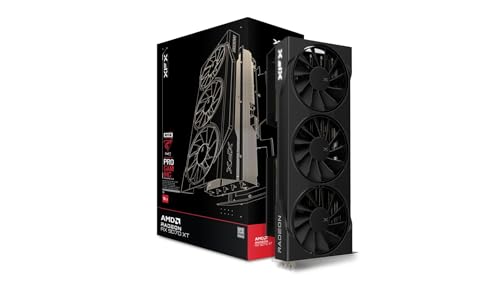
- Best Overall: XFX Swift AMD Radeon RX 9070 XT Triple Fan Gaming Edition 16GB — high-end RDNA 4 muscle for high-refresh 1440p and 4K attempts, shortlisted for general builders working to an under $1000 budget. Check on Amazon
- Best Value: ASUS Prime Radeon RX 9070 XT 16GB GDDR6 OC Edition — a high-end card with dual BIOS and longevity-focused hardware choices, shortlisted for general builders working to an under $1000 budget. Check on Amazon
- Best for 1440p: ASRock Radeon RX 9070 XT Challenger 16GB OC Graphics Card — the third take on the same high-end GPU, with a strong factory tune, shortlisted for general builders working to an under $1000 budget. Check on Amazon
- Best Budget: ASUS Dual GeForce RTX 5060 Ti 16GB GDDR7 White OC Edition — the balanced 16GB GDDR7 pick for builders who keep cards for years, shortlisted for general builders working to an under $1000 budget. Check on Amazon
- Best Compact: XFX Swift AMD Radeon RX 9060 XT OC Triple Fan Gaming Edition 16GB — 16GB of VRAM and RDNA 4 pace for 1440p ambitions, shortlisted for general builders working to an under $1000 budget. Check on Amazon
- Best Premium: ASUS TUF Gaming GeForce RTX 5060 8GB GDDR7 OC Edition — a current-generation card with GDDR7 and a seriously built cooler, shortlisted for general builders working to an under $1000 budget. Check on Amazon
In this guide
Quick Picks
Start here if you start anywhere. These are the six routes we would shortlist for anyone hunting the best gaming graphics card under $1000, ordered for this lens and this budget. That discipline, more than any single spec, is what this guide is selling.
- Best Overall — XFX RX 9070 XT Swift Triple Fan: high-end RDNA 4 muscle for high-refresh 1440p and 4K attempts; Radeon RX 9070 XT with 16GB GDDR6, ranked here for the under $1000 general shortlist.
- Best Value — ASUS Prime RX 9070 XT 16GB OC: a high-end card with dual BIOS and longevity-focused hardware choices; Radeon RX 9070 XT with 16GB GDDR6, ranked here for the under $1000 general shortlist.
- Best for 1440p — ASRock RX 9070 XT Challenger 16GB OC: the third take on the same high-end GPU, with a strong factory tune; Radeon RX 9070 XT with 16GB GDDR6, ranked here for the under $1000 general shortlist.
- Best Budget — ASUS Dual RTX 5060 Ti 16GB White OC: the balanced 16GB GDDR7 pick for builders who keep cards for years; GeForce RTX 5060 Ti with 16GB GDDR7, ranked here for the under $1000 general shortlist.
- Best Compact — XFX RX 9060 XT 16GB OC: 16GB of VRAM and RDNA 4 pace for 1440p ambitions; Radeon RX 9060 XT with 16GB GDDR6, ranked here for the under $1000 general shortlist.
- Best Premium — ASUS TUF RTX 5060 8GB OC: a current-generation card with GDDR7 and a seriously built cooler; GeForce RTX 5060 with 8GB GDDR7, ranked here for the under $1000 general shortlist.
How These Picks Were Chosen
Linked products in this guide were cross-checked against the site’s Creators API pick sheet on 2026-11-20; each one’s full API title sits in the sources file beside this article. Tier honesty came next: a card is linked only in budgets its class genuinely belongs to. No flagship silicon is borrowed to decorate a low budget, and no entry card is promoted beyond its station to fill a slot. That discipline, more than any single spec, is what this guide is selling.
The internal order was set by this guide’s brief — balanced raster performance per dollar, enough VRAM for modern textures, and a card that will not need replacing the moment the next big release lands — using memory headroom, cooler quality, dimensions, and power draw as tie-breakers. Anything that was not a desktop gaming card — workstation models, laptop parts, accessories — was removed before ranking began. This tier has enough verified choice that the shortlist below is a genuine ranking rather than a census. It is the same test at every tier in this cluster.
Detailed Reviews: Best gaming graphics card under $1000

Best Overall — XFX Swift AMD Radeon RX 9070 XT Triple Fan Gaming Edition 16GB
Strengths
- High-end RDNA 4 performance for 1440p and beyond
- A cooler sized for sustained 4K sessions, not benchmark sprints
- Swift cooler is built for sustained, not bursty, loads
Trade-offs
- Demands a strong power supply and a case with real airflow
- It will expose a weak CPU at 1440p high-refresh
- Overshoots a plain 1080p monitor by a wide margin
| GPU | Radeon RX 9070 XT (RDNA 4) |
|---|---|
| Memory | 16GB GDDR6 |
| Outputs | HDMI / 3x DisplayPort |
| Cooling | Triple fan |
Everything about the XFX RX 9070 XT Swift Triple Fan follows from its core spec — a Radeon RX 9070 XT with 16GB GDDR6 — which makes it a high-end card with a clear resolution home. Aim it at 1440p with genuine 4K headroom play, as a typical home gaming PC reasonably would, and its strengths and ceilings both come into focus. Inside a build shaped like the one in our introduction — a mixed library that jumps between competitive shooters, a big open-world release, and a couple of indie games on the same weekend — it behaves like a considered choice rather than a compromise. For 1440p with genuine 4K headroom ambitions on this budget, it is the right shape of compromise.
Ownership details separate this model from other cards built on the same silicon. The verified listing highlights gpu: Radeon RX 9070 XT (RDNA 4); memory: 16GB GDDR6; outputs: HDMI / 3x DisplayPort, and those choices decide noise, fit, and day-to-day manners more than any launch chart does. Measured against this lens’s priority — balanced raster performance per dollar, enough VRAM for modern textures, and a card that will not need replacing the moment the next big release lands — it answers the brief convincingly. It is, in short, the kind of pick that makes the under $1000 tier feel bigger than it is.
Everything around the card is the limitation: wattage, airflow, and physical room, and a build missing any of the three turns it into an expensive problem. None of that disqualifies it — every pick here has a ceiling — but it defines who should skip it, and the verdict below says so plainly. For 1440p with genuine 4K headroom ambitions on this budget, it is the right shape of compromise.
Best for: players who want the class’s strengths without babysitting settings — the XFX RX 9070 XT Swift Triple Fan at the under $1000 level / Not suited for: anyone expecting a tier above this card’s class, or a case and power supply that cannot support it


Best Value — ASUS Prime Radeon RX 9070 XT 16GB GDDR6 OC Edition
Strengths
- 2.5-slot footprint is manageable for a card of this class
- Dual-ball fan bearings are built for long service life
- Dual-ball bearings outlast sleeve designs in dusty rooms
Trade-offs
- Large card — verify length and slot clearance carefully
- Price class assumes a 1440p or better display to make sense
- Power supply requirements step up sharply versus mid-range picks
| GPU | Radeon RX 9070 XT |
|---|---|
| Memory | 16GB GDDR6 |
| Outputs | HDMI / DisplayPort 2.1 |
| Design | 2.5-slot, Axial-tech fans, dual-ball fan bearings |
| Extras | Dual BIOS, GPU Guard |
| Interface | PCIe 5.0 |
Everything about the ASUS Prime RX 9070 XT 16GB OC follows from its core spec — a Radeon RX 9070 XT with 16GB GDDR6 — which makes it a high-end card with a clear resolution home. Aim it at 1440p with genuine 4K headroom play, as a typical home gaming PC reasonably would, and its strengths and ceilings both come into focus. Inside a build shaped like the one in our introduction — a mixed library that jumps between competitive shooters, a big open-world release, and a couple of indie games on the same weekend — it behaves like a considered choice rather than a compromise. It is, in short, the kind of pick that makes the under $1000 tier feel bigger than it is.
Same GPU, different card: the cooler, board design, and outputs recorded in the verified API title are where this model earns or loses its place. Its spec sheet, verified against the API title in our sources file, points to gpu: Radeon RX 9070 XT; memory: 16GB GDDR6; outputs: HDMI / DisplayPort 2.1 as the design decisions that matter in daily use. Against the priority for this angle of the guide — balanced raster performance per dollar, enough VRAM for modern textures, and a card that will not need replacing the moment the next big release lands — it holds up well. It is, in short, the kind of pick that makes the under $1000 tier feel bigger than it is.
It is easy to overbuy here. The card justifies itself only when the display and processor around it can spend its performance. Hold that limit in mind and the card is easy to place; ignore it and this is the paragraph a disappointed buyer quotes back. For 1440p with genuine 4K headroom ambitions on this budget, it is the right shape of compromise.
Best for: players who want the class’s strengths without babysitting settings — the ASUS Prime RX 9070 XT 16GB OC at the under $1000 level / Not suited for: anyone expecting a tier above this card’s class, or a case and power supply that cannot support it

Best for 1440p — ASRock Radeon RX 9070 XT Challenger 16GB OC Graphics Card
Strengths
- Triple-fan Challenger design at the sharp end of the family
- Triple-fan Challenger cooling for sustained loads
- PCIe 5.0 interface matches the newest platforms
Trade-offs
- Warranty terms vary by region — read them before, not after
- The API listing flags substantial power requirements — budget the PSU honestly
- Budget the power supply as part of this purchase, not after it
| GPU | Radeon RX 9070 XT (RDNA 4) |
|---|---|
| Memory | 16GB GDDR6 |
| Boost clock | 2970 MHz (from API title) |
| Outputs | DisplayPort 2.1a / HDMI 2.1b |
| Cooling | Triple fan |
| Interface | PCIe 5.0 |
Built around the Radeon RX 9070 XT with 16GB GDDR6, the ASRock RX 9070 XT Challenger 16GB OC sits squarely in the high-end class, and that positioning — not the badge on the box — is what this review judges it on. Aim it at 1440p with genuine 4K headroom play, as a typical home gaming PC reasonably would, and its strengths and ceilings both come into focus. Inside a build shaped like the one in our introduction — a mixed library that jumps between competitive shooters, a big open-world release, and a couple of indie games on the same weekend — it behaves like a considered choice rather than a compromise. It is, in short, the kind of pick that makes the under $1000 tier feel bigger than it is.
Same GPU, different card: the cooler, board design, and outputs recorded in the verified API title are where this model earns or loses its place. From the API-verified details — including gpu: Radeon RX 9070 XT (RDNA 4); memory: 16GB GDDR6; boost clock: 2970 MHz (from API title) — you can read the card’s priorities directly: this is where your money visibly goes. Against the priority for this angle of the guide — balanced raster performance per dollar, enough VRAM for modern textures, and a card that will not need replacing the moment the next big release lands — it holds up well. Judged against the rest of the under $1000 field, it neither overreaches nor undersells itself.
This is a card whose supporting budget matters as much as its own price — PSU headroom and case clearance are part of the purchase. Hold that limit in mind and the card is easy to place; ignore it and this is the paragraph a disappointed buyer quotes back. For 1440p with genuine 4K headroom ambitions on this budget, it is the right shape of compromise.
Best for: players who want the class’s strengths without babysitting settings — the ASRock RX 9070 XT Challenger 16GB OC at the under $1000 level / Not suited for: anyone expecting a tier above this card’s class, or a case and power supply that cannot support it
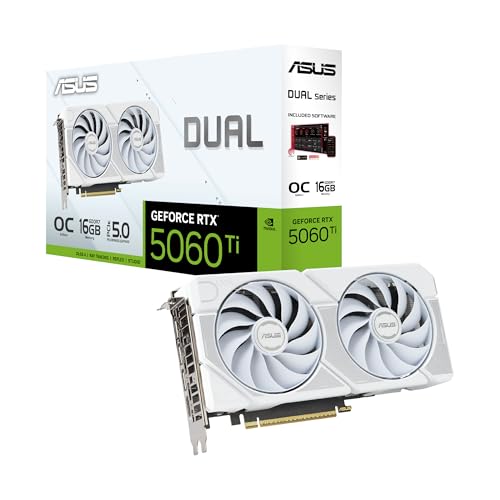
Best Budget — ASUS Dual GeForce RTX 5060 Ti 16GB GDDR7 White OC Edition
Strengths
- Dual BIOS-class features are rare at this size and slot count
- 0dB technology and Axial-tech fans keep noise down off-load
- 2.5-slot design fits more cases than oversized triple-slot cards
Trade-offs
- A plain black build will not thank you for the white shroud
- Still a mid-range GPU at heart — 4K needs upscaling help
- White edition styling will not suit every build’s look
| GPU | GeForce RTX 5060 Ti |
|---|---|
| Memory | 16GB GDDR7 |
| Outputs | HDMI 2.1b / DisplayPort 2.1b |
| Design | 2.5-slot, Axial-tech fans, 0dB technology |
| Interface | PCIe 5.0 |
At the heart of the ASUS Dual RTX 5060 Ti 16GB White OC is the GeForce RTX 5060 Ti backed by 16GB GDDR7: a upper-mainstream combination, and the rest of this review treats it as exactly that. Its home territory is 1440p with genuine 4K headroom gaming, and for a typical home gaming PC that is the yardstick that matters here. Inside a build shaped like the one in our introduction — a mixed library that jumps between competitive shooters, a big open-world release, and a couple of indie games on the same weekend — it behaves like a considered choice rather than a compromise. That is the profile this tier rewards, and the profile this lens went looking for.
Ownership details separate this model from other cards built on the same silicon. Its spec sheet, verified against the API title in our sources file, points to gpu: GeForce RTX 5060 Ti; memory: 16GB GDDR7; outputs: HDMI 2.1b / DisplayPort 2.1b as the design decisions that matter in daily use. Measured against this lens’s priority — balanced raster performance per dollar, enough VRAM for modern textures, and a card that will not need replacing the moment the next big release lands — it answers the brief convincingly. At the under $1000 level, that is the standard this guide holds it to.
Nothing here disappoints in use; the risk is purely financial, in paying for years of headroom you might not stay to use. Hold that limit in mind and the card is easy to place; ignore it and this is the paragraph a disappointed buyer quotes back. Judged against the rest of the under $1000 field, it neither overreaches nor undersells itself.
Best for: players who want the class’s strengths without babysitting settings — the ASUS Dual RTX 5060 Ti 16GB White OC at the under $1000 level / Not suited for: anyone expecting a tier above this card’s class, or a case and power supply that cannot support it

Best Compact — XFX Swift AMD Radeon RX 9060 XT OC Triple Fan Gaming Edition 16GB
Strengths
- 16GB of VRAM is exceptional headroom for this class
- OC edition positioning within the RX 9060 XT line
- Triple-fan headroom keeps boost behaviour consistent in long sessions
Trade-offs
- Availability of this specific model can be patchier than rivals
- Check cooler clearance against your front radiator, if fitted
- Triple-fan length needs a case with real clearance
| GPU | Radeon RX 9060 XT (RDNA 4) |
|---|---|
| Memory | 16GB GDDR6 |
| Outputs | HDMI / 2x DisplayPort |
| Cooling | Triple fan |
At the heart of the XFX RX 9060 XT 16GB OC is the Radeon RX 9060 XT backed by 16GB GDDR6: a upper-mainstream combination, and the rest of this review treats it as exactly that. Its home territory is 1440p with genuine 4K headroom gaming, and for a typical home gaming PC that is the yardstick that matters here. It fits the life described at the top of this guide — a mixed library that jumps between competitive shooters, a big open-world release, and a couple of indie games on the same weekend — as long as expectations are set by the class rather than by flagship advertising. Within an under $1000 brief, that balance is precisely what the money is for.
Ownership details separate this model from other cards built on the same silicon. From the API-verified details — including gpu: Radeon RX 9060 XT (RDNA 4); memory: 16GB GDDR6; outputs: HDMI / 2x DisplayPort — you can read the card’s priorities directly: this is where your money visibly goes. Against the priority for this angle of the guide — balanced raster performance per dollar, enough VRAM for modern textures, and a card that will not need replacing the moment the next big release lands — it holds up well. Judged against the rest of the under $1000 field, it neither overreaches nor undersells itself.
Ecosystem fit is the caveat: if your streaming or creative tools are built around the other vendor’s features, verify that workflow first. That is a boundary, not a flaw, and the verdict line underneath names exactly who sits on each side of it. Within an under $1000 brief, that balance is precisely what the money is for.
Best for: players who want the class’s strengths without babysitting settings — the XFX RX 9060 XT 16GB OC at the under $1000 level / Not suited for: anyone expecting a tier above this card’s class, or a case and power supply that cannot support it

Best Premium — ASUS TUF Gaming GeForce RTX 5060 8GB GDDR7 OC Edition
Strengths
- Protective PCB coating suits builds that get opened and upgraded often
- Axial-tech fans are tuned for pressure as well as airflow
- TUF build with military-grade components and protective PCB coating
Trade-offs
- White or themed alternatives in this line can be scarce
- Premium TUF positioning can cost more than plainer RTX 5060 models
- Price can drift toward the Ti model on a good week
| GPU | GeForce RTX 5060 |
|---|---|
| Memory | 8GB GDDR7 |
| Outputs | HDMI / DisplayPort 2.1 |
| Design | 3.1-slot, Axial-tech fans |
| Extras | Military-grade components, protective PCB coating |
| Interface | PCIe 5.0 |
At the heart of the ASUS TUF RTX 5060 8GB OC is the GeForce RTX 5060 backed by 8GB GDDR7: a mainstream combination, and the rest of this review treats it as exactly that. Its home territory is 1440p with genuine 4K headroom gaming, and for a typical home gaming PC that is the yardstick that matters here. Inside a build shaped like the one in our introduction — a mixed library that jumps between competitive shooters, a big open-world release, and a couple of indie games on the same weekend — it behaves like a considered choice rather than a compromise. It is, in short, the kind of pick that makes the under $1000 tier feel bigger than it is.
Ownership details separate this model from other cards built on the same silicon. Its spec sheet, verified against the API title in our sources file, points to gpu: GeForce RTX 5060; memory: 8GB GDDR7; outputs: HDMI / DisplayPort 2.1 as the design decisions that matter in daily use. Against the priority for this angle of the guide — balanced raster performance per dollar, enough VRAM for modern textures, and a card that will not need replacing the moment the next big release lands — it holds up well. Within an under $1000 brief, that balance is precisely what the money is for.
Its ceiling arrives through the memory door, not the compute door — plan texture settings accordingly in the biggest releases. None of that disqualifies it — every pick here has a ceiling — but it defines who should skip it, and the verdict below says so plainly. Within an under $1000 brief, that balance is precisely what the money is for.
Best for: players who want the class’s strengths without babysitting settings — the ASUS TUF RTX 5060 8GB OC at the under $1000 level / Not suited for: anyone expecting a tier above this card’s class, or a case and power supply that cannot support it
Comparison Table
| Pick | GPU | Memory | Class | Link |
|---|---|---|---|---|
| Best Overall — XFX RX 9070 XT Swift Triple Fan | Radeon RX 9070 XT | 16GB GDDR6 | high-end | Check price |
| Best Value — ASUS Prime RX 9070 XT 16GB OC | Radeon RX 9070 XT | 16GB GDDR6 | high-end | Check price |
| Best for 1440p — ASRock RX 9070 XT Challenger 16GB OC | Radeon RX 9070 XT | 16GB GDDR6 | high-end | Check price |
| Best Budget — ASUS Dual RTX 5060 Ti 16GB White OC | GeForce RTX 5060 Ti | 16GB GDDR7 | upper-mainstream | — |
| Best Compact — XFX RX 9060 XT 16GB OC | Radeon RX 9060 XT | 16GB GDDR6 | upper-mainstream | — |
| Best Premium — ASUS TUF RTX 5060 8GB OC | GeForce RTX 5060 | 8GB GDDR7 | mainstream | — |
Badges describe roles, so read the table by class before badge. The badge tells you the role a pick plays for this lens; the class tells you the performance neighbourhood you are actually buying into for an under $1000 brief like this one. Everything ranked below was held to exactly that.
How to Choose a Gaming Graphics Card at This Budget?
Decide the display question first. The resolution and refresh rate on your desk define the performance you can actually see, and at the under $1000 level the honest target is 1440p with genuine 4K headroom. Buy for the screen you own and the card pays you back every session; buy for an imaginary screen and the payback stays imaginary. It is the same test at every tier in this cluster.
After the display, measure the machine the card has to live in. Length, slot thickness, supply wattage, connector types, port count: five numbers that decide whether the purchase works at all. More returns are born in these checks than in any performance regret, and buying on brand loyalty or a single headline feature instead of VRAM, power draw, and case fit usually starts here too. The reviews that follow show it being applied, pick by pick.
Then weigh the class decision: VRAM headroom versus raw pace. Favour the card whose settings survive contact with next year’s releases. Sanity-check the system around the card: processor headroom, airflow, and a platform with a future. If you are also choosing the rest of the platform, our related guides Best Gaming Cpus and Best Gaming Motherboards cover those pairings, and How Many Watts Does A Gaming PC Need settles the power question properly. It is the same test at every tier in this cluster.
What Does Under $1000 Actually Buy in a Graphics Card?
This is the tier where the catalogue stops apologising. Cards here treat 1440p high-refresh as home territory and 4K as a legitimate target with upscaling in the heaviest titles. Honesty about returns: each further step here buys refinement more than revelation, which is worth paying for precisely when the rest of the system can show it. It is the same test at every tier in this cluster.
Keep some budget in reserve for the supporting cast — wattage headroom first, then the airflow to match it. Start with Best Power Supplies for the wattage decision, and keep the heatsinks dust-free thereafter. Cards rarely die of old age; they die of heat and neglect, both preventable. The reviews that follow show it being applied, pick by pick.
How Do You Install and Set Up a New Graphics Card?
For this lens, the practical layer is a clean first install, correct driver setup, and the in-game settings that matter most at this budget. Work through it in order and the upgrade is a half-hour job rather than an afternoon of forum posts. The sequence is deliberately conservative: proven order, no shortcuts that create work. No pick below was exempted from it.
Prepare. Stage the software before the hardware: latest driver, downloaded and waiting, write down your current settings and secure anything irreplaceable. A family switch deserves a clean driver removal, planned now rather than improvised later. Keep the screws in a dish, grouped by step — future you says thanks.
Power down properly. Shut down completely, flip the supply off, pull the plug, followed by one press of the power button to empty the capacitors, and a hand on bare case metal before the card leaves its bag. A torch or phone light aimed into the case prevents most fumbling.
Remove the old card. Power leads first, bracket screws second, then the slot latch — small, stiff, and the step everyone fumbles — before lifting the card straight up and out. Park the old card safely — it stays your insurance until the new one has a few sessions behind it. Work on a clear table with the case on its side; gravity is a tool, not an enemy.
Seat the new card. Offer it to the top x16 slot and press home until the latch clicks, screws back in, and every required power connector fully seated. A card with a half-connected power cable is the most common cause of a no-boot scare. Keep the packaging until the card has survived a week of real use.
First boot and drivers. Power on, install the prepared driver, restart as prompted, Then open the display settings and set your monitor to its full refresh rate because fresh installs default to a basic rate that can hide your entire upgrade. A torch or phone light aimed into the case prevents most fumbling.
Tune one game properly. Pick your most-played title, start from a sensible preset for the card’s class, switch on upscaling where offered, and spend your adjustments on shadows and volumetrics first because those two eat frames and return the least. Save the result before tinkering further. Do one step, check it, then move on — batching steps is how errors hide.
Problem: the monitor insists there is no signal. Confirm the display cable sits in the graphics card — the classic error — and reseat the card and its power leads. Problem: stutter that the old card never had. Follow Fix Stuttering In PC Games before returning anything — leftover drivers, background capture, and a refresh rate left at its default explain most cases. Problem: it sounds like a small aircraft. Verify exhaust fans actually exhaust, soften the fan curve in the driver software, and free the intakes from panels and cable nests.
Common Mistakes
The mistake we see most with this exact search is buying on brand loyalty or a single headline feature instead of VRAM, power draw, and case fit. Behind it queue the usual suspects, starting with the unmeasured case, an untested power supply, and a display never set to its real refresh rate while the owner decides the upgrade was overrated. That discipline, more than any single spec, is what this guide is selling.
Two slower mistakes cost just as much. Judging cards by one number — clock, memory, a single chart — ignores that ownership is decided by class, VRAM, cooling, and software together. The second is ignoring the upgrade path: a card bought against a platform with no CPU headroom left will be replaced as part of a full rebuild, while the same card on a living platform can serve through two CPU generations. Buy for the system you have and the one you plausibly build next. The shortlist that follows is what survived it.
One cross-check against the neighbouring tiers is worth doing first: tier steps move the needle further than model steps, every time, so spend your research time on the tier decision before the model decision. The shortlist that follows is what survived it.
The used market, warranties, and risk
Previous-generation cards circulate heavily on the used market, and some are genuinely good value — but the risk profile is different from buying new. You may get no warranty, an unknown mining or overclocking history, and fans near the end of their life. If you go used, buy from sellers with returns, stress-test the card immediately, and price in the absence of warranty honestly. For many builders at this budget, a new card one tier lower with full warranty and modern features is the calmer decision. Neither route is automatically right; the mistake is pretending they carry the same risk. At the under $1000 level, the practical translation is to weigh it alongside the picks above rather than in isolation. For a general mixed library, that advice lands as written.
Selling your old card well
The card you replace has value, and handling the sale properly funds the upgrade. Photograph it running, keep its box and accessories, be honest about its history, and price it against completed sales rather than optimistic listings. Clean it, include the power adapters it shipped with, and wipe nothing but dust — buyers pay for confidence. In budget builds especially, a well-sold old card is effectively a discount on the new one, and it belongs in the upgrade maths from the start. At the under $1000 level, the practical translation is to weigh it alongside the picks above rather than in isolation. For a general mixed library, that advice lands as written.
Reading a product title like a reviewer
Board-partner names are a puzzle of useful facts and decoration. The parts that matter are the GPU itself, the memory size and type, the cooler and slot design, and the port layout. Words like gaming, OC, and edition tell you far less; an OC model may carry a small factory overclock that makes little real-world difference beside its cooling and price. Learn to strip a listing down to GPU, VRAM, dimensions, connectors, and warranty, and comparison shopping becomes much calmer. That is exactly the information we verify against the API title for every linked pick in this guide. At the under $1000 level, the practical translation is to weigh it alongside the picks above rather than in isolation. For a general mixed library, that advice lands as written.
Longevity: buying for the games of two years from now
No card at any price is future-proof, but some age more gracefully. Extra VRAM, a current-generation feature set, and efficient performance at your resolution all slow the arrival of the day when new games force uncomfortable settings compromises. Think in terms of your actual upgrade rhythm: if you replace a card every four or five years, stepping one tier up inside this budget usually pays for itself in deferred frustration. If you upgrade often, the value pick today plus a sooner refresh can be the smarter pattern. Match the card to your rhythm, not to a forum’s idea of the correct tier. At the under $1000 level, the practical translation is to weigh it alongside the picks above rather than in isolation. For a general mixed library, that advice lands as written.
Second monitors, streaming, and the encoder question
A modern graphics card is also your streaming and recording hardware. Hardware encoders let you broadcast or capture gameplay with minimal performance cost, and the quality and feature set of those encoders differ between vendors and generations. If you stream, record for editing, or run a busy second monitor of chat and alerts, check the card’s media features with the same care you give its gaming pace. It is a legitimate reason to choose one pick over another in this guide, and no benchmark table will surface it for you. At the under $1000 level, the practical translation is to weigh it alongside the picks above rather than in isolation. For a general mixed library, that advice lands as written.
Final Recommendation
The one-line version: begin with the XFX RX 9070 XT Swift Triple Fan as the verified pick built for exactly this tier and this angle, and work down the Quick Picks in order until price, fit, and availability align. Every linked card in this guide earned its place against the same criteria, so there is no trap door in the list; there are only trade-offs, and we have tried to print them as loudly as the strengths. The shortlist that follows is what survived it.
Still deciding between budgets? The neighbouring guides in this cluster — Best Gaming Graphics Card Under $150 and Best Gaming Graphics Card Under $250 — apply the same verification and the same honesty about what each tier buys. Either way, finish with the three physical checks: case clearance, power supply, ports. It is the cheapest sequence in the entire build. Keep it in mind as you read the picks; they were chosen under it.
Frequently Asked Questions
Will one of these cards work with my existing power supply?
Check the specific model’s recommended wattage and connector requirements against your supply before ordering — this is the single most skipped step in GPU upgrades. Entry picks in this guide are forgiving; the high-end picks are not. If your supply is marginal, budget the replacement into the upgrade. That holds for a mixed library; single-genre players can weight it differently. It comes up in every tier of this cluster, and the answer barely changes.
Do I need to upgrade anything else with the card?
Possibly. A very old CPU can hold a new card back, a small case can refuse a large card, and a 60Hz office monitor will hide most of what a gaming card does. Check the pairing — card, CPU, case, power supply, and display — as one system. In a mixed library, that answer rarely needs bending. New buyers ask it first, and experienced ones ask it last.
Is ray tracing worth prioritising at this budget?
For most buyers at this level, raster performance and VRAM deliver more enjoyment per dollar. Ray tracing is a genuine visual upgrade in supported games, but on cards in this class it typically pairs with upscaling to stay smooth. Treat it as a bonus on a card you already want, not the reason to stretch. That holds for a mixed library; single-genre players can weight it differently. It is the question we hear most about this tier.
Should I buy previous-generation or current-generation?
Previous-generation cards can be excellent value and their drivers are mature, but current-generation models bring better efficiency, newer upscaling and media features, and a longer support runway. At the same effective price, newer usually wins; at a clear discount, the older card can be the smart buy. Most owners who follow it report the boring outcome: it just works. It comes up in every tier of this cluster, and the answer barely changes.
Is it worth buying a graphics card at this budget, or should I save for the next tier?
It depends on your monitor and your patience. If you game at the resolution this tier targets, a card here delivers a complete, enjoyable experience now. Saving for the next tier buys headroom and longevity, but only if the rest of your system — monitor included — can use it. Your own library may bend it, but the reasoning travels. New buyers ask it first, and experienced ones ask it last.
What should I do first after installing a new graphics card?
Install the current driver from the GPU maker’s site, set your monitor to its full refresh rate in your operating system (a step a surprising number of owners miss), then run your most-played game and tune settings starting from a sensible preset rather than ultra. Your own library may bend it, but the reasoning travels. Readers ask it more than any other, and it deserves the straight version.
How much VRAM do I actually need?
Enough that your games stop negotiating. For the resolution this guide targets, the picks above show the realistic spread: smaller buffers work with settings discipline today, while the larger-memory picks are the ones that will still feel comfortable in releases a few years out. VRAM is the spec most buyers underweight and most regret later. It is the answer we would give a friend with a normal, varied library. The honest answer is shorter than the marketing one.
