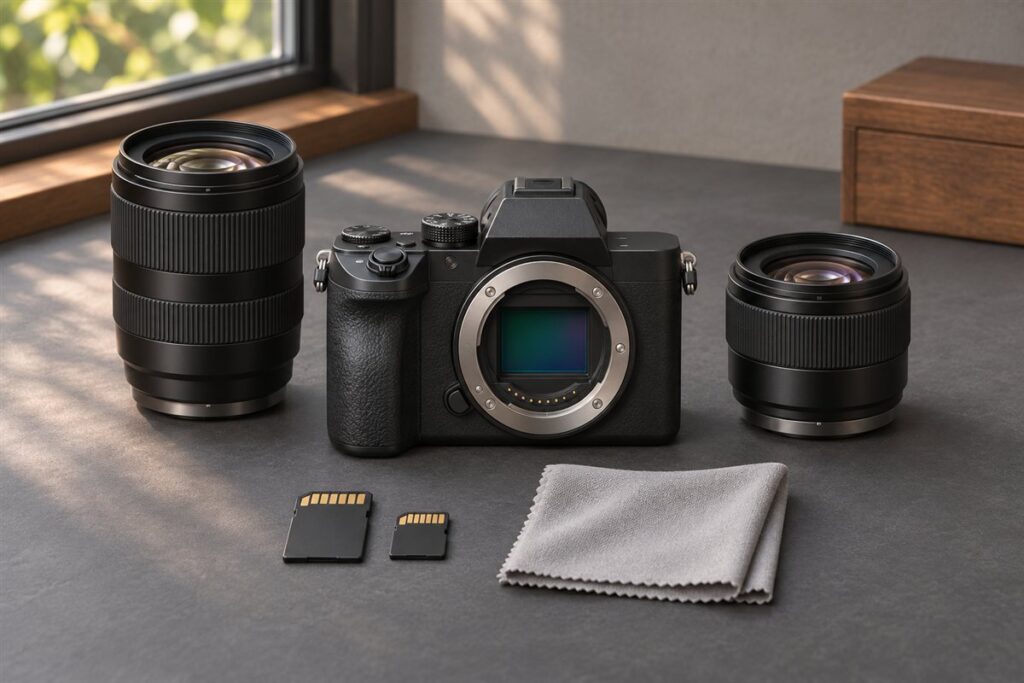
A DSLR uses a mirror and optical viewfinder, and it offers a huge range of lenses and accessories. We have not used these products ourselves, so this guide shows how to choose rather than claiming results with any specific body. Bodies differ in handling, autofocus and video features, so small details can change how enjoyable a camera is to use every day.
Decide what you plan to shoot, from family events to wildlife or video. That makes it much easier to weigh the six options below and avoid paying for features you will not use. Also consider the lenses you already own or can borrow, because glass often outlasts the body that carries it.
As an Amazon Associate we earn from qualifying purchases. Links on this site are affiliate links, and they do not change the information we give.
What to Look For
| Factor | Why it matters | What to check |
|---|---|---|
| Sensor size | Larger sensors collect more light and can give smoother low light images | Compare crop and full-frame formats and what you need |
| Autofocus | Good tracking helps with moving subjects | Check the number of focus points and how they cover the frame |
| Lens mount | The mount decides which lenses you can add later | Look at the range of lenses and used options available |
| Handling | A comfortable grip and clear controls make shooting easier | Hold the camera in a shop if possible |
| Viewfinder and screen | Bright finders and tilting screens help with composition | Check coverage, and whether the screen moves |
| Video features | Resolution and frame rate options matter if you film | Confirm what the maker lists, plus a microphone input |
| Battery and storage | Long battery life suits events and travel | Check card type and the maker stated shot count |
Setup and Care Tips
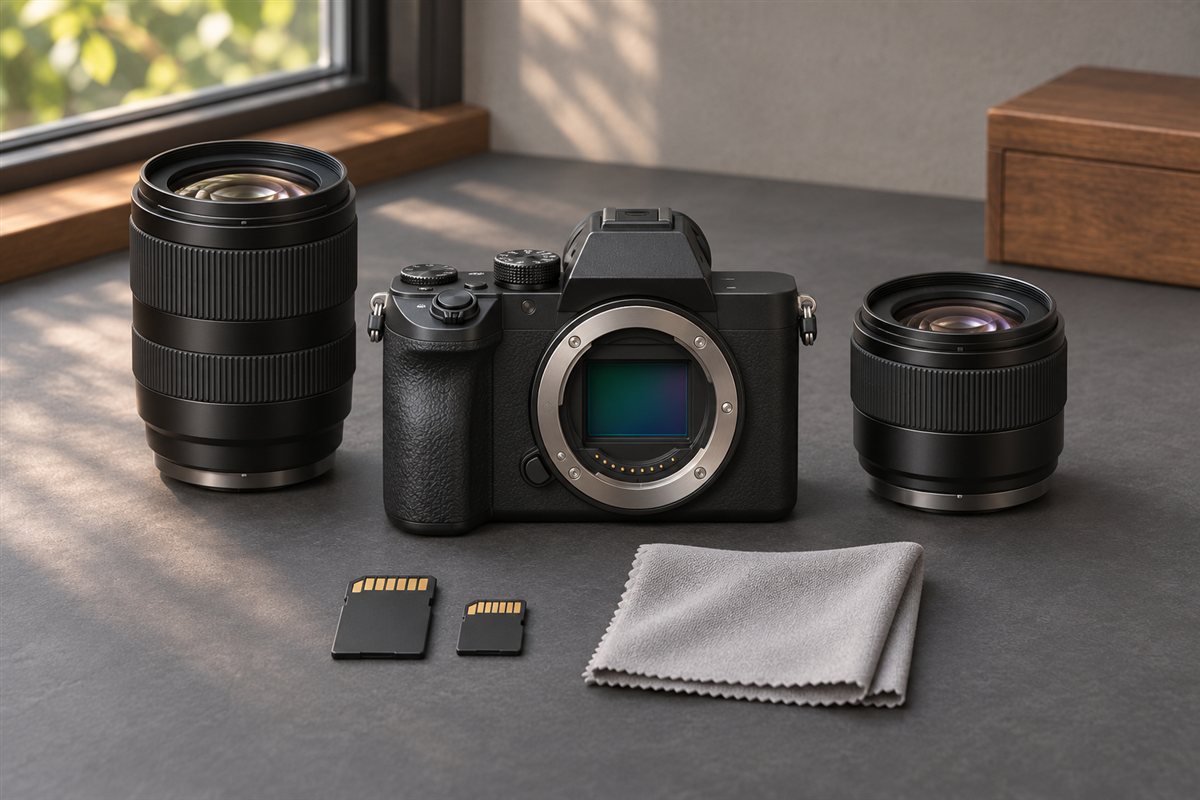
- Clean lens glass with a blower and a soft microfiber cloth.
- Keep the sensor covered by a lens or body cap when no lens is attached.
- Carry a spare battery and memory card on shoots.
- Learn exposure basics before relying on full manual mode.
- Store the camera in a dry bag with a moisture absorber.
Mistakes to Avoid
- Buying on megapixel count alone.
- Choosing a body without looking at the lens range.
- Ignoring weight, which matters on long days.
- Skipping a strap, bag and cards when planning the full kit.
- Changing lenses in dusty or windy spots.
FAQ
Are DSLRs still worth buying?
They remain capable, offer wide lens choice and often suit those who like optical viewfinders. Mirrorless cameras are another route, so consider both before you decide. Lens choice, a comfortable grip and reliable autofocus often matter more to the final photo than a small gain in resolution.
Do I need a full-frame DSLR?
Not necessarily. Smaller sensors are lighter and often lower in cost to build a kit around, while full-frame bodies suit low light and shallow depth of field. Lighter bodies are easier to carry all day, but larger ones can offer more buttons and longer battery life.
Questions to Ask Before You Buy
- Do you already own lenses that fit a particular mount?
- Do you prefer an optical viewfinder to an electronic one, particularly in bright light?
- How long should the battery last between charges on a typical outing?
- Is the grip comfortable with the lens sizes you expect to use?
- Will you shoot video often, or mainly still photographs?
- Is a used body in good condition a better fit for your plans?
Matching It to Your Use
Learning Photography
A DSLR with clear physical dials makes it easy to see how aperture, shutter speed, and sensitivity relate. Many learners find that direct controls make the lessons stick.
Sports and Wildlife
The optical finder shows the scene with no delay, and long battery life is useful on all day outings. Check the burst rate and buffer depth if you plan to shoot action.
Family and Travel
A smaller body and a versatile lens can handle everyday moments. Weight is the main factor, since a full kit can feel heavy by evening.
Feature Trade-offs
| Feature | Upside | Downside |
|---|---|---|
| Optical viewfinder | Clear, lag-free view | Does not show final exposure |
| Large lens library | Many options, new and used | Older designs may lack newer features |
| Long battery life | Fewer swaps in the field | Bodies can be bulkier |
| Phase detect autofocus | Fast through the viewfinder | Live view focus is slower on many models |
Who Should Skip It
If video is your main interest, or you want the most advanced subject tracking, other camera types may suit you better. DSLR video features and live view focus often lag behind more recent designs.
It may also not be right if you care about size and weight. The mirror box and prism add bulk, and a day of carrying a body with several lenses can be tiring.
Finally, think about the long term. Manufacturers have shifted attention elsewhere, so new lenses and accessories for this format may be limited. If you value a growing ecosystem, weigh that carefully. Browsing the used market can help you gauge how many lenses and accessories are still easy to find in your area.
The Short Version
Pick the sensor size, lens mount and handling that fit your subjects. Good glass and a body you enjoy holding matter more than any single spec. Check each listing for what is included. Compare sensor, lens range and handling side by side, and ignore extras you are unlikely to use.