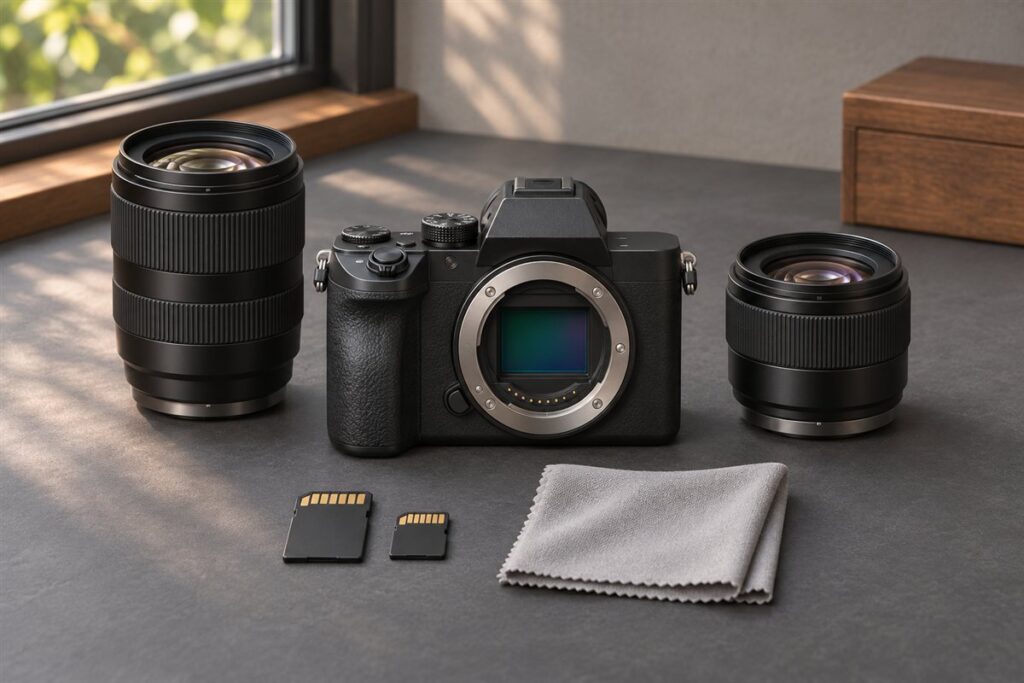
The main technical difference is that a DSLR uses a mirror and optical viewfinder, while a mirrorless camera sends the image from the sensor straight to an electronic display. That one change affects autofocus, body size, battery use and how lens lines are developed, and it helps you choose the right system for your shooting style.
How Each Design Works
In a DSLR, light passes through the lens and strikes a mirror that bounces it up into a prism, so you see the scene through a glass optical viewfinder. When you press the shutter, the mirror flips out of the way and the sensor records the picture.
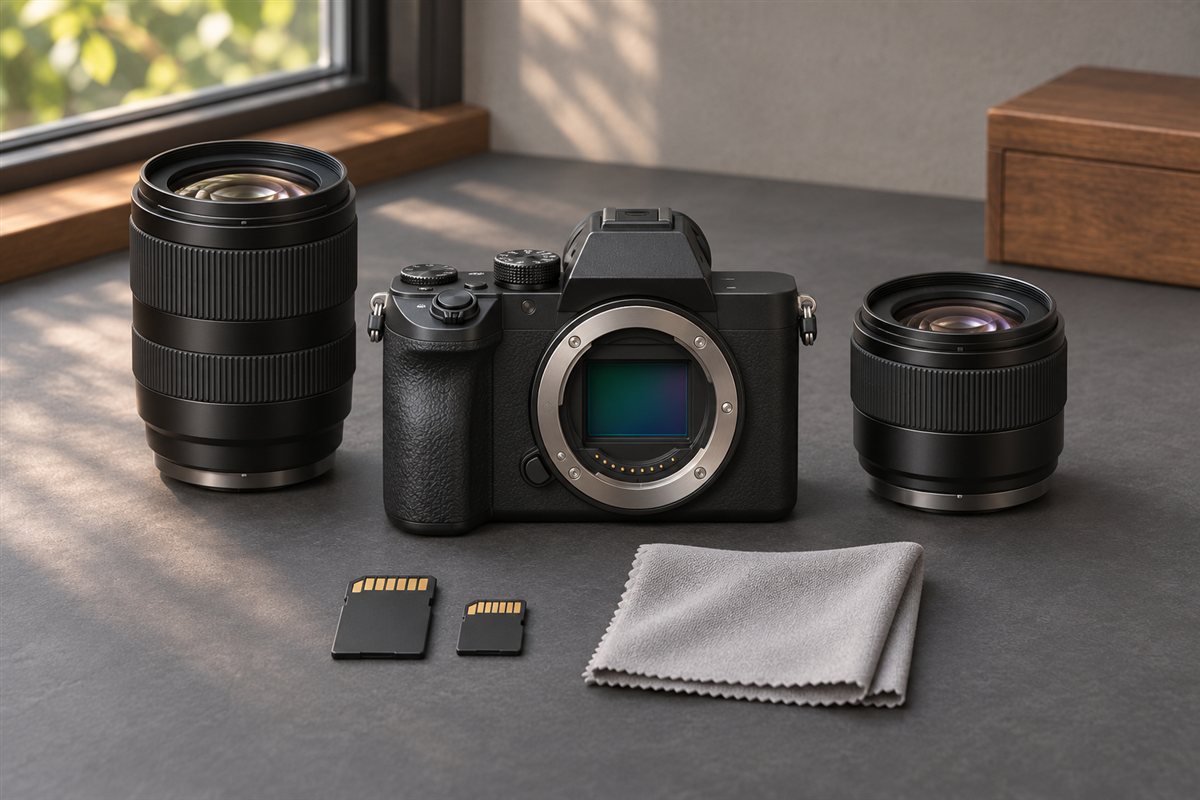
A mirrorless camera has no mirror box. Light reaches the sensor all the time, and the camera shows that live image on the rear screen or in an electronic viewfinder (EVF). Because the mirror and prism are gone, the body can be built smaller, although big lenses still add bulk.
Key Differences at a Glance
| Area | DSLR | Mirrorless |
|---|---|---|
| Viewfinder | Optical, no lag, no battery draw for the view | Electronic, shows exposure and effects before you shoot |
| Autofocus | Dedicated phase-detect module, often weaker in live view | Sensor-based focus points across much of the frame, with subject and eye detection on many models |
| Body size | Usually deeper and heavier | Usually slimmer, with a short distance from mount to sensor |
| Battery life | Generally longer per charge | Generally shorter because the sensor and screen stay active |
| Lens range | Huge used market for older lenses | New designs focus on this mount type |
What These Differences Mean in Practice
- Autofocus tracking: Mirrorless systems tend to follow faces, eyes and moving subjects more flexibly, since focus data comes from the imaging sensor itself.
- Exposure view: An EVF lets you see brightness, white balance and picture style adjustments before pressing the button, which cuts down on guesswork.
- Silent shooting: Many mirrorless bodies offer an electronic shutter with no mirror slap, handy at events, though fast-moving subjects can show distortion.
- Adapting lenses: The short mount-to-sensor distance of mirrorless makes it easy to fit older lenses through adapters.
Which One Should You Choose?
Choose mirrorless if you want the newest autofocus, video features, a compact kit for travel and a screen-based view of your final image. Most major makers now put their new development into mirrorless mounts, so lens and body options are growing there.
Choose a DSLR if you like an optical view, need long battery life on remote trips, or want to build a kit from the large supply of used bodies and lenses. A DSLR remains a capable tool for sports, wildlife and general work, and plenty of working photographers still use one.
Whichever way you lean, check the exact specifications and lens lineup for the model you are considering on the maker’s own page, since features vary a great deal from one camera to the next. We have not used these cameras ourselves, so treat this as general guidance.
Shutter Types and Rolling Distortion
Another technical difference that affects results is how the shutter works. A DSLR uses a mechanical shutter with curtains that travel across the sensor, preceded by the movement of the mirror. Many mirrorless cameras offer three modes: a mechanical shutter, an electronic first curtain that begins the exposure electronically and ends it with the mechanical curtain, and a fully electronic shutter with no moving parts. Each mode has strengths and drawbacks, and knowing them helps you choose the right setting.
The fully electronic shutter is silent, free of vibration and often allows faster burst rates. The drawback is that the sensor is read line by line, and fast-moving subjects or panning can show skewed verticals, often called rolling shutter distortion. Artificial lights can also cause banding because of flicker in some lighting. A mechanical shutter avoids these issues but makes noise and can add slight vibration. Electronic first curtain is a compromise that reduces vibration with few side effects, although it can affect the look of out-of-focus highlights at fast apertures in some cases.
- Use silent mode at ceremonies, wildlife sessions or theatres where noise matters, and avoid it for fast action.
- Switch to mechanical shutter under fluorescent or LED lighting if you see bands.
- Check the product page for flash sync limits in electronic mode, since they are often more restrictive.
A DSLR avoids most of these issues but has mirror slap and shutter noise that cannot be removed. When comparing models, read the specification pages for which shutter modes are offered and what limits apply to each, because they vary from camera to camera.
Autofocus Systems in More Detail
Autofocus is where the design difference is most visible. A DSLR sends light to a dedicated focus module in the body, which is fast and reliable through the optical viewfinder. The number and spread of focus points are limited to the area the module covers, which is usually clustered toward the centre of the frame. When you switch to live view on the rear screen, many DSLRs use a different focus method that is slower than the viewfinder system.
A mirrorless camera reads focus information from the imaging sensor, so focus points can cover most of the frame and the same system works for stills and video. Many models add recognition for faces, eyes, animals and vehicles. This helps when subjects move off-centre. It also helps video, where smooth focus transitions matter. Exact performance depends on the camera generation and the lens, so check the specification and independent reviews.
- Learn the camera’s focus modes, such as single, continuous and tracking, and which is best for your subjects.
- Use a custom button to switch between wide and small focus areas quickly.
- Check which lenses are fast and quiet at focusing, since motor types influence video quality.
A DSLR can still be reliable for action when paired with a good lens and practised technique, particularly for photographers who learned its focus system. A mirrorless camera gives more help to beginners, while experienced shooters may value the flexibility. When you test a camera, track a moving subject such as a passing cyclist or a pet to see how well the focus keeps up.
Viewfinder Experience: Optical Versus Electronic
The viewfinder is a personal choice, and it often decides which camera feels right. An optical viewfinder shows the real scene with no delay, no power use and a natural look in bright light. Some photographers find it easier to follow action through it, because there is no refresh rate or lag, and it works even when the battery is flat.
An electronic viewfinder is a small screen that shows the image the sensor sees. Its advantage is that it can preview exposure, white balance, picture style and focus aids, so you see something close to the final result before you press the shutter. It can magnify the view for manual focusing, show a level and a histogram, and display information within the frame. In dark conditions the view can be brightened, which helps composition at night.
- Check the refresh rate and resolution on the product page, and try the viewfinder in person if possible.
- Look for blackout during burst shooting, which varies between models.
- Consider eye relief if you wear glasses.
- Check battery use, as an electronic viewfinder draws power continuously.
Some people take time to adapt to an electronic finder, especially in very bright or very dark scenes, or when following fast movement. Others prefer it immediately because it removes guesswork. If you can, spend a few minutes at a store with both types before deciding, since this is a matter of comfort as much as technology.
Lens Mounts, Adapters and the Used Market
The camera body is only half the investment, so think about lenses. A DSLR system benefits from a long history of lenses, and the used market offers many options at lower prices. Older lenses are often well-built and perform strongly, though condition varies, and some lack modern features such as quiet motors or the latest stabilisation.
Mirrorless mounts typically have a shorter distance from the mount to the sensor, which allows optical designs that were harder with a mirror box. New lens releases from major makers now focus on mirrorless mounts, so the newest designs are often found there. Third-party lens makers also support many mirrorless mounts, although not all, so check what is available for the body you are considering.
- Confirm that an adapter exists for the lenses you already own, and read about its limitations.
- Check whether autofocus, aperture control and stabilisation work through the adapter.
- Compare used prices for lenses in both systems.
- Think about size and weight, since adapted lenses add length.
If you already own DSLR lenses, a mirrorless body with a good adapter can extend their life while you add native lenses over time. If you are starting fresh, look at the lens lineup you will want in two or three years and choose the mount that offers it, without assuming that one system always has a better selection.
Video Features and Heat Handling
Video is another area where the designs differ. Mirrorless cameras were built around live sensor readout, so video modes tend to be more complete, with continuous autofocus, tracking, frame rate options and exposure aids such as zebras and waveforms. Many offer stabilisation in the body, and some record in higher quality formats. DSLRs introduced video to many photographers, but their video autofocus and tools are often more limited, especially in older models.
Whatever you choose, read the video specifications carefully. Look at the maximum resolution and frame rates, any recording time limits, whether there is a microphone and headphone port, and the type of cards needed. Heat can limit recording on small bodies, and some cameras stop when they warm up. The manual or independent reviews are the best place to find out how a particular camera behaves during long takes.
- Check for a flip-out screen if you film yourself.
- Think about rolling shutter in video, which varies between models.
- Consider an external microphone, since the built-in microphone is rarely the best option.
- Budget for fast cards if you want high-quality recording formats.
If video is a main use, favour a mirrorless camera built with it in mind. If it is an occasional extra, either design can handle casual clips, and your priorities can go to handling and lens choice instead.
FAQ
Is mirrorless always better than a DSLR?
No. Mirrorless leads in autofocus features and compactness, but a DSLR can still deliver excellent images, and its battery life and used lens market are real advantages.
Can I use my DSLR lenses on a mirrorless camera?
Often yes. Many makers offer a mount adapter that lets DSLR lenses fit their mirrorless bodies, though autofocus behavior can vary, so confirm compatibility for your exact lens.
Which one is better for beginners?
Mirrorless often helps beginners with live previews and focus assistance, while a DSLR offers simplicity and a bright optical view. Handle both, and consider your budget and lens needs.
Do mirrorless cameras have worse battery life?
Generally they use more power because the sensor and viewfinder are always active. Plan for spare batteries, and check the maker's battery figures.
Is silent shooting always better?
Not for fast action, since an electronic shutter can distort moving subjects. Use it where noise matters, and switch to mechanical when subjects move quickly.
Are DSLRs obsolete?
No, they still take excellent photos, and many remain in professional use. The main difference is that new development is concentrated on mirrorless systems.
Does a mirrorless camera have a dust problem with no mirror?
The sensor is exposed when the lens is off, so change lenses carefully. Many bodies have sensor cleaning systems, and a cleaning kit is useful for both designs.
Can I use an optical viewfinder-style experience on mirrorless?
Some cameras have high-quality electronic viewfinders that feel close, but they are still screens. Try them in person to see if you are comfortable.
Should I wait for a newer model?
There is always a newer model, so buy when your needs justify it. Check whether the body you want is still supported with firmware and lenses.
The Short Version
Mirrorless drops the mirror for an electronic view, giving smaller bodies and modern autofocus, while DSLRs keep the optical viewfinder and longer battery life. Choose mirrorless for new features and portability, and a DSLR for an optical view and a bargain-friendly used lens market.