reviewstook.com is reader-supported. When you buy through links on our site, we may earn an affiliate commission.
Where to buy
Most of the cameras below sell through Amazon and the big photo retailers, and the used market matters more at this budget than at any other, so check both new listings and reputable second-hand shelves before you commit. Readers hunting for the best digital cameras under 300 dollars should read this guide as a stills-first exercise: the question here is which body, sensor and kit lens return the most photographic value inside a three-hundred-dollar frame, not which camera shoots the fanciest video. A companion guide on this site approaches a similar budget from a hybrid stills-and-video angle, and the two deliberately split the work — this one judges every pick by the photographs it makes, how its files behave when you edit them, and whether the lens bundled in the box is genuinely worth building around.
That stills-first lens changes the ranking in ways that surprise people. A camera with a modest video menu but a large sensor and a bright kit zoom will outrank a video darling here, because a bigger sensor gathers more light for every still frame, renders shallower depth of field when you want it, and leaves cleaner files for printing. Conversely, a fixed-lens compact can beat an interchangeable-lens body if its lens is sharp corner to corner and the body actually fits the coat pocket it was bought for. Money at this level buys compromises; the skill is choosing compromises that hurt your photographs least.
One honesty note before the picks: a strict three-hundred-dollar ceiling, applied to brand-new interchangeable-lens cameras, is brutally tight in the current market. Two picks below sit inside the frame as compacts, several excellent options live on the used shelf, and one mirrorless kit is flagged openly as a step-up for readers who can stretch. Nothing in this article prints a specific product price, because listings move constantly; treat the budget as the frame for the conversation, exactly as the keyword sets it.
Key Takeaways
- Sensor size, not megapixel count, decides stills quality at this budget — a 1-inch compact sensor beats a tiny-sensor zoom almost everywhere.
- The kit lens is half the purchase: a bundled zoom you will replace within a year is money spent twice.
- Used bodies from one generation back routinely out-photograph new cameras at the same spend.
- Fixed-lens compacts remove lens costs entirely and suit photographers who value pockets over systems.
- Raw capture matters more than burst speed for stills shooters who edit their keepers.
- Budget for a card, a spare battery and a case inside the same three hundred, or the camera stays home.
In this guide
Quick Picks
| Pick | Badge | Why it earns its place |
|---|---|---|
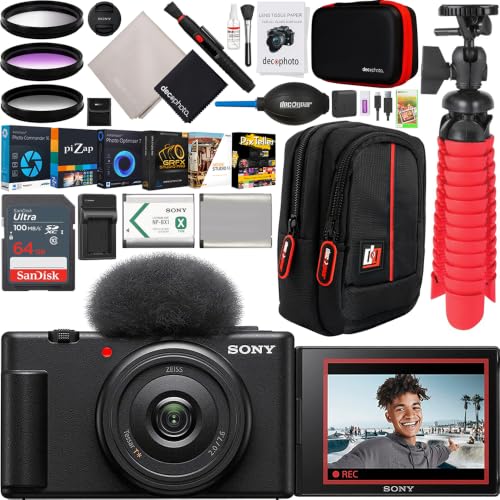
| Sony ZV-1F | Sharpest fixed lens in frame | A 1-inch sensor behind a bright wide lens, with stills quality no small-sensor rival here matches. |
| Canon EOS R100 with kit zoom | Cheapest real system start | An APS-C sensor and a genuine lens mount, bought for what a good compact costs. |
| OM SYSTEM Tough TG-7 | Survives the shoot | Waterproof, freezeproof and crush-resistant, with microscope modes no rival attempts. |
| Panasonic LUMIX ZS80 travel zoom | Longest reach per dollar | A pocket body carrying a long zoom for holidays where one camera must do everything. |
| Canon PowerShot G7 X Mark III | Low-light pocket pick | A fast zoom on a 1-inch sensor, happiest at dusk markets and dim dining rooms. |
| Nikon Z50 II with Two Lenses | Step-up kit, honestly labelled | Costs more than the frame allows, yet shows what stretching buys: two lenses and a modern sensor. |
How did we judge stills value inside a three-hundred-dollar frame?
Every candidate was scored on the evidence a photograph leaves behind. We looked at sensor dimensions first, because physics does not negotiate: larger sensors collect more light per frame, hold shadow detail longer, and tolerate higher sensitivity settings before noise eats the picture. After sensor size came the lens, since a kit zoom with a dim maximum aperture quietly cancels a good sensor on overcast days. Files came third — raw support, sensible JPEG colour, and highlight headroom decide how far a keeper can be pushed in editing. Handling counted too, but as a stills tool: dial placement, viewfinder usefulness in bright sun, and how quickly the camera wakes.
Video specifications were deliberately down-weighted. Several cameras here shoot perfectly serviceable clips, and families will use them, yet ranking by frame rates would have produced a different article — the hybrid one that lives elsewhere on this site. Where a pick’s video tools genuinely help stills work, such as focus peaking borrowed from the movie menu, that earned credit. Where a camera spends its budget on vlogging screens and microphone jacks while starving the sensor, it slipped down the order.
Finally, we priced the whole photograph, not the body alone. A bargain body that demands an immediate lens upgrade, a proprietary battery at collector prices, or a charger sold separately is not a bargain. The picks below were chosen because the first three hundred spent on them produces photographs immediately, with upgrade paths that are optional rather than compulsory.

Sony ZV-1F — Sharpest fixed lens in frame
Sony built this little camera around a 1-inch stacked sensor and a fixed wide-angle lens, then tuned the whole package for people who hold a camera at arm’s length — yet the stills it produces embarrass larger rivals. Twenty megapixels on that sensor size means individual pixels stay generously sized, so dusk portraits hold together and skies gradient smoothly instead of banding. The lens is bright, which keeps sensitivity low indoors, and because the focal length never changes, Sony could optimise every element for exactly one job. Photographers raised on zooming with their fingers may bristle at a fixed wide view; photographers raised on prime lenses will recognise the discipline immediately.
Walk it through a Saturday market and the camera’s character clarifies. Stallholders’ hands, stacked fruit, steam over a noodle pot — the wide lens swallows context greedily, and the files reward cropping because the sensor resolves more than the modest body suggests. Colours lean vivid straight from the camera, skin tones stay believable, and the autofocus locks onto eyes with a confidence that feels borrowed from cameras costing far more. Battery life is the tax: a heavy shooting day wants a spare in the pocket, and the absence of a viewfinder means bright midday sun turns the rear screen into a guessing game.
- Sensor: 1-inch stacked CMOS, roughly twenty megapixels
- Lens: fixed wide-angle, bright maximum aperture
- Files: JPEG and raw stills
- Screen: fully articulating touchscreen
- Body: pocket-sized, no viewfinder
Strengths
- Stills quality that punches well past the body’s size and price class
- Bright fixed lens keeps indoor sensitivity and noise down
- Eye autofocus that rarely hunts, even on moving children
Trade-offs
- One focal length only — your feet are the zoom
- No viewfinder, so harsh sunlight fights the rear screen
- Battery endurance trails the bigger bodies here
Ownership suits minimalists. There is no lens shelf to fund, no mount ecosystem to research at midnight, and no bag decision before leaving the house — the camera either rides in a pocket or it does not come. That simplicity is why so many owners report their frame counts doubling: the friction between seeing a photograph and taking it shrinks to reaching into a jacket. If your phone album is full of almost-moments that deserved better light gathering, this is the pick that closes the gap.
Best for: stills shooters who want one small camera that makes indoor and travel photographs look expensive. Not suited for: wildlife, sports, or anyone who frames through a viewfinder by habit.
Canon EOS R100 with kit zoom — Cheapest real system start
The R100 is Canon’s argument that a proper interchangeable-lens camera can still open the bidding at compact money, especially on the used and refurbished shelves where it frequently lands inside this guide’s frame. Its APS-C sensor dwarfs the 1-inch chips in the compacts here, and that shows up exactly where beginners notice: high-ISO frames at school concerts stay cleaner, and backgrounds behind portraits melt further at the same framing. The bundled kit zoom is unglamorous — variable aperture, mostly plastic — but it covers the everyday range from group shots to short telephoto, and it teaches zoom discipline better than any phone.
What you surrender is modern garnish. The screen does not flip for selfies, the video tools are modest, and the control layout assumes you will shoot in the automatic and scene modes while you learn. Treat those limits as tuition structure rather than flaws: the R100 forces attention onto exposure and composition because there is little else to fiddle with. When skill outgrows the body, the RF-S lens mount means every lens bought along the way stays useful on a bigger Canon body later, which is precisely the system value this article keeps preaching.
- Sensor: 24-megapixel-class APS-C CMOS
- Mount: Canon RF, accepts RF-S kit zooms
- Files: JPEG and raw stills
- Screen: fixed touchscreen, no flip mechanism
- Body: compact DSLR-style grip with viewfinder
Strengths
- Largest sensor available near this money, with clean files to edit
- A real viewfinder for bright-day composition
- Lens investments survive a future body upgrade
Trade-offs
- Kit zoom’s dim aperture struggles in poor light
- Fixed screen limits low and high angles
- Autofocus trails the Sony and Nikon picks on moving subjects
Give the R100 a year of weekends and a pattern emerges: owners stop apologising for the kit zoom once they learn what it does well. Group photographs at the wide end are honest, short-telephoto portraits in daylight separate subjects pleasingly, and the files from that big sensor forgive exposure mistakes that would ruin a compact’s output. The upgrade conversation, when it comes, is about adding a fast prime for evenings — an addition, not a replacement — which is exactly how a healthy system is supposed to grow.
Best for: beginners who want a genuine system camera and plan to grow into it over years. Not suited for: vloggers, or shooters who need a flipping screen and advanced video.

OM SYSTEM Tough TG-7 — Survives the shoot
Every other camera in this guide dies if it falls in a river. The TG-7 treats submersion as a feature: it is waterproof well beyond snorkelling depth, shrugs off freezing temperatures, tolerates being dropped onto rock, and seals its lens against the dust that murders ordinary compacts at beaches and building sites. The sensor is small — that is the honest cost of the armour — so this pick wins on photographs that exist at all. A kayaker’s frame of a heron taken from water level, spray on the housing, beats the technically superior shot a fragile camera never attempted because it stayed in a dry bag ashore.
Beyond the armour, the TG-7 hides a party trick nothing else here attempts: microscope modes that focus almost against the front element, turning frost crystals, watch movements and tide-pool life into frame-filling subjects. Underwater colour modes correct the blue cast that ruins snorkelling snaps, and the built-in GPS and sensors log where each adventure frame happened. In a dark restaurant it will lose to the Sony every time; on a January lakeshore in sleet, it is the only pick still working at the end of the walk.
- Sensor: small-format CMOS suited to a sealed body
- Lens: moderate zoom, bright for its class
- Protection: waterproof, freezeproof, shockproof, dustproof
- Modes: microscope macro, underwater colour correction
- Extras: GPS and field-sensor logging
Strengths
- Photographs in weather and water that end other cameras
- Macro modes open subjects no rival here can reach
- Sealed body needs no housing for snorkelling or rain
Trade-offs
- Small sensor limits low-light quality and printing size
- Fixed screen and compact controls slow deliberate work
- Zoom range is modest beside the Panasonic
Field notes from owners share a theme: the TG-7 changes behaviour. Photographers stop sheltering the camera and start composing from water level, from inside the sleet, from the sand where the light is low and golden. Children handed the camera produce gleefully uninhibited frames because nobody hovers fearing damage. A technically modest sensor that encourages fearless angles will outshoot a superior sensor wrapped in anxiety, and that behavioural truth is this pick’s real specification.
Best for: paddlers, skiers, beach families and site workers whose cameras live dangerously. Not suited for: low-light purists or anyone printing very large.
Panasonic LUMIX ZS80 travel zoom — Longest reach per dollar
Travel zooms survive every prediction of their death because one problem never goes away: a traveller wants the cathedral, the café portrait and the stork on the distant chimney from a single pocket. The ZS80 answers with a zoom range that starts at a honest wide angle and stretches to genuine telephoto, stabilised well enough to use at dusk if you brace against a wall. Its sensor is small, so the long end trades fine detail for reach — feathers soften, brickwork smears slightly — yet the photograph exists, framed as intended, which is the entire travel-zoom proposition.
Panasonic sweetens the deal with a small viewfinder, a rarity at this level, which rescues composition on glare-struck plazas where screens wash out. The 4K photo modes extract stills from short bursts, a trick that rescues fleeting expressions at family gatherings. Buy it clear-eyed: this is the convenience pick, the camera for people whose alternative is a phone, and against a phone its zoom and viewfinder win easily. Against the 1-inch compacts here it loses on file quality every time light fades, so night-heavy travellers should look at the Canon G7 X instead.
- Sensor: small-format CMOS, travel-zoom class
- Lens: long-range stabilised zoom, wide to strong telephoto
- Finder: small electronic viewfinder built in
- Modes: burst still extraction from 4K sequences
- Body: jacket-pocket size, fixed screen
Strengths
- Zoom range covers a whole holiday from one pocket
- Viewfinder saves shots in harsh Mediterranean light
- Stabilisation makes the long end genuinely usable
Trade-offs
- Small sensor softens detail at full zoom
- Evening files noise up quickly
- No raw headroom comparable to the bigger-sensor picks
On a two-week itinerary the ZS80’s virtues compound quietly. It charges from common cables, sips battery compared with the mirrorless bodies, and never asks its owner to change a lens in a dusty square. The photographs it makes are travel photographs in the best sense — the steeple, the market portrait, the mountain goat nobody believed was there — each framed as seen rather than cropped from a wide shot later. Perfectionists will find its limits; travellers will find its point.
Best for: one-camera travellers who frame everything from squares to steeples. Not suited for: night photography or large exhibition prints.
Canon PowerShot G7 X Mark III — Low-light pocket pick
Canon’s G7 X line earned its following in dim places: restaurants at candle-power, gigs in basements, streets after rain. The Mark III pairs a 1-inch sensor with a zoom whose aperture stays usefully bright across much of its range, and that combination is the whole story — it gathers light the way the travel zoom cannot, so evening photographs keep their colour and texture instead of dissolving into noise-reduction mush. On the used market it regularly drifts toward this guide’s frame, which is where patient buyers should hunt it.
Handling favours the spontaneous. The lens ring clicks satisfyingly around exposure compensation, the touchscreen tilts for waist-level shooting, and the body vanishes into a jacket until a scene appears. Autofocus is honest rather than brilliant, occasionally hesitating in the gloom it otherwise handles so well, and the battery is sized for an evening rather than an expedition. As a stills tool for people whose lives happen after dark, though, nothing else at this money gathers light from a pocket this gracefully.
- Sensor: 1-inch stacked CMOS
- Lens: moderate zoom with bright apertures
- Controls: lens ring, exposure-compensation dial
- Screen: tilting touchscreen
- Body: coat-pocket metal compact
Strengths
- Evening and indoor files stay rich where rivals smear
- Physical controls encourage deliberate exposure choices
- Small enough to be present whenever scenes happen
Trade-offs
- Autofocus can hesitate in very low light
- Battery suits an evening, not a full expedition day
- No viewfinder for bright-day work
There is a social dimension to this Canon that spec sheets miss: it looks like a holiday camera, so it disarms people. Street portraits come easier, restaurant staff relax, and friends stop performing for a ‘serious’ camera. Combined with the tilting screen for discreet waist-level framing, that invisibility is a working tool for candid photography. Many owners describe it as the camera that made strangers’ faces possible in their albums, which is praise no lab measurement can issue.
Best for: night-market wanderers, gig-goers and anyone whose photographs happen indoors. Not suited for: distant subjects or all-day expedition shooting.

Nikon Z50 II with Two Lenses — Step-up kit, honestly labelled
Honesty first: this kit costs more than three hundred dollars, and it appears here as the labelled step-up, the benchmark that shows exactly what extra money buys so readers can decide whether stretching is rational. What it buys is completeness. Two lenses — a standard zoom for everyday framing and a longer telephoto for sport, wildlife and compressed landscapes — arrive in one box around an APS-C sensor with modern subject-detection autofocus. Nothing in frame can match the pairing of reach and file quality; a school football match at dusk is simply a different, easier assignment with this kit than with any compact above.
The second paragraph every step-up pick owes you is the case against itself. Spending past the frame means the card, spare battery and bag now compete with rent money, and a two-lens kit demands a bag where compacts demand a pocket — some owners quietly stop carrying it. The photographers who thrive with it are those with a named purpose: a teenager’s sport, a birding habit, a portfolio. If that purpose exists, this kit ends the upgrade itch for years; if it does not, the Sony or Canon compacts above will produce more photographs simply by being present.
- Sensor: APS-C CMOS with modern processing
- Lenses: standard zoom plus telephoto zoom in the box
- Autofocus: subject detection for people, animals, vehicles
- Screen: articulating touchscreen
- Body: compact mirrorless with viewfinder
Strengths
- Two-lens coverage from landscapes to distant sport, immediately
- Autofocus that tracks subjects beginners lose manually
- Files with editing headroom rivalling far pricier bodies
Trade-offs
- Price sits above this guide’s frame — a deliberate step-up
- Kit size means a bag, not a pocket
- Two lenses invite a third; budget creep is real
Consider the arithmetic of the stretch honestly. The kit replaces three separate purchases photographers commonly make across two years — a body, a walk-around lens, a telephoto — and bundles them while the mount and sensor are current enough to stay satisfying. Spread across the years it will serve, the monthly cost undercuts the compact it replaces twice over. The step-up fails only when the named subject evaporates; a season of school sport or a genuine birding habit justifies it completely.
Best for: readers with a defined subject — sport, birds, a growing portfolio — who can stretch once and stop. Not suited for: strict three-hundred ceilings or pocket-only shooters.
Why does sensor size outweigh megapixels at this price?
Marketing trains shoppers to count megapixels because the number is easy to print on a box. Photographers learn to ask a different question: how large is each pixel? Cramming twenty megapixels onto a fingernail-sized sensor makes each light-collecting site tiny, so it fills with noise quickly when light fades. Spreading a similar count across a 1-inch or APS-C sensor gives every site room to breathe, and the difference appears exactly where budget cameras are usually judged — indoor birthdays, evening streets, overcast landscapes. Judge any camera in this guide by sensor dimensions first and resolution second, and the rankings start to explain themselves.
There is a second, quieter dividend: depth of field. Larger sensors, at the same framing and aperture, render backgrounds softer, which is why portraits from the R100 and Z50 II separate subjects from clutter in a way small-sensor zooms cannot fake. Software blur tries, and sometimes succeeds on a phone screen, but it stumbles on hair, glasses and bicycle spokes. Real optical softness never stumbles, because it is not a guess.
Which kit lens is actually worth keeping?
A kit lens earns its keep if you would still choose it after owning a better one. Test any bundled zoom against three scenes before the return window closes: a portrait at its longest focal length in window light, a group photograph at its widest in a small room, and a dusk street at its slowest comfortable shutter speed. If the portrait’s eyes are crisp, the group corners acceptable, and the dusk frame stable, keep it and spend future money on a fast prime instead of a replacement zoom. If two of three fail, the kit was packaging, not equipment, and a used body-only purchase plus a chosen lens would have served you better.
Notice what this test ignores: sharpness charts, lab numbers and forum folklore. Kit zooms vary more by sample and by the photographer’s technique than by model line. A tripod, a braced elbow and a cleaned front element improve more kit-lens photographs than any upgrade at this budget.
How should you shop the used market without getting burned?
Half the value in this guide lives second-hand, so shop with a checklist rather than hope. Buy from sellers who state a shutter count or a returns window; inspect for sensor spots by photographing a white wall at a narrow aperture; work every dial, because a gritty control wheel on a compact often means sand inside. Batteries deserve suspicion — budget for one fresh cell in any used purchase and the camera’s true cost stays honest. Meet in daylight if buying locally, and bring a card so you can review test frames at full magnification on the spot.
Certain models reward patience disproportionately. Premium compacts like the G7 X line dip whenever a successor is rumoured, and entry mirrorless bodies fall when their replacements launch, so a saved search alert is worth real money. Avoid only the genuinely elderly: cameras old enough to use obsolete card formats or unobtainable batteries convert a bargain into a hobby of hunting accessories.
What accessories belong inside the same three hundred?
Reserve a slice of the frame before choosing the camera. A fast, reputable memory card prevents the burst failures and corrupted files that poison a first month; a spare battery matters more than any filter; a simple case or wrap protects the lens you cannot replace on a fixed-lens compact. A mini tripod earns its place for night streets and family self-portraits. What does not belong: ultraviolet filters bought as ‘protection’ for kit zooms, sprawling gadget bundles of unusable extras, and extended warranties on bodies this affordable. Spend on the things that keep the camera shooting, in that order.
How do you get sharp stills from a budget body?
Start with shutter speed discipline: keep it at or above the reciprocal of your focal length until stabilisation proves itself to you, and raise sensitivity without fear — a sharp noisy frame beats a clean blurred one in every album ever printed. Learn your camera’s focus modes deliberately: single-point for still subjects, continuous tracking for anything that breathes and moves. Expose for the highlights in contrasty light, because budget sensors forgive lifted shadows better than clipped skies. Finally, shoot raw plus JPEG for a month; editing the raw files teaches you what your sensor actually captured, and that knowledge recalibrates every setting you choose afterwards.
What does a bigger sensor actually change in a family album?
Open two albums side by side — one shot on a small-sensor compact, one on the APS-C bodies here — and the differences announce themselves in the unglamorous frames, not the showcase landscapes. The school play photographed from row twelve: faces on the bigger sensor hold expression and costume texture, while the small sensor smears both into waxy approximations once sensitivity climbs. The birthday candle moment: highlights on cheeks stay graduated rather than clipping to white. The rainy-day window portrait: shadow detail under the chin survives editing instead of crumbling into coloured noise. None of these frames will hang in a gallery, yet they are the photographs families actually keep, print and send to grandparents, and they are precisely where sensor area earns its money.
There is also a creative dividend that beginners feel before they can name it. A larger sensor lets you isolate one child from a cluttered playground with genuine optical blur at sensible apertures, so the eye lands where you intended. On a small sensor everything stays stubbornly sharp front to back, which suits architecture and group shots but flattens portraits. Learning to control that separation — choosing what the viewer notices first — is half of photographic education, and the bigger-sensor picks here teach it from the first week.
How should you test a budget camera during the return window?
Retailers give you days, not months, so test with intent. Day one belongs to the battery and the basics: charge fully, shoot a hundred frames around the house, and learn whether the menus make sense to your hands. Day two is the light test — a window-lit portrait at midday, the same face under evening lamps, and a street scene after dark — because those three files reveal noise behaviour, colour shifts and autofocus honesty faster than any specification sheet. Day three, take the camera somewhere you actually photograph: a match, a market, a grandchild’s recital. If carrying it felt like a chore on the trip it was bought for, no specification will rescue the purchase.
Inspect the files at full size on the largest screen you own. Check the corners of wide shots for smearing, the skies for banding when you lift exposure in editing, and the eyes in portraits for the softness that small screens forgive. Photograph a plain wall at a narrow aperture to expose sensor dust on used bodies. Finally, test the boring logistics: how long a full card takes to copy, whether the charger works from your travel adapter, whether the strap lugs rattle. Cameras fail ownership on logistics as often as on image quality.
Which settings rescue beginners from blurry keepers?
Most disappointing first-month photographs share three causes, and each has a setting-level cure. Motion blur from slow shutter speeds yields to a simple rule: until you know your hands, keep the shutter at twice the reciprocal of the focal length for moving subjects, and let sensitivity rise — noise can be softened in editing, blur cannot. Missed focus yields to mode discipline: single-point autofocus placed deliberately on the nearest eye beats wide-area guessing in cluttered rooms, while continuous tracking earns its keep only when the subject genuinely moves toward or across you. Washed-out skies yield to exposure compensation: dialling down two-thirds of a stop in contrasty midday light preserves cloud detail that no slider fully recovers.
Build one custom habit on top of those cures. Photographers who thrive with budget bodies check the histogram after any shot that matters, because the rear screen lies cheerfully in sunlight. A ten-second glance at the graph — highlights not piled against the right wall, shadows not crushed off the left — prevents the specific heartbreak of discovering a blown-out wedding frame at home. The cameras here all offer a histogram; the discipline is free, and it compounds for the life of the hobby.
How do you print well from an affordable sensor?
Printing forgives resolution and punishes noise, which is good news for this entire guide. A clean twenty-megapixel file from the Sony or the Canon compacts enlarges handsomely to the sizes that fit domestic walls, provided the original exposure was honest: highlights intact, focus on the intended subject, sensitivity no higher than the light demanded. Prepare prints by sharpening for the output size rather than the screen, and by brightening slightly — paper reflects less light than a monitor emits, so screen-perfect files print dark. Matte papers hide noise gracefully; glossy papers flatter contrasty landscapes.
Where budget files genuinely limit printing is aggressive cropping. A frame that uses half the sensor to rescue a distant subject halves your enlargement headroom too, which is why the Panasonic’s honest optical reach and the Nikon’s telephoto zoom matter to print-makers despite their other compromises. Frame tightly in the camera whenever the wall is the destination, and let the full sensor work for the print.
What maintenance keeps a cheap camera alive for years?
Longevity at this level is mostly hygiene. Keep a rocket blower — never canned air — for the sensor and lens mount area, and change lenses with the body facing down so dust falls out rather than in. Wipe salt spray off the compacts after beach days even when they claim weather resistance, because seals age and grit works into zoom barrels. Store the camera dry, battery half-charged, in a bag that breathes; a sealed plastic box in a damp cupboard grows fungus on internal elements, and fungus is the one repair that costs more than these bodies are worth.
Batteries deserve a calendar note. Lithium cells age whether used or not, so rotate two batteries rather than hoarding four, and replace swelling cells immediately. Firmware updates, unglamorous as they sound, occasionally fix the autofocus quirks and card errors that owners blame on hardware — check the maker’s page twice a year. None of this is exciting, and all of it is the difference between a five-year camera and a five-month one.
How does weather change which pick you should trust?
Photographers shop on specifications and shoot in weather. The TG-7’s sealing is not a marketing garnish; it is permission to keep photographing when drizzle empties a viewpoint of tripods, when sea spray coats every surface at a regatta, when a January hike turns to sleet above the tree line. Those emptied, weather-lit scenes are often the best photographs of a trip, and they belong exclusively to the camera still functioning. If your calendar is full of water, snow and sand, its small sensor is the correct price for attendance.
For everyone else, weather discipline substitutes for sealing. A zip bag and a lens cloth handle showers; a dry towel in the car handles the rest. The mirrorless picks tolerate more damp than their manuals admit but reward caution around salt water, which corrodes contacts with quiet enthusiasm. Choose the armoured camera when exposure to the elements is the plan rather than the risk — sailing, skiing, site work, small children near paddling pools — and choose file quality when weather is merely possible.
What should you learn first: exposure, composition or editing?
Spend the first month on composition, because it is the only skill that survives every future camera upgrade. Work one focal length, move closer than feels polite, and put horizons level and subjects off-centre until the habits set. Exposure comes second, and mostly as a rescue skill: recognising when the meter is being fooled by snow, stage lighting or backlit faces, and compensating before the moment passes. Editing comes last and lightest — a crop, a horizon, a gentle contrast curve — because budget sensors punish heavy processing, and because photographs composed well in the field need little rescue.
The order matters for morale as much as technique. Beginners who start in editing software learn to fix; beginners who start in the field learn to see. Seeing compounds: after a month of deliberate framing, your unedited files will beat your earlier edited ones, and the camera you already own will feel upgraded. That is the cheapest performance gain in this entire guide, and it costs only attention.
Why do some budget photographs look cheap while others look rich?
Study disappointing photographs long enough and a pattern emerges: they are rarely unsharp. They are flat — lit from directly behind the photographer, framed from standing eye level, taken at the moment the subject was merely present rather than doing something. Rich photographs, including every memorable frame the picks here can make, come from three cheap decisions: move until the light rakes across the subject from the side, lower or raise the camera until the background simplifies, and wait for a gesture — a laugh, a glance, a hand mid-task — instead of announcing the photograph. None of those decisions cost money, which is why a three-hundred-dollar camera in observant hands embarrasses an expensive one in careless hands so reliably.
Colour does the rest. Budget sensors render pleasing colour when white balance matches the light; under mixed indoor lighting — warm lamps against blue window dusk — automatic settings can drift green or orange. Learning to set white balance deliberately, or to shoot raw and settle it later, removes the faintly ‘cheap’ cast that beginners blame on their lens. The compacts and bodies in this guide all allow that control; the difference between a snapshot and a photograph is often one menu page, patiently learned.
How should parents choose when the subject is mostly children?
Children punish slow cameras and reward present ones, so the parental ranking inside this guide differs from the general one. The camera that lives in a coat pocket — the Sony, the Canon G7 X — photographs more childhood than the technically superior body left charging at home. Autofocus that finds eyes without menu-diving matters more than resolution, because expressions last a second and menus take ten. Durability matters in proportion to the child’s age: toddlers make the TG-7’s armour a genuine feature rather than a spec-sheet flourish, since dropped, dribbled-on and sand-encrusted are normal operating conditions in a nursery garden.
Parents should also think in decades. Files from any pick here will print and display beautifully for family purposes, so the deciding factor is which camera the parent will actually carry to the unglamorous moments — the rainy school run, the kitchen baking disaster — where childhood actually happens. Buy the body that fits your real life, keep it charged by the door, and the album takes care of itself.
What role does a tripod play at this budget?
A modest tripod transforms two genres for budget bodies: night streets and deliberate landscapes. Long exposures let the small-sensor picks shoot at their lowest, cleanest sensitivity while traffic paints light trails and water turns to glass — results no handheld technique at this price can imitate. The catch is discipline: a tripod slows you down, and slowness is the point. Compositions improve when each frame costs a minute of setup, because horizons get levelled, edges get checked, and the photographer notices the rubbish bin entering stage left.
Choose stability over features. A wobbly tall tripod is worse than a sturdy short one, and a simple mini tripod on a wall beats both for travel. Pair it with the camera’s self-timer or a remote release so your hand does not shake the frame at the moment of exposure. For the TG-7, a tripod also unlocks its macro modes properly, holding the camera at the exact distance where frost and tide-pool detail resolve.
How do you decide between zoom reach and low-light strength?
Count your last hundred phone photographs and sort them honestly. If most were taken across rooms, fields or water — subjects you could not approach — reach is your bottleneck and the Panasonic or the Nikon kit answers it. If most were taken indoors, at dusk, or in cafés and halls, light is your bottleneck and the 1-inch compacts answer it. Photographers consistently misjudge this audit because memorable photographs skew distant and dramatic, while actual photographs skew near and dim. Buy for the hundred you took, not the five you remember.
The hybrid answer — a bright lens on a modest zoom — is exactly what the G7 X Mark III attempts, which is why it suits the undecided. You surrender the extremes in both directions and gain a camera that is merely good everywhere. For a first dedicated camera, ‘good everywhere’ is frequently the wisest purchase on this page.
How do the six stills picks compare side by side?
| Pick | Sensor class | Lens arrangement | Finder | Defining strength |
|---|---|---|---|---|
| Sony ZV-1F | 1-inch | Fixed wide prime | None | File quality per cubic inch |
| Canon EOS R100 | APS-C | Interchangeable, kit zoom | Electronic | System growth at compact money |
| OM SYSTEM TG-7 | Small | Fixed moderate zoom | None | Survival and macro |
| Panasonic ZS80 | Small | Fixed long zoom | Electronic | Reach from a pocket |
| Canon G7 X Mark III | 1-inch | Fixed bright zoom | None | Low-light gathering |
| Nikon Z50 II kit | APS-C | Two interchangeable zooms | Electronic | Complete coverage, step-up price |
Read the table by columns that match your failures. If your album is full of grainy indoor shots, the sensor column decides. If your holidays lack the distant steeple, the lens column decides. If your camera keeps dying outdoors, only one row survives the question.
Which buying mistakes waste a small camera budget?
The classic error is buying resolution instead of light: choosing the highest megapixel count on the smallest sensor, then wondering why evening photographs look like watercolour. Second comes the bundle trap — a cheap body padded with tripods, filters and bags of such low quality that none survive a season, while the headline price quietly exceeds a clean body-only deal. Third, shoppers ignore the battery ecosystem; a discontinued compact with irreplaceable cells is a countdown timer, not a camera. Fourth, people buy reach they never use: a long zoom sounds versatile, yet if your subjects are children in living rooms, brightness beats reach every evening of the year. Last, many buyers skip the return-window test entirely, discovering a gritty zoom ring or a wandering autofocus in month two, when the remedy has expired.
Final Recommendation
For most readers, the Sony ZV-1F is the stills answer inside the frame: the largest sensor that fits a pocket here, a bright lens, and files that reward editing. Choose the Canon R100 instead if the word ‘system’ excites you — it is the cheapest honest doorway into interchangeable lenses, especially used. The TG-7 owns the outdoors, the Panasonic owns the holiday zoom, and the G7 X Mark III owns the night. Stretch to the Nikon two-lens kit only with a named subject waiting for it. Any of the six, bought deliberately, will out-photograph the phone it replaces; the frame’s real enemy is not a wrong pick but an impulse one.
Frequently Asked Questions
Can a camera at this level really beat a recent smartphone for stills?
Yes, in the situations that fill albums: low light, distant subjects, and portraits needing natural background separation. The larger sensor and real optics gather light and shape depth in ways computational tricks approximate but cannot match on hair, glass or motion. In bright daylight on a wide scene, a good phone narrows the gap considerably — which is why this guide ranks cameras by the hard cases, not the easy ones.
Should I buy new or used at three hundred dollars?
Used, if you can inspect or return the camera, because one generation back buys a class above: bigger sensors, better lenses, metal bodies. New makes sense for the sealed TG-7, whose history is unknowable, and whenever a warranty matters more than specification. Either way, price a fresh battery and card into the comparison before declaring a winner.
How many megapixels do I actually need for prints?
Far fewer than boxes imply. Around twenty megapixels prints beautifully at sizes that fill a living-room wall, provided the pixels are clean — which returns the conversation to sensor size and light. A noisy high-resolution file prints worse than a clean lower-resolution one, because noise scales up with the picture while detail does not magically appear.
Is a fixed-lens camera too limiting for a beginner?
It limits framing, not learning. A fixed wide lens teaches composition with feet and eyes faster than any zoom, and removes lens spending from the hobby entirely. It becomes the wrong tool only when your subjects are distant and unapproachable — sport, wildlife, ceremony stages — where the travel zoom or the Nikon kit answers better.
What does ‘step-up’ mean in this guide, and should I ever stretch?
It means a pick priced above the keyword’s frame, included transparently because it defines what extra money buys. Stretch when a specific, recurring subject demands it and the total kit — body, card, battery, bag — still fits your real finances. Never stretch for specifications you cannot name a use for; unused capability is the most expensive kind.
How long should a camera at this price last?
Years, if the battery stays obtainable and the lens stays clean. Entry bodies are mechanically simple, compacts have no shutter to wear in the traditional sense, and the TG-7 is built for abuse outright. The usual cause of death is neglect — a damp bag, a gritty beach day unsealed — not age, which is why the accessory slice of the budget matters.
Do I need a separate charger and spare battery on day one?
Buy the spare battery before the first important occasion, not after it. Budget compacts sip power in casual use yet drain quickly with screens at full brightness, flash firing and cold weather sapping the cells, and the day a battery dies mid-celebration is the day the camera’s value gets questioned unfairly. A second genuine or reputable third-party cell, rotated weekly so both age evenly, costs little beside the body. The separate charger can wait if the camera charges over USB, though an external charger earns its place on trips because the camera stays usable while a spare refills overnight in the hotel room.
Which of these cameras handles school sport from the sideline?
Honestly, only the Nikon two-lens kit, and that is by design rather than oversight. Sideline sport needs telephoto reach and tracking autofocus working together, a combination the frame cannot fund in a single body — which is why this guide labels the kit a step-up instead of pretending a compact zoom suffices. The Panasonic reaches far enough in bright daylight for a parent’s album, provided expectations stay at ‘recognisable and joyful’ rather than ‘magazine sharp’. If sport is the main subject rather than an occasional one, the step-up is not indulgence; it is the actual requirement, and buying a compact first simply rents disappointment.
Related Guides
Readers weighing their next step may also enjoy our guide to the best digital cameras under 500 dollars, a stills-first look at affordable cameras for portrait photography, and our roundup of the best cameras for travel.


