reviewstook.com is reader-supported. When you buy through links on our site, we may earn an affiliate commission.
Where to Buy the Best Cameras for 300 Dollars Without Wasting the Budget
Three hundred dollars is the most honest budget in photography, and the best cameras for 300 dollars are the ones that respect what that money can and cannot do. It will not buy a full-frame anything. It will not buy a serious interchangeable-lens kit once a second lens, a bag and a card are added. What it buys, bought well, is a genuinely capable camera of one specific kind: a proper action camera, a very good webcam setup with money left for light, or a previous-generation model that was somebody’s flagship not long ago. The mistake at this level is rarely choosing the wrong brand. It is spreading the money thinly across a camera, three accessories and a case, and ending up with a mediocre version of everything.
So this guide treats the three hundred as a whole purchase, not a sticker. Every pick below either leaves room in the budget for the card, mount or light that makes it useful, or arrives as a bundle that already includes the extras. We have also been strict about what the money is for. If your three hundred is meant for family stills and you are tempted by a big-zoom bridge camera from an unfamiliar name, read the buying sections first: at this price, sensor quality and honest handling beat zoom range and megapixel counts every single time.
Six cameras follow. Four are action cameras at different points of the value curve, because action is where three hundred dollars goes furthest in 2026. Two are webcams, included deliberately: for a large share of buyers typing this search, the camera they actually need sits on a monitor, and at this budget a webcam plus a decent light outperforms a cheap ‘real’ camera left in a drawer. None of the six needs a subscription to function, and none is a toy dressed up as a tool.
Key Takeaways
- At 300 dollars, buy one kind of camera well rather than a kit of compromises.
- Action cameras give the most capability per dollar at this level; previous flagships are the sweet spot.
- Budget for the card, mount or light inside the three hundred, not as an afterthought.
- A webcam plus good light beats a cheap camera in a dark room for calls and streaming.
- Megapixel counts and extreme digital zoom are the two numbers to ignore here.
- Buy from a seller with easy returns: at this price, handling feel decides more than specifications.
In this guide
Quick Picks
| Pick | Badge | Why it made the list |
|---|---|---|
| GoPro Hero | Best all-round camera at this budget | GoPro’s simplified Hero shoots proper 4K, survives water and drops, and leaves budget room for mounts and a card. |
| AKASO Brave 7 LE | Best value action camera with a front screen | Dual screens, 4K video and a generous accessory bundle make the Brave 7 LE the most complete cheap action package here. |
| AKASO EK7000 | Best ultra-budget action camera | The long-running EK7000 costs so little of the budget that it turns 300 dollars into a camera plus everything else you need. |
| DJI Osmo Action 3 Outdoor Combo | Best bundle for riders and hikers | The Outdoor Combo pairs DJI’s quick-release magnetic mounting with straps riders actually use, around a tough 4K camera. |
| Logitech C920S HD Pro Webcam | Best webcam foundation at this budget | The C920S frees most of the budget for the light and microphone that actually decide how good you look and sound on calls. |
| NexiGo N60 1080P Webcam | Best leave-money-over webcam | The N60 covers family calls and home working for a small slice of the budget, keeping the rest for everything else on your list. |
How Did We Choose the Best Cameras for 300 Dollars?
We started by asking what three hundred dollars has to cover. For an action camera that means the camera, a memory card fast enough for its top resolution, and at least one mount, because an action camera with nothing to attach it to is a paperweight with a lens. For a webcam it means the camera and the light that makes it look good, since no webcam sensor survives a dim room unaided. Any candidate that only made sense once the budget quietly grew by half was cut, however good it was in isolation.
Image quality was judged at the settings people actually use, not the headline mode. Several budget cameras advertise a top resolution that overheats, crops heavily or drops stabilisation; we favoured models whose everyday mode — the one you will leave it in — is genuinely strong. Stabilisation mattered more than raw resolution for the action picks, because shaky 4K is worse than smooth footage at a lower setting, and honest low-light behaviour mattered more than either for the webcams.
Finally, we weighted ownership costs and annoyances: proprietary batteries that are hard to find, apps that demand accounts, mounts that only fit one brand’s accessories. At three hundred dollars you are buying into a small ecosystem whether you meant to or not, and the picks below are the ones whose ecosystems stay cheap and open. Everything here is a current, supported model from a maker that publishes firmware updates and sells spares.
One more criterion ran quietly through the whole selection: repairability and continuity. Every pick’s maker sells batteries, doors, mounts or refills through ordinary retail channels, and every pick has a user base large enough that any problem you encounter has a searchable answer. At three hundred dollars you cannot buy prestige, but you can absolutely buy an ecosystem that will still be standing in three years — and we treated that as a feature on the spec sheet, ranked alongside stabilisation and light sensitivity.
Detailed Picks: Six Ways to Spend 300 Dollars Well

GoPro Hero — Best all-round camera at this budget
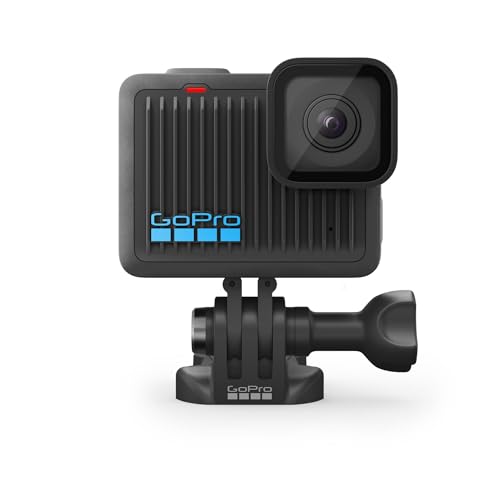
The GoPro Hero — the compact model simply called Hero — is what happens when a flagship maker builds down to a price honestly instead of stripping a flagship until it squeaks. It shoots 4K video, it is waterproof out of the box, it uses the same mounting ecosystem as its expensive siblings, and its interface is deliberately simple: a small touchscreen, big targets, very little to misconfigure. For a buyer with three hundred dollars who wants one camera for holidays, bikes, pools and the occasional vlog, this is the centre of gravity of the whole list.
What you give up versus the flagship HERO models is breadth, not competence. The photo side is modest, the accessory range of speciality lenses and mods does not apply, and serious creators will eventually want the bigger sensor and manual control of the top models. But notice what is not missing: stabilisation that works, colours that look right without editing, and an app that transfers clips to a phone without a fight. Add a card and one or two mounts and the whole purchase still sits inside the budget with change, which is exactly the discipline this price point demands.
Ownership is where the Hero quietly wins friends. It wakes fast, records with one press, and its clips land in the GoPro app with the minimum of pairing theatre — a mercy on a beach with wet hands. The battery door and lens cover are replaceable, which at this price is not a given, and the whole unit shrugs off the rinsing-under-a-tap routine that salt water demands. Buyers stepping up later will find their mounts, cards and habits transfer directly to the flagship models, so nothing spent alongside this camera is wasted money.
Verdict in one line: if the budget buys one camera and the camera must do a bit of everything outdoors, this is the one — the rest of the list exists for buyers whose ‘everything’ leans a particular way.
- Type: compact action camera
- Video: 4K with electronic stabilisation
- Waterproof: yes, body-sealed without a housing
- Mounting: standard GoPro-style fingers and thread options
- Controls: touchscreen, simplified menu
- Best paired with: a fast microSD card and a handlebar or chest mount
Strengths
- Flagship-maker image quality and colours at a mid price
- Waterproof and tough without buying a housing
- Simple interface that beginners cannot really mis-set
Trade-offs
- Photo features are basic next to the flagship models
- No access to the speciality lens mods of the big models
- Serious creators will outgrow its manual control quickly
Best for: the buyer who wants one durable camera for travel, water and weekends, bought complete inside the budget.
Not suited for: photographers who mainly shoot stills, or creators who already know they need manual exposure control.

AKASO Brave 7 LE — Best value action camera with a front screen
The Brave 7 LE exists for the buyer who looked at the GoPro above, did the maths on mounts and cases, and felt the budget strain. AKASO’s answer is to put almost everything in the box: the camera with front and rear screens, a waterproof housing, a remote, and a pile of mounts that would cost real money bought separately. The front screen is the headline feature — it turns the camera into a genuine selfie and vlogging tool, something the simplest action cameras simply cannot do — and it works well enough that framing yourself stops being guesswork.
The honest compromises are in refinement. Stabilisation is good rather than class-leading, the touchscreen can be leisurely, and the image has a slightly more processed look than the GoPro’s, particularly in mixed light. Battery discipline matters too: carry the second battery the bundle culture encourages, because a long day of 4K will find the limit. Judged as a total purchase, though, the Brave 7 LE is arguably the smartest spend on this page — everything arrives at once, nothing essential is left for a second order, and the money left over can go towards a bigger card.
A word about the screens, because they change who this camera suits. The rear touchscreen handles settings and review; the front screen is fixed as a framing mirror for selfie shots rather than a live settings display, which is the right economy at this level. In bright sun both stay readable enough to work with, and the voice control — genuinely useful when the camera is helmet-mounted and your hands are busy — works more reliably than the budget norm. For vloggers who talk to their action camera, this is the cheapest dual-screen experience worth having.
Choose it over the GoPro if the bundle maths matters more than the last degree of polish; choose the GoPro if it does not. Either way, the first upgrade either camera wants is the same: a bigger, faster memory card.
- Type: action camera with front and rear screens
- Video: 4K with electronic stabilisation
- Waterproof: via included housing
- In the box: mounts, remote and housing included
- Controls: touchscreen plus remote control
- Best paired with: a high-endurance microSD card
Strengths
- Front screen makes self-filming and vlogging practical
- Bundle includes the mounts others charge extra for
- Leaves the most money unspent of any full package here
Trade-offs
- Stabilisation and polish a step behind GoPro
- Touchscreen responsiveness is merely okay
- Needs the housing for waterproofing, unlike the sealed GoPro
Best for: first-time action camera buyers who want the whole kit in one box, especially solo travellers who film themselves.
Not suited for: riders who want the smoothest possible stabilisation for fast, rough footage.

AKASO EK7000 — Best ultra-budget action camera
The EK7000 has been on sale for years, and its survival is the review: it is the camera people buy when the camera is not the point. A kids’ bike helmet, a kayak, a festival, a car dashboard for a road trip — situations where the footage matters and the hardware must not. It shoots 4K at a basic level, comes with a waterproof housing and mounts, includes a remote, and costs a small fraction of this budget, which completely changes the shopping problem. Instead of asking what else you can afford, you ask what else the trip needs: a bigger card, a floaty handle, a spare battery, a small tripod.
Set expectations correctly and it will not disappoint. Stabilisation is modest, so it suits steadier mounts and gentler motion better than aggressive riding; low light is not its friend; the app is functional rather than lovely. But as a second camera, a risk-it camera, or a first camera for a teenager whose care level is still developing, nothing else on this page makes as much sense. Many owners of expensive action cameras quietly own one of these too, for the shots they would never risk the good camera on.
Its longevity is part of the value calculation. Because the EK7000 has been sold in huge numbers for years, batteries, housings and mounts remain cheap and everywhere, and any problem you meet has been met — and answered — by thousands of owners before you. That support-by-population is worth more than a spec increment. Treat it as the camera that lives in the car, the boat box or the teenager’s rucksack, always charged, always available, and it will quietly accumulate the most honest footage your family owns.
Every camera collection should contain one device nobody is precious about. If this budget is your only camera money, the EK7000’s disposability is not a compromise — it is the feature that gets it taken everywhere the good shots are.
- Type: budget action camera
- Video: 4K at entry level, with basic stabilisation
- Waterproof: via included housing
- In the box: housing, mounts and wireless remote
- Controls: buttons and small screen, app support
- Best paired with: spare batteries and a floaty grip for water
Strengths
- So inexpensive that loss or damage is a shrug, not a disaster
- Bundle covers the essential mounts from day one
- Perfect risk-it second angle alongside a better camera
Trade-offs
- Modest stabilisation for fast or rough motion
- Weak low-light performance
- Image quality is entry level in every respect
Best for: buyers who want a camera for risky, wet or youthful use, and anyone building a two-camera setup on this budget.
Not suited for: anyone whose main footage is fast action or evening shooting.

DJI Osmo Action 3 Outdoor Combo — Best bundle for riders and hikers
DJI’s Action 3 is the connoisseur’s choice at this level, and the Outdoor Combo is the version aimed squarely at cyclists and hikers: chest and backpack straps in the box, a protective frame, and DJI’s magnetic quick-release mounting, which remains the fastest system here for moving a camera between a helmet, a chest strap and a handlebar with cold or gloved fingers. The camera itself is a strong all-rounder — 4K video, confident stabilisation, good colours, and a front touchscreen that makes checking framing on the trail genuinely easy.
Why does a previous-generation model earn a place over newer rivals? Because at this budget the mount system and the bundle are worth more than a spec-sheet increment. The Action 3’s ecosystem is mature, its batteries and mounts are widely available, and its weaknesses are known and minor: it is not the low-light leader, and DJI’s newest models add polish you can feel but do not need. If your three hundred is funding a season of riding and hiking rather than a spec collection, this is the most thoughtfully assembled package on the page.
The combo’s frame deserves its own mention: it protects the camera’s edges, carries the cold shoe and tripod thread the bare camera lacks, and makes the whole unit easier to grab with gloves. DJI’s colour profile also flatters the overcast, green-brown palette of trail riding better than most rivals manage without grading. Add the way the camera remembers your custom modes between mounts — one for the helmet, one for the chest — and the Action 3 feels less like a previous model on discount and more like a finished tool that happens to be affordable.
Riders comparing this with the GoPro Hero should decide on the mount: if your hands are gloved and your stops are brief, DJI’s magnetic system saves real seconds at every stop, and seconds are footage.
- Type: action camera, Outdoor Combo bundle
- Video: 4K with strong electronic stabilisation
- Waterproof: body waterproof, frame included
- Mounting: magnetic quick-release system
- In the box: chest strap, backpack strap, protective frame
- Best paired with: a handlebar mount for bike use
Strengths
- Quick-release mounting is the fastest here with gloves on
- Bundle straps match how riders and hikers actually film
- Mature ecosystem with easy spare batteries and mounts
Trade-offs
- Previous generation, so not the low-light leader
- Newer DJI models add refinement it lacks
- Combo is activity-specific; swimmers should price other bundles
Best for: cyclists, mountain bikers and hikers who move the camera between mounts all day.
Not suited for: buyers who always want the newest model regardless of bundle value.

Logitech C920S HD Pro Webcam — Best webcam foundation at this budget
Including a webcam in a cameras-for-300-dollars guide needs one sentence of defence: for the reader whose camera life is video calls, remote work, tutoring or streaming from a desk, the best camera purchase at this budget is a proven webcam plus the light that transforms it. The C920S is the proven webcam. Its 1080p image, autofocus and automatic light correction have made it the default recommendation for a decade, it has a privacy shutter built in, and it works with every conferencing and streaming platform without drama or drivers.
The strategy is what matters. The C920S consumes so little of the three hundred that the remainder buys a proper key light and a USB microphone, and that combination — decent camera, real light, real mic — looks and sounds more professional than any single camera at this price staring into a dim room with a laptop microphone. If your ‘camera’ needs are a desk and a face, this is not the budget option on the page. It is the correct one, and the expensive-looking results will surprise anyone who has only seen webcams used badly.
Two ownership details seal the recommendation for professionals. The C920S’s mounting clip grips everything from thin laptop lids to thick monitors without wobbling, and its tripod thread opens up desk-arm and lighting-stand positions that transform framing options. And because it is the industry’s default, every platform’s ‘recommended settings’ guides, every employer’s IT help page and every streaming tutorial already speaks its language. When something looks wrong at 8:55 before a 9:00 call, that shared knowledge is the difference between a fix and a panic.
Streamers should note the C920S also makes an excellent second camera later — the wide desk angle while a better camera takes the close-up — so it never really leaves the setup, it just gets promoted sideways.
- Type: USB webcam with privacy shutter
- Video: Full HD 1080p for calls and streaming
- Focus: autofocus with automatic light correction
- Audio: built-in stereo microphones (a USB mic is the upgrade path)
- Mounting: monitor clip and tripod thread
- Best paired with: a key light and a USB microphone, both affordable inside this budget
Strengths
- Universally compatible and completely driver-free
- Leaves budget for the light and mic that transform results
- Privacy shutter built in for shared or family computers
Trade-offs
- 1080p only, while newer rivals offer 4K
- Built-in microphones are adequate, not good
- Useless away from a computer, obviously
Best for: remote workers, tutors, streamers and anyone whose camera life happens at a desk.
Not suited for: anyone who needs to film away from a computer.

NexiGo N60 1080P Webcam — Best leave-money-over webcam
The N60 is the pragmatist’s webcam: 1080p video, a built-in microphone, a privacy cover, plug-and-play setup, and a price that barely dents three hundred dollars. It exists on this page for the household that needs a camera for the family computer — grandparents’ calls, homework help, the occasional work meeting — and has better uses for the remaining money than webcam specifications. Set up in a reasonably lit room, its image is entirely respectable, and its fixed-focus simplicity means there is nothing for a non-technical user to break or misconfigure.
Be clear about its ceiling. It will not flatter a dim room, its field of view and image processing are a class below the Logitech above, and streamers building an audience should start with the C920S instead. But as an honest utility purchase it is hard to fault, and there is a wider lesson in it: not every camera search is a hobby search. Sometimes the best camera for 300 dollars is the one that costs a fraction of it and solves the problem by Friday.
The N60 also earns its keep as the household’s second camera: the one that lives on the children’s computer, travels to the grandparents’ house, or covers the kitchen-table homework call without anyone fetching the ‘good’ webcam from the study. Its picture softens in the evening, so pair it with the room’s ordinary lamp moved closer rather than any upgrade — at this end of the market, light placement is the entire image-quality game, and the N60 rewards it as honestly as cameras three times its price.
If the household later upgrades its main webcam, the N60 migrates gracefully to the spare room, the child’s computer or the travel bag. Cameras that retire this usefully are rarer than cameras that merely perform.
- Type: USB webcam with privacy cover
- Video: Full HD 1080p
- Focus: fixed focus, set for typical desk distances
- Audio: built-in noise-reducing microphone
- Mounting: monitor clip, plug and play
- Best paired with: a desk lamp angled at the face, which it rewards immediately
Strengths
- Solves household video calls for a fraction of the budget
- Nothing to configure; ideal for non-technical users
- Privacy cover included
Trade-offs
- Image quality a clear class below the C920S
- Fixed focus and modest low-light performance
- Not a streamer’s camera
Best for: family computers, occasional work calls and buyers who would rather keep most of the budget.
Not suited for: streamers, tutors or anyone on camera professionally every day.
How Do the Six Best Cameras for 300 Dollars Compare?
The table below strips each pick down to the one thing it does best and the one compromise you accept for the price. Read it alongside the detailed reviews: at this budget, the right choice is the one whose compromise lands on something you do not care about.
| Pick | Best at | Watch out for |
|---|---|---|
| GoPro Hero | Everyday 4K video in a waterproof, mount-anything body | Basic stills and no flagship accessory path |
| AKASO Brave 7 LE | Complete bundle with a vlogging front screen | Refinement and stabilisation below the leaders |
| AKASO EK7000 | Cheapest credible way into action footage | Entry-level image, stabilisation and low light |
| DJI Osmo Action 3 Outdoor Combo | Mounting speed and a rider-focused bundle | A generation behind on low-light polish |
| Logitech C920S HD Pro Webcam | Proven desk image with budget left for light and sound | No 4K and mediocre built-in audio |
| NexiGo N60 1080P Webcam | Household calls solved at minimal cost | Fixed focus and modest image processing |
What Does 300 Dollars Actually Buy in a Camera Today?
It helps to know where the money goes. At this level you are paying for a small sensor, a fixed lens, a processor and a body — and the makers who do it well spend the budget in that order of importance. Three hundred dollars buys a genuinely good small sensor with competent processing, which is why the action cameras above punch so hard: their makers sell millions, the development cost is spread thin, and the image pipeline is mature. What it does not buy is a large sensor with interchangeable lenses plus the lenses themselves; any kit at this price advertising that combination is funding it by cutting the sensor, the lens quality or the build, usually all three.
The other thing three hundred buys is last generation’s best. Camera development moves in steps, and the model replaced six months ago often sells at exactly this level with ninety percent of the new model’s ability. The Action 3 on this page is the clearest example. If you can resist the newest box, this budget stretches remarkably far; if you cannot, it buys the bottom rung of the new ladder instead of the top rung of the old one, and the old top rung is nearly always the better camera.
Should You Buy an Action Camera or a ‘Proper’ Camera at This Price?
The honest answer depends on where your photographs and videos happen. If they happen outdoors, in motion, near water or in the hands of children, the action camera wins at this price and it is not close: it is waterproof, it stabilises, it mounts to things, and it survives the drop that ends a conventional camera’s life. A cheap conventional camera is better at exactly two things — zooming, and looking like a camera — and at this price its zoom is usually achieved with a tiny sensor that makes the far-away results mushy anyway.
Choose a conventional compact only if your subjects are people at conversational distances, indoors and out, and you value a zoom for school plays and sports days over toughness. Even then, compare it honestly against your phone, because at three hundred dollars the phone in your pocket is the competitor every compact must beat, and many do not. The action cameras and webcams on this page earn their place precisely because a phone cannot do their jobs: a phone should not be strapped to a handlebar in the rain, and it makes a poor all-day webcam.
How Should You Split the Budget Between Camera and Accessories?
A workable rule for this price point: seventy percent on the camera, thirty on the things that make it usable. For action cameras the essentials are a memory card rated for the camera’s top video mode — a slow card causes dropped recordings that no specification warns you about — one mount matched to your main activity, and a spare battery if your days are long. Everything else, the cases and clamp collections and novelty mounts, can wait until you know what you actually film.
For the webcam route the split reverses: the camera is the cheap part and the light is the purchase that matters. A modest panel light or even a well-placed desk lamp with a daylight bulb transforms a webcam image more than doubling the camera budget does. Add a USB microphone before any camera upgrade, too. Viewers and colleagues forgive soft video far sooner than echoing, distant audio, and at this budget sound is where professionalism is actually bought.
Which Specifications Matter at 300 Dollars, and Which Are Traps?
Three specifications genuinely predict happiness here. Stabilisation quality, which you cannot see on a box and must judge from reviews and sample footage. Battery life at the resolution you will really use, not the laboratory figure. And card requirements, because a camera that demands the fastest, priciest cards quietly taxes every purchase. A fourth, for webcams, is autofocus behaviour: a camera that hunts visibly every time you move will annoy you daily.
The traps are just as consistent. Megapixel counts beyond the mid-teens on small sensors add file size, not detail. Digital zoom figures are cropping dressed as reach. ‘4K’ on the cheapest cameras sometimes means an upscaled or low-frame-rate mode you will never use twice. And waterproof claims deserve a second look: body-sealed cameras and housing-dependent cameras are different commitments, and the housing only protects when its seal is clean and correctly closed, every single time.
How Do You Test a Budget Camera in the Return Window?
Buy from somewhere with painless returns and use the first weekend properly. Shoot the subjects you actually bought it for, in the light you actually have: the dog in the garden, the ride you always take, the desk at the hour of your real calls. Check three things on a big screen, not the camera’s display — stabilisation on your normal movement, faces in your normal indoor light, and whether the files transfer to your phone or computer without a wrestling match.
Then test the annoyances, because annoyances are what retire budget cameras to drawers. How long does it take to wake and record? Can you operate it with gloves, or one-handed, or in bright sun? Does the app demand an account to do basic things? A camera that passes the image tests but fails the annoyance tests will be left at home by the third outing, and a returned camera is a far better outcome than a resented one.
When Is It Worth Stretching Past 300 Dollars Instead?
Stretch when you have identified the specific wall you will hit. If you will film in the evening regularly, the low-light step up is real and worth paying for once. If photography — not video — is the point, and you can see yourself buying a second lens within a year, then this budget is a deposit, not a destination, and an entry interchangeable-lens kit bought slightly above it beats any fixed-lens purchase. If you are a streamer whose income depends on looking credible, the camera-light-microphone chain deserves the extra.
Do not stretch for resolution numbers, for a newer model number, or because a bundle adds accessories you have not imagined using. The discipline that makes three hundred dollars work is knowing what the camera is for. Every pick on this page will serve a clear purpose well; the failures at this price are almost always purpose failures, not product failures — the right camera bought for the wrong life.
How Long Should a 300-Dollar Camera Last?
Physically, years: the action cameras here are built for impacts that would end a phone, and webcams have no moving parts to wear. The realistic limit is relevance and batteries. Lithium cells fade; a camera with replaceable, widely available batteries ages gracefully, while a sealed unit becomes e-waste when its cell tires, which is another quiet argument for the mainstream models above. Software matters too — makers who update firmware extend a camera’s useful life, and all six picks come from companies that do.
Plan on three to five years of happy service, and plan the purchase so that the ecosystem survives the camera. Mounts, cards and lights bought at this level mostly carry forward to the next camera, which is why the thirty percent accessory split is an investment rather than a tax. The buyers who regret budget cameras are rarely those who bought modestly; they are those who bought oddly — the unknown brand, the proprietary everything, the deal that could not be repeated or repaired.
What About Refurbished and Previous-Generation Cameras at 300 Dollars?
This budget is the natural home of the refurbished flagship, and buyers comfortable with manufacturer-refurbished stock can sometimes land the model above their target — last year’s best action camera with a warranty — for the price of this year’s mid-ranger. The rules are strict but simple: buy only refurbishment done or certified by the maker or a major retailer, insist on a warranty measured in months rather than days, and check the battery situation, because a sealed camera with a tired cell is a bargain with an expiry date. Accessories and mounts included in refurb bundles vary wildly; price the deal on the camera alone.
Previous-generation new stock is the safer version of the same trick, and this guide already endorses it in the Action 3. The discount on a superseded model is rarely about failure — it is about shelf space — and the camera’s abilities do not diminish because a successor exists. What does diminish is the firmware-update horizon and the accessory tail, so favour models one generation back from big makers over three generations back from anyone. Played this way, three hundred dollars routinely buys what five hundred bought eighteen months ago, which is the closest thing camera shopping has to a free lunch.
How Should Parents Buy at This Budget for a Teenager?
The teenage use case has its own logic, and it points firmly at the action cameras. A teenager’s camera life is bikes, pools, skateparks, school trips and the filming of friends doing inadvisable things at moderate speeds — precisely the action camera’s design brief, with the added parental benefit that a dropped EK7000 or Brave 7 LE is a lesson, not a loss. Waterproofing matters more than resolution; a mount that fits their actual sport matters more than the bundle count; and the front screen on the Brave 7 LE matters because teenage filming is overwhelmingly social and self-framed.
Agree the boring rules at purchase, while goodwill is high: the camera is rinsed after the sea, charged on the same shelf every night, and its footage is the teenager’s own — with the family’s sharing norms applying to anything posted. Then step back. A camera a teenager controls completely, within a budget a parent can stay relaxed about, produces the volume of experimentation from which real skill and real archives grow. That is the best possible outcome of three hundred dollars in a young person’s hands.
What Is the Best Way to Carry and Protect a Budget Camera?
Budget cameras die of logistics more than of defects: crushed in a rucksack under a water bottle, drowned by a housing seal closed on a grain of sand, cooked on a car dashboard. The countermeasures cost almost nothing. A semi-hard case sized to the camera, not a cavernous generic one, prevents the crush and organises the card and battery that otherwise vanish. A lanyard or float, fitted from day one, prevents the two classic action-camera losses — overboard and left-on-a-rock. And a ten-second seal ritual for housings — look, wipe, close, look again — prevents the flood that ends more cheap waterproof cameras than any manufacturing flaw.
At home, give the camera an address: one shelf or drawer where it lives with its charger, so ‘where is the camera’ never precedes ‘the moment has passed’. Batteries stored half-charged through quiet months last years longer than batteries stored flat or full. None of this is shopping, exactly, but it decides whether the three hundred dollars is still working in year three — which, at this end of the market, is where the real value ranking is written.
Should You Wait for Sales, or Buy a 300-Dollar Camera Now?
Camera pricing at this level follows a predictable tide: new models launch, previous models slide, and the big retail events push the mid-range down by amounts that matter at this budget. If your need is a specific trip or season, buy in time to learn the camera before it — a familiar mid-range camera outperforms an unfamiliar flagship on any holiday. If your need is general, the patience play is to watch the previous-generation flagships, which drift into this budget in steps and occasionally land with bundle extras that sweeten them further.
What waiting should never do is shrink the purchase into the no-name tier to save the last slice of money. The gap between the cheapest camera with a famous badge and the anonymous equivalent is where warranties, firmware, honest waterproofing and resale value live. Three hundred dollars spent on a supported camera is a multi-year asset; two hundred spent on an unsupported one is frequently a one-season toy wearing a camera’s clothes. Hold the line on the badge, flex on the timing, and the budget will do the rest.
Can a 300-Dollar Camera Be Your Only Camera?
For a surprising number of households, yes — and recognising it saves real money. If your photographic life is holidays, children, pets, bikes and video calls, the picks on this page cover every one of those duties at a level your audience will experience as simply good. The only-camera test is not about the photographs you dream of taking; it is about the last two hundred photographs you actually took, and where they happened. Run that audit honestly and most people discover their camera life is narrower, sunnier and more sociable than their aspirations pretend.
The households that genuinely need more are identifiable by their exceptions becoming regular: the weekly evening sport in winter floodlight, the birding walks, the portraits that have become a side income. When the exception is monthly, the budget answer is to rent or borrow for it and keep the three-hundred-dollar camera for the ninety percent. When the exception is weekly, it is no longer an exception — it is your photography, and it deserves its own budget conversation. Until then, one well-chosen camera at this price, used constantly, beats a cabinet of intentions at any price.
A Last Word on Value at This Price
Value at three hundred dollars is measured in years of use, not in launch-day specifications. The cameras in this guide were chosen to still be earning their place in three years: supported, repairable in the small ways that matter, and matched to lives rather than to spec sheets. Buy the one whose compromise you will never notice, keep it charged and cased, and this modest budget will quietly outperform friends who spent twice as much on cameras matched to lives they do not actually live.
Which Mistakes Waste a 300-Dollar Camera Budget?
The classic mistake is buying the camera with the longest zoom or the biggest megapixel number, because both are achieved at this price by shrinking the sensor until image quality collapses. Close behind is spending the entire budget on the camera body and nothing on the card, mount or light, leaving a capable device unusable for its first month. A third is buying a housing-dependent waterproof camera for a one-off holiday and never learning to close the seal properly; the flooded camera that results is the most common budget-camera death of all.
Shoppers also underrate the phone comparison. If a compact camera does not clearly beat your phone at the things you shoot, the money is better spent on an action camera or webcam that does something the phone cannot — or saved towards the interchangeable-lens camera you actually want. Finally, beware the sprawling accessory bundle from an unknown brand: thirty plastic mounts feel like value, but the camera inside them is where the money was saved, and it shows in every frame.
One more deserves a paragraph of its own: buying for the holiday instead of the life. A camera bought for two weeks in the sun and never touched again has cost three hundred dollars for a fortnight’s footage, while the same money on the camera matched to your ordinary weekends — the rides, the matches, the family calls — returns value every month of the year. If the holiday camera and the life camera differ, buy the life camera and let it come on holiday too.
Final Recommendation
If one recommendation has to stand for the whole page, it is the GoPro Hero: it is the most complete expression of what three hundred dollars can do — real 4K, real toughness, a real ecosystem — with money left over for the card and mount that complete it. Riders and hikers should take the DJI Action 3 Outdoor Combo instead for its straps and quick-release mounting, and the Brave 7 LE is the smartest buy for anyone who films themselves and wants everything in one box.
Desk-bound buyers should ignore the action cameras entirely and build the C920S, light and microphone combination, which will make them look more professional than colleagues who spent twice as much on a camera alone. Whichever route you take, hold the discipline that defines this budget: one kind of camera, bought completely, for a purpose you can name. Do that, and three hundred dollars is not a compromise at all.
Related guides
Frequently Asked Questions
Is 300 dollars enough for a good camera in 2026?
Yes, for a defined purpose. It buys an excellent action camera, a complete webcam setup with light and microphone, or a strong previous-generation model. It is not enough for a new interchangeable-lens system with lenses, and any product promising that at this price is cutting corners you will see in the images.
Should I buy a compact camera or an action camera for family use?
If your family life is outdoors, active or near water, the action camera is tougher, simpler and better value. A compact only wins for zoom at school events and a more traditional feel — and it must first beat your phone, which at this price many compacts fail to do.
Why are there webcams in a camera guide?
Because for remote workers, tutors and streamers, the camera that matters sits on a monitor. At this budget a proven webcam plus a light and a USB microphone produces a more professional result than any single camera in a dim room, so pretending otherwise would make the guide less honest, not more.
What memory card do I need for a budget action camera?
A card rated for sustained video writing at the camera’s top mode — look for the speed class the maker specifies, and buy from a reputable seller, since counterfeit cards are rampant at the cheap end. Capacity matters less than speed and authenticity; a genuine smaller card beats a fake large one.
Is it better to buy last year’s flagship or this year’s budget model?
Usually the flagship. It brings a better sensor, better build and a mature accessory ecosystem at the same money, losing only the newest software tricks. The Action 3 in this guide is exactly that trade, and it is the one experienced buyers make most often at this price.
Can a 300-dollar camera shoot in low light?
Webcams with a proper light, yes — that is the point of the setup. Action cameras are fair in low light at best; their small sensors and wide lenses are built for daylight and motion. If evenings are your main shooting time, either budget for light or save towards a larger-sensor camera.
Related Guides
Keep exploring with best action cameras under 300 and best webcams for streaming and calls and best cameras for beginners starting out.


