reviewstook.com is reader-supported. When you buy through links on our site, we may earn an affiliate commission.
Where to buy
Bokeh is the quality photographers chase and physics rations. The soft, melted background behind a sharp subject — the look that makes a portrait feel expensive — is produced by a wide aperture, a large sensor and a longer focal length working together, and compact cameras, by definition, ration all three. So the honest guide to the best compact cameras for bokeh begins with a confession and a map. The confession: no true compact will ever match a full-frame camera with a fast prime lens at this trick, and any list pretending otherwise is selling something. The map: within and around the compact class there are real gradations of background separation, from the one-inch compacts that genuinely blur a busy street behind a face, to compact-bodied mirrorless cameras that accept the fast lenses where true bokeh lives. This list walks that map from the pocketable end upward, and labels each stop honestly.
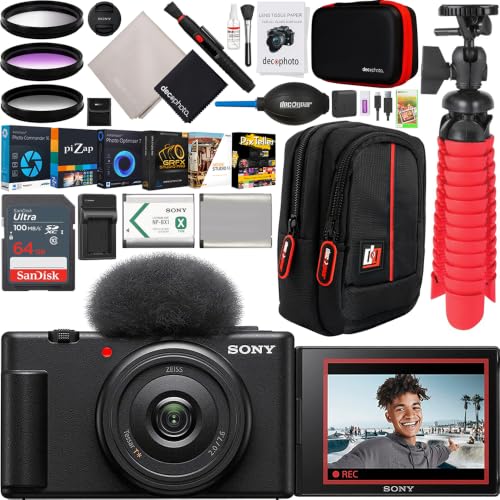
- Sony ZV-1F: check price on Amazon
- DJI Osmo Pocket 3: check price on Amazon
- Nikon Z50 II with Two Lenses: check price on Amazon
- Sony Alpha 7 IV: check price on Amazon
- Canon EOS R6 Mark II: check price on Amazon
- Panasonic LUMIX S5II: check price on Amazon
Readers arriving from our adventure riding guide should recalibrate completely: there, a camera earned its place by surviving; here, it earns its place by separating — by how convincingly it lifts a person out of their background and renders that background as atmosphere rather than information. And readers heading onward to the concerts guide will find a neighbouring but different question, about darkness and distance rather than depth. This guide’s question is the oldest in portrait photography: how do you make one face matter more than everything behind it, with a camera that still fits a coat pocket or a small bag?
Three levers control the answer, and the whole guide is an extended tour of them. Aperture: the wider the lens opens, the shallower the zone of sharpness. Sensor size: the larger the sensor, the shallower the depth at any given framing — which is why the one-inch compacts below out-blur smaller-sensored rivals, and why the full-frame cameras at the list’s top live in a different blur economy altogether. Distance: the closer the camera to the subject and the farther the subject from the background, the more any camera blurs — the lever that costs nothing, works on every device, and rescues more compact-camera portraits than any specification. Buyers who master the third lever get more from the modest picks; buyers who ignore it waste the expensive ones.
None of the judgements in this guide require a studio to verify. A garden, a patient friend and an hour of late light will demonstrate every claim on this page — the compact’s honest melt at café distance, the system camera’s dissolution at the same framing, the free bokeh that distance choreography adds to both. Readers are encouraged to run that experiment with whatever camera they already own before spending anything, because its results will tell them which rung of this list their ambitions actually live on.
A word about computational blur, because phones have trained a generation to expect a portrait mode on everything. Software blur guesses at depth and paints the guess; it frays around hair, glasses and bicycle spokes, and it cannot be adjusted after the fact with any dignity. Every camera in this guide produces its separation optically — real light through real glass — which is why their bokeh has texture, gradation and highlights that render as discs rather than smears. That difference is the entire reason to buy a camera for this purpose in the age of the phone.
Key Takeaways
- Bokeh obeys physics: aperture, sensor size and distances — no compact cheats all three.
- The Sony ZV-1F is the strongest true compact here for subject separation at arm’s length.
- DJI’s Osmo Pocket 3 pairs a one-inch sensor with a gimbal for moving portraits with soft backgrounds.
- Interchangeable lenses are where deep bokeh lives; the Nikon Z50 II is the compact-bodied doorway.
- Full-frame picks — Sony A7 IV, Canon R6 Mark II, Panasonic S5II — are the honest ceiling of the look.
- Distance is free bokeh: subject close, background far beats any menu setting.
In this guide
Quick Picks
| Camera | Badge | Why it is here |
|---|---|---|
| Sony ZV-1F | Best true compact | One-inch sensor and wide lens tuned for faces, with background defocus on tap. |
| DJI Osmo Pocket 3 | Best moving bokeh | A gimbal-smooth one-inch camera whose portraits glide. |
| Nikon Z50 II with Two Lenses | Best compact system | An APS-C body that grows into fast prime lenses as bokeh ambitions deepen. |
| Sony Alpha 7 IV | Best full-frame all-rounder | The benchmark hybrid for portraits with genuinely melted backgrounds. |
| Canon EOS R6 Mark II | Best for people in motion | Full-frame separation with autofocus that keeps eyes sharp inside the blur. |
| Panasonic LUMIX S5II | Best value full frame | Full-frame depth and video pedigree at the friendliest tier of its class. |
How did we rank cameras by a quality as slippery as bokeh?
Ranking began with the sensor-and-lens equation rather than with brand or price, because bokeh is arithmetic before it is art. Each candidate’s realistic depth of field was considered at the framings people actually use for portraits — head and shoulders, half length, full length — since a camera that blurs beautifully only at macro distances has answered a question nobody asked. The one-inch compacts earned their places by producing visible, pleasing separation at conversational distances; the mirrorless picks earned theirs by accepting lenses that change the arithmetic entirely.
The character of the blur was weighed alongside its quantity. Bokeh is not merely how much background dissolves but how: highlights rendering as soft discs rather than hard-edged rings, backgrounds melting in smooth gradation rather than nervous double-lines, busy scenes — foliage, fairy lights, city streets — resolving into atmosphere instead of visual static. Cameras and lenses differ in this character as surely as voices differ, and the picks favour renderings that flatter people rather than merely erasing scenery.
Focus reliability formed the third criterion, because shallow depth is unforgiving. When the zone of sharpness is measured in centimetres, the camera’s eye detection and focus consistency decide whether the portrait’s sharp point lands on the eye — where it must — or on an ear, a nose, a lock of hair. Several otherwise desirable cameras were marked down here; a beautiful blur wrapped around the wrong sharpness is a beautiful failure.
Finally, honesty about category was enforced in both directions. True compacts were not punished for physics they cannot change, and mirrorless cameras were not allowed to pretend compactness they do not possess: they appear in this guide as the compact-adjacent ceiling, labelled as such, because readers asking this keyword deserve to know where the pocketable world ends and the system world begins — and what each world can actually do to a background.

Sony ZV-1F — Best true compact
Sony’s little creator compact is the strongest honest answer a fixed-lens camera can give to this keyword, and the reasons are physical. Its one-inch sensor is several times the area of the sensors in ordinary compacts and phones, and behind its wide lens that area translates into genuinely shallow depth at the distances the camera was designed for: a person at arm’s length or across a café table, rendered sharp against a background that has begun, convincingly, to melt. Faces separate from bookcases, market stalls and street clutter in a way smaller-sensored compacts simply cannot reproduce, however their menus plead.
Sony also cheats — fairly, and with a button. The camera’s background defocus function opens the aperture and adjusts the recipe to maximise separation on demand, a one-touch admission that its owners bought it for exactly the look this guide is about. Purists may call it a shortcut; portraitists will call it the correct default. The bokeh it produces is optical, born of the wide aperture rather than painted by software, with highlights that swell into soft discs and edges that graduate rather than clip.
The wide lens shapes the kind of portrait this camera makes, and buyers should understand the trade before romanticising it. At 20mm-equivalent territory, the ZV-1F’s portraits are environmental: the person large in a wide world, the background present but softened, context retained as atmosphere. That is the visual grammar of modern creator content and travel portraiture, and it is gorgeous. It is not the compressed, telephoto isolation of the classic headshot, where the background vanishes into colour-field painting; for that, the lens-changing picks below exist, and this guide will not pretend a fixed wide lens can follow them there.
Eye autofocus is the supporting actor that makes the headline possible. Shallow depth at close range leaves no slack for focus error, and the Sony’s eye tracking holds the correct eye as the subject moves, talks and gestures — the difference between a portrait session and a lottery. Product-showcase focus behaviour, which shifts to a held object and back, extends the same courtesy to the reviewer’s hands and the crafter’s work.
Colour rendering flatters the enterprise. Sony tuned this line’s skin tones under the mixed light of real rooms, and portraits emerge with faces that look like faces rather than corrections — important, because bokeh draws the eye to the subject and the subject is usually skin. A camera can win the background and lose the face; this one was designed, unusually, to win both.
The limits are the fixed lens and the walking-pace stabilisation, both stated plainly in its other appearances in this series. For bokeh purposes the lens limit is the binding one: the ZV-1F gives you its one beautiful perspective and asks you to compose within it. Photographers who accept that bargain get the most bokeh a coat pocket has ever honestly contained.
Choose the ZV-1F when the camera must remain a true compact — pocketable, fixed, unintimidating — and the portraits are people at conversational distance in real places. Within those terms it has no rival in this guide, because within those terms physics allows it almost none.
- Type: creator compact, one-inch sensor
- Lens: wide fixed lens for environmental portraits
- Defocus: dedicated background-blur function
- Focus: eye autofocus with product showcase mode
Strengths
- Real optical separation at café-table distances
- One-touch defocus tuned for faces
- Skin tones that survive the attention bokeh draws
Trade-offs
- Wide lens means environmental, not telephoto, portraits
- Fixed lens ends the framing conversation
- Stabilisation sized for walking, not running
Best for: creators, travellers and café portraitists wanting pocketable separation. Not suited for: classic headshot compression or lens-system growth.
Video portraiture is where this camera’s bokeh quietly outclasses its stills, because the defocus holds through motion and speech: a presenter talking against a softened room, a musician filmed against a melted rehearsal space. Stills photographers debating the fixed lens should weigh that moving portraits — the dominant portrait form of the platform era — are this little camera’s native art.

DJI Osmo Pocket 3 — Best moving bokeh
The Pocket 3 brings the one-inch sensor class to the portrait in a body that moves like none of the others: a three-axis gimbal holding the lens steady while the photographer walks, circles and leans. Bokeh in motion is a different art from bokeh at rest. A background that melts is pleasing in a still; a background that melts while the camera glides around the subject — highlights swelling and drifting, the world revolving softly behind a sharp face — is cinema, and this pocketable instrument produces it without a crew, a slider or a stabiliser rig.
Its lens opens wide for the class, and paired with the large sensor the depth at portrait distances is honestly shallow: a subject at a metre or two separates from a street, a garden, a market, with the smooth gradation that marks optical blur. The gimbal contributes an unexpected bokeh virtue — stability at slow shutter speeds and in low light, where the camera can keep its aperture wide and its ISO civilised while walking, so evening portraits keep their separation instead of trading it for noise-reduction smear.
Subject tracking is the enabler. The Pocket follows a face or figure as the operator moves, holding focus and framing while the background performs its slow melt — a one-person parallax machine. Wedding videographers, travel filmmakers and creators filming partners, children and collaborators have adopted it for exactly this shot: the walking portrait, the orbiting introduction, the subject held sharp in a revolving world. No other pick in this guide attempts the shot at all, let alone from a coat pocket.
The rotating screen and the camera’s smallness change the social physics of portraiture too. Subjects relax for the Pocket in a way they do not for a full-frame rig; the instrument reads as a gadget rather than an assignment, and relaxed subjects are the raw material of every portrait worth keeping. Street portraitists working close will find its discretion as valuable as its sensor.
Delicacy is the standing tax, repeated here because portrait work happens in crowds and cafés: the gimbal head is a precision mechanism that wants a case and a moment of care. Audio for moving portraits benefits from DJI’s wireless microphone pairing, which keeps a walking subject’s voice at constant level while the world revolves — the soundtrack the visual trick deserves.
Choose the Pocket 3 when your portraits move — when the subject walks, the camera circles, and the background is meant to perform rather than merely recede. For stills-led portraiture the Sony above is the truer compact; for the moving portrait, this is the most capable small camera in the world at the trick, and the trick is this guide’s subject.
- Type: gimbal camera, one-inch sensor
- Stabilisation: three-axis mechanical gimbal
- Tracking: automatic subject following for moving portraits
- Audio: direct wireless microphone pairing
Strengths
- Cinematic bokeh in motion, from a pocket
- Wide aperture and large sensor for the class
- Subjects relax for its unthreatening size
Trade-offs
- Gimbal head demands careful handling
- Stills are a sideline to its video soul
- Session-length battery on long shoots
Best for: walking portraits, travel films and wedding-day movement. Not suited for: studio stills or rough handling.
Evening city portraits are this camera’s showcase reel: neon and streetlight highlights blooming into discs behind a walking subject, the gimbal erasing the photographer’s footsteps, the sensor holding the face together under mixed light. Photographers who shoot the blue hour in cities will understand within one outing why the Pocket has become the moving portraitist’s second body — and often, quietly, the first one out of the bag.

Nikon Z50 II with Two Lenses — Best compact system
Crossing into interchangeable lenses changes the bokeh conversation from negotiation to abundance, and the Z50 II is the compact-bodied doorway this guide recommends for the crossing. Its APS-C sensor — far larger than any compact’s — already separates a subject more decisively than the fixed-lens picks at the same framing, even through the versatile kit lenses in this two-lens bundle. But the bundle is honestly a beginning rather than the destination: the Z mount in front of that sensor accepts fast prime lenses, and the first fast prime a Z50 II owner buys rewrites their portraits so completely that the kit zooms retire to daylight duty without resentment.
That growth path is the pick’s real argument, and it deserves to be stated as economics. A buyer whose bokeh ambitions are genuine but whose budget is staged can start here, shoot environmental portraits with real separation today, and add the portrait prime when the savings allow — arriving, in two purchases, at a portrait instrument no compact can approach, without having discarded the first purchase to get there. The body remains the body; only the glass graduates. Few investments in photography compound as kindly.
Nikon’s colour and the Z system’s handling suit the portrait mission. The Z50 II’s ergonomics — a proper grip, a viewfinder for the moments when a screen feels like a barrier between photographer and subject, controls that fall under fingers — make it feel like a camera rather than an appliance, and portrait sessions are long conversations in which handling pleasure compounds. Eye-detection autofocus holds the shallow zone where it belongs as subjects move and laugh, which is when the portraits worth keeping happen.
The two-lens bundle’s honest role should be understood: it covers the walk-around range for travel, family and learning, with separation that already exceeds the compacts at longer focal lengths and closer distances. It will not produce the melted-canvas backgrounds of the full-frame picks below, and this guide will not pretend the kit glass is portrait glass. What it produces is the platform from which portrait glass becomes a purchase rather than a fantasy — and the discipline of learning depth with modest tools, which makes the eventual fast prime feel like a superpower instead of a setting.
Video portraiture is credibly served, with the caveat that the system’s video refinements trail the Sony and Panasonic specialists below. For the stills-led portraitist this guide imagines choosing this pick, that ordering is correct.
Choose the Z50 II bundle when you want compact-carried photography now and true portrait bokeh on a roadmap — when the honest answer to “how much separation?” is “more every year, as the lenses arrive.” It is the growth stock of this list.
- Type: APS-C mirrorless, two-lens bundle
- Mount: Nikon Z, accepts fast portrait primes
- Focus: eye detection for shallow-depth work
- Role: the compact-bodied doorway to system bokeh
Strengths
- Sensor size already beats every true compact
- Fast primes transform it when budget allows
- Camera-like handling for long portrait sessions
Trade-offs
- Kit lenses are a beginning, not portrait glass
- No longer pocketable — small-bag territory
- Video refinements trail the specialists
Best for: growing portraitists staging their budget across seasons. Not suited for: buyers wanting the finished look from one fixed lens.
Family photography is this system’s quiet home ground: children at the long end of the kit zoom, separated from the garden’s clutter by real optics; grandparents across a table, softened room behind them; the dog, at last, sharper than the fence. The portraits families actually frame come from exactly this class of camera, in exactly this stage of its owner’s growth — which is why the doorway matters more than any single specification on this page.

Sony Alpha 7 IV — Best full-frame all-rounder
Here the guide steps deliberately out of the compact class to show readers the ceiling they are measuring the compacts against — and the A7 IV is the ceiling’s most balanced expression. Its full-frame sensor changes the depth arithmetic so completely that the conversation stops being about whether the background separates and becomes about how much separation the photographer chooses to allow. With a fast prime fitted — and Sony’s lens catalogue offers more fast primes at more prices than any rival system — a portrait at conversational distance renders the world behind the subject as pure atmosphere: faces carved out of light, backgrounds reduced to colour and glow.
Why include a camera that is nobody’s idea of compact in a compact guide? Because a large share of this keyword’s searchers are compact owners discovering the limits of physics and quietly asking what the next step costs. The honest answer deserves a name and a shape: this size, this weight, this system commitment — and this is what it buys. Readers who recoil from the shape have learned something valuable too, namely that the one-inch compacts above are their true home, and they can buy them without the nagging suspicion that they settled.
As a portrait instrument the A7 IV is close to complete. Its eye autofocus is the industry reference — the system other cameras are measured against — and at full-frame depths, where the sharp zone can be a few centimetres, that reliability is not a convenience but the difference between a session and a salvage operation. Resolution gives portraits room to crop, the colour science renders skin with the maturity of a line designed by people who also make cinema cameras, and the hybrid video capability means the moving portrait inherits the same separation.
The system’s depth is the long argument. Lenses from Sony and a thriving third-party ecosystem span every portrait ambition and budget staging; bodies upgrade while glass endures; rental houses stock the mount in every city a working portraitist might visit. Buying into the A7 IV is buying into the deepest portrait economy in photography, and bokeh chasers feel that depth every time a new fast prime appears at a price that would have been fantasy a decade ago.
The costs are size, price and the end of innocence about both. This camera travels in a bag, announces itself at gatherings, and turns photography into a declared activity rather than a pocket’s afterthought. Some portraitists find their subjects perform for it in ways that help; others miss the ZV-1F’s social invisibility. Both reactions are data about the photographer’s actual life, and this guide respects either conclusion.
Choose the A7 IV when the bokeh question has become the photography question — when portraits are the work, the background must obey, and the compact era has been honestly outgrown. It is the benchmark against which every other pick in this guide is a negotiation.
- Type: full-frame mirrorless hybrid
- Mount: Sony E, the deepest fast-prime catalogue
- Focus: reference-class eye autofocus
- Role: the ceiling the compacts are measured against
Strengths
- Separation limited only by the lens chosen
- Focus reliability at centimetre-thin depths
- A lens economy that rewards every ambition
Trade-offs
- Not compact by any honest definition
- System pricing across body and glass
- Subjects notice it, for better and worse
Best for: committed portraitists outgrowing compact physics. Not suited for: pockets, discretion or casual carry.
Wedding and event portraitists form this camera’s working parish, and their use case stress-tests bokeh claims honestly: a couple sharp against a reception’s chaos, fairy lights rendered as the soft discs the couple imagined when they strung them, focus holding through tears, laughter and a dance floor’s geography. Equipment that survives that examination weekly has earned its place as the benchmark, and the A7 IV has been surviving it for years.

Canon EOS R6 Mark II — Best for people in motion
Canon’s full-frame contender earns its place beside the Sony on a distinction portraitists feel in their wrists and their keepers: it is the camera for subjects who will not hold still. Children mid-laugh, dancers mid-phrase, a partner turning toward a joke — the R6 Mark II’s autofocus hunts eyes with a tenacity that suits shallow depth’s unforgiving arithmetic, because at full-frame apertures the difference between a keeper and a near-miss is a centimetre of focus placed exactly on the nearer eye while the subject is still moving toward the camera. Canon built its reputation on photographing people, and this body is that reputation in current silicon.
The background rendering through Canon’s RF portrait glass has a house character photographers describe with unusual affection: smooth, unhurried, with highlights that stay round and calm rather than busy. Bokeh character is partly taste, and Canon’s taste — refined across decades of wedding and editorial work — leans toward flattery. Skin rendering follows the same philosophy, warm and forgiving under mixed reception light, which is why so many people-photographers who could choose any system describe their choice in terms of faces rather than specifications.
In-body stabilisation adds a portrait virtue that spec-led comparisons miss: at dusk, in churches and reception halls, the stabilised body lets the photographer keep the aperture wide and the ISO honest while hand-holding at speeds that would soften a lesser setup — preserving the shallow depth that the whole exercise exists for, in the light where portraits are most often commissioned. The blur stays in the background, where it was invited, instead of creeping into the subject through camera shake.
Against the Sony, the honest deltas are ecosystem shape and video emphasis. Canon’s RF catalogue is superb at the portrait tier and narrower in third-party breadth; the R6 Mark II’s video is strong, where the A7 IV’s hybrid balance tilts a fraction more toward the moving image’s specialists. Portrait-first buyers will not feel short-changed by either; they should choose by the glass they dream about and the colours they prefer, because at this level the cameras are both innocent and the lenses are the biography.
Size and presence match its rival’s: a bag camera, a declared instrument. What differs is the feeling in use — Canon’s ergonomics and menus are famously the ones photographers describe as disappearing — and over a four-hour wedding that disappearance is a measurable quantity of kept frames.
Choose the R6 Mark II when your portraits move, your light is wedding light, and Canon’s rendering of people is the rendering you want your name on. It is the full-frame pick for photographers whose subjects have pulses.
- Type: full-frame mirrorless, people-first
- Mount: Canon RF portrait glass
- Stabilisation: in-body, for dusk portraits
- Focus: eye tracking tuned for moving subjects
Strengths
- Keeps eyes sharp inside paper-thin depth
- Calm, flattering background character
- Stabilisation protects wide apertures at dusk
Trade-offs
- Third-party lens breadth trails Sony’s
- Bag camera, not a pocket camera
- Video specialists may lean elsewhere
Best for: weddings, families, dancers and unposed people. Not suited for: minimalists or the discreet street portrait.
Grandparents are this camera’s secret beneficiaries, because the portraits families treasure most are the unposed ones — a laugh across a table, a grandchild caught mid-turn — and unposed people at shallow depth are the hardest focus problem in domestic photography. A body that solves it invisibly, at every birthday and christening, quietly becomes the family archive’s author, and its bokeh becomes the look of the family’s memory itself.

Panasonic LUMIX S5II — Best value full frame
Panasonic’s S5II closes the list by making the full-frame bokeh economy accessible at its friendliest tier, and its route there is instructive: a mature full-frame sensor, phase-detect autofocus that finally silenced the old objection to Panasonic for people work, and the L-Mount alliance’s growing shelf of fast primes — including the value heroes that have rewritten what portrait glass needs to cost. A photographer can assemble, around this body, a portrait kit whose backgrounds melt at the full-frame standard for a total that undercuts the famous names’ body prices not long ago. Value at this level is not a compromise story; it is a market correction with a viewfinder.
The autofocus point deserves its paragraph because it decides this camera’s presence in a bokeh guide. Panasonic’s historical contrast-based system hunted in exactly the shallow-depth situations portraits create, and the S5II’s phase hybrid system ended that era: eyes are found and held, subjects tracked through the centimetre-thin zone, video focus breathing tamed. Portraitists who crossed Panasonic off years ago owe the current generation a fresh test, because the objection they remember has been retired by engineering.
Video portraiture is where the S5II argues beyond value. Panasonic’s video heritage — the deepest colour and monitoring tools in this class, stabilisation that flatters handheld work — serves the moving portrait directly: interviews against softened rooms, musicians against melted rehearsal spaces, creators whose portraits speak. The hybrid buyer whose stills and video ambitions are equal may find this the most balanced instrument in the guide’s top tier, price aside; with price considered, its case strengthens further.
Handling and build are working-grade rather than luxurious: a serious grip, weather sealing for the garden-party rain, controls that reward learning. The L-Mount’s third-party ecosystem has become a genuine portrait economy — fast primes from the alliance partners span the ambitions — though the catalogue’s sheer breadth still trails Sony’s, and exotic glass wishes may wait longer here.
Choose the S5II when full-frame separation is the goal and the budget insists on arithmetic: the body-and-prime combination this platform enables is the cheapest honest route to the look that opens this guide’s imagination. It is proof that the ceiling, too, has a value tier — and that the tier is excellent.
- Type: full-frame mirrorless, value tier
- Mount: L-Mount alliance fast primes
- Focus: phase hybrid autofocus for people
- Video: deepest tools in its class
Strengths
- Full-frame bokeh at the friendliest total cost
- Autofocus finally equal to portrait work
- Moving portraits served by real video depth
Trade-offs
- Lens catalogue breadth still growing
- Handling polish a step behind the flagships
- Brand gravity weaker for resale
Best for: budget-honest portraitists and hybrid creators. Not suited for: buyers needing the widest exotic glass today.
Interview filmmakers are the S5II’s quiet constituency: a subject seated against a softened office or studio, the background’s clutter dissolved into colour, the face carrying the entire frame’s authority. Documentary and corporate work runs on that shot, and a camera that produces it at this tier — with monitoring tools the dearer rivals reserve for cinema lines — earns its keep in a single commission.
How do the six compare side by side?
| Camera | Home ground | Signature strength | Watch out for |
|---|---|---|---|
| Sony ZV-1F | Pocket portraits | True compact separation | Wide environmental framing only |
| DJI Osmo Pocket 3 | Moving portraits | Gimbal glide through melted backgrounds | Delicate head, video-first soul |
| Nikon Z50 II with Two Lenses | Growing systems | Fast primes on a roadmap | Kit glass is only the beginning |
| Sony Alpha 7 IV | Committed portraiture | Full-frame depth, reference focus | Size, price, presence |
| Canon EOS R6 Mark II | People in motion | Calm rendering, tenacious eye focus | Narrower third-party glass |
| Panasonic LUMIX S5II | Value full frame | The look at an honest total | Catalogue still maturing |
How do you get more bokeh from whatever camera you own?
Technique outperforms equipment at this trick, and the levers are free. First, distance choreography: move the subject away from the background — a portrait shot two metres in front of a hedge blurs politely, while the same portrait with the hedge twenty metres behind melts — and move yourself closer to the subject, because depth of field thins as focus distance shrinks. Second, focal length: zoom to the longest end of whatever lens you have and step back to frame, because longer focal lengths compress and dissolve backgrounds more decisively than wide ones at the same framing. Third, light placement: a background containing highlights — street lamps, fairy lights, sunlit foliage gaps — gives the blur something beautiful to render, turning separation into bokeh rather than mere softness.
Aperture discipline completes the free toolkit. Shoot portraits at the lens’s widest aperture without apology, resist the landscape photographer’s instinct to stop down for safety, and expose for the face — accepting a bright, soft world behind it as the portrait’s correct grammar. Owners of the compacts in this guide who apply all four habits will out-blur owners of full-frame cameras who apply none, a sentence this guide offers as both encouragement and warning.
Which mistakes do bokeh hunters make?
Chasing blur quantity over subject sharpness leads the list. A portrait whose background is soup and whose eyes are almost sharp is a failure wearing an expensive costume; the discipline is focus first — eye detection on, the nearer eye chosen, a test frame checked at full magnification — and blur second, as the reward for the discipline rather than its substitute. The cameras above were ranked with focus reliability weighted for exactly this reason.
Buying aperture without distances runs second. Owners mount the fast prime, shoot their subject against a wall half a metre behind them, and conclude the lens underdelivers — when the geometry never gave the lens a chance. Bokeh is a three-body problem among camera, subject and background, and the cheapest variable in it is the photographer’s feet. Move the subject, then judge the glass.
The third mistake is ignoring the background’s content while perfecting its softness. A melted background still shows its colours and brightest shapes; a portrait against softened clutter reads as clutter, gently. Choosing where the subject stands — against foliage, open shade, distant lights — is portrait direction, and no aperture in this guide can perform it on the photographer’s behalf.
What does bokeh character actually mean, and can you see it before buying?
Two cameras can produce the same measured depth of field and render backgrounds so differently that viewers prefer one without knowing why. The differences live in the details of the blur: whether out-of-focus highlights become soft even discs or bright-ringed donuts, whether edges in the background dissolve in one smooth gradation or double into nervous outlines, whether the transition from sharp to soft at the subject’s shoulders feels like a slope or a cliff. Lens designers call the sum of these behaviours rendering; photographers call it character; and it is why two portraitists with identical budgets defend different systems with the fervour usually reserved for football.
You can audition character before buying, and you should. Every camera and lens in this guide has a public trail of real portraits — not test charts but weddings, street sessions, café sittings — and an hour spent studying the backgrounds in those photographs teaches more than a month of specifications. Look specifically at the hard cases: foliage behind a head, fairy lights at an evening reception, a bright window in a soft room. The system whose failures you find beautiful is your system, because every system’s bokeh fails somewhere and you will be living with its failures as intimately as its triumphs.
Character also explains why this guide refuses to crown the deepest blur as automatically the best. A background melted to abstraction flatters a studio portrait and betrays an environmental one, where the place is half the story. The ZV-1F’s gentle separation and the A7 IV’s total dissolution are not better and worse versions of one thing; they are different sentences in the language, and the portraitist’s real skill is choosing which sentence a given subject deserves.
How does video bokeh differ from stills bokeh?
Moving portraits add time to the blur’s behaviour, and time exposes weaknesses stills forgive. Focus breathing — the subtle zooming as focus shifts — becomes visible when a subject sways; aperture changes during a clip can step the depth visibly where a still would never reveal them; and autofocus hunting, a minor sin in a burst of stills, becomes a seasick pulsing of the entire background in video. The hybrid picks in this guide earned their places partly on how their systems behave across seconds rather than instants, which is why the video-heritage brands recur in the top tier.
Stabilisation interacts with depth in video in a way stills photographers rarely consider. At shallow depths, camera shake does not merely blur the subject — it moves the entire plane of focus, so the subject breathes in and out of sharpness rhythmically. The gimbal of the Pocket 3 and the in-body systems of the mirrorless picks are therefore bokeh equipment as much as the lenses are, holding the plane still so the blur stays where the photographer put it: behind the subject, performing, rather than wandering across the subject’s face.
Sound completes the moving portrait’s illusion more than newcomers expect, because a beautifully separated image paired with echoing room audio collapses the cinema back into a meeting recording. The picks with credible microphone paths — the creator compact’s inputs, the Pocket’s wireless pairing, the mirrorless bodies’ audio ecosystems — protect the portrait’s other half. Bokeh gets the eye’s vote; audio decides whether the viewer stays.
What should a portrait session with a compact actually look like?
Begin with the background, not the subject — the inversion that separates portraitists from snapshot-takers. Walk the location first through the camera, hunting for the backdrop the blur deserves: open shade with depth behind it, foliage far enough back to melt, a wall of even tone, distant lights for the evening session. Place the subject in front of that found background, at the distance the guide’s choreography prescribes, and only then attend to the face. Sessions run in this order produce portraits whose backgrounds look designed, because they were — before the subject ever sat down.
Work the distances deliberately once the subject is placed. A step closer thins the depth and strengthens the separation; a step of the subject away from the backdrop melts it further; the longest framing the lens allows compresses what remains. With a fixed-lens compact these three movements are the entire optical toolkit, and a photographer who rehearses them owns more bokeh than a system owner who stands still and trusts the glass. Sessions are short, subjects are patient for minutes rather than hours, and the compact’s levers — being free and instant — suit that economy perfectly.
Finish by checking the eyes at full magnification before releasing the subject, because shallow depth’s failures are invisible on a small screen at arm’s length and eternal in the delivered file. One verified sharp frame is worth a folder of almosts, and the habit of verifying — chimping, the professionals call it without shame — is the cheapest quality control in portraiture. The blur will take care of itself; it always does. The eyes are your responsibility.
How should the budget be divided between body, lens and light?
Portrait budgets fail in a predictable shape: the body consumes everything, the lens is whatever came in the box, and light — the ingredient portraits are actually made of — gets nothing. The division this guide recommends inverts the glamour order. The lens that produces the bokeh should be funded first and defended hardest, because it outlives bodies and defines the look; the body should be the least expensive one whose autofocus can be trusted at the chosen lens’s depths; and a modest reserve should survive for the unglamorous allies — a reflector, a small continuous light for evening rooms, the backdrop distance that a rented hour in a prettier location buys.
Staging follows from that division. The Z50 II path embodies it: body and kit now, the portrait prime as the deliberate second purchase, light improvised from windows until it earns a budget line. Full-frame buyers should apply the same discipline at their altitude — a body one tier humbler wearing the right fast prime will out-portrait a flagship wearing a slow zoom every day of the week, because bokeh is made by the front element’s generosity, not the body’s badge. Reviewers who rank cameras without their lenses are ranking half the instrument.
Light deserves the final word in the division because it is where compact owners can most cheaply close the gap on system owners. A subject placed in open shade with a bright, distant background gives any camera in this guide beautiful raw material; a subject under a ceiling spot in a cluttered room defeats all of them equally. The portraitist’s eye for light and distance is the one component that transfers across every purchase in this list, appreciates with practice, and cannot be outbid.
Final Recommendation
Decide which world you live in. If the camera must disappear into a pocket and the portraits are people in real places, the ZV-1F is the honest compact answer, and the Pocket 3 is its moving-image twin. If portraits are becoming the work, skip the pretending: the Z50 II starts the system road affordably, and the full-frame trio — Sony for the benchmark, Canon for moving people, Panasonic for value — deliver the melted backgrounds this keyword dreams about, at the price of size the dream requires. The best compact cameras for bokeh are therefore two answers wearing one title: the best separation a pocket allows, and the smallest systems that remove the pocket’s limits. Buy the one your actual life will carry.
Frequently Asked Questions
Can a compact camera really produce bokeh?
Yes — modest, genuine, optical bokeh, provided the sensor is large for the class and the distances are choreographed. The one-inch compacts in this guide separate a subject at conversational distance from a background several metres behind, with highlights rendering as soft discs. What they cannot do is full-frame depth at full-length framing; that remains system-camera territory, which is why this guide maps both worlds honestly.
What matters more, aperture or sensor size?
They multiply rather than compete. A wide aperture on a small sensor and a moderate aperture on a large sensor can produce similar depth; the full-frame cameras pull away because they combine the large sensor with access to the widest apertures. For a fixed-lens compact, judge the pair together — which is why one-inch compacts with fast lenses lead their class here.
Is software portrait mode as good as optical bokeh?
For a quick share, often good enough; for portraits you keep, no. Software guesses depth from a flat image and frays at hair, glasses and fine detail, and its blur has a painted uniformity that optical bokeh — with its gradations, disc highlights and depth-dependent character — does not. The cameras in this guide blur with light, and the difference survives enlargement, printing and time.
Which focal length is best for portraits?
The classic portrait range sits at moderate telephoto — long enough to flatter facial proportions and dissolve backgrounds, short enough to keep a working distance conversational. Wide lenses, like the ZV-1F’s, make environmental portraits where context is part of the story. Neither is wrong; they are different genres, and this guide’s picks divide along exactly that line.
Why are my backgrounds still busy with a fast lens?
Usually geometry, not glass: the subject is too close to the background, or you are too far from the subject. Move the subject metres away from what stands behind them, step closer yourself, and use the lens’s longest sensible framing. If the background contains bright clutter, reposition so the blur has foliage, shade or distant lights to render instead.
Should I buy a compact now or save for full frame?
Buy the compact if your portraits are opportunistic — travel, family, content — and your carrying life is genuinely pocket-shaped; its bokeh is real and its presence is daily. Save for the system if portraits are becoming commissioned, printed or central to your work, because you will otherwise buy twice. The Z50 II exists in this guide precisely as the staged middle path between those two honest answers.
Related Guides
Portraitists working after dark should continue to the best compact cameras for low light guide, while those filming people rather than photographing them will find the moving side covered in the best cameras for youtube portraits and interviews roundup. The pocketable end of this list is explored further in the best compact cameras for travel photography guide.


