reviewstook.com is reader-supported. When you buy through links on our site, we may earn an affiliate commission.
Where to buy
Small objects make large demands. A coin, a ring, a watch movement, a beetle, a button from a grandfather’s uniform — photographing any of them well means working at distances where depth of field is measured in millimetres, where the camera’s own shadow becomes a lighting problem, and where a breath of camera shake is an earthquake. The best cameras for small objects are the ones built for that magnified world: close focusing or a macro lens ecosystem behind them, focus stacking or bracketing to buy back the depth physics takes away, and screens, tethering and focus aids that let you judge sharpness at the size the subject will actually be seen.
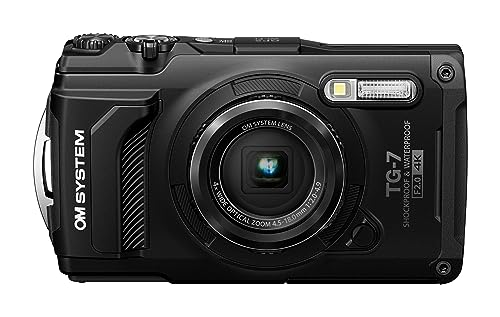
- OM SYSTEM Tough TG-7: check price on Amazon
- Nikon Z50 II: check price on Amazon
- Panasonic LUMIX S5II: check price on Amazon
- Canon EOS R6 Mark III: check price on Amazon
- Fujifilm X-T5: check price on Amazon
- OM System OM-1 Mark II: check price on Amazon
The list deliberately spans three philosophies. The TG-7 is the self-contained answer — a compact whose microscope mode focuses almost at its own lens and stacks in-camera, no extra lenses, no computer. The mirrorless trio are the system answer, trading bodies and macro glass for control, resolution and a workflow that scales from an online listing to a museum catalogue. And the two prose-only entries mark where the specialisms deepen: Fujifilm’s high-resolution crop files for texture, and OM System’s computational flagship, whose maker treats close-up photography as a first-class citizen.
What unites them is honesty about the genre’s central fact: at these distances, the camera is only half the instrument. Light, support and patience are the other half, and every verdict below is written assuming you will supply them.
Key Takeaways
- The OM SYSTEM Tough TG-7 is the small-object camera most people should buy first: microscope focus and in-camera stacking in a pocket body.
- The Nikon Z50 II is the learner’s system — affordable body, macro lenses when ready, focus aids that teach.
- The Panasonic LUMIX S5II brings full-frame quality and focus bracketing to product and specimen work.
- The Canon EOS R6 Mark III is the heavyweight for stacked, print-grade files of valuable small things.
- The Fujifilm X-T5, prose-only, crops deep into texture with its high-resolution sensor.
- The OM System OM-1 Mark II, prose-only, is the computational close-up specialist’s flagship.
In this guide
Quick Picks
| Camera | Badge | Why it is here |
|---|---|---|
| OM SYSTEM Tough TG-7 | Best for small objects overall | Microscope mode, in-camera stacking and focus almost at the glass. |
| Nikon Z50 II | Best learning system | A body that grows from kit lens to true macro as your subjects shrink. |
| Panasonic LUMIX S5II | Best full-frame value | Bracketing, stabilisation and clean files for sellers and collectors. |
| Canon EOS R6 Mark III | Best for print-grade stacks | Resolution, bracketing and colour for objects that deserve permanence. |
| Fujifilm X-T5 | Best for texture, prose-only | High-resolution crop files that hold a surface’s whole biography. |
| OM System OM-1 Mark II | Best computational specialist, prose-only | Stacking and close-up features engineered into the flagship. |
How did we judge cameras at the scale of a thumbnail?
By working distance, depth and truth-telling. Working distance first: how close must the camera sit to fill the frame with a two-centimetre subject, and at that distance, does the camera block its own light or frighten its own subject? A long working distance is a luxury in this genre — room for light, room for the insect to stay calm — and systems that provide it through macro lenses earned their keep.
Depth second: how does the pick buy sharpness across a small object’s planes? The honest currencies are small apertures, focus bracketing with stacking, and the small sensor’s natural depth. We favoured cameras that automate the bracketing reliably, because a hand-shifted focus sequence of twenty frames is a test of character nobody passes twice.
Truth-telling third: the focus aids — magnification, peaking, tethered screens — that show whether the plane of sharpness is where you believe it is. At macro distances, the screen’s small preview lies charmingly; the cameras here were chosen for the tools that correct the lie before the session ends rather than after it.

OM SYSTEM Tough TG-7 — Best for small objects overall
The TG-7 approaches small objects the way a naturalist approaches a tide pool: by getting in among them. Its microscope mode focuses almost to the front element, so a coin’s relief, a flower’s heart or a beetle’s armour fills the frame from a distance where other cameras are still looking for their minimum focus. Built-in focus stacking then merges a sequence into a frame sharp across the subject’s whole depth — the genre’s hardest trick, performed inside the camera while you hold your breath and watch.
The small sensor, so often apologised for, is an accomplice here: its natural depth of field keeps more of a tiny subject sharp per frame, and the body’s toughness suits the places small objects live — the garden, the workshop bench, the stream’s edge. Its accessory lights and rails turn it into a small studio that fits in a coat pocket.
Its limits are real and worth stating: fixed lens, and files that will not print a poster. But as the first, and for many the only, small-object camera a person needs, nothing on this page is more fit for the purpose — it simply refuses to let technique stand between the photographer and the tiny world.
- Mode: microscope macro, focus almost at the lens
- Stacking: in-camera focus stacking and bracketing
- Sensor: small format, naturally deep focus
- Body: tough, waterproof, bench-proof
Strengths
- The whole macro workflow in one pocket body
- Stacking without a computer or a rail
- Goes where small things live
Trade-offs
- Fixed lens forever
- Large prints exceed its files
- Stacking control is simpler than a tethered rig’s
Best for: collectors, naturalists, sellers of small things, the curious. Not suited for: gallery-scale printing.

Nikon Z50 II — Best learning system
The Z50 II is how a photographer grows into small objects rather than buying their way in. Start with the kit lens’s respectable close focus — coins, crafts, the garden’s larger insects — and learn the genre’s grammar of light and depth. Then, when the subjects shrink or the standards rise, the system is waiting: true macro lenses in Nikon’s range that turn this compact body into a serious close-up instrument without replacing it.
The crop sensor helps the student twice. Its magnification makes modest macro lenses reach further into the tiny world, and its depth of field is a touch more forgiving while focus technique is being learned. The focus aids are the grown-up kind — magnification for checking, peaking for placing the plane — and the body’s handling encourages the tripod-and-patience workflow the genre demands.
It will not stack in-camera with the TG-7’s push-button ease or print with the full-frame picks’ authority, and this guide will not pretend otherwise. What it offers is the honest apprenticeship: a camera whose ceiling rises with its owner’s skill, at a price that leaves budget for the lighting that matters more than either.
- Format: APS-C mirrorless, body only
- Macro path: native macro lenses available
- Focus aids: magnification and peaking
- Sensor: crop reach and forgiving depth
Strengths
- Grows from first coin to serious macro
- Crop magnification flatters modest lenses
- Handling teaches the right workflow
Trade-offs
- Macro lens is a second purchase
- Stacking is a software workflow
- Files trail the full-frame picks for print
Best for: learners, hobbyists building a macro practice. Not suited for: one-box simplicity or poster printing.

Panasonic LUMIX S5II — Best full-frame value
The S5II brings the full-frame virtues to the small-object bench without the flagship tax: clean, detailed files that hold a texture’s truth; focus bracketing that walks the plane through a subject in measured steps for stacking; and in-body stabilisation that steadies the hand-held exceptions to the tripod rule. For the seller photographing jewellery or the collector documenting a cabinet, it is the professional’s sensible body.
Its phase-detect autofocus matters in a place you might not expect: the living small subject. Insects, a watch’s moving balance, the craft object being turned in a maker’s hands — the S5II acquires and holds focus with a calm the genre’s older contrast systems never managed, and its video serves the object film — the ring rotated slowly in light — that modern selling increasingly demands.
The L-mount lens range behind it includes the macro glass the work requires, from its own maker’s and its partners’. As a system for small things that must look expensive, it is complete, current and fairly priced — the combination this page exists to find.
- Format: full-frame mirrorless
- Bracketing: automated focus bracketing for stacks
- Stabilisation: in-body, for hand-held close work
- Video: strong, for object films and rotation shots
Strengths
- Full-frame files at a sane system price
- Bracketing discipline built in
- Stills and object video in one body
Trade-offs
- Macro glass is a further investment
- Stacking merges happen in software
- Menu system rewards a setup session
Best for: sellers, collectors, product photographers. Not suited for: pocket carry or instant stacks.

Canon EOS R6 Mark III — Best for print-grade stacks
When the small object is valuable — the heirloom, the specimen, the artwork an insurer or a museum needs documented — the R6 Mark III is the bench’s heavy instrument. Its full-frame files carry the resolution and colour fidelity that permanence requires, its focus bracketing is precise and repeatable, and its handling makes a forty-frame stacking sequence a procedure rather than an ordeal.
Canon’s colour is half the argument for objects whose truth is chromatic: gemstones, enamels, a butterfly’s wing, the patina on bronze. Rendered through this body and a proper macro lens, surfaces keep their identity instead of drifting toward a generic digital gloss. Tethering options let the session be judged on a real screen at real size, which at macro magnification is the difference between documentation and hope.
It is, plainly, more camera than a marketplace listing needs, and its price with macro glass is a decision rather than an impulse. For the objects whose photographs will outlive their owners’ memories, that is the correct proportion of seriousness.
- Format: full-frame mirrorless
- Bracketing: precise automated focus sequences
- Colour: reference-grade rendering of surfaces
- Workflow: tethered review for critical work
Strengths
- Print and archive-grade files
- Surfaces keep their true colours
- Built for repeatable studio procedure
Trade-offs
- The system’s cost is a commitment
- Overkill for casual listings
- Demands the lighting rig it deserves
Best for: documentation, insurance, museums, serious collectors. Not suited for: beginners or budget listings.
Fujifilm X-T5 — Best for texture, prose-only
The X-T5 earns its prose-only place on resolution and temperament. Its high-density crop sensor records small surfaces — woven fabric, engraved metal, a leaf’s venation, a coin’s wear — with a density that lets the photographer crop into the texture afterwards, reframing the object at the desk. Paired with Fujifilm’s macro options, it is the texture specialist of this page.
Temperament matters at the bench more than brochures admit: the X-T5’s dials and film-simulation colour encourage a slower, more deliberate session, and its files have a rendering that collectors of mechanical watches and vintage objects tend to describe with uncharacteristic emotion. It lacks the in-camera stacking party tricks of the OM System pair; its stacking is a considered, software-finished workflow for people who prefer it that way.
Choose it when the small object’s surface is the story and the session is a pleasure rather than a production line. It is the connoisseur’s bench camera, and it knows it.
- Format: APS-C mirrorless, high-resolution sensor
- Files: dense detail for cropping into texture
- Controls: traditional dials, deliberate pace
- Colour: film-simulation rendering
Strengths
- Texture recorded in forensic detail
- Crop freedom after the session
- A bench manner that slows and improves the work
Trade-offs
- Stacking is external and deliberate
- Crop sensor trails full-frame for the largest prints
- Not the fastest workflow for volume selling
Best for: texture lovers, watch and vintage collectors. Not suited for: high-volume listing photography.
OM System OM-1 Mark II — Best computational specialist, prose-only
If the TG-7 is the close-up world’s pocketknife, its flagship sibling is the laboratory. The OM-1 Mark II — the second prose-only entry, from the maker that treats macro as a headline rather than a footnote — builds computational photography into a weather-sealed system body: in-camera focus stacking with real control, high-resolution modes, and a lens range whose macro offerings are the envy of larger systems.
The smaller sensor’s depth advantage, which the TG-7 exploits in miniature, scales up here with system quality: more of the tiny subject sharp per frame, stacks that converge faster, and a body that can work in the field — rain, dust, the stream bank — where so many small subjects actually live. For the naturalist whose objects have six legs and opinions, it is arguably the most purpose-built instrument on this page.
Its place here is as the specialist’s horizon: the camera the TG-7 owner graduates toward, the system the field macro photographer builds a career inside. If small objects are becoming your subject rather than your errand, this is where the road leads.
- Format: Micro Four Thirds flagship
- Stacking: in-camera with advanced control
- Body: fully weather-sealed for field macro
- Lenses: a macro range of unusual depth
Strengths
- Close-up treated as the main event
- Field-worthy sealing for living subjects
- Depth of field advantage at macro distances
Trade-offs
- Smaller sensor caps the largest prints
- A system investment, not an impulse
- Computational features reward study
Best for: field macro specialists, insect and nature photographers. Not suited for: studio-only or largest-print work.
How do you photograph a coin so its relief reads?
With raking light and patience. A coin’s story is written in relief a fraction of a millimetre deep, and only light arriving at a low angle — across the surface, never down on it — gives that relief shadows to speak with. Tilt the light, not the coin, until the portrait’s cheek and the lettering stand out; then, if the whole surface must be sharp, let the stacking cameras earn their keep. Collectors photographing for sale should include one honest straight-on frame as well: the raking shot is the portrait, the flat shot is the evidence, and buyers deserve both.
Why does working distance matter more than magnification?
Because magnification is a number and working distance is a life. Two setups can both fill the frame with a beetle; the one whose lens sits fifteen centimetres away leaves room for light, for the subject’s comfort and for the photographer’s hands, while the one at four centimetres shadows the scene with its own barrel and startles anything alive. When you compare macro options for the system cameras here, ask for the working distance at your intended magnification before you ask about anything else. It is the specification that decides whether the session feels like surgery or like gardening.
How do you photograph a watch or a piece of jewellery for sale?
Like a portraitist with a deadline. The object gets cleaned beyond what the eye can see — at macro distance, the camera sees the fingerprints you cannot — arranged on a background that flatters without lying, and lit by a soft source large enough to draw a long, elegant reflection along the metal. Take the hero shot, the clasp or movement detail, the honest flaw macro that builds a buyer’s trust, and the scale shot with a familiar object. The S5II and the R6 Mark III divide this work by budget; the discipline of the set belongs to every price.
What does a focusing rail do, and who needs one?
A rail moves the whole camera in micrometre steps, turning focus stacking from a hope into a measurement. Lens-based bracketing — which the bodies here automate — covers most subjects honourably; the rail earns its place at the highest magnifications, where the lens’s own focus steps are too coarse and the depth per frame is thinner than paper. If your small objects are specimens, gemstones or anything whose stack must not fail, the rail is the bench’s foundation. If they are listings and pleasures, the cameras’ bracketing is your rail, and it is already paid for.
How do you photograph insects without harming or hurrying them?
Early, gently and at their invitation. Cold mornings slow an insect into a sitter; a patient approach with a longer working distance keeps it one. The OM System pair’s field manners — sealing, depth of field, stacking that works on a living subject’s stillness — were designed in this ethic’s image. Never chill, glue or trap a subject for a photograph; the genre’s best practitioners are naturalists first, and their portraits carry the calm of an unhurried encounter. The insect that stays for its portrait is the only kind worth framing.
Why do small objects demand a colour discipline?
Because at this scale, colour is often the information. The gemstone’s hue, the stamp’s printing variant, the fungus’s exact and diagnostic tint — a small object’s photograph may be consulted as evidence, and a white balance chosen by the camera’s mood is a witness changing its story. Fix the white balance to the light you built, include a grey card in the session’s first frame, and let the systems’ raw files keep the truth recoverable. The Canon’s and Fujifilm’s colour reputations were earned in studios that understood this; the discipline itself is free.
How do you photograph food’s smallest subjects — spices, seeds, salt?
As landscapes. A pile of smoked paprika at macro distance is a dune field; peppercorns are boulders; the salt’s crystals are a geology. Light them like landscapes — low, raking, from one side — and compose with a horizon and a foreground, because the eye reads the tiny world with the same grammar as the large one. The TG-7’s microscope mode was practically designed for the spice drawer, and its stacking keeps the whole dune sharp. Food stylists charge for this knowledge; the home cook with a steady hand and a window can have it for the price of a cardamom pod.
What is the copy stand, and why do documenters swear by it?
A copy stand holds the camera pointing straight down at a flat subject, square and repeatable — the workstation of stamps, coins, documents, textiles and anything whose photograph must be a measurement rather than an impression. The system cameras here, tethered to a screen, turn the stand into a small factory of consistent records: same distance, same light, object after object, an archive a collection can be searched by. If your small objects are numerous and flat, build the session around the stand and let the camera be the least interesting part of it.
How do you handle dust, the macro photographer’s weather?
At macro magnification, dust is not a blemish but a landscape feature: a single fibre is a fallen tree across your coin. The session therefore begins with cleaning as a ritual — blower, brush, the object handled by its edges, the background wiped last — and continues with a review at full magnification before the lighting is struck, because dust discovered in the edit costs ten times what it costs on the bench. Keep the blower beside the camera the way the other guides in this series keep a cloth beside the lens. At this scale, housekeeping is image quality.
Why photograph a small object at all, rather than just looking?
Because the camera sees the object at a size life never offers. The watch movement’s finishing, the feather’s barbs, the worn inscription on a ring’s inner band — these exist below the threshold of the unaided eye, and the photograph is not a record of the object so much as a revelation of it. Every owner of a collection has a version of the moment: the familiar thing, owned for years, suddenly strange and detailed on the screen. The cameras in this guide are, at bottom, instruments for manufacturing that moment on demand.
How do you photograph electronics and circuit boards?
Square, shadowless and honest. A board’s photograph is usually diagnostic — a technician, a buyer or a forum needs to read it — so the copy-stand discipline applies: camera parallel to the board, light diffuse and even, focus stacked if the components’ heights demand it. Watch the reflections on the solder and the chips’ glossy tops; a polariser, turned slowly, can be the difference between a readable board and a mirror with ambitions. The X-T5’s resolution earns its mention here: at full magnification, the silkscreen’s smallest print stays legible.
What makes a good background for a two-centimetre subject?
Absence, mostly. The background’s job is to be a tone the subject is not — darker for pale objects, lighter for dark ones, matte always, and far enough behind the subject that the shallow depth melts it into a field rather than a second subject. Naturalists bend the rule beautifully with a leaf or a stone that belongs to the subject’s world; sellers should not. Keep three or four matte cards in the kit — black, mid-grey, a warm cream — and you own the genre’s entire scenery department for the price of a sandwich.
How do you photograph a ring’s inscription or a hallmark?
By treating legibility as the only aesthetic. The inscription lives on a curve, in shadow, at the limit of the lens’s depth — so the technique is a stack, a raking light low enough to shadow each letter’s cut, and the object rotated between frames if the curve defeats a single stack. Jewellers and insurers do this daily with the class of equipment on this page; the amateur’s advantage is time. Take the frames, merge them, and check the result at full size while the ring is still on the bench. A hallmark photograph that cannot be read is a rumour, not a record.
Why does the genre reward a tripod you can hate less?
Because small-object work is tripod work, and a tripod that fights its owner gets left in the cupboard, taking the sharpness with it. The qualities that matter are unglamorous: a head that locks without sagging at macro angles, legs that splay low for bench height, controls operable by feel while your eye is on the screen. The cameras’ stabilisation covers the exceptions; the tripod covers the rule. Buy it once, buy it for the bench’s height and your own patience, and it will out-serve every camera body in this guide.
How do you photograph a flower’s heart or a seed head?
In the morning, in still air, with the light the garden provides. The flower’s centre is a small object’s small object — stamens like a tiny forest, a seed head’s architecture — and the field macro virtues decide the session: working distance that does not shade the bloom, depth earned by stacking or by the small sensor’s gift, and a background chosen by moving your own feet six inches. The TG-7 in the border and the OM-1 in the serious garden divide this work; both ask only that the photographer arrive before the wind does.
How do you build a small-object corner in a spare room?
With a bench, a window and a curtain. The corner needs a surface that does not wobble, light that can be shaped — the window for the soft days, one LED panel for the rest — and storage for the genre’s small parliament of things: cards, cloths, blower, rails, the grey card, the tent for shiny subjects. It does not need size; some of the finest macro benches in the world occupy a metre of a spare room, because the subjects are two centimetres wide and the world they need is proportional. Build the corner once and the camera, whichever of these six it is, finally has a home worthy of its magnification.
What is focus peaking, and can you trust it at macro distance?
Peaking paints the in-focus edges on the screen in a bright colour — a map of the sharpness plane drawn live. At macro distance it is a guide rather than a gospel: the painted zone is thicker than the true plane, so the craft is to rock the focus until the paint centres on your subject’s vital plane, then confirm at full magnification before the sequence begins. The systems here all offer both tools, and the pairing is the professional habit — peaking to place, magnification to prove. Trust, in this genre, is a two-step verb.
What changes when the subject is a whole collection?
With a template and a liturgy. A collection’s photographs must agree with each other — same background, same light, same distance discipline — so that the hundredth object can be compared with the first at a glance. Build the set once, record its recipe like a lab protocol, and work through the cabinet in sessions the calendar respects. The tethered system cameras turn this into a rhythm; even the TG-7, on a small stand with its lights, can keep a template honestly. A collection photographed as a system becomes a catalogue; photographed as moods, it becomes a pile.
Why do auction houses and museums photograph small things so plainly?
Because their photographs are instruments, not advertisements. The plain record — even light, true colour, the flaw included, a scale in the frame — exists so that a stranger can trust the object without holding it. Home photographers documenting for insurance or for a family’s future should steal the plain style entire; it is easier than the glamorous one and worth more. Save the raking light and the drama for the portraits, and keep the record set boring, consistent and complete. The cameras here do both dialects; the wise owner keeps the two folders separate.
How do you photograph a moving small subject — a spider, a beetle, a mechanism?
By deciding what may blur. A living subject at macro distance will not hold a stacking pose, so the single frame returns to honour: the plane placed on the eye or the vital part, the aperture balanced between depth and light, the shutter fast enough for the subject’s tempo. The S5II’s autofocus and the OM-1’s field design serve this work; the TG-7’s depth is the small camera’s answer. A watch’s balance wheel, by contrast, may blur beautifully — its motion is its meaning — and the photograph that lets it smear while the bridges stay sharp tells the truer story.
What does magnification do to your sense of time?
It slows the photographer to the subject’s scale. A macro session has a tempo unlike any other genre’s: the object arranged by millimetres, the light nudged by degrees, the stack ticking through its frames like a small clock. Photographers either find this meditative or intolerable within one session, and it is better to know which before the system budget is spent. The TG-7’s speed is the merciful introduction — a stacked macro in under a minute — while the full bench workflow is the genre at its most monastic. Both are legitimate; only one of them is a personality test with a lens attached.
How do you sell a small object with one photograph?
You mostly cannot, and the platforms’ best sellers know it: the one photograph that must exist is the honest hero — the whole object, sharp across its depth, true in colour, on a background that flatters without lying — and it is exactly the photograph the stacking cameras were built to mass-produce. After the hero, the details and the flaws in macro close-up do the persuading. If a listing truly allows a single frame, spend the session on that hero as if it were a portrait sitting, because for the object’s next owner, it is one.
Why does the genre love a grey card?
Because memory lies about colour and the card does not. Photographed once in the session’s light, the grey card gives the edit a fixed point of truth from which every frame’s colour can be corrected — the gemstone’s hue, the textile’s dye, the specimen’s diagnostic tint restored to what the light actually showed. It costs almost nothing, weighs less, and separates documentation from decoration more decisively than any camera feature in this guide. The professionals’ secret is that their secrets are mostly this size: small, grey and used every time.
How do you photograph through glass — a specimen jar, a display case, a watch crystal?
Kill the reflection and mind the second surface. Lens close to the glass, a dark shroud sealing the gap, the room’s lights arranged so none of them can see the pane — the same discipline as the night-window work elsewhere in this series, in miniature. Focus manually on the subject, because autofocus will fall in love with the glass’s dust. A polariser helps at an angle and hinders square-on; test before the session that matters. Display cases in museums add their own rules, which are the house’s to state and yours to keep.
What is the smallest studio in this guide?
The TG-7, two accessory lights and a sheet of matte card — a studio that fits in a lunchbox and sets up on a café table. That is not a consolation prize; it is a philosophy the genre keeps rediscovering, that small subjects need small, close, controllable light rather than a room of equipment. The bench systems in this guide produce the finer file, but the lunchbox studio produces the photograph today, at the market, in the garden, beside the collection cabinet. In small-object work, as in the miniatures and sightseeing guides elsewhere in this batch, the present camera with the right light beats the perfect camera in another postcode.
What does a textile ask of the camera?
Flat, raking and patient. Textiles are small objects pretending to be surfaces; their truth is in the weave’s relief and the dye’s variation, both of which die under flat frontal light. Lay the piece flat and true, rake one light across it until the weave casts its tiny shadows, and let the X-T5’s resolution or the Canon’s colour carry the record. For a lace edge or an embroidery, a dark background behind the open work turns the pattern into calligraphy. Handle with clean hands and photograph the maker’s irregularities as carefully as the pattern — in textiles, the hand’s presence is the value.
What do you do when the subject is smaller than the lens can focus?
You enter the genre’s deep water, where magnification accessories live: close-up filters that screw on like reading glasses for the lens, extension tubes that move the lens further from the sensor, reversed lenses and microscope objectives adapted by the devoted. The system cameras here accept this whole parliament of tricks; the TG-7 simply starts where they end. Know the cost of each step — light lost, depth vanishing, working distance shrinking to a whisper — and climb only as far as your subjects demand. The photograph of a springtail is a triumph; it is also a morning’s work, and the morning should be chosen knowingly.
How do you photograph a small object outdoors, in its own world?
By bringing the bench’s discipline to the field rather than the field’s chaos to the bench. The subject stays where it lives — the fungus on its log, the beetle on its leaf — and the photographer builds the small studio around it: a diffuser held against the sun, a background card slipped behind the leaf, the camera on a beanbag at the subject’s own level. The OM System pair’s sealing and the Nikon’s patience serve here; the ethic is the naturalist’s from earlier in this guide. The photograph that results has something no bench can manufacture: the object at home, in its own light, at its own scale.
Why does every macro photographer eventually buy a better light before a better lens?
Because the lens they own was never the limit. At macro distance, the photograph is made of light arranged within a few centimetres — its direction, its size relative to the subject, its colour — and the difference between a harsh point and a soft, shaped source is larger than any lens upgrade ever measured. The genre’s veterans all tell the same story: a year blaming the glass, a day with a proper diffuser, a conversion. This guide has placed the lesson in several sections because it is the cheapest truth in the whole batch of guides: light first, and the cameras here will show you what they can do.
How do you know a small-object photograph is finished?
When the object looks inevitable — sharp where it must be, true in colour, lit so its form explains itself, on a ground that argues nothing. Most frames fail one test: the plane a whisper off, the highlight blown on the curve, the background’s edge shouting from the corner. The bench discipline — check at full magnification, clean, adjust one variable, reshoot — converges on the finished frame the way a jeweller converges on a setting. Keep the standard and a modest cabinet of objects becomes, frame by frame, a collection of portraits at the scale of wonder.
What is the first small object you should photograph?
One you already love and can afford to fail with: a coin from a trip, a button, a shell, the household’s most interesting spoon. Love supplies the patience the genre runs on, and a familiar object teaches the gap between seeing and photographing faster than any specimen — you know what it should look like, so every failure is instructive. Set the session aside properly, light from the side, stack if your camera offers it, and compare the result with the object in your hand. That comparison, repeated across a winter of small things, is the entire education this guide can point at but never give.
Where does a stamp’s portrait begin?
As a document first and a portrait second. Printed small things live or die on fidelity: the camera square to the paper on a copy stand or a levelled tripod, the light even and glancing enough to spare the gloss, the colour anchored by the grey card so a printing variant reads as itself. Perforations and edges stay in the frame — for stamps, the edge is identity. The resolution to crop into a single stamp from a block belongs to the X-T5 and the Canon; the discipline of squareness belongs to whoever sets the stand. Philately’s whole science is comparison, and the photograph that cannot be compared is decoration.
What does the genre owe the amateur’s kitchen table?
Almost everything. More fine macro photography has been made on kitchen tables — by window light, with a cereal box for a background and a patience learned from the subjects — than in all the studios whose owners write the tutorials. The table’s lesson is the genre’s democratising truth: the equipment in this guide spans a wide range of prices, but the distance between the TG-7 on a kitchen table and the flagship on a bench is mostly convenience, not vision. Start at the table. The bench, if your objects demand it, will be built by hands the table trained.
How do you archive a small-object session?
With the object’s name, the date and the recipe. Small things photograph in series — a collection, a season of insects, a product line — and the session’s value multiplies when the next one can repeat its conditions exactly: the light’s position noted, the background’s card named, the camera’s settings filed with the frames. Keep the stacked master and the honest single frames; storage is cheaper than reshooting a sold object. In a year, the archive becomes the collection’s second cabinet, searchable and shareable, and its discipline will have quietly become the owner’s reputation among fellow collectors.
Why do small things photograph larger than life in every sense?
Because attention is a magnifier too. An object photographed at this care becomes, in the viewer’s mind, monumental — the coin becomes a shield, the beetle a knight, the button a moon. The cameras and techniques in this guide are the machinery of that transformation, but its cause is simpler: somebody looked at a small thing as if it mattered at full size. That is the genre’s whole secret and its standing invitation. The tiny world is not a lesser world awaiting a bigger lens. It is the same world, waiting for the same respect, at a scale where respect must be deliberate.
Comparison: all six picks at a glance
| Camera | Form | Character | Choose it if… |
|---|---|---|---|
| OM SYSTEM Tough TG-7 | Rugged compact | The microscope | You want macro solved in one body |
| Nikon Z50 II | APS-C mirrorless | The apprenticeship | You are learning the tiny world |
| Panasonic LUMIX S5II | Full-frame mirrorless | The professional value | Small things must look expensive |
| Canon EOS R6 Mark III | Full-frame mirrorless | The archive | The objects deserve permanence |
| Fujifilm X-T5 | APS-C mirrorless | The texture | Surfaces are the story |
| OM System OM-1 Mark II | MFT flagship | The laboratory | Macro is becoming your subject |
What are the most common mistakes in small-object photography?
Lighting from the camera’s own position
On-axis light at macro distance is a confession of flatness: the object’s relief, which is its character, vanishes, and the photograph becomes an inventory picture. Move the light to the side — raking light across a coin’s relief or a fabric’s weave is where the texture lives — and diffuse it, because a small object under a hard small light is a landscape of blown highlights. The cameras here will record whatever the light decides; the light, at this scale, is most of the photography.
Chasing magnification before stability
The beginner buys reach and photographs earthquakes. At macro magnification, every tremor is amplified exactly as much as the subject is, so the tripod, the remote release or timer, the stable bench and the patience to let vibrations settle are not accessories — they are the image quality. The TG-7’s stacking and the systems’ stabilisation help at the margins; the discipline of not touching anything at the moment of exposure helps at the foundation. Build the stillness first, then magnify it.
Ignoring the background at small scale
At macro distances the background is not a backdrop but a colour field that fills half the frame, and the household’s clutter reads as abstract shapes competing with a two-centimetre subject. A piece of matte card, a slate, a leaf — the small-object photographer’s backgrounds are bought for pennies and chosen like frames. Judge your composition at full magnification, where a stray bright edge shouts, and let the subject own the small world you have built for it.
Final Recommendation
Begin where the genre is kindest: the OM SYSTEM Tough TG-7 solves small objects in a single pocket body, and most photographers — collectors, sellers, the incurably curious — will never need more. Grow into the Nikon Z50 II system if the hobby takes hold, step to the Panasonic S5II when small things must look expensive, and reserve the Canon R6 Mark III for objects whose photographs are documents. The Fujifilm X-T5 and OM-1 Mark II wait at the specialist end, for texture and for the field respectively. Whichever you hold, light from the side, build the stillness, and clean the object like a jeweller. At this scale, care is the sharpest lens.
Related guides
- Best DIY Security Cameras for Small Business: Self-Installed Systems With Local Storage
- Best Digital Cameras for Close Up Shots: Macro, Magnification and Focus Stacking
- Best Compact Cameras for Bokeh: One-Inch Compacts and the Small Systems That Melt Backgrounds
- Best Canon Cameras for Videos: Recording Depth, Focus and Cinema Options for Experienced Shooters
Frequently Asked Questions
Do I need a dedicated macro lens for small objects?
Not to begin, and perhaps not ever. The TG-7’s microscope mode covers the classic small subjects — coins, stamps, jewellery details, insects — with no extra glass at all, and kit lenses focus close enough for larger small things like watches and crafts. A dedicated macro lens earns its place when you need a single tiny detail to fill a large, high-quality frame, or more working distance between the lens and a living subject. Let the subjects you actually photograph make the decision.
What is focus stacking, and do I need it?
Stacking is the genre’s answer to physics: at macro distance, only a sliver of the subject is sharp in any one frame, so the camera takes a sequence at stepped focus distances and software — or the TG-7 and OM-1, in-camera — merges the sharp slivers into one fully sharp image. You need it when the whole object must be sharp at once: product shots, specimens, documentation. For artistic work, a single sharp plane is often the better picture. It is a tool, not a tax.
How do I photograph shiny small objects — jewellery, coins, chrome?
Shiny objects photograph their surroundings, so build surroundings worth reflecting: a tent of diffusion material lit from outside, with deliberate dark cards placed to draw the edges and give the metal its shape. The camera sees the tent, not the room; the object shows the tent’s smooth gradients instead of the ceiling’s chaos. Work tethered or magnified if you can, move the object rather than the lights once the tent is built, and expect the session to be slow. Reflective small things are the genre’s final exam, and the tent is the whole syllabus.
Can I photograph small objects with my phone instead?
For a quick listing of a forgiving object, modern phones do a decent impression — and then the genre’s demands arrive: controlled depth, true colour on a gemstone, a living insect at working distance, a file that prints. The cameras here exist for the second list. A fair division is to let the phone handle the household’s administrative small things, and keep a real close-up instrument for the objects that matter — which, in most collections, is a short and beloved list.
What lighting should a beginner buy first?
A window, used sideways, is free and excellent; after that, one small continuous LED panel with diffusion you can improvise from a sheet of baking parchment or a shower cap’s more dignified cousins. Continuous light beats flash for learning because you can see the shadows you are making at the size you are making them. Add a reflector card and a black card for edges, and you own the complete lighting grammar of small things for less than a lens cap’s replacement on the big systems.
Related Guides
Keep exploring with our companion reading: best cameras for close up detail, best cameras for shooting miniatures and best cameras for product photography.


