reviewstook.com is reader-supported. When you buy through links on our site, we may earn an affiliate commission.
Where to buy
Independent film is where camera choice becomes philosophy: with no studio’s money and no second unit, the camera must be the lighting package’s partner, the schedule’s servant and the festival screen’s equal. The best cameras for shooting independent films are the ones that give a small crew a big film’s image — full-frame depth, colour that grades into a signature, dynamic range that forgives real locations, and reliability across twelve-hour days in borrowed houses. The six below are the bodies independent features and shorts are actually being shot on at this tier, from the Panasonic pair built for cinema to the pocket camera that has become the indie set’s secret weapon.
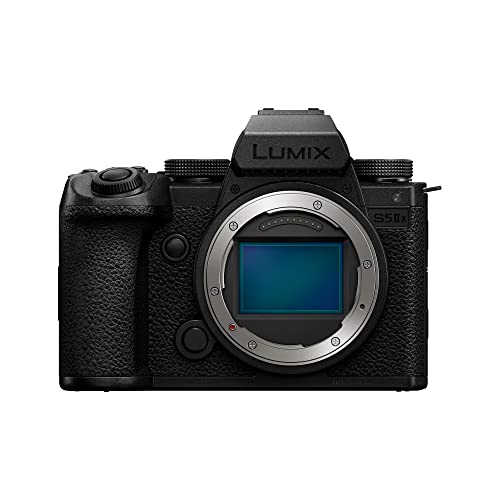
- Panasonic LUMIX S5IIX: check price on Amazon
- Panasonic LUMIX S5II: check price on Amazon
- Sony Alpha 7 IV: check price on Amazon
- Canon EOS R6 Mark II: check price on Amazon
- DJI Osmo Pocket 3: check price on Amazon
- Sony ZV-1F: check price on Amazon
Indie economics shape every verdict. The camera budget competes with feeding the cast, insuring the location and paying for the one extra day that saves the third act — so value here is measured in finished films, not specifications. A body that shoots a feature beautifully and leaves money for sound, light and time outranks a body that consumes the production to feed itself. The shortlist therefore pairs its flagships with honest value routes and two small cameras whose footage has embarrassed far larger rigs in the right hands.
Bring your film to the decision: its locations, its light, its night scenes, its cast’s patience. A chamber drama in one house, a road film across a county and a night piece in a real city are three different cameras wearing one title, and the sections below argue for each.
Key Takeaways
- The Panasonic S5IIX is the indie director’s cinema tool: pro recording, scopes and stamina.
- The S5II delivers the same image for less, leaving budget for sound, light and days.
- Sony’s Alpha 7 IV is the available-light and autofocus insurance policy for small crews.
- Canon’s R6 Mark II gives indie faces the kindest colour and stills for the poster in one body.
- DJI’s Pocket 3 shoots the moves, inserts and second-unit material a tiny crew cannot otherwise afford.
- Behind the scenes and in proof-of-concept work, the Sony ZV-1F is the camera every indie kit should carry.
In this guide
Quick Picks
| Camera | Badge | Why it is here |
|---|---|---|
| Panasonic LUMIX S5IIX | Best indie cinema tool | Professional codecs, external recording and monitoring for a feature-grade pipeline. |
| Panasonic LUMIX S5II | Best value feature body | The same full-frame image; the savings feed the production. |
| Sony Alpha 7 IV | Best low-light insurance | Autofocus and sensitivity that rescue night scenes and tiny crews. |
| Canon EOS R6 Mark II | Best for faces and colour | Canon’s rendering for performance-led films, plus campaign stills. |
| DJI Osmo Pocket 3 | Best second unit in a pocket | Gimbal moves, inserts and locations a full rig cannot enter. |
| Sony ZV-1F | Best companion camera | Behind-the-scenes, tests and the director’s visual notebook. |
How did we judge cameras for films with more ambition than money?
By the finished film test: if this body shot the whole feature, what would the audience feel? That test weights image character — depth, colour, dynamic range in real rooms — above laboratory resolution, because audiences remember faces in window light, not test charts. It weights reliability across a production’s worst day above a showroom’s best hour. And it weights the total system cost, lenses included, against the budget lines a camera can starve: sound, light, food, days.
Low light mattered disproportionately, because independent films live in available light — real houses at night, real streets, the golden hour that lasts twenty minutes and waits for no generator. Bodies that hold clean images in those conditions extend an indie schedule more than any other feature. Autofocus mattered for the same reason: a two-person crew cannot dedicate a focus puller to every scene, and an actor’s best take cannot be sacrificed to a soft eye.
Finally, we honoured the ecosystem of the possible: lens mounts with affordable glass and thriving used markets, bodies rental houses stock for the day a second unit is needed, and files that a freelance colourist can grade without a phone call. Independent film is a community sport, and its cameras should speak the community’s language.

Panasonic LUMIX S5IIX — Best indie cinema tool
The S5IIX is the closest a mirrorless body comes to thinking like a cinema camera, and independent directors have adopted it accordingly. Professional codecs and external SSD recording give the colourist real material; scopes and frame guides keep a small crew honest about exposure and composition; phase hybrid autofocus tracks an actor through a scene without a focus puller’s salary; and the full-frame image — depth, dynamic range, night manners — holds a festival screen without apology.
Its indie virtues are practical as much as aesthetic. The body runs long days without thermal drama, the L-mount alliance supplies cinema-minded glass at prices a crowdfunding budget survives, and the recording options let a production shoot its master in a serious codec while the same body captures behind-the-scenes in a light one. Films shot on it have the pipeline of productions ten times their budget.
It asks for an operator who thinks in cinema’s grammar — frame rates, shutter discipline, colour workflow — and stills photographers will find its soul elsewhere. For the director whose short is a calling card and whose feature is a plan, this is the guide’s first recommendation: the camera that treats an independent budget with professional respect.
- Sensor: full-frame, 24.2 megapixels
- Autofocus: phase hybrid face and eye tracking
- Recording: pro codecs, external SSD options
- Tools: scopes, frame guides, cinema assists
Strengths
- A feature pipeline in one body
- Long-day stamina for real schedules
- Grades like a cinema camera
Trade-offs
- Demands cinema discipline from its operator
- Autofocus concedes chaos to Sony
- Video-first handling throughout
Best for: directors and DPs building features and shorts. Not suited for: casual video or stills-led work.

Panasonic LUMIX S5II — Best value feature body
Every indie producer should perform the S5II calculation: the same full-frame sensor and autofocus as the X, the same image the audience will judge — for a saving that buys the sound recordist, the extra location day, or the lighting package that the film will be remembered for. Independent cinema’s history is written by exactly this arithmetic, and the S5II is its current champion: a feature-capable body priced like a compromise it does not ask the image to make.
On set it behaves like its sibling in every way the screen can detect — colour, depth, stabilisation for the hand-held passages, codecs strong enough for a festival grade. Productions pair the two as A and B cameras without a colourist’s complaint, which makes the S5II also the rational second body for an S5IIX production.
What the saving costs is pipeline depth: fewer external recording options, a lighter professional toolkit. A well-planned indie shoot — and planning is the genre’s religion — rarely misses them. If your film’s budget is a fixed sum being argued over by every department, give the argument to production value and shoot on this.
- Sensor: full-frame, 24.2 megapixels
- Autofocus: phase hybrid tracking
- Video: professional core specification
- Mount: L-mount alliance, shared with the X
Strengths
- Feature image at a producer-friendly price
- Intercuts seamlessly with the S5IIX
- Savings convert directly into production value
Trade-offs
- Lighter pro recording menu
- Video-first ergonomics
- Rental availability thinner than Sony’s
Best for: budget features, shorts and second bodies. Not suited for: cinema-spec delivery pipelines.

Sony Alpha 7 IV — Best low-light insurance
Independent films die in the dark more often than anywhere else — the night exterior lit by one practical, the house scene the schedule pushed past sunset — and the Alpha 7 IV is the insurance policy against that death. Its sensitivity keeps night footage clean at sensitivities lesser bodies surrender, and its eye autofocus finds the actor’s face in light a focus puller would call unreasonable. For a small crew shooting real places at real hours, those two virtues are worth more than any codec.
The ecosystem compounds the insurance: every rental house can supply a second body or the missing lens by morning, every freelance colourist knows the files, and the stills side shoots the poster and the production photographs without a second system. Indie productions run on favours and logistics; this body is the one the logistics favour.
Its recording menu is a hybrid’s rather than a cinema camera’s, and long takes in hot locations deserve the planning any professional would give them. Weighed as a whole — image, focus, night, ecosystem — it remains the body most likely to bring a small crew’s film home, which is the only verdict independent cinema ultimately recognises.
- Sensor: full-frame, high-resolution class
- Autofocus: real-time eye detection
- Video: detailed 4K with strong low-light behaviour
- Mount: Sony E, universally rentable
Strengths
- Night scenes survive on small lighting packages
- Autofocus that rescues tiny crews
- An ecosystem that answers emergencies
Trade-offs
- Hybrid recording menu, not cinema-deep
- Premium system cost
- Long hot takes need planning
Best for: night-heavy and small-crew productions. Not suited for: purist cinema pipelines.

Canon EOS R6 Mark II — Best for faces and colour
Performance-led indies — the two-hander in a flat, the family drama around a table — live or die on faces, and faces are Canon’s ancestral craft. The R6 Mark II renders skin with a warmth that flatters untrained actors and survives the grade, its oversampled 4K holds detail kindly rather than clinically, and its subject detection keeps the conversation’s focus where the scene’s meaning moves. Directors cast this camera the way they cast a sympathetic lens: for the humanity it adds.
Around the image, the indie package coheres: in-body stabilisation for the documentary passages, RF glass from affordable primes upward, and stills that shoot the festival poster in the same light as the film. For the director-photographer hyphenates who populate independent cinema, that completeness is a budget line saved and a look unified.
Its recording stamina and codec depth sit a tier below the Panasonics’, so plan the long dialogue days with power and settings discipline. For films whose budget of attention belongs to performance, it is the most humane instrument in this guide — the camera actors’ faces would choose.
- Sensor: full-frame, 24.2 megapixels
- Video: oversampled 4K
- Stabilisation: in-body assistance
- Colour: Canon’s celebrated skin rendering
Strengths
- Faces have never had a kinder mirror
- Stills and film in one look
- Forgiving for untrained performers
Trade-offs
- Recording depth below the Panasonics
- Long days need power planning
- Premium pricing
Best for: dramas, dialogue and performance films. Not suited for: marathon single-take shooting.

DJI Osmo Pocket 3 — Best second unit in a pocket
Ask indie directors what the Pocket 3 did for their films and they lower their voices: it shot the stairwell descent the rig could not fit, the market walk that would have needed permits and a Steadicam operator, the insert of hands on a steering wheel at dawn. Its gimbal and 1-inch sensor produce moving footage with a production value grotesquely out of proportion to its size and price, and on a small production that disproportion is called survival.
Used with discipline — matched frame rates, its flatter colour for the grade, daylight and lit interiors as its home — its footage intercuts with the full-frame A-camera at the sizes festival screens forgive, and its absence of ceremony lets a director grab the transition, the texture, the breath between scenes that make a film feel lived-in. It is also the set’s morale camera: the behind-the-scenes and the wrap-party record live on it.
It cannot carry a feature — night exteriors and ultimate detail belong to the big sensors — and pretending otherwise wastes its genius. As the second unit an indie crew of three can actually deploy, it has no rival in this guide or, frankly, in the market’s recent memory.
- Sensor: 1-inch on a three-axis gimbal
- Video: 4K with face and subject tracking
- Role: second unit, inserts, movement
- Carry: coat-pocket size
Strengths
- Production value wildly beyond its size
- Shoots where rigs and permits cannot
- Morale and behind-the-scenes included
Trade-offs
- Not a night or A-camera instrument
- Gimbal fragility on rough locations
- Fixed lens vocabulary
Best for: second unit and solo directors. Not suited for: carrying a feature alone.

Sony ZV-1F — Best companion camera
The ZV-1F’s indie role is the one nobody budgets for and everybody needs: the camera of the process. It shoots the location scout so the DP can plan, the rehearsal so the director can think, the crowdfunding pitch with a face the autofocus keeps kind, and the behind-the-scenes film that becomes the festival’s marketing. Its wide lens and instant manners suit cramped real locations, and its files are good enough that its footage has a way of graduating into the film’s texture — the video diary, the character’s own recordings, the found-footage beat.
Directors who carry one describe it as a visual notebook: compositions tested in seconds, light read at a glance, blocking solved before the A-camera is built. On a production where time is the scarcest currency, a notebook that answers instantly is a department in itself.
Its limits are the compact’s — fixed lens, small sensor, no night heroics — and it should never be asked to save a scene the A-camera missed. Kept in its lane, it is the cheapest insurance and the cheapest inspiration in this guide, and indie kits feel undressed without one.
- Sensor: 1-inch, roughly 20 megapixels
- Lens: fixed ultra-wide
- Autofocus: face and eye priority
- Role: scouts, rehearsals, behind-the-scenes
Strengths
- The production’s visual notebook
- Instant, kind footage of everything around the film
- Small enough to be everywhere
Trade-offs
- Not a scene-saving A-camera
- Fixed lens and small sensor ceilings
- Night work beyond its brief
Best for: directors’ companions and BTS. Not suited for: principal photography.
What does an indie crew actually need from a camera?
Forgiveness, in four currencies. Forgiveness for light that cannot be built — dynamic range and sensitivity. Forgiveness for time that cannot be bought — autofocus, stamina, setups that take minutes. Forgiveness for locations that cannot be controlled — stabilisation, small footprints, quiet operation. And forgiveness for money that cannot be raised — total system cost that leaves the film fed. The bodies here were ranked on those currencies rather than on showroom specifications, because independent film is the art of the forgiven constraint, and its cameras should be fluent in the genre.
How do you light an indie feature on real locations?
Augment, never replace. Read the location’s own light — the window’s direction, the practical lamps, the street’s spill — and build the scene’s look from what the place offers, adding one or two controllable sources to shape faces and separate planes. The full-frame bodies’ sensitivity is what makes the philosophy possible; a generation ago the same rooms demanded a generator. Shoot the location at its best hour when the schedule allows, and let the place’s truth become the film’s production design. Audiences smell a real room through the screen.
What frame rate and shutter give the film look?
Twenty-four frames per second with the shutter near one-fiftieth — the cadence a century of cinema taught audiences to read as story. Every A-camera here shoots it natively; the discipline is resisting the higher rates’ video-game smoothness except where slow motion is the intention. Pair the cadence with deliberate camera movement — locked, panning with purpose, or floating on the gimbal’s calm — and a mirrorless body produces the grammar festivals screen. The film look is mostly this arithmetic plus light; the camera merely has to not prevent it.
How do you record sound that matches the image?
By treating the sound recordist as a department, not an accessory. Indie audiences forgive a soft frame sooner than an echoing room, because dialogue is where story lives. The bodies here accept proper microphones and timecode-minded workflows at their tiers, but the decisive purchases are the boom, the recorder and the person whose only job is listening. Budget them before the second lens — the S5II-over-S5IIX saving exists, in this guide’s moral arithmetic, precisely to fund the sound department. A film is heard as much as seen, and festivals programme with their ears.
What lenses does an indie feature actually need?
Three honest focal lengths and the discipline to scout with them: a wide for the rooms, a normal for the conversations, a short telephoto for the close-ups and the compressed exteriors. Fast enough for the locations’ light, matched enough in character to intercut, and affordable enough — via the mounts’ used markets — to leave the budget breathing. Prime sets teach a director’s eye faster than zooms, because the feet learn the framing. The mounts represented here all support that classic trio at indie prices, which is no accident of the shortlist.
How do you plan a shooting day around a small camera package?
By scenes’ light, not by the script’s order. Exteriors at the day’s kind edges, interiors through the harsh middle, nights when the story’s nights are unavoidable and the cast is fresh enough to survive them. Small packages move fast — a mirrorless kit relocates in minutes where a cinema rig takes an hour — and the schedule should exploit that speed: more setups, more coverage, fewer compromises carved in stone. The director who plans around the light with a forgiving camera finishes days that defeat larger productions, and finishing is the indie superpower.
What is the director’s monitor on a tiny crew?
Often the camera’s own screen, judged with unusual honesty — which is why the bodies’ screen quality and assists matter more on indie sets than on crewed ones. Where a monitor exists, it belongs to the director’s eye for performance rather than to a client’s approval, and the scopes belong to whoever is minding exposure. Keep the chain simple: what the festival screen will forgive, the set screen must catch. The Panasonic pair’s professional assists earn their keep exactly here, on the sets too small for a video village.
How do you cast a camera for a night film?
By its sensor’s honesty after dark and its autofocus’s courage in the dim. Night indies are shot on practicals, neon and nerve; the Sony’s sensitivity and eye detection lead this guide’s night class, with the Panasonics close behind on the strength of their dynamic range. Test the exact streets and rooms before committing — a night test with your actors, your lenses and your nerve is worth a month of reviews. And schedule mercy: night shoots tax humans faster than cameras, and the film’s last night scene is shot by whoever is still standing.
What does the colour grade mean for an indie film?
It is the second lighting pass and the film’s final signature. Shooting a flat, information-rich profile on any A-body here gives the colourist the material to build the look the locations only suggested — the warmth of the family scenes, the cold of the city’s nights, the consistency across days the weather refused to match. Budget the grade as a department, choose the colourist as carefully as the DP, and shoot for their hands from the first setup. Indie films are remembered by their looks as much as their scripts; the grade is where the look is decided.
How do shorts differ from features in camera terms?
Intensity replaces endurance. A short can be shot at the edge of a camera’s manners — the hottest day, the longest takes, the boldest available light — because the production is a weekend’s sprint, while a feature must live with its body for a month of Tuesdays. Shorts are also the audition: the S5II pair and the Sony shoot shorts that look like features’ best days, which is why they anchor so many calling-card films. Choose the short’s camera for the feature you intend it to advertise, and the same body, crew and look graduate together.
How do you direct actors for a camera that forgives?
Freer, and closer. Forgiving autofocus and sensitivity let a director keep the take rolling through the improvisation, the overlap, the moment the scene finds itself — instead of cutting for technical safety. Small crews discover that the modern indie style, intimate and handheld and alive, is partly a technology story: the cameras here hold focus and exposure through performances that a stricter era would have rehearsed into safety. Direct for the accident, protect it with the machine, and edit with gratitude. The film’s best scene is usually the one the plan did not contain.
What is coverage on a two-person crew?
A promise made carefully. Classical coverage — master, singles, close-ups, inserts — multiplies setups a tiny crew cannot afford, so indie coverage is designed backward from the edit: the master that plays, the two singles the scene will actually cut between, the insert the story cannot live without. Shoot those with total commitment and let the rest go. The Pocket 3 gathers the transitions and textures in the margins. A film covered honestly at this scale cuts together; a film covered ambitiously at this scale collapses on day three, taking the schedule with it.
How do you scout locations with the camera in mind?
Visit at the hour you will shoot, with the ZV-1F or the A-body in hand, and photograph the scene’s geography: where the light enters, where it dies, where the camera can stand, where it cannot. Note the practicalities that become production design — the socket that exists, the window that faces the wrong way, the street that sings at night. Location scouting is cinematography done in advance at walking pace, and the productions that do it with a camera arrive on the day with a plan the light has already approved.
What is the festival screen’s actual demand?
Less resolution than projectionists fear and more craft than film-makers hope. Festivals screen everything from restored classics to phone-shot prizewinners; what unites the selections is intention — images that look chosen. A clean, well-exposed, consistently graded 4K master from any A-body here passes the technical gate without discussion, leaving the film to be judged on the things festivals actually judge. Shoot for intention, deliver a tidy master, and stop letting format anxiety spend the budget that story needed.
How do you handle weather on an indie schedule?
Write it into the film or insure against it with cover sets — the interior that can absorb a rained-off day. Small productions cannot wait out weather like studios; they metabolise it. The cameras’ weather manners matter here: sealed-enough bodies for the drizzle scene, the Pocket 3 sacrificed gladly to the storm shot, and a schedule with a swap day designed in. Some of independent cinema’s most remembered scenes are weather the plan survived by embracing. Build the embrace into the call sheet.
What does a director’s relationship with the camera become?
Fluency, then invisibility. Early in a production the camera is a negotiation — settings, doubts, checks; by the second week, on a body that behaves, it becomes a reflex, and the director’s attention returns wholly to the performances, which is where it belonged. This is the deepest argument for the familiar bodies in this guide and against exotic rentals learned on the day: the film needs the director’s mind, and every menu not yet memorised is rent charged against it. Choose the body you can stop thinking about soonest.
How do you shoot a long take with a small crew?
Choreograph the humans before the camera. The long take is a dance of actor, operator and light, rehearsed in sections, with focus marks replaced by the autofocus’s vigilance and the route cleared like a stage. The stabilised bodies and the Pocket 3 each offer a dialect of it — the gimbal’s glide, the handheld’s breath — and the choice is the scene’s emotional grammar. Long takes are indie cinema’s flex and its trap in equal measure: one that serves the scene is a triumph, one that serves the director’s vanity costs the day. Rehearse like a theatre company; shoot like you mean the story.
What is the role of test shoots?
They are the film’s first draft, shot before the money is. A weekend test — the lead actor, the main location, the camera and lenses under consideration — answers the questions no review can: how the colour sits on that face in that room, whether the night street holds, whether the crew’s rhythm works. Productions that test arrive at day one with a look already chosen and a team already fluent. The companion cameras in this guide exist partly to make tests cheap enough to be unskippable. Skip them and the feature itself becomes the test, at feature prices.
How do you keep a tiny crew’s morale through a feature?
Feed them, finish on time, and show them footage. The dailies — even a single great shot screened at wrap — are morale’s currency on a production where money is not. The cameras support the ritual by making the day’s best work instantly viewable and genuinely impressive; a crew that sees the film becoming beautiful forgives the schedule its hours. Indie cinema runs on belief more than on budget, and belief is renewed nightly, on a screen, in a room with food. Schedule the renewal like a scene.
What does post-production ask of the shoot?
Consistency and metadata, the unglamorous sacraments. Matching colour profiles across bodies and days, slates or at least disciplined file organisation, sound recorded with the same care as image, and backups verified nightly — post-production can rescue many things, but it cannot rescue chaos it cannot identify. The colourist and editor are the production’s final crew members, hired in advance by the orderliness of what the set sends them. Shoot tidy, and the grade becomes art; shoot messy, and the grade becomes archaeology.
How do you know the film is ready for its camera?
When the script’s demands can be listed as shots the package has already proven. The test shoot done, the locations scouted at their hours, the night scenes rehearsed, the sound plan funded — at that point the camera choice stops being a hope and becomes a specification the production has verified. Many fine films began with the camera bought first and the readiness argued later; the great indie tradition, though, runs the other way. Readiness is the real production value, and it is free to any team disciplined enough to rehearse its own film.
How do you film intimacy without intruding?
Small cameras, long lenses and a set that shrinks to whispers. The mirrorless bodies’ quiet operation and modest footprint let a scene between two people stay a scene between two people; the operator becomes furniture, the autofocus minds the mechanics, and the actors forget the machine in the way performances require. This is a genuine technological gift of the current tier — cinema-quality images from equipment that does not announce itself — and directors of chamber pieces cite it as the reason their films feel unobserved. Choose the small, quiet, forgiving setup, then earn the forgetting with your own stillness.
What is the one-location film’s camera logic?
Depth and patience. Confined to one house or one shop, the film must find its visual variety in light’s changes and the lens’s vocabulary — the wide that establishes, the portrait length that confesses, the close-up that accuses. The interchangeable bodies earn their place here, and the location itself becomes a lighting instrument across the day. One-location indies are the genre’s purest camera test, because nothing distracts from the image’s work; the Panasonics’ and Canon’s performances in real rooms are exactly what such films are shot on.
How do you shoot a road film on these bodies?
Light, fast and honest about the journey. The kit lives in the car, the schedule follows the light across the map, and the Pocket 3 and the stabilised bodies gather the road’s texture between the set pieces — the fuel stops, the weather arriving, the landscape thinking. Power and media discipline become roadcraft: charge at every stop, back up at every night halt, and treat the vehicle as the production office it has become. Road films are won by the crews that keep moving; these cameras were chosen partly because they never once ask the journey to wait for them.
What does a first-time director most need from the camera?
That it not become a second film to direct. The forgiving bodies — the Sony’s autofocus, the Panasonics’ assists, the Canon’s colour — absorb the technical anxiety so the director’s finite attention can fund the performances and the schedule. First features fail from divided attention more than from any image deficiency, which is why this guide ranks a slightly lesser body with total fluency above a greater one that must be learned under fire. Direct the film. Let the camera be the one department that never asks for a meeting.
How do you handle the film’s climax technically?
Rehearse it like the budget depends on it, because it does. The climax concentrates the production’s hardest demands — the night, the crowd, the performance that cannot be repeated at that pitch — so it gets the test shoot, the freshest crew, the backup body rolling, and the schedule’s most protected slot. Whatever camera leads your package, the climax is where its reliability ranking in this guide stops being prose. Protect the day, double the coverage, and let the actors spend themselves exactly once, on the record.
What is the archive of an independent film?
A hard drive treated like a negative, because it is one. The masters, the project files, the sound, the stills, the paperwork of releases — archived in two places, labelled for a stranger, and kept beyond the premiere, because films are recut, resold and rediscovered in ways their makers never schedule. The productions that survive their own success are the ones whose archives do. It is the least cinematic paragraph in this guide and may be the most valuable; more indie heritage has been lost to a failed drive than to every critic combined.
How do you choose between renting and buying?
By the production’s length and the career’s direction. A single short may rent the flagship tier cheaper than buying the value tier; a director building a practice across years of shorts and a feature buys the S5II-class body and owns the fluency that rentals never teach. Run the arithmetic honestly, including the test shoots and the second unit days, and include fluency in the ledger — it is a real asset with a real yield. The bodies here were chosen to make buying rational at indie scale, which was not true a generation ago.
What does the audience never forgive?
Sound they cannot understand and performances they cannot believe — in that order, and notably, neither is a camera specification. This is the final discipline this guide can offer: the camera is the most fun purchase and rarely the decisive one. Let the shortlist settle the camera question in an afternoon, then spend the production’s real obsession on the microphone’s placement and the actors’ truth. The films that festivals remember are the ones whose makers understood the hierarchy. The cameras above are simply the ones that let you honour it.
How do you start, this month, with no budget at all?
Shoot the test. Borrow or rent the body you are considering for one weekend, take your lead actor to your main location, and film the hardest scene — the night one, the long one — with the sound plan you can actually afford. The footage will tell you more about your film, your camera and your crew than a year of research, and it becomes the crowdfunding pitch, the festival of evidence that the film exists. Independent cinema begins at exactly that moment: not when the camera is bought, but when the first honest scene is in the can.
What is the wrap gift a camera gives a production?
A film that exists. Every production in this genre’s history that finished did so because its tools held through the worst day — the rain day, the lost location, the night the generator of goodwill ran dry. Reliability sounds like the least romantic criterion in this guide, and it is the one the credits silently thank. When the last setup is struck and the backups are verified, the camera goes back in its case having done the only job independent cinema ever really assigns: it was there, working, for all of it.
How do you talk to a producer about camera choice?
In finished films, not in specifications. Show the test footage, name the productions shot on the body, and translate every technical claim into a schedule or budget consequence — the day saved, the night scene possible, the second body affordable. Producers fund outcomes; directors who learn to present camera choices as outcomes stop losing the argument to the spreadsheet. The bodies in this guide make the conversation easy, because each has a finished-film argument attached: the image, the insurance, the saving, the second unit. Bring the footage. Let it negotiate.
What is the next film’s inheritance from this one?
Fluency, footage and a crew that trusts you. The body you master on a short becomes the dialect you shoot the feature in; the team that watched you finish becomes the team that assembles faster next time; the archive becomes the showreel that funds the sequel. Independent careers are compound interest on finished work, and the camera — bought wisely, learned completely, kept ready — is the account the interest lands in. Choose the one you will still be fluent in when the bigger script arrives.
How do you keep faith with the film during the hard middle?
Watch the dailies and remember the test. The middle of an indie shoot is where every production briefly becomes a rumour — tired people, dwindling money, a story not yet visibly a film. The footage is the antidote: one scene, cut roughly, screened for the core team, proving the film exists and is beautiful. The cameras here make that proof cheap and immediate. Schedule the screening before you need it, the way you schedule the backup. Faith, in independent film, is a production task like any other, and it is renewed on a screen.
What is the simplest coverage of a dialogue scene?
Two singles and a master that knows when to leave. Shoot the master wide enough to hold the relationship, then the singles at the portrait length where the autofocus and the actors can sustain each other, and cut on the lines where the meaning turns. Small crews waste their days on angles the edit will never visit; the discipline of the simple pattern — rehearsed, lit once, performed in sequence — protects the performances, which are the scene. The bodies here hold focus and colour across the pattern without a technician’s intervention, which is why the pattern survives contact with a two-person crew.
How do you finance the camera inside a crowdfunding campaign?
As a named, visible promise. Backers fund what they can picture: the test footage shot on the intended body, the frame grabs that prove the look, the budget line that shows the camera beside the sound and the food rather than above them. Campaigns that present the camera as one department among equals raise more trust than campaigns that present it as a talisman. And the ZV-1F’s pitch footage — the director’s face, the locations, the test scene’s best thirty seconds — is the campaign’s hardest-working asset, shot on the cheapest camera in this guide.
What should the last shot of the production be?
The one the film cannot open without — planned, protected and shot while the company still has its strength. Productions drift toward scheduling by convenience and discover at wrap that the indispensable frame was left to the tired final hour. The director who lists the film’s three indispensable shots on day one and guards their slots like locations has understood something the camera cannot teach. Any body here will record them beautifully. The discipline of reserving the company’s best hour for them is the production’s own image quality.
What is the director’s promise to the camera?
To learn it before the film does. A weekend of tests, a notebook of settings, a custom configuration saved and rehearsed — the small courtship that turns a body from equipment into an instrument. Every camera in this guide rewards the courtship with a fluency that shows on the screen as confidence, and punishes its absence with the fumbling that shows as doubt. The film will ask everything of you soon enough. Arrive with the camera already answered.
Comparison: all six picks at a glance
| Camera | Form | Character | Choose it if… |
|---|---|---|---|
| Panasonic LUMIX S5IIX | Full-frame mirrorless | The cinema tool | Pipeline and stamina rule |
| Panasonic LUMIX S5II | Full-frame mirrorless | The producer’s friend | Budget must feed the film |
| Sony Alpha 7 IV | Full-frame mirrorless | The insurance policy | Nights and tiny crews dominate |
| Canon EOS R6 Mark II | Full-frame mirrorless | The humanist | Performance and faces lead |
| DJI Osmo Pocket 3 | Pocket gimbal | The second unit | Movement must cost nothing |
| Sony ZV-1F | Compact | The notebook | The process needs filming too |
What are the most common mistakes indie film-makers make with cameras?
Spending the sound and lighting budget on the body
The classic first-feature error: a flagship camera recording echoing dialogue in flat light, producing a film that looks expensive and sounds amateur — the exact reverse of what audiences forgive. The S5II exists in this guide as the correction. Buy the body that leaves the film fed, lit and recorded properly, and the audience will rate the cheaper camera’s film above the flagship’s every time.
Shooting the rehearsal instead of rehearsing the shot
Small crews burn their actors’ best performances on unplanned coverage, then shoot the scene properly with a depleted cast. Block it, light it, rehearse it with the ZV-1F if you must see it — and roll the A-camera when the scene is ready to be believed. Actors are not media cards; their finest takes are a finite resource, and camera discipline is how a director spends them on the record rather than on the warm-up.
Ignoring the backup until the day it is needed
A feature’s footage is irreplaceable in a way no other genre’s is — the location is struck, the actor has left the country, the light will never repeat. Dual recording where the body offers it, nightly backups in two places, and cards treated as negatives until the film is finished: this doctrine is not caution but arithmetic. More independent films have been lost to storage optimism than to every camera failure combined.
Final Recommendation
Let the film choose. Directors building a feature pipeline should shoot the S5IIX, or the S5II when the budget needs feeding — and in indie cinema the budget always needs feeding. Night-heavy and tiny-crew productions belong to the Alpha 7 IV’s insurance; performance dramas to the R6 Mark II’s kind eye. Every production here should carry the Pocket 3 as its second unit and the ZV-1F as its notebook. Then spend what remains — in money, time and obsession — on sound, light and the actors’ best hours. The camera’s job is to be worthy of them, and each of these six, in its chair, is.
One last word from the edit suite, where independent films are truly finished. No editor has ever asked which camera a beautiful scene was shot on before deciding to keep it, and no audience has ever left a cinema praising a codec. They remember the face in the window light, the street at night, the moment the story turned. Choose any A-camera in this guide, learn it until it disappears, and spend the production’s heart on those moments. The camera will keep its side of the bargain.
Related guides
- Best Currently Available Film for Cameras: Six Living Emulsions in Colour and Black-and-White
- Best Cameras to Film With for YouTube: Production Bodies for Serious Creators
- Best Cameras for Video for Short Films: Small Crews, Real Scenes
Frequently Asked Questions
Can a mirrorless camera really shoot a feature film?
Yes — it is now the independent norm rather than the exception. The full-frame bodies here deliver the depth, dynamic range and colour that festival screens demand, in packages a small crew can carry, power and afford. What they ask in return is cinema discipline from their operators: frame rates, shutter, colour workflow and sound treated as departments. The camera stopped being the limiting factor years ago; the craft is the budget now.
Which is better for a first feature, the S5II or the S5IIX?
For most first features, the S5II — because its saving buys the sound, light and days a first feature actually dies without, and its image is the same image. Choose the X when your delivery pipeline, external recording or monitoring needs are specific and contracted. Let the production’s real shortages, not the brochure’s hierarchy, arbitrate.
How important is autofocus for narrative film?
It depends on the crew you can field. A dedicated focus puller with cinema lenses remains the classical ideal; a two-person indie crew lives by eye-tracking autofocus, and the bodies here provide it at a level that protects real performances. Many working directors blend both — manual for the controlled setups, tracking for the improvised gold. The sin is not using autofocus; it is losing an irreplaceable take to pride.
Can the Pocket 3 footage really cut into a feature?
In daylight and lit interiors, with frame rates matched and colour graded toward the A-camera, yes — especially for movement, inserts and transitions, where its gimbal grammar reads as production value. It will not carry night exteriors or the film’s close-ups. Used as a second unit with honest limits, it has already embarrassed larger rigs on real festival screens.
What else should an indie budget protect besides the camera?
Sound first, then light, then time — an extra day rescues more films than any lens. After those, insurance, food that respects the crew, and the colour grade. The camera is the most visible purchase and rarely the most decisive one; this guide’s value picks exist to keep the decisive ones funded. A finished film on the S5II outranks an unfinished one on anything.
Related Guides
Keep exploring with our companion reading: best cameras for shooting commercials and client work, best cameras for shooting 4k quality footage and best cameras for vlogging and solo creators.


