reviewstook.com is reader-supported. When you buy through links on our site, we may earn an affiliate commission.
Where to buy
Scenery is the kindest teacher a beginner can choose, and the best cameras for scenery for beginners are the ones that make its lessons easy to learn. A landscape does not run away, does not blink, and waits politely while you fumble with a dial — yet it punishes exactly the things beginners get wrong: soft focus, tilted horizons, skies blown to white. The six cameras below were chosen for forgiving automation, honest screens, and controls that teach exposure instead of hiding it, so your first season of hills, coasts and forests produces keepers rather than homework.
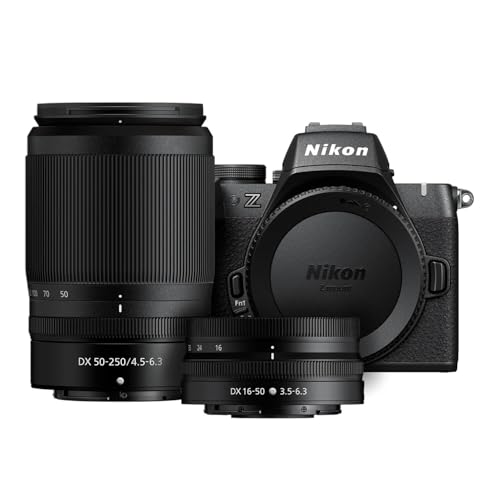
- Nikon Z50 II with Two Lenses: check price on Amazon
- Sony ZV-1F: check price on Amazon
- OM SYSTEM Tough TG-7: check price on Amazon
- DJI Osmo Pocket 3: check price on Amazon
- GoPro HERO13 Black: check price on Amazon
- Canon EOS R6 Mark II: check price on Amazon
Notice what this shortlist refuses to do: it does not start you on a professional body with a manual the size of a novel, and it does not strand you on a toy you will outgrow by autumn. The Nikon kit opens the list because two lenses teach more about scenery than any single specification — the wide one for the valley, the telephoto for the ridge detail you almost walked past. The compacts and action cameras cover the beginners whose scenery arrives on hikes, swims and cycle rides, where a camera in the bag beats a system at home.
Bring patience; the cameras bring everything else. Every pick shoots far better than a beginner’s eye at first, which is correct: equipment should wait for skill, not the reverse. What separates the six is how each one teaches — through presets, through lenses, through surviving the weather that makes scenery worth photographing in the first place.
Key Takeaways
- The Nikon Z50 II two-lens kit is the finest scenery classroom here: wide and telephoto views from day one.
- Beginners need a tripod more than a second lens — budget for one alongside any pick.
- The OM SYSTEM Tough TG-7 removes weather fear, the beginner’s most common reason for leaving a camera home.
- Golden-hour light matters more than megapixels; every pick here rewards early alarms.
- For anyone graduating from a phone, the Sony ZV-1F is the gentlest start on this page.
- Buy for the scenery you actually visit weekly, not the expedition you imagine yearly.
In this guide
Quick Picks
| Camera | Badge | Why it is here |
|---|---|---|
| Nikon Z50 II with Two Lenses | Best learning system | Wide and telephoto kit lenses teach scenery’s two native languages in one box. |
| Sony ZV-1F | Easiest first camera | Phone-simple handling, a bright wide lens, and colour that flatters early efforts. |
| OM SYSTEM Tough TG-7 | Best for rough weather | Waterproof, freeze-proof and crush-resistant; scenery in the rain becomes possible. |
| DJI Osmo Pocket 3 | Best for moving scenery | Gimbal-smooth walking films and panoramas from a pocket, with a 1-inch sensor. |
| GoPro HERO13 Black | Best for adventure landscapes | The widest view here, waterproof, made for summits, surf and trails. |
| Canon EOS R6 Mark II | Best to grow into | Full-frame quality and stabilisation for the beginner who knows they are serious. |
What did we ask of a beginner’s scenery camera?
Three things, in order. First, forgiveness: exposure guidance you can see, autofocus that finds the scene rather than a foreground twig, and a screen bright enough to judge a shot under real sky. Beginners abandon cameras that make them feel stupid, so interfaces were scored on how kindly they explain themselves — the Nikon’s presets, the Sony’s plain-language modes, the TG-7’s dial that simply works with gloves on.
Second, teaching value. Scenery rewards understanding aperture, focal length and light, so cameras that expose those levers honestly — and show their effects immediately — outranked cameras that bury them. The two-lens Nikon kit leads here because swapping lenses is a physical lesson in perspective no menu can replicate: the same valley, two truths, learned in an afternoon.
Third, presence. A beginner’s scenery camera must survive being carried — in a daypack through drizzle, on a clifftop in wind, out of a warm car into cold dawn air. Weather resistance, battery honesty and simple grips all counted, because the finest landscape camera ever made photographs nothing from a cupboard. The six survivors each solve presence differently; the verdicts match the solution to the beginner.

Nikon Z50 II with Two Lenses — Best learning system
This kit is a curriculum disguised as a camera box. The wide zoom frames the whole valley — river, meadow, ridge — while the telephoto isolates the waterfall’s white thread or the lighthouse standing small against weather, and moving between them teaches the beginner’s deepest scenery lesson: photographs are made by choosing what to exclude. Nikon’s colour presets include landscape-friendly looks applied in camera, so early results encourage rather than confuse, and subject-detection autofocus borrowed from the professional line keeps attention on composition instead of focus anxiety.
The body itself suits learners: a proper grip for cold hands, a flip screen for low tripod angles among the heather, and controls that grow with you — full manual exposure waits patiently for the month you want it. Stills quality from the APS-C sensor prints handsomely at the sizes a first exhibition of one (your hallway) demands, and video is strong enough for scenery films when curiosity turns that way.
Its honest limitation is commitment. A two-lens kit asks for a real bag, a tripod budget and a willingness to change lenses in the field with cold fingers. Beginners who want that apprenticeship will find no better-priced master; beginners who suspect they want photography without the ceremony should look at the compacts below without a shred of shame — the best scenery camera remains the one present at the scenery.
- Sensor: APS-C, roughly 21 megapixels
- Lenses: wide zoom plus telephoto zoom in the box
- Presets: in-camera picture controls with landscape looks
- Screen: tilting/flip design for tripod work
Strengths
- Two focal lengths teach perspective fastest
- Presets make early results encouraging
- A system that grows for years
Trade-offs
- Needs a bag and a tripod budget
- Lens changes in wind and rain test patience
- More camera than casual walkers want
Best for: beginners ready to learn scenery properly. Not suited for: photographers who travel with a single small pocket.

Sony ZV-1F — Easiest first camera
The ZV-1F understands its student: someone whose entire photographic education so far is a phone. Its fixed lens is wide — scenery’s natural direction — and bright, its autofocus simply finds the scene, and its colour renders a green valley and a stone village the way memory insists they looked. A background-defocus switch and clear on-screen guidance replace the first semester of theory, letting a beginner compose, shoot and succeed on the very first walk.
Do not mistake simplicity for weakness. The 1-inch sensor records detail and dynamic range a phone cannot approach, holding cloud texture in skies that handsets bleach white, and its video mode turns a scenic viewpoint into a gentle pan with faces addressed to camera when the day needs narrating. For travel scenery — the viewpoint, the old town, the coastal path — it is astonishingly complete for something that fits a jacket.
The ceiling arrives with ambition: no zoom for the distant church spire, no lens changes when perspective lessons beckon. Most beginners take a year or more to feel those walls, and by then the ZV-1F has either confirmed photography as a passing pleasure — money well contained — or built the confidence that makes a system camera like the Nikon feel exciting rather than intimidating. Either outcome is a success worth its modest price.
- Sensor: 1-inch, roughly 20 megapixels
- Lens: fixed ultra-wide, bright aperture
- Guidance: plain-language modes and defocus switch
- Video: 4K with face-priority autofocus
Strengths
- Success on the first walk, guaranteed by design
- Skies and greens rendered beautifully
- Pocketable enough to always be present
Trade-offs
- No telephoto reach at all
- Fixed lens caps long-term growth
- Not weather-sealed
Best for: phone graduates and travelling beginners. Not suited for: isolating distant details in a landscape.

OM SYSTEM Tough TG-7 — Best for rough weather
Scenery’s finest hours are frequently horrible to stand in: the squall clearing over the estuary, frost smoking off a dawn field, surf exploding against the harbour wall. The TG-7 is built for precisely those hours — waterproof, freeze-proof, shockproof and crushproof — and it converts the beginner’s most destructive habit, leaving the camera behind “just in case,” into a non-issue. It rides in a coat pocket through weather that would send a system camera back to the car.
Its photographic tricks suit scenery’s small print as well as its vistas. A renowned microscope mode focuses almost to the lens surface, opening the frost crystal, the lichen map and the tidepool universe that beginners overlook while staring at horizons. The lens is bright for its class, GPS and environmental sensors log where and how cold it was, and the controls work through gloves — a detail every winter photographer learns to worship.
The sensor is small, and honesty requires saying what that means: enormous prints and deep crops are beyond it, and night landscapes soften sooner than the Nikon’s. Within its element — the wet, cold, sandy, dropped reality of outdoor beginnings — no camera here gives a novice more photographs per season, because no other camera here is so consistently, indestructibly present.
- Body: waterproof, freeze-proof, shockproof build
- Modes: microscope macro for scenery’s details
- Lens: bright zoom for its class
- Logging: GPS and temperature/pressure sensors
Strengths
- Weather stops being a reason to stay home
- Macro mode reveals a second landscape
- Glove-friendly controls
Trade-offs
- Small sensor limits huge prints
- Night scenery is its weakest suit
- No interchangeable lenses, ever
Best for: hikers, sailors, skiers and the weather-cursed. Not suited for: gallery-size landscape printing.

DJI Osmo Pocket 3 — Best for moving scenery
Some beginners meet scenery through film rather than stills — the walking approach to a viewpoint, the river followed at bank level — and for them the Pocket 3 is a revelation. Its gimbal holds the horizon like a spirit level while its 1-inch sensor, the largest among this guide’s pocketable picks, renders dawn and dusk with a richness that embarrasses phones. Panoramas sweep automatically, time-lapses turn cloud shadows into theatre, and the whole apparatus vanishes into a pocket at the summit.
Stills are better than its video-first reputation suggests, particularly for social sharing and modest prints, and face tracking makes the “I was here” record effortless. The rotating screen frames vertical scenery for the platforms beginners actually post to, a small mercy that shapes habits early: shoot for where the audience lives.
Care is the price. A gimbal dislikes sand, drops and being stuffed unprotected into a rucksack’s depths, and the fixed wide view cannot reach across a valley. Treat it as the film-maker’s scenery camera — the one that turns a walk into a story — and pair its footage with stills from any other pick when a wall print calls. Beginners whose scenery moves will not find a kinder introduction.
- Sensor: 1-inch on a three-axis gimbal
- Video: 4K with subject tracking
- Features: auto panoramas and time-lapse modes
- Screen: rotates for vertical shooting
Strengths
- Walking scenery films of professional calm
- Excellent dawn and dusk video
- Truly pocketable
Trade-offs
- Gimbal needs protection and care
- No telephoto view
- Stills trail the Nikon for printing
Best for: beginners who film their landscapes. Not suited for: rough handling or beach abuse.

GoPro HERO13 Black — Best for adventure landscapes
The HERO13 photographs scenery from the places other cameras watch from the car park: the surf line, the summit cairn in a gale, the kayak’s bow, the mountain bike’s bars. Its ultra-wide lens swallows whole valleys in a single frame, its stabilisation irons out the wind’s best efforts, and waterproofing in its bare skin means the coastal beginner never performs the case ritual while waves arrive. For scenery that is earned by effort, nothing here attends more of it.
Beginners benefit from its bluntness. There is essentially one viewpoint — very wide — and the camera’s intelligence handles exposure while the owner learns composition by moving their feet, which is the oldest and best scenery lesson there is. Time-lapse and night-lapse modes automate the patient genres: star trails over a bothy, clouds boiling over a ridge, recorded while you sleep in a tent below.
Its limits are the wide lens’s own: distant detail dissolves, faces at conversational distance shrink, and low-light stills are the weakest here. As a scenery specialist for the adventurous it is unrivalled; as an only camera for a gentle rambler it is the wrong shape of tool. Match it to a life that gets wet and high, and it will bring home landscapes nobody else on the trail managed to capture.
- Video: up to 5.3K, class-leading stabilisation
- Lens: ultra-wide, interchangeable lens mods available
- Body: waterproof without a housing
- Modes: time-lapse and night-lapse automation
Strengths
- Attends scenery no other pick survives
- The widest, most dramatic view here
- Effortless exposure for beginners
Trade-offs
- Distant subjects stay distant
- Low-light stills are modest
- Ultra-wide look is a strong flavour
Best for: surfers, climbers, riders and trail runners. Not suited for: gentle, deliberate tripod landscapes.

Canon EOS R6 Mark II — Best to grow into
Every cohort of beginners contains one who already knows — who has read the theory, saved the money and wants a camera that will not need replacing when skill arrives. The R6 Mark II is that camera. Its full-frame sensor drinks dawn light, its in-body stabilisation forgives hand-held shooting while tripod habits form, and Canon’s colour science renders skin and landscape with the warmth that built the brand’s following. Autofocus subject detection, inherited from professional bodies, simply refuses to be the reason a beginner’s shot failed.
Growth room is the argument in full: the RF lens system stretches from a beginner’s kit zoom to the finest landscape glass made, and the body’s video specification serves scenery films at a level the other picks admire from below. Nothing about it punishes a novice — menus are logical, auto modes are honest — it merely refuses to become the bottleneck for about a decade.
The cautions are financial and physical. It is the heaviest and costliest route here, lenses add meaningfully to both, and some beginners discover their enthusiasm was for the idea of photography rather than its practice — an expensive way to learn that about oneself. If the commitment is real, though, this is the last first camera you will buy: the shortlist’s ceiling, purchased at the start.
- Sensor: full-frame, 24.2 megapixels
- Stabilisation: in-body, multi-stop assistance
- Mount: Canon RF, from kit zooms to professional primes
- Autofocus: deep subject detection
Strengths
- Image quality nothing else here matches
- A decade of growth without replacing the body
- Forgiving stabilisation for learners
Trade-offs
- The serious money option
- Heaviest kit in the guide
- Capability far beyond a casual hobby
Best for: committed beginners buying once. Not suited for: tentative hobbyists testing the water.
Why does scenery forgive beginners better than any other genre?
Because it holds still and repeats itself. The valley you photograph badly on Saturday waits, essentially unchanged, for your improved attempt next month — same ridge, better light, wiser composition — and that repeatability turns mistakes into a curriculum. Portraits forgive nothing and wildlife forgives less, but a landscape keeps office hours. Exploit the mercy deliberately: choose one local view, photograph it across a season in all weathers, and watch your own development happen in the differences. No course teaches faster than a familiar hill honestly revisited.
What is the first accessory a scenery beginner should buy?
A tripod, before any lens, filter or bag. Scenery’s best light is dim — dawn, dusk, woodland shade — and dim light demands either steady support or noisy compromise. A modest tripod unlocks the slow shutter speeds that turn waterfalls silky and keep twilight villages sharp, and it teaches the genre’s core discipline: composing deliberately instead of snatching. Every pick here benefits, the compacts via their standard mounts as surely as the mirrorless pair. Buy legs tall enough for your eye level and light enough that carrying them never becomes the argument against going.
How do you stop skies from blowing out to white?
Expose for the sky and let the land fall where it may — the reverse of a beginner’s instinct. Tap or meter on the brightest part of the scene, or dial a touch of negative exposure compensation, and the clouds keep their architecture while shadows can be lifted later in editing; a white sky, by contrast, contains no information to recover. Bracketed exposures and graduated filters exist for stubborn cases, but the metering habit solves most. Check the histogram’s right edge the way drivers check mirrors: constantly, and especially at sunrise when the light changes by the minute.
What makes a scenery photograph look composed rather than snapped?
Layers and a decision. Layers — something near, something middle, something far — give a flat photograph the depth your eyes enjoyed at the scene: the lichen-covered rock, the river’s bend, the ridge beyond. The decision is what the photograph is about: beginners point at everything beautiful in view and record a catalogue; a composed frame chooses one subject and lets the rest support it. Walk the viewpoint before raising the camera. The best scenery position is rarely the car park’s railing, and the ten steps that find foreground interest are the cheapest tuition in the genre.
When is the best light, honestly?
The hour after sunrise and the hour before sunset earn their reputation honestly: low sun rakes across texture, warms stone and grass, and models hillsides into relief that noon flattens into a postcard. But beginners should also court the unpopular lights — the bright overcast that saturates woodland greens without contrast’s cruelty, the storm’s edge where a single shaft ignites a field, the blue minutes after sunset when villages light their windows. Arrive early, stay late, and treat the famous hours as the beginning of the lesson rather than its whole content.
Should a beginner shoot RAW or JPEG for scenery?
Both, if the camera allows the pairing: JPEG for the instant gratification that sustains a new habit, RAW filed away as the negative your future, more skilled self will be grateful for. Scenery stresses a file like no other genre — skies to rescue, shadows to lift — and the first time editing software recovers a sunset you thought lost, the RAW habit pays for its storage forever. The Nikon and Canon reward this approach most, but even the compacts’ JPEGs benefit from the discipline of exposing carefully in the first place. Files are cheap; unrepeatable dawns are not.
How do filters fit a beginner’s scenery kit?
Slowly, and in a specific order. A circular polariser earns first place: it deepens skies, strips glare from wet rock and water surfaces, and produces effects no software can fully imitate after the fact. Neutral density filters follow when long exposures tempt you — the milky waterfall, the streaked cloud — and everything else can wait a year. Mirrorless and compact users should confirm thread sizes before ordering, and everyone should learn the polariser’s one quirk: at ultra-wide angles it can band a sky unevenly, a flaw you spot once and thereafter anticipate.
What does the telephoto lens teach that the wide one cannot?
Compression and selection. From the same tripod position, the Nikon’s telephoto stacks ridge behind ridge like stage scenery, isolates the one sunlit field in a shadowed valley, and turns a chaotic coast into a graphic of headland and light. Beginners raised on wide views often find telephoto landscapes feel more designed, more theirs — because the framing excludes so much that every included element is a choice. Scenery photographers eventually live at both ends; the two-lens kit simply starts the education at the correct place, with the contrast fresh in the hands.
How should beginners handle weather that turns mid-shoot?
As material, not interruption — with the right pick. The TG-7 and HERO13 continue working through rain that sends the mirrorless pair under a jacket for lens-wiping intervals, and some of the finest scenery ever made wears weather openly: rain veils, clearing squalls, frost arriving. Practicalities matter more than bravery: a lens cloth in every pocket, a bag that closes fast, batteries kept warm, and the discipline to dry everything at home before storage. Learn your camera’s limits in a garden shower rather than on a summit, and weather becomes a genre instead of an ending.
What is a realistic first-year project for a scenery beginner?
One place, four seasons, twelve finished photographs. Choose somewhere within an hour of home — a reservoir, a stretch of coast, a favourite valley — and commit to its portrait across the year: the same viewpoints in frost, blossom, drought and storm. The project enforces the genre’s real skills (returning, noticing, waiting) far better than a scatter of famous locations photographed once each. By the twelfth frame you will own a body of work that means something, a camera you understand in your bones, and a wall that finally deserves the word gallery.
How do you judge your own scenery photographs honestly?
Print them. A screen forgives softness, noise and muddy colour at social sizes; even a modest print exposes all three without malice. Choose your five best frames each season and print them at a size that fills a frame, then live with them for a month. The ones that keep rewarding attention teach you what your eye actually values — usually a simpler composition and better light than you remembered chasing. This ritual, repeated, develops taste faster than any lens purchase, and it costs less than a memory card.
What changes when scenery becomes video?
Time enters the frame. A still asks where to stand; a film asks how the scene unfolds — the mist lifting, the tide turning, the walk arriving. The Pocket 3 and HERO13 serve this instinct natively, while the mirrorless pair produce scenery films of a quality that justifies learning their video modes slowly. Beginners should keep moving-scenery clips short, let the landscape supply the motion before the camera adds any, and record natural sound even when they expect to mute it later: the option is free at capture and impossible to retrofit.
How do you find scenery worth photographing near home?
Walk the unglamorous hours in the unglamorous places. The canal towpath at dawn, the reservoir in November, the industrial edge where fields resume — local scenery photographed with commitment beats famous scenery photographed with tourism, because familiarity reveals the light and the season’s small changes that a visitor never stays for. Maps help: contour lines promise viewpoints, footpaths promise access, and a sun-position app promises the hour the valley side ignites. Build a personal gazetteer of ten local scenes and work it like a professional assignment; your eye will learn faster than your odometer ever could.
What should a beginner pack for a dawn scenery session?
Less than instinct suggests, in a fixed order. Camera with a charged battery and an empty card — check both the night before, by ritual, not memory. Tripod. Lens cloth. A headtorch for the walk in, warm layers for the standing still that follows, and a flask, because dawn photography is mostly waiting and waiting is better warm. The phone carries the map and the sun app. Everything else — spare lenses, filters beyond the polariser — earns its place only after the third or fourth session reveals a specific need. A light bag is a kept appointment.
How do seasons change what a scenery camera must do?
Spring asks for macro patience and rain readiness — the TG-7’s hour. Summer demands dynamic range against hard light and rewards the polariser. Autumn is colour discipline: every camera here renders foliage well, and the skill lies in excluding enough woodland for the colour to compose. Winter tests batteries, gloves and nerve, favouring the tough builds and the Nikon’s honest controls. A beginner who photographs a full year has effectively taken four different courses with one camera, which is why this guide values versatility and presence over any single spectacular specification.
Why do beginners tilt horizons, and how is it cured?
Because the eye corrects unconsciously what the frame records literally — standing on a slope, you level the world in your head while the camera faithfully reports the slope. The cures are mechanical and habitual: switch on the camera’s level or grid display (every pick offers one), check the horizon against the frame’s edge before pressing, and straighten the rare survivor in editing without shame. Water is the strictest teacher: a tilted lake announces itself instantly. Within a month of deliberate checking, level horizons become reflex, and your scenery acquires the quiet professionalism that separates it from snapshots.
How does foreground interest change a beginner’s results overnight?
It supplies the missing first chapter. A scenery frame that begins at the horizon asks the viewer’s eye to arrive from nowhere; a frame that opens on a mossy wall, a patterned shore or a gate’s diagonal gives the eye a path to walk. Beginners often stand too far back out of politeness toward the view — step closer to the near thing instead, crouch until it looms, and let the famous ridge become the backdrop to your foreground’s small story. Every pick here focuses close enough for the trick; the Nikon and Sony reward it most, but the habit itself is free and transfers to every camera you will ever own.
What should you do when the sky is more interesting than the land?
Give it the frame it is asking for. Composition rules that allot the sky a polite third collapse before a storm front stacked like architecture or a sunset that owns the evening: raise the horizon to the bottom edge and let the heavens take two-thirds or more. The wide lenses here — the Sony’s fixed view, the GoPro’s sweep, the Nikon’s kit zoom at its shortest — were made for such evenings. Judge by balance rather than by rule, and review on the camera’s screen at arm’s length: if the small image reads dramatically, the large one will too.
How do you photograph woodland without producing green confusion?
Wait for the light to organise it. Woodland defeats beginners because a forest is a thousand subjects competing; the photograph succeeds when light appoints one — a single beech catching a shaft, a path curving out of shadow, mist separating the layers into grey ranks. Overcast mornings and fog are woodland’s studio conditions, flattening contrast and saturating greens, which is why the TG-7’s weatherproofing and the Nikon’s presets earn their keep among trees. Shoot less and look more: woodland photography is ninety percent standing still, and the camera you brought matters less than the ten minutes you gave the scene to reveal its order.
What is the beginner’s path to photographing water well?
Decide what water is doing in the story, then choose the shutter to match. Fast speeds freeze the waterfall’s violence into crystal detail; slow speeds — a second or several, tripod mandatory — pour it into silk and turn a harbour into glass under evening boats. The mirrorless pair give you direct control of that dial; the compacts offer scene modes that approximate it honourably. Neutral density filters extend slow work into daylight. Practise on one local fall across a month, at every speed the camera offers, and you will own the genre’s central skill with a single subject as your tutor.
How should you approach famous viewpoints as a beginner?
With respect and suspicion in equal measure. Photograph the famous frame first — it is famous because it works, and taking it teaches you why the tripod holes are worn where they are. Then treat the icon as base camp: walk the edges, turn around (the view behind a famous viewpoint is the least photographed scenery in the country), return at an unfashionable hour, and let the place show you its second and third compositions. Your archive will hold both the postcard and the personal, and the habit of looking past the railing will serve every landscape you ever visit.
What does a beginner gain from photographing in black and white?
Honesty about structure. Strip colour from a coastal scene and whatever remains — the curve of the bay, the lighthouse’s punctuation, the cloud’s architecture — is the photograph’s actual skeleton; scenery that survives monochrome was well composed, and scenery that collapses was leaning on pretty colour. Most picks here offer in-camera monochrome modes worth experimenting with on grey days when colour sulks anyway. Shoot the colour version too, compare them at home, and let the exercise sharpen the eye that decides, next time, whether a scene is a composition or merely a view.
How do you keep a scenery camera ready across a busy life?
By removing every small friction between impulse and departure. The camera lives charged, card formatted, in the bag by the door — not in a cupboard requiring assembly. A standing Saturday dawn appointment, kept loosely but kept, does more for a beginner’s portfolio than a heroic annual expedition. The pocketable picks exist precisely for the unplanned chapters: the TG-7 in the coat for the dog walk that turns golden, the Pocket 3 for the evening the mist arrives. Readiness is a system, and beginners who build it photograph three times as much scenery in a year.
What should you look for when reviewing a day’s scenery files?
Patterns, not masterpieces. Sort ruthlessly: which frames are sharp where you intended, which skies survived, which compositions you repeated from habit rather than from seeing. Beginners discover their tics in review — the horizon habitually centred, the foreground habitually empty, the favourite focal length standing in for thought. Name one tic per outing and assign its correction to the next; that loop, repeated monthly, is the entire secret curriculum of landscape photography. Keep the failures for a season before deleting: they are the before-pictures your progress will want as evidence.
How does the coast test a beginner differently from the hills?
The coast adds motion and salt. Hills hold still for your apprenticeship; the sea rehearses a new composition every seven seconds, rewarding the photographer who watches three waves before shooting the fourth. Long exposures calm it into mist around the rocks — tripod work the mirrorless pair excel at — while fast speeds catch the explosion at the harbour wall, where the TG-7 and HERO13 stand unconcerned in the spray. Salt is the silent tax: rinse the tough cameras, wipe the delicate ones, and never change a lens facing the wind. Coastal beginners learn timing faster than any other kind, because the subject itself keeps demonstrating it.
What is the role of patience in scenery photography?
It is the medium itself. The difference between the snapshot a hundred visitors took at noon and the photograph one of them took is usually forty minutes of waiting — for the cloud to move off the summit, the shaft to find the field, the mist to thin to exactly one ridge’s worth. Beginners should practise waiting as a skill with its own equipment: warm layers, a flask, a tripod set and composed before the light arrives so the moment finds you ready. Every camera here rewards the wait equally; no specification substitutes for it. The photographers whose scenery you admire are, mostly, the ones still standing there when the light finally happened.
How do you photograph mountains without making them look small?
Include something whose size the viewer knows. Mountains photographed alone flatten into backdrop because the frame holds no scale: add the bothy, the walker in the red jacket, the fence line climbing the slope, and the brain recalibrates the ridge to its true immensity. Telephoto compression helps too — the Nikon’s longer lens stacks the peaks until they crowd the sky — as does shooting in side light that models every crag. The GoPro’s ultra-wide view does the opposite trick, making the photographer small inside an enormous bowl of landscape. Both are honest; choose per the feeling you carried home.
What should beginners know about photographing at altitude?
That everything conspires politely against the unprepared. Batteries fade faster in cold thin air, screens wash out in fierce light, weather rewrites itself hourly, and the photographer — breathing hard, slightly euphoric — composes carelessly. The tough picks shrug off the physical side; the human side needs systems: compositions scouted on the map the night before, settings checked at the col rather than the summit, gloves that work the dials. Altitude scenery repays the discipline disproportionately, because so few beginners bring any. Your photographs from the high places will outnumber and outclass the crowd’s simply for having been planned.
How can a beginner use a phone alongside these cameras?
As the scout and the secretary, never the rival. The phone’s maps, sun-position apps and weather radar choose the viewpoint and the hour; its notes app records which compositions await a return in better light; its camera takes the behind-the-scenes record. Then it goes away, and the real camera does the photographing without a single notification. This division keeps the phone’s genuine brilliance — logistics — from poisoning the camera’s genuine brilliance, which is attention. Beginners who adopt the split stop apologising for owning two devices and start exploiting both.
What does it mean to finish a scenery photograph?
That it survives three viewings: the screen’s thrill on the day, the edit’s scrutiny a week later, and the wall’s judgement a month on. Finishing is mostly restraint — cropping the frame to its strongest rectangle, lifting shadows without bleaching the sky’s memory, resisting saturation’s candy. The files from every pick here tolerate that restraint gracefully, particularly the Nikon and Canon RAW files saved alongside their JPEGs. A beginner who finishes ten photographs properly learns more than one who processes a hundred casually, because finishing is where taste is actually trained.
How do you build a personal style in scenery photography?
Slowly, and mostly by noticing your own preferences in the archive. After a season, patterns surface uninvited: you return to water, or to telephoto compressions, or to the blue hour above all others. Style is those patterns, recognised and then pursued deliberately — a subject you serve for years, a palette you favour, a kind of weather you would set an alarm for. The camera’s role is merely to stop obstructing the pursuit, which is why this guide’s versatile picks outrank narrower marvels. Buy the camera that disappears into your habits, then let the habits, compounded over seasons, become the style.
What is the kindest advice for a beginner’s first exhibition?
Show fewer photographs than you want to. Five frames that each survived the wall test, hung with space around them, persuade a room; twenty frames dilute the five into a portfolio’s average. Ask one honest friend which single image they would take home, and believe the answer enough to lead with it. Every photographer in this guide’s future — including the one holding a TG-7 at a bus stop in the rain — is building toward that small, severe selection. The camera starts the archive. Your courage in editing it is what the audience will eventually call your eye.
How do you start a scenery session when the light looks hopeless?
Shoot anyway, at the small subjects. A grey, dripping morning that flattens the valley simultaneously perfects the waterfall’s even light, the woodland’s saturated greens and the macro world the TG-7 was born for. Beginners who only unpack a camera for golden light photograph twelve days a year; beginners who learn each weather’s gift photograph a hundred, and skill follows attendance more faithfully than it follows equipment. Keep a mental menu — mist for layers, overcast for forests, storm edges for drama, blue hour for villages — and a hopeless forecast becomes merely a change of assignment.
What is the last check before leaving a viewpoint?
Turn around, and look at what the departing light is doing behind you. Scenery photographers lose more great frames to the walk back than to any technical error: the ridge you ignored igniting, the valley you crossed now modelled in gold. Build the backward glance into the ritual — camera still out, tripod still shouldered, one full minute of looking — before the bag closes. It costs nothing, it rescues several evenings a season, and it teaches the deepest scenery habit of all: the photograph is where the light is, not where the plan said it would be.
How should a beginner celebrate progress?
By re-photographing the first scene. Return, a year on, to the viewpoint of your earliest scenery attempt, with the same camera and a year’s weather in your eye, and make the photograph again. Place the two frames side by side without commentary. The distance between them — in light awaited, foreground found, horizon levelled — is the truest measure of what the year taught, and it will encourage you more honestly than any compliment. Cameras are bought in a day; photographers are made in exactly this kind of return.
Comparison: all six picks at a glance
| Camera | Form | Character | Choose it if… |
|---|---|---|---|
| Nikon Z50 II with Two Lenses | Mirrorless kit | The classroom | You want to learn focal lengths properly |
| Sony ZV-1F | Compact | The gentle start | You are graduating from a phone |
| OM SYSTEM Tough TG-7 | Tough compact | The weatherproof | Your scenery arrives wet and cold |
| DJI Osmo Pocket 3 | Pocket gimbal | The film-maker | Your landscapes move |
| GoPro HERO13 Black | Action camera | The adventurer | Your viewpoints are earned in surf and altitude |
| Canon EOS R6 Mark II | Full-frame mirrorless | The long-term investment | You are certain, and buying once |
What are the most common mistakes beginners make with scenery?
Photographing only at midday on holiday
Convenience light is scenery’s flattest: shadows vanish, colours bleach, and famous views render as the postcard rack already sells. The fix costs sleep, not money — the same viewpoint at seven in the morning transforms into relief, colour and atmosphere. Beginners who change only this habit, rising early twice a month with any pick in this guide, improve faster than peers who upgrade cameras while keeping holiday hours. Light is the genre’s real equipment; the camera merely receives it.
Standing exactly where the signpost says to stand
Designated viewpoints produce designated photographs — correct, pleasant and identical to ten thousand others. Ten steps lower finds the foreground boulder; twenty steps along finds the frame of branches; lying the tripod flat among the heather finds the photograph that is yours. Scenery rewards the legs as much as the lens, and the compacts’ small size is an invitation to scramble where a big system discourages exploring. Move first, compose second, shoot third.
Buying lenses before learning light
The second-lens itch arrives early and cures nothing. A beginner’s limiting factor is almost never focal length — the Nikon kit’s two lenses already span scenery’s needs — but rather timing, position and patience. Spend the lens money on a tripod, a polariser, printing your best work and the petrol to return to a beloved valley in better weather. When a specific, repeated frustration finally names the lens you need, buy it with a clear conscience and a clear purpose.
Final Recommendation
Choose by temperament. The eager student belongs with the Nikon two-lens kit, whose wide and telephoto pairing teaches scenery’s grammar in a single season. The phone graduate who wants success without ceremony should take the ZV-1F; the weatherproof wanderer, the TG-7; the film-minded walker, the Pocket 3; the adventurer, the HERO13. The certain and the patient may skip the queue entirely with the R6 Mark II. Then set an alarm for dawn, pack the night before, and go to the nearest beautiful place you know — the camera you chose is ready, and the valley has been waiting politely all this time.
One final encouragement belongs in this guide’s closing pages. Every landscape photographer whose work you admire began with a first season of tilted horizons, white skies and valleys that refused to look as grand as they felt. The difference between them and the beginners who quit is rarely talent and never the camera tier — it is simply that they kept setting the alarm. Your first season starts with whichever of these six is in your hand at the next dawn.
Related guides
- Best Digital Cameras for Beginners Photography: First Cameras That Actually Teach You
- Best Compact Cameras for Landscape Photography: 6 Pocketable Picks for Serious Scenery
- Best Cameras for YouTube Videos for Beginners: Forgiving First Cameras That Grow With a Channel
Frequently Asked Questions
Do I need a full-frame camera for good scenery photographs?
No. Full-frame helps at the extremes — very large prints, very dim light — but composition, timing and light decide scenery quality long before sensor size does. The APS-C Nikon kit and even the 1-inch Sony produce photographs that hang happily on walls. Buy full-frame, as with the Canon here, for growth room and low-light luxury, not because your valley requires it.
How many megapixels does a beginner need for landscapes?
Fewer than marketing implies. Around twenty megapixels — the territory of most picks here — prints large, crops modestly and handles beautifully. Technique multiplies effective resolution more than sensors do: a sharp, tripod-held twenty will out-print a hurried thirty every time. Spend attention on steadiness and light; the numbers in this shortlist are already sufficient for years of scenery.
Can one of these cameras handle family photos too?
Comfortably. The Nikon kit and the Canon are genuine all-rounders whose autofocus handles children and gatherings as happily as valleys, while the Sony was designed with faces in mind. The TG-7 and GoPro serve family life in their elements — pools, beaches, bikes — rather than at the dinner table. Scenery may be the headline, but none of these picks is a one-genre prisoner.
Is a tripod really necessary for a beginner?
For scenery, effectively yes — it is the accessory that changes photographs rather than merely enabling them. Dawn and dusk sharpness, silky water, deliberate composition: all three flow from a steady camera and the slower working method a tripod imposes. A modest set of legs under any pick in this guide improves results more than stepping up a tier of camera body.
What is the best way to practise without travelling?
Appoint a local view and work it relentlessly: different hours, weathers, focal lengths and seasons, reviewed honestly and printed occasionally. Familiar scenery removes novelty’s distraction and exposes pure technique — you will see your own progress in the comparisons, which is the most motivating curriculum a beginner can design. Travel later, with an eye already trained.
Related Guides
Keep exploring with our companion reading: best cameras for travel photography on foot, best cameras for beginners learning photography and best cameras for hiking and mountain adventures.


