reviewstook.com is reader-supported. When you buy through links on our site, we may earn an affiliate commission.
Where to buy
Amazon links cover five of the six recommendations in the buying list; the sixth, a purpose-built path, is discussed in prose because it sits outside our verified pool. Barn technology should be bought and installed in daylight, in the quiet season, never for the first time on the night a mare is due.
- OBSBOT Tiny 2: check price on Amazon
- Razer Kiyo Pro Ultra: check price on Amazon
- Logitech Brio: check price on Amazon
- Logitech C920S HD Pro: check price on Amazon
- NexiGo N60: check price on Amazon
A stall camera is bought for the hours nobody can be there: the foaling watch at 3 a.m., the colic risk monitored from the house, the new arrival checked without a torch and a yard walk that wakes the whole barn. The best cameras for horse stall duty are therefore judged by stable-yard criteria, not desk criteria: how they see in a barn’s real light, which is to say dusk, dust and one bulb; how far their view reaches across a box stall and into its corners; how they behave on barn Wi-Fi and barn power, which are their own disciplines; and how reliably they put a clear picture on the phone of a tired person who must decide, from that picture, whether to get dressed and go down to the yard.
The honest starting point is that most stall monitoring is done by webcams and small PTZ cameras working through a laptop, a recorder or a streaming setup in the tack room, and this guide’s picks are exactly those proven instruments, chosen for sensor size, low-light behaviour and tracking rather than for marketing. A dedicated foaling-camera system is discussed in prose for the yards that want a purpose-built, weather-sealed installation. What this guide will not do is pretend a desk camera is a security camera; each pick’s real requirements, a computer or recorder nearby, a network that reaches, light that exists, are stated where they belong, in its own section.
Buy for the night the system must not fail, install it in the calm season, and test the whole chain, camera, network, phone alert, human response, before a mare ever depends on it.
Key Takeaways
- Low-light honesty decides stall cameras; barns are darker than desks.
- The Tiny 2’s PTZ tracking follows a restless mare around the whole box.
- The Kiyo Pro Ultra’s large sensor sees furthest into barn gloom.
- Every webcam here needs a host, a laptop or recorder, in the tack room.
- Barn Wi-Fi and power are part of the camera purchase, not afterthoughts.
- A camera supports the night watch; it never replaces the horseman’s judgement.
In this guide
Quick Picks
| Camera | Badge | Why it is here |
|---|---|---|
| OBSBOT Tiny 2 | Best Stall Camera Overall | PTZ tracking and a large sensor follow a mare around the entire box. |
| Razer Kiyo Pro Ultra | Best for Dark Barns | The largest webcam sensor here gathers what little light a barn offers. |
| Logitech Brio | Best Fixed Wide View | Wide, sharp coverage of a whole stall from one corner mount. |
| Logitech C920S HD Pro | Best Proven Workhorse | Dependable 1080p for everyday yard checks on any host machine. |
| NexiGo N60 | Best for Many Stalls | Affordable 1080p to equip several boxes on one sensible budget. |
| Dedicated foaling and stall camera system | Best Purpose-Built Installation (Prose-Only) | Weather-sealed, barn-native monitoring designed for yards. |
How did we choose cameras for horse stalls?
We began with the barn’s light, or rather its absence. A stall at night offers a fraction of a desk’s illumination, and cameras divide ruthlessly there: sensor size and honest low-light processing decide whether the picture shows a mare lying flat in the corner or a grey rumour that could be anything. Picks were favoured for the largest sensors in their class and for exposure behaviour that holds a dark box readable without blowing the bulb’s pool of light into a white hole.
Second, coverage. A box stall’s story happens in its corners, the foaling corner, the water corner, the patch of bedding a horse in trouble will choose, so field of view, mounting height and, in the Tiny 2’s case, a motorised head that can follow and be pointed, were scored as welfare features. A camera that sees the middle of the stall beautifully and its corners not at all is a decoration.
Third, the yard’s infrastructure truth. These are USB and network-era cameras: each needs a host computer or recorder within cable or network reach, power that survives a barn’s habits, and a connection that reaches the house or the phone. We scored ecosystems for how gracefully they live in that reality, long cable runs, remote viewing software, motion alerts that a tired person can configure, and we state each pick’s requirements plainly rather than letting the reader discover them at midnight.
The picks in detail

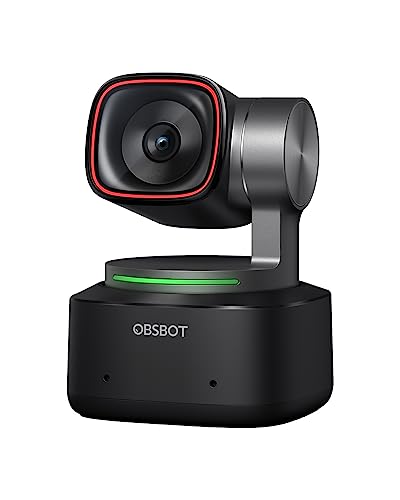
OBSBOT Tiny 2 — Best Stall Camera Overall
The Tiny 2 solves the stall’s coverage problem with movement: its motorised pan-and-tilt head and AI tracking follow a mare as she circles, paws, lies and rises, keeping her framed in the picture the watcher at home is judging by, while its unusually large sensor delivers a low-light image far beyond ordinary webcam manners. For foaling watch, that combination is transformative. The classic stall camera shows a fixed rectangle and the mare leaves it at the crucial moment; the Tiny 2’s rectangle follows her, and its remote control from the viewing software lets the watcher steer the view to the corner she has chosen without entering the barn and disturbing her.
Voice and gesture control are irrelevant in an empty barn, but the tracking modes, the presets and the scheduled positions are not: set the head’s home on the foaling corner, let tracking hold the mare through the night, and check the whole box with a sweep from the sofa. Its 4K capture, viewed as a downsampled stream, gives the watcher genuine detail, the tail’s flagging, the bag’s waxing, the first membrane, at the moments when detail decides whether to go down to the yard.
It needs its host and its network like all the picks here, its price is the fleet’s highest among the webcams, and its moving head deserves a mount a horse cannot rub against, high in the corner, cabled tidily. Installed with that care, it is the closest thing in this guide to a night watchman who never blinks, and for a foaling season it earns every penny of its keep.
- Form: PTZ tracking webcam, 4K
- Sensor: unusually large for the class
- Tracking: AI following on a gimbal head
- Control: remote pan, tilt and presets
- Role: foaling watch, restless patients, isolation boxes
Strengths
- Follows the mare instead of losing her.
- Night detail a watcher can judge by.
- Whole box inspectable from the house.
Trade-offs
- Needs a host machine and solid network.
- Premium price among webcams.
- Mount it beyond rubbing reach.
Best for: foaling mares and high-value monitoring. Not suited for: yards without tack-room power or network.

Razer Kiyo Pro Ultra — Best for Dark Barns
The Kiyo Pro Ultra’s argument is a single, barn-shaped fact: it carries the largest sensor fitted to a webcam, and in a dark stall, sensor area is eyesight. Where lesser webcams dissolve a resting horse into noise, this one holds the outline, the breathing flank, the head’s position, with a clarity that lets a watcher distinguish sleep from trouble at a glance, which is the entire clinical content of a night check. Its low-light processing is honest rather than smeared, and its image stays credible under the single-bulb regime most stalls actually run.
As a fixed camera it asks the installer to do the thinking once: mount high in the corner with the widest useful view of the box, set its exposure for the night’s reality rather than the day’s, and let its consistency do the rest. Its built-in shutter and serious build suit a tack-room host setup that runs for a season without attention, and its picture quality flatters the yard’s other use for these cameras, the livery client’s reassuring view of their horse, settled and visible, from their own sofa.
It is a premium webcam with a fixed view, no tracking and no weather sealing of its own, so it lives indoors, mounted and hosted, like the professional instrument it is. For the darkest barns and the most anxious watches, it is the fixed camera this guide recommends first.
- Form: premium fixed webcam
- Sensor: largest in the webcam class
- Light: strongest low-light performance here
- Build: privacy shutter, serious construction
- Role: dark barns, isolation and hospital boxes
Strengths
- Sees a resting horse clearly in near-dark.
- Honest detail for clinical judgements.
- Runs a season without attention.
Trade-offs
- Fixed view; placement must be right.
- Premium price for a webcam.
- Indoor, hosted use only.
Best for: dark barns and anxious night watches. Not suited for: outdoor or unhosted installation.

Logitech Brio — Best Fixed Wide View
The Brio’s stall virtues are width and dynamic range. Its adjustable field of view can be set wide enough to hold a whole box from one high corner, and the downsampled sharpness from its 4K capture keeps the far corner legible, while its wide dynamic range handles the barn’s cruellest lighting trick, the bright bulb in frame above a dark bed, without surrendering either. For the yard that wants one fixed camera per important stall and a picture the night staff can trust, it is the balanced choice: professional image, sane ecosystem, presets that make each stall’s setup repeatable.
Its software control lets the watcher zoom the digital view into the corner of interest, the water bucket, the foaling corner, without touching the mount, and its autofocus and exposure manners are the calm, set-and-forget kind a monitoring camera needs. Mounted on a small bracket with its cable run tidily to the tack-room host, it disappears into the barn’s furniture for seasons at a time.
Low light is good rather than the Razer’s exceptional, and like all the webcams here it is an indoor, hosted device, not a yard-hardened sentinel. Within the barn’s roof and the host’s reach, it is the fixed-view pick this guide expects to satisfy the most yards for the longest.
- Form: premium USB webcam
- View: adjustable field of view, digital zoom
- Light: wide dynamic range for bulb-and-bed contrast
- Capture: 4K sensor, downsampled viewing
- Role: whole-stall fixed coverage
Strengths
- One corner covers the whole box legibly.
- Handles the bulb-over-dark-bed problem.
- Presets make multi-stall setups consistent.
Trade-offs
- Low light a step behind the Kiyo Pro Ultra.
- Host and network required.
- No tracking; the mare can leave the frame’s best area.
Best for: fixed whole-stall views on professional yards. Not suited for: unhosted or outdoor positions.

Logitech C920S HD Pro — Best Proven Workhorse
The C920S is the yard’s dependable: a 1080p webcam with a decade of service in every environment imaginable, honest colour, steady autofocus and compatibility with any host machine a tack room can produce, including the retired laptop that most yards actually have. For everyday stall checks, the settled horse visible, the water bucket’s level plausible, the box’s occupant calm, its picture is entirely sufficient, and its price lets a yard treat cameras as equipment rather than as treasures.
Its privacy shutter is a small, human feature in a livery context, closing the view when a stall is being used for a veterinary examination or a client’s private moment, and its sheer ubiquity means every viewing platform, spare cable and troubleshooting answer already exists. Yards building their first monitoring setup should start here without embarrassment: the lessons it teaches, about placement, light and network, transfer whole to any later upgrade.
True night work exposes its limits, as the darker sections of this guide make plain: pair it with a low, honest light left on in monitored stalls, a common and horse-accepted practice, and its picture stays useful through the night. As the fleet’s workhorse and teacher, it earns its place on merit, not nostalgia.
- Form: USB webcam with privacy shutter
- Video: native Full HD 1080p
- Compatibility: any host, any platform
- Focus: steady autofocus
- Role: everyday checks, first installations
Strengths
- Runs on the tack room’s oldest laptop.
- Sufficient picture for daily checks.
- Shutter respects private moments.
Trade-offs
- Needs a stall light for night duty.
- Fixed field of view.
- No tracking or zoom finesse.
Best for: first systems and everyday monitoring. Not suited for: unlit foaling watch.

NexiGo N60 — Best for Many Stalls
A yard’s monitoring problem is usually plural: six boxes, two isolation stalls and a budget that must also buy hay. The N60 is the plural answer, an honest 1080p webcam with fixed focus, a privacy cover and plug-and-play manners, priced so that covering the row is a decision rather than a campaign. Its fixed focus, a limitation at a desk, is a quiet virtue in a stall: nothing hunts, nothing refocuses on the bars, and the picture a watcher gets at 3 a.m. is the picture the installer framed in daylight.
Multiplied across a barn with a small host or recorder per group of stalls, the N60 fleet gives a yard the thing single expensive cameras cannot: no blind boxes. Welfare checks become a screen’s glance rather than a yard round, livery owners get their reassurance, and the night staff’s attention concentrates on the one or two stalls where the premium cameras, the Tiny 2 on the foaling mare, the Razer in the hospital box, are doing the clinical work.
Low light is its honest boundary, so the multi-stall plan should include the stall-light habit as infrastructure, one low bulb per monitored box, accepted by horses and kind to every camera in this guide. Bought as a fleet with that light planned, the N60 is how ordinary yards, not just grand ones, come to be watched yards.
- Form: budget USB webcam, privacy cover
- Video: Full HD 1080p, fixed focus
- Setup: plug and play, anywhere
- Role: multi-stall coverage
- Cost: priced for fleets, not singles
Strengths
- Covers the whole row within a hay budget.
- Fixed focus never hunts at 3 a.m.
- Identical setups simplify the whole barn.
Trade-offs
- Needs stall lighting at night.
- Basic image in difficult light.
- Each group needs its host connection.
Best for: livery yards and multi-stall coverage. Not suited for: sole foaling-watch duty in the dark.
Dedicated foaling and stall camera system — Best Purpose-Built Installation (Prose-Only)
We discuss the dedicated path without a link because the right system varies by yard and sits outside our verified pool, but its case deserves stating. Purpose-built stall and foaling cameras are designed for the barn rather than adapted to it: weather-sealed housings that shrug off dust and washdown, infra-red illumination for true darkness, long cable or wireless runs designed for barn distances, and viewing apps built for the foaling alarm and the multi-stall dashboard. For a stud farm whose season is a procession of due dates, that integration, camera, light, network and alerts engineered as one system, is worth its installed price many times over in sleep alone.
The trade-offs are commitment and cost: an installed system is a fixture, chosen with the yard’s layout for years, and its expansion follows the maker’s ecosystem rather than the open market’s. Yards should buy it from specialists who will survey the barn, prove the network coverage in the furthest stall, and stand behind the night it matters.
We mark the path honestly as the professional summit of this guide. The webcam fleet above serves the majority of yards superbly and teaches every lesson the dedicated system will later assume; the stud farm and the hospital barn should read this section as their signpost and take the dedicated conversation to a specialist installer with this guide’s criteria in hand.
- Form: installed barn camera system
- Light: infra-red for true darkness
- Build: sealed for dust and washdown
- Viewing: multi-stall dashboards and alerts
- Role: stud farms, hospital barns, large yards
Strengths
- Engineered for barns, not adapted to them.
- Sees in complete darkness.
- One system, surveyed and supported.
Trade-offs
- No verified listing in our pool today.
- Installed cost and ecosystem commitment.
- Overkill for a two-box yard.
Best for: stud farms and professional hospital barns. Not suited for: small yards or first experiments.
Comparison table
| Camera | Form | Best at | Standout | Choose it for |
|---|---|---|---|---|
| OBSBOT Tiny 2 | PTZ webcam | Foaling watch | Tracking head, large sensor | The mare due this week |
| Razer Kiyo Pro Ultra | Webcam | Dark barns | Largest sensor | Hospital and isolation boxes |
| Logitech Brio | Webcam | Whole-stall view | Wide view, dynamic range | Professional yards |
| Logitech C920S | Webcam | Everyday checks | Proven and compatible | First systems |
| NexiGo N60 | Webcam | Many stalls | Fleet pricing, fixed focus | Livery rows |
| Dedicated system | Installed | Purpose-built yards | Infra-red, sealed, supported | Stud farms |
What does a stall camera actually need to see at night?
It needs to answer four questions without waking the yard. Is the horse up or down, and in a normal posture or a wrong one? Is she resting, pawing, circling, rolling repeatedly, the behavioural alphabet of foaling and colic alike? Are the basics in order, water present, no cast against the wall, no leg through anything it should not be through? And has anything changed since the last check? A camera system earns its place by answering those four at a glance, in the dark, on a phone, for a person who is half asleep and must not be given a puzzle instead of a picture.
That standard explains this guide’s obsessions. Sensor size and honest low-light processing decide whether down and wrong-down are distinguishable. Coverage and tracking decide whether the corner she chose is in the story. Light, the stall’s own low bulb or the dedicated system’s infra-red, decides whether the camera is an instrument or a hopeful ornament. Judge every setup, in the shop and after installation, by filming the four questions at 3 a.m. conditions and answering them from the phone in bed. Anything less is a daytime toy wearing a night watchman’s hat.
And hold the standard with humility: the camera informs the horseman; it does not replace the walk down the yard when the picture is ambiguous, the behaviour is wrong or the gut says go. The best systems in this guide are the ones that make the go-or-stay decision clearer, earlier and less often wrong, and that is a welfare outcome, not a technology one.
How do you install monitoring in a working barn?
Prove the network in the furthest stall
Barns defeat Wi-Fi with stone, steel and distance, so the installation begins with a survey, not a purchase: stand in the furthest monitored stall with the phone and the intended host, and prove the connection at night-time strength. Where the signal fails, the answers are wired runs, a yard access point or the dedicated system’s own links, decided before cameras are bought. More stall systems die of optimistic networking than of any camera fault.
Mount high, cable tidy, beyond the horse
Cameras live high in the corner, out of rubbing, reaching and bedding-throwing range, with cables run where teeth and hooves and the mucking-out fork cannot find them. The view is framed on the whole box with the foaling corner favoured, and the mount is checked after the first night, because horses vote on installations and their votes are physical.
Rehearse the night routine before it matters
The watcher, the phone, the alerts, the decision rules, who goes down for what picture, should all be rehearsed on an ordinary night in the quiet season. Foaling season is no time to discover that the alert volume sleeps through its owner or that the host laptop updates itself at 2 a.m. The rehearsal is the difference between a system and a pile of equipment with aspirations.
What mistakes do yards make with stall cameras?
Buying the camera before the network
The classic sequence, a fine camera, a dead signal, a foaling watched through a doorway at 3 a.m. anyway. Survey first, as the installation section insists, and let the barn’s real connectivity choose the system’s shape. The camera is the last purchase in a monitoring project, not the first.
Expecting daylight pictures from darkness
A webcam without light is a microphone in a soundproof room. Yards that refuse the stall-light habit, or the dedicated system’s infra-red, are buying cameras to watch darkness with. Horses accept a low night light readily; pride about pure darkness helps nobody at 3 a.m.
Watching instead of deciding
A monitor that produces anxiety rather than decisions is a welfare cost, not a benefit. Set the check rhythm, the alert rules and the go-down criteria in advance, with the vet’s input for the clinical cases, and let the system serve the rhythm. The camera’s job is fewer, better decisions, not a second sleepless occupation.
Forgetting the camera is in a barn
Dust, moisture, ammonia and curiosity all attack equipment in ways no desk ever will. Mounts loosen, lenses film over, cables get investigated. A monthly wipe, a mount check and a lens cloth kept in the tack room are the maintenance reality, and systems chosen for sealed simplicity survive it best.
Final Recommendation
For the foaling box and the high-value watch, install the Tiny 2 where its tracking can follow the mare, on a proven network, rehearsed before the season. For dark fixed boxes, the Kiyo Pro Ultra’s sensor is the safest pair of eyes; for whole-stall professional coverage, the Brio; for first systems and everyday checks, the C920S; and for the whole row, a fleet of N60s under honest stall lights. Stud farms should take the dedicated path with a specialist installer. Survey the network first, light the night honestly, rehearse the routine, and the cameras will give the yard back its sleep, which is what they were bought for.
Related guides
Frequently Asked Questions
Can a webcam really work as a stall camera?
Yes, with its requirements respected: a host computer or recorder within reach, a proven network, a mount beyond the horse, and light for the night, either the stall’s own low bulb or acceptance of the camera’s limits. Within those terms the webcams here monitor stalls on real yards every night; outside them, choose the dedicated path.
Do horses mind a light left on in the stall?
Most adapt quickly to a low, steady light, and yards have used night lights for foaling and hospital watches for generations. Keep it dim, constant rather than flashing, and positioned to serve the camera without shining in the horse’s resting eye line, and it becomes part of the barn’s night furniture.
What about alerts when something happens?
Motion and sound alerts from the viewing software can wake the watcher for the events that matter, a mare down and thrashing, prolonged circling, but they must be tuned on ordinary nights first, because an alert that cries wolf nightly will be silenced within a week. The rehearsal section exists largely to tune exactly this.
How many stalls can one host handle?
Modest hosts handle a small group of webcam streams comfortably; larger rows should split hosts or step up to a recorder or the dedicated system’s architecture. Plan the host as part of the fleet purchase, and test the full row’s streams together at night before the season depends on them.
Is a stall camera a substitute for night checks?
No, and this guide wants that answer in writing. It is a way of making night checks informed, timed and less frequent, not abolished. The horseman’s walk down the yard, hands on the horse, remains the standard the camera serves, and any system that promises otherwise is selling the wrong thing.
How does foaling season change the monitoring brief?
It concentrates it. For most of the year the stall camera is a convenience; for the weeks around a due date it becomes clinical equipment, and the yard’s standard should rise to meet it: the best camera on the mare, the Tiny 2’s tracking or the Razer’s dark-seeing, the network proven nightly, the alerts tuned, the decision rules agreed with the vet and written where the night staff can see them. Sleep becomes a managed resource, shared between watchers in shifts the camera makes humane, because a watcher who checks a clear picture hourly sleeps between checks in a way the doorway watcher never does.
After the foal is on the ground, the camera’s second career begins: the mare and foal’s first days are a film every owner treasures and every vet appreciates, the nursing rhythm, the foal’s strength, the mare’s attentiveness, all reviewable without disturbing the box. Yards consistently report that the foaling camera, bought for anxiety, is kept for joy, and that the livery and family audience for the foal’s first week rivals the watch itself.
Then the season ends and the system should be reviewed while its lessons are fresh: which mount loosened, which alert cried wolf, which stall’s light failed the camera. Write it in the yard book, fix it in the quiet months, and the next season inherits a system rather than a memory of improvisation.
What does monitoring do for the yard’s people?
It gives them their nights back in proportion to its reliability, which is a welfare outcome for humans that horse welfare quietly depends on, because tired people make tired decisions at 4 a.m. with a mare in trouble. It also changes the yard’s conversations: the livery owner who can see their horse settled stops telephoning at midnight; the student on night duty has a senior’s eyes available by phone picture rather than by guesswork; the vet receives a description anchored in footage, this is what she has been doing for an hour, that transforms the advice that follows.
Handled badly, of course, it does the opposite, one more glowing rectangle of anxiety in a tired person’s night. The difference is entirely in the discipline this guide has described: proven network, honest light, tuned alerts, written decision rules, rehearsed routine. Yards that build the discipline find the cameras become invisible infrastructure, like good fencing. Yards that skip it own a gadget. The horses, characteristically, can tell the difference by the calm of the humans around them.
How should a small yard start, with one horse and one worry?
Start with the worry’s own stall and the fleet’s workhorse: a C920S or an N60 on the tack room’s existing laptop, a low light in the box, a mount high in the corner, and a week of ordinary nights to learn what the picture can and cannot tell you. That modest beginning teaches the whole discipline, network, light, alerts, decision rules, at the price of a week’s hay, and it answers the only question that decides the next step: does this yard’s reality suit the webcam path, or does the furthest stall, the darkest barn, the professional season ahead argue for the dedicated system? Small yards that start small and learn honestly almost never waste money, because every later purchase is aimed by evidence the first camera gathered.
Resist the simultaneous temptation to cover every box at once. One stall watched well teaches more than six watched badly, and the fleet can grow box by box as the routines prove themselves, the N60s multiplying down the row, the premium camera arriving when a mare or a hospital case earns it. Monitoring, like horsemanship, is a practice built in layers, and the yards whose systems still work in year five are invariably the ones that built them that way.
And keep the first camera when the upgrades come. The workhorse that taught the yard becomes the spare, the isolation box’s eye, the loaner for the neighbour’s foaling week, and its long, unglamorous service is the best argument this guide can make for starting with honest equipment rather than with the catalogue’s ceiling.
What should be written in the yard book about the cameras?
The same things the yard book records about everything that matters: what was installed, where, when, and what it has taught. Note the mount positions that survived a season and the ones the horses edited. Note the alert settings that held their credibility and the night the network failed and why. Note which camera watched which foaling and what the watcher wishes had been different at 3 a.m. That record, kept in the book rather than in one person’s memory, is what turns a collection of cameras into the yard’s institutional knowledge, available to the new groom, the covering manager and the owner at their most tired.
The book should also hold the decision rules the cameras serve: the pictures that mean walk down now, the pictures that mean watch again in twenty minutes, the behaviours that mean telephone the vet before the yard. Writing them in advance, with the vet’s agreement, converts the camera from a source of feelings into an instrument of a plan, and plans are what 3 a.m. actually runs on. Review the rules after every significant night, the way good yards review everything, and let the footage, kept for the important cases, be the review’s evidence.
None of this is technology, and all of it is why the technology works. The yards that get welfare and sleep from their cameras are the yards that govern them like they govern feeding and turnout, as systems with written standards, and this guide’s last technical recommendation is simply that the camera page be added to the yard book before the first camera is unboxed.
How do cameras change the livery conversation?
For livery yards, the stall camera has quietly become part of the service owners are buying: the reassurance of seeing their horse settled, eating, resting, in its own box, from their own home, on the evenings they cannot visit. Offered with clear terms, which stalls, which hours, whose eyes, it builds a trust that facilities without it increasingly struggle to match, and the fleet’s privacy shutters and per-stall setups let a yard offer the reassurance without surrendering the barn’s privacy wholesale. Owners, characteristically, use the view kindly and briefly, a minute’s peace of mind before bed, and yards report that the midnight telephone call has become rarer in direct proportion.
The terms matter as much as the technology. A camera in a horse’s box watches the yard’s work as well as the horse, and staff deserve to know where the lenses are and what the footage is for, welfare and reassurance, not surveillance of the mucking out. Yards that write the terms with their staff, and keep them, find the cameras accepted as the welfare tools they are; yards that spring them on people discover that trust, once spent, is the one thing in this guide that cannot be reordered.
There is a marketing sentence buried in all this, and it is an honest one: a watched yard is a cared-for yard, demonstrably, nightly, to the people paying for the care. The cameras in this guide let a good yard prove its goodness in the dark, which is when goodness is hardest to prove and most worth proving.
A night on a watched yard, hour by hour
At evening stables the cameras take over from the daylight staff without ceremony: the last check is done in person, the lights settle to their night state, and the yard’s picture moves to the watcher’s phone. At ten, the row is feeding and settling, and the screen’s glance confirms it in seconds. At midnight the foaling mare is circling, and the Tiny 2 follows her while the watcher, warm and dressed in ten seconds if needed, judges the circling’s character against the yard book’s rules and decides, correctly, to watch again in twenty minutes rather than to disturb her now. At two she is down and up twice, tail flagging, and the watcher is already pulling on boots as the picture sharpens the decision from suspicion to knowledge. The foal arrives with a human present who arrived in time because a camera bought them the journey’s head start, and the rest of the night is the oldest story in horse keeping, told, for once, with the watcher rested enough to be useful through all of it.
That small narrative is the entire business case and welfare case in one: not the replacement of the horseman, but the horseman’s attention, delivered at the right hour instead of spread thin across all of them. Every specification in this guide, sensor, tracking, network, light, exists to serve that delivery. Yards shopping for cameras should hold the narrative in mind and ask of every product the only question that matters: will you be clear, and will you be there, at the hour this story reaches its chapter?
Will you be clear, and will you be there: the two clauses deserve their own audit before any season begins, because they fail independently. A camera can be there and useless, a smear of noise in a dark box, or clear and absent, unplugged by a cleaner’s elbow since Tuesday. The yard’s weekly camera round, five minutes with the yard book, every lens wiped, every view confirmed on the phone, every alert test-fired, exists to catch both failures while they are still cheap. Add the round to the existing rounds rather than inventing a new one, and the system inherits the barn’s oldest reliability mechanism: a person, walking, looking, on a schedule.
The ethics of watching animals
A stall camera watches a creature that cannot consent, in the most private hours of its life, and the yard’s ethics should be as deliberate as its networking. The footage’s purpose is the horse’s welfare and its people’s reassurance, and it should be kept to those purposes: retained for the clinical window, shared with the owner and the vet, and not circulated as entertainment when a horse is in trouble. Foaling footage of one’s own mare, shared with joy after a happy outcome, is the community’s delight; the same footage handled carelessly is a small betrayal of the animal at its most vulnerable. The distinction costs nothing to observe and says everything about a yard.
There is also the horse’s own experience to keep in view: cameras should be silent, steady and uninteresting, their lights dim and constant, their heads’ movements, in the Tiny 2’s case, smooth rather than sudden, so that the watched life remains a natural life. A system the horses ignore completely is the ethical ideal as well as the practical one, because behaviour filmed under the influence of the filming is evidence about the wrong subject. Install for invisibility, maintain for invisibility, and the archive will show horses being horses, which was the entire point.
That point, stated once plainly, is the guide’s foundation: the camera serves the horse first, the owner’s peace second, and every other interest, including this guide’s rankings, a distant third. Yards that keep the order straight find the technology easy to govern; yards that reverse it eventually govern nothing, however fine their pictures.
The horse first, the owner’s peace second: with that order straight, the remaining decisions in this guide become almost mechanical. The mare due first gets the tracking camera. The darkest box gets the largest sensor. The row gets its honest fleet and its honest lights. The network gets surveyed before anything is unboxed, and the whole system gets rehearsed, written into the yard book and reviewed after its first real night. Do those things in that order and the technology will repay the yard in the only currencies it deals in: sleep, warning and the occasional foal, arrived at in time, to a rested and ready welcome.
Sleep, warning and the occasional foal are also, not coincidentally, the three things a night watch has been for since long before cameras existed, which is why this guide has treated the technology as a servant of an ancient routine rather than as a novelty. The lantern became the torch, the torch became the camera, and the horseman’s questions never changed: is she settled, is she safe, is it time. Buy the camera that answers those three most clearly in your barn’s own darkness, install it like you mean it, and the routine will do the rest, tonight and every night the yard is entrusted to your care.
Entrusted to your care is the right weight for the decision, and it suggests the final test to run before any purchase is finalised: stand in the stall at night, in the dark the camera will actually work in, and look at the box with your own eyes adjusted to it. Then ask whether the camera you are considering sees better than that, follows further than that, and reports more reliably than a tired human standing where you are standing. The picks in this guide were chosen because, in their assigned corners of the barn, they do. Choose among them by corner and by conscience, and the yard will sleep the better for it.
The yard will sleep the better for it, and so, in the end, will the horses, whose rest is disturbed less by a camera’s silent watching than by the torch-lit visits it replaces. That is the quiet arithmetic underneath this whole guide: every check the camera makes unnecessary is a small kindness to the animal in the box, and every check it makes timely is a large one. Buy for those kindnesses, in the order the guide has given, and the technology will have earned its place in the oldest workplace of all.
Earned its place in the oldest workplace of all, and kept it, season after season, by the simple discipline of being checked, wiped, rehearsed and believed in proportion to its evidence. That proportion, belief matched to evidence, is the horseman’s whole art applied to a new instrument, and yards that apply it will find their cameras becoming what their best tools have always been: unremarkable, indispensable, and there at the hour that decides. Install yours before the season, and let that hour find you ready.
Let that hour find you ready, and let it find the mare, when her hour comes, already watched over by a system that was installed in daylight, tested in the quiet weeks and trusted by everyone on the yard’s night rota. That readiness, unglamorous and complete, is what the best camera for a horse stall finally is: not a lens, not a sensor, but a promise the yard makes to its horses and keeps, nightly, in the dark.
A promise kept nightly, in the dark, is also the right note on which to leave the choosing itself. The cameras above will be superseded, as cameras are; the promise will not be, and yards that understand the difference buy calmly, install thoroughly and sleep soundly in every sense. Choose the instrument that fits your barn’s corners and your conscience, write its page in the yard book, and then go and do the evening round that no camera will ever make unnecessary: the walk, the hands, the hay nets, the quiet word to each box, with the cameras, from tonight, keeping the watch beside you.
Keeping the watch beside you, not instead of you: if this guide has a single sentence to be remembered by, it is that one, and every ranking in it was arranged to make the sentence true in practice. The tracking head follows so the watcher can rest; the big sensor sees so the watcher can judge; the fleet covers the row so the watcher’s one walk can be the walk that matters. Equip the watch, rehearse it, write it down, and the barn’s nights become what they were always meant to be: quiet, watched, and broken only by the sounds that deserve a human’s arrival.
Broken only by the sounds that deserve a human’s arrival: that is the watched yard’s definition of a good night, and it is achievable this season, at every scale this guide has covered, from the one worried box to the stud farm’s row. Begin with the survey, end with the rehearsal, and let the cameras take their place in the yard’s ancient order of things, below the horses, beside the people, and awake, quietly, through all the hours in between.
Awake through all the hours in between, and unremarked by morning, which is the fate of all good infrastructure and the compliment this guide most intends for its picks. Nobody will praise the stall camera at breakfast when the night has gone well; they will simply be rested, the mare will be well, and the foal, when it comes, will have been met by people whose judgement the night’s clear pictures kept sharp. That unremarked competence is the product. Choose it, install it, and let the yard’s nights return to their proper business of rest, for horses and humans alike.
Rest, for horses and humans alike, is a fitting final specification, and the only one that never appears on a box. Keep it at the top of the yard’s own list, above resolution, above features, above the pleasure of a new gadget, and every camera decision in this guide will make itself in the right order: the horse’s rest protected, the watcher’s rest earned, and the night, at last, doing the quiet work it was always supposed to do in a well-kept barn, watched over by quiet eyes that ask nothing of the darkness except to be allowed to keep it safe until morning.
One more small discipline belongs in the yard book beside the camera page: the monthly test of the watcher’s own phone, its alerts audible, its battery honest, its app signed in before the season signs in for it. The finest stall camera in this guide reports to a device, and the device is part of the system, as surely as the lens and the light. Test the whole chain, end to end, while the nights are still ordinary, and the chain will hold on the night when ordinary is the one thing the yard cannot spare.
Related Guides
Yards filming horses in work should also read our helmet camera guide for rider-worn options. For general video questions, see our HD video camera roundup, and for outdoor filming around the farm, our hiking and camping camera picks.


