Disclosure: As an Amazon Associate, reviewstook.com earns from qualifying purchases. Links to Amazon on this page are affiliate links; they cost you nothing extra.
Quick answer: Both are 49 g tri-mode wireless mice. The Attack Shark X3 lists the PixArt PAW3395 26K sensor and Kailh switches; the Redragon M725 lists up to 8,000 DPI and five programmable buttons — check price on Amazon for both.
This comparison is built from the product listings on Amazon, not our own testing. Confirm details on the product pages, and check price on Amazon for current pricing.
By the Reviewstook Editorial Team. Last updated: October 31, 2026.

At a Glance
| Feature | Attack Shark X3 | Redragon M725 Honeycomb |
|---|---|---|
| Price | Check price on Amazon | Check price on Amazon |
| Weight | 49 g | 49 g |
| Connection | Bluetooth 5.2, 2.4 GHz, wired | Type-C wired, Bluetooth, 2.4 GHz |
| Sensor | PAW3395, up to 26,000 DPI, 650 IPS | Up to 8,000 DPI, 5 levels |
| Switches | Kailh GM 8.0, 80 million cycles | Not highlighted |
| Buttons | Programmable | 5 programmable buttons |
| Shell | Not stated as honeycomb | Honeycomb |
In this guide
Key Differences
Sensor
The X3 lists a flagship-class sensor.
Price
The M725 is the lower-priced of the two.
Shell
The M725 uses a honeycomb shell.
Which Should You Choose?
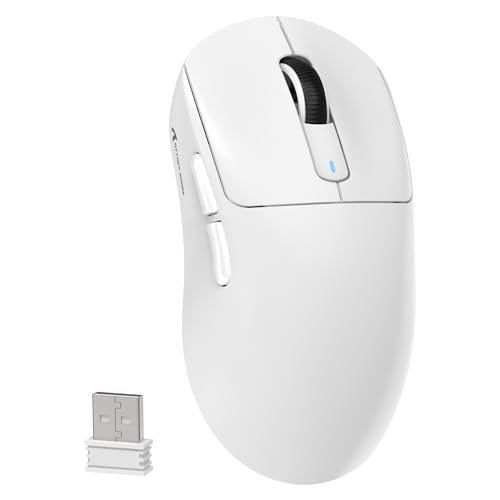
Choose the Attack Shark X3 if
you want a better sensor and switches.


Choose the Redragon M725 Honeycomb if
you want the lowest-priced light wireless mouse.

What the Differences Mean
A spec table shows what differs. This section explains why each difference matters, so you can weigh the rows that apply to you.
Connection
Connection type changes how you use the product. Wired means no battery and the lowest latency with no setup. A 2.4 GHz wireless mode is designed to match wired latency for games, while Bluetooth is convenient for laptops but usually slower. Wireless also means charging. In this comparison, Attack Shark X3 lists “Bluetooth 5.2, 2.4 GHz, wired” while Redragon M725 Honeycomb lists “Type-C wired, Bluetooth, 2.4 GHz”.
Sensor
A sensor with a higher maximum DPI is not automatically more accurate. Most players run a few hundred to about 1600 DPI. Tracking consistency matters more than the peak figure, and it is hard to judge from a spec sheet. In this comparison, Attack Shark X3 lists “PAW3395, up to 26,000 DPI, 650 IPS” while Redragon M725 Honeycomb lists “Up to 8,000 DPI, 5 levels”.
Switches
Switch type affects feel, sound and sometimes responsiveness. Optical and magnetic switches register the press without metal contact; mechanical switches use a physical contact. The right one is the one that feels good to you and suits the room you play in. In this comparison, Attack Shark X3 lists “Kailh GM 8.0, 80 million cycles” while Redragon M725 Honeycomb lists “Not highlighted”.
Buttons and controls
More buttons help only if you will bind them and can reach them without shifting your grip. Extra controls add weight and cost, so count the ones you would really use. In this comparison, Attack Shark X3 lists “Programmable” while Redragon M725 Honeycomb lists “5 programmable buttons”.
Which Is Right for Which Buyer
- If you play competitive shooters, prioritize weight or key response, a layout you can control and a stable connection over extra features.
- If you play strategy or MMO games, look at the number of programmable buttons or keys and whether profiles can be stored on the device.
- If you use the same device for work, pay attention to comfort, noise and Bluetooth support.
- If you are on a budget, check the price on the day you buy and the return policy, and skip features you will not use.
Before You Buy: A Five-Point Check
- Confirm the exact model on the product page; similar names often hide different features.
- Check dimensions against your hand or desk.
- Look at the warranty and return window.
- Read what the companion software is required for.
- Keep the packaging for the first couple of weeks.
This comparison is based on the Amazon listings and manufacturer information, not our own testing. Treat it as a way to narrow the choice, then confirm the details that matter to you.
Grip Style and Hand Size on a Light Mouse
Two mice with the same listed weight can feel very different in the hand, because shape decides how that weight is held. Before comparing features, work out your grip. In a palm grip, your whole hand rests on the shell and the fingers lie flat on the buttons. A claw grip arches the fingers and keeps the palm lightly in contact at the back. A fingertip grip touches the mouse only with the finger pads and thumb. Light mice are popular with claw and fingertip users, but a palm-grip user can also like them if the shape fills the hand.
Measure your hand from the wrist crease to the tip of the middle finger, and the width across the knuckles. Then compare with the length, width and height shown on each listing. A mouse that is too short forces the fingers to curl and tire, while one that is too long makes small movements harder. Pay attention to the hump position as well: a hump toward the back suits palm grips, and a more central hump suits claw users.
Side shape matters too. Check whether the sides are straight, curved or textured, and whether the thumb has a place to rest. If you grip hard with the thumb and pinky, look for a shell that does not flex. Since a listing cannot tell you how a mouse feels, confirm the return window before ordering and give the shape a proper trial for a few days of normal use before deciding.
Living With Tri-Mode Wireless Day to Day
Both mice offer more than one way to connect, and each mode has its own routine. The 2.4 GHz receiver is the mode most players use for games, because it is designed for fast, stable response. Plug the receiver into a port close to the mouse, ideally on the front of a desktop or on a short extension, rather than behind a case or a metal dock. Distance and obstacles can cause stutters.
Bluetooth is better suited to laptops, tablets and travel, where you do not want to use a port. It usually has a little more delay and can take a moment to wake from sleep, so many people keep it for office work. Wired mode is useful when the battery is low, and it lets you keep playing while it charges. Check whether the cable is included and whether it also carries data in the same mode.
Battery life varies with how the mouse is used, so rely on the listing for claims and expect real use to differ. Lighting, polling rate and connection type all affect it. Find out how the mouse shows low battery, whether it has an auto-sleep setting and how long it takes to charge. If you switch between a PC and a laptop, learn how to change modes with the button or switch on the bottom and test it before a busy day. Store the receiver in its slot if there is one, so it does not get lost.
Software, Onboard Memory and Polling Settings
Many gaming mice rely on companion software to change DPI steps, remap buttons, set lift-off distance and adjust lighting or polling rate. Check whether the software is made by the brand, what operating systems it supports and whether a web-based tool is offered. Download it only from the official site named in the listing or manual, and be cautious with unfamiliar links.
Ask where settings are stored. A mouse with onboard memory keeps its profiles on the device, so your DPI and button assignments follow you to another computer without installing anything. A mouse that relies on software for every change may reset when moved. If you use a shared or work computer where you cannot install programs, this is a deciding factor.
Polling rate describes how often the mouse reports its position to the computer. Higher values can feel smoother on a fast display, but they use more battery and ask more of the computer, and the benefit depends on your monitor and your games. Most people do well with a moderate setting and can raise it if they notice a difference. Likewise, keep DPI at a level you can control, and use the in-game sensitivity setting to fine-tune. When you first set up, change one setting at a time and play for a while, so you know what helped.
Shell Design, Feet and Your Mouse Surface
A honeycomb shell removes material to save weight and lets air reach the hand. It can feel cooler, but it has trade-offs. Holes can collect dust, skin oils and crumbs, so plan to brush or blow the shell out now and then. Some users notice the texture against their palm, and others do not. A shell without holes is easier to wipe clean and may feel more solid under hard grips, though it can be a touch warmer.
The feet, also called skates, determine how the mouse glides. Check what material they are made from and whether spare pairs are included or sold. Worn feet make a mouse feel scratchy or slow, and replacing them can renew the feel. Clean the mousepad and the feet regularly, since dust adds friction. Be careful not to use adhesive that harms the base if you swap them.
Match the mouse to the surface. A cloth pad gives control and a slower glide, while a hard pad gives a fast glide and can wear feet more quickly. A bare desk may work but can scratch the feet and vary in tracking. Some sensors perform differently on glass or glossy surfaces, so read the maker’s notes. If you use a large pad, a light mouse will feel quick, and you may want to lower sensitivity for steadier aim.
Weighing Value Between a Budget and a Step-Up Mouse
When two mice share the same weight and connection options, the question becomes what the extra spend buys. A step-up model typically offers a higher-end sensor, different switches, more settings and sometimes better build quality. A budget model gives you the main idea, a light wireless mouse, at a lower cost, with fewer extras. Neither is automatically better. What matters is whether the upgrade solves a problem you actually have.
Ask yourself how you will use it. If you play fast shooters for hours, sensor consistency, switch feel and a stable wireless link may justify paying more. If you mostly browse, work and play casual games, a simpler mouse can serve you well, and the savings can go toward a good mousepad. Remember that skill depends far more on practice and settings than on a spec sheet.
Consider long-term costs as well. Check the warranty length, the return window and whether replacement feet or a receiver are available. Read listing details carefully for what is included in the box. If you are unsure, consider buying the lower-priced option first, especially if you have never used a mouse this light. Give any new mouse a couple of weeks before judging it, since both grip and aim need time to adjust to a lighter shape.
Gaming Mouse Terms in Plain Language
Spec sheets for light wireless mice use shorthand that can be hard to parse. These definitions give you a quick reference.
- DPI: a measure of how far the cursor moves for a given hand movement. It is a sensitivity setting, not a direct measure of quality.
- Polling rate: how often the mouse reports its position to the computer, measured in hertz.
- Tri-mode: support for three connection types, usually a wireless receiver, Bluetooth and a cable.
- Receiver or dongle: the small USB piece that links a mouse wirelessly to your computer.
- Onboard memory: storage inside the mouse that keeps settings without software running.
- Feet or skates: the pads on the bottom that glide over the surface.
- Honeycomb shell: a body with open cutouts with open cutouts used to reduce weight.
Check each maker’s own page for what a feature means on that particular model.
Which Situation Fits Which Mouse
| Your situation | What to weigh | Where to look |
|---|---|---|
| Fast-paced shooters | Weight, sensor and wireless stability | Specification pages and the manual |
| Office work and casual gaming | Comfort and battery habits | Shape and charging notes |
| Small hands | Shell size and grip support | Dimensions and photos |
| Laptop and travel | Bluetooth option and a small receiver | Connection list |
| First wireless mouse | Simple setup and easy software | Setup guide |
If you are torn, think about the one feature you will notice daily. For many people that is shape and weight, not the long spec list.
A Short Desk Setup Check
- Place the receiver in a front-facing USB port close to the mouse, using an extension cable if the maker supplies one.
- Keep other wireless devices, such as routers and hubs, from crowding the receiver.
- Use a clean, flat mouse mat or surface that suits the sensor.
- Test the mouse in the games or apps you use most.
- Adjust DPI in small steps instead of making big jumps.
- Save profiles on the mouse if it supports it.
- Charge the battery as the maker recommends and keep a spare cable handy.
A few minutes of setup can solve most of the small annoyances that make a mouse feel unreliable.
Grip, Hand Size and Comfort
A light mouse feels different depending on how you hold it. Palm, claw and fingertip grips each put weight in different places, and a shell shape that suits one grip may feel awkward in another. Measure your hand from the wrist crease to the tip of your middle finger, and compare it with any size guidance from the maker.
Take breaks, keep your wrist in a neutral position and adjust your chair and desk height. If you have pain or discomfort, speak with a health professional.
Living With Wireless Day to Day
Wireless mice fit into a routine, and a few habits keep them working smoothly. Charge the battery before it runs low, and learn how the indicator light shows the charge level. Keep the receiver plugged in when you travel, or store it in the slot the maker provides if there is one. If you use Bluetooth with a laptop or tablet, learn how to switch modes quickly.
Wireless signals can be affected by metal desks, crowded USB hubs and other devices. If the cursor stutters, try moving the receiver closer, using an extension, or changing ports. Turn the mouse off when you carry it in a bag to save battery.
Keep the sensor window clean and free of dust, and wipe the feet if they collect debris. A damp cloth and a little care go a long way.
Software, Updates and Keeping Settings Safe
Download software only from the official maker site, and check the version supports your operating system. Update firmware as the maker instructs, following all steps, and do not unplug the mouse during an update. Back up your settings if the software allows it, so you can restore them quickly.
If a mouse disconnects, lags or double-clicks, try a different port, update firmware and clean the sensor window. If the problem continues, contact the maker’s support team and keep your proof of purchase.
Going Deeper: Living With the Choice Day to Day
The sections above settle the headline differences between Attack Shark X3 vs Redragon M725. What they cannot fully capture is what either mouse is like to live with across weeks of ordinary use: the small habits, setup decisions and comfort details that decide whether a purchase still feels right months later. The sections that follow dig into that practical layer. None of them change the verdict in the comparison, but together they will help you test the mouse you choose properly, set it up once and well, and recognise the difference between a genuine mismatch and a problem with a simple fix.
Weight and Balance in Real Play
Total weight is only half the story; balance is the other half. A mouse whose weight sits toward the back can feel reluctant to start moving, while one balanced toward the front can feel eager but harder to stop precisely. You notice balance most in small movements: tiny corrections, careful cursor placement, and the moment a flick ends. If a mouse offers removable weights or a way to shift balance, change one thing at a time and play for a full session before judging. Many players discover that a modest weight with even balance feels better than chasing the lightest possible number, especially across longer sessions where control matters as much as speed.
Polling and Settings Without Superstition
Higher polling settings make the mouse report its position more often, which can smooth out fast movement on a high-refresh monitor. The practical difference is subtle for most players, and it can cost battery life on a wireless mouse. A sensible approach is to try your usual settings first, play for a few days, and only then experiment. Change one setting at a time and give each change a real session, not a minute of desktop wiggling. Settings advice from other players is a starting point, not an answer, because their sensitivity, pad, monitor and games differ from yours. Your own consistency across a week of play is the measurement that counts.
Sharing a Desk or a Computer
If the mouse will be shared, or used for both work and play, a few practical points matter. A shape that suits very different hand sizes is rare, so be realistic about who uses it most. Profiles help when two people want different button layouts or sensitivity, provided switching between them is quick. Wireless mice earn their keep on shared desks because they move between machines without cable juggling. Hygiene is unglamorous but real: a shell that wipes clean easily is a kindness on a family or office desk. Finally, agree on a charging spot, because a shared mouse that is always flat helps nobody.
Measuring Your Hand Before You Decide
Start with a tape measure rather than a guess. Measure from the tip of your middle finger to the base of your palm, and then across the widest part of your hand. Write both numbers down and compare them with the dimensions on the product listing. A mouse that looks right in photos can feel completely different once your fingers rest on it, especially around the hump and the sides. If your current mouse leaves your ring finger and little finger with nowhere comfortable to sit, that is useful information too. Comfort problems rarely come from one dramatic flaw. They build up from small mismatches between hand size, grip style and shell shape, and they usually show up after an hour rather than in the first five minutes.
How Grip Style Changes Everything
Palm grip spreads contact across the whole shell and tends to suit relaxed, lower-sensitivity play. Claw grip arches the fingers and puts more weight on the fingertips, which many players find quicker for small corrections. Fingertip grip removes the palm from the shell entirely and favours fast, wrist-led movement, but it can tire the hand sooner. None of these is better in the abstract. The right question is which grip you naturally fall into when a match gets tense, because that is the grip you will actually use for most of your playing time. If you switch grips between games, favour a shape that feels secure in both rather than perfect in one.
Reading Sensor Behaviour in Plain Terms
Sensor numbers on a listing only tell part of the story. What you feel in game is how consistently the cursor follows your hand at the speeds you actually move. Slow, controlled tracking matters for holding an angle. Fast flicks matter when you turn or react. A helpful home test is simple: draw slow circles, then fast straight lines across your pad, and watch whether the cursor path stays smooth and predictable. Jerky or drifting movement at normal speeds is a reason to check the surface, the feet and the connection before blaming the sensor itself. Most modern gaming sensors track far beyond what hands can demand, so shape and comfort usually decide satisfaction.
Receiver Placement and Wireless Stability
Wireless performance depends as much on your desk as on the mouse. Keep the receiver close to the pad, ideally on a short extension cable so it sits in clear view of the mouse rather than hidden behind a metal case under the desk. Large metal objects, crowded USB hubs and other wireless dongles packed together can all make a connection feel less stable. If you notice occasional stutter, move the receiver first before changing settings. It is the cheapest fix and the most commonly overlooked one. A clear line between receiver and mouse, at roughly pad height, gives any wireless mouse its fairest chance to feel as steady as a wired one.
Battery Habits That Prevent Mid-Match Surprises
Build a charging routine instead of reacting to a low-battery warning. Many players charge during a regular break on the same day each week, or top up whenever the mouse sits unused at lunch. Turning lighting effects down or off extends the time between charges, and using the cable for a session while it charges is a sensible fallback rather than a failure. If your mouse offers a battery indicator in its software, check it at the start of a long session instead of the middle of one. Keeping the charging cable within reach of the pad, rather than in a drawer, removes the friction that turns a small top-up into an annoying interruption.
Mouse Feet, Pads and Glide
The feet under a mouse and the surface above them work as a pair. A hard pad gives a faster, lower-friction glide that suits quick flicks, while a cloth pad adds control and stopping power that many players prefer for precise aiming. Worn or scratched feet change that balance gradually, so a mouse can start to feel scratchy long before anything is actually broken. Keep the pad clean, because dust and crumbs collect exactly where the feet travel. If glide feels uneven, wipe the feet with a soft dry cloth and brush the pad before assuming the mouse is at fault. Small surface problems are responsible for a surprising share of tracking complaints.
Click Feel and What to Listen For
Clicks are something you will feel thousands of times, so small differences matter. Pay attention to how much force the main buttons need, whether the left and right clicks feel even, and whether there is noticeable wobble or travel before the click registers. A consistent, predictable click helps timing in fast games and reduces accidental presses during long sessions. Sound matters too if you share a room or play late at night. None of this appears clearly on a spec sheet, which is why the return window matters: use it to click through menus, play your usual games and work at the desk, and judge the buttons by your own hands rather than by descriptions alone.
The Scroll Wheel in Games and at Work
The wheel is easy to ignore until it annoys you. In games it often switches weapons or triggers abilities, so clear, separate steps help you land on the intended item without overshooting. For browsing and documents, a wheel that can move quickly through long pages saves real time. Test both behaviours in your first week: scroll slowly through a document one notch at a time, then spin through a long page and stop where you intend. A wheel that feels vague in one of those two jobs will keep reminding you of it. Also check the middle click, since a stiff or unreliable wheel click is a common quiet frustration.
Side Buttons and Reach
Extra buttons only help if your thumb reaches them without shifting your grip. Buttons placed too far forward get ignored, and buttons that are too easy to press by accident get disabled, which defeats their purpose. When you first set up, assign the side buttons to simple, forgiving actions while you learn their positions, then move important actions onto them once the reach feels automatic. In games where a missed press is costly, it is better to use two buttons you trust than six you fumble for. Judge the layout by playing, not by counting: a shorter list of controls you can hit reliably beats a long list you have to think about.
Software Profiles Without the Headache
Companion software is most useful when you keep it simple. Set one main profile for everyday use and, if you play very different games, one extra profile per style rather than per title. Save or export your settings once they feel right, because reinstalling software or moving to another computer can otherwise mean rebuilding everything from memory. Update firmware only when you have time to test afterwards, and avoid updating right before an important session. If the mouse stores settings onboard, confirm your key assignments still work with the software closed, since that is the setup you will have on another machine or at a friend’s desk.
Troubleshooting Lag, Stutter and Drift
When a mouse misbehaves, work through the simple causes in order. Try a different surface or clean the current one. Move the receiver closer or plug the mouse in directly to separate a wireless issue from a mouse issue. Test another USB port, and test the mouse on another computer if you can. Check for software or firmware updates from the maker’s official support page. If clicks begin to register twice, the wheel skips, or tracking stays erratic across surfaces and computers, the problem is likely in the mouse itself, and that is the point to use the warranty or the return window rather than endlessly adjusting settings.
Cleaning and Day-to-Day Care
A gaming mouse needs little care, but a little care goes a long way. Wipe the shell with a slightly damp soft cloth to remove the oils that build up from your hand, and keep drinks away from the pad area where a spill can reach both mouse and pad. Use a dry brush or a gentle puff of air around the wheel and the sensor opening rather than poking at them. Avoid harsh cleaners on coated shells. Store a spare charging cable where you can reach it. These small habits keep the grip surface feeling consistent and stop the slow build-up of grime that makes buttons and wheels feel worse over time.
Desk Setup Around the Mouse
Your chair height, desk height and monitor position all shape how a mouse feels. Your forearm should rest roughly level, with your wrist in a neutral position rather than bent sharply up or down. If your shoulder hikes up while you play, the desk or chair height is fighting you, and no mouse shape will fully fix that. Give the mouse enough pad space that you are not lifting and recentring it every few seconds at your chosen sensitivity. Players who use low sensitivity in particular benefit from a larger pad and from keeping cables, mugs and phones out of the sweep area on the mouse side of the keyboard.
Different Games, Different Demands
A mouse that feels perfect in one genre can feel merely fine in another. Fast shooters reward secure grip and dependable tracking during quick turns. Strategy and MOBA play involves constant medium-speed movement and many clicks, so click comfort and wheel behaviour matter more over a long session. MMO players often value extra buttons they can reach without looking. Simulation and casual games are forgiving of almost any sensible shape. If you play across genres, weigh the demands of the game you play most, and be honest about it: buying for a game you might take up one day usually leads to a mouse that suits the games you actually play slightly less well.
Using the Return Window Like a Test Lab
Treat the first days with a new mouse as a structured test rather than a honeymoon. On the first day, set it up and play your most familiar game, where you will notice differences fastest. Over the next few days, add your other regular activities: work, browsing, editing or study. Note any ache, missed clicks or moments where you had to adjust your grip. Keep the packaging intact until you are sure. If something feels wrong, describe it precisely to yourself: too tall, too narrow, buttons too far forward. That description is valuable whether you return this mouse or simply adjust how you hold it, because it tells you exactly what to look for next time.
More Questions Worth Settling Before You Buy
How long should a gaming mouse take to feel natural?
Most players settle into a new shape within a few days of regular play, though a very different shape can take a couple of weeks. Judge it after several full sessions in your main games rather than after one evening. If your aim feels inconsistent but your hand is comfortable, give it more time. If your hand aches or cramps, that rarely improves with patience, and it is a good reason to use the return window.
Why does my cursor feel different on a new pad?
The pad and the mouse feet work as a pair, so changing either one changes glide and stopping feel. A faster pad makes small movements feel lighter and can make your usual sensitivity feel higher, while a slower, higher-friction pad adds control. When you change pads, play for a few sessions before adjusting sensitivity, because your hand needs time to separate the new surface feel from the mouse itself.
Should I turn lighting off to save battery?
Lighting is one of the larger everyday drains on a wireless mouse, so dimming it or switching it off noticeably lengthens the time between charges. Many players keep lighting on at the desk and turn it off for travel or long sessions away from a charger. The setting lives in the companion software, and it does not affect tracking or click performance in any way.
What should I check first if clicks start registering twice?
First, test the mouse on another computer and with a wired connection if it offers one, to rule out a software or connection issue. Clean around the buttons with a dry brush. If the behaviour follows the mouse across computers and connections, treat it as a hardware issue and contact the maker or seller while the warranty applies, rather than living with a fault that will only get worse.
Is a heavier mouse ever the better choice?
Yes. Some players, especially those who use higher sensitivity or play slower-paced games, prefer the steadiness and deliberate feel of a heavier mouse. Weight is a preference, not a ranking. The useful test is whether you can make small, controlled movements and stop the cursor exactly where you intend after an hour of play, without your hand feeling tired.
How do I know if a mouse is too big for my hand?
Warning signs include your fingers stretching to reach the main buttons, your palm being pushed into an uncomfortable arch, side buttons that need a grip shift to press, and soreness in the fingers or wrist after ordinary sessions. Compare the listed dimensions with your current mouse and your hand measurements. A modest size mismatch is often manageable; several of these signs together usually mean the shape is wrong for you.
Start With the Keys You Actually Use
Before comparing any models, spend one ordinary day noticing your own keyboard habits. Do you reach for a number pad when you pay bills or work in spreadsheets? Do you use the function row for media controls, screenshots or game abilities? Do you live on the arrow keys in documents? Write the answers down, because they decide which layout will feel natural and which will quietly frustrate you. Many buyers choose a size based on how a desk looks in photos, then discover a missing key they use fifty times a day. A keyboard is a tool you touch constantly, so your real habits are a better guide than any trend.
Switch Feel, Explained by Your Fingers
Linear switches move smoothly from top to bottom, tactile switches add a small bump you can feel as the key registers, and clicky switches add both a bump and an audible click. Gamers often favour linear switches for fast, repeated presses, while typists frequently enjoy tactile feedback that confirms each keystroke. There is no universal winner. If you can, type a paragraph on each style before deciding, and pay attention to your fingers after a few minutes rather than your first impression. Also consider the people around you: a clicky board that delights you at noon may test a household at midnight, and switch choice is one of the few decisions that affects everyone in the room.
Keycaps: The Surface You Actually Touch
Keycaps shape both feel and durability. Double-shot legends are moulded through the cap, so the letters resist wearing away, while printed legends can fade with heavy use. PBT plastic is commonly praised for resisting shine and keeping a dry, textured feel, while ABS often starts smoother and can polish over time. Profile matters as well: taller sculpted caps guide fingers differently from low, flat ones. If you type by touch, a profile that helps you find the home row without looking is worth more than a decorative set. Whatever a listing claims, judge keycaps by typing a long passage and by checking that the legends you rely on, such as media icons, are actually present and readable.
Frequently Asked Questions
Which is lighter?
Both list 49 g.
Which has the better sensor?
The Attack Shark X3.
Are they tri-mode?
Yes.
Is Attack Shark X3 or Redragon M725 Honeycomb better for beginners?
Pick the one that fits your hand or desk and your budget. Features matter less than comfort for most beginners. See the verdict above for the main difference.
Can I use either with a Mac?
Basic functions normally work on any system, but companion software may be Windows-only. Check each product page.
What if I choose the wrong one?
Check the return window on Amazon and keep the packaging while you test it.
Is a lighter mouse always better for gaming?
Not always. Light mice reduce effort for fast flicks, but comfort depends on shape and grip. Some players prefer a bit more weight for stability.
Where should I plug in the 2.4 GHz receiver?
Use a nearby port on the front of your PC or a short extension cable. Avoid ports behind metal cases or crowded hubs that can weaken the signal.
Do I need to install software to use these mice?
Basic movement and clicking usually work without it. Software is needed for remapping buttons, changing DPI steps and adjusting other settings, so check the listing.
What does onboard memory do?
It stores your profiles on the mouse itself. Settings then follow you to another computer without reinstalling the software.
How do I clean a honeycomb shell?
Use a soft brush or compressed air to clear dust, and a slightly damp cloth for the outside. Keep liquids away from the openings.
Can I use either mouse on a glass desk?
Some sensors struggle on glass or very glossy surfaces. Use a mousepad, and check the maker's notes on supported surfaces.
How long should I try a new mouse before deciding?
Give it a week or two of normal use. Grip and aim adjust over time, but keep the return window in mind.
Bottom Line
Choose the X3 for performance, the M725 for price. See best lightweight gaming mice.
Related Reading
- 6 Best Gaming Mice Under $50
- Is the Attack Shark X3 Worth Buying? Listing-Based Review
- Razer DeathAdder Essential vs Redragon M602: $20 Wired Mice


