Disclosure: As an Amazon Associate, reviewstook.com earns from qualifying purchases. If you buy through a link on this page, we may earn a commission at no extra cost to you.
Where to Buy
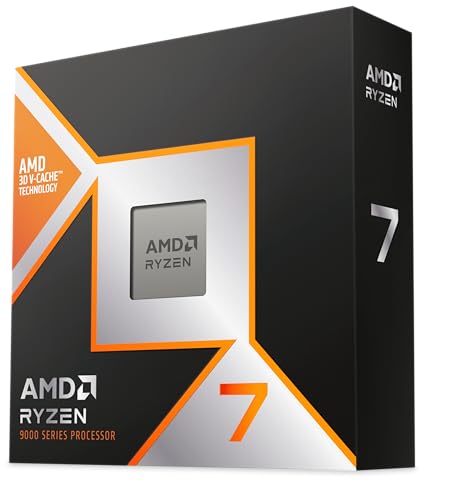
Three picks lead our amd ryzen black friday deals shortlist. Start with the AMD Ryzen 7 9800X3D if gaming performance is the whole point of the machine, the AMD Ryzen 9 9950X3D if you want the flagship that refuses to choose between gaming and workstation work, or the AMD Ryzen 5 9600X if you are building a modern AM5 system on a disciplined budget. Every price in this guide is a dated sighting checked against Amazon’s own catalog data on November 20, 2026 — confirm the live price at checkout, because Black Friday pricing moves by the hour.
AMD Ryzen Black Friday Deals: The Whole AM5 Ladder, Verified Rung by Rung
Amazon Black Friday Week runs November 19–30, 2026, with Black Friday itself on November 27 and Cyber Monday closing the event on November 30. This guide is deliberately narrower than our multi-brand processor coverage: all six picks are AMD Ryzen, all six sit on the AM5 platform, and the question it answers is not “which brand” but “which rung of the Ryzen ladder deserves your money this week.” That focus pays off. Because every pick shares one socket and one memory standard, the comparisons here are pure: cache against cores, cores against clocks, this generation against the last, with every price verified the same way on the same day.
The six processors verified against Amazon’s catalog on November 20, 2026 map the full ladder. At the top, the sixteen-core Ryzen 9 9950X3D pairs 3D V-Cache with flagship core count for buyers who game and create at the highest level. Beside it, the Ryzen 7 9800X3D remains the pure gaming flagship, and its predecessor the 7800X3D has been repriced by the sale into the value gaming pick. The Ryzen 9 9900X carries the deepest verified percentage cut in the guide for hybrid workloads, the Ryzen 7 9700X is the efficient eight-core all-rounder, and the Ryzen 5 9600X opens the ladder at a sighting under $175. All six listings returned reference prices, so all six picks carry checkable percentages — a rarity worth noting in this year’s coverage.
Platform notes before the picks: every processor here is AM5 and DDR5 only. If you are upgrading from AM4, the board and memory change with the chip, and our Ddr5 Ram Black Friday Deals guide covers the memory half of that move; if you are weighing AMD against Intel before committing to a platform, our Cpu Black Friday Deals 2026 guide makes the cross-brand case with the same verified sightings. Inside the Ryzen family, though, the decision is refreshingly mechanical, and the reviews below are organized to make it: gaming cache first, threaded cores second, efficiency and price as the tiebreakers.
In this guide
Quick Picks
| Pick | Best for | Dated sighting | Deal |
|---|---|---|---|
| AMD Ryzen 7 9800X3D | Best gaming CPU | Seen at $411 on November 20, 2026 (reference $479, about 14% off) | Check on Amazon |
| AMD Ryzen 9 9950X3D | Best flagship for gaming plus creation | Seen at $589.99 on November 20, 2026 (reference $699, about 16% off) | Check on Amazon |
| AMD Ryzen 7 7800X3D | Best value gaming CPU | Seen at $339 on November 20, 2026 (reference $449, about 24% off) | Check on Amazon |
| AMD Ryzen 9 9900X | Best percentage deal for hybrid work | Seen at $331 on November 20, 2026 (reference $499, about 34% off) | Check on Amazon |
| AMD Ryzen 7 9700X | Best efficient all-rounder | Seen at $258.99 on November 20, 2026 (reference $339, about 24% off) | Check on Amazon |
| AMD Ryzen 5 9600X | Best budget AM5 entry | Seen at $173.99 on November 20, 2026 (reference $220, about 21% off) | Check on Amazon |
How These Deals Were Chosen
Every pick in this guide was verified the same way: we searched Amazon’s catalog data for the exact Ryzen model, matched the returned listing title against the processor we intended to cover, and recorded the price, the reference price, and the official product image from that same listing. Ryzen listings require care: AMD sells boxed retail chips alongside tray processors, bundle listings pair chips with motherboards at combined prices, and the previous AM4 generation (still excellent, still on sale) shares shelf space and search results with AM5. Every pick here is the standalone boxed AM5 processor, verified as such on November 20, 2026; the motherboard bundles that surfaced in the same searches were set aside, because a bundle price cannot be honestly compared with a chip price.
The ladder logic shaped the list. A brand guide earns its existence by making the internal choices clear, so each pick owns a distinct decision: the gaming flagship (9800X3D), the no-compromise flagship (9950X3D), the value gaming chip (7800X3D), the hybrid throughput deal (9900X), the efficient all-rounder (9700X) and the entry point (9600X). Chips that overlapped a stronger sibling’s argument at sighting prices — the non-X3D Ryzen 9 9950X at $539 with no reference price returned, for instance — were left to the multi-brand guide’s context rather than padded in here. What remains is six processors that between them answer every AM5 buying question we hear, each with a dated sighting and a verified reference price.
One more filter deserves naming, because Ryzen buyers trip over it every sale: the AM4 back catalog. AMD’s previous platform remains on sale at tempting prices, and several of its chips — including an earlier X3D model that surfaced in our verification searches at a sighting close to the 7800X3D’s — are genuinely good processors. They are not in this guide, because they belong to a different platform decision: AM4 means DDR4 memory and a board with no upgrade path to anything else in this article. An AM4 chip can be the right end-state upgrade for an existing AM4 system, and the wrong foundation for a new build at any discount, because every dollar it saves today is spent again the day the platform is replaced. New builds and AM5 owners are this guide’s audience; AM4 upgraders should price their chips as final-form purchases and compare them against the cost of the full platform move described above.
We also weighted where each chip sits in its lifecycle. The 9000-series processors are the current generation, with the platform’s full support runway ahead of them. The 7800X3D is a generation old and discounted like it — which is precisely its appeal, because AM5 boards do not care which generation they host, and a gaming workload cares about cache more than vintage. Lifecycle honesty cuts both ways: the 7800X3D’s stock is finite in a way the current chips’ is not, and the guide flags where that urgency is real rather than manufactured.
Top pick
1. AMD Ryzen 7 9800X3D — Best Gaming CPU
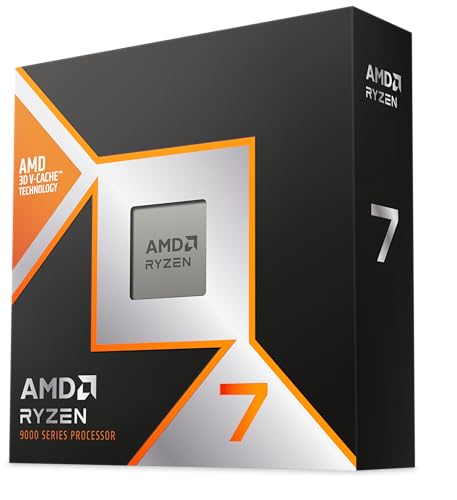
Badge: Best Gaming CPU. Start the ladder at its gaming peak. The Ryzen 7 9800X3D was seen at $411 on November 20, 2026 against a $479 reference price in Amazon’s data — about 14% off — and it remains the fastest gaming processor AMD sells and the chip the rest of this guide is measured against. Its recipe is now famous: eight Zen 5 cores, a 64MB slab of 3D V-Cache bringing total L3 to 96MB, and, in this second generation of the design, the cache moved beneath the cores so the chip cools better, clocks higher (up to 5.2 GHz) and overclocks where its predecessor could not. Games feed on that cache, and the result is frame rates and frame-time consistency that no non-X3D chip in this guide matches.
Within a Ryzen-only guide, the 9800X3D’s role sharpens. It is not the most cores, the highest clock or the deepest discount here; it is the specialist that wins the single most common AM5 workload outright. High-refresh esports play, simulation and strategy titles, MMOs and big open worlds — the genres whose engines are most sensitive to memory latency — are exactly where its advantage concentrates, and it delivers that advantage at a 120W-class appetite that a good tower cooler handles quietly. For a gaming PC built around a strong graphics card, this is the processor that removes the CPU from the list of things limiting the experience.
The alternatives inside this guide define its edges. If your machine also renders, compiles or streams seriously, the 9950X3D below buys the same gaming technology with double the cores for $178.99 more at sighting, and the 9900X buys twelve cores for $80 less. If your budget is contested, the 7800X3D keeps the cache and surrenders a generation of clocks for $72 less. The 9800X3D is for the buyer who has read those sentences and still wants the gaming flagship itself — a defensible, and at a verified 14% cut, timely purchase.
Mini specs (verified from the listing and model specification):
- Cores/threads: 8 cores, 16 threads, Zen 5
- Cache: 96MB L3 (3D V-Cache, second generation)
- Boost clock: up to 5.2 GHz
- Socket/platform: AMD AM5, DDR5
- TDP: 120W
Strengths
- The fastest gaming processor in the Ryzen line, at a verified 14% sighting cut.
- Second-generation V-Cache improves thermals and restores overclocking.
- Efficient and quiet under gaming loads relative to its performance.
Trade-offs
- Eight cores cap threaded productivity below both Ryzen 9 picks.
- Premium over the 7800X3D buys a generation, not a transformation, in gaming.
- Requires AM5 and DDR5 — a full platform move for AM4 owners.
Verdict: Best for: gaming-first AM5 builds and upgraders who want the flagship gaming chip itself. Not suited for: heavy threaded workloads, or budgets where the GPU is still unfunded.
Deal details: Seen at $411 on November 20, 2026, against a $479 reference price returned by Amazon’s catalog data — about 14% off. The verified listing is AMD’s boxed retail processor. X3D stock historically thins first during the event; confirm the live price at checkout.

Check on Amazon · See the current Black Friday price · View this deal on Amazon

2. AMD Ryzen 9 9950X3D — Best Flagship for Gaming Plus Creation
Badge: Best Flagship for Gaming Plus Creation. The Ryzen 9 9950X3D is the answer to the oldest Ryzen dilemma — gaming cache or workstation cores — written as a single product: sixteen Zen 5 cores and 128MB of total L3 cache, with 3D V-Cache on one of its two core dies. It was seen at $589.99 on November 20, 2026 against a $699 reference price — about 16% off — the largest absolute saving among the referenced picks in this guide. For the buyer whose machine must be the fastest gaming PC and a serious workstation in the same chassis, this is the flagship, and Black Friday has made its premium over the gaming specialist smaller than its specification suggests.
The engineering compromise is worth understanding because it shapes the experience. One eight-core die carries the V-Cache and is where games belong; the other die runs at higher clocks for threaded work. AMD’s chipset software steers games onto the cache die automatically, and current BIOS and driver versions have made that steering reliable — which is why keeping both updated is part of owning this chip happily. When the steering works as designed, the 9950X3D games within a whisker of the 9800X3D and then renders, compiles and encodes at sixteen-core speed, a combination nothing else in this guide attempts. It is, plainly, the no-compromise pick, priced like one even on sale.
Who should not buy it: almost everyone, and the guide says so with respect. Pure gamers gain nothing measurable over the 9800X3D for $178.99 less. Pure creators who never game can take the same core count without the cache in the standard Ryzen 9 line. The 9950X3D is for the genuinely dual-purpose flagship build — the streamer who edits, the developer who plays at 240Hz, the creator whose evenings and deadlines share a desk — and for that buyer, a verified $109 absolute saving against reference is the difference between someday and this week.
Mini specs (verified from the listing and model specification):
- Cores/threads: 16 cores, 32 threads, Zen 5
- Cache: 128MB L3 total (3D V-Cache on one die)
- Boost clock: up to 5.7 GHz
- Socket/platform: AMD AM5, DDR5
- TDP: 170W; high-end cooling recommended
Strengths
- Gaming-flagship cache and sixteen-core throughput in one processor.
- The guide’s largest absolute saving against its reference price.
- Highest boost clocks in the guide for clock-sensitive work.
Trade-offs
- The highest sighting in the guide — a flagship price even discounted.
- Dual-die cache design depends on current BIOS and chipset drivers for best gaming behavior.
- 170W class appetite demands serious cooling.
Verdict: Best for: dual-purpose flagship builds that game and create at the highest level. Not suited for: pure gamers (9800X3D), pure creators (standard Ryzen 9), or modest cooling.
Deal details: Seen at $589.99 on November 20, 2026, against a $699 reference price returned by Amazon’s catalog data — about 16% off. The verified listing is AMD’s boxed retail processor (title: Ryzen 9 9950X3D 16-Core). Confirm the live price at checkout.
Check on Amazon · See the current Black Friday price · View this deal on Amazon

3. AMD Ryzen 7 7800X3D — Best Value Gaming CPU
Badge: Best Value Gaming CPU. Every Ryzen generation leaves behind a chip that becomes the value legend of the next sale, and the 7800X3D has assumed the role completely: seen at $339 on November 20, 2026 against a $449 reference price — about 24% off. The comparison that defines it is internal: same 96MB of L3 cache as the 9800X3D, same eight-core gaming brief, $72 less at sighting prices. Its Zen 4 cores clock lower (up to 5.0 GHz), its first-generation cache placement caps overclocking, and in exchange it is famously efficient, cool-running, and — the point — still fast enough in games that the graphics card, not the processor, decides the experience in the overwhelming majority of builds.
There is a system-builder’s elegance to choosing it in 2026. AM5 boards are mature and cheaper than at the platform’s launch, DDR5 6000 CL30 kits are the standardized pairing (the specification our memory guide leads with), and the $72 saved against the 9800X3D funds exactly the things a gaming PC feels: a GPU tier step, a faster SSD, a better monitor. A 7800X3D build is not a compromise build; it is the same architecture of decisions that made this chip the default gaming recommendation of its own era, re-priced by its successor’s arrival.
The honest limits: productivity trails the newer eight-core chips as well as the Ryzen 9s, there is no overclocking story to tell, and its stock is the previous generation’s — when the event clears the channel, this sighting does not come back at this level. Buyers building a flagship to keep for many years may prefer paying the $72 once. Buyers optimizing a whole system this week should take the 24% cut, the cache, and the efficiency, and spend the difference where games can see it. Readers doing exactly that will find the reallocation targets in our Gpu Black Friday Deals 2026 guide, verified to the same standard.
Mini specs (verified from the listing and model specification):
- Cores/threads: 8 cores, 16 threads, Zen 4
- Cache: 96MB L3 (3D V-Cache, first generation)
- Boost clock: up to 5.0 GHz
- Socket/platform: AMD AM5, DDR5
- TDP: 120W class; exceptionally efficient in games
Strengths
- The full X3D gaming effect at $72 below the current flagship’s sighting.
- Verified 24% cut against a real reference price.
- Cool, quiet and undemanding of supporting hardware.
Trade-offs
- Previous-generation clocks and productivity performance.
- Locked design — no overclocking headroom to grow into.
- Finite channel stock; the sighting is unlikely to survive the event.
Verdict: Best for: value-optimizing AM5 gaming builds and upgraders from non-X3D Ryzen 7000 chips. Not suited for: flagship keepers who will resent the $72 question, or threaded workloads.
Deal details: Seen at $339 on November 20, 2026, against a $449 reference price returned by Amazon’s catalog data — about 24% off. The verified listing is AMD’s boxed retail processor. Because this is previous-generation stock, treat availability as part of the deal and confirm the live price promptly.

Check on Amazon · See the current Black Friday price · View this deal on Amazon

4. AMD Ryzen 9 9900X — Best Percentage Deal for Hybrid Work
Badge: Best Percentage Deal for Hybrid Work. The deepest verified cut in the Ryzen line this Black Friday is not on a gaming chip at all: the Ryzen 9 9900X was seen at $331 on November 20, 2026 against a $499 reference price — about 34% off. Twelve Zen 5 cores and twenty-four threads, boosting to 5.6 GHz, for eight dollars less than the 7800X3D’s sighting and eighty dollars less than the 9800X3D’s: the sale has temporarily inverted the ladder, and hybrid users should take the inversion personally. If your machine’s week includes rendering, compiling, encoding, virtual machines or heavy multitasking alongside its gaming, this is the Ryzen to buy while the arithmetic looks like this.
What the 9900X is, precisely: the productivity half of the flagship argument, without the cache. Its 64MB of L3 is conventional, its gaming performance is strong rather than charmed, and its threaded throughput is in a different class from every eight-core chip in this guide. The workloads that scale with cores — and most professional workloads do, almost linearly — finish on the 9900X in a fraction of the time the X3D chips need, while games run at frame rates that only the cache chips embarrass, and only in the most CPU-bound scenarios. For the streamer who edits, the developer who games, the creator who does both on one desk, that profile is not a compromise; it is the correct shape, now at the guide’s best percentage.
Position it carefully against its siblings. Against the 9950X3D, it gives up four cores and the cache to save $258.99 at sighting — the right trade unless both halves of your workload are truly flagship-class. Against the 9800X3D, it trades gaming supremacy for twelve-core throughput and a lower price. The buyer it does not suit is the pure gamer, who should let the X3D chips fight for the money instead. Everyone else on AM5 should start their shortlist here and make the other picks argue their way past it.
Mini specs (verified from the listing and model specification):
- Cores/threads: 12 cores, 24 threads, Zen 5
- Cache: 64MB L3
- Boost clock: up to 5.6 GHz
- Socket/platform: AMD AM5, DDR5
- TDP: 120W; cooler not included
Strengths
- The line’s deepest verified cut — about 34% against a real reference price.
- Twelve Zen 5 cores at a price below both X3D gaming chips.
- High clocks keep single-threaded and gaming performance strong.
Trade-offs
- No V-Cache: the X3D chips out-game it in cache-sensitive titles.
- Twelve cores still trail the sixteen-core flagship for pure throughput.
- No included cooler — budget for one.
Verdict: Best for: hybrid creator-gamers and developers who want Ryzen 9 throughput at a midrange sighting. Not suited for: pure gamers chasing cache-driven frame times.
Deal details: Seen at $331 on November 20, 2026, against a $499 reference price returned by Amazon’s catalog data — about 34% off. The verified listing is AMD’s boxed retail processor (title: Ryzen 9 9900X 12-Core). Confirm the live price at checkout; inverted-ladder sightings are the ones that correct fastest.

Check on Amazon · See the current Black Friday price · View this deal on Amazon

5. AMD Ryzen 7 9700X — Best Efficient All-Rounder
Badge: Best Efficient All-Rounder. The Ryzen 7 9700X is the quiet professional of the ladder: eight Zen 5 cores, a 65W TDP, and a sighting of $258.99 on November 20, 2026 against a $339 reference price — about 24% off. It makes no single claim to fame, and that is its claim. Its single-threaded performance is flagship-adjacent (it boosts to 5.5 GHz, higher than the 9800X3D), its gaming is strong in everything except the cache-sensitive extreme, its productivity is honest eight-core work, and it does all of it at power and heat levels that suit small cases, quiet builds and modest coolers. For a machine that must do everything well and announce nothing, this is the Ryzen.
The efficiency deserves emphasis because it is easy to undervalue at purchase time and impossible to retrofit. A 65W-class processor can live under a compact air cooler in a small-form-factor case, run quietly in a living-room or studio machine, and leave power-supply and thermal headroom for the graphics card — the component that actually wants the watts in a gaming build. AMD’s platform tools also let tinkerers raise its power limits toward the 105W-class behavior of its predecessor generation, which makes the 9700X two chips in one: the efficient default, and a faster part for owners willing to spend the heat. Few processors in this guide offer a choice like that after the purchase.
Its edges are defined by its neighbors. Gamers with high-refresh ambitions should step to the X3D chips, whose cache it cannot imitate. Threaded-work buyers should step to the 9900X, whose four extra cores are, at sighting prices, only $72.01 away — close enough that anyone with a real multi-threaded workload should take them. The 9700X’s buyer is the balanced one: mixed use, a premium on quiet and efficiency, perhaps a small case, and no single workload extreme enough to justify a specialist. That describes a great many real PCs, which is why this unglamorous chip may be the most-owned pick in the guide a year from now.
Mini specs (verified from the listing and model specification):
- Cores/threads: 8 cores, 16 threads, Zen 5
- Cache: 32MB L3
- Boost clock: up to 5.5 GHz
- Socket/platform: AMD AM5, DDR5
- TDP: 65W (configurable higher via platform power options)
Strengths
- Flagship-class single-thread speed at a 65W appetite — quiet, cool, small-case friendly.
- Verified 24% cut brings it to a genuinely midrange sighting.
- Balanced across gaming, work and everyday use with no weak discipline.
Trade-offs
- No V-Cache: cache-sensitive games belong to the X3D picks.
- The 9900X’s twelve cores sit close enough in price to tempt every threaded workload upward.
- 32MB of L3 is the mainstream tier, not the flagship tier.
Verdict: Best for: balanced, quiet and small-form-factor AM5 builds that do a bit of everything. Not suited for: high-refresh gaming specialists or heavy threaded workloads.
Deal details: Seen at $258.99 on November 20, 2026, against a $339 reference price returned by Amazon’s catalog data — about 24% off. The verified listing is AMD’s boxed retail processor (title: Ryzen 7 9700X 8-Core). Confirm the live price at checkout.
Check on Amazon · See the current Black Friday price · View this deal on Amazon

6. AMD Ryzen 5 9600X — Best Budget AM5 Entry
Badge: Best Budget AM5 Entry. The ladder has to start somewhere a budget can reach, and the Ryzen 5 9600X starts it properly: six Zen 5 cores boosting to 5.4 GHz, seen at $173.99 on November 20, 2026 against a $220 reference price — about 21% off. The strategic point of this chip is not its price alone but what its price buys into: the current AM5 platform, with DDR5, PCIe 5.0-era boards, and an upgrade path that runs through every other processor in this guide. A 9600X build today is a 9800X3D build later, with nothing thrown away but the chip itself — and the chip, at this sighting, is the cheapest ticket AMD sells into that future.
As a processor in its own right, the 9600X is better than its tier suggests. Six Zen 5 cores at up to 5.4 GHz deliver single-threaded speed within sight of the flagship’s, which is what most games and all everyday computing actually consume; paired with a mid-range graphics card at 1080p or 1440p, it will not be the component holding the frame rate back in the great majority of titles. Its 65W appetite keeps the whole build cheap to cool and power, and its integrated graphics (a basic display-capable iGPU, present across the Ryzen 9000 line) keeps a system usable for desktop work before the graphics card arrives or while one is being replaced.
The discipline this pick requires is honesty about the workload. Six cores is the floor of the modern line: heavily threaded games are arriving, streaming while gaming asks more of a CPU than it did, and creators will outgrow it quickly — those buyers should stretch to the 9700X or 9900X now rather than upgrade twice. But for a first AM5 build, a budget gaming PC, a family machine or an office system that should stay current for years, the 9600X at a verified $173.99 is the rational foundation, and the platform it buys into is the real deal being purchased. Buyers assembling that first build end-to-end will find the rest of the parts list in our Best Black Friday Gaming Pc Deals 2026 coverage.
Mini specs (verified from the listing and model specification):
- Cores/threads: 6 cores, 12 threads, Zen 5
- Cache: 32MB L3
- Boost clock: up to 5.4 GHz
- Socket/platform: AMD AM5, DDR5
- TDP: 65W; basic integrated graphics for display output
Strengths
- The cheapest verified entry into the current AM5 platform and its upgrade path.
- Near-flagship single-thread speed for gaming and everyday work.
- 65W efficiency keeps cooler and power-supply costs down across the build.
Trade-offs
- Six cores are the modern floor — streamers and creators will outgrow it.
- No V-Cache; cache-sensitive gaming belongs higher up the ladder.
- Mid-range GPU pairing is its natural habitat; flagship cards deserve more CPU.
Verdict: Best for: first AM5 builds, budget gaming PCs and long-life everyday systems. Not suited for: streaming-plus-gaming rigs, creators, or flagship GPU pairings.
Deal details: Seen at $173.99 on November 20, 2026, against a $220 reference price returned by Amazon’s catalog data — about 21% off. The verified listing is AMD’s boxed retail processor (title: Ryzen 5 9600X 6-Core). Confirm the live price at checkout.
Check on Amazon · See the current Black Friday price · View this deal on Amazon
Comparison Table
Read this table as the ladder drawn flat. Cache decides gaming, cores decide threaded work, and the sighting column decides which argument wins this week. Every price is the November 20, 2026 sighting — confirm the live price on the listing before you buy.
| Model | Key specs | Dated sighting |
|---|---|---|
| AMD Ryzen 7 9800X3D | 8C/16T Zen 5, 96MB L3 X3D, up to 5.2 GHz | $411 on Nov 20, 2026 |
| AMD Ryzen 9 9950X3D | 16C/32T Zen 5, 128MB L3 X3D, up to 5.7 GHz | $589.99 on Nov 20, 2026 |
| AMD Ryzen 7 7800X3D | 8C/16T Zen 4, 96MB L3 X3D, up to 5.0 GHz | $339 on Nov 20, 2026 |
| AMD Ryzen 9 9900X | 12C/24T Zen 5, 64MB L3, up to 5.6 GHz | $331 on Nov 20, 2026 |
| AMD Ryzen 7 9700X | 8C/16T Zen 5, 32MB L3, 65W, up to 5.5 GHz | $258.99 on Nov 20, 2026 |
| AMD Ryzen 5 9600X | 6C/12T Zen 5, 32MB L3, 65W, up to 5.4 GHz | $173.99 on Nov 20, 2026 |
How to Choose Within the Ryzen Line This Black Friday
Decide cache or cores first. This is the Ryzen line’s one great fork. 3D V-Cache (the X3D chips) accelerates games — especially simulation, strategy, MMO and high-refresh play — and does little for rendering or compiling. Extra cores (the Ryzen 9 non-X3D chips) accelerate threaded work almost linearly and game merely very well. The 9950X3D exists for buyers who refuse the fork. Everyone else should pick a side based on the machine’s primary job, because paying for both when you use one is the most expensive habit in the catalog.
Then decide the generation question. The 7800X3D versus 9800X3D choice is the ladder’s subtlest: same cache, same core count, one generation and $72 apart at sightings. The newer chip is better at everything by a modest margin and overclocks; the older chip is the value play whose saving funds other components. There is no wrong answer, only an honest one: if the rest of the build is fully funded, take the 9800X3D; if anything else in the cart is compromised, take the 7800X3D and un-compromise it.
Match the chip to the graphics card’s tier. CPU and GPU should be bought as a pair of intentions. A 9600X beside a mid-range card is a balanced 1440p machine; the same chip beside a flagship card leaves performance unbought. A 9800X3D beside a budget card is the mirror error. As a working rule, the processor should cost a clear step less than the graphics card in a gaming build — and our Gpu Black Friday Deals 2026 guide lets you check that ratio against verified card sightings from the same week.
Use the platform as the tiebreaker. Every chip here shares AM5, which means the choice is reversible in a way platform choices usually are not: a 9600X bought today can become a future X3D flagship with a BIOS update and ten minutes of work. That reversibility argues for buying the chip your current workload needs rather than the one a hypothetical future workload might — the ladder will still be there, and this guide’s successors will price it again next year.
Feed the chip properly. Pair any of these processors with DDR5-6000 memory (the AM5 sweet spot), keep the motherboard BIOS and AMD chipset drivers current — the dual-die 9950X3D’s game steering depends on them — and size the cooler to the TDP class: the 65W chips forgive almost anything, the 120W chips want a good tower, and the 170W flagship wants high-end air or liquid. A Ryzen performing below its reviews is almost always a Ryzen under-cooled, under-BIOSed or paired with fallback-speed memory.
How to Check a Deal Is Real — and Move Up the Ladder Safely
Verify the exact model in the title. Ryzen names are dense: 9700X, 9900X and 9950X3D are three different processors a careless glance apart, and X3D suffixes change a chip’s entire character. Match the listing title against the model named in the review you are acting on, and be wary of bundle listings whose combined price looks like a chip price — several CPU-plus-motherboard bundles surfaced in our verification searches at prices designed to be misread.
Use the sighting method on anything else you consider. Every price in this guide is a dated sighting with its reference price printed beside it, because all six listings returned one. That is the standard to hold other deals to: a percentage whose reference you cannot see is a claim, not a fact. Within this guide, the comparisons are deliberately absolute as well as relative — the 9900X’s 34% leads the percentages, but the 9950X3D’s $109 absolute saving is the largest number of dollars, and different buyers should care about different ones.
Swap or install with the platform’s rules. AM5 puts the pins in the socket: open the retention frame, align the triangle markers, seat the chip flat, and never touch the socket’s contact field. Update the BIOS before swapping to a newer-generation chip, apply fresh thermal paste, and on first boot give the system time — AM5 memory training with new DDR5 can take minutes and looks, misleadingly, like a failure. Then enable EXPO on the memory, or your new processor will spend its life waiting on fallback-speed RAM.
Validate in the return window. Confirm the BIOS and your system tools report the correct model, core count and memory speed. Run the games and workloads you bought the chip for, watch sustained temperatures, and — on the 9950X3D — confirm via AMD’s tools that games are landing on the cache die. A week of real use inside the return window is the cheapest quality control in the hobby.
Common Mistakes
Buying X3D for a workstation, or cores for a gaming rig. The fork exists because the workloads differ. A render node gains nothing from V-Cache; a high-refresh gaming rig gains little from sixteen cores. The most expensive Ryzen is the one optimized for the job you do not have.
Assuming the biggest percentage is the best deal. The 9900X’s 34% is genuine and verified — and it is the right buy only for hybrid workloads. Percentages rank discounts, not suitability. The ladder table exists so the specification, not the badge, makes the decision.
Starving the flagship with slow memory or an old BIOS. An X3D chip on fallback-speed DDR5 with a launch-day BIOS is a fraction of the product reviewed everywhere. EXPO on, drivers current, BIOS updated — the unglamorous trio that unlocks what you paid for.
Overlooking cooling class. The ladder spans 65W to 170W. A cooler carried over from a 65W build will quietly throttle a 9950X3D into behaving like a cheaper chip. Match the cooler to the rung.
Waiting for the previous generation to get cheaper forever. The 7800X3D’s sighting is a channel-clearing price on finite stock. Previous-generation value legends do not get restocked; when the event clears them, the ladder’s value rung moves back up to the current generation’s price.
Final Recommendation
Gamers: the 9800X3D at $411 is the flagship answer, and the 7800X3D at $339 is the value answer, and the $72 between them should be decided by whether your graphics card is fully funded. Dual-purpose flagship builders: the 9950X3D at $589.99 is the only chip here that refuses to compromise, and its $109 absolute saving is the sale’s largest. Hybrid workers: start at the 9900X at $331 — the deepest verified cut in the line — and make everything else justify itself against it. Balanced and small-form-factor builders: the 9700X at $258.99. New AM5 entrants: the 9600X at $173.99, bought as a platform decision as much as a processor. Every rung was verified on November 20, 2026 with its reference price attached; confirm the socket is AM5, the model string is exact, and the live price still resembles the sighting before you order.
FAQ
When do AMD Ryzen Black Friday deals start in 2026?
Amazon Black Friday Week runs November 19–30, 2026. Black Friday is November 27 and Cyber Monday is November 30. Every price in this guide was sighted on November 20, 2026. Current-generation Ryzen pricing tends to hold through the event; the previous-generation 7800X3D is the pick most exposed to stock exhaustion.
What is the difference between the 9800X3D and 9950X3D?
Core count and purpose. Both carry 3D V-Cache for gaming. The 9800X3D is an eight-core gaming specialist; the 9950X3D doubles the cores to sixteen for workstation throughput, puts the cache on one of its two dies, and relies on current drivers to steer games onto that die. Gaming performance is close; threaded performance is not. Choose by whether your machine creates as seriously as it plays.
Is the 7800X3D still worth buying in 2026?
Yes, at this sighting. It delivers the same 96MB of cache and most of its successor’s gaming performance for $72 less, with exceptional efficiency. Its deficits — lower clocks, no overclocking, previous-generation productivity — are real but specific. For a system-optimizing gaming build it remains one of the smartest purchases on AM5; for a no-compromise flagship build, the 9800X3D answers the question instead.
Which Ryzen is best for streaming and gaming together?
It depends how the streaming is done. With GPU encoding (the modern default), the eight-core X3D chips game superbly and leave the encoding to the card. With CPU encoding or heavy simultaneous workloads — gaming, encoding, recording, editing — the twelve-core 9900X at its current sighting is the balanced choice, and the 9950X3D is the flagship one.
Can I upgrade from a Ryzen 7000 chip to a 9000 chip on the same board?
Yes — that is the AM5 platform’s core promise. Update your motherboard BIOS with the old chip installed, swap the processor, and re-enable your memory profile. The same applies in reverse order of generations within this guide: every pick here, from the 9600X to the 9950X3D, shares the socket and the DDR5 standard.
What memory should I pair with a Ryzen 9000 processor?
DDR5-6000 with tight timings (CL30 is the benchmark specification) is the established AM5 sweet spot: it runs the memory controller in its preferred 1:1 relationship and suits every chip in this guide. Two-stick kits are strongly preferred for stability at rated speed. Our DDR5 memory guide covers the verified kits in the same dated-sighting format.
Why does this guide not print star ratings?
Ratings and review counts on Amazon listings change constantly during a sale event, so any fixed number printed in a guide goes stale within days. We judge picks on verified listings, dated prices and manufacturer specifications instead.