Disclosure: As an Amazon Associate, reviewstook.com earns from qualifying purchases. If you buy through a link on this page, we may earn a commission at no extra cost to you.
Where to Buy
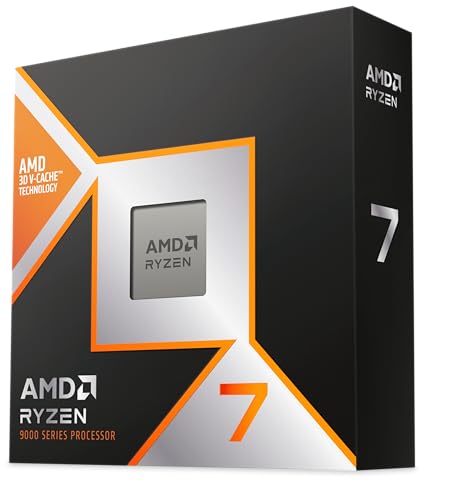
Three picks lead our cpu black friday deals 2026 shortlist. Start with the AMD Ryzen 7 9800X3D if gaming is the job and you want the fastest gaming processor in this guide, the AMD Ryzen 9 9900X if you split your time between games and serious multi-threaded work, or the Intel Core i7-14700KF if you are upgrading an existing LGA1700 board and want twenty cores at the lowest sighting here. Every price in this guide is a dated sighting checked against Amazon’s own catalog data on November 20, 2026 — confirm the live price at checkout, because Black Friday pricing moves by the hour.
CPU Black Friday Deals 2026: Six Processors, Two Platforms, One Rule
Amazon Black Friday Week runs November 19–30, 2026, with Black Friday itself on November 27 and Cyber Monday closing the event on November 30. Processors are the most honest category in the sale, because a CPU’s value is unusually legible: core count, cache, clock speed and platform are printed on the box, the performance hierarchy is stable and well measured, and the discount arithmetic cannot hide behind bundles. What Black Friday actually changes is which rung of that hierarchy your money reaches. This year, at the sightings we verified on November 20, the answer is: a higher rung than usual, on both platforms — including the gaming flagship class that rarely moves.
This guide covers six desktop processors verified one by one against Amazon’s catalog on November 20, 2026: AMD’s gaming flagship with 3D V-Cache, its previous-generation X3D predecessor at a steep sighting cut, a twelve-core Ryzen 9 for hybrid gaming-and-workstation duty, Intel’s current-generation Core Ultra 7 for new LGA1851 builds, and two LGA1700 upgrades — a twenty-core i7-class chip and a fourteen-core i5-class chip — for the enormous installed base of 600- and 700-series boards. Four of the six listings returned reference prices, so four picks carry verified percentages; the other two are presented as absolute sightings and judged on specification, the honest way.
One rule decides whether any of these deals is a deal for you: socket first. The AMD picks here are AM5 processors; they fit only AM5 motherboards and require DDR5 memory. The Intel picks split across two sockets that are not interchangeable — the Core Ultra 7 needs an LGA1851 board, while the 14700KF and 14600K fit LGA1700 boards, many of which also exist in DDR4 variants. A processor bought for the wrong socket is not a bargain at any percentage. If you are building from scratch rather than upgrading, our Best Black Friday Gaming Pc Deals 2026 guide covers complete systems, and our Ddr5 Ram Black Friday Deals guide covers the memory every AM5 and most new Intel builds will need.
In this guide
Quick Picks
| Pick | Best for | Dated sighting | Deal |
|---|---|---|---|
| AMD Ryzen 7 9800X3D | Best gaming CPU | Seen at $411 on November 20, 2026 (reference $479, about 14% off) | Check on Amazon |
| AMD Ryzen 9 9900X | Best for gaming plus workstation work | Seen at $331 on November 20, 2026 (reference $499, about 34% off) | Check on Amazon |
| AMD Ryzen 7 7800X3D | Best value gaming CPU | Seen at $339 on November 20, 2026 (reference $449, about 24% off) | Check on Amazon |
| Intel Core Ultra 7 265K | Best for new Intel builds | Seen at $332.99 on November 20, 2026 (no reference price returned — no percentage claimed) | Check on Amazon |
| Intel Core i7-14700KF | Best LGA1700 upgrade | Seen at $249.99 on November 20, 2026 (reference $339.99, about 26% off) | Check on Amazon |
| Intel Core i5-14600K | Best budget Intel gaming chip | Seen at $249.95 on November 20, 2026 (no reference price returned — no percentage claimed) | Check on Amazon |
How These Deals Were Chosen
Every pick in this guide was verified the same way: we searched Amazon’s catalog data for the exact processor model, matched the returned listing title against the chip we intended to cover, and recorded the price, the reference price where one exists, and the official product image from that same listing. Processor listings carry their own traps: tray and boxed variants, marketplace imports, and — on the Intel side — K, KF, and non-K versions of the same chip that differ in integrated graphics and overclocking support. Where the standard boxed retail listing existed, that is the one we verified and linked; where the exact headline model was out of stock at check time (the i7-14700K), we verified its KF twin instead and said so plainly in the review. All six picks here passed that check on November 20, 2026.
The list was built to answer the three real CPU questions of this Black Friday. First: what is the best gaming processor money can buy, and is it actually discounted? (The 9800X3D, and yes — modestly but verifiably.) Second: what should the large base of existing owners upgrade to without changing platform? For AM5 owners the 7800X3D and 9900X sightings answer it; for LGA1700 owners the 14700KF and 14600K answer it. Third: what should a brand-new Intel build buy? The Core Ultra 7 265K, on the only Intel socket with a future. Each pick had to win one of those arguments outright; chips that were merely “also discounted” were left out.
We also weighted platform economics, because the processor price is never the whole price. An AM5 chip drops into boards that will accept future Ryzen generations and pairs with DDR5 you can carry forward. An LGA1700 upgrade reuses your board and possibly your DDR4 or DDR5 memory, which can make a nominally older chip the cheapest real upgrade in this guide. An LGA1851 build pays full platform cost today in exchange for the newest Intel architecture. The reviews below price those contexts in, pick by pick, rather than pretending the sighting is the whole story.
Top pick
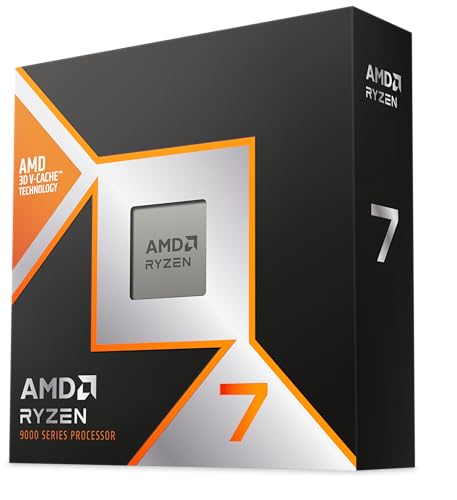
1. AMD Ryzen 7 9800X3D — Best Gaming CPU
Badge: Best Gaming CPU. The Ryzen 7 9800X3D is the processor the rest of the gaming market is measured against, and it was seen at $411 on November 20, 2026 against a $479 reference price in Amazon’s data — about 14% off. Flagship gaming chips are the category’s most reluctant discounters; the X3D line in particular has historically held its price because nothing else does what it does. Fourteen percent off the best gaming CPU you can buy, verified against a real reference price, is exactly the kind of sighting Black Friday exists for — unspectacular as a percentage, decisive as a purchase.
The technology is worth one clear paragraph. The 9800X3D stacks 64MB of additional L3 cache beneath its eight Zen 5 cores, for 96MB total, and this second-generation arrangement places the cache under the cores rather than on top, which improved cooling and let AMD raise clocks and allow overclocking compared with the first X3D generation. Games are the workload that feeds on cache: they repeatedly reach for the same world-state data, and keeping it on-chip instead of sending the core out to system memory removes the latency that shows up as frame-time stutter. The result is a chip that leads gaming charts while drawing modest power, paired with eight full-performance cores that handle streaming, voice and background tasks without breaking stride.
The caveats are the honest shape of a specialist. For pure productivity — rendering, compiling, heavy multitasking — the twelve- and sixteen-core chips in and around this guide are faster per dollar, and creators who game occasionally rather than primarily should read the 9900X review next. The 9800X3D also requires the AM5 platform and DDR5 memory, so LGA1700 owners face a full platform change to use it; at that point the build-versus-upgrade math in our final recommendation applies. But for a gaming-first build or an AM5 upgrade, this is the ceiling, and $411 is the lowest verified way to reach it in this guide.
Mini specs (verified from the listing and model specification):
- Cores/threads: 8 cores, 16 threads, Zen 5
- Cache: 96MB L3 (3D V-Cache, second generation)
- Boost clock: up to 5.2 GHz
- Socket/platform: AMD AM5, DDR5
- TDP: 120W
Strengths
- The fastest gaming processor in this guide, with a verified double-digit sighting cut.
- Second-generation V-Cache placement improves thermals and restores overclocking headroom.
- Efficient under gaming loads — flagship performance without flagship cooling demands.
Trade-offs
- Eight cores cap multi-threaded productivity below the Ryzen 9 picks.
- AM5 platform and DDR5 are mandatory — no drop-in path for Intel owners.
- The 14% saving is real but modest, as flagship gaming chips’ savings always are.
Verdict: Best for: gaming-first builds and AM5 upgrades where frame rates and frame times are the priority. Not suited for: productivity-led workstations, or Intel owners unwilling to change platform.
Deal details: Seen at $411 on November 20, 2026, against a $479 reference price returned by Amazon’s catalog data — about 14% off. The verified listing is AMD’s boxed retail processor. Confirm the live price at checkout; X3D stock is historically the first to thin out during the event.

Check on Amazon · See the current Black Friday price · View this deal on Amazon

2. AMD Ryzen 9 9900X — Best for Gaming Plus Workstation Work
Badge: Best for Gaming Plus Workstation Work. The deepest verified cut in this guide belongs to the Ryzen 9 9900X: seen at $331 on November 20, 2026 against a $499 reference price — about 34% off. That sighting puts a twelve-core, twenty-four-thread Zen 5 flagship-class processor at less than the 9800X3D’s gaming-specialist price, and it reframes the AM5 decision. If your machine renders, compiles, encodes or runs virtual machines during the week and games at night, this is not the compromise pick; at $331 it is the obvious one, and the percentage is backed by a reference price in Amazon’s own data rather than by banner arithmetic.
What twelve Zen 5 cores buy is throughput with no gaming apology. The 9900X boosts to 5.6 GHz — higher than the 9800X3D — carries 64MB of L3 cache, and splits its cores across two dies in the arrangement that has defined Ryzen 9 since its introduction. In games it sits a step behind the X3D chips, whose cache advantage is real, and a step ahead of almost everything else; in multi-threaded work it simply leaves the eight-core chips behind, finishing renders and builds in roughly the proportion its core count promises. For the hybrid user, that trade — a small gaming concession for a large productivity gain — is the correct shape of a processor, and Black Friday has priced it below the specialist.
Consider the platform costs honestly. The 9900X is AM5 and DDR5 only, and its 120W-class appetite deserves a competent cooler rather than a bundled afterthought (no cooler is included). Buyers whose work is purely gaming should still take the 9800X3D or save with the 7800X3D below; buyers whose work is purely threaded and never games might look further up the Ryzen 9 range. But the large middle — creators who game, developers who play, streamers who edit — is exactly who this chip was designed for, and at a verified 34% sighting cut it is the value center of this entire guide.
Mini specs (verified from the listing and model specification):
- Cores/threads: 12 cores, 24 threads, Zen 5
- Cache: 64MB L3
- Boost clock: up to 5.6 GHz
- Socket/platform: AMD AM5, DDR5
- TDP: 120W; cooler not included
Strengths
- The guide’s deepest verified cut — about 34% against a real reference price.
- Twelve Zen 5 cores deliver workstation throughput with near-flagship gaming.
- Higher boost clocks than the X3D flagship favor clock-sensitive applications.
Trade-offs
- Gaming trails the X3D chips; the cache advantage is theirs.
- Requires AM5, DDR5 and a separately bought cooler.
- Dual-die layout rewards current BIOS and chipset drivers — keep both updated.
Verdict: Best for: hybrid creator-gamers, developers and streamers on or moving to AM5. Not suited for: pure gamers chasing the last frame, or buyers needing an included cooler.
Deal details: Seen at $331 on November 20, 2026, against a $499 reference price returned by Amazon’s catalog data — about 34% off. The verified listing is AMD’s boxed retail processor (model string 9900X in the title). At this sighting it undercuts the 9800X3D by $80 while offering four more cores.

Check on Amazon · See the current Black Friday price · View this deal on Amazon

3. AMD Ryzen 7 7800X3D — Best Value Gaming CPU
Badge: Best Value Gaming CPU. The 7800X3D was the gaming king of its generation, and Black Friday has repositioned it as the value king of this one: seen at $339 on November 20, 2026 against a $449 reference price — about 24% off. The arithmetic that matters is against its successor: at sighting prices, the 7800X3D costs $72 less than the 9800X3D while delivering the same 96MB of L3 cache, the same eight-core layout, and gaming performance that sits within a modest margin of the newer chip in most titles. For an AM5 builder whose budget is contested by the graphics card — which is to say, almost every AM5 builder — that $72 is a GPU tier argument, not a rounding error.
The first-generation X3D design differs from its successor in ways worth knowing. Its cache sits on top of the cores, which insulated them and capped clock speeds and voltage headroom; it is a locked, efficiency-tuned part that boosts to 5.0 GHz and asks little of a cooler. In exchange it is one of the most power-efficient gaming processors ever sold, it runs happily under mid-range air cooling, and its gaming behavior — the cache-driven frame-time smoothness that made X3D famous — is fully present. On an AM5 board with current BIOS support (universal by now), it drops in and performs like the flagship it recently was.
Why not simply always buy the newer chip? Because platforms are bought with finite money, and because the 7800X3D’s remaining deficits are specific: no overclocking to speak of, eight Zen 4 cores that trail in productivity, and a successor that is better in every measurable way for $72 more at sighting. Buyers building a no-regrets flagship should pay the $72. Buyers optimizing a whole system — especially anyone pairing the processor with a mid-range GPU, where the CPU difference shrinks further — should take the 7800X3D, move the saving to the card, and never think about it again. Our Gpu Black Friday Deals 2026 guide is where that reallocated $72 does its work.
Mini specs (verified from the listing and model specification):
- Cores/threads: 8 cores, 16 threads, Zen 4
- Cache: 96MB L3 (3D V-Cache, first generation)
- Boost clock: up to 5.0 GHz
- Socket/platform: AMD AM5, DDR5
- TDP: 120W class; notably efficient under gaming loads
Strengths
- X3D gaming performance at $72 below its successor’s sighting, with a verified 24% cut.
- Exceptional gaming efficiency — modest cooling is sufficient.
- Mature platform support on every AM5 board with a current BIOS.
Trade-offs
- A generation behind in clocks, productivity and overclocking freedom.
- Eight cores only — threaded work belongs to the 9900X.
- The successor exists; flagship builders will feel the $72 question until they answer it.
Verdict: Best for: AM5 gaming builds optimizing the whole system budget, and upgraders from early Ryzen 7000 chips. Not suited for: productivity-led users, or no-compromise flagship builds.
Deal details: Seen at $339 on November 20, 2026, against a $449 reference price returned by Amazon’s catalog data — about 24% off. The verified listing is AMD’s boxed retail processor. Confirm the live price before ordering; previous-generation X3D stock does not replenish once the event clears it.

Check on Amazon · See the current Black Friday price · View this deal on Amazon

4. Intel Core Ultra 7 265K — Best for New Intel Builds
Badge: Best for New Intel Builds. Intel’s side of this guide starts with the only Intel socket that has a future. The Core Ultra 7 265K — twenty cores (8 performance + 12 efficiency), boosting to 5.5 GHz on the LGA1851 platform — was seen at $332.99 on November 20, 2026. Amazon’s catalog returned no reference price for the listing we verified, so we print no percentage; the case rests on the sighting against the chip’s position as the mainstream flagship of Intel’s current desktop generation, and on what it offers that the cheaper LGA1700 picks cannot: a platform that will accept Intel’s next processors, the newest architecture’s efficiency, and an integrated NPU for on-device AI features in supported software.
Arrow Lake’s character is different from the Intel generations before it. The design prioritizes efficiency and multi-threaded throughput per watt: the twenty cores deliver strong rendering, compiling and encoding performance without the power appetite that defined the 14th generation’s reputation, and the integrated graphics are competent enough for desktop work and troubleshooting duty. Gaming performance is good rather than class-leading — the X3D chips own that argument this generation — but for a new Intel build that works as hard as it plays, the 265K is the balanced center of the current lineup, and $332.99 is a sighting that undercuts the tier above it by enough to fund the motherboard difference.
Be clear-eyed about the platform commitment. LGA1851 means a new 800-series motherboard and DDR5 memory (some boards in the ecosystem use CUDIMM modules for the highest speeds; standard UDIMM DDR5 like the kits in our memory guide is the mainstream choice). There is no upgrade path from LGA1700 — nothing carries over except storage, case and power supply. Buyers who already own an LGA1700 board should read the next two reviews instead, because for them Intel’s best Black Friday value is not this chip. Buyers starting fresh who prefer Intel’s ecosystem, Quick Sync video handling, or Thunderbolt-rich boards will find this the right foundation at a fair, verified price.
Mini specs (verified from the listing):
- Cores: 20 (8 P-cores + 12 E-cores)
- Boost clock: up to 5.5 GHz
- Socket/platform: Intel LGA1851, 800-series boards, DDR5
- Graphics/AI: integrated graphics; integrated NPU
- Unlocked (K) for overclocking on Z-series boards
Strengths
- The current Intel platform — the only Intel socket here with an upgrade future.
- Twenty cores with strong efficiency and multi-threaded throughput.
- Integrated graphics and NPU broaden its usefulness beyond gaming builds.
Trade-offs
- Requires a new LGA1851 board and DDR5 — full platform cost for upgraders.
- Gaming performance is strong but not X3D-class.
- No reference price was returned, so there is no verified percentage to quote.
Verdict: Best for: brand-new Intel builds that balance work and play on the current platform. Not suited for: LGA1700 owners (upgrade in-socket instead), or gaming-only buyers chasing the absolute frame-rate ceiling.
Deal details: Seen at $332.99 on November 20, 2026 for the boxed 265K listing we verified. No reference price was returned by Amazon’s catalog data, so no percentage is claimed. A KF variant (no integrated graphics) sat lower at check time under a separate listing; choose the K if you value the iGPU for troubleshooting and Quick Sync.
Check on Amazon · See the current Black Friday price · View this deal on Amazon
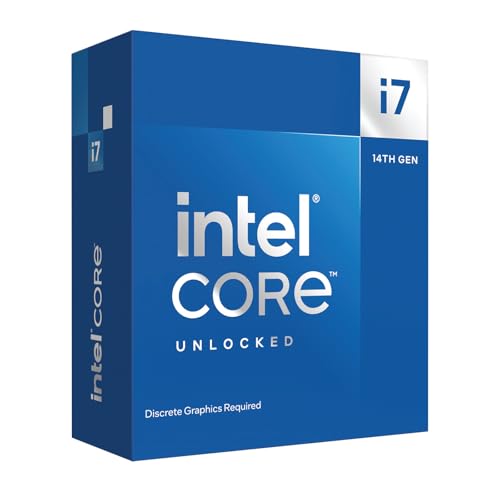
5. Intel Core i7-14700KF — Best LGA1700 Upgrade
Badge: Best LGA1700 Upgrade. For the millions of systems running 600- and 700-series Intel boards, this is the Black Friday headline: the Core i7-14700KF, twenty cores (8 performance + 12 efficiency), seen at $249.99 on November 20, 2026 against a $339.99 reference price — about 26% off. One transparency note, stated here rather than buried: the i7-14700K listing itself was out of stock at check time, so we verified its KF twin — the identical silicon without integrated graphics. For any system with a discrete graphics card, which is to say nearly every system considering this chip, the KF is the same processor where it matters, and at this sighting it is the cheapest twenty-core upgrade in the guide.
What the upgrade delivers depends on where you start. From a 12th-generation i5 or a 13th-generation i7, the 14700KF brings more cores of both kinds, higher clocks (up to 5.6 GHz boost), and a multi-threaded ceiling that transforms rendering, encoding and compile workloads, while gaming gains come mostly in the CPU-bound and heavily threaded titles. It drops into existing LGA1700 boards with a BIOS update — check your board maker’s support list before ordering, and update the BIOS while the old chip is still installed — and it works with whichever memory your board uses, DDR4 or DDR5, which makes it the only pick in this guide that can upgrade a DDR4 system. Twenty cores, no new board, no new RAM, $249.99: as an upgrade proposition, nothing else here competes.
The responsibilities are real. The 14700KF’s performance comes with the 14th generation’s appetite: under full multi-threaded load it can draw power that overwhelms entry coolers and cheap boards’ power delivery, so budget for a capable tower cooler and confirm your motherboard’s VRM is up to an i7-class chip. The KF’s missing integrated graphics also removes the troubleshooting fallback and Intel Quick Sync from the integrated GPU — streamers who use iGPU Quick Sync encoding should weigh that, and everyone should note the discrete card becomes a single point of failure for display output. None of this dents the core proposition for the typical gaming-and-work system with a real graphics card: this is the highest-value in-socket upgrade of the sale.
Mini specs (verified from the listing):
- Cores: 20 (8 P-cores + 12 E-cores)
- Boost clock: up to 5.6 GHz class
- Socket/platform: Intel LGA1700, 600/700-series boards (BIOS update may be required)
- Memory: DDR4 or DDR5, depending on board variant
- Graphics: none (KF) — discrete GPU required
Strengths
- Twenty cores at the guide’s joint-lowest sighting, with a verified 26% cut.
- Drops into existing LGA1700 boards, including DDR4 systems — no platform cost.
- Transformative multi-threaded upgrade from 12th/13th-gen i5 and i7 chips.
Trade-offs
- No integrated graphics: no display fallback, no iGPU Quick Sync.
- High power draw under full load demands a serious cooler and a capable board.
- LGA1700 is a closed platform — this is a final-form upgrade, not a stepping stone.
Verdict: Best for: LGA1700 owners upgrading from 12th/13th-gen chips for work and gaming. Not suited for: systems without a discrete graphics card, iGPU Quick Sync users, or boards with entry-level power delivery.
Deal details: Seen at $249.99 on November 20, 2026, against a $339.99 reference price returned by Amazon’s catalog data — about 26% off. The verified listing is the boxed 14700KF; the 14700K (with integrated graphics) was out of stock at check time. If the K reappears near this price and you value the iGPU, it is the same silicon with the graphics enabled.
Check on Amazon · See the current Black Friday price · View this deal on Amazon

6. Intel Core i5-14600K — Best Budget Intel Gaming Chip
Badge: Best Budget Intel Gaming Chip. The Core i5-14600K closes the guide at $249.95, seen on November 20, 2026 — five cents below the 14700KF, which makes its review the most important piece of buying advice in this article: at these sightings, the 14700KF is the better buy for almost everyone, and the 14600K earns its place for the specific buyers the KF does not fit. Amazon’s catalog returned no reference price for the 14600K listing we verified, so no percentage is claimed; what follows is the honest case for a fourteen-core (6 performance + 8 efficiency), unlocked, integrated-graphics-equipped chip that has been the default Intel gaming recommendation of its generation.
The 14600K’s virtues are balance and manners. Its six performance cores are the same architecture as the i7’s, clocked to 5.3 GHz boost, and for pure gaming — where the performance cores and the GPU do the work — it runs close behind the bigger chips while drawing meaningfully less power and asking less of the cooler and the motherboard. Unlike the KF above, the K includes integrated graphics: a display fallback when a graphics card fails, and Quick Sync for streamers and video editors who use it. For a fresh LGA1700 budget build (boards for the platform are now inexpensive) or an upgrade from a 12th-generation i3/i5, it is a complete, no-asterisk processor.
So who should buy it at $249.95 when the 14700KF sits at $249.99? Three buyers: anyone who needs the integrated graphics the KF lacks; anyone whose board or cooler cannot feed the i7’s full-load appetite; and anyone reading this after the KF’s sighting has moved, because deal prices during Black Friday Week are a snapshot, not a promise — if the gap reopens to the more typical spread, the 14600K resumes its natural role as the value pick. What no Intel buyer at this budget should do is pay more for the 14600K than for the 14700KF while both sightings hold. Check both live prices at checkout and take the arithmetic as it stands that hour.
Mini specs (verified from the listing):
- Cores: 14 (6 P-cores + 8 E-cores)
- Boost clock: up to 5.3 GHz
- Socket/platform: Intel LGA1700, 600/700-series boards (BIOS update may be required)
- Memory: DDR4 or DDR5, depending on board variant
- Graphics: integrated graphics included (K)
Strengths
- Balanced gaming performance with integrated graphics and Quick Sync included.
- Gentler power and cooling demands than the i7-class chips.
- Unlocked, on a mature platform with inexpensive boards for new budget builds.
Trade-offs
- At sighting prices it costs the same as the twenty-core 14700KF — check both before buying.
- Six performance cores cap heavily threaded workloads below the i7.
- No reference price was returned, so there is no verified percentage to quote.
Verdict: Best for: Intel gaming builds needing integrated graphics, and LGA1700 upgraders with modest boards or coolers. Not suited for: buyers who can use the 14700KF at the same money, or heavy multi-threaded workloads.
Deal details: Seen at $249.95 on November 20, 2026 for the boxed 14600K listing we verified. No reference price was returned by Amazon’s catalog data, so no percentage is claimed. The five-cent gap to the 14700KF is the single most important number in this guide — re-verify both live prices at checkout.
Check on Amazon · See the current Black Friday price · View this deal on Amazon
Comparison Table
Read this table as a decision filter, not a ranking. Socket decides eligibility first; cores, cache and clocks decide the job after that. Every price is the November 20, 2026 sighting — confirm the live price on the listing before you buy.
| Model | Key specs | Dated sighting |
|---|---|---|
| AMD Ryzen 7 9800X3D | AM5, 8C/16T Zen 5, 96MB L3, up to 5.2 GHz | $411 on Nov 20, 2026 |
| AMD Ryzen 9 9900X | AM5, 12C/24T Zen 5, 64MB L3, up to 5.6 GHz | $331 on Nov 20, 2026 |
| AMD Ryzen 7 7800X3D | AM5, 8C/16T Zen 4, 96MB L3, up to 5.0 GHz | $339 on Nov 20, 2026 |
| Intel Core Ultra 7 265K | LGA1851, 20 cores, up to 5.5 GHz, iGPU + NPU | $332.99 on Nov 20, 2026 |
| Intel Core i7-14700KF | LGA1700, 20 cores, up to 5.6 GHz, no iGPU | $249.99 on Nov 20, 2026 |
| Intel Core i5-14600K | LGA1700, 14 cores, up to 5.3 GHz, iGPU | $249.95 on Nov 20, 2026 |
How to Choose the Right CPU This Black Friday
Start with the socket you own, or the one you are willing to buy. If you own an AM5 board, your upgrade menu is the three AMD picks here and nothing else. If you own LGA1700, your menu is the 14700KF and 14600K (plus a BIOS update), and a platform change to AM5 or LGA1851 should be justified by more than fashion. If you own neither, you are choosing a platform, not just a processor: AM5 offers the gaming ceiling and a lived-in upgrade path; LGA1851 offers Intel’s current architecture and its board ecosystem. The processor decision follows from the socket decision, never the reverse.
Let the workload count the cores. Games lean on a few fast cores plus, in the X3D case, a mountain of cache; eight strong cores saturate that need today. Threaded work — rendering, compiling, encoding, virtualization — scales with cores almost linearly, which is why the 9900X and 14700KF exist. The most common CPU mistake is buying cores for a workload that cannot use them while starving the graphics card that decides the frame rate; the second most common is the reverse, stranding a serious workstation on a gaming-specialist chip. Name your primary workload in one sentence before you shop, and let it pick the row of the comparison table.
Understand what X3D cache does and does not do. The 3D V-Cache on the 9800X3D and 7800X3D is a gaming technology: it accelerates the cache-hungry, latency-sensitive pattern of game code, and it does comparatively little for rendering or office work. If you game at high refresh rates, play simulation, strategy or MMO titles (the most cache-sensitive genres), or chase frame-time consistency, the X3D premium is the best-spent money in PC gaming. If your machine’s hardest job is a video export, the same money buys four more cores in the 9900X, which your workload will actually feel.
Price the whole platform, not the chip. A $250 in-socket upgrade that reuses board and memory can outperform, in value, a $330 chip that demands $250 of new platform around it. Conversely, sinking flagship money into a closed platform (LGA1700’s last generation) should be a deliberate end-state decision: the 14700KF at $249.99 is cheap enough to be exactly that. Add board, memory and cooler costs to every option before comparing sightings — our Ddr5 Ram Black Friday Deals guide covers the memory line of that arithmetic, which in 2026 is not a small one.
Check the supporting cast: BIOS, cooler, power. Every pick here may need a motherboard BIOS update to be recognized; do it with the old processor installed. None of these chips includes a cooler adequate to its class (most include none), and the Intel K chips in particular will use every watt a good cooler lets them. A processor deal that forces a cooler upgrade is still often a deal — but it should be a known cost, not a thermal-throttling surprise.
How to Check a Deal Is Real — and Swap a CPU Without Breaking Anything
Verify the exact model suffix. On Intel listings, the suffix is a specification: K means unlocked with integrated graphics, KF means unlocked without, and no suffix means locked with different clocks. On AMD listings, X3D in the name is the difference between a gaming flagship and a different chip entirely. Read the full title and match it against the model named in the review you are acting on — the spec boxes in this guide carry the strings to check.
Use the sighting method on anything else you consider. Every price here is a dated sighting because that is the only honest unit during a sale. Four of our six listings returned reference prices and four percentages are printed; the other two are presented bare, and any deal elsewhere that shows a percentage without a reference you can see deserves the same skepticism. Compare absolute prices within a tier — the 14600K/14700KF five-cent gap in this guide is what real deal-checking looks like.
Prepare before you open the socket. Update the motherboard BIOS with the old CPU installed, download the latest chipset drivers, and have thermal paste ready — the new chip needs a fresh application. Photograph the old installation if it is your first swap. Handle the processor by its edges, mind the socket pins (on Intel boards they are in the socket and bend if you look at them wrongly; on AM5 they are too), and never force the retention arm.
Validate in the return window. After the swap, confirm the BIOS reports the correct model and memory speed (re-enable EXPO/XMP — a CPU swap often resets it), then run your real workloads: a game you know, an export you can time. Watch temperatures under a sustained load. A processor is one of the most reliable components in a PC, but bent pins, a missed BIOS requirement or a badly seated cooler announce themselves in the first week, which is exactly when fixing them is free.
Common Mistakes
Buying for the wrong socket. AM5, LGA1700 and LGA1851 are three different physical interfaces, and no adapter exists. The cheapest CPU in this guide is expensive if it cannot be installed. Check your board’s socket before the price.
Paying flagship money to feed a mid-range GPU. At 1440p and 4K with a mid-range card, the graphics card decides the frame rate and the gap between good CPUs narrows to noise. Balance the build; a 7800X3D beside a strong GPU beats a 9800X3D beside a starved one at the same total.
Ignoring the KF trade. KF chips are the same silicon without integrated graphics — a fine trade with a discrete card, a real loss if you use iGPU Quick Sync or want a display fallback. Know which buyer you are before the five-cent headlines decide for you.
Forgetting the BIOS update order. A board that does not yet recognize the new chip cannot boot with it installed, and then cannot be updated without the old chip. Update first, swap second, in that order, every time.
Reusing old thermal paste and an undersized cooler. A new flagship-class chip under a cooler specced for a mid-range one will throttle quietly and give back the performance you paid for. Paste is cheap; cooling headroom is the processor’s permission to perform.
Final Recommendation
Gaming-first buyers should take the Ryzen 7 9800X3D at $411 while a verified cut on the flagship lasts; system optimizers on AM5 should take the 7800X3D at $339 and give the saving to the graphics card. Hybrid creator-gamers get this guide’s best arithmetic in the Ryzen 9 9900X at $331 — about 34% off a twelve-core chip that does everything well. New Intel builds belong on the Core Ultra 7 265K at $332.99 and the LGA1851 platform. Existing LGA1700 owners have the simplest decision of the sale: the i7-14700KF at $249.99 if you run a discrete card, the i5-14600K at $249.95 if you need integrated graphics or your board and cooler are modest — and check both live prices at checkout, because five cents is not a margin, it is a coin flip that should land on twenty cores. Whichever you choose, confirm the socket, the suffix and the live price before you confirm the order.
FAQ
When do CPU Black Friday deals start in 2026?
Amazon Black Friday Week runs November 19–30, 2026. Black Friday is November 27 and Cyber Monday is November 30. Every price in this guide was sighted on November 20, 2026, early in the event. Processor pricing is comparatively stable during the event, but flagship gaming chips like the 9800X3D can sell through their allocated stock before Cyber Monday.
Is the Ryzen 7 9800X3D worth it over the 7800X3D?
At sighting prices the gap is $72. The 9800X3D is faster in games, faster in productivity, more efficient in design and overclockable; the 7800X3D delivers the same cache and most of the gaming performance. If the $72 comes out of the graphics card budget, buy the 7800X3D. If the rest of the build is already funded, the 9800X3D is the better chip and the gap is fair.
Can I upgrade to a 14700KF on my existing motherboard?
If your board is an Intel 600- or 700-series LGA1700 model, almost certainly yes, with a BIOS update performed while your current processor is installed. Check your board maker’s CPU support list for the exact model, confirm the board’s power delivery suits an i7-class chip, and note that your existing memory — DDR4 or DDR5 — carries over, because compatibility follows the board.
What is the difference between the 14700K and 14700KF?
Integrated graphics. The K includes Intel’s iGPU, which provides display output and Quick Sync video acceleration; the KF omits it and requires a discrete graphics card. The cores, clocks and performance with a discrete card are the same. The 14700K listing was out of stock when we verified this guide, which is why the KF is the linked pick.
Should I buy AM5 or LGA1851 for a new build?
Both are current platforms with DDR5. AM5 currently owns the gaming ceiling through the X3D chips and has a multi-generation upgrade record. LGA1851 brings Intel’s latest architecture, strong multi-threaded efficiency and Intel’s board and connectivity ecosystem. Choose by workload: gaming-led builds lean AM5; balanced Intel-preference builds are well served by the Core Ultra 7 265K.
Do any of these processors include a cooler?
No — none of the six picks ships with a cooler adequate to its class, and most ship with none at all. Budget for a capable tower air cooler or liquid cooler appropriate to the chip, and fresh thermal paste for the installation. The X3D chips are the most forgiving; the Intel K chips under full load are the least.
Why does this guide not print star ratings?
Ratings and review counts on Amazon listings change constantly during a sale event, so any fixed number printed in a guide goes stale within days. We judge picks on verified listings, dated prices and manufacturer specifications instead.