The best lithium ion batteries are the lithium cells that keep a device running longest, whether they are recharged hundreds of times or used once and replaced. Lithium chemistry holds its charge for years on a shelf, works in the cold where other batteries fade, and weighs less than the alkaline cells it replaces, which is why it powers cameras, flashlights, remotes, game controllers, and smart home devices. This guide covers six lithium batteries, from Energizer, EBL, Duracell, Amazon Basics, and Philips, and explains which type fits which device.
A lithium battery comes in two kinds, and the best lithium ion batteries cover both. A primary lithium cell, such as the Energizer Ultimate Lithium AA or the Duracell CR123A, is used once and replaced, and it suits a device that is used rarely but must work when it is needed, such as a smoke alarm or a camera. A rechargeable lithium-ion cell, such as the EBL or Philips AA lithium batteries in this guide, is charged and used again, and it suits a device that is used every day, such as a game controller or a remote, because the cost of recharging is far less than buying new cells.
The six batteries in this guide cover the main sizes and uses. The Energizer Ultimate Lithium AA 24-pack is the everyday pick, with long-lasting power for flashlights, remotes, electronics, cameras, and toys. The EBL Rechargeable AA Lithium 8-pack is the rechargeable pick, with 1.5V and 3000mWh for high-drain devices. The Duracell CR123A 6-count is the camera pick, with 3V and a 10-year storage life. The Amazon Basics CR123A 6-pack is the value camera pick, with the same 3V and shelf life. The Amazon Basics 9V Lithium 8-pack is the alarm pick, with a 10-year shelf life. The Philips Rechargeable AA Lithium 8-pack is the controller pick, with 1.5V and 3600mWh for game controllers and remotes.
This guide covers six best lithium ion batteries, and every one of them is a genuine lithium battery with its brand, model, size, and capacity stated in the listing title, so a buyer can tell exactly which battery is in the box. The comparison table below gives the short version, and the sections after it give the detail for each battery, including who each one fits and where each one falls short. The buying guide after the picks explains how to choose between primary and rechargeable cells, so a buyer who is still unsure can decide from the device first and the battery second.
A lithium battery also deserves a word about shelf life, because the shelf life is the reason to choose lithium over alkaline for a device that sits unused. The Duracell CR123A and the Amazon Basics CR123A and 9V batteries in this guide all state a 10-year storage or shelf life, which means a battery bought today will still work in a decade, and a smoke alarm or a camera that is used rarely will not fail because the battery went flat in the drawer. An alkaline cell loses its charge far faster on the shelf, which is why lithium is the right choice for emergency devices.
In this guide
Quick picks: best lithium ion batteries
| # | Product | Where to buy |
|---|---|---|
| 1 | Energizer Ultimate Lithium AA Batteries | Check on Amazon |
| 2 | EBL Rechargeable AA Lithium Batteries | Check on Amazon |
| 3 | Duracell CR123A 3V Lithium Battery | Check on Amazon |
| 4 | Amazon Basics CR123A Lithium Batteries | Check on Amazon |
| 5 | Amazon Basics 9 Volt Lithium Batteries | Check on Amazon |
| 6 | Philips Rechargeable AA Lithium Batteries | Check on Amazon |
How the picks were chosen for the best lithium ion batteries
The picks were chosen from the product listings returned by the site product search, and only genuine lithium batteries made the list. Each listing title was checked for the brand, the size, the voltage, and the capacity, and a battery was only linked when all of those matched the listing. Alkaline batteries, NiMH batteries, chargers sold without batteries, and battery testers were not counted as picks, because the article is about lithium batteries, not about batteries in general.
Lithium chemistry was the first filter, because the keyword sets it: every pick in this guide states lithium in its listing title, and the rechargeable picks state lithium-ion or Li-ion as well. The Energizer Ultimate Lithium AA, the Duracell CR123A, and the Amazon Basics CR123A and 9V are primary lithium cells, while the EBL and Philips AA batteries are rechargeable lithium-ion cells with 1.5V and a stated capacity in mWh. A battery whose title stated alkaline or NiMH was not chosen, even when the brand looked familiar, because it is not a lithium battery.
Size and voltage were the second filter. A battery must fit the device it powers, so the picks in this guide cover the sizes most devices use: AA at 1.5V, CR123A at 3V, and 9V for alarms and smoke detectors. The Energizer, EBL, and Philips picks are AA cells, the Duracell and Amazon Basics picks are CR123A cells, and the Amazon Basics 9V pick is a 9V cell, and the voltage is stated in every title. A battery of the wrong size or voltage was not chosen, because it will not fit or will not power the device.
The third filter was the listing itself. Every pick is a new listing from a known battery brand: Energizer, EBL, Duracell, Amazon Basics, or Philips. Listings for used or renewed batteries were excluded, and listings whose titles named a different size, a different brand, or a charger without batteries were excluded too. The result is six lithium batteries that a buyer can order with confidence that the battery in the box matches the battery in the title.
What makes a lithium battery good
A good lithium battery is first of all long-lasting, and the measure that matters is the capacity, which decides how long the device runs before the battery is flat. The Philips Rechargeable AA Lithium states 3600mWh, which is the highest capacity in this guide, and the EBL Rechargeable AA Lithium states 3000mWh, while the primary lithium picks state long-lasting power without a capacity figure. A battery with a higher capacity runs longer in a high-drain device, and a buyer who uses a game controller or a camera every day should choose the highest capacity in this guide.
Recharge cycles are the second quality that matters for a rechargeable cell, because they decide how many times the battery can be used before it must be replaced. The EBL Rechargeable AA Lithium states 1600 recharge cycles, and the Philips Rechargeable AA Lithium states 1200 long cycle life, which means either battery can be charged and used again for years. A buyer who uses a device every day should choose a rechargeable cell, because the cost of recharging is far less than buying new primary cells, and the waste is far less too.
Shelf life is the third quality, because it decides whether the battery works when it is needed. The Duracell CR123A and the Amazon Basics CR123A and 9V batteries in this guide all state a 10-year storage or shelf life, which means a battery bought today will still work in a decade. A buyer who stocks batteries for a smoke alarm, a camera, or an emergency flashlight should choose the longest shelf life in this guide, and should check the date on the pack when it arrives.
Finally, a good lithium battery is one that is safe in the device it powers. A rechargeable lithium-ion cell should be leak-proof, and the EBL pick in this guide states leak-proof construction, while the primary lithium picks state long-lasting power for flashlights, remotes, electronics, cameras, and toys. A buyer should use the size and voltage the device asks for, and should not mix old and new cells, or different brands, in the same device, because a mixed set will drain unevenly and may leak.
Primary or rechargeable: how to choose
Primary lithium is the type to choose when the device is used rarely but must work when it is needed, and the Energizer Ultimate Lithium AA, the Duracell CR123A, and the Amazon Basics CR123A and 9V picks in this guide are primary cells. A smoke alarm, a camera, and an emergency flashlight are the devices that suit primary lithium, because they sit for months and must work at once, and the 10-year shelf life stated on the CR123A and 9V picks is the reason to choose them. A buyer who uses a device once a month or less should choose primary lithium.
Rechargeable lithium-ion is the type to choose when the device is used every day, and the EBL and Philips AA picks in this guide are rechargeable cells. A game controller, a remote, and a high-drain device are the devices that suit rechargeable lithium-ion, because the battery is drained and charged again and again, and the 1600 cycles stated on the EBL pick and the 1200 cycles stated on the Philips pick mean either battery will last for years. A buyer who uses a device daily should choose rechargeable, because the saving grows with every charge.
Size is the choice that decides whether the battery fits, and the picks cover the sizes most devices use. AA at 1.5V is the size for remotes, controllers, flashlights, and toys, and the Energizer, EBL, and Philips picks in this guide are AA cells. CR123A at 3V is the size for cameras and smart home devices, and the Duracell and Amazon Basics picks are CR123A cells. 9V is the size for smoke alarms and detectors, and the Amazon Basics 9V pick is the 9V cell in this guide. A buyer should check the device for the size and voltage it asks for.
Capacity is the last choice, and the rechargeable picks show the range. The Philips Rechargeable AA Lithium states 3600mWh, which is the highest capacity in this guide, and the EBL Rechargeable AA Lithium states 3000mWh, while the primary picks state long-lasting power without a capacity figure. A buyer who uses a high-drain device should choose the highest capacity, and a buyer who uses a low-drain device can accept a lower one, because the device will draw less and the battery will last longer either way.
Quick picks at a glance
| Battery | Type | Capacity | Best for |
|---|---|---|---|
| Energizer Ultimate Lithium AA | Primary lithium AA | Not stated | Everyday devices |
| EBL Rechargeable AA Lithium | Rechargeable Li-ion AA | 3000mWh, 1600 cycles | High-drain devices |
| Duracell CR123A | Primary lithium CR123A | 3V, 10-year storage | Cameras and smart home |
| Amazon Basics CR123A | Primary lithium CR123A | 3V, 10-year shelf life | Value cameras and safety |
| Amazon Basics 9V Lithium | Primary lithium 9V | 10-year shelf life | Alarms and detectors |
| Philips Rechargeable AA Lithium | Rechargeable Li-ion AA | 3600mWh, 1200 cycles | Controllers and remotes |
The best lithium ion batteries

Energizer Ultimate Lithium AA Batteries (24 Pack)
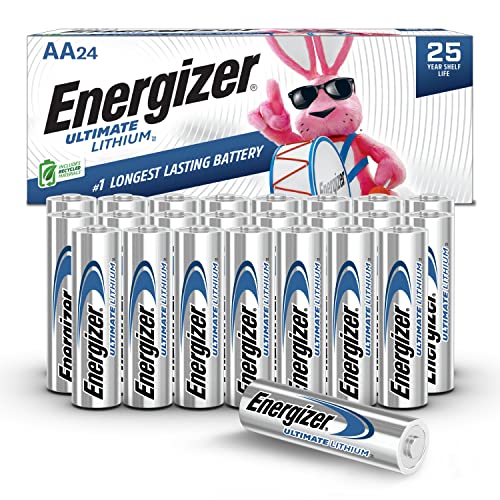
The Energizer Ultimate Lithium AA Batteries (24 Pack) are the everyday pick in this guide, and they are the batteries to choose when the buyer wants long-lasting lithium power for the devices around the house. The listing title states the brand, the Ultimate Lithium model, the AA size, the 24-pack count, the lithium chemistry, and the long-lasting power for flashlights, remote controls, electronics, cameras, and toys, with reliable performance. That is a complete specification for an everyday lithium battery.
An everyday battery earns its place by working in every device, and the Energizer Ultimate Lithium AA does so across flashlights, remotes, electronics, cameras, and toys, which are the devices most households already own. The 24-pack is the largest pack in this guide, and it means the buyer can stock the drawer once and power the house for a long time. A buyer who wants one battery for every AA device will find this is the one.
Key specs:
- Size: AA, lithium
- Pack: 24 pack
- Use: flashlights, remotes, electronics, cameras, toys
- Power: long-lasting
- Type: primary lithium
Strengths:
- Works in every AA device in the house
- Largest pack in this guide
- Long-lasting lithium power
Trade-offs:
- Primary cell, not rechargeable
- No capacity stated in the title
- No shelf life stated in the title
The Energizer Ultimate Lithium AA Batteries fit the buyer who wants one battery for every AA device. They are the pick for a household drawer, a family with many devices, or a buyer who wants to stock up once.
Best for: everyday AA devices around the house. Not suited for: a device used every day, or a buyer who wants a rechargeable cell.
Check price on Amazon: Energizer Ultimate Lithium AA Batteries

EBL Rechargeable AA Lithium Batteries (8 Pack)
The EBL Rechargeable AA Lithium Batteries (8 Pack) are the rechargeable pick in this guide, and they are the batteries to choose when the buyer wants a lithium-ion cell that can be charged again and again. The listing title states the brand, the rechargeable AA lithium model, the 8-pack count, the 1.5V voltage, the 3000mWh capacity, the use for Blink cameras, the mercury-free build, the 40 percent lighter weight, the 1600 recharge cycles, the leak-proof construction, and the use for high-drain devices. That is a complete specification for a rechargeable lithium-ion battery.
A rechargeable cell earns its keep by the number of times it can be used, and the EBL pick states 1600 recharge cycles, which means it can be charged and used again for years before it must be replaced. The 3000mWh capacity powers high-drain devices, such as cameras and controllers, and the leak-proof construction keeps the device safe when the battery is left inside. The 40 percent lighter weight matters for a device that is carried, and the mercury-free build is the mark of a battery made to a modern standard.
Key specs:
- Size: AA, rechargeable lithium
- Voltage: 1.5V
- Capacity: 3000mWh
- Cycles: 1600 recharge cycles
- Build: mercury-free, leak-proof, 40% lighter
Strengths:
- 1600 recharge cycles for years of use
- 3000mWh powers high-drain devices
- Leak-proof and mercury-free
Trade-offs:
- Needs a charger, not included in the title
- 8-pack is smaller than the Energizer pack
- 1.5V may not suit every AA device
The EBL Rechargeable AA Lithium Batteries fit the buyer who uses a device every day. They are the pick for cameras, controllers, and high-drain devices, and for a buyer who wants to stop buying single-use cells.
Best for: high-drain devices used every day. Not suited for: a device used rarely, or a buyer who wants a single-use cell.
Check price on Amazon: EBL Rechargeable AA Lithium Batteries
Duracell CR123A 3V Lithium Battery (6 Count)
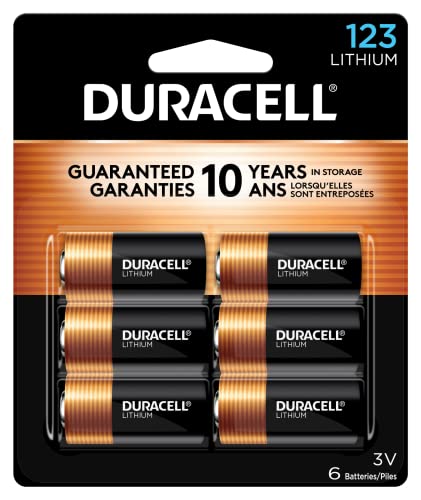
The Duracell CR123A 3V Lithium Battery (6 Count) is the camera pick in this guide, and it is the battery to choose when the buyer wants a CR123A cell with a 10-year storage life. The listing title states the brand, the CR123A model, the 3V voltage, the lithium chemistry, the 6-count pack, the 10-year storage life, and the high power. That is a complete specification for a camera battery.
A camera battery must work when the moment arrives, and the Duracell CR123A does so with a 10-year storage life, which means a battery bought today will still work in a decade, and a camera that is used rarely will not fail because the battery went flat in the drawer. The 3V lithium chemistry powers cameras, flashlights, and smart home devices, and the high power stated in the title is the mark of a cell built for devices that draw hard when they work.
Key specs:
- Size: CR123A, lithium
- Voltage: 3V
- Pack: 6 count
- Storage: 10-year storage
- Power: high power
Strengths:
- 10-year storage life
- High power for cameras and flashlights
- Trusted battery brand
Trade-offs:
- Primary cell, not rechargeable
- 6-count is a small pack
- CR123A fits fewer devices than AA
The Duracell CR123A fits the buyer who powers a camera or a smart home device. It is the pick for a camera bag, a flashlight, or a device that must work after months on a shelf.
Best for: cameras and smart home devices. Not suited for: a device that takes AA cells, or a buyer who wants a rechargeable cell.
Check price on Amazon: Duracell CR123A 3V Lithium Battery

Amazon Basics CR123A Lithium Batteries (6 Pack)
The Amazon Basics CR123A Lithium Batteries (6 Pack) are the value camera pick in this guide, and they are the batteries to choose when the buyer wants a CR123A cell with a 10-year shelf life at a lower cost. The listing title states the brand, the CR123A model, the 6-pack count, the non-rechargeable label, the 3V voltage, and the shelf life of up to 10 years. That is a complete specification for a value CR123A battery.
A value battery earns its place by matching the branded pick on the features that matter, and the Amazon Basics CR123A does so with the same 3V, the same 6-pack, and the same 10-year shelf life as the Duracell pick in this guide. The difference is the brand and the cost, and a buyer who stocks several cameras or smart home devices will save by choosing the value pack. A buyer who wants the same performance for less will find this is the one.
Key specs:
- Size: CR123A, lithium
- Voltage: 3V
- Pack: 6 pack
- Shelf life: up to 10 years
- Type: non-rechargeable
Strengths:
- Same 10-year shelf life as the branded pick
- Value price for stocking several devices
- 3V lithium power for cameras
Trade-offs:
- Primary cell, not rechargeable
- 6-pack is a small pack
- CR123A fits fewer devices than AA
The Amazon Basics CR123A fits the buyer who stocks several cameras or smart home devices. They are the pick for a value CR123A, a camera bag, or a household that uses CR123A cells in several places.
Best for: value CR123A power for cameras. Not suited for: a device that takes AA cells, or a buyer who wants a rechargeable cell.
Check price on Amazon: Amazon Basics CR123A Lithium Batteries

Amazon Basics 9 Volt Lithium Batteries (8 Pack)
The Amazon Basics 9 Volt Lithium Batteries (8 Pack) are the alarm pick in this guide, and they are the batteries to choose when the buyer wants a 9V lithium cell with a 10-year shelf life. The listing title states the brand, the 9V lithium model, the 8-pack count, the 10-year shelf life, and the long-lasting power. That is a complete specification for an alarm battery.
A 9V battery powers the smoke alarms and detectors that guard the house, and the Amazon Basics 9V does so with a 10-year shelf life, which means a battery bought today will still work in a decade, and an alarm that is tested rarely will not fail because the battery went flat. The 8-pack stocks several alarms at once, and the long-lasting power stated in the title is the mark of a cell built for devices that must work when they are needed most.
Key specs:
- Size: 9V, lithium
- Pack: 8 pack
- Shelf life: 10 years
- Power: long lasting
- Type: primary lithium
Strengths:
- 10-year shelf life
- 8-pack stocks several alarms
- Long-lasting power for safety devices
Trade-offs:
- Primary cell, not rechargeable
- 9V fits fewer devices than AA
- No capacity stated in the title
The Amazon Basics 9V Lithium Batteries fit the buyer who powers smoke alarms and detectors. They are the pick for a household that wants every alarm stocked with a long-life cell.
Best for: smoke alarms and detectors. Not suited for: a device that takes AA or CR123A cells, or a buyer who wants a rechargeable cell.
Check price on Amazon: Amazon Basics 9 Volt Lithium Batteries
Philips Rechargeable AA Lithium Batteries (8 Pack)
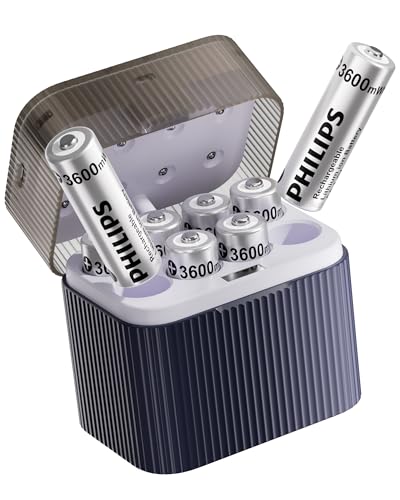
The Philips Rechargeable AA Lithium Batteries (8 Pack) are the controller pick in this guide, and they are the batteries to choose when the buyer wants the highest capacity rechargeable AA cell in this list. The listing title states the brand, the rechargeable AA lithium model, the 8-pack count, the 1.5V voltage, the 3600mWh capacity, the Li-ion chemistry, the 1200 long cycle life, and the use for game controllers, remotes, and household electronics. That is a complete specification for a rechargeable lithium-ion battery.
A 3600mWh capacity is the highest in this guide, and it means the Philips pick runs a game controller or a remote longer than any other rechargeable cell in this list before it needs charging. The 1200 long cycle life means it can be charged and used again for years, and the stated use for game controllers, remotes, and household electronics is the list of devices most buyers already own. A buyer who plays games every day will find this is the battery that keeps the controller alive through the session.
Key specs:
- Size: AA, rechargeable lithium
- Voltage: 1.5V
- Capacity: 3600mWh
- Cycles: 1200 long cycle life
- Use: game controllers, remotes, household electronics
Strengths:
- Highest capacity in this guide
- 1200 cycles for years of use
- Stated for game controllers and remotes
Trade-offs:
- Needs a charger, not included in the title
- 8-pack is smaller than the Energizer pack
- 1.5V may not suit every AA device
The Philips Rechargeable AA Lithium Batteries fit the buyer who plays games or uses a remote every day. They are the pick for a game controller, a TV remote, or any AA device that is used daily.
Best for: game controllers and remotes used daily. Not suited for: a device used rarely, or a buyer who wants a single-use cell.
Check price on Amazon: Philips Rechargeable AA Lithium Batteries
Buying guide: choosing a lithium battery
Check the size and voltage first
A battery must fit the device it powers, and the buyer should check the size and voltage the device asks for before ordering. AA at 1.5V is the size for remotes, controllers, flashlights, and toys, CR123A at 3V is the size for cameras and smart home devices, and 9V is the size for smoke alarms and detectors. The picks in this guide cover all three, and a battery of the wrong size will not fit, while a battery of the wrong voltage will not power the device.
Choose primary for rare use, rechargeable for daily use
A device that is used rarely but must work when it is needed should take a primary lithium cell, because the 10-year shelf life stated on the CR123A and 9V picks in this guide means the battery will still work after years on a shelf. A device that is used every day should take a rechargeable lithium-ion cell, because the 1600 cycles on the EBL pick and the 1200 cycles on the Philips pick mean the battery will last for years of daily use. The buyer should match the type to the use, not to the price.
Compare capacity for high-drain devices
A high-drain device, such as a game controller or a camera, needs a battery with a high capacity, and the buyer should compare the mWh figure in the title. The Philips pick states 3600mWh, which is the highest in this guide, and the EBL pick states 3000mWh, while the primary picks state long-lasting power without a capacity figure. A buyer who uses a high-drain device should choose the highest capacity, and a buyer who uses a low-drain device can accept a lower one.
Do not mix old and new cells
A device that takes more than one battery should be filled with cells of the same brand, the same type, and the same age, because a mixed set will drain unevenly and may leak. The buyer should replace all the cells in a device at once, and should not mix a new cell with an old one, or a primary cell with a rechargeable one. A device that is filled with a matched set will run longer and stay safe.
Store spare batteries safely
A spare lithium battery should be stored in its original packaging or a battery case, with the terminals covered, and away from metal objects such as keys and coins that can short the terminals. The buyer should keep spare batteries in a cool dry place, and should check the date on the pack when it arrives, because a battery that has sat in a hot warehouse will not last as long as one that has been stored well. A battery that is stored safely will work when it is needed.
Using and caring for lithium batteries
Charge rechargeable cells fully
A rechargeable lithium-ion cell should be charged fully before it is used, and the buyer should use a charger made for lithium-ion AA cells, because a charger made for another chemistry may not charge it correctly. The EBL and Philips picks in this guide are 1.5V lithium-ion cells, and they need a charger that matches that voltage. A buyer who charges with the wrong charger may damage the cell or shorten its life.
Remove batteries from devices that sit unused
A battery left in a device that sits unused for months may leak, and the buyer should remove the batteries from a flashlight, a remote, or a toy that will not be used for a long time. The EBL pick in this guide states leak-proof construction, but no battery is proof against a long period in a hot drawer. A device that is stored with its batteries removed will be ready when it is needed, and the batteries will last longer on the shelf.
Recycle used batteries
A lithium battery should not go in the household rubbish, because it contains materials that can be recovered and chemicals that should not reach landfill. The buyer should take used batteries to a collection point, a shop that takes them back, or a recycling centre, and should tape the terminals before handing them over. A battery that is recycled will be made into new products, and the household will stay safe.
Check the date on the pack
A battery pack carries a date, and the buyer should check it when the pack arrives, because a battery that has sat in a warehouse for years will not last as long as a fresh one. The 10-year shelf life stated on the CR123A and 9V picks in this guide starts from the date of manufacture, not the date of purchase, so a pack that is already old will not give the full ten years. A buyer who checks the date will know what they bought.
Common mistakes when buying lithium batteries
Buying alkaline by mistake
The most common mistake in this guide is buying an alkaline battery when a lithium one is needed, because the packs look similar and the alkaline costs less. The buyer should read the listing title for the word lithium, and should check that the rechargeable picks state lithium-ion or Li-ion. The Energizer Ultimate Lithium, the Duracell CR123A, and the Amazon Basics CR123A and 9V picks in this guide are all lithium, and an alkaline cell will not last as long or work as well in the cold.
Buying NiMH for a lithium device
A NiMH battery is 1.2V, while a lithium AA cell is 1.5V, and a device that expects 1.5V may not work well on 1.2V. The buyer should read the title for the chemistry, and should not buy a NiMH cell when the device asks for lithium. The EBL and Philips picks in this guide state lithium-ion at 1.5V, and a NiMH cell sold beside them is a different battery for a different use.
Mixing primary and rechargeable cells
A device filled with a mix of primary and rechargeable cells will drain unevenly, because the two types have different voltages and different discharge curves, and the weaker cell may leak. The buyer should fill a device with cells of the same type, the same brand, and the same age, and should replace them all at once. A matched set will run longer and stay safe.
Charging a primary cell
A primary lithium cell must never be charged, because it is not made to be recharged and charging it can make it leak or burst. The buyer should check the title for the word rechargeable before putting a cell in a charger, and should only charge the EBL and Philips picks in this guide, which state rechargeable lithium-ion. The Energizer, Duracell, and Amazon Basics picks in this guide are primary cells, and they should be replaced, not recharged.
Our recommendation for the best lithium ion batteries
The best lithium ion batteries are the ones that match the device, and the six picks in this guide cover the devices most buyers have. A buyer who wants one battery for every AA device should choose the Energizer Ultimate Lithium AA 24-pack, with its long-lasting power for flashlights, remotes, electronics, cameras, and toys. A buyer who uses a device every day should choose the EBL Rechargeable AA Lithium 8-pack or the Philips Rechargeable AA Lithium 8-pack, with their 1600 and 1200 recharge cycles.
A buyer who powers a camera or a smart home device should choose the Duracell CR123A 6-count or the Amazon Basics CR123A 6-pack, with their 3V power and 10-year shelf life. A buyer who powers smoke alarms and detectors should choose the Amazon Basics 9V Lithium 8-pack, with its 10-year shelf life and its 8-pack for stocking several alarms at once.
The single recommendation, for a buyer who wants one battery and one answer, is the Energizer Ultimate Lithium AA 24-pack for everyday devices, and the Philips Rechargeable AA Lithium 8-pack for devices used every day, with its 3600mWh capacity and 1200 cycles. Both state lithium in their titles, both suit the devices they were chosen for, and both are the batteries to stock first.
Related reading on Reviewstook: see our guides to best triple-A batteries, best solar battery chargers 12 volt for more on this topic.
Frequently asked questions about the best lithium ion batteries
What is the difference between lithium and lithium-ion batteries?
A primary lithium battery, such as the Energizer Ultimate Lithium AA or the Duracell CR123A in this guide, is used once and replaced, while a rechargeable lithium-ion battery, such as the EBL or Philips AA cells in this guide, is charged and used again. The primary cell suits a device that is used rarely but must work when it is needed, while the rechargeable cell suits a device that is used every day.
How long do lithium batteries last on a shelf?
The Duracell CR123A and the Amazon Basics CR123A and 9V batteries in this guide all state a 10-year storage or shelf life, which means a battery bought today will still work in a decade. A buyer should check the date on the pack when it arrives, because the shelf life starts from the date of manufacture, and a pack that has sat in a warehouse will not give the full ten years.
Can I recharge a lithium AA battery?
A rechargeable lithium-ion AA battery can be charged again, and the EBL pick in this guide states 1600 recharge cycles while the Philips pick states 1200 long cycle life. A primary lithium AA battery must never be charged, because it is not made to be recharged and charging it can make it leak. The buyer should check the title for the word rechargeable before putting a cell in a charger.
What size lithium battery does my device need?
AA at 1.5V is the size for remotes, controllers, flashlights, and toys, CR123A at 3V is the size for cameras and smart home devices, and 9V is the size for smoke alarms and detectors. The buyer should check the device for the size and voltage it asks for, because a battery of the wrong size will not fit and a battery of the wrong voltage will not power the device.
How should I dispose of used lithium batteries?
A used lithium battery should be taken to a collection point, a shop that takes them back, or a recycling centre, and should not go in the household rubbish. The buyer should tape the terminals before handing the battery over, so it cannot short against another battery on the way. A battery that is recycled will be made into new products.