The best triple a batteries are the ones that last in the devices a household actually uses, from television remotes and wireless mice to toys, flashlights, and wall clocks. A AAA battery is a small purchase, and it is easy to buy the wrong kind, so this guide sorts the shelves into six clear picks: a bulk alkaline pack for the drawer, a long-shelf-life pack for the emergency kit, a value pack for everyday use, a rechargeable set for heavy users, a high-capacity alkaline for thirsty toys, and a lithium pack for cold weather and high-drain gear.
A AAA battery is not one product. Alkaline batteries are the standard choice for remotes, clocks, and toys, and they hold their charge on the shelf for years. Lithium AAA batteries weigh less, work in freezing cold, and suit high-drain devices such as camera flashes and some game controllers. Rechargeable Ni-MH AAA batteries cost more up front and pay for themselves in a household that burns through batteries every month, because the same cells can be charged hundreds of times.
The six batteries in this guide cover the main buyers. The Energizer MAX 48-pack is the bulk pick for a busy household, the Duracell Coppertop 24-count is the shelf-life pick for the emergency drawer, the Amazon Basics 36-count is the value pick for everyday devices, the Panasonic Eneloop 12-pack is the rechargeable pick for heavy users, the Rayovac High Energy 36-pack is the high-capacity pick for toys, and the Energizer Ultimate Lithium 8-pack is the cold-weather pick for demanding gear. All six are AAA size, and all six are sold as new listings.
This guide covers six best triple a batteries: two Energizer packs, one Duracell pack, one Amazon Basics pack, one Panasonic Eneloop pack, and one Rayovac pack. Every pick states its brand, its chemistry, and its pack size in the listing title, so a buyer can tell exactly what is in the box before buying. The comparison table below gives the short version, and the sections after it give the detail.
A AAA battery also deserves a word about the devices it powers, because the battery is only as good as the device it serves. A television remote draws so little power that a single alkaline cell can last a year, while a motorised toy can drain the same cell in an afternoon, and a wireless mouse sits between the two. The same cell behaves differently in each device, so the right question is never which battery is best in general, but which battery is best for the device in hand. The guide below answers that question device by device, so a buyer can stock one drawer and cover the whole house.
In this guide
Quick picks: best triple a batteries
| # | Product | Where to buy |
|---|---|---|
| 1 | Energizer MAX AAA Batteries 48 Pack | Check on Amazon |
| 2 | Duracell Coppertop AAA Batteries 24 Count | Check on Amazon |
| 3 | Amazon Basics AAA Batteries 36 Count | Check on Amazon |
| 4 | Eneloop Panasonic AAA Rechargeable Batteries 12 Pack | Check on Amazon |
| 5 | Rayovac High Energy AAA Batteries 36 Pack | Check on Amazon |
| 6 | Energizer Ultimate Lithium AAA Batteries 8 Pack | Check on Amazon |
How the picks were chosen for the best triple a batteries
Every battery below started as a listing returned by the reviewstook.com product lookup, and every listing was checked the same way. First, the title had to name the exact brand and the exact product line, because an Energizer MAX pack is not the same as an Energizer Ultimate Lithium pack, and a Duracell Coppertop pack is not the same as a Duracell Optimum pack. Second, the title had to state the AAA size and the pack count, because a mixed AA and AAA pack is not a AAA pack, and a buyer who needs AAA batteries should not receive AA cells.
The batteries were also checked for the details that decide real use. The chemistry decides where the battery works best, and the picks here cover alkaline for everyday devices, lithium for cold weather and high-drain gear, and Ni-MH rechargeable for heavy use. The pack size decides the value for a household, and the picks here run from an 8-pack of lithium cells to a 48-pack of alkaline cells, so a buyer can match the pack to the drawer. The shelf life decides whether a pack survives in storage, and the listings that state it are quoted exactly.
One more check shaped the list: the battery must be a genuine AAA cell of the stated brand and line, not a mixed pack, not a charger sold without cells, and not a battery for a different size. Listings for AA and AAA combo packs, for chargers, and for button cells were left out, because a buyer searching for the best triple a batteries wants AAA cells in the box. The six batteries below are all AAA cells, sold as new listings, with the brand, the chemistry, and the pack size stated in the title.
What a AAA battery is, and which chemistry to buy
A AAA battery is a small cylindrical cell, 44.5 millimetres long and 10.5 millimetres across, that powers low-drain and medium-drain devices. It fits in television remotes, wireless mice and keyboards, wall clocks, flashlights, toys, and many small gadgets. The standard AAA cell is rated at 1.5 volts for alkaline and lithium chemistries, while a rechargeable Ni-MH AAA cell is rated at 1.2 volts, and most devices designed for AAA cells accept both.
Alkaline AAA batteries are the default choice for most households. They are cheap, they hold a charge on the shelf for years, and they work well in remotes, clocks, and toys that draw power slowly. Their weakness is high-drain use: a camera flash or a motorised toy will drain an alkaline cell fast, and the cell will fade rather than hold steady. Alkaline cells are single-use, so a household that replaces batteries every week will spend more over a year than a household that recharges.
Lithium AAA batteries are the specialist choice for cold weather and high-drain devices. They weigh less than alkaline cells, they keep working below freezing, and they hold a steady voltage until they are nearly empty, so a flash or a controller keeps performing. Their weakness is the pack size and the cost per cell: lithium AAA batteries are sold in small packs, and a buyer who uses them in a television remote is paying for performance the remote will never need.
Rechargeable Ni-MH AAA batteries are the economical choice for heavy users. A set such as the Panasonic Eneloop cells in this guide can be charged hundreds of times, so a household that runs wireless mice, game controllers, and toys every day will save money and throw away far fewer cells. Their weakness is self-discharge and a lower 1.2-volt rating, although modern low-self-discharge cells hold most of their charge for months, and most AAA devices are designed to accept them.
What makes a good AAA battery
Shelf life is the first test, and it decides whether a pack bought today still works next year. Alkaline AAA batteries from the big brands state shelf lives of ten years or more, and the listings in this guide that state a shelf life are quoted exactly. A buyer should keep spare batteries in a cool, dry drawer, and should check the date on the pack before buying a large bulk pack, because a 48-pack that sits for five years should still be fresh when it is opened.
Capacity is the second test. Capacity is stated in milliamp-hours, and a higher number means a longer run in the same device. The Rayovac High Energy cells in this guide state 1100 mAh, which is a strong figure for an alkaline AAA, and that capacity is what makes them a good pick for motorised toys. A buyer should not compare capacity across chemistries, because a lithium cell and an alkaline cell deliver their energy differently, and the right comparison is within one chemistry.
Pack size is the third test. A household that replaces remote batteries twice a year needs a small pack, while a household with children and toys needs a bulk pack, and the picks here run from 8 cells to 48 cells. A buyer should match the pack to the use, because a huge pack of the wrong chemistry is worse than a small pack of the right one, and a lithium pack bought for a clock is money spent on performance the clock will never use.
Brand and line are the fourth test, and they are the one that cannot be fixed after buying. A Duracell Coppertop cell and a Duracell Optimum cell are different products, and an Energizer MAX cell and an Energizer Ultimate Lithium cell are different products, so a buyer must check the brand and the line in the title before buying. The batteries here cover the main lines from Energizer, Duracell, Amazon Basics, Panasonic, and Rayovac, and the line is stated in every title.
Quick picks at a glance
| Battery | Type and pack | Shelf life | Best for |
|---|---|---|---|
| Energizer MAX AAA (48-pack) | Alkaline, 48-pack | Long shelf life | Bulk household use |
| Duracell Coppertop AAA (24-count) | Alkaline, 24-count | 12-year shelf life | Emergency drawer |
| Amazon Basics AAA (36-count) | Alkaline, 36-count, 1.5V | 10-year shelf life | Everyday value |
| Eneloop Panasonic BK-4MCCA12FA (12-pack) | Ni-MH rechargeable, 12-pack | 2100 cycles | Heavy users |
| Rayovac High Energy AAA (36-pack) | Alkaline, 36-pack, 1100 mAh | 1.5 volts | Toys and high drain |
| Energizer Ultimate Lithium AAA (8-pack) | Lithium, 8-pack | Cold weather | High-drain gear |
The best triple a batteries

Energizer MAX AAA Batteries, 48 Pack
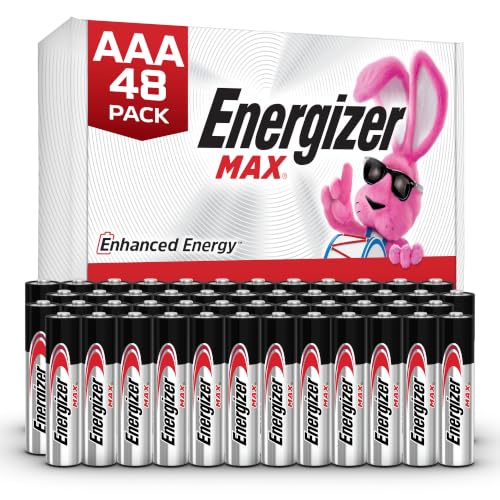
The Energizer MAX AAA 48-pack is the bulk pick for a busy household, and it is the largest pack in this guide. A 48-pack of alkaline AAA cells covers remotes, toys, clocks, and flashlights for months, and it means the battery drawer is rarely empty when a device stops. The title states the brand, the MAX line, the AAA size, the 48-pack count, and the alkaline chemistry, so a buyer knows exactly what is in the box.
A bulk alkaline pack is the right answer when the household goes through batteries steadily. The MAX line is Energizer’s everyday alkaline, made for the devices that draw power slowly and sit on a shelf between uses. A buyer who keeps one pack in the drawer and one pack in the emergency kit will rarely run out, and the 48-pack size suits a family with children, toys, and several remotes.
Key specs:
- Chemistry: alkaline
- Pack size: 48 batteries
- Size: AAA (triple A)
- Type: disposable alkaline
- Line: Energizer MAX
Strengths:
- 48-pack covers a household for months
- MAX line is made for everyday devices
- Alkaline cells hold charge well in storage
Trade-offs:
- Alkaline fades faster in high-drain toys
- 48-pack is more than a small household needs
- Single-use cells add to household waste
The Energizer MAX 48-pack fits the household that replaces AAA batteries often and wants the drawer stocked. It is the pick for families with toys and remotes, for a shared house, and for anyone who would rather buy once than shop for batteries every month.
Best for: Bulk household use, remotes, toys, and clocks. Not suited for: High-drain devices, freezing weather, or heavy daily use that suits rechargeables.
Check price on Amazon: Energizer MAX AAA Batteries 48 Pack
Duracell Coppertop AAA Batteries, 24 Count
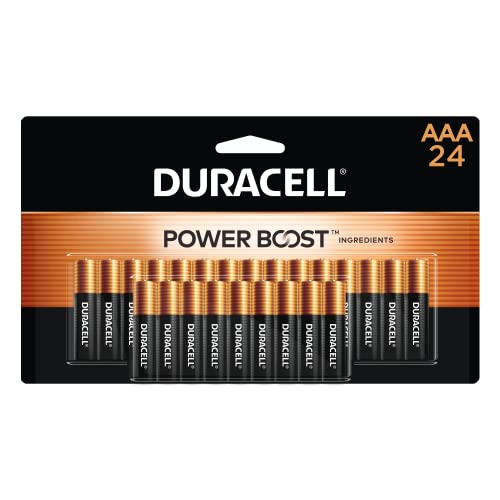
The Duracell Coppertop AAA 24-count is the shelf-life pick for the emergency drawer, and it is the pack to buy when the batteries may sit for years before they are needed. The title states the brand, the Coppertop line, the AAA size, the 24-count pack, and a 12-year shelf life, and it names the Power Boost ingredients in the cell. A 12-year shelf life means a pack bought today is still fresh when a flashlight is needed in a power cut years later.
A Coppertop pack is the right answer when reliability matters more than bulk. The 24-count size is large enough for a household and small enough to store, and the long shelf life means the buyer does not have to think about the pack again. It suits the emergency kit, the glove box, and the drawer where the spare batteries live.
Key specs:
- Chemistry: alkaline
- Pack size: 24 batteries
- Shelf life: 12 years
- Size: AAA (triple A)
- Line: Duracell Coppertop
Strengths:
- 12-year shelf life suits emergency storage
- Coppertop line is a proven everyday alkaline
- 24-count is a practical household size
Trade-offs:
- 24-pack costs more per household than a 48-pack
- Alkaline fades in high-drain devices
- Single-use cells add to household waste
The Duracell Coppertop 24-count fits the buyer who wants batteries that work after years in a drawer. It is the pick for the emergency kit, the flashlight drawer, and the household that values a fresh cell on demand over the lowest cost per battery.
Best for: Emergency storage, flashlights, and the spare-battery drawer. Not suited for: Heavy daily use, high-drain toys, or freezing weather.
Check price on Amazon: Duracell Coppertop AAA Batteries 24 Count

Amazon Basics AAA Long-Lasting Alkaline Batteries, 36 Count
The Amazon Basics AAA 36-count is the value pick for everyday devices, and it is the pack for a buyer who wants a known alkaline cell at a low cost. The title states the brand, the AAA size, the 36-count pack, the 1.5-volt rating, and a 10-year shelf life, and it describes the cell as long-lasting and leak-proof. A 36-pack is a sensible middle size: large enough to last, small enough to store.
A value alkaline pack is the right answer when the devices are ordinary. Remotes, clocks, and wireless mice do not need a premium cell, and the Amazon Basics line is made for exactly that use. A buyer who keeps one pack in the drawer will cover the household’s remotes and clocks for a long stretch, and the 10-year shelf life means the spare cells stay fresh.
Key specs:
- Chemistry: alkaline
- Pack size: 36 batteries
- Voltage: 1.5 volts
- Shelf life: 10 years
- Size: AAA (triple A)
Strengths:
- 36-pack is a sensible household size
- 10-year shelf life suits drawer storage
- 1.5-volt alkaline suits remotes and clocks
Trade-offs:
- Alkaline fades in high-drain devices
- No stated capacity figure in the title
- Single-use cells add to household waste
The Amazon Basics 36-count fits the buyer who wants everyday AAA batteries without paying for a premium line. It is the pick for remotes, clocks, and wireless mice, and for a household that wants one pack in the drawer and no fuss.
Best for: Everyday devices, remotes, clocks, and wireless mice. Not suited for: High-drain toys, cold weather, or heavy use that suits rechargeables.
Check price on Amazon: Amazon Basics AAA Batteries 36 Count

Eneloop Panasonic BK-4MCCA12FA AAA Rechargeable Batteries, 12 Pack
The Eneloop Panasonic BK-4MCCA12FA 12-pack is the rechargeable pick for heavy users, and it is the only rechargeable set in this guide. The title states the brand, the Eneloop line, the BK-4MCCA12FA model, the AAA size, the Ni-MH chemistry, the 2100-cycle rating, and the pre-charged design. A 2100-cycle rating means the same twelve cells can be charged and used again and again, which is the point for a household that burns through batteries.
A rechargeable set is the right answer when the devices never rest. Wireless mice, game controllers, and motorised toys drain cells every week, and a rechargeable set turns that weekly purchase into a weekly charge. The Eneloop cells arrive pre-charged, so they work straight from the pack, and the low-self-discharge design means a charged cell still holds most of its charge after months in a drawer.
Key specs:
- Chemistry: Ni-MH rechargeable
- Pack size: 12 batteries
- Cycle rating: 2100 cycles
- Design: pre-charged
- Size: AAA (triple A)
Strengths:
- 2100-cycle rating suits years of reuse
- Pre-charged cells work straight from the pack
- Rechargeable design cuts waste and long-term cost
Trade-offs:
- Needs a Ni-MH charger, sold separately
- 1.2-volt rating suits most but not all devices
- 12-pack costs more up front than alkaline
The Eneloop 12-pack fits the household that replaces AAA batteries every week. It is the pick for wireless mice, game controllers, and toys, and for a buyer who would rather charge cells than keep buying packs.
Best for: Heavy use, wireless mice, game controllers, and toys. Not suited for: A drawer that sits untouched for years, or a device that needs a 1.5-volt cell.
Check price on Amazon: Eneloop Panasonic AAA Rechargeable Batteries 12 Pack

Rayovac High Energy AAA Batteries, 36 Pack
The Rayovac High Energy AAA 36-pack is the high-capacity pick for toys, and it is the pack for a buyer who wants a capacity figure stated on the listing. The title states the brand, the High Energy line, the AAA size, the 36-pack count, the alkaline chemistry, a 1100 mAh capacity, and the 1.5-volt rating. A 1100 mAh capacity is a strong figure for an alkaline AAA, and it is what keeps a motorised toy running longer than a standard cell.
A high-capacity alkaline is the right answer when the device is thirsty. Toys with motors, flashing lights, and sounds drain cells fast, and a higher-capacity cell means fewer swaps and longer play. The 36-pack size suits a household with children, and the alkaline chemistry means the cells hold their charge on the shelf until they are needed.
Key specs:
- Chemistry: alkaline
- Pack size: 36 batteries
- Capacity: 1100 mAh
- Voltage: 1.5 volts
- Size: AAA (triple A)
Strengths:
- 1100 mAh capacity suits thirsty toys
- 36-pack is a practical family size
- 1.5-volt alkaline suits most AAA devices
Trade-offs:
- Alkaline still fades under the heaviest drain
- Single-use cells add to household waste
- No stated shelf-life figure in the title
The Rayovac High Energy 36-pack fits the family whose toys eat batteries. It is the pick for motorised toys, for handheld games, and for any AAA device that drains cells faster than a remote ever will.
Best for: Toys, handheld games, and high-drain alkaline use. Not suited for: Freezing weather, or daily heavy use that suits rechargeables.
Check price on Amazon: Rayovac High Energy AAA Batteries 36 Pack
Energizer Ultimate Lithium AAA Batteries, 8 Pack
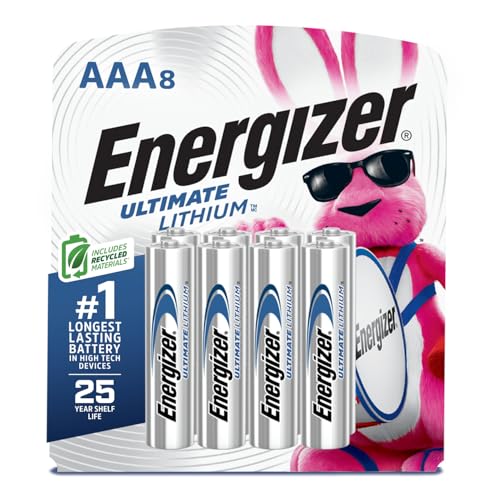
The Energizer Ultimate Lithium AAA 8-pack is the cold-weather pick for demanding gear, and it is the only lithium set in this guide. The title states the brand, the Ultimate Lithium line, the AAA size, the 8-pack count, and the lithium chemistry. Lithium cells weigh less than alkaline cells, work in freezing cold, and hold a steady voltage until they are nearly empty, which is why they suit camera flashes, outdoor sensors, and some game controllers.
A lithium pack is the right answer when the conditions are harsh. An alkaline cell fades in the cold and sags under a heavy load, while a lithium cell keeps delivering, and that difference is what a flash or an outdoor device needs. The 8-pack size fits the specialist use: a buyer who needs lithium cells for a few devices, not for every remote in the house.
Key specs:
- Chemistry: lithium
- Pack size: 8 batteries
- Size: AAA (triple A)
- Type: disposable lithium
- Line: Energizer Ultimate Lithium
Strengths:
- Lithium chemistry works in freezing cold
- Steady voltage suits high-drain gear
- Lighter than alkaline cells
Trade-offs:
- 8-pack is small for a household
- Lithium costs more per cell than alkaline
- Overkill for a television remote or a clock
The Energizer Ultimate Lithium 8-pack fits the buyer whose devices work in the cold or drain hard. It is the pick for camera flashes, outdoor sensors, and high-drain controllers, and for anyone who needs a cell that keeps working when alkaline fades.
Best for: Cold weather, camera flashes, and high-drain gear. Not suited for: Remotes, clocks, or any low-drain device where alkaline is enough.
Check price on Amazon: Energizer Ultimate Lithium AAA Batteries 8 Pack
How to buy the best triple a batteries
Match the chemistry to the device
Start with the device, not the brand. A remote, a clock, and a wireless mouse need an alkaline cell, because they draw power slowly and sit for months. A camera flash, an outdoor sensor, and a high-drain controller need a lithium cell, because they draw hard and may work in the cold. A wireless mouse, a game controller, and a toy that runs every day need a rechargeable Ni-MH set, because the cells are charged weekly. The wrong chemistry is the most common buying mistake, and it is fixed by reading the device first.
Read the pack size before the brand
A 48-pack suits a family, a 24-pack suits a drawer, and an 8-pack suits a specialist device, so the pack size is a buying decision, not a detail. A bulk pack of the wrong chemistry is worse than a small pack of the right one, and a lithium pack bought for a clock is money spent on performance the clock will never use. Check the pack count in the title, count the devices in the house, and buy the size that matches the next year of use.
Check the shelf life for stored batteries
Batteries bought for an emergency kit may sit for years, so the shelf life on the listing matters. The Duracell Coppertop cells in this guide state a 12-year shelf life, and the Amazon Basics cells state ten years, which means a pack bought today is still fresh when it is needed. Store spare batteries in a cool, dry drawer, keep them in the original pack until use, and do not store loose cells where they can short against keys or coins.
Do not mix chemistries or old and new cells
A device should always run on cells of the same brand, chemistry, and age, because a mixed set drains unevenly and can leak. Replace all the cells in a device at once, and do not pair a fresh cell with a half-used one. Keep new and used cells apart, mark the rechargeable set so it is not thrown away by mistake, and recycle used cells at a collection point rather than putting them in household waste.
Buy the pack size for the next year, not the next week
A buyer who counts the AAA devices in the house will buy the right pack the first time. Count the remotes, the clocks, the mice, the toys, and the flashlights, and work out how often each one needs fresh cells. A household with two remotes and a clock needs a small pack, while a household with children and a dozen toys needs a bulk pack such as the 48-count Energizer MAX in this guide. Buying the right size once beats buying the wrong size three times.
How to store and use AAA batteries
Store spares in a cool, dry place
Heat shortens the life of a stored battery, and damp can corrode the contacts, so the battery drawer should be cool and dry. Keep cells in the original pack until they are needed, because the pack stops the terminals from touching each other or metal objects. A pack stored at room temperature will hold its charge for the shelf life stated on the listing, and a pack stored in a hot garage will not.
Keep rechargeable cells charged and marked
A Ni-MH set such as the Eneloop cells in this guide should be charged when it is bought, used in rotation, and kept as a matched set. Mark the set with a date or a colour, charge the cells together, and replace the whole set when one cell starts to fade, because a weak cell in a set drags the others down. A charger made for Ni-MH cells is the right tool; a charger made for another chemistry is not.
Check devices that sit unused
A device that sits for months with batteries inside can leak, and a leaked cell can ruin the contacts. Remove the batteries from a toy, a flashlight, or a remote that will not be used for a season, and check the battery compartment for white crust or damp before fitting fresh cells. Clean the contacts with a dry cloth, fit fresh cells of the same type, and the device will work as it should.
Dispose of used cells properly
Used AAA batteries should not go in household waste, because they contain metals that belong in a recycling stream. Most supermarkets and electronics shops run a battery collection point, and a household can keep a small box for used cells and drop it off when it is full. Rechargeable cells last far longer, and when a set finally fades after hundreds of cycles, it should be recycled in the same way.
Common mistakes when buying AAA batteries
Buying AA cells by mistake
The most common mistake is ordering the wrong size. AA and AAA cells look alike in a small photo, and a mixed AA and AAA pack is not a AAA pack, so a buyer should check the size in the title before buying. The listings in this guide all state AAA in the title, and a buyer who checks that one word will not receive the wrong size.
Using alkaline cells in a high-drain device
A camera flash or a motorised toy will drain an alkaline cell fast, and the device will fade before the play is done. The fix is to match the chemistry: lithium for flashes and cold weather, rechargeable Ni-MH for daily heavy use, and alkaline for remotes and clocks. A buyer who matches the chemistry once will not keep buying cells for the same device.
Throwing rechargeable cells away
A Ni-MH cell looks like a disposable cell, and a household that is not used to rechargeables can throw a good set away by mistake. Mark the rechargeable set, keep it apart from the disposable packs, and tell everyone in the house that the marked cells go back on the charger. A set that is kept and charged will serve for years.
Storing batteries loose in a drawer
Loose cells rolling in a drawer can touch each other terminal to terminal, or touch keys and coins, and a shorted cell can heat up and leak. Keep spare cells in the original pack, or in a battery case, and never carry loose cells in a pocket with coins. A pack that stays sealed until use is a pack that stays safe and fresh.
Our recommendation for the best triple a batteries
For most households, the Energizer MAX 48-pack is the first buy, because it stocks the drawer for months and covers remotes, toys, and clocks at once. Add the Duracell Coppertop 24-count for the emergency kit, because its 12-year shelf life means the flashlight works when it is needed years later. A household that replaces batteries every week should buy the Panasonic Eneloop 12-pack instead of another disposable pack, because the cells are charged and reused, and the saving grows with every cycle.
For toys, the Rayovac High Energy 36-pack is the right choice, because its stated 1100 mAh capacity keeps a motorised toy running longer. For cold weather and high-drain gear, the Energizer Ultimate Lithium 8-pack is the right choice, because lithium holds its voltage where alkaline fades. The Amazon Basics 36-count is the plain value choice for everyday devices, and it is the pack to buy when nothing special is needed and the drawer simply needs filling.
Whichever pack is bought first, the rule stays the same: match the chemistry to the device, check the size and the line in the title, and store the spares in a cool, dry drawer. A household that follows that rule will rarely buy the wrong battery again.
Related reading on Reviewstook: see our guides to best batteries for Blink outdoor cameras, best camera batteries and chargers, best charger for batteries for more on this topic.
Frequently asked questions about triple A batteries
What is the difference between AAA and AA batteries?
AAA batteries are smaller than AA batteries, at 44.5 millimetres long and 10.5 millimetres across, while AA batteries are 50.5 millimetres long and 14.5 millimetres across. The two sizes are not interchangeable, and a device made for AAA cells will not accept AA cells. Check the size in the listing title before buying.
How long do AAA batteries last on the shelf?
It depends on the chemistry and the brand. The Duracell Coppertop cells in this guide state a 12-year shelf life, and the Amazon Basics cells state ten years, when they are stored in a cool, dry place in the original pack. Rechargeable Ni-MH cells lose charge slowly in storage, so they should be topped up before use after months on a shelf.
Are rechargeable AAA batteries worth it?
They are worth it for a household that replaces AAA batteries often. A set such as the Panasonic Eneloop cells in this guide is rated for 2100 cycles, so the same cells can be charged and used again and again. They suit wireless mice, game controllers, and toys, and they are less useful for a device whose batteries sit untouched for years.
Can I use lithium AAA batteries in any device?
Most AAA devices accept lithium cells, because they share the 1.5-volt rating of alkaline cells, and they are the right choice for cold weather and high-drain gear. Check the device manual first, because a few devices are designed for alkaline cells only. Do not use lithium cells in a device that the maker says needs alkaline.
What does mAh mean on a battery listing?
Milliamp-hours measure how much charge a battery holds, and a higher number means a longer run in the same device. The Rayovac High Energy cells in this guide state 1100 mAh, which is a strong figure for an alkaline AAA. Compare capacity only within one chemistry, because lithium and alkaline cells deliver their energy differently.