The best electric vehicle chargers are the ones that charge the car fast, fit the plug the car uses, and are safe to install at home. A Level 2 charger runs on 240 volts and adds miles far faster than a standard wall outlet, and the difference between a 32-amp charger and a 50-amp charger is hours of charging time. The six chargers in this guide cover the main choices: hardwired and plug-in, J1772 and NACS, 40-amp and 50-amp, and smart chargers with Wi-Fi. Every listing was checked in full before it was linked.
An electric vehicle charger matters because home charging is how most owners charge. A car that charges overnight at home is ready every morning, and a charger that is too slow will leave the car half full. A Level 2 charger adds 25 to 46 miles of range per hour, depending on the amperage, and a charger that matches the car plug will work without an adapter. The charger is the part of the electric car that lives in the garage.
The chargers in this guide cover the main uses. The ChargePoint HomeFlex 50A is the best all-round pick, the ChargePoint Home Flex NEMA 14-50 is the plug-in pick, the Autel Level 2 50A is the fast hardwired pick, the Emporia Level 2 48A is the smart Wi-Fi pick, the Tesla Wall Connector is the Tesla pick, and the Tesla Universal Wall Connector is the dual-plug pick. All six are Level 2 chargers, and all six are sold as new listings.
This guide covers six best electric vehicle chargers: two ChargePoint chargers, one Autel, one Emporia, and two Tesla wall connectors. All six are Level 2, all six run on 240 volts, and all six state their amperage, plug type, and cable length in the listing title. The comparison table below gives the short version, and the sections after it give the detail.
In this guide
Quick picks: best electric vehicle chargers
| # | Product | Where to buy |
|---|---|---|
| 1 | ChargePoint HomeFlex 50A EV charger | Check on Amazon |
| 2 | ChargePoint Home Flex NEMA 14-50 EV charger | Check on Amazon |
| 3 | Autel Level 2 50A EV charger | Check on Amazon |
| 4 | Emporia Level 2 48A EV charger | Check on Amazon |
| 5 | Tesla Wall Connector NACS EV charger | Check on Amazon |
| 6 | Tesla Universal Wall Connector dual plug EV charger | Check on Amazon |
How the picks were chosen for the best electric vehicle chargers
Every charger below started as a listing returned by the reviewstook.com product lookup, and every listing was checked the same way. First, the title had to name the exact brand and the exact model, including every number and letter, because a ChargePoint HomeFlex 50A is not a ChargePoint Home Flex NEMA 14-50, and an Autel MaxiCharger is not an Autel Level 2 50A. Second, the title had to state the amperage and the plug type, because a charger must match the car and the home wiring.
The chargers were also checked for the details that decide real use. Amperage decides speed, and the chargers here range from 40 amps to 50 amps. Plug type decides the car, and the chargers here cover J1772 for most electric cars and NACS for Tesla, with one dual-plug charger for both. Cable length decides the garage layout, and the chargers here have 24-foot or 25-foot cables. Smart features decide scheduling and monitoring, and the chargers here offer Wi-Fi and app control.
One more check shaped the list: the charger must be a charger, not a charger protection box, a cable adapter, or a phone charger. Listings for protection boxes, adapters, and phone chargers were left out, because a buyer searching for the best electric vehicle chargers wants a charger. The six chargers below are all Level 2 electric vehicle chargers, sold as new listings, with the brand and the model stated in the title.
What an electric vehicle charger is, and who should buy one
An electric vehicle charger is a wall-mounted or portable unit that charges an electric car from home power. A Level 2 charger runs on 240 volts, like a dryer or an oven, and it adds 25 to 46 miles of range per hour, depending on the amperage. A Level 1 charger runs on a standard 120-volt outlet and adds only a few miles per hour. A Level 2 charger is the standard for home charging, and it is the charger most owners buy.
An electric vehicle charger suits anyone who owns an electric car and charges at home. It is the right choice when the car is parked overnight, when the daily drive is more than a few miles, when the owner wants the car full every morning, and when the home has a 240-volt circuit or can have one installed. It is not the right choice for a buyer without home parking, because a home charger needs a garage or a driveway.
The six chargers in this guide cover the main buyers. The all-round and plug-in picks are for most homes, the fast hardwired pick is for the buyer who wants the quickest charge, the smart pick is for the buyer who wants app control, and the Tesla picks are for Tesla owners and for homes with both a Tesla and another electric car.
What makes a good electric vehicle charger
Amperage is the first test, and it decides how fast the car charges. A 50-amp charger adds up to 46 miles per hour, a 48-amp charger adds up to 50 miles per hour, and a 40-amp charger adds less. The chargers here are 48-amp and 50-amp, and a buyer should check the amperage in the title before buying, because the amperage decides the charging time. A buyer should also check the home wiring, because a 50-amp charger needs a 60-amp or larger circuit.
Plug type is the second test. A J1772 plug fits most electric cars, and a NACS plug fits Tesla cars, and the wrong plug will not fit without an adapter. The chargers here cover both, and the Tesla Universal Wall Connector has both plugs in one unit. A buyer should check the plug in the title before buying, because the plug decides the car it fits.
Installation type and smart features are the third test. A hardwired charger is wired directly into the home panel, and a plug-in charger uses a NEMA 14-50 outlet, and the choice depends on the garage. Smart features like Wi-Fi and app control let the buyer schedule charging for cheap overnight rates, and the ChargePoint, Autel, and Emporia chargers here offer them. A buyer should check the installation type in the title before buying.
Quick picks at a glance
| Charger | Amperage and plug | Use | Best for |
|---|---|---|---|
| ChargePoint HomeFlex 50A | 50A, J1772, hardwired, Wi-Fi | Home, J1772 car | Best all-round charger |
| ChargePoint Home Flex plug-in | NEMA 14-50, J1772, smart | Home, flexible | Best plug-in charger |
| Autel Level 2 50A | 50A, J1772, hardwired, Wi-Fi, 25ft | Home, fast charge | Best fast hardwired charger |
| Emporia Level 2 48A | 48A, J1772, Wi-Fi, 25ft | Home, smart | Best smart Wi-Fi charger |
| Tesla Wall Connector | 48A, NACS, 24ft | Home, Tesla | Best Tesla charger |
| Tesla Universal Wall Connector | NACS + J1772, dual plug | Home, two cars | Best dual-plug charger |
The best electric vehicle chargers

ChargePoint HomeFlex Level 2 EV Fast Charger, J1772, Smart, Hardwired, 50A
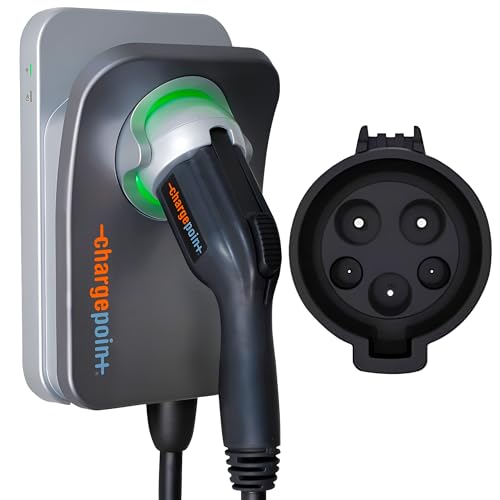
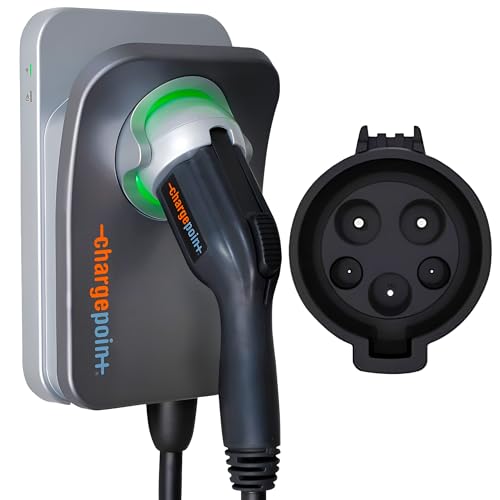
The ChargePoint HomeFlex Level 2 EV Fast Charger, J1772, Smart, Hardwired, 50A is the best all-round pick in this guide, and it is the pick for a buyer who wants fast, smart home charging. It is a ChargePoint HomeFlex Level 2 fast charger with a J1772 plug, smart Wi-Fi features, a hardwired installation, and 50 amps. It adds up to 37 miles of range per hour, and the smart features let the buyer schedule charging for cheap overnight rates.
The HomeFlex suits a home with a J1772 electric car and a 240-volt circuit. The 50-amp charging fills the car overnight, the Wi-Fi app shows the charging status, and the hardwired installation is neat and permanent. It is the charger for a buyer who wants fast, smart home charging.
Key specs:
- ChargePoint HomeFlex Level 2 EV Fast Charger
- J1772 plug, Smart, Hardwired
- 50A, adds up to 37 miles per hour
- Wi-Fi connected, app control
- For electric cars
Strengths:
- 50 amps for fast home charging
- Smart Wi-Fi with scheduling and app control
- Hardwired installation is neat and permanent
Trade-offs:
- A hardwired charger needs an electrician
- J1772 only, so Tesla needs an adapter
- 50 amps needs a larger home circuit
The ChargePoint HomeFlex fits a home with a J1772 electric car and a 240-volt circuit.
Best for: fast, smart home charging for J1772 cars. Not suited for: a Tesla without an adapter, or a renter who needs a plug-in charger.
Check price on Amazon: ChargePoint HomeFlex 50A EV charger

ChargePoint Home Flex Level 2 EV Fast Charger, J1772, NEMA 14-50 Plug
The ChargePoint Home Flex Level 2 EV Fast Charger, J1772, NEMA 14-50 Plug is the plug-in pick in this guide, and it is the pick for a buyer who wants a charger that plugs into an outlet. It is a ChargePoint Home Flex Level 2 fast charger with a J1772 plug and a NEMA 14-50 plug. It adds up to 30 miles of range per hour, and the smart charging features let the buyer schedule it from the app.
The Home Flex plug-in suits a buyer who may move the charger or take it along. The NEMA 14-50 plug fits a standard dryer-style outlet, the smart features schedule charging, and the J1772 plug fits most electric cars. It is the charger for a buyer who wants flexibility with fast charging.
Key specs:
- ChargePoint Home Flex Level 2 EV Fast Charger
- J1772 plug, NEMA 14-50 Plug
- Adds up to 30 miles per hour
- Smart charging for electric cars
- Plug-in installation
Strengths:
- Plugs into a NEMA 14-50 outlet, no hardwiring
- Can be unplugged and taken along
- Smart charging with app scheduling
Trade-offs:
- Adds fewer miles per hour than the 50A pick
- J1772 only, so Tesla needs an adapter
- Needs a NEMA 14-50 outlet in the garage
The ChargePoint Home Flex plug-in fits a buyer who wants a charger that plugs in and can move.
Best for: a plug-in charger that can move. Not suited for: a Tesla without an adapter, or a buyer who wants the fastest charge.
Check price on Amazon: ChargePoint Home Flex NEMA 14-50 EV charger

Autel Level 2 EV Charger 50A, J1772 Hardwired Home Charger, WiFi, 25ft Cable
The Autel Level 2 EV Charger 50A, J1772 Hardwired Home Charger, WiFi, 25ft Cable is the fast hardwired pick in this guide, and it is the pick for a buyer who wants the quickest charge here. It is an Autel Level 2 charger with 50 amps, a J1772 plug, a hardwired installation, Wi-Fi, and a 25-foot cable. It adds up to 46 miles of range per hour, the fastest charging in this guide.
The Autel suits a buyer who drives far every day and needs the car full fast. The 50-amp charging fills the battery overnight, the 25-foot cable reaches the car from the wall, and the Wi-Fi and Bluetooth app control schedule the charging. It is the charger for a buyer who wants the fastest hardwired charge.
Key specs:
- Autel Level 2 EV Charger 50A
- J1772 Hardwired Home Charger
- WiFi, 25ft Cable
- Up to 46 miles per hour
- Smart WiFi and Bluetooth App Control
Strengths:
- Up to 46 miles per hour, the fastest here
- 25-foot cable reaches the car easily
- Wi-Fi and Bluetooth app control
Trade-offs:
- A hardwired charger needs an electrician
- J1772 only, so Tesla needs an adapter
- 50 amps needs a larger home circuit
The Autel 50A fits a buyer who drives far every day and wants the fastest hardwired home charge.
Best for: the fastest hardwired home charge. Not suited for: a Tesla without an adapter, or a renter who needs a plug-in charger.
Check price on Amazon: Autel Level 2 50A EV charger

EMPORIA Level 2 EV Charger with J1772 Connector, 48 Amp, 240V WiFi Enabled Electric Vehicle Charging Station, 25ft Cable
The EMPORIA Level 2 EV Charger with J1772 Connector, 48 Amp, 240V WiFi Enabled Electric Vehicle Charging Station, 25ft Cable is the smart Wi-Fi pick in this guide, and it is the pick for a buyer who wants app control and scheduling. It is an Emporia Level 2 charger with a J1772 connector, 48 amps, 240 volts, Wi-Fi, and a 25-foot cable. The Wi-Fi app lets the buyer schedule charging for cheap overnight rates and watch the charging from a phone.
The Emporia suits a buyer who wants to save on electricity with smart scheduling. The 48-amp charging fills the car fast, the Wi-Fi app controls the schedule, and the 25-foot cable reaches the car. It is the charger for a buyer who wants smart features with fast charging.
Key specs:
- EMPORIA Level 2 EV Charger
- J1772 Connector, 48 Amp, 240V
- WiFi Enabled Electric Vehicle Charging Station
- 25ft Cable
- Smart app control
Strengths:
- Wi-Fi app with scheduling for cheap rates
- 48 amps for fast charging
- 25-foot cable reaches the car easily
Trade-offs:
- J1772 only, so Tesla needs an adapter
- A hardwired or plug-in choice that needs checking
- 48 amps needs a larger home circuit
The Emporia 48A fits a buyer who wants smart Wi-Fi scheduling with fast charging.
Best for: smart Wi-Fi scheduling and fast charging. Not suited for: a Tesla without an adapter, or a buyer who wants no app.
Check price on Amazon: Emporia Level 2 48A EV charger

Tesla Wall Connector – Electric Vehicle (EV) NACS Charger – Level 2 – up to 48A with 24-foot Cable
The Tesla Wall Connector – Electric Vehicle (EV) NACS Charger – Level 2 – up to 48A with 24-foot Cable is the Tesla pick in this guide, and it is the pick for a Tesla owner who wants the maker charger. It is a Tesla Wall Connector with a NACS plug, Level 2 charging, up to 48 amps, and a 24-foot cable. The NACS plug fits Tesla cars directly, and the 48-amp charging fills the car fast.
The Tesla Wall Connector suits a Tesla owner who charges at home. The NACS plug fits without an adapter, the 48-amp charging adds miles fast, and the 24-foot cable reaches the car. It is the charger for a Tesla owner who wants the maker unit.
Key specs:
- Tesla Wall Connector
- Electric Vehicle NACS Charger
- Level 2, up to 48A
- 24-foot Cable
- For Tesla cars
Strengths:
- NACS plug fits Tesla cars directly
- Up to 48 amps for fast charging
- Maker charger built for Tesla
Trade-offs:
- NACS only, so other cars need an adapter
- A hardwired charger that needs an electrician
- 48 amps needs a larger home circuit
The Tesla Wall Connector fits a Tesla owner who charges at home and wants the maker charger.
Best for: Tesla owners charging at home. Not suited for: a non-Tesla car without an adapter, or a renter.
Check price on Amazon: Tesla Wall Connector NACS EV charger

Tesla Universal Wall Connector – Electric Vehicle (EV) NACS / J1772 Charger with Dual Plug Type
The Tesla Universal Wall Connector – Electric Vehicle (EV) NACS / J1772 Charger with Dual Plug Type is the dual-plug pick in this guide, and it is the pick for a home with both a Tesla and another electric car. It is a Tesla Universal Wall Connector with both a NACS plug and a J1772 plug in one unit. The dual plugs mean one charger serves both cars, and the buyer never needs an adapter.
The Universal Wall Connector suits a home with two electric cars of different plug types. The NACS plug fits the Tesla, the J1772 plug fits the other car, and one wall unit covers both. It is the charger for a buyer who wants one charger for every car in the garage.
Key specs:
- Tesla Universal Wall Connector
- NACS / J1772 Charger
- Dual Plug Type
- Compatible for all North American EVs
- Level 2 home charger
Strengths:
- Dual plugs serve both Tesla and J1772 cars
- One wall unit covers every car in the garage
- No adapter needed for either plug
Trade-offs:
- Costs more than a single-plug charger
- A larger unit that needs wall space
- A hardwired charger that needs an electrician
The Tesla Universal Wall Connector fits a home with both a Tesla and another electric car.
Best for: a home with two electric cars of different plugs. Not suited for: a home with one car, or a buyer on the tightest budget.
Check price on Amazon: Tesla Universal Wall Connector dual plug EV charger
Buying guide for the best electric vehicle chargers
Check the car plug first: J1772 or NACS
Start with the car plug, because the plug decides the charger. A J1772 plug fits most electric cars, including Chevrolet, Ford, Hyundai, Kia, and Volkswagen, and a NACS plug fits Tesla cars. A buyer with a Tesla should buy a NACS charger, and a buyer with another electric car should buy a J1772 charger. Check the plug in the title before buying, because the wrong plug will not fit.
A buyer with both a Tesla and another electric car should buy the Tesla Universal Wall Connector here, because it has both plug types in one unit. A buyer with one car should buy the plug that fits it, and a buyer who may change cars should buy the dual-plug charger. Check the plug type in the title before buying.
Amperage: how fast do you need to charge
Amperage decides how fast the car charges, and a 50-amp charger adds up to 46 miles per hour, while a 48-amp charger adds up to 50 miles per hour. A buyer who drives far every day should buy a 48-amp or 50-amp charger, and a buyer who drives a short distance should buy a 40-amp charger. Check the amperage in the title before buying, because the amperage decides the charging time.
The amperage also decides the home wiring. A 50-amp charger needs a larger circuit than a 40-amp charger, and a buyer should ask an electrician before buying. A charger that is too powerful for the panel cannot be installed, and a buyer who buys the wrong amperage will need a panel upgrade. Check the wiring with an electrician before buying.
Hardwired or plug-in: which installation
A hardwired charger is wired directly into the home panel, and it is the right choice for a permanent garage installation, because it is neat and it allows the highest amperage. A plug-in charger uses a NEMA 14-50 outlet, and it is the right choice for a buyer who may move the charger or take it along. Check the installation type in the title before buying, because the type decides the wiring.
A buyer who rents should buy a plug-in charger, because it can be unplugged and taken along. A buyer who owns the home should buy a hardwired charger, because it is permanent and tidy. Ask an electrician to install either type, because 240-volt wiring is not a do-it-yourself job.
Smart features and scheduling
Smart features let the buyer schedule charging for cheap overnight rates, and they let the buyer watch the charging from a phone. The ChargePoint, Autel, and Emporia chargers here offer Wi-Fi and app control, and a buyer who wants to save on electricity should look for them. Check the smart features in the title before buying, because a charger without them cannot schedule charging.
Scheduling matters because electricity is cheaper at night in many places, and a charger that starts at midnight can save money every day. A buyer who charges every night should buy a smart charger, and a buyer who charges now and then can buy a simpler one. Check the app and Wi-Fi in the title before buying.
Cable length and garage layout
Cable length decides where the charger can sit, and the chargers here have 23-foot to 25-foot cables. A buyer should measure the distance from the charger spot to the car charging port, because a cable that is too short will not reach. A 25-foot cable suits most garages, and a buyer with a long driveway should look for the longest cable. Check the cable length in the title before buying.
The charger spot matters too. A charger should sit near the panel and near the car, and it should be protected from rain if it is outside. A buyer who parks outside should buy a charger rated for outdoor use, and a buyer who parks in a garage can buy any charger here. Check the weather rating in the title before buying.
Using and caring for an electric vehicle charger
Install the charger safely
Ask a licensed electrician to install the charger, because 240-volt wiring is not a do-it-yourself job. The electrician will check the panel, run the circuit, and mount the charger, and a buyer should not wire it alone. A charger that is installed wrong can damage the car or the home, and a buyer should keep the installation receipt.
After installing it, test the charger with the car, check the app, and set the charging schedule. A charger that is tested on the first day will show any problem early, and a buyer should check the cable and the plug for damage. A charger that is installed well will work for years.
Keep the cable and plug clean
A charger cable collects dust and dirt, and it needs a wipe now and then to stay clean. Coil the cable on its holder after charging, and do not leave it on the floor, because a cable on the floor can be run over or tripped on. A cable that is coiled and hung will last longer than one left on the ground.
Check the plug for damage every few months, because a plug that is cracked or burnt is a plug to replace. Do not use a charger with a damaged plug, because it can damage the car. A charger that is checked will be safe, and a charger that is ignored can become a risk.
Look after the charger for the long term
Check the charger software once a month, because makers release updates that fix bugs and add features. A charger with the latest software is a reliable charger, and a charger with old software can have problems. Set the charger to update itself when possible, and check it by hand when it cannot.
Watch the charger in the first month, because a charger that trips the breaker or runs hot needs an electrician to check the wiring. A charger that stays cool and steady will run for years, and a charger that trips often has a wiring problem. Good installation is the best care a charger can get.
Common mistakes when buying an electric vehicle charger
Buying the wrong plug type
The most common mistake is buying a J1772 charger for a Tesla, or a NACS charger for another electric car. The plugs look alike in a photo, but they do not fit each other without an adapter. Check the plug in the title before buying, because the plug decides the car it fits. A buyer with both a Tesla and another car should buy the dual-plug Tesla Universal Wall Connector.
The same mistake happens with adapters. An adapter can make the wrong plug fit, but it adds a part that can fail, and a buyer should buy the right plug instead. Check the plug type in the title before buying, because the right plug is the one that fits the car.
Buying a charger the home wiring cannot support
A 50-amp charger needs a larger circuit than a 40-amp charger, and a buyer who buys a 50-amp charger for a panel that cannot support it will need a panel upgrade. Ask an electrician to check the panel before buying, because the wiring decides the charger. A charger that is too powerful for the panel cannot be installed.
The same care applies to the outlet. A plug-in charger needs a NEMA 14-50 outlet, and a buyer without one will need an electrician to add it. Check the installation type in the title before buying, and ask an electrician about the panel and the outlet.
Buying a protection box or adapter instead of a charger
Charger protection boxes, cable adapters, and phone chargers appear in the same search results as electric vehicle chargers, and a buyer in a hurry can buy one by mistake. A protection box is not a charger, and an adapter is not a charger, no matter how good the price looks. Check the title for the amperage and the plug before buying, and look at the photo for the wall unit.
The same care applies to Level 1 chargers that appear in the results. A Level 1 charger runs on a standard outlet and adds only a few miles per hour, and a buyer who wants fast home charging should buy a Level 2 charger. Check the level in the title before buying.
Installing the charger without an electrician
A 240-volt circuit is not a do-it-yourself job, and a buyer who wires a charger alone can damage the car or the home. Ask a licensed electrician to install the charger, because the electrician will check the panel, run the circuit, and test it. A charger that is installed by a professional is a safe charger, and a charger that is wired wrong is a risk.
The same care applies to outdoor installation. A charger that sits outside needs weather protection, and a buyer who installs it in the rain can damage it. Ask the electrician about the weather rating, and check the title before buying.
Our recommendation for the best electric vehicle charger
The best electric vehicle charger for most buyers is the ChargePoint HomeFlex Level 2 EV Fast Charger, J1772, Smart, Hardwired, 50A, because it is a smart hardwired charger with the fastest charging here, Wi-Fi, and app control. It suits a home with a J1772 car and a 240-volt circuit, it adds up to 37 miles per hour, and it is the charger for a buyer who wants fast, smart home charging. A buyer shopping for an electric vehicle charger should start there.
A buyer who wants a plug-in charger should buy the ChargePoint Home Flex NEMA 14-50, a buyer who wants the fastest hardwired charge should buy the Autel Level 2 50A, and a buyer who wants smart Wi-Fi features should buy the Emporia Level 2 48A. A Tesla owner should buy the Tesla Wall Connector, and a home with both a Tesla and another electric car should buy the Tesla Universal Wall Connector.
Whichever charger is chosen, check the plug first, match the amperage to the home wiring, and ask an electrician to install it. The right charger is the one that fits the car, charges fast enough, and is installed safely.
Related reading on Reviewstook: see our guides to best fast charger under 100, best fast charger for travel under 10, best MagSafe charger under 10 for more on this topic.
Frequently asked questions about electric vehicle chargers
What is the difference between Level 1 and Level 2 charging?
A Level 1 charger runs on a standard 120-volt outlet and adds only a few miles of range per hour, while a Level 2 charger runs on 240 volts and adds 25 to 46 miles per hour. A Level 2 charger is the standard for home charging, and it is the charger most owners buy. A buyer who drives far every day should buy a Level 2 charger.
A Level 1 charger suits a buyer who drives only a few miles a day, because it can top up the car overnight. A buyer who drives more should buy a Level 2 charger, because Level 1 will not keep up. Check the level in the title before buying.
Do I need a J1772 or a NACS charger?
A J1772 plug fits most electric cars, including Chevrolet, Ford, Hyundai, Kia, and Volkswagen, and a NACS plug fits Tesla cars. A buyer with a Tesla should buy a NACS charger, and a buyer with another electric car should buy a J1772 charger. Check the plug in the title before buying, because the wrong plug will not fit.
A buyer with both a Tesla and another electric car should buy the Tesla Universal Wall Connector here, because it has both plug types in one unit. A buyer with one car should buy the plug that fits it.
How fast will a 50-amp charger charge my car?
A 50-amp charger adds up to 46 miles of range per hour, depending on the car, and a 48-amp charger adds up to 50 miles per hour. The actual speed depends on the car charging system, because some cars cannot take the full amperage. Check the amperage in the title before buying, and check the car manual for its maximum charging rate.
A buyer who drives far every day should buy a 48-amp or 50-amp charger, and a buyer who drives a short distance can buy a 40-amp charger. The amperage decides the charging time, and the car decides the maximum it can take.
Should a charger be hardwired or plug-in?
A hardwired charger is wired directly into the home panel, and it is the right choice for a permanent garage installation, because it is neat and it allows the highest amperage. A plug-in charger uses a NEMA 14-50 outlet, and it is the right choice for a buyer who may move the charger or take it along. Check the installation type in the title before buying.
A buyer who rents should buy a plug-in charger, and a buyer who owns the home should buy a hardwired charger. Ask an electrician to install either type, because 240-volt wiring is not a do-it-yourself job.
Can I install an EV charger myself?
No, a 240-volt circuit is not a do-it-yourself job, and a buyer who wires a charger alone can damage the car or the home. Ask a licensed electrician to install the charger, because the electrician will check the panel, run the circuit, and test it. A charger that is installed by a professional is a safe charger.
The electrician will also check that the panel can support the charger amperage, because a 50-amp charger needs a larger circuit than a 40-amp charger. Ask about the panel before buying, because the wiring decides the charger.